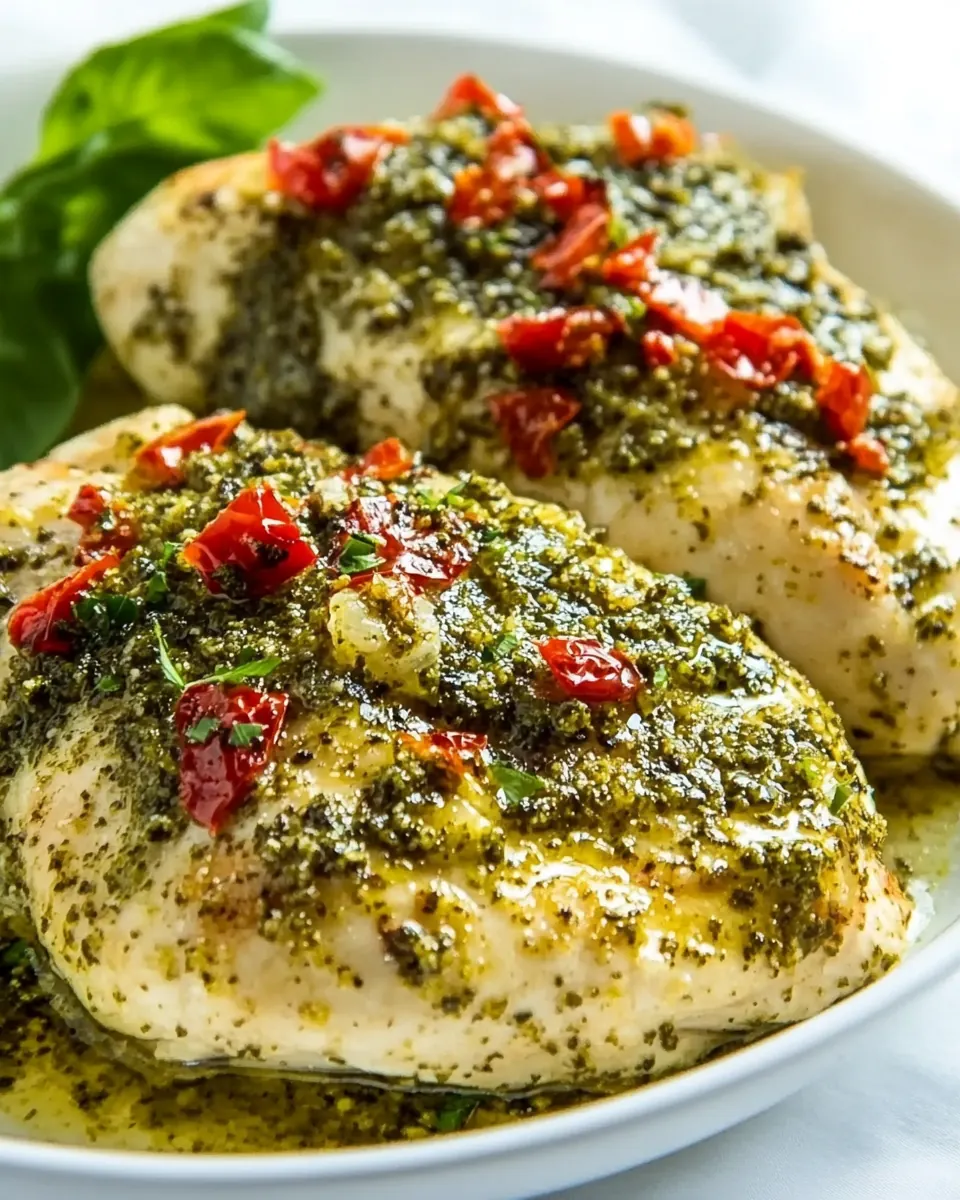
Easy Baked Pesto Chicken
Easy Baked Pesto Chicken came into my weeknight rotation because I needed something fast that still felt thoughtful when guests arrived.
One evening I had leftover basil wilting in the fridge and a pack of chicken that needed rescuing. I wanted the kind of meal that smells herbal and toasty as soon as it hits the pan, and this recipe fit the bill. The combination of bright basil, nutty walnuts, and creamy parmesan means the sauce doubles as a condiment you will spoon on everything. I love how the chicken stays juicy because it bakes quickly, and the pesto adds freshness without heavy sauce.
Over time I learned small tweaks that make the dish sing, like bruising the greens to release aroma and toasting the garlic and walnuts for depth. When friends come over, this is the recipe I turn to because it looks like effort but is genuinely simple. There is a comforting contrast between tender chicken and the crunchy walnut garnish that gives every bite textural interest. You can plate it with simple sides, or let it be the showstopper with bright diced tomatoes on top. That first bite, where warm chicken meets cool herbal pesto, is why I keep making it.
Recipe Snapshot
20 mins
10 mins
10 mins
Medium
350 kcal
Italian
Keto, Gluten-Free
Dinner
Oven, 13 x 9 x 2-inch baking dish, Food processor or blender, Medium-sized skillet, Rolling pin, Instant-read thermometer
What You’ll Enjoy About This Easy Baked Pesto Chicken
Bright herbal flavor with minimal fuss
I adore Easy Baked Pesto Chicken because the pesto brings a burst of fresh basil and spinach without complicated steps. I find that bruising the greens first intensifies aroma, so every forkful tastes lively. This is one of those recipes where simple prep yields a layered taste profile.
Fast enough for busy nights
We often need dinner on the table quickly, and this recipe answers that. The chicken only needs a short bake, and while it cooks you can finish the pesto. I love multitasking in the kitchen, and this dish rewards quick, focused work with a satisfying result.
Textural contrast keeps it interesting
The toasted walnuts and grated parmesan add crunch and savory notes that contrast with tender chicken and soft pesto. I like offering extra chopped walnuts on the side for guests who want more crunch, because that little detail elevates the meal.
Versatile for many occasions
I frequently serve this for casual dinners, small gatherings, or a light weekend lunch. The recipe adapts well to scaling, and you can spoon extra pesto on the side. Because the flavors are familiar, it appeals to kids and adults alike, which is why it’s become a reliable option in my repertoire.
Healthful without sacrificing flavor
This dish balances lean chicken with heart healthy olive oil and nutrient rich spinach and basil. I appreciate meals that feel indulgent but are still grounded in whole ingredients, and this checks that box every time.
Ingredients Required for Easy Baked Pesto Chicken
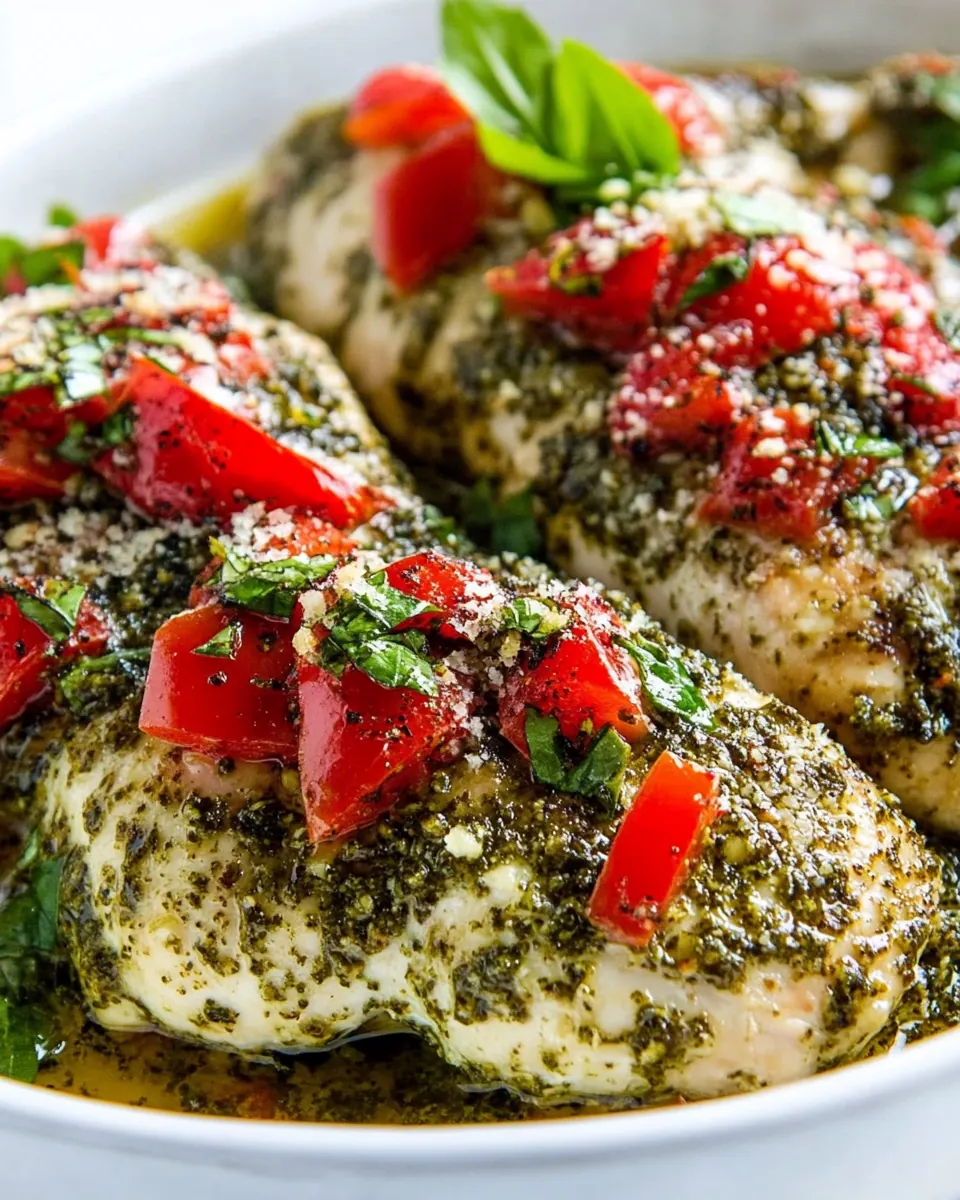
The philosophy here is simple, fresh, and balanced. Each ingredient plays a distinct role: the chicken is the canvas, the herbs and garlic supply aromatic brightness, the walnuts and parmesan add savory richness and texture, and the tomatoes bring acidity and color. Using good quality olive oil and freshly packed greens makes the pesto vibrant and silky, while seasoning the chicken before baking ensures every bite is well flavored.
- 2 1/2 pounds boneless skinless chicken breast pounded to 3/4-inch thickness: Pounded to an even 3/4-inch thickness, provides uniform cooking and tender texture for an easy baked chicken main course. Helps absorb flavors from the pesto and toppings while preventing dryness during baking.
- 1 tablespoon olive oil: Used to lightly coat the chicken to promote even browning and help seasonings adhere during cooking. Adds a subtle fruity richness that complements the pesto and roasted tomatoes.
- salt and pepper to taste: Used to season the chicken to taste before and after baking to enhance overall flavor balance. Provides basic savory seasoning that brings out the natural taste of the chicken and other components.
- 1/2 cup extra-virgin olive oil: Used as a base for emulsifying the fresh pesto, contributing richness and a smooth mouthfeel. Supplies healthy monounsaturated fat that enhances flavor and helps carry fat-soluble aromas.
- 1/2 teaspoon kosher salt: Used to season the pesto and other components with a clean, crunchy saltiness that elevates flavors. Gives precise control over salinity for balanced taste in the dish.
- 1/4 teaspoon black pepper: Used to add mild heat and depth to the pesto blend, balancing the salt and herbs. Provides subtle earthy bite that intensifies overall flavor without overpowering delicate basil notes.
- 1 cup packed basil: Packed and blended into the pesto, offering bright, aromatic herbaceousness and the characteristic basil flavor. Contributes freshness and green color while pairing well with garlic, cheese, and olive oil.
- 1 cup packed baby spinach: Packed and folded into the pesto to add mild, leafy sweetness and extra nutrients while extending the herb base. Helps create a milder, slightly earthier pesto and increases volume affordably.
- 3 cloves unpeeled garlic: Used unpeeled for blending into the pesto to impart pungent, savory depth and aromatic warmth. Roasting or blending mellows raw sharpness and integrates garlic flavor throughout the sauce.
- 1/4 cup walnuts plus more for garnish: Used in small pieces within the pesto to add buttery crunch and nutty undertones, and reserved more for garnish for texture contrast. Provides richness and depth that enhances the herbal and cheesy components.
- 1/4 cup grated parmesan cheese plus more for garnish: Used grated into the pesto for salty, umami-rich savory character and sprinkled more for garnish to finish the dish. Adds creamy mouthfeel and nutty complexity that rounds out the pesto flavor.
- 1 cup diced tomatoes: Used fresh and diced as a bright, juicy topping that cuts through the richness of pesto and cheese, adding acidity and color. Contributes freshness and a pleasant contrast in texture when spooned over the baked chicken.
Instructions for Easy Baked Pesto Chicken
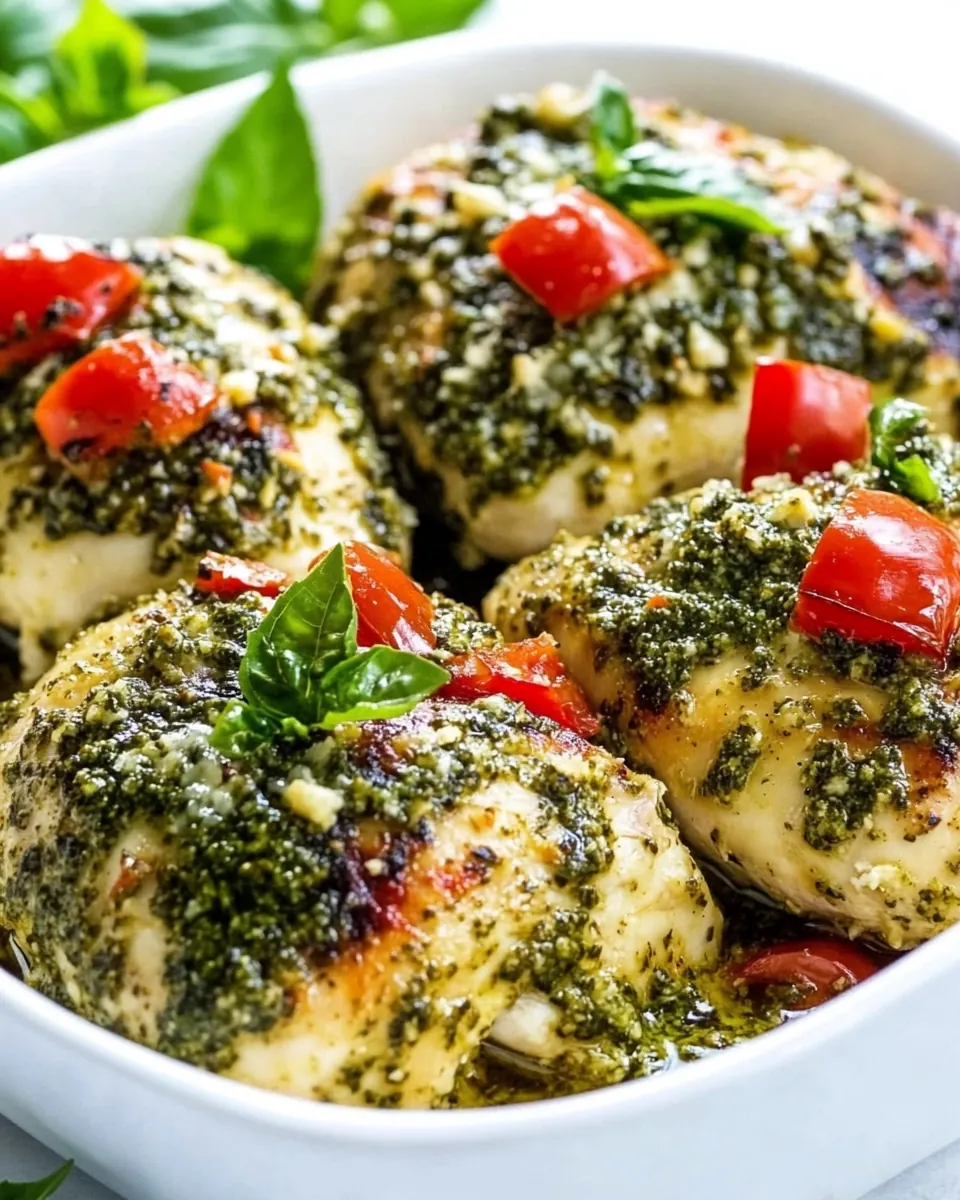
This is the part where everything comes together. The baking happens quickly, while the pesto assembly is hands on and aromatic. Read each step so you can time the toasting and processing while the chicken rests briefly after baking.
- Preheat the oven to 450 degrees Fahrenheit. Drizzle 1 tablespoon olive oil on both sides of 2 1/2 pounds boneless skinless chicken breast. Season it with salt and pepper to taste then place the chicken in a 13 x 9 x 2-inch baking dish.: As the oven warms you will notice the kitchen heat rising and a faint metallic hum from the element engaging, which prepares a hot, even environment that encourages quick searing at the edges of the chicken . Drizzling the olive oil creates a glossy surface that helps the spice adherence and promotes slight browning in high heat, adding flavor through the Maillard reaction. When you press the chicken into the baking dish it should rest flat with room around each piece so air circulates; crowding traps steam and leads to a steamed, pale surface rather than a lightly caramelized one. A common error is skipping the oil which can make the seasoning fall off and leave the top dry. Smell for faint oil and salt on the surface, and visually check that the pieces are evenly spaced before sliding the dish into the oven.
- Bake the chicken until it reaches an internal temperature of 165 degrees Fahrenheit, about 15 to 18 minutes.: During baking you will hear a low sizzling of rendered juices and see the edges take on a subtle golden hue, signals that proteins are tightening and moisture is retreating toward the center. The internal thermometer is the dependable cue to avoid overcooking; aim for 165 degrees Fahrenheit , then remove promptly to let carryover heat settle. If you overbake, the texture becomes dry and stringy, which is the most common mistake here. When you pierce the thickest part the juices should run clear and the surface should yield slightly under a finger but spring back, indicating tender, fully cooked meat. Rest the chicken several minutes after baking to allow juices to redistribute for a juicier bite.
- Place 1 cup packed basil and 1 cup packed baby spinach in a resealable plastic bag. Use a rolling pin to lightly bruise the herbs and greens. Transfer to a food processor or blender.: Bruising the herbs in a sealed bag releases volatile oils, increasing fragrance and flavor extraction when you process them. The tactile press and rolling action will make the leaves collapse slightly and smell intensely herbal. Moving them into the food processor immediately preserves the aroma, as exposed leaves oxidize quickly and lose vibrancy. Avoid over bruising to the point of pulping, which can yield a muddy texture; you want soft, fragrant leaves that still have some structure. The visual cue is bright green, not wilted brown, showing freshness has been retained.
- Heat a medium-sized skillet over medium heat. Toast 3 cloves unpeeled garlic until the outsides are lightly browned, shaking the pan occasionally, about 8 minutes. Remove the garlic skin and add it to a food processor.: Toasting whole garlic mellows its sharpness and adds deep, nutty notes that become almost sweet. As you shake the pan, listen for a faint crackle and watch for specks of golden brown on the papery skins. Once toasted, let the cloves cool slightly so the flesh slips out of the skin easily, releasing a caramelized aroma that will enrich the pesto. A common slip is to let the cloves char black, which creates a bitter undertone; aim for light browning. When you press the cloves, they should feel soft and slightly yielding, an indication that they will blend into a silky, mellow paste.
- Place 1/4 cup walnuts in the same pan and toast over medium heat, 3 to 4 minutes. Transfer to the food processor.: Toasting the walnuts awakens their oils and adds a warm, toasty depth that counterbalances the bright herbs. You will smell a pleasantly nutty aroma and see the nuts take a little color at the edges. Move them to the processor as soon as they color to prevent scorching. A toasted walnut should be crisp and aromatic; if it tastes bitter the pan was too hot. This step improves mouthfeel and helps the pesto achieve a satisfying, slightly coarse texture rather than a flat puree.
- Add 1/2 teaspoon kosher salt and 1/4 teaspoon black pepper to the food processor. Process the pesto mixture by pulsing five times to help break down the greens.: The initial pulses are all about control, breaking down stems and nut fragments while preserving some texture so the pesto does not become too smooth. You will notice a green cloud rising as bits churn, and the aroma will intensify. The salt and pepper start building seasoning that layers with the parmesan later; under-salting is a frequent mistake and can make the final sauce dull. Use short pulses to avoid overheating, which can darken the color and produce a bitter note.
- Turn the food processor on low speed, as it's running slowly drizzle in 1/2 cup extra-virgin olive oil until a smooth pesto with some smaller pieces is formed, about 10 seconds from start to finish.: Emulsifying the olive oil into the greens creates a silky texture that coats the chicken beautifully. The slow drizzle encourages the oil to bind with the greens, producing a cohesive sauce rather than separated oil. You should see a glossy, emerald mixture with tiny flecks of herb and nut, not a completely liquefied paste. If you add the oil too quickly the pesto may split, leaving a slick layer; if that happens gently pulse to reincorporate. The scent should be fresh and herbaceous with a warm, nutty undertone.
- Add 1/4 cup grated parmesan cheese to the pesto and process on low speed for 5 seconds. Taste and season the sauce with salt and pepper as desired. Transfer pesto to a small bowl.: Stirring in parmesan rounds the flavor and adds savory umami that complements the toasted nuts and herbs. After a few quick pulses the cheese blends while preserving texture. Taste the pesto to confirm balance; if it needs more acid or salt, make tiny adjustments. Avoid adding large amounts of cheese at once, which can dominate the delicate herb profile. The finished sauce should be savory, aromatic, and slightly creamy when scooped.
- Brush some pesto sauce on each cooked chicken breast. Transfer to a serving platter.: Brushing warm chicken with pesto allows the flavors to meld while the meat rests, and the heat slightly releases the herb oils for an aromatic finish. Apply a thin layer first, then add more to taste; visual cues include a glossy coating that clings to the surface. If you spoon the pesto on too heavily it can pool and feel oily, so aim for an even, attractive smear. After brushing, let the chicken sit briefly so the sauce settles into the surface.
- Top chicken with additional chopped walnuts and parmesan cheese, and 1 cup diced tomatoes. Serve extra pesto sauce on the side.: The final garnishes provide contrast: crunchy chopped walnuts , savory grated parmesan , and bright diced tomatoes that add acidity. When you plate, the colors should pop against the golden edges of the chicken , inviting immediate bites. Serving extra pesto on the side lets guests adjust intensity. A common oversight is adding wet tomatoes too early which can make the surface soggy; add them just before serving for best texture.
Make It Your Own
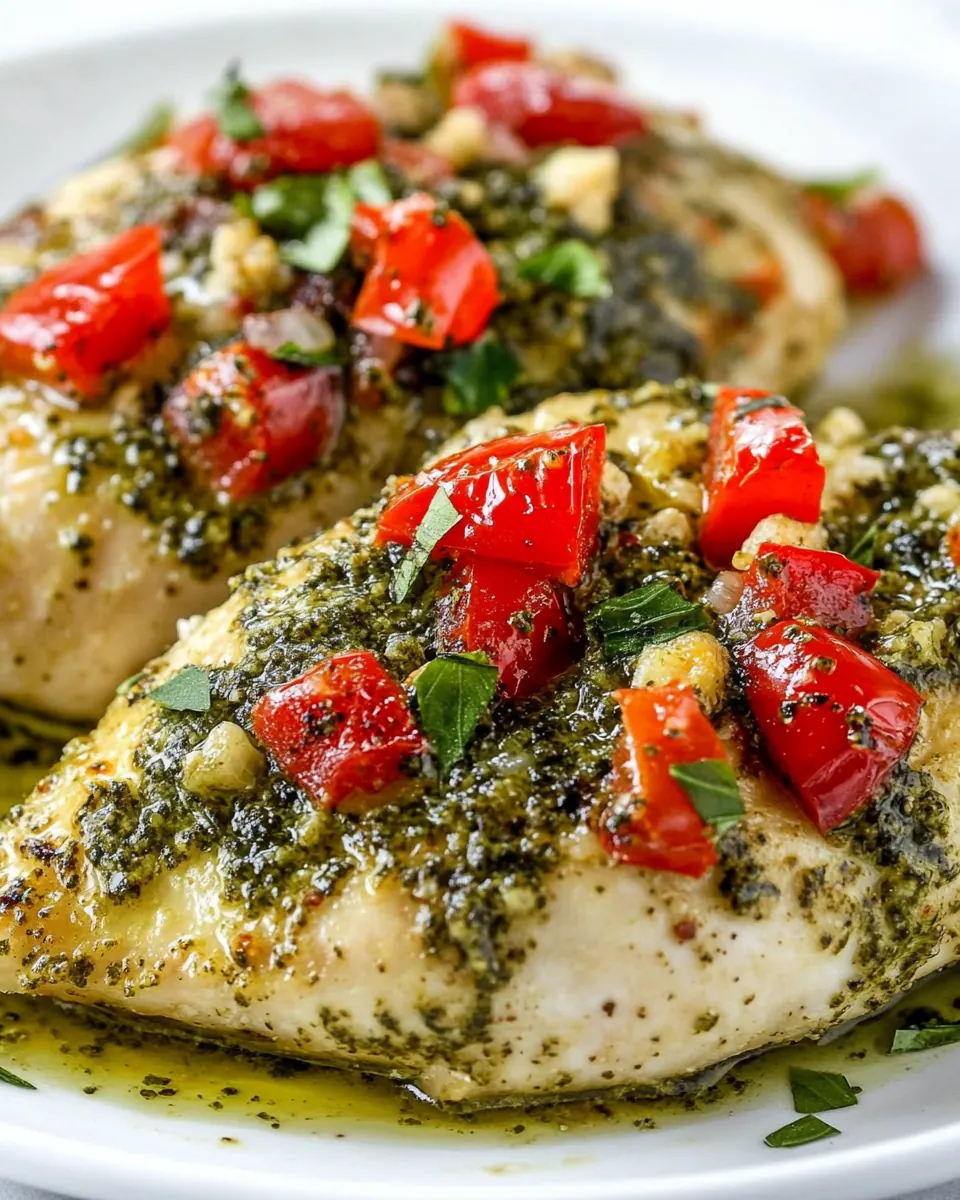
This recipe is forgiving and personalizable, and small adjustments make it feel uniquely yours. Below are practical ideas that I use to vary texture, presentation, and intensity while staying true to the core flavors of the dish.
- Adjust pesto texture: Pulse less for a chunkier pesto, or blend longer for a silkier finish depending on whether you prefer little nutty bites or a smooth spread.
- Control oiliness: If your pesto tastes too oily, add an extra handful of greens or a splash of lemon juice to brighten and bind flavors without adding fat.
- Make ahead: Prepare the pesto a day in advance and store it airtight in the refrigerator to let flavors meld, then bring it to room temperature before using.
- Extra garnish: Keep chopped walnuts and grated parmesan on the side so diners can customize crunch and saltiness to their taste.
- Bring heat carefully: If you like a hint of spice, add a pinch of black pepper or a light dusting of red pepper flakes to the pesto, but start small so the herbs remain front and center.
Serving Suggestions
Easy Baked Pesto Chicken pairs beautifully with simple sides and suits a variety of occasions. Serve it warm straight from the platter with bright garnishes for a weeknight dinner or a relaxed weekend lunch. The flavors work well year round, and the dish is easy to scale when hosting. Below are detailed serving ideas that highlight complementary textures and seasonal touches.
- Simple starches: Pair with roasted potatoes or steamed rice to soak up extra pesto and tomato juices, creating a comforting base.
- Vegetable sides: Serve with a crisp green salad or roasted vegetables for color and contrast, balancing the richness of the pesto.
- Occasions: Great for casual family dinners, informal weekend lunches, or small gatherings where you want a dish that feels elevated without fuss.
- Storage: Refrigerate leftovers in an airtight container for up to three days; reheat gently to preserve texture and refresh with a spoonful of extra pesto.
- Seasonal pairings: In summer, add extra diced ripe tomatoes for brightness; in cooler months, serve alongside warm roasted root vegetables for comfort.
FAQ
Conclusion
Easy Baked Pesto Chicken stands out for its bright herbal pesto, toasted nut crunch, and quick bake time that keeps the meat tender and flavorful. Give it a try on a busy weeknight when you want something that feels special without hours of work. The combination of fresh basil, toasted walnuts, and grated parmesan means each bite is aromatic and satisfying, and the recipe is flexible enough to fit many occasions. I hope you enjoy the rhythm of assembling the pesto while the chicken bakes, and that the resulting meal becomes one you return to again and again.
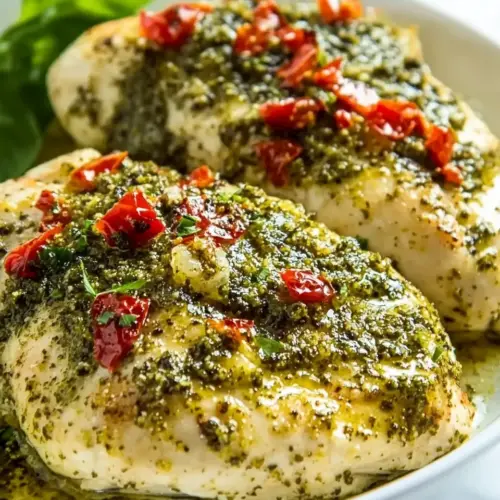
Easy Baked Pesto Chicken
Equipment
- Oven
- 13 x 9 x 2 inch baking dish
- Food processor or blender
- Medium sized skillet
- Rolling Pin
- Instant read thermometer
Ingredients
- 2 1/2 pounds boneless skinless chicken breast pounded to 3/4-inch thickness Pounded to an even 3/4-inch thickness, provides uniform cooking and tender texture for an easy baked chicken main course. Helps absorb flavors from the pesto and toppings while preventing dryness during baking.
- 1 tablespoon olive oil Used to lightly coat the chicken to promote even browning and help seasonings adhere during cooking. Adds a subtle fruity richness that complements the pesto and roasted tomatoes.
- salt and pepper to taste Used to season the chicken to taste before and after baking to enhance overall flavor balance. Provides basic savory seasoning that brings out the natural taste of the chicken and other components.
- 1/2 cup extra-virgin olive oil Used as a base for emulsifying the fresh pesto, contributing richness and a smooth mouthfeel. Supplies healthy monounsaturated fat that enhances flavor and helps carry fat-soluble aromas.
- 1/2 teaspoon kosher salt Used to season the pesto and other components with a clean, crunchy saltiness that elevates flavors. Gives precise control over salinity for balanced taste in the dish.
- 1/4 teaspoon black pepper Used to add mild heat and depth to the pesto blend, balancing the salt and herbs. Provides subtle earthy bite that intensifies overall flavor without overpowering delicate basil notes.
- 1 cup packed basil Packed and blended into the pesto, offering bright, aromatic herbaceousness and the characteristic basil flavor. Contributes freshness and green color while pairing well with garlic, cheese, and olive oil.
- 1 cup packed baby spinach Packed and folded into the pesto to add mild, leafy sweetness and extra nutrients while extending the herb base. Helps create a milder, slightly earthier pesto and increases volume affordably.
- 3 cloves unpeeled garlic Used unpeeled for blending into the pesto to impart pungent, savory depth and aromatic warmth. Roasting or blending mellows raw sharpness and integrates garlic flavor throughout the sauce.
- 1/4 cup walnuts plus more for garnish Used in small pieces within the pesto to add buttery crunch and nutty undertones, and reserved more for garnish for texture contrast. Provides richness and depth that enhances the herbal and cheesy components.
- 1/4 cup grated parmesan cheese plus more for garnish Used grated into the pesto for salty, umami-rich savory character and sprinkled more for garnish to finish the dish. Adds creamy mouthfeel and nutty complexity that rounds out the pesto flavor.
- 1 cup diced tomatoes Used fresh and diced as a bright, juicy topping that cuts through the richness of pesto and cheese, adding acidity and color. Contributes freshness and a pleasant contrast in texture when spooned over the baked chicken.
Instructions
- Preheat the oven to 450 degrees Fahrenheit. Drizzle 1 tablespoon olive oil on both sides of 2 1/2 pounds boneless skinless chicken breast. Season it with salt and pepper to taste then place the chicken in a 13 x 9 x 2-inch baking dish.: As the oven warms you will notice the kitchen heat rising and a faint metallic hum from the element engaging, which prepares a hot, even environment that encourages quick searing at the edges of the chicken . Drizzling the olive oil creates a glossy surface that helps the spice adherence and promotes slight browning in high heat, adding flavor through the Maillard reaction. When you press the chicken into the baking dish it should rest flat with room around each piece so air circulates; crowding traps steam and leads to a steamed, pale surface rather than a lightly caramelized one. A common error is skipping the oil which can make the seasoning fall off and leave the top dry. Smell for faint oil and salt on the surface, and visually check that the pieces are evenly spaced before sliding the dish into the oven.
- Bake the chicken until it reaches an internal temperature of 165 degrees Fahrenheit, about 15 to 18 minutes.: During baking you will hear a low sizzling of rendered juices and see the edges take on a subtle golden hue, signals that proteins are tightening and moisture is retreating toward the center. The internal thermometer is the dependable cue to avoid overcooking; aim for 165 degrees Fahrenheit , then remove promptly to let carryover heat settle. If you overbake, the texture becomes dry and stringy, which is the most common mistake here. When you pierce the thickest part the juices should run clear and the surface should yield slightly under a finger but spring back, indicating tender, fully cooked meat. Rest the chicken several minutes after baking to allow juices to redistribute for a juicier bite.
- Place 1 cup packed basil and 1 cup packed baby spinach in a resealable plastic bag. Use a rolling pin to lightly bruise the herbs and greens. Transfer to a food processor or blender.: Bruising the herbs in a sealed bag releases volatile oils, increasing fragrance and flavor extraction when you process them. The tactile press and rolling action will make the leaves collapse slightly and smell intensely herbal. Moving them into the food processor immediately preserves the aroma, as exposed leaves oxidize quickly and lose vibrancy. Avoid over bruising to the point of pulping, which can yield a muddy texture; you want soft, fragrant leaves that still have some structure. The visual cue is bright green, not wilted brown, showing freshness has been retained.
- Heat a medium-sized skillet over medium heat. Toast 3 cloves unpeeled garlic until the outsides are lightly browned, shaking the pan occasionally, about 8 minutes. Remove the garlic skin and add it to a food processor.: Toasting whole garlic mellows its sharpness and adds deep, nutty notes that become almost sweet. As you shake the pan, listen for a faint crackle and watch for specks of golden brown on the papery skins. Once toasted, let the cloves cool slightly so the flesh slips out of the skin easily, releasing a caramelized aroma that will enrich the pesto. A common slip is to let the cloves char black, which creates a bitter undertone; aim for light browning. When you press the cloves, they should feel soft and slightly yielding, an indication that they will blend into a silky, mellow paste.
- Place 1/4 cup walnuts in the same pan and toast over medium heat, 3 to 4 minutes. Transfer to the food processor.: Toasting the walnuts awakens their oils and adds a warm, toasty depth that counterbalances the bright herbs. You will smell a pleasantly nutty aroma and see the nuts take a little color at the edges. Move them to the processor as soon as they color to prevent scorching. A toasted walnut should be crisp and aromatic; if it tastes bitter the pan was too hot. This step improves mouthfeel and helps the pesto achieve a satisfying, slightly coarse texture rather than a flat puree.
- Add 1/2 teaspoon kosher salt and 1/4 teaspoon black pepper to the food processor. Process the pesto mixture by pulsing five times to help break down the greens.: The initial pulses are all about control, breaking down stems and nut fragments while preserving some texture so the pesto does not become too smooth. You will notice a green cloud rising as bits churn, and the aroma will intensify. The salt and pepper start building seasoning that layers with the parmesan later; under-salting is a frequent mistake and can make the final sauce dull. Use short pulses to avoid overheating, which can darken the color and produce a bitter note.
- Turn the food processor on low speed, as it's running slowly drizzle in 1/2 cup extra-virgin olive oil until a smooth pesto with some smaller pieces is formed, about 10 seconds from start to finish.: Emulsifying the olive oil into the greens creates a silky texture that coats the chicken beautifully. The slow drizzle encourages the oil to bind with the greens, producing a cohesive sauce rather than separated oil. You should see a glossy, emerald mixture with tiny flecks of herb and nut, not a completely liquefied paste. If you add the oil too quickly the pesto may split, leaving a slick layer; if that happens gently pulse to reincorporate. The scent should be fresh and herbaceous with a warm, nutty undertone.
- Add 1/4 cup grated parmesan cheese to the pesto and process on low speed for 5 seconds. Taste and season the sauce with salt and pepper as desired. Transfer pesto to a small bowl.: Stirring in parmesan rounds the flavor and adds savory umami that complements the toasted nuts and herbs. After a few quick pulses the cheese blends while preserving texture. Taste the pesto to confirm balance; if it needs more acid or salt, make tiny adjustments. Avoid adding large amounts of cheese at once, which can dominate the delicate herb profile. The finished sauce should be savory, aromatic, and slightly creamy when scooped.
- Brush some pesto sauce on each cooked chicken breast. Transfer to a serving platter.: Brushing warm chicken with pesto allows the flavors to meld while the meat rests, and the heat slightly releases the herb oils for an aromatic finish. Apply a thin layer first, then add more to taste; visual cues include a glossy coating that clings to the surface. If you spoon the pesto on too heavily it can pool and feel oily, so aim for an even, attractive smear. After brushing, let the chicken sit briefly so the sauce settles into the surface.
- Top chicken with additional chopped walnuts and parmesan cheese, and 1 cup diced tomatoes. Serve extra pesto sauce on the side.: The final garnishes provide contrast: crunchy chopped walnuts , savory grated parmesan , and bright diced tomatoes that add acidity. When you plate, the colors should pop against the golden edges of the chicken , inviting immediate bites. Serving extra pesto on the side lets guests adjust intensity. A common oversight is adding wet tomatoes too early which can make the surface soggy; add them just before serving for best texture.
Notes
- Adjust pesto texture: Pulse less for a chunkier pesto, or blend longer for a silkier finish depending on whether you prefer little nutty bites or a smooth spread.
- Control oiliness: If your pesto tastes too oily, add an extra handful of greens or a splash of lemon juice to brighten and bind flavors without adding fat.
- Make ahead: Prepare the pesto a day in advance and store it airtight in the refrigerator to let flavors meld, then bring it to room temperature before using.
- Extra garnish: Keep chopped walnuts and grated parmesan on the side so diners can customize crunch and saltiness to their taste.
- Bring heat carefully: If you like a hint of spice, add a pinch of black pepper or a light dusting of red pepper flakes to the pesto, but start small so the herbs remain front and center.