Israeli Salad
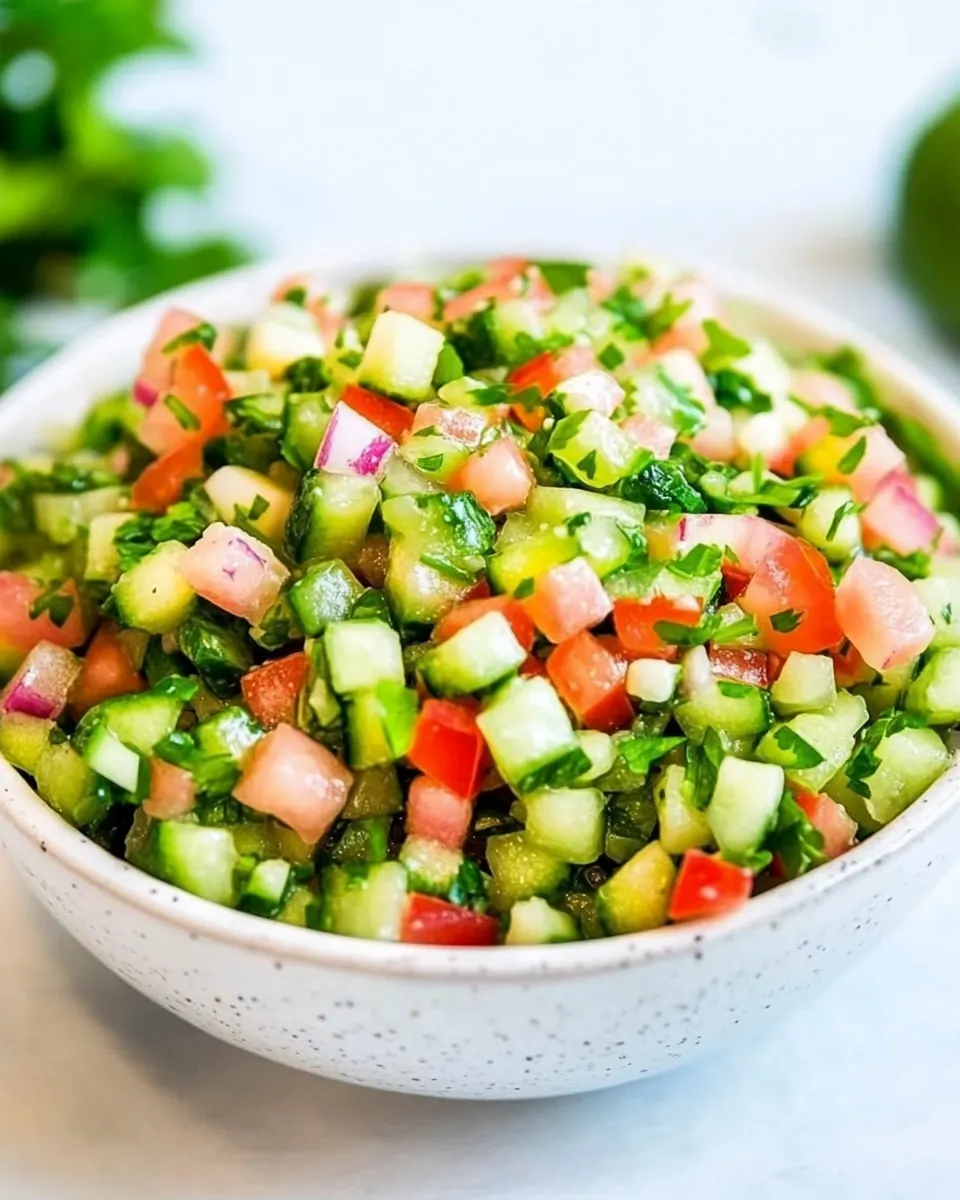
Israeli Salad is the sort of dish I turn to when I want something bright, honest, and impossibly fresh. The first time I made it I was working in a tiny summer kitchen, juggling a stack of warm pita and a crate of sun warmed tomatoes. I remember the way the citrusy lemon snapped against the cool bite of cucumber, and how the parsley seemed to lift everything into a single, clean note. From that day on this salad became my default summer companion, something I bring to picnics and lazy dinners when I want a simple win.
There are memories tied up in every bowl I toss together. I love how chopping becomes almost meditative, how the sounds of knife on board and the quick rustle of parsley feel like part of a ritual. Once I served this at a family gathering, and someone asked for the recipe between bites, surprised how a handful of ingredients could taste so celebratory. It is the kind of dish that makes you slow down, taste, and savor small seasonal pleasures, and it travels well from counter to picnic blanket.
Recipe Snapshot
15 mins
5 mins
10 mins
Easy
120 kcal
Mediterranean
Vegan, Gluten-Free
Salads
Mixing bowl, Cutting board, Chef knife, Citrus juicer, Spoon
Why You Need This Israeli Salad
Bright, Fresh Flavor
I adore how Israeli Salad delivers instant brightness. The combination of crisp Persian cucumbers, ripe tomatoes, and zesty lemon juice wakes the palate without any heavy dressings. I tend to toss the salad gently so every bite catches a hint of oil and acid, and that tiny balance is what keeps this dish lively and addictive.
Effortless and Fast
One of the reasons I reach for Israeli Salad on hectic evenings is how quickly it comes together. With just a few minutes of chopping and a quick toss, you have a colorful side that looks composed yet feels effortless. I appreciate recipes like this that reward a small amount of prep with immediate payoff, it lets me spend more time at the table and less at the stove.
Versatile Company
I often mash a forkful onto warm pita or serve it beside grilled vegetables, because Israeli Salad plays well with many partners. The salad’s clean flavor makes it a graceful counterpoint to rich or spiced mains, providing brightness and texture. Whenever I host, it’s a reliable crowd pleaser that pairs with both casual and more formal spreads.
Healthy and Seasonal
I love that Israeli Salad celebrates simple produce, which makes it especially great in summer when tomatoes and cucumbers are at their peak. It’s hydrating, low in calories, and naturally gluten free. I find it refreshes the meal without stealing the spotlight, and it’s a great way to get extra vegetables into everyone’s plates.
Easy to Personalize
While the classic is perfect as written, I often tweak quantities to suit taste. I’ll add more parsley for herbaceous lift or a touch more olive oil when serving with dry sides. The structure is forgiving, so it’s easy to make it your own while keeping the spirit intact.
Israeli Salad Shopping List
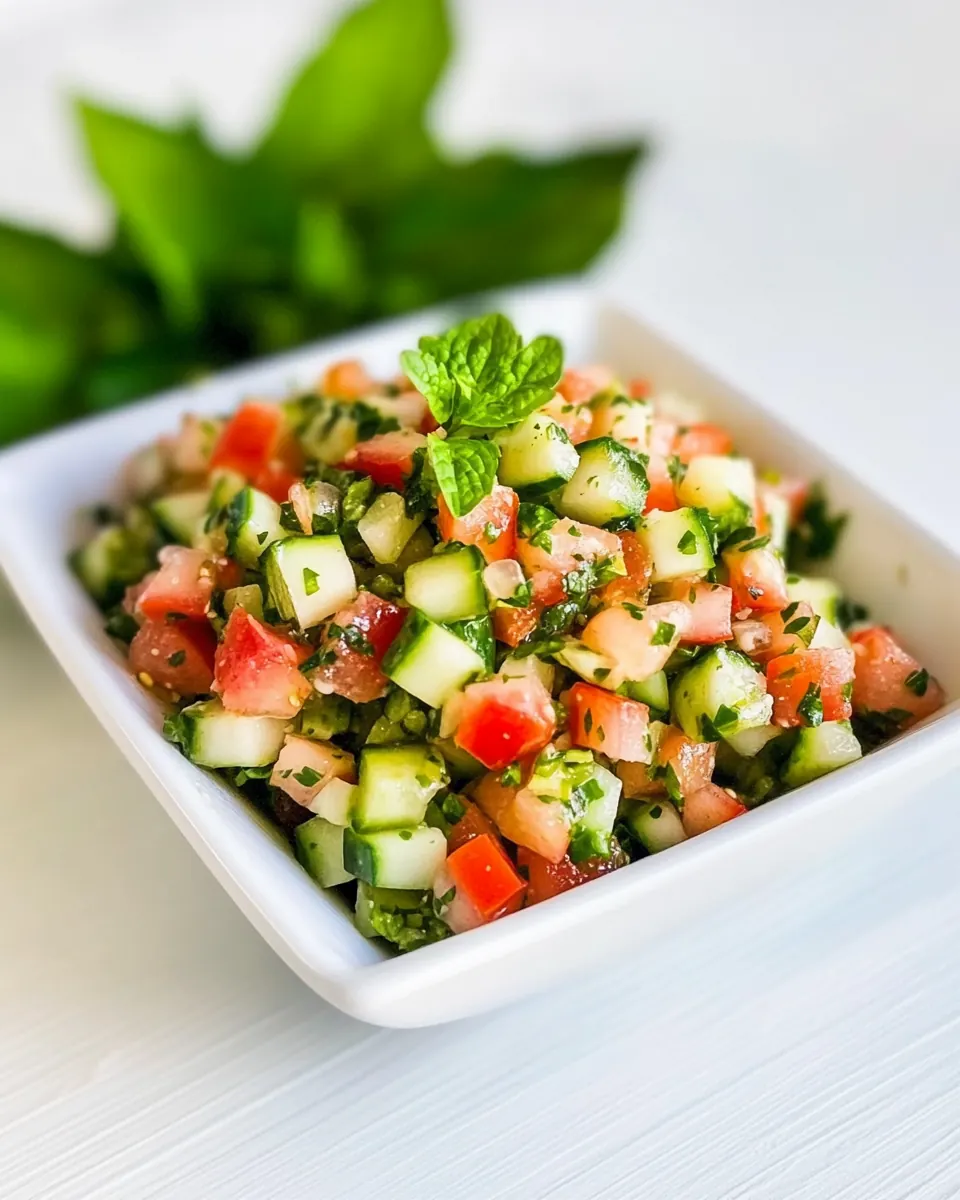
These ingredients form a concise, harmonious team. The salad relies on texture from crisp Persian cucumbers, juiciness from ripe tomatoes, herbal lift from parsley, and bright acidity from lemon juice. A little olive oil ties everything together, while onion adds optional bite and salt balances the flavors. Each component plays a clear role, and keeping them high quality makes the whole dish shine.
- 1 pound Persian cucumbers, diced: Provide crisp, hydrating texture and mild cucumber flavor; diced pieces add refreshing crunch and visual contrast in the salad. Help balance acidity and oil while contributing moisture and a cooling mouthfeel.
- 1 pound fresh ripe tomatoes, seeded and diced: Bring juicy sweetness and bright acidity when seeded and diced; contribute the bulk of the salad and vibrant color. Add a fresh, ripe tomato flavor that complements the herbs and dressing.
- 1/3 cup minced onion () (optional): Offer a sharp, pungent bite when minced; optional for those who want a more pronounced savory edge. Add subtle aromatic depth that contrasts with the salad's sweet and acidic components.
- 1/2 cup minced fresh parsley: Introduce a bright, herbaceous note and fresh green color when minced; parsley ties flavors together and adds light vegetal complexity. Provide a slightly peppery, clean finish that enhances overall freshness.
- 3 tablespoons extra virgin olive oil: Emulsify the dressing and add rich, fruity fat; extra virgin olive oil coats the vegetables and carries flavors across the palate. Contribute smooth mouthfeel and a subtle grassy aroma to the salad.
- 3 tablespoons fresh lemon juice: Deliver bright acidity and citrusy freshness; fresh lemon juice balances the richness of the olive oil and enhances other flavors. Add lively tartness that lifts the overall dish.
- Salt to taste (I use about 1/2 tsp): Season to preference to enhance and balance all flavors; used sparingly it brings out sweetness, acidity, and herb notes. Provide necessary salinity that rounds the salad while avoiding overpowering individual ingredients.
Directions for Israeli Salad
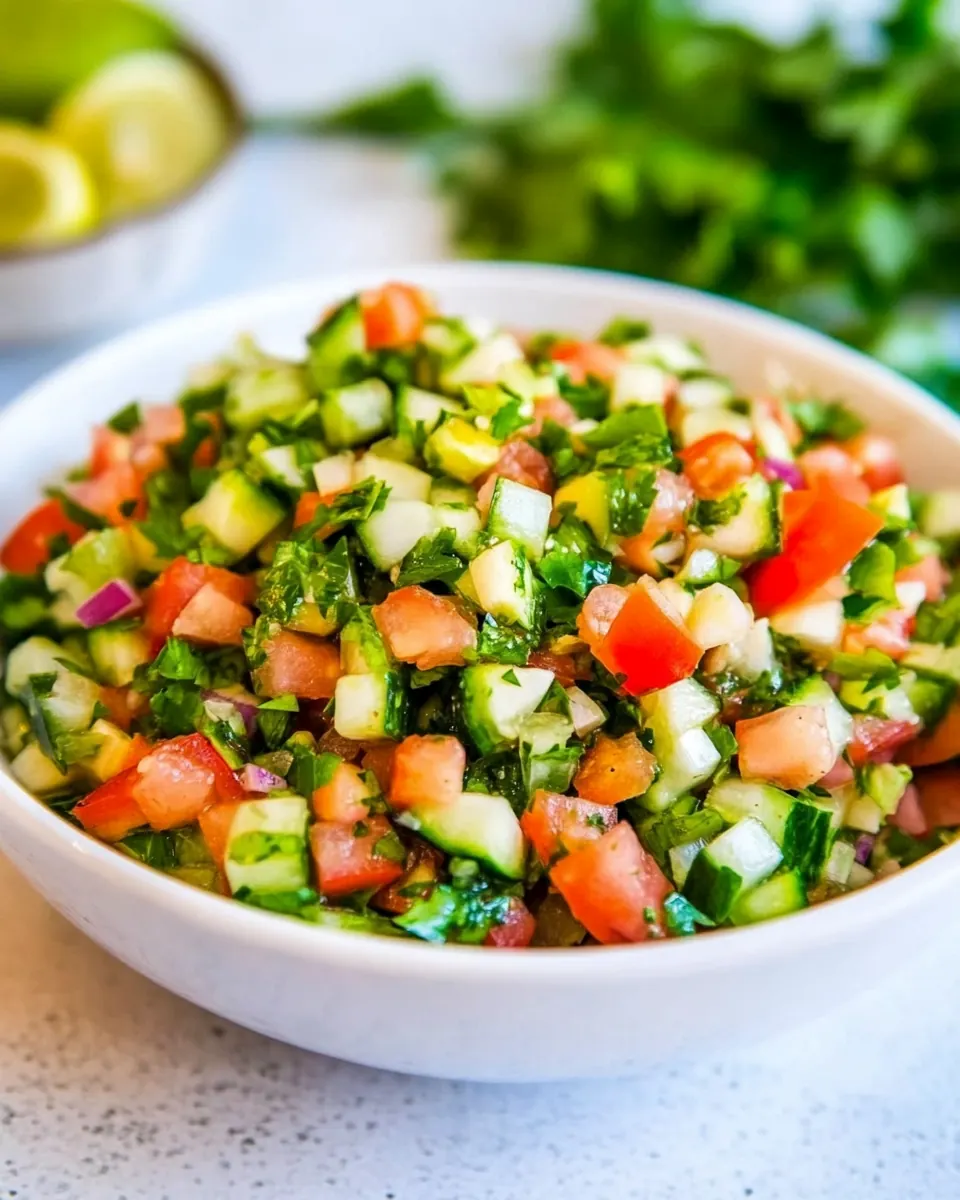
I like to approach the prep calmly, enjoying the rhythm of cutting and tossing. The following steps follow my preferred technique for even dice and balanced seasoning so each bite is consistent. Keep a clean board and a sharp knife, because those simple tools do most of the work here.
- Here is the way I like to dice the Persian cucumbers– it produces small, even, triangular pieces. Slice the Persian cucumber in half lengthwise.: The air should smell faintly green and cool as you begin slicing, a crisp vegetal scent that tells you the cucumbers are fresh. Hold the cucumber steady and slice it lengthwise, listening for the clean whisper of your knife hitting the board. Cutting lengthwise first gives long thin strips, which you will slice again to form tiny, triangular dice, creating a satisfying crunch when eaten. This technique matters because uniform pieces mix better with the rest of the salad, so every forkful has balanced texture and flavor. A common mistake to avoid is using a dull knife, which bruises the cucumber and releases excess moisture, making the salad watery. Keep your cuts deliberate and even, and if seeds feel bothersome to anyone, remove them by scooping gently with a spoon before dicing.
- Slice each half into 4 slices lengthwise, so you have 8 long, thin pieces total.: You will notice a brighter, watery scent from the center as you expose the seed cavity, a sign of juiciness. Slicing lengthwise creates predictable halves that are easier to manage for subsequent slicing. This matters because the shape you create here determines the size and uniformity of the final dice, which affects mouthfeel. Avoid pressing too hard while slicing, which can squash the cucumber and cause it to leak water; let the knife do the work and maintain a steady pace to keep pieces intact.
- Hold the long, thin pieces together with one hand, and slice the bunch into very small pieces with the other hand. Note: Persian cucumbers have lots of little seeds, which add to their flavor. If you have trouble digesting seeds, you can seed the cucumber easily by slicing it in half lengthwise and scooping out the seed-filled center.: The rhythmic sound of the knife will become steady as you make these parallel cuts, and the thin strips will show pale translucent interiors bordered by deeper green skin. Creating eight strips makes the next crosswise cuts more efficient and consistent, crucial for a uniform salad. The reason this slicing pattern matters is that it yields even triangular bits rather than ragged chunks, which helps the salad sit together visually and texturally. A troubleshooting tip is to check for wobble; if the cucumber rolls, make a small flat cut to stabilize it before slicing further.
- Place the diced cucumbers into a large mixing bowl along with all the other ingredients.: When you slice the bundled strips, the board will echo with quick, clean taps, and the resulting dice should fall like tiny gems into the bowl. This method creates small triangles that catch dressing and herbs well, and it ensures consistent bites. The sensory cue to watch for is the even scatter of similarly sized pieces; if some are much larger, stop and trim to match sizes. A mistake to avoid is gripping too tightly, which can bruise the strips; instead, hold gently and guide the knife confidently.
- Mix until vegetables are well coated with parsley, oil, lemon juice, and salt.: The seeds give a subtle textural contrast and a slightly sweeter mouthfeel, and when left in they contribute to the salad’s fresh character. If you choose to remove them, the sound of the spoon scraping the cavity will be soft, and the remaining flesh will be slightly drier, which reduces moisture in the bowl. This step matters because some diners prefer a seedless bite, and removing seeds prevents excess liquid from diluting the dressing. A common oversight is scooping too little and leaving a wet center, so be thorough if seeding is needed.
- Best served fresh at room temperature. You can also serve chilled for a more refreshing salad.: When you add the cucumbers to the bowl, the air will carry the mingling scents of tomato and parsley, promising layers of flavor. Adding everything into a roomy bowl allows gentle tossing without crushing the vegetables. This matters because overcrowding a small bowl leads to uneven mixing and broken pieces. Avoid using a shallow bowl that forces you to shovel and press the salad; choose a bowl with space to move the ingredients freely so the dressing coats evenly.
- Mix until vegetables are well coated with parsley oil lemon juice and salt: As you toss, listen for the soft shuffle of veggies and watch for a glossy sheen on the surfaces as the olive oil and lemon juice meld with the parsley . Coating evenly ensures each bite carries herbal, acidic, and savory notes. This technique matters because proper coating balances flavors and prevents pockets of dryness or oversalted bites. A troubleshooting note is to taste as you go; it is easy to over salt early on, so add incrementally and adjust after a gentle toss.
- Best served fresh at room temperature: Serving at room temperature allows the salad to show its full aromatic range, with the citrus and herbs unfurling naturally. The texture will feel lively and crisp without being chilled numb, and the olive oil will feel silkier on the tongue. This matters because extreme cold can mute flavors, while too warm will wilt delicate herbs. A common mistake is refrigerating for too long before serving which dulls the brightness, so let the salad sit only briefly if chilling is necessary.
- You can also serve chilled for a more refreshing salad: Chilling tightens the crunch and underscores refreshment, which is particularly pleasant on hot days. As it cools, the salad will sound a bit firmer when you fork it, and the lemon will feel slightly subdued, making it a more cooling accompaniment. This option matters for occasions where a cold dish is preferred, but be mindful that prolonged chilling can flatten aromatic notes, so serve within a short window after refrigerating. One mistake to avoid here is over chilling, which mutes the parsley and makes the oil congeal against the vegetables.
Recipe Notes about Israeli Salad
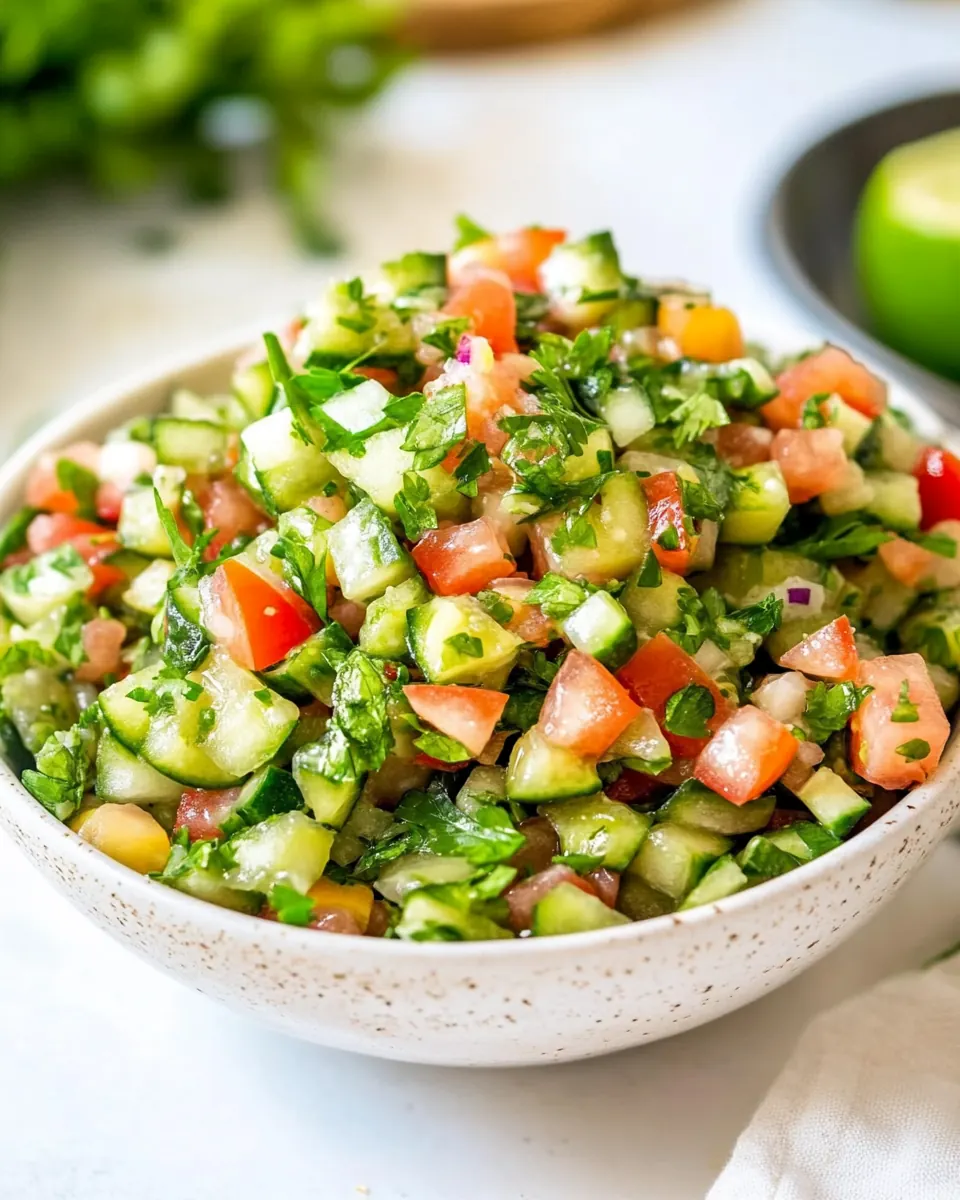
I like to keep a few practical notes in mind when I make Israeli Salad. These tips help with timing, texture, and flavor balance so the final result feels intentionally composed rather than thrown together. A sharp knife and fresh citrus make a bigger difference than you might expect.
- Choose ripe tomatoes for the most pronounced tomato flavor, but avoid overripe ones that will turn the salad watery.
- Trim and mince parsley finely so it disperses evenly, adding bright herbal notes throughout the salad.
- Use good quality olive oil since it contributes to mouthfeel and rounds the lemon, opt for an extra virgin you enjoy sipping.
- Add onion sparingly if using, and soak minced onion in cold water for a few minutes to mellow its sharpness if preferred.
- Taste before serving, then adjust salt and lemon juice in small increments to reach the ideal bright balance.
Serving Ideas for Israeli Salad
This salad is wonderfully adaptable to many meal contexts. It works as a refreshing side, a light lunch, or part of a larger mezze spread. Think about texture contrasts and temperature when pairing so the salad complements rather than competes with other dishes.
- As a side for grilled mains pair the salad with simply seasoned grilled vegetables for contrast and brightness during summer dinners.
- On a mezze platter include the salad alongside hummus and warm pita, using it to cut through richer spreads.
- For casual lunches mound the salad on warm pita and add a drizzle of olive oil for a quick handheld bite that highlights freshness.
- During Ramadan the salad offers a hydrating, light option at iftar to balance heavier dishes and rehydrate after fasting.
- Storage tip keep leftovers airtight in the fridge for up to two days, but expect some texture softening as the juices mingle.
- Seasonal pairing this salad shines in peak summer when tomatoes and cucumbers are sweetest, and it pairs well with other fresh summer herbs and simple grilled fare.
FAQ
Conclusion
What makes this salad special is its elegant simplicity, where a few fresh ingredients combine to create a vivid, balanced bowl of flavor. Try it as a quick way to highlight summer produce, or bring it to gatherings when you want a dish that feels effortless yet thoughtfully composed. I encourage you to enjoy the process of chopping and tasting, letting small adjustments guide you to your perfect version. It’s a humble recipe that rewards attention, and I hope it becomes a go to for moments when you want bright, uncomplicated food.
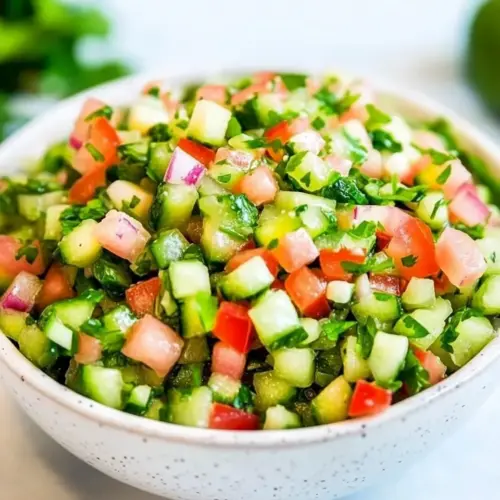
Israeli Salad
Equipment
- Mixing Bowl
- Cutting Board
- Chef knife
- Citrus Juicer
- Spoon
Ingredients
- 1 pound Persian cucumbers, diced Provide crisp, hydrating texture and mild cucumber flavor; diced pieces add refreshing crunch and visual contrast in the salad. Help balance acidity and oil while contributing moisture and a cooling mouthfeel.
- 1 pound fresh ripe tomatoes, seeded and diced Bring juicy sweetness and bright acidity when seeded and diced; contribute the bulk of the salad and vibrant color. Add a fresh, ripe tomato flavor that complements the herbs and dressing.
- 1/3 cup minced onion (optional) Offer a sharp, pungent bite when minced; optional for those who want a more pronounced savory edge. Add subtle aromatic depth that contrasts with the salad's sweet and acidic components.
- 1/2 cup minced fresh parsley Introduce a bright, herbaceous note and fresh green color when minced; parsley ties flavors together and adds light vegetal complexity. Provide a slightly peppery, clean finish that enhances overall freshness.
- 3 tablespoons extra virgin olive oil Emulsify the dressing and add rich, fruity fat; extra virgin olive oil coats the vegetables and carries flavors across the palate. Contribute smooth mouthfeel and a subtle grassy aroma to the salad.
- 3 tablespoons fresh lemon juice Deliver bright acidity and citrusy freshness; fresh lemon juice balances the richness of the olive oil and enhances other flavors. Add lively tartness that lifts the overall dish.
- Salt to taste (I use about 1/2 tsp) Season to preference to enhance and balance all flavors; used sparingly it brings out sweetness, acidity, and herb notes. Provide necessary salinity that rounds the salad while avoiding overpowering individual ingredients.
Instructions
- Here is the way I like to dice the Persian cucumbers-- it produces small, even, triangular pieces. Slice the Persian cucumber in half lengthwise.: The air should smell faintly green and cool as you begin slicing, a crisp vegetal scent that tells you the cucumbers are fresh. Hold the cucumber steady and slice it lengthwise, listening for the clean whisper of your knife hitting the board. Cutting lengthwise first gives long thin strips, which you will slice again to form tiny, triangular dice, creating a satisfying crunch when eaten. This technique matters because uniform pieces mix better with the rest of the salad, so every forkful has balanced texture and flavor. A common mistake to avoid is using a dull knife, which bruises the cucumber and releases excess moisture, making the salad watery. Keep your cuts deliberate and even, and if seeds feel bothersome to anyone, remove them by scooping gently with a spoon before dicing.
- Slice each half into 4 slices lengthwise, so you have 8 long, thin pieces total.: You will notice a brighter, watery scent from the center as you expose the seed cavity, a sign of juiciness. Slicing lengthwise creates predictable halves that are easier to manage for subsequent slicing. This matters because the shape you create here determines the size and uniformity of the final dice, which affects mouthfeel. Avoid pressing too hard while slicing, which can squash the cucumber and cause it to leak water; let the knife do the work and maintain a steady pace to keep pieces intact.
- Hold the long, thin pieces together with one hand, and slice the bunch into very small pieces with the other hand. Note: Persian cucumbers have lots of little seeds, which add to their flavor. If you have trouble digesting seeds, you can seed the cucumber easily by slicing it in half lengthwise and scooping out the seed-filled center.: The rhythmic sound of the knife will become steady as you make these parallel cuts, and the thin strips will show pale translucent interiors bordered by deeper green skin. Creating eight strips makes the next crosswise cuts more efficient and consistent, crucial for a uniform salad. The reason this slicing pattern matters is that it yields even triangular bits rather than ragged chunks, which helps the salad sit together visually and texturally. A troubleshooting tip is to check for wobble; if the cucumber rolls, make a small flat cut to stabilize it before slicing further.
- Place the diced cucumbers into a large mixing bowl along with all the other ingredients.: When you slice the bundled strips, the board will echo with quick, clean taps, and the resulting dice should fall like tiny gems into the bowl. This method creates small triangles that catch dressing and herbs well, and it ensures consistent bites. The sensory cue to watch for is the even scatter of similarly sized pieces; if some are much larger, stop and trim to match sizes. A mistake to avoid is gripping too tightly, which can bruise the strips; instead, hold gently and guide the knife confidently.
- Mix until vegetables are well coated with parsley, oil, lemon juice, and salt.: The seeds give a subtle textural contrast and a slightly sweeter mouthfeel, and when left in they contribute to the salad’s fresh character. If you choose to remove them, the sound of the spoon scraping the cavity will be soft, and the remaining flesh will be slightly drier, which reduces moisture in the bowl. This step matters because some diners prefer a seedless bite, and removing seeds prevents excess liquid from diluting the dressing. A common oversight is scooping too little and leaving a wet center, so be thorough if seeding is needed.
- Best served fresh at room temperature. You can also serve chilled for a more refreshing salad.: When you add the cucumbers to the bowl, the air will carry the mingling scents of tomato and parsley, promising layers of flavor. Adding everything into a roomy bowl allows gentle tossing without crushing the vegetables. This matters because overcrowding a small bowl leads to uneven mixing and broken pieces. Avoid using a shallow bowl that forces you to shovel and press the salad; choose a bowl with space to move the ingredients freely so the dressing coats evenly.
- Mix until vegetables are well coated with parsley oil lemon juice and salt: As you toss, listen for the soft shuffle of veggies and watch for a glossy sheen on the surfaces as the olive oil and lemon juice meld with the parsley . Coating evenly ensures each bite carries herbal, acidic, and savory notes. This technique matters because proper coating balances flavors and prevents pockets of dryness or oversalted bites. A troubleshooting note is to taste as you go; it is easy to over salt early on, so add incrementally and adjust after a gentle toss.
- Best served fresh at room temperature: Serving at room temperature allows the salad to show its full aromatic range, with the citrus and herbs unfurling naturally. The texture will feel lively and crisp without being chilled numb, and the olive oil will feel silkier on the tongue. This matters because extreme cold can mute flavors, while too warm will wilt delicate herbs. A common mistake is refrigerating for too long before serving which dulls the brightness, so let the salad sit only briefly if chilling is necessary.
- You can also serve chilled for a more refreshing salad: Chilling tightens the crunch and underscores refreshment, which is particularly pleasant on hot days. As it cools, the salad will sound a bit firmer when you fork it, and the lemon will feel slightly subdued, making it a more cooling accompaniment. This option matters for occasions where a cold dish is preferred, but be mindful that prolonged chilling can flatten aromatic notes, so serve within a short window after refrigerating. One mistake to avoid here is over chilling, which mutes the parsley and makes the oil congeal against the vegetables.
Notes
- Choose ripe tomatoes for the most pronounced tomato flavor, but avoid overripe ones that will turn the salad watery.
- Trim and mince parsley finely so it disperses evenly, adding bright herbal notes throughout the salad.
- Use good quality olive oil since it contributes to mouthfeel and rounds the lemon, opt for an extra virgin you enjoy sipping.
- Add onion sparingly if using, and soak minced onion in cold water for a few minutes to mellow its sharpness if preferred.
- Taste before serving, then adjust salt and lemon juice in small increments to reach the ideal bright balance.
