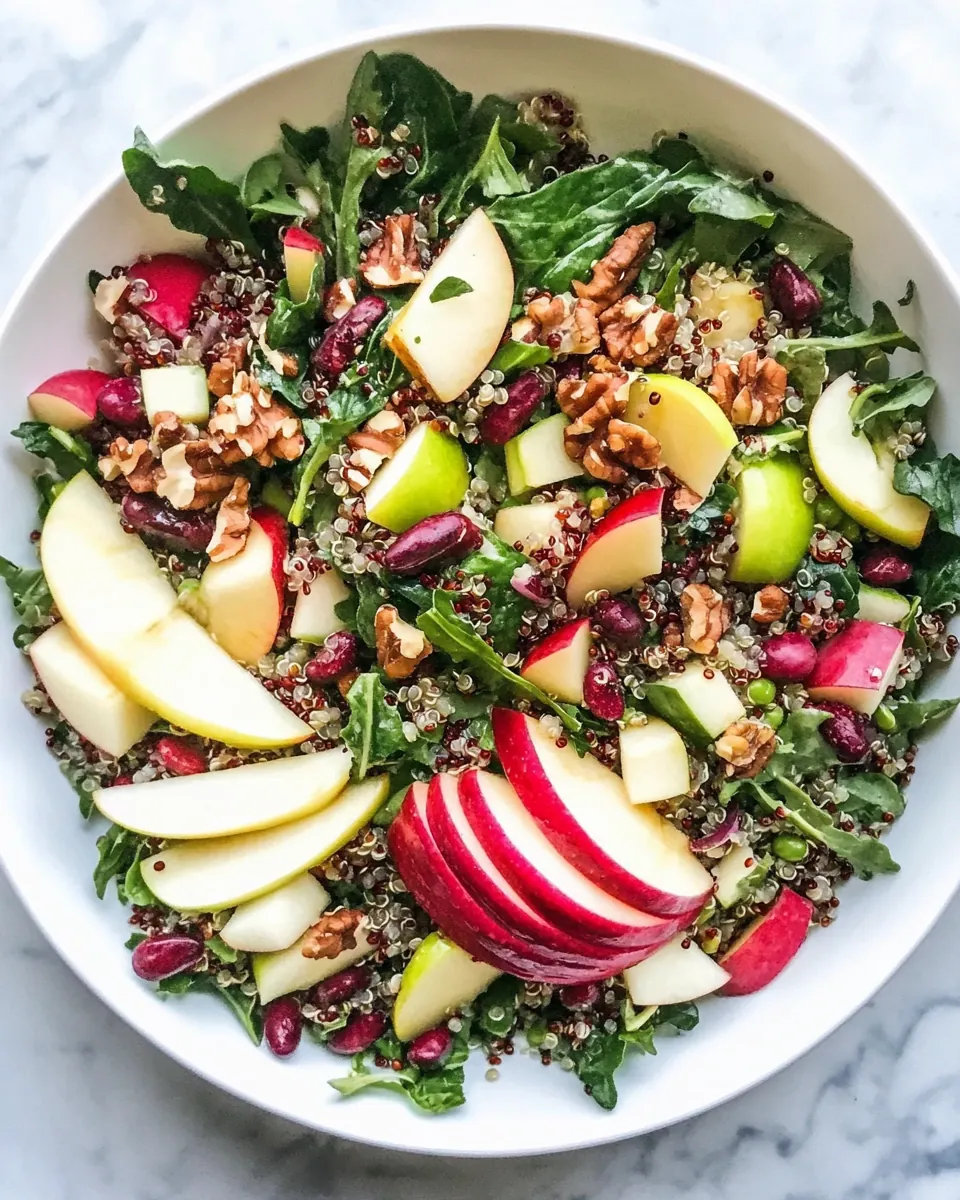
Quinoa Apple Salad
Quinoa Apple Salad started showing up on my table the first autumn I moved into a tiny kitchen with a window that looked out over a maple tree. I was craving something bright and textural after weeks of heavy, braised meals, and the crispness of fruit paired with nutty grains felt like a breath of fresh air. I remember standing at the counter, watching the quinoa steam and imagining how the tart apples and sweet dressing would balance the earthy quinoa and verdant spinach.
Over time, this salad became my go to for potlucks and light dinners. I love that it travels well as long as the dressing is kept separate, and friends always ask for the dressing recipe. The first bite is always a surprise, a mix of soft cooked quinoa, crunchy pistachios, and the juicy snap of a apple, all brightened by lemon. There is a real joy in tossing the ingredients together, and I often make a double batch of the dressing because it keeps for a week in the fridge.
Recipe Snapshot
40 mins
20 mins
20 mins
Easy
250 kcal
American
Gluten-Free, Vegan
Salads
Small pot, Small blender or food processor
Why This Quinoa Apple Salad Is a Winner
Bright, balanced flavors
I adore how the tartness of lemon and the sweet pop of dried cranberries lift the nutty core of quinoa. I find salads that manage tension between sweet and savory to be the most memorable, and this one nails that contrast, which keeps every forkful interesting.
Textural contrast that keeps you coming back
The combination of tender cooked quinoa, crisp chopped apple and pear, and crunchy pistachios creates a delightful mouthfeel. I love serving it because guests comment on the satisfying crunch and the soft, almost pillowy bite of the grain.
Flexible and forgiving
I appreciate recipes that let me swap what I have on hand, and this salad is forgiving. You can use broth or water to cook the quinoa, different apple varieties, and still end up with a lively bowl. That flexibility makes it a reliable choice on busy weeknights.
Great as a side or a light main
We often serve this as a side at dinner because it complements roasted vegetables and grilled proteins, but I also eat it on its own for lunch. It feels substantial without being heavy, which is exactly what I want on a crisp autumn day.
Easy to prepare ahead
I like that the components can be prepared in stages. Cook the quinoa ahead and chill it, make the dressing in advance, and chop fruit just before serving so everything is fresh. That staging helps me host without feeling rushed.
Ingredients You’ll Need for Quinoa Apple Salad
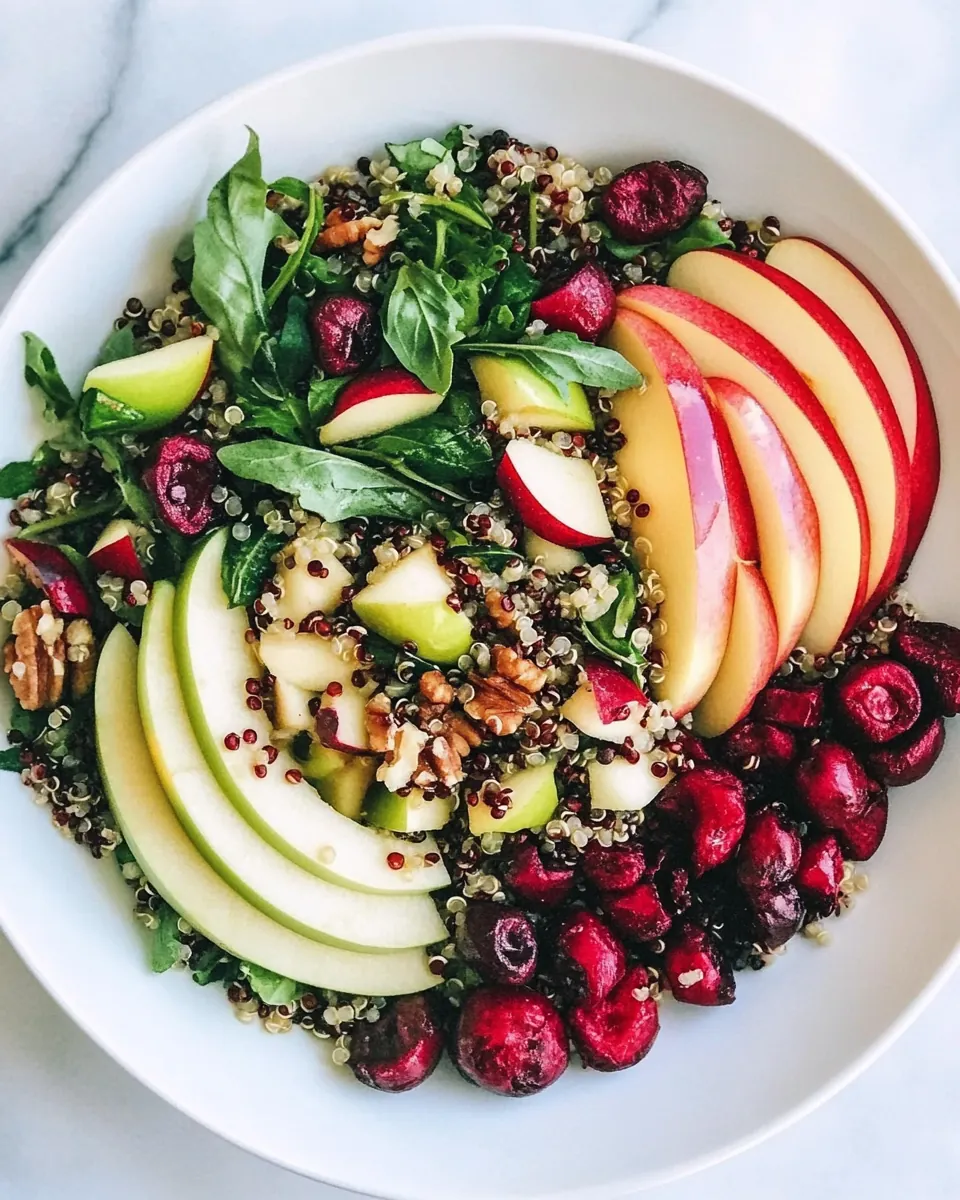
These ingredients are chosen to create a balance of nutty, sweet, tart, and savory notes. The backbone is quinoa, which soaks up the bright lemon dressing while remaining light. Fruits add juiciness and natural sweetness, nuts bring crunch, and the simple dressing ties everything together without overpowering the delicate flavors.
- 1/2 cup quinoa, tri-colored or plain: Rinse and cook to provide a fluffy, nutty base; tri-colored or plain quinoa adds protein and texture while absorbing flavors from the dressing. Use the measured amount to yield a light grain component that balances the salad's fruit and greens. Fluff with a fork after cooking to keep grains separate and tender.
- 1 cup chicken broth or vegetable broth or water: Simmer and infuse to cook the quinoa and add savory depth; chicken broth, vegetable broth, or water hydrates the grains and influences overall flavor. Choose broth for extra umami or water for a neutral profile. Maintain a gentle simmer and cover until liquid is absorbed for perfectly cooked quinoa.
- 6 cups baby spinach, 5 ounces: Toss and wilt as the primary leafy green; baby spinach contributes tender, mild flavor and vibrant color while providing vitamins and minerals. Add fresh to retain a delicate texture that contrasts with crunchy and chewy components. Lightly massage with dressing if preferred to soften and meld flavors.
- 1 large apple, Pink Lady or Honeycrisp: Slice and sweeten to introduce crisp texture and bright, tart-sweet notes; Pink Lady or Honeycrisp apples bring juiciness and a firm bite. Core and thinly slice or dice to distribute evenly throughout the salad. Toss immediately with lemon juice to prevent browning and preserve freshness.
- 1 large pear, Anjou: Slice and sweeten to contribute delicate sweetness and soft texture; Anjou pear offers subtle floral notes and a tender bite that complements apples. Core and cut to match the apple size for balanced mouthfeel. Add near the end to avoid excessive bruising or browning.
- 2 teaspoons lemon juice: Squeeze and preserve to brighten fruit and prevent browning; lemon juice imparts acidity that balances sweetness and oils in the dressing. Incorporate into dressing or toss directly with cut fruit for immediate protection. Adjust amount slightly to taste and acidity of the fruit.
- 1/2 cup roasted and salted shelled pistachios: Toast and sprinkle to deliver crunch and a savory, nutty finish; roasted and salted shelled pistachios add texture contrast and a salty accent. Roughly chop if desired to distribute more evenly and release oils. Store separately until serving to preserve crispness if making ahead.
- 1/3 cup dried cranberries: Scatter and sweeten to add chewy bursts of concentrated fruity flavor; dried cranberries provide tangy contrast and visual interest. Rehydrate briefly if desired for plumper texture, or mix dry for chewier bites. Combine with grains and fruit for balanced sweetness.
- 2 lemons: Zest and juice to enhance brightness and aromatic complexity; two lemons supply additional acidity and peel oils for the dressing. Use zest sparingly to avoid bitterness and juice for tang and preservation of cut fruit. Separate peel and juice uses as needed for layered citrus flavor.
- 1/4 teaspoon onion powder: Sprinkle and season to imbue savory depth with minimal effort; onion powder contributes background savoriness without texture. Add to the dressing to blend smoothly with other seasonings and balance sweet elements. Use measured amount to avoid overpowering delicate flavors.
- 1/2 teaspoon Dijon-style mustard, not regular mustard: Whisk and emulsify to lend tang and a subtle pungent note; Dijon–style mustard helps stabilize the dressing by binding oil and acid. Use the specified type (not regular mustard) for its creamier texture and milder heat. Start with the listed amount and adjust slightly for personal taste.
- 1/4 teaspoon salt: Season and balance to control overall saltiness; measured salt enhances and rounds out flavors across grains, fruit, nuts, and dressing. Dissolve into the dressing for even distribution or sprinkle lightly on assembled salad if needed. Taste before adding more to avoid oversalting.
- 3 tablespoons granulated sugar, see note 1: Sweeten and stabilize to temper acidity and create a balanced vinaigrette; granulated sugar moderates tart lemon and bright fruit. Dissolve fully into warm liquid or whisk vigorously into the dressing for a smooth finish. Consider adjusting slightly based on fruit sweetness.
- 1/3 cup olive oil or vegetable oil: Emulsify and flavor to provide mouth-coating richness; olive oil or vegetable oil binds the dressing and carries aromatics. Choose olive oil for fruitier notes or vegetable oil for a neutral base that highlights other ingredients. Slowly whisk into acidic components to form a stable emulsion.
- 1/2 tablespoon poppy seeds: Shake and decorate to add tiny pops of texture and a subtle nutty flavor; poppy seeds offer visual speckling and a delicate crunch. Fold into the dressing or sprinkle over the finished salad for even distribution. Use measured amount to avoid overwhelming the other textures.
How to Make Quinoa Apple Salad
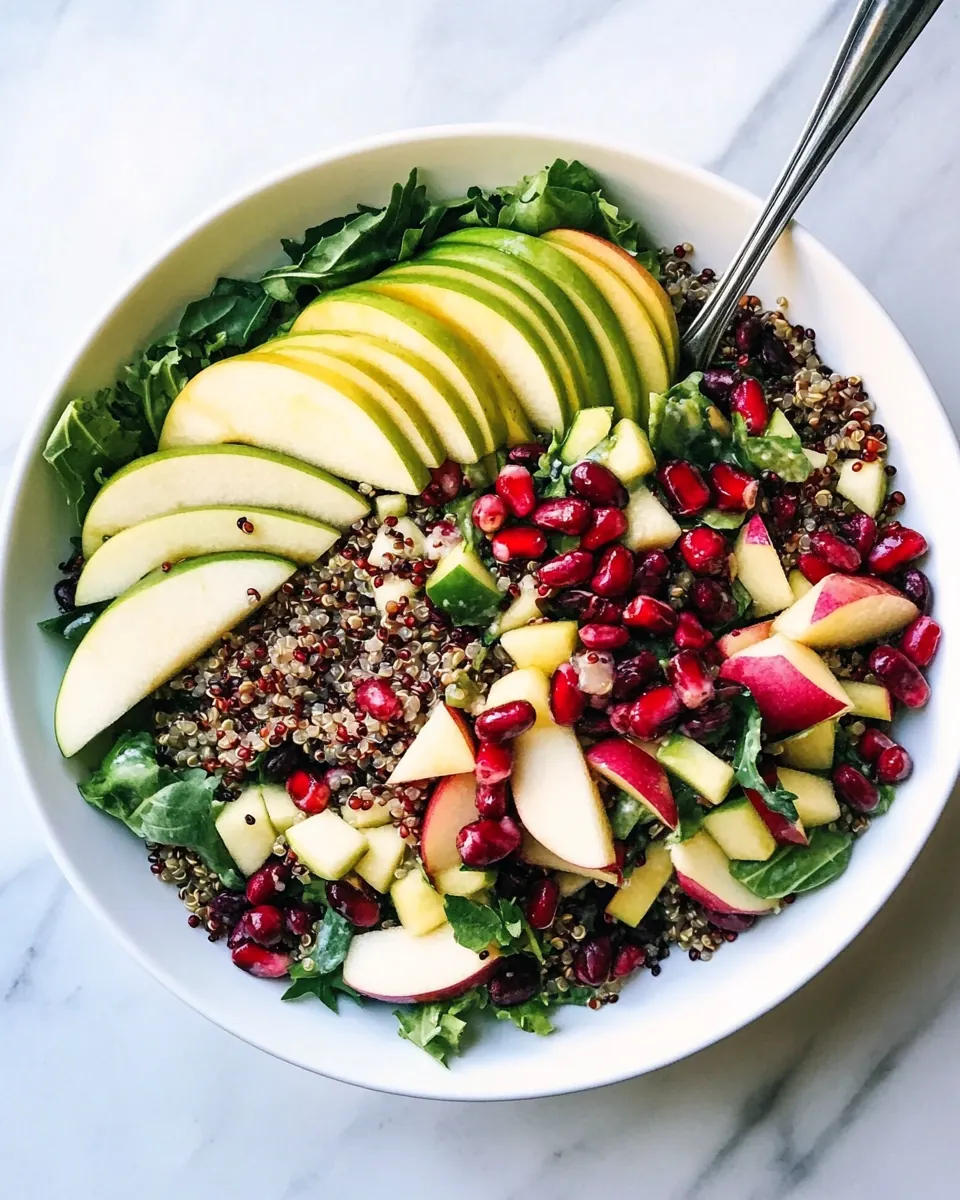
This salad comes together in stages. I like to cook the quinoa first, prepare the dressing next, then assemble just before serving so the fruit and greens stay fresh. Below I expand each instruction into detailed, sensory forward steps to help you feel comfortable at every stage.
- Prepare quinoa by rinsing it under cold water in a fine-mesh sieve. This removes the bitter saponin coating. Combine quinoa and water (or broth) in a small pot over high heat. Bring to a boil, add in a heaping 1/4 teaspoon salt, reduce heat to low, and cover the pot. Simmer 10–15 minutes or until the liquid is absorbed. Remove from heat, keep covered, and let stand 10–15 minutes. Fluff with a fork, then add 2–3 tablespoons of the prepared dressing (see next step). Toss and refrigerate to chill until at room temperature.: The cool, running water removes the bitter saponin coating and you will notice the water run clear, which is a good visual cue that the grain is clean. Rinsing also reduces any dusty smell from bagged quinoa . One common mistake is skimping on rinsing, which can leave a faint bitterness. Gently shake the sieve to remove excess water before cooking so you do not add unnecessary moisture to the pot.
- While quinoa is cooking, prepare the dressing. Combine 1/4 teaspoon lemon zest, 4 tablespoons lemon juice, onion powder, mustard, salt, and sugar in a small blender or food processor. Blend or pulse until completely smooth. Slowly pour in the oil and blend just until emulsified. Do not over-blend. Stir in poppy seeds, transfer to a jar with a lid, and chill in the fridge while preparing the other parts of the salad. Re-shake to combine before dressing the salad.: When the pot first heats, the liquid will steam and small bubbles will form at the edges, signaling it is almost at a boil. Using chicken broth or vegetable broth will add savory depth, while plain water keeps the flavor neutral. Avoid turning the heat too high after adding the grain, because vigorous boiling can push out liquid and dry the quinoa .
- Remove large stems and coarsely chop the spinach (just a few coarse cuts through all the spinach). Add to a large bowl and toss with room-temperature quinoa.: You will see larger bubbles and a rolling boil briefly before turning the heat down. Adding the salt at this stage seasons the grain evenly. Keeping the pot covered traps steam, which cooks the quinoa gently. A typical pitfall is lifting the lid during simmering, which releases steam and extends the cooking time.
- Chop or thinly slice the apple and pear. Toss both fruits with lemon juice to keep from browning too quickly. Add to the spinach and quinoa.: Listen for a gentle whisper of steam rather than a vigorous churn. When the liquid is gone and little steam holes appear at the surface, the quinoa is ready. If you undercook it, the texture will be grainy; overcooking makes it mushy. Start checking at 10 minutes to catch it at the ideal texture.
- Sprinkle pistachios and dried cranberries into the salad. This salad doesn’t sit well with the dressing, so only dress what will be enjoyed the same day. Drizzle with dressing (add to preference; store any leftover dressing in the fridge for up to 1 week). Gently toss to combine and enjoy.: Resting allows trapped steam to finish cooking the grains evenly, creating tender, separate pearls. You will notice the pot quiet and tiny plump grains when you later fluff with a fork. A mistake to avoid is skipping the rest period, which can result in unevenly cooked quinoa .
- Fluff with a fork, then add 2 to 3 tablespoons of the prepared dressing: Fluffing aerates the quinoa and separates the grains so the dressing coats each piece lightly. The small amount of dressing at this stage seasons the grain and prevents it from clumping as it cools. Avoid stirring aggressively, which can break the grains and create a sticky texture.
- Toss and refrigerate to chill until at room temperature: Tossing while warm helps the dressing absorb, then chilling firms the grains for a pleasant texture in the salad. You want it cool, not icy, so plan ahead and take it out of the fridge a bit before assembling. A common error is refrigerating while still steaming hot, which can wilt greens prematurely and trap condensation.
- While quinoa is cooking, prepare the dressing: The aroma of lemon zest will be immediate and bright when you start. Combining zest, lemon juice, onion powder , Dijon style mustard , salt , and sugar creates a balanced base, and blending briefly releases fragrant oils. Over blending can warm the dressing and break emulsification, so pulse until smooth and then proceed to the oil stage slowly.
- Combine 1/4 teaspoon lemon zest, 4 tablespoons lemon juice, onion powder, mustard, salt, and sugar in a small blender or food processor: As you pulse these ingredients, watch for a uniformly mixed paste, and smell the citrus lift. Sugar mellows the acidity while mustard helps bind the oil. A frequent misstep is adding all the oil at once, which can cause separation; drizzle oil slowly to form a stable emulsion.
- Blend or pulse until completely smooth: The goal is a silky base free of grainy bits of sugar or zest. Smoothness helps the dressing cling to leaves and fruit. If the mixture seems too thick, a tiny splash of water can loosen it, but do this sparingly. Overheating in the blender can change the flavor, so blend in short bursts.
- Slowly pour in the oil and blend just until emulsified: The sound will change to a steady hum as the oil integrates and the dressing develops a glossy sheen. This step creates a cohesive dressing that will coat the salad evenly. If it separates later, a quick shake before serving will bring it back together. Avoid over blending, which can thin the dressing too much.
- Do not over blend: Emulsions break when they get too warm or are agitated excessively. You will know you are done when the dressing looks slightly thick and clings to the spoon. If you over blend, chill the dressing and whisk vigorously before use to help it re emulsify.
- Stir in poppy seeds, transfer to a jar with a lid, and chill in the fridge while preparing the other parts of the salad: The poppy seeds add a pretty speckled texture and a soft nutty note. Chilling also allows flavors to meld. A common oversight is skipping the chill, which can make the dressing taste raw and blunt; a short rest improves integration.
- Re shake to combine before dressing the salad: Give the jar a firm shake so any settled oils reincorporate, and you will see the dressing regain its sheen. This is a small step that makes a big difference, ensuring even flavor distribution. Forgetting to shake can result in oily top layers and under seasoned dressing at the bottom.
- Remove large stems and coarsely chop the spinach: Coarse chopping makes the leaves easier to eat and helps the dressing cling. The sound is subtle but you will notice the pile reduce in volume as you cut. Leaving long stems can create stringy bites, so trim them for the best texture.
- Add to a large bowl and toss with room temperature quinoa: Tossing now lets the warm grains and greens mingle, slightly wilting the spinach for a tender texture. The visual cue is when the leaves glisten and soften. Toss gently to avoid bruising the leaves; over handling can make them limp and sad.
- Chop or thinly slice the apple and pear: The crisp snap of freshly cut apple and the softer, juicier pear are central to the salad’s character. Slice just before assembly and toss with lemon juice to retain color. A common mistake is cutting both fruits too early, which leads to browning and loss of freshness.
- Toss both fruits with lemon juice to keep from browning too quickly: The citrus will smell bright and prevent oxidation, keeping slices visually appealing. Toss until each piece has a light coating. Over saturating with lemon can make the fruit tart, so use sparingly to preserve natural sweetness.
- Add to the spinach and quinoa: When you fold the fruit in, watch for an even distribution of color and texture. The visual balance of fruit and greens signals that the salad is well combined. Avoid over mixing which can break delicate fruit pieces and bruise the leaves.
- Sprinkle pistachios and dried cranberries into the salad: The crunchy pistachios and chewy dried cranberries provide final texture contrast and flavor pops. Scatter them evenly so each serving gets a bit of everything. A typical mistake is adding nuts too late to a dressed salad, which can make them soggy; add nuts just before serving for best crunch.
- This salad does not sit well with the dressing, so only dress what will be enjoyed the same day: When dressed, the greens and fruit soften and the textures change, so plan to combine only what will be eaten soon. If you must store leftovers, keep the dressing separate. Serving a freshly dressed portion preserves that lively crunch and bright flavor.
- Drizzle with dressing add to preference store any leftover dressing in the fridge for up to 1 week: A light drizzle ensures the salad remains bright and not overly oily, and you can always add more at the table. Leftover dressing keeps for a week chilled, and you will notice flavors deepen slightly over time. A misstep is overdressing, which masks the delicate flavors and softens the fruit too quickly.
- Gently toss to combine and enjoy: The final toss brings everything together with a soft rustle, and the aroma of lemon and toasted nuts will make it hard to resist. Serve immediately and enjoy the layered textures. Avoid vigorous tossing at this point, which can bruise the fruit and wilt the greens prematurely.
Ways to Customize
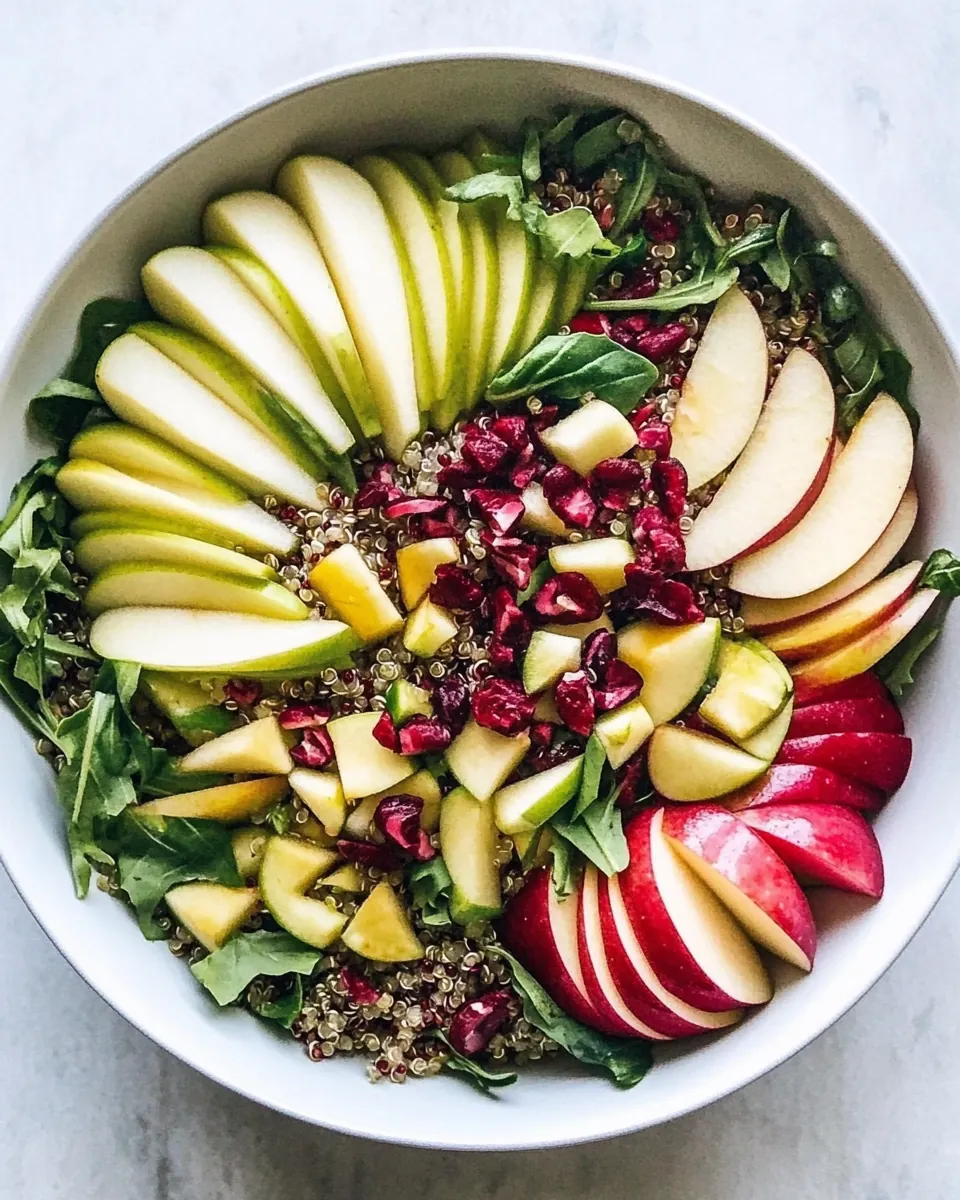
This salad is a flexible template. Small swaps or adjustments in texture and acidity can shift it from playful side to a full meal. Below I offer detailed, actionable customization tips so you can make the recipe your own while keeping the core balance intact.
- Change the grain: Substitute the quinoa for cooked farro or barley if you prefer a chewier texture, though cooking times and liquid ratios will differ.
- Adjust the sweetness: Modify the sugar in the dressing to taste, adding gradually so you can dial in the exact balance between tart and sweet.
- Swap the nuts: If you do not have pistachios, try toasted almonds or walnuts for a different crunch and flavor profile.
- Vary citrus intensity: Use more or less lemon juice to make the dressing brighter or milder depending on how forward you want the citrus to be.
- Make it heartier: Increase the quinoa portion slightly to make the salad more substantial as a light main, while keeping other ratios similar.
Pairing Suggestions for Quinoa Apple Salad
This salad works beautifully across many meals. Think of it as a versatile side that can anchor seasonal spreads or a light standalone lunch. The suggestions below cover serving styles, occasions, and storage considerations to help you present it with confidence.
- Casual lunch: Serve the salad with a crusty baguette and a small bowl of soup for a comforting midday meal.
- Holiday side: Offer it alongside roasted vegetables and a simple protein for a balanced holiday plate that feels fresh among richer dishes.
- Outdoor gatherings: Keep dressing separate until serving and the salad will travel well to picnics or potlucks without losing texture.
- Storage tip: Store leftover undressed salad in an airtight container and the dressing in a separate jar; the dressing keeps up to one week refrigerated.
- Seasonal pairing: The salad sings in fall when apples and pears are ripe, making it ideal for autumn menus and gatherings.
FAQ
Conclusion
This Quinoa Apple Salad stands out for its lively balance of textures and flavors, from nutty quinoa to crisp apple and crunchy pistachios. It’s simple to prepare, flexible, and perfect for autumn or anytime you want a bright, substantial side. I encourage you to give it a try and adjust the dressing sweetness to your taste. Share it at a gathering or enjoy it as a solo lunch, and notice how small changes like fruit choice or nut swaps make it feel new each time.
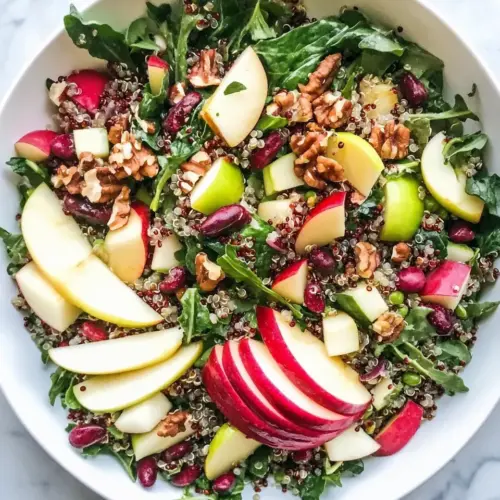
Quinoa Apple Salad
Equipment
- Small pot
- Small blender or food processor
Ingredients
- 1/2 cup quinoa, tri-colored or plain Rinse and cook to provide a fluffy, nutty base; tri-colored or plain quinoa adds protein and texture while absorbing flavors from the dressing. Use the measured amount to yield a light grain component that balances the salad's fruit and greens. Fluff with a fork after cooking to keep grains separate and tender.
- 1 cup chicken broth or vegetable broth or water Simmer and infuse to cook the quinoa and add savory depth; chicken broth, vegetable broth, or water hydrates the grains and influences overall flavor. Choose broth for extra umami or water for a neutral profile. Maintain a gentle simmer and cover until liquid is absorbed for perfectly cooked quinoa.
- 6 cups baby spinach, 5 ounces Toss and wilt as the primary leafy green; baby spinach contributes tender, mild flavor and vibrant color while providing vitamins and minerals. Add fresh to retain a delicate texture that contrasts with crunchy and chewy components. Lightly massage with dressing if preferred to soften and meld flavors.
- 1 large apple, Pink Lady or Honeycrisp Slice and sweeten to introduce crisp texture and bright, tart-sweet notes; Pink Lady or Honeycrisp apples bring juiciness and a firm bite. Core and thinly slice or dice to distribute evenly throughout the salad. Toss immediately with lemon juice to prevent browning and preserve freshness.
- 1 large pear, Anjou Slice and sweeten to contribute delicate sweetness and soft texture; Anjou pear offers subtle floral notes and a tender bite that complements apples. Core and cut to match the apple size for balanced mouthfeel. Add near the end to avoid excessive bruising or browning.
- 2 teaspoons lemon juice Squeeze and preserve to brighten fruit and prevent browning; lemon juice imparts acidity that balances sweetness and oils in the dressing. Incorporate into dressing or toss directly with cut fruit for immediate protection. Adjust amount slightly to taste and acidity of the fruit.
- 1/2 cup roasted and salted shelled pistachios Toast and sprinkle to deliver crunch and a savory, nutty finish; roasted and salted shelled pistachios add texture contrast and a salty accent. Roughly chop if desired to distribute more evenly and release oils. Store separately until serving to preserve crispness if making ahead.
- 1/3 cup dried cranberries Scatter and sweeten to add chewy bursts of concentrated fruity flavor; dried cranberries provide tangy contrast and visual interest. Rehydrate briefly if desired for plumper texture, or mix dry for chewier bites. Combine with grains and fruit for balanced sweetness.
- 2 lemons Zest and juice to enhance brightness and aromatic complexity; two lemons supply additional acidity and peel oils for the dressing. Use zest sparingly to avoid bitterness and juice for tang and preservation of cut fruit. Separate peel and juice uses as needed for layered citrus flavor.
- 1/4 teaspoon onion powder Sprinkle and season to imbue savory depth with minimal effort; onion powder contributes background savoriness without texture. Add to the dressing to blend smoothly with other seasonings and balance sweet elements. Use measured amount to avoid overpowering delicate flavors.
- 1/2 teaspoon Dijon-style mustard, not regular mustard Whisk and emulsify to lend tang and a subtle pungent note; Dijon-style mustard helps stabilize the dressing by binding oil and acid. Use the specified type (not regular mustard) for its creamier texture and milder heat. Start with the listed amount and adjust slightly for personal taste.
- 1/4 teaspoon salt Season and balance to control overall saltiness; measured salt enhances and rounds out flavors across grains, fruit, nuts, and dressing. Dissolve into the dressing for even distribution or sprinkle lightly on assembled salad if needed. Taste before adding more to avoid oversalting.
- 3 tablespoons granulated sugar, see note 1 Sweeten and stabilize to temper acidity and create a balanced vinaigrette; granulated sugar moderates tart lemon and bright fruit. Dissolve fully into warm liquid or whisk vigorously into the dressing for a smooth finish. Consider adjusting slightly based on fruit sweetness.
- 1/3 cup olive oil or vegetable oil Emulsify and flavor to provide mouth-coating richness; olive oil or vegetable oil binds the dressing and carries aromatics. Choose olive oil for fruitier notes or vegetable oil for a neutral base that highlights other ingredients. Slowly whisk into acidic components to form a stable emulsion.
- 1/2 tablespoon poppy seeds Shake and decorate to add tiny pops of texture and a subtle nutty flavor; poppy seeds offer visual speckling and a delicate crunch. Fold into the dressing or sprinkle over the finished salad for even distribution. Use measured amount to avoid overwhelming the other textures.
Instructions
- Prepare quinoa by rinsing it under cold water in a fine-mesh sieve. This removes the bitter saponin coating. Combine quinoa and water (or broth) in a small pot over high heat. Bring to a boil, add in a heaping 1/4 teaspoon salt, reduce heat to low, and cover the pot. Simmer 10–15 minutes or until the liquid is absorbed. Remove from heat, keep covered, and let stand 10–15 minutes. Fluff with a fork, then add 2–3 tablespoons of the prepared dressing (see next step). Toss and refrigerate to chill until at room temperature.: The cool, running water removes the bitter saponin coating and you will notice the water run clear, which is a good visual cue that the grain is clean. Rinsing also reduces any dusty smell from bagged quinoa . One common mistake is skimping on rinsing, which can leave a faint bitterness. Gently shake the sieve to remove excess water before cooking so you do not add unnecessary moisture to the pot.
- While quinoa is cooking, prepare the dressing. Combine 1/4 teaspoon lemon zest, 4 tablespoons lemon juice, onion powder, mustard, salt, and sugar in a small blender or food processor. Blend or pulse until completely smooth. Slowly pour in the oil and blend just until emulsified. Do not over-blend. Stir in poppy seeds, transfer to a jar with a lid, and chill in the fridge while preparing the other parts of the salad. Re-shake to combine before dressing the salad.: When the pot first heats, the liquid will steam and small bubbles will form at the edges, signaling it is almost at a boil. Using chicken broth or vegetable broth will add savory depth, while plain water keeps the flavor neutral. Avoid turning the heat too high after adding the grain, because vigorous boiling can push out liquid and dry the quinoa .
- Remove large stems and coarsely chop the spinach (just a few coarse cuts through all the spinach). Add to a large bowl and toss with room-temperature quinoa.: You will see larger bubbles and a rolling boil briefly before turning the heat down. Adding the salt at this stage seasons the grain evenly. Keeping the pot covered traps steam, which cooks the quinoa gently. A typical pitfall is lifting the lid during simmering, which releases steam and extends the cooking time.
- Chop or thinly slice the apple and pear. Toss both fruits with lemon juice to keep from browning too quickly. Add to the spinach and quinoa.: Listen for a gentle whisper of steam rather than a vigorous churn. When the liquid is gone and little steam holes appear at the surface, the quinoa is ready. If you undercook it, the texture will be grainy; overcooking makes it mushy. Start checking at 10 minutes to catch it at the ideal texture.
- Sprinkle pistachios and dried cranberries into the salad. This salad doesn’t sit well with the dressing, so only dress what will be enjoyed the same day. Drizzle with dressing (add to preference; store any leftover dressing in the fridge for up to 1 week). Gently toss to combine and enjoy.: Resting allows trapped steam to finish cooking the grains evenly, creating tender, separate pearls. You will notice the pot quiet and tiny plump grains when you later fluff with a fork. A mistake to avoid is skipping the rest period, which can result in unevenly cooked quinoa .
- Fluff with a fork, then add 2 to 3 tablespoons of the prepared dressing: Fluffing aerates the quinoa and separates the grains so the dressing coats each piece lightly. The small amount of dressing at this stage seasons the grain and prevents it from clumping as it cools. Avoid stirring aggressively, which can break the grains and create a sticky texture.
- Toss and refrigerate to chill until at room temperature: Tossing while warm helps the dressing absorb, then chilling firms the grains for a pleasant texture in the salad. You want it cool, not icy, so plan ahead and take it out of the fridge a bit before assembling. A common error is refrigerating while still steaming hot, which can wilt greens prematurely and trap condensation.
- While quinoa is cooking, prepare the dressing: The aroma of lemon zest will be immediate and bright when you start. Combining zest, lemon juice, onion powder , Dijon style mustard , salt , and sugar creates a balanced base, and blending briefly releases fragrant oils. Over blending can warm the dressing and break emulsification, so pulse until smooth and then proceed to the oil stage slowly.
- Combine 1/4 teaspoon lemon zest, 4 tablespoons lemon juice, onion powder, mustard, salt, and sugar in a small blender or food processor: As you pulse these ingredients, watch for a uniformly mixed paste, and smell the citrus lift. Sugar mellows the acidity while mustard helps bind the oil. A frequent misstep is adding all the oil at once, which can cause separation; drizzle oil slowly to form a stable emulsion.
- Blend or pulse until completely smooth: The goal is a silky base free of grainy bits of sugar or zest. Smoothness helps the dressing cling to leaves and fruit. If the mixture seems too thick, a tiny splash of water can loosen it, but do this sparingly. Overheating in the blender can change the flavor, so blend in short bursts.
- Slowly pour in the oil and blend just until emulsified: The sound will change to a steady hum as the oil integrates and the dressing develops a glossy sheen. This step creates a cohesive dressing that will coat the salad evenly. If it separates later, a quick shake before serving will bring it back together. Avoid over blending, which can thin the dressing too much.
- Do not over blend: Emulsions break when they get too warm or are agitated excessively. You will know you are done when the dressing looks slightly thick and clings to the spoon. If you over blend, chill the dressing and whisk vigorously before use to help it re emulsify.
- Stir in poppy seeds, transfer to a jar with a lid, and chill in the fridge while preparing the other parts of the salad: The poppy seeds add a pretty speckled texture and a soft nutty note. Chilling also allows flavors to meld. A common oversight is skipping the chill, which can make the dressing taste raw and blunt; a short rest improves integration.
- Re shake to combine before dressing the salad: Give the jar a firm shake so any settled oils reincorporate, and you will see the dressing regain its sheen. This is a small step that makes a big difference, ensuring even flavor distribution. Forgetting to shake can result in oily top layers and under seasoned dressing at the bottom.
- Remove large stems and coarsely chop the spinach: Coarse chopping makes the leaves easier to eat and helps the dressing cling. The sound is subtle but you will notice the pile reduce in volume as you cut. Leaving long stems can create stringy bites, so trim them for the best texture.
- Add to a large bowl and toss with room temperature quinoa: Tossing now lets the warm grains and greens mingle, slightly wilting the spinach for a tender texture. The visual cue is when the leaves glisten and soften. Toss gently to avoid bruising the leaves; over handling can make them limp and sad.
- Chop or thinly slice the apple and pear: The crisp snap of freshly cut apple and the softer, juicier pear are central to the salad’s character. Slice just before assembly and toss with lemon juice to retain color. A common mistake is cutting both fruits too early, which leads to browning and loss of freshness.
- Toss both fruits with lemon juice to keep from browning too quickly: The citrus will smell bright and prevent oxidation, keeping slices visually appealing. Toss until each piece has a light coating. Over saturating with lemon can make the fruit tart, so use sparingly to preserve natural sweetness.
- Add to the spinach and quinoa: When you fold the fruit in, watch for an even distribution of color and texture. The visual balance of fruit and greens signals that the salad is well combined. Avoid over mixing which can break delicate fruit pieces and bruise the leaves.
- Sprinkle pistachios and dried cranberries into the salad: The crunchy pistachios and chewy dried cranberries provide final texture contrast and flavor pops. Scatter them evenly so each serving gets a bit of everything. A typical mistake is adding nuts too late to a dressed salad, which can make them soggy; add nuts just before serving for best crunch.
- This salad does not sit well with the dressing, so only dress what will be enjoyed the same day: When dressed, the greens and fruit soften and the textures change, so plan to combine only what will be eaten soon. If you must store leftovers, keep the dressing separate. Serving a freshly dressed portion preserves that lively crunch and bright flavor.
- Drizzle with dressing add to preference store any leftover dressing in the fridge for up to 1 week: A light drizzle ensures the salad remains bright and not overly oily, and you can always add more at the table. Leftover dressing keeps for a week chilled, and you will notice flavors deepen slightly over time. A misstep is overdressing, which masks the delicate flavors and softens the fruit too quickly.
- Gently toss to combine and enjoy: The final toss brings everything together with a soft rustle, and the aroma of lemon and toasted nuts will make it hard to resist. Serve immediately and enjoy the layered textures. Avoid vigorous tossing at this point, which can bruise the fruit and wilt the greens prematurely.
Notes
- Change the grain: Substitute the quinoa for cooked farro or barley if you prefer a chewier texture, though cooking times and liquid ratios will differ.
- Adjust the sweetness: Modify the sugar in the dressing to taste, adding gradually so you can dial in the exact balance between tart and sweet.
- Swap the nuts: If you do not have pistachios, try toasted almonds or walnuts for a different crunch and flavor profile.
- Vary citrus intensity: Use more or less lemon juice to make the dressing brighter or milder depending on how forward you want the citrus to be.
- Make it heartier: Increase the quinoa portion slightly to make the salad more substantial as a light main, while keeping other ratios similar.