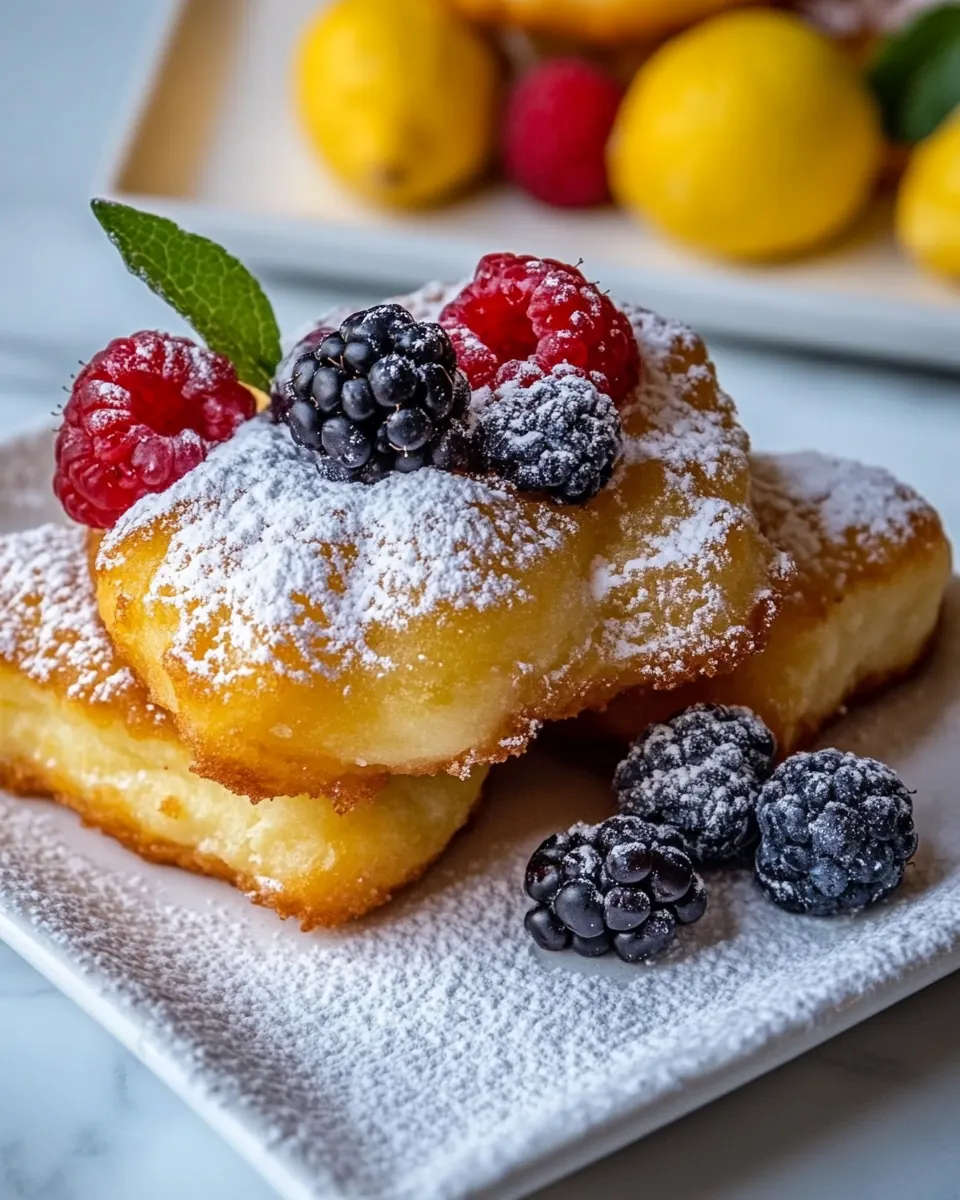
Lemon Beignets with Fresh Berries
Lemon Beignets with Fresh Berries are one of those treats that makes a weekend morning feel like a small celebration, and I still remember the first time I sank my teeth into a warm, citrusy puff dusted with confectioners sugar and studded with bright berries.
That morning I was running late for a market visit, but the smell of frying dough and lemon lifted me out of the rush. I sat on the kitchen stool, sipping something warm, and watched as the beignets rose and browned, their edges caramelizing to a delicate sheen. I couldn’t help but fiddle with the piping bag, coaxing just the right amount of lemon curd into the center so each bite had a burst of tartness, and the fresh berries added that clean, juicy counterpoint that made the treat feel lighter.
Over the years I’ve adjusted tiny details to make the texture pillowy yet structured, the kind that holds a curd filling without collapsing under its own weight. I love how the recipe brings people together, because handing out a steaming beignet feels like offering a hug. When I serve these, conversation slows, forks pause, and eyes light up. Whether I’m sharing at a casual brunch or taking them to a friend’s potluck, the combo of lemon beignets with fresh berries always earns compliments and requests for the recipe.
Recipe Snapshot
45 mins
30 mins
15 mins
Medium
250 kcal
American
Gluten-Free, Low FODMAP
Desserts
Stand mixer, Paddle attachment, Large enameled cast iron pan, Thermometer, Piping bag, Slotted spoon
What Sets This Lemon Beignets with Fresh Berries Apart
A tender, airy texture that still holds a filling
I adore how the dough becomes light and pillowlike, while still having enough structure to accept a dollop of lemon curd. The secret is the chilled dough and the right flour ratio, which create a delicate network of bubbles that trap steam during frying, producing that satisfying little explosion of air when you bite in.
Bright, balanced flavor
The burst of lemon from the curd and the subtle lemon zest in the dough make each bite feel lively rather than cloyingly sweet. I always reach for fresh berries because their acidity and texture cut through the richness of the fried dough and evaporated milk, keeping the overall experience fresh and approachable.
Comfortful ritual and showmanship
There is something theatrical about piping curd into warm puffs and watching powdered sugar melt slightly on their surface. I find that guests love the little ritual, and it transforms a simple dessert into a moment. The process invites conversation, and I often let people try their hand at filling a beignet while we chat.
Flexible timing and make ahead advantage
The dough refrigerates wonderfully, so I can prepare it the day before and fry just before serving. That flexibility lets me spread the work out, reducing stress on the day of entertaining. Chilling also deepens the flavor, which is a neat bonus I’ve come to rely on for reliable results.
Contrast of textures and colors
There is a sensory joy in the combination of a light, slightly crisp exterior, a pillowy interior, glossy curd pockets, and jewel like berries. I like serving them on a platter so everyone can admire the colors, and the visual appeal often steals the show before the first bite.
What to Buy for Lemon Beignets with Fresh Berries
These ingredients are chosen to create a dough that is airy, flavorful, and resilient enough to be fried then filled. The key players are the flour for structure, the yeast for lift, evaporated milk and butter for tenderness, and lemon components for brightness. The berries and curd add contrasting freshness and sweetness that keep the beignets from feeling heavy.
- 1 and 1/2 cups warm water, between 110 and 115 degrees (F): Provide warm liquid to activate yeast and help create a soft, aerated dough; maintain temperature between 110–115°F to ensure proper fermentation. Encourage gluten development and make mixing easier, contributing to beignet lightness and volume.
- 2/3 cup granulated sugar: Add sweetness and help feed the yeast during initial fermentation for a mildly sweet dough; also balance tartness from lemon elements. Contribute to browning and tenderness in the final fried beignets.
- 2 teaspoons lemon zest: Offer bright citrus aroma and concentrated lemon flavor to the dough, enhancing overall citrus profile. Add subtle oils that lift the scent and complement the lemon curd and berries.
- 2 and 1/4 teaspoons active dry yeast: Leaven the dough by producing carbon dioxide during fermentation, which creates the airy, pillowy texture characteristic of beignets. Ensure freshness and proper measurement for reliable rise and consistent crumb.
- 2 large eggs, at room temperature: Enrich the dough with fats and emulsifiers from the yolks and whites, improving structure, color, and tender crumb. Help bind ingredients and contribute to a richer, more flavorful beignet.
- 1 cup evaporated milk: Provide additional richness and a slightly caramelized depth without overpowering, lending tenderness and moisture to the dough. Act as a dairy component that complements eggs for a balanced dough texture.
- 2 and 1/2 teaspoons pure vanilla extract: Enhance and round out the sweet and citrus flavors with a warm vanilla note that deepens the aroma profile. Use a small amount to avoid masking the lemon elements while improving overall flavor complexity.
- 7 cups bread flour: Form the bulk of the dough’s structure by supplying starches and proteins necessary for gluten formation; bread flour’s higher protein yields a chewier, sturdier beignet capable of holding air pockets. Allow for strong rise and maintain shape during frying.
- 1 and 1/2 teaspoons salt: Balance sweetness and strengthen gluten slightly while controlling flavor; salt also enhances overall taste perception. Use measured amounts to avoid inhibiting yeast activity or producing overly salty dough.
- 5 tablespoons unsalted butter, at room temperature: Contribute fat to the dough, creating a tender, rich crumb and adding flavor; room–temperature butter incorporates more evenly for smooth dough. Help create a delicate texture that contrasts with the crisp fried exterior.
- 4 cups peanut oil, for deep frying: Serve as the frying medium that achieves a hot, consistent temperature for quick frying and crisp exterior formation; choose an oil with a high smoke point for safety. Maintain proper oil depth and temperature to prevent soggy or greasy beignets.
- 2 cups confectioners’ sugar: Add a sweet, snowy finishing dusting that complements fried dough and lemon flavors; sift over warm beignets for attractive presentation and immediate sweetness. Dissolve slightly on contact to produce a delicate glaze-like coating.
- 1 cup lemon curd: Provide an intense lemon flavor and glossy, tangy filling or drizzle that reinforces the citrus theme; use to fill or top beignets for bursts of concentrated lemon. Balance sweetness and acidity to brighten the overall dessert.
- 1 cup fresh blueberries: Introduce fresh, juicy blueberry bites that add natural sweetness, texture, and color contrast; scatter or serve alongside for freshness. Provide antioxidants and a mild tartness that pairs well with lemon and sugar.
- 1 cup fresh raspberries: Contribute vibrant color and a bright, slightly tart flavor that contrasts the sweet dough and lemon curd; add whole or lightly macerated berries for freshness. Offer a soft texture and visual appeal in the berry assortment.
- 1 cup fresh blackberries: Bring deep color and mildly sweet-tart flavor with a slightly earthy note that complements other berries and lemon; serve fresh to maintain texture. Add variance in size and juiciness for an attractive, mixed-berry presentation.
Making Lemon Beignets with Fresh Berries

I like to walk you through this process as a relaxed, rhythmic kitchen session, so you feel confident frying and filling. The following steps transform a cold dough into golden beignets filled with tangy lemon curd and finished with fresh berries, and I will point out smells and visual cues you can trust.
- In a medium-size bowl, add the warm water, sugar, and yeast and whisk well to combine. Sit aside for about 10 minutes, or until the mixture has bubbled up and become foamy.: The first thing you'll notice is the aroma of yeast as the warm water wakes it up and the surface becomes frothy, signaling active fermentation. This foaming should be lively but not overly violent, and it often smells slightly yeasty and sweet; that scent reassures you the starter is healthy. The why here is simple, the yeast needs time to metabolize sugar and produce gas that will leaven the dough. One common mistake is using water that is too hot, which can kill the yeast and leave you with no rise. If you see no bubbles, it's safer to discard and start over with fresh yeast rather than push the recipe and end up with dense beignets. Keep the bowl in a warm spot, not in direct sun, to avoid overheating.
- In the bowl of a stand mixer fitted with the paddle attachment, beat the eggs until smooth. Beat in the vanilla and evaporated milk. Beat in 3 and 1/2 cups of the flour until smooth. Turn the mixer to low speed and slowly pour in the yeast mixture (careful here – this mixture can splash up if added too quickly!); beat until smooth. Add in the butter and beat until incorporated. Finally, beat in the remaining 3 and 1/2 cups of flour and salt. Beat until dough is smooth and cohesive; about 2 minutes. Cover the bowl tightly with plastic wrap and refrigerate the dough for at least 2 hours, or up to 24 hours.: As you mix, the bowl will fill with a rich, creamy batter that gradually transforms into a cohesive dough. The smell will become buttery and slightly sweet from the evaporated milk and butter , and you may see the dough pulling cleanly from the sides of the bowl when the gluten develops properly. The slow addition of the yeast mixture keeps the batter from splashing and ensures even hydration. The refrigeration step chills the dough, firms the fats, and lets flavors meld while improving handling. A classic pitfall here is overflouring the dough and ending up dry; trust the texture and stop adding flour when the dough is smooth and slightly tacky. Another issue is undermixing which can leave the dough lumpy and uneven in structure, so aim for that cohesive, slightly elastic texture this stage promises.
- Line a large rimmed baking sheet with three layers of paper towels, set aside.: Preparing the draining station in advance keeps the frying workflow tidy and the beignets crisp. The paper towels help absorb excess oil immediately, preventing pooling that can make the exterior soggy. You'll see the oil bead on the surface of the paper towel at first, then the beignets will rest on a slightly drier layer, which maintains crispness. Forgetting this step often results in greasy beignets, which detracts from their lightness. I recommend stacking a couple of towels and replacing them if they become saturated during a long fry session.
- In a large enameled cast-iron pan, heat 4 inches of oil to 360 degrees (F). Remove the dough from the refrigerator. On a lightly floured surface, roll the dough out into a 1/4-inch thick rectangle. Cut the dough into 2 and 1/2-inch squares.: As the oil approaches temperature you will see a faint shimmer and possibly a thin wispy smoke, a sign that the oil is hot enough to create immediate steam and puff the dough. Working chilled dough helps it hold its shape when transferred to hot oil. Roll gently so the dough stays airy, and use a bench scraper or sharp cutter to make clean edges. Visual cues that you're ready include a smooth dough surface and a steady oil thermometer reading of 360 degrees F . A frequent error is rolling the dough too thin which yields flatter beignets, or too thick which prevents even frying. Keep the thickness consistent for uniform cooking.
- In batches, fry the dough until they puff up and are golden brown in color, about 1 minute. Using a slotted spoon, transfer the beignets to the prepared baking sheet and repeat with remaining dough.: When each piece hits the oil it should sink slightly then pop back up as steam inflates the interior; the sound is a gentle sizzle that becomes a brisker crackle as the outer surface browns. Look for an even golden brown, not scorched spots, turning if necessary for uniform color. Frying in small batches preserves the oil temperature so each beignet puffs properly; overcrowding drops the oil heat and yields oily, heavy dough. Use a slotted spoon to lift them and let extra oil drain before resting on the paper towels. If the beignets absorb too much oil, it usually means the oil was not hot enough; adjust the heat and test with a small piece first.
- Fill a piping bag (fitted with a small tip) with the lemon curd.: The curd should feel smooth and glossy, with a slightly thick, spoonable consistency that flows gently through the piping tip. When you squeeze, you should feel a slight resistance, and the curd should hold its shape before piping. The reason for piping is control, so you can deposit the right amount without tearing the beignet. If the curd is too warm it will be too runny and may leak, so cool it to room temperature before piping to avoid spills.
- Using the end of a small spoon (or your finger) make a small hole in the side of each beignet. Insert the tip into each hole and fill until the center puffs up a bit (or the curd begins to spill back out the hole).: As you pipe, you will see the beignet gently inflate where the curd enters, a pleasant visual cue that the filling is reaching the interior. The curd should stop filling just as the dough puffs to avoid overfilling and rupture. A common slip up is making too large a hole which causes the filling to escape, or piping too vigorously which can split the beignet. Aim for a small entry point and steady pressure, and wipe the tip between beignets to keep presentation neat.
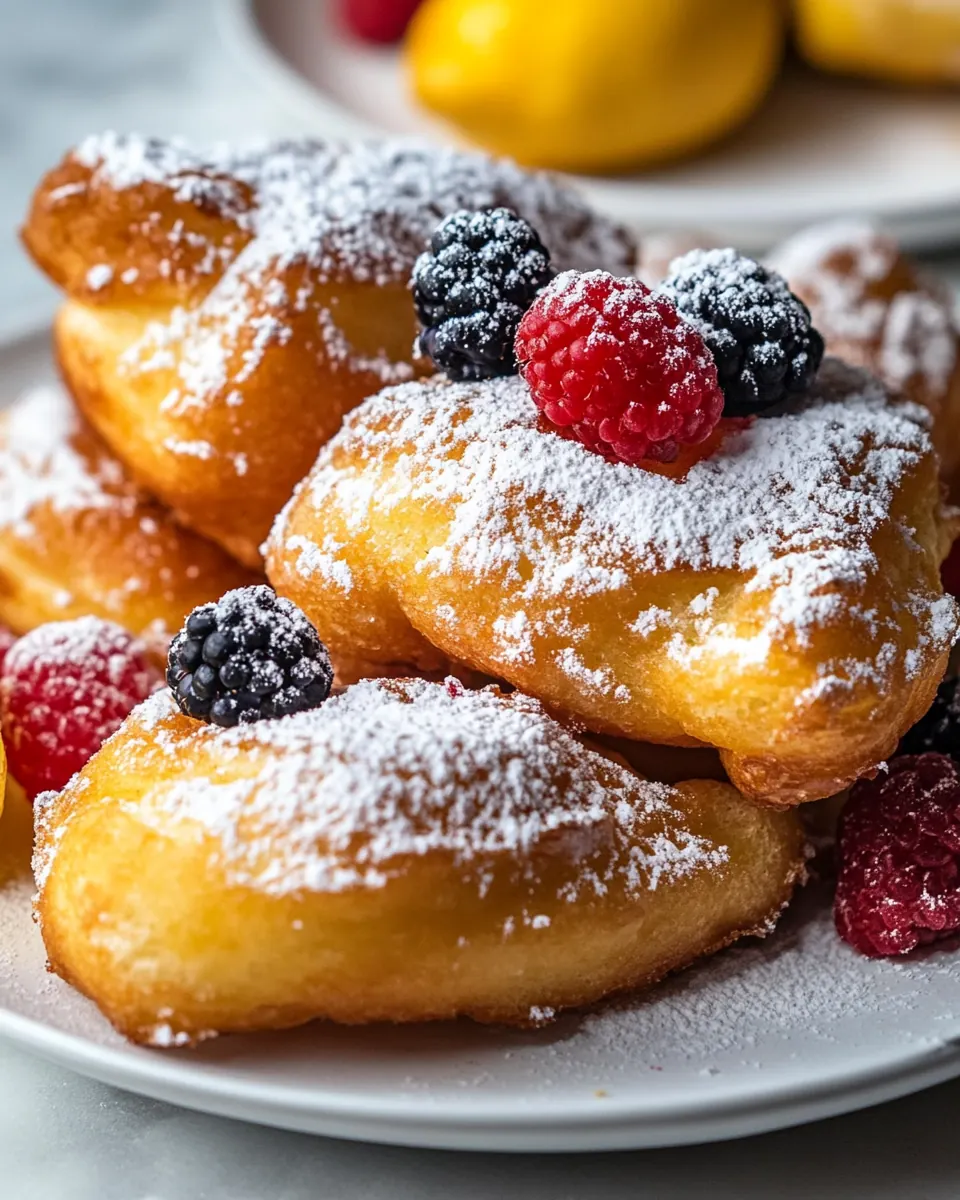
- Dust with powdered sugar, top with berries, and serve at once!: The final moment is aromatic and tactile, the feather light dusting of confectioners' sugar melting slightly on the warm surface and the fresh berries adding contrast and color. You'll notice a gentle mingling of fried dough scent, citrus perfume, and berry brightness. Serve immediately for the best texture and flavor; letting them sit too long results in softer exteriors and a less vibrant contrast between curd and berries. If you need to hold them briefly, keep them in a single layer at room temperature to avoid sogginess.
Making Adjustments
These adjustments help you tailor the recipe to your schedule and pantry while preserving the delicate texture and bright flavors. Each tip begins with a clear focus word so you can scan quickly and decide which change suits your needs.
- Timing: If you need more flexibility, prepare the dough up to 24 hours ahead and refrigerate. Chilling slowly deepens flavor and firms the dough, making it easier to roll when you are ready to fry.
- Oil choice: If peanut oil is not available, choose another high smoke point oil such as refined canola, but expect a slight difference in aroma. The key is a neutral oil with a smoke point above 360 degrees F.
- Filling consistency: If your lemon curd is too thin, chill it briefly to thicken before piping. If it is too firm, warm gently to make it pipeable, but avoid overheating which can break down the texture.
- Batch control: Fry in small, consistent batches to keep oil temperature steady. Overcrowding is the most common cause of greasy beignets, so cook in groups that leave room for movement.
- Flour swap: If you must use all purpose flour instead of bread flour, expect slightly softer beignets that may not hold as much filling, adjust handling gently, and avoid overworking the dough.
- Piping technique: Start with a small entry hole and apply steady pressure to avoid tearing. Clean the tip between each beignet for tidy presentation and consistent fill amounts.
- Holding short term: If you need to hold beignets for a short while, place them in a single layer on a cooling rack at room temperature, away from steam, to preserve crispness.
Great Combinations for Lemon Beignets with Fresh Berries
These serving ideas and pairings enhance the bright, airy nature of the beignets and make them fit a variety of occasions from casual brunch to festive gatherings. Think about textures, temperatures, and the mood you want to set when presenting them.
- Brunch centerpiece: Arrange the beignets on a large platter with small bowls of extra lemon curd and additional berries for guests to customize their portions, making it interactive and relaxed.
- Casual gathering: Serve warm on a disposable tray for outdoor events, topping with a light dusting of confectioners’ sugar right before serving to keep them looking fresh and appealing.
- Elegant dessert: Plate two beignets per person with a delicate drizzle of cooled lemon curd on the plate and a sprig of fresh berries for color, creating a composed look that feels restaurant worthy.
- Seasonal pairing: In spring, highlight tender local berries and serve with bright florals on the table to match the fresh flavors of the beignets and to celebrate the season.
- Storage tips: Leftovers are best eaten within a day; store unfilled beignets in a single layer to avoid crushing. Rewarm briefly in a moderate oven to restore some crispness, but freshly filled is always best.
- Occasions: These beignets are ideal for brunch, special breakfasts, baby showers, and spring gatherings where a light, fruity dessert is welcome.
FAQ
Conclusion
These Lemon Beignets with Fresh Berries stand out for their airy texture, bright citrus filling, and the way fresh berries lift the whole experience. I encourage you to give them a try, taking the time to chill the dough and maintain oil temperature for the best results. Share them warm with friends or family, and enjoy how a simple pastry can turn a small moment into something memorable.

Lemon Beignets with Fresh Berries
Equipment
- Stand mixer
- Paddle attachment
- Large enameled cast iron pan
- Thermometer
- Piping Bag
- Slotted Spoon
Ingredients
- 1 and 1/2 cups warm water, between 110 and 115 degrees (F) Provide warm liquid to activate yeast and help create a soft, aerated dough; maintain temperature between 110–115°F to ensure proper fermentation. Encourage gluten development and make mixing easier, contributing to beignet lightness and volume.
- 2/3 cup granulated sugar Add sweetness and help feed the yeast during initial fermentation for a mildly sweet dough; also balance tartness from lemon elements. Contribute to browning and tenderness in the final fried beignets.
- 2 teaspoons lemon zest Offer bright citrus aroma and concentrated lemon flavor to the dough, enhancing overall citrus profile. Add subtle oils that lift the scent and complement the lemon curd and berries.
- 2 and 1/4 teaspoons active dry yeast Leaven the dough by producing carbon dioxide during fermentation, which creates the airy, pillowy texture characteristic of beignets. Ensure freshness and proper measurement for reliable rise and consistent crumb.
- 2 large eggs, at room temperature Enrich the dough with fats and emulsifiers from the yolks and whites, improving structure, color, and tender crumb. Help bind ingredients and contribute to a richer, more flavorful beignet.
- 1 cup evaporated milk Provide additional richness and a slightly caramelized depth without overpowering, lending tenderness and moisture to the dough. Act as a dairy component that complements eggs for a balanced dough texture.
- 2 and 1/2 teaspoons pure vanilla extract Enhance and round out the sweet and citrus flavors with a warm vanilla note that deepens the aroma profile. Use a small amount to avoid masking the lemon elements while improving overall flavor complexity.
- 7 cups bread flour Form the bulk of the dough’s structure by supplying starches and proteins necessary for gluten formation; bread flour’s higher protein yields a chewier, sturdier beignet capable of holding air pockets. Allow for strong rise and maintain shape during frying.
- 1 and 1/2 teaspoons salt Balance sweetness and strengthen gluten slightly while controlling flavor; salt also enhances overall taste perception. Use measured amounts to avoid inhibiting yeast activity or producing overly salty dough.
- 5 tablespoons unsalted butter, at room temperature Contribute fat to the dough, creating a tender, rich crumb and adding flavor; room-temperature butter incorporates more evenly for smooth dough. Help create a delicate texture that contrasts with the crisp fried exterior.
- 4 cups peanut oil, for deep frying Serve as the frying medium that achieves a hot, consistent temperature for quick frying and crisp exterior formation; choose an oil with a high smoke point for safety. Maintain proper oil depth and temperature to prevent soggy or greasy beignets.
- 2 cups confectioners’ sugar Add a sweet, snowy finishing dusting that complements fried dough and lemon flavors; sift over warm beignets for attractive presentation and immediate sweetness. Dissolve slightly on contact to produce a delicate glaze-like coating.
- 1 cup lemon curd Provide an intense lemon flavor and glossy, tangy filling or drizzle that reinforces the citrus theme; use to fill or top beignets for bursts of concentrated lemon. Balance sweetness and acidity to brighten the overall dessert.
- 1 cup fresh blueberries Introduce fresh, juicy blueberry bites that add natural sweetness, texture, and color contrast; scatter or serve alongside for freshness. Provide antioxidants and a mild tartness that pairs well with lemon and sugar.
- 1 cup fresh raspberries Contribute vibrant color and a bright, slightly tart flavor that contrasts the sweet dough and lemon curd; add whole or lightly macerated berries for freshness. Offer a soft texture and visual appeal in the berry assortment.
- 1 cup fresh blackberries Bring deep color and mildly sweet-tart flavor with a slightly earthy note that complements other berries and lemon; serve fresh to maintain texture. Add variance in size and juiciness for an attractive, mixed-berry presentation.
Instructions
- In a medium-size bowl, add the warm water, sugar, and yeast and whisk well to combine. Sit aside for about 10 minutes, or until the mixture has bubbled up and become foamy.: The first thing you'll notice is the aroma of yeast as the warm water wakes it up and the surface becomes frothy, signaling active fermentation. This foaming should be lively but not overly violent, and it often smells slightly yeasty and sweet; that scent reassures you the starter is healthy. The why here is simple, the yeast needs time to metabolize sugar and produce gas that will leaven the dough. One common mistake is using water that is too hot, which can kill the yeast and leave you with no rise. If you see no bubbles, it's safer to discard and start over with fresh yeast rather than push the recipe and end up with dense beignets. Keep the bowl in a warm spot, not in direct sun, to avoid overheating.
- In the bowl of a stand mixer fitted with the paddle attachment, beat the eggs until smooth. Beat in the vanilla and evaporated milk. Beat in 3 and 1/2 cups of the flour until smooth. Turn the mixer to low speed and slowly pour in the yeast mixture (careful here - this mixture can splash up if added too quickly!); beat until smooth. Add in the butter and beat until incorporated. Finally, beat in the remaining 3 and 1/2 cups of flour and salt. Beat until dough is smooth and cohesive; about 2 minutes. Cover the bowl tightly with plastic wrap and refrigerate the dough for at least 2 hours, or up to 24 hours.: As you mix, the bowl will fill with a rich, creamy batter that gradually transforms into a cohesive dough. The smell will become buttery and slightly sweet from the evaporated milk and butter , and you may see the dough pulling cleanly from the sides of the bowl when the gluten develops properly. The slow addition of the yeast mixture keeps the batter from splashing and ensures even hydration. The refrigeration step chills the dough, firms the fats, and lets flavors meld while improving handling. A classic pitfall here is overflouring the dough and ending up dry; trust the texture and stop adding flour when the dough is smooth and slightly tacky. Another issue is undermixing which can leave the dough lumpy and uneven in structure, so aim for that cohesive, slightly elastic texture this stage promises.
- Line a large rimmed baking sheet with three layers of paper towels, set aside.: Preparing the draining station in advance keeps the frying workflow tidy and the beignets crisp. The paper towels help absorb excess oil immediately, preventing pooling that can make the exterior soggy. You'll see the oil bead on the surface of the paper towel at first, then the beignets will rest on a slightly drier layer, which maintains crispness. Forgetting this step often results in greasy beignets, which detracts from their lightness. I recommend stacking a couple of towels and replacing them if they become saturated during a long fry session.
- In a large enameled cast-iron pan, heat 4 inches of oil to 360 degrees (F). Remove the dough from the refrigerator. On a lightly floured surface, roll the dough out into a 1/4-inch thick rectangle. Cut the dough into 2 and 1/2-inch squares.: As the oil approaches temperature you will see a faint shimmer and possibly a thin wispy smoke, a sign that the oil is hot enough to create immediate steam and puff the dough. Working chilled dough helps it hold its shape when transferred to hot oil. Roll gently so the dough stays airy, and use a bench scraper or sharp cutter to make clean edges. Visual cues that you're ready include a smooth dough surface and a steady oil thermometer reading of 360 degrees F . A frequent error is rolling the dough too thin which yields flatter beignets, or too thick which prevents even frying. Keep the thickness consistent for uniform cooking.
- In batches, fry the dough until they puff up and are golden brown in color, about 1 minute. Using a slotted spoon, transfer the beignets to the prepared baking sheet and repeat with remaining dough.: When each piece hits the oil it should sink slightly then pop back up as steam inflates the interior; the sound is a gentle sizzle that becomes a brisker crackle as the outer surface browns. Look for an even golden brown, not scorched spots, turning if necessary for uniform color. Frying in small batches preserves the oil temperature so each beignet puffs properly; overcrowding drops the oil heat and yields oily, heavy dough. Use a slotted spoon to lift them and let extra oil drain before resting on the paper towels. If the beignets absorb too much oil, it usually means the oil was not hot enough; adjust the heat and test with a small piece first.
- Fill a piping bag (fitted with a small tip) with the lemon curd.: The curd should feel smooth and glossy, with a slightly thick, spoonable consistency that flows gently through the piping tip. When you squeeze, you should feel a slight resistance, and the curd should hold its shape before piping. The reason for piping is control, so you can deposit the right amount without tearing the beignet. If the curd is too warm it will be too runny and may leak, so cool it to room temperature before piping to avoid spills.
- Using the end of a small spoon (or your finger) make a small hole in the side of each beignet. Insert the tip into each hole and fill until the center puffs up a bit (or the curd begins to spill back out the hole).: As you pipe, you will see the beignet gently inflate where the curd enters, a pleasant visual cue that the filling is reaching the interior. The curd should stop filling just as the dough puffs to avoid overfilling and rupture. A common slip up is making too large a hole which causes the filling to escape, or piping too vigorously which can split the beignet. Aim for a small entry point and steady pressure, and wipe the tip between beignets to keep presentation neat.
- Dust with powdered sugar, top with berries, and serve at once!: The final moment is aromatic and tactile, the feather light dusting of confectioners' sugar melting slightly on the warm surface and the fresh berries adding contrast and color. You'll notice a gentle mingling of fried dough scent, citrus perfume, and berry brightness. Serve immediately for the best texture and flavor; letting them sit too long results in softer exteriors and a less vibrant contrast between curd and berries. If you need to hold them briefly, keep them in a single layer at room temperature to avoid sogginess.
Notes
- Timing: If you need more flexibility, prepare the dough up to 24 hours ahead and refrigerate. Chilling slowly deepens flavor and firms the dough, making it easier to roll when you are ready to fry.
- Oil choice: If peanut oil is not available, choose another high smoke point oil such as refined canola, but expect a slight difference in aroma. The key is a neutral oil with a smoke point above 360 degrees F.
- Filling consistency: If your lemon curd is too thin, chill it briefly to thicken before piping. If it is too firm, warm gently to make it pipeable, but avoid overheating which can break down the texture.
- Batch control: Fry in small, consistent batches to keep oil temperature steady. Overcrowding is the most common cause of greasy beignets, so cook in groups that leave room for movement.
- Flour swap: If you must use all purpose flour instead of bread flour, expect slightly softer beignets that may not hold as much filling, adjust handling gently, and avoid overworking the dough.
- Piping technique: Start with a small entry hole and apply steady pressure to avoid tearing. Clean the tip between each beignet for tidy presentation and consistent fill amounts.
- Holding short term: If you need to hold beignets for a short while, place them in a single layer on a cooling rack at room temperature, away from steam, to preserve crispness.