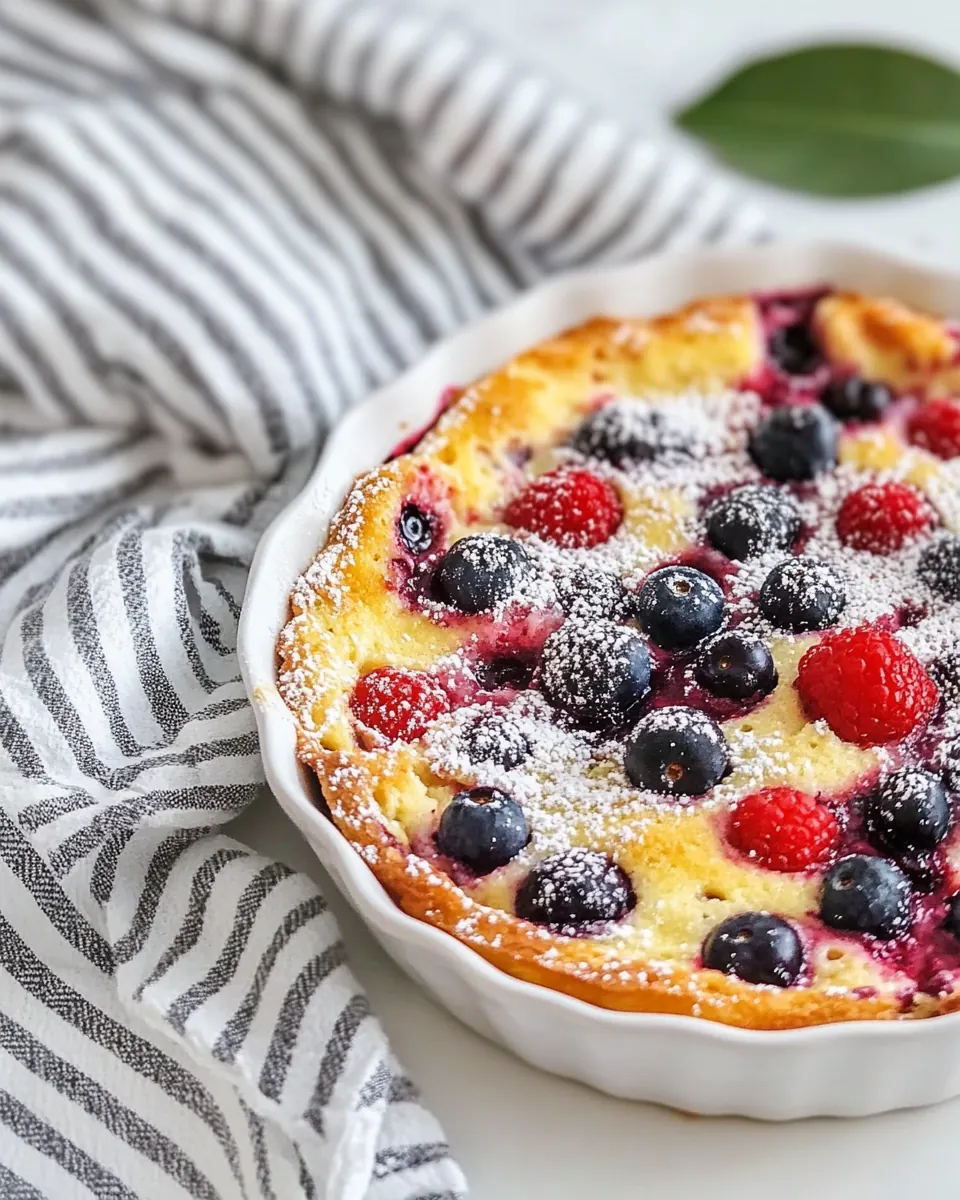
Flaugnarde of Mixed Berries
Flaugnarde of Mixed Berries is one of those comfort desserts I reach for the moment summer berries start to overflow my fridge. I remember the first time I made it for a sleepy Sunday brunch, the kitchen full of sunlight and the house smelling faintly of warm vanilla and baking fruit. It was simple, forgiving, and everyone scraped their plates clean, asking for seconds before coffee was even finished.
That day I learned how approachable a French classic can be, especially when you let the fruit shine. I like that Flaugnarde of Mixed Berries balances a custardy batter with the bright tang of berries, and the texture is somewhere between a pancake and a clafoutis. The experience felt nostalgic without being fussy, and it quickly became my go to for potlucks and relaxed family meals.
Over time I tweaked small things, like using a touch less sweetener so the natural berry juices sing, and sifting the flour for a silkier batter. Each little change made the final dish more confident, and now I almost always pair it with a simple dusting of powdered sugar rather than anything heavy. When someone asks for an easy dessert that looks elegant, I hand them the recipe for Flaugnarde of Mixed Berries and a warm smile.
Recipe Snapshot
1 hr 5 mins
15 mins
50 mins
Medium
200 kcal
American
Gluten-Free, Vegan
Desserts
Baking dish, Whisk, Large bowl, Wire rack
Why This Flaugnarde of Mixed Berries Stands Out
Bright, seasonal flavor that does the talking
I love how the mixed fresh berries are the star here. They offer a natural sweetness and acidity that cuts through the rich custard, so you get a layered taste profile without needing complicated add ins. When the berries roast in the oven their sugars concentrate, producing little pops of jammy goodness that make every bite interesting.
Simple technique, impressive results
This recipe demands very little equipment and minimal technique, which is why I lean on it for gatherings. A quick whisking of eggs and flour, a gentle pour over fruit, then into the oven. The outcome looks like you spent much longer on it than you did, which always wins me compliments at the table.
Flexible and forgiving
I appreciate that Flaugnarde of Mixed Berries forgives small mistakes. If the batter is a touch thinner or thicker, or the fruit varies, the texture still comes out lovely. You can swap berries depending on what you have, and the recipe tolerates small substitutions, while still delivering a satisfying result.
A dessert for many occasions
It reads as both casual and refined, so you can serve it for a weekday treat or a weekend brunch. The presentation is simple, yet elegant. I often bring it to potlucks because it travels well and rarely returns home with me.
Light but comforting
The custard base is lighter than a heavy cake, so it never sits too heavy after a meal. That balance of airy batter and juicy fruit makes it one of my favorite desserts to serve when I want something sweet but not overwhelming.
Ingredients You’ll Need for Flaugnarde of Mixed Berries
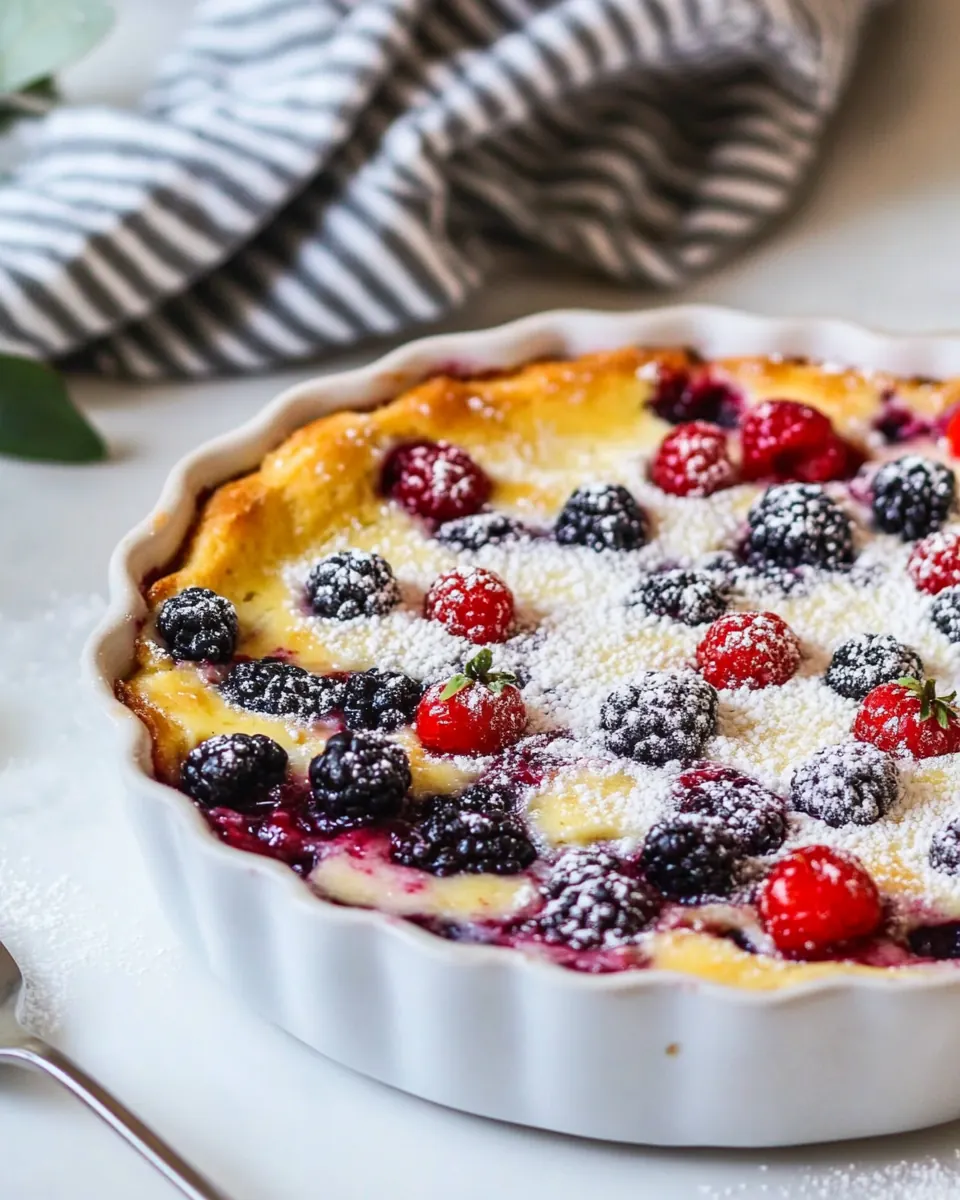
The ingredients here are intentionally straightforward. The magic happens by pairing ripe fruit with a simple, custardy batter so nothing steals the show. Key players are the mixed fresh berries for brightness, eggs to provide structure, and a touch of milk and flour to create that delicate, slightly set texture. The result is rustic and elegant at the same time.
- 2 1/2 cups mixed fresh berries, such as blackberries, blueberries, raspberries: Provide vibrant tartness and natural sweetness while contributing texture and color to the flaugnarde; toss gently to distribute evenly and prevent crushing, and scatter across the batter before baking for even fruit pockets.
- 3 large eggs: Bind the custard base and give structure to the batter by coagulating proteins when heated; whisk until smooth and slightly aerated to yield a tender, set custard that holds the fruit in place.
- 10 tbsp light agave nectar, or sugar: Sweeten the batter and promote browning during baking while adding moisture; dissolve fully into the eggs or milk to ensure an even sweetness and adjust amount to taste based on berry tartness.
- 1/2 cup unbleached all-purpose flour, sifted: Thicken the custard and provide body to the flaugnarde, creating a delicate, pancake-like texture; sift and incorporate gradually to avoid lumps and maintain a light, tender crumb.
- 1/8 tsp salt: Enhance overall flavor balance by intensifying sweetness and rounding other tastes; dissolve into the dry ingredients to ensure even season and prevent any metallic notes in the finished custard.
- 1 cup 1% milk: Add creaminess and loosen the batter to create a silky custard texture while contributing mild dairy richness; incorporate gradually to control consistency and avoid overrun that could thin the batter too much.
- 2 tsp vanilla extract: Impart aromatic sweetness and depth to the batter, enhancing the fruit flavors and rounding the custard’s profile; add with the milk or eggs for uniform distribution and subtle perfume.
- powdered sugar for dusting: Add a delicate finishing touch of sweetness and visual appeal by dusting lightly over the cooled flaugnarde; sprinkle just before serving to avoid melting into the surface and blurring decorative contrast.
- baking spray: Prevent sticking and allow the flaugnarde to release cleanly from the pan while browning evenly; coat the baking dish thoroughly before adding batter to ensure an intact, attractive presentation.
Making This Flaugnarde of Mixed Berries
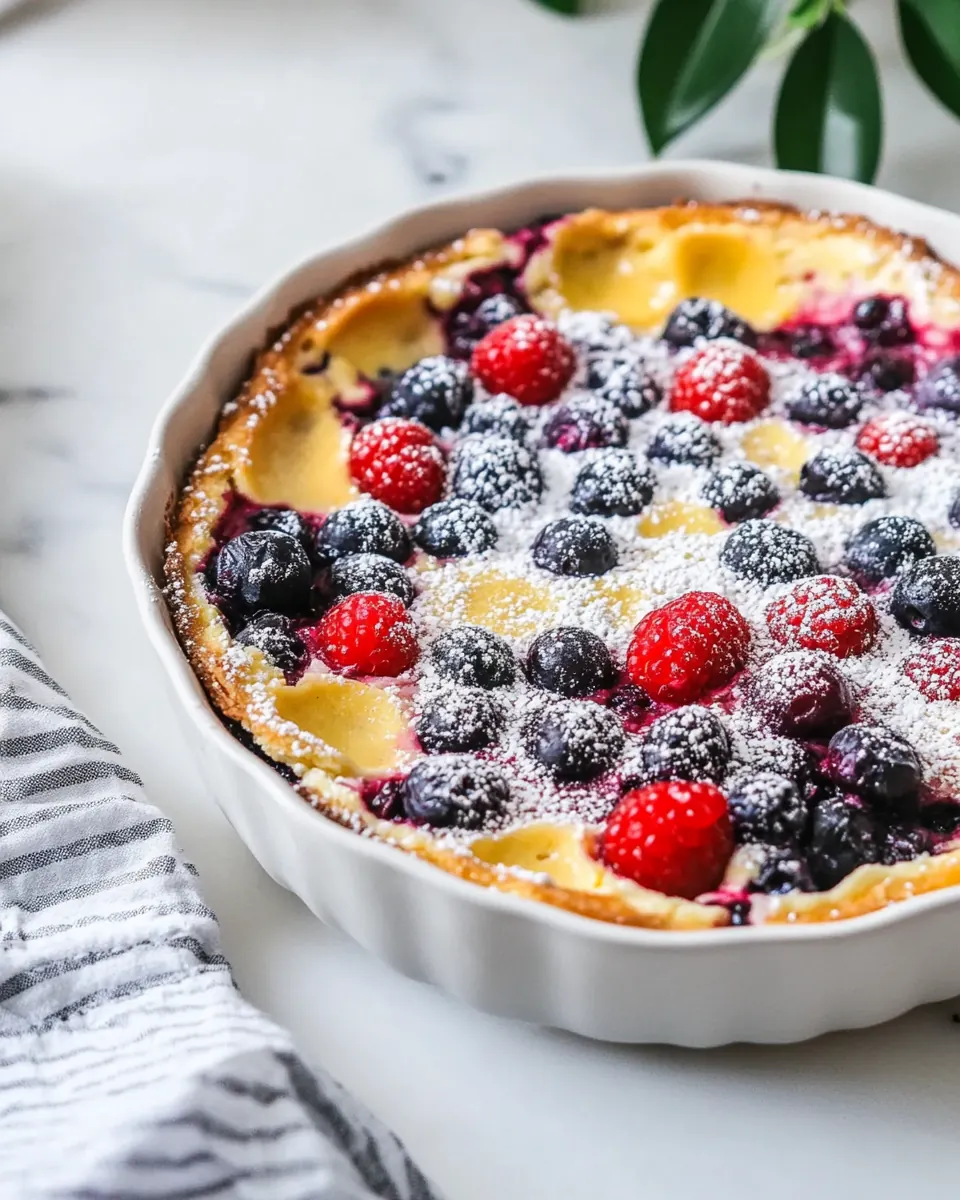
This recipe is relaxed and kitchen friendly, so you can focus on texture and temperature rather than complicated timing. Follow the steps in order and watch for visual cues, like gentle browning and a slight jiggle in the center. The payoff is a custardy, fruit studded flaugnarde that smells irresistibly of warm berries and vanilla.
- Preheat the oven to 350 F°.: The moment you preheat, the kitchen begins to smell faintly warm and anticipatory, and your oven reaches the steady environment the flaugnarde needs to set evenly. You want the oven fully warmed so the batter puffs gently and cooks through without overbrowning. A common mistake is putting the dish into a not fully heated oven, which can cause uneven rising and a dense center. Listen for the oven clicking off the preheat cycle, and if you have an oven thermometer, confirm it reads around 350 F° to ensure accuracy.
- Lightly spray a baking dish with baking spray and dust with a little flour. Toss in the berries.: The scented oil from the spray and the dusting of flour create a release layer, so the flaugnarde lifts cleanly when sliced. As you toss the mixed fresh berries into the dish, you'll hear a soft patting sound and notice the colorful fruit settling into a casual pattern. This layering helps fruit remain distributed rather than sinking. Avoid packing the berries tightly, because overcrowding can yield soggy pockets rather than beautifully roasted bits. If you skip dusting, the bottom may stick, making serving messy.
- Whisk the eggs, agave, salt, and flour together in a large bowl until smooth. Add the milk and vanilla extract. Whisk until smooth then pour into the baking dish.: As you whisk, the batter will take on a satiny texture, no lumps visible, and a faint vanilla aroma will emerge. The batter should be smooth enough to coat the back of a spoon, indicating proper emulsification between the eggs , flour , and milk . Pouring the mixture over the fruit, you will see the berries sink slightly and the batter weave around them. The reason this order matters is to prevent flour lumps and ensure an even bake. A typical error is not fully dissolving the sweetener, which leaves a gritty texture, so whisk until everything seems homogenous.
- Bake for 45 – 50 minutes or until lightly browned and a toothpick inserted into the center comes out clean.: During baking the kitchen fills with a warm aroma of cooked berries and vanilla, and the top develops a gentle golden color. You may hear soft crackling as the top sets, and the edges will pull away slightly from the dish. The toothpick test verifies the custard has set without being overbaked. If you bake too long, the texture will dry out, so begin checking around 45 minutes. An often overlooked sign of doneness is a slight jiggle in the center, which is acceptable because it will continue to set as it cools.
- When you pull it out of the oven it will wiggle a bit which is completely normal. Cool on a wire rack. The flaugnarde will have puffed up a bit and will deflate while cooling.: As it rests, you will smell intensified berry sweetness and notice steam gently rising. The puffing and deflating are part of the custard setting process; it indicates air pockets collapsing and the structure stabilizing. Cooling on a wire rack prevents sogginess from trapped steam under the dish. Resist the urge to cut into it while piping hot, because the interior needs time to finish setting. A common pitfall is serving too soon and getting a runny interior, so be patient for a firmer texture.
- When cool, dust with powdered sugar and serve.: The final dusting of powdered sugar adds a refined visual contrast and a whisper of sweetness on top. As you slice, the surface yields a gentle crack and the fragrant berry aroma becomes more pronounced. Serve warm or at room temperature to catch the best texture, and observe the interplay of custard and fruit in each forkful. Avoid pre dusting too early, as moisture will dissolve the sugar and dull the presentation.
Recipe Notes about Flaugnarde of Mixed Berries
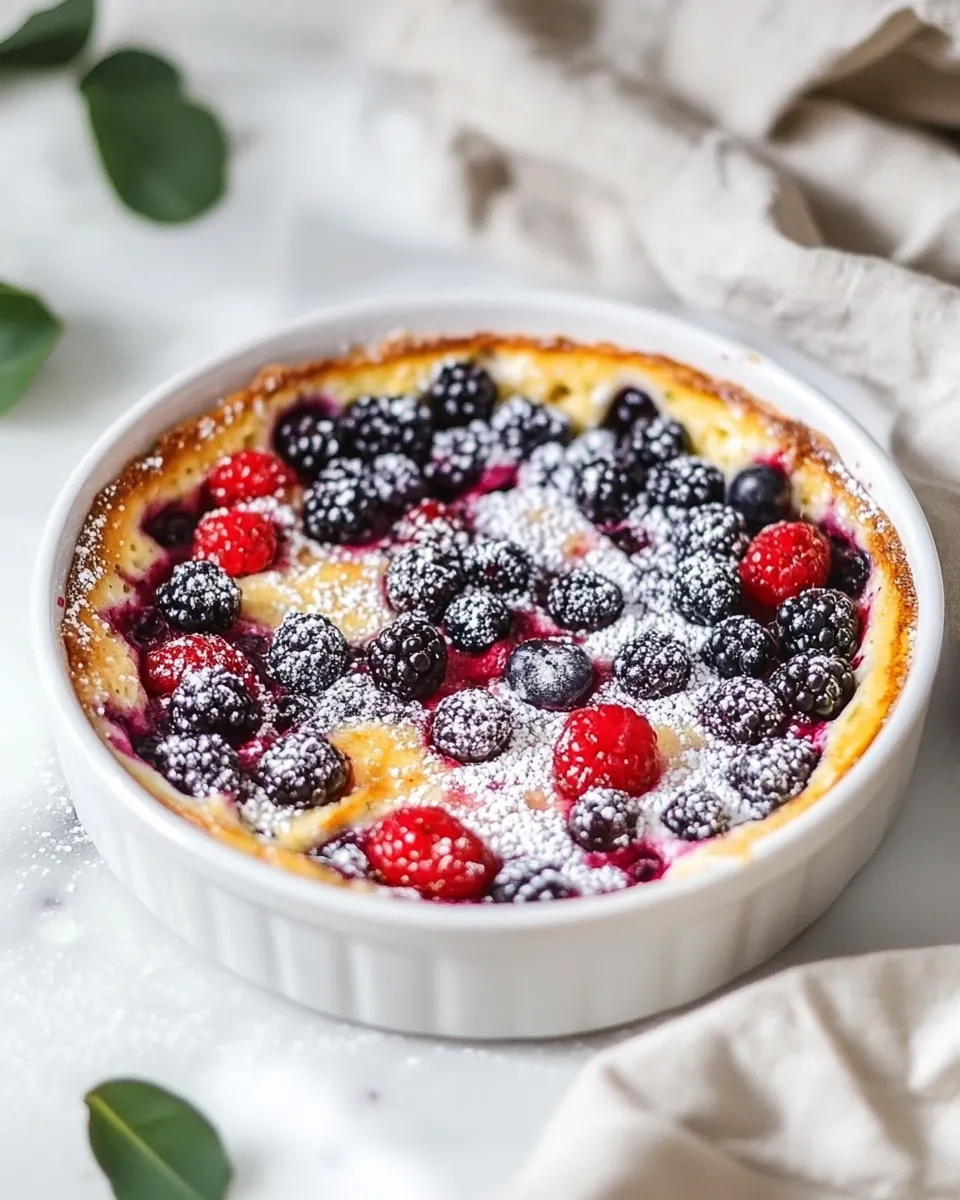
These notes collect little tricks I use to make serving and prep smoother. They focus on timing, texture, and how to preserve the best berry flavors. Read them and decide which suit your kitchen style.
- Adjust sweetness to taste, if your berries are particularly sweet reduce the agave to avoid an overly sugary final dish.
- Sifting matters, sifting the flour eliminates lumps and creates a silkier batter that bakes more evenly and looks more refined.
- Room temperature eggs blend better, let eggs sit on the counter for a few minutes before whisking to avoid a lumpy batter and ensure a smooth custard.
- Use a shallow baking dish, a shallow dish encourages even baking and a pleasing ratio of browned edges to custardy center.
- Swap sweeteners carefully, if you replace agave with sugar, dissolve it fully in the eggs or milk to prevent graininess in the finished custard.
- Keep presentation simple, a light dusting of powdered sugar is all you need to make this dessert look elegant without overshadowing the berries.
Serving This Flaugnarde of Mixed Berries
This flaugnarde shines in casual and slightly more formal settings alike. Serve it warm or at room temperature, and pick accompaniments that complement rather than compete with the fruit. Below are practical serving ideas and storage notes so you can plan ahead.
- Serve warm with a dusting of powdered sugar, the warmth enhances the berry aroma and creates a cozy dessert suitable for brunch or an after dinner treat.
- Pair with coffee or tea, the light custard and bright berries balance bold beverages, making the dish a lovely option for mid morning gatherings or afternoon tea service.
- Bring to potlucks, it travels well if transported in the dish, and it presents beautifully once dusted, making it a reliable choice for shared meals and casual celebrations.
- Occasions, this is perfect for summer brunches, light dinner parties, or a relaxed holiday breakfast when you want something impressive but uncomplicated.
- Storage, cover the cooled flaugnarde and refrigerate for up to three days. Rewarm gently in a low oven to revive the texture before serving.
- Seasonal pairing, use the freshest local berries in summer for the brightest flavor, and consider using frozen berries in winter with slightly reduced liquid to compensate for extra moisture.
- Slice carefully, allow the flaugnarde to cool enough to set for cleaner slices, and use a sharp knife dipped in hot water for smoother serving edges.
- Make ahead, you can assemble earlier in the day and bake just before guests arrive to ensure it is at its freshest and most aromatic.
- Leftovers, enjoy chilled slices for breakfast with yogurt, the custard makes a pleasant morning treat without feeling too decadent.
- Plating, serve in wedges directly from the baking dish, and garnish with an extra handful of fresh berries if you want a lively finish.
FAQ
Conclusion
What makes this flaugnarde special is its effortless ability to highlight fresh berries in a tender, custardy bake that feels both homey and refined. It’s forgiving enough for a novice to execute, yet elegant enough to bring to a brunch or casual dinner and feel proud of the result. I encourage you to give it a try, especially when berries are at their peak, because the simple combination of warm vanilla, lightly set custard, and bursting fruit is one of those reliably satisfying outcomes. Once you make it a couple of times, you’ll find little personal tweaks that make it your own, and it will likely become a go to dessert for seasonal gatherings and relaxed afternoons alike.
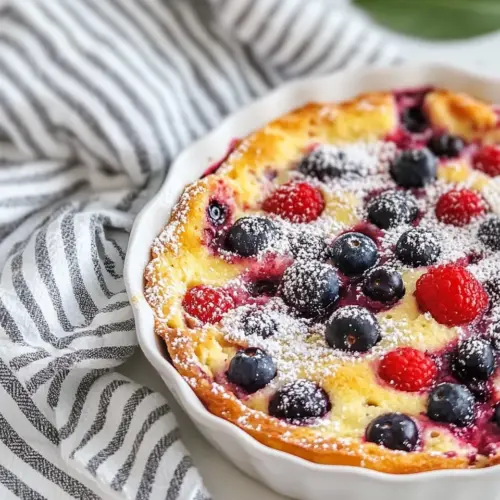
Flaugnarde of Mixed Berries
Equipment
- Baking Dish
- Whisk
- Large Bowl
- Wire Rack
Ingredients
- 2 1/2 cups mixed fresh berries, such as blackberries, blueberries, raspberries Provide vibrant tartness and natural sweetness while contributing texture and color to the flaugnarde; toss gently to distribute evenly and prevent crushing, and scatter across the batter before baking for even fruit pockets.
- 3 large eggs Bind the custard base and give structure to the batter by coagulating proteins when heated; whisk until smooth and slightly aerated to yield a tender, set custard that holds the fruit in place.
- 10 tbsp light agave nectar, or sugar Sweeten the batter and promote browning during baking while adding moisture; dissolve fully into the eggs or milk to ensure an even sweetness and adjust amount to taste based on berry tartness.
- 1/2 cup unbleached all-purpose flour, sifted Thicken the custard and provide body to the flaugnarde, creating a delicate, pancake-like texture; sift and incorporate gradually to avoid lumps and maintain a light, tender crumb.
- 1/8 tsp salt Enhance overall flavor balance by intensifying sweetness and rounding other tastes; dissolve into the dry ingredients to ensure even season and prevent any metallic notes in the finished custard.
- 1 cup 1% milk Add creaminess and loosen the batter to create a silky custard texture while contributing mild dairy richness; incorporate gradually to control consistency and avoid overrun that could thin the batter too much.
- 2 tsp vanilla extract Impart aromatic sweetness and depth to the batter, enhancing the fruit flavors and rounding the custard’s profile; add with the milk or eggs for uniform distribution and subtle perfume.
- powdered sugar for dusting Add a delicate finishing touch of sweetness and visual appeal by dusting lightly over the cooled flaugnarde; sprinkle just before serving to avoid melting into the surface and blurring decorative contrast.
- baking spray Prevent sticking and allow the flaugnarde to release cleanly from the pan while browning evenly; coat the baking dish thoroughly before adding batter to ensure an intact, attractive presentation.
Instructions
- Preheat the oven to 350 F°.: The moment you preheat, the kitchen begins to smell faintly warm and anticipatory, and your oven reaches the steady environment the flaugnarde needs to set evenly. You want the oven fully warmed so the batter puffs gently and cooks through without overbrowning. A common mistake is putting the dish into a not fully heated oven, which can cause uneven rising and a dense center. Listen for the oven clicking off the preheat cycle, and if you have an oven thermometer, confirm it reads around 350 F° to ensure accuracy.
- Lightly spray a baking dish with baking spray and dust with a little flour. Toss in the berries.: The scented oil from the spray and the dusting of flour create a release layer, so the flaugnarde lifts cleanly when sliced. As you toss the mixed fresh berries into the dish, you'll hear a soft patting sound and notice the colorful fruit settling into a casual pattern. This layering helps fruit remain distributed rather than sinking. Avoid packing the berries tightly, because overcrowding can yield soggy pockets rather than beautifully roasted bits. If you skip dusting, the bottom may stick, making serving messy.
- Whisk the eggs, agave, salt, and flour together in a large bowl until smooth. Add the milk and vanilla extract. Whisk until smooth then pour into the baking dish.: As you whisk, the batter will take on a satiny texture, no lumps visible, and a faint vanilla aroma will emerge. The batter should be smooth enough to coat the back of a spoon, indicating proper emulsification between the eggs , flour , and milk . Pouring the mixture over the fruit, you will see the berries sink slightly and the batter weave around them. The reason this order matters is to prevent flour lumps and ensure an even bake. A typical error is not fully dissolving the sweetener, which leaves a gritty texture, so whisk until everything seems homogenous.
- Bake for 45 - 50 minutes or until lightly browned and a toothpick inserted into the center comes out clean.: During baking the kitchen fills with a warm aroma of cooked berries and vanilla, and the top develops a gentle golden color. You may hear soft crackling as the top sets, and the edges will pull away slightly from the dish. The toothpick test verifies the custard has set without being overbaked. If you bake too long, the texture will dry out, so begin checking around 45 minutes. An often overlooked sign of doneness is a slight jiggle in the center, which is acceptable because it will continue to set as it cools.
- When you pull it out of the oven it will wiggle a bit which is completely normal. Cool on a wire rack. The flaugnarde will have puffed up a bit and will deflate while cooling.: As it rests, you will smell intensified berry sweetness and notice steam gently rising. The puffing and deflating are part of the custard setting process; it indicates air pockets collapsing and the structure stabilizing. Cooling on a wire rack prevents sogginess from trapped steam under the dish. Resist the urge to cut into it while piping hot, because the interior needs time to finish setting. A common pitfall is serving too soon and getting a runny interior, so be patient for a firmer texture.
- When cool, dust with powdered sugar and serve.: The final dusting of powdered sugar adds a refined visual contrast and a whisper of sweetness on top. As you slice, the surface yields a gentle crack and the fragrant berry aroma becomes more pronounced. Serve warm or at room temperature to catch the best texture, and observe the interplay of custard and fruit in each forkful. Avoid pre dusting too early, as moisture will dissolve the sugar and dull the presentation.
Notes
- Adjust sweetness to taste, if your berries are particularly sweet reduce the agave to avoid an overly sugary final dish.
- Sifting matters, sifting the flour eliminates lumps and creates a silkier batter that bakes more evenly and looks more refined.
- Room temperature eggs blend better, let eggs sit on the counter for a few minutes before whisking to avoid a lumpy batter and ensure a smooth custard.
- Use a shallow baking dish, a shallow dish encourages even baking and a pleasing ratio of browned edges to custardy center.
- Swap sweeteners carefully, if you replace agave with sugar, dissolve it fully in the eggs or milk to prevent graininess in the finished custard.
- Keep presentation simple, a light dusting of powdered sugar is all you need to make this dessert look elegant without overshadowing the berries.