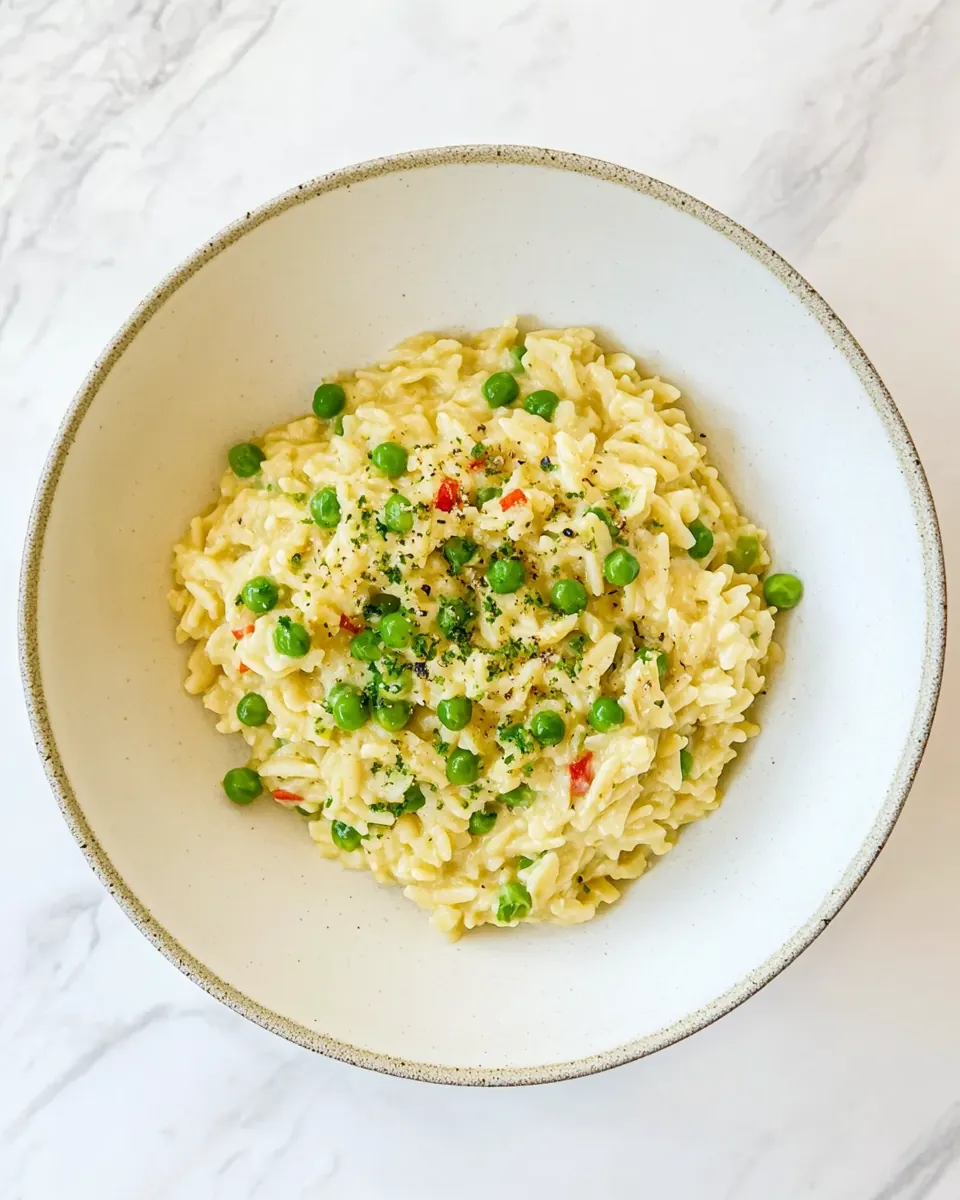
Orzotto with Peas
Orzotto with Peas is one of those comforting bowls I reach for when I want something creamy and satisfying without fuss. The first time I made Orzotto with Peas I was racing the clock between errands and an evening meeting, and the way the kitchen filled with warm, savory steam convinced me this should be a weekday staple. I remember stirring the tiny rice shaped pasta and tasting a spoonful that felt rich yet bright from a hint of lemon, and I knew I had to keep this recipe in heavy rotation.
Over the years I have tweaked small details to get the texture just right. I like it slightly loose, with the orzo still glossy and tender, the peas popping with freshness, and the cheese melted into the sauce so each bite feels silky. There was a night when friends dropped by unexpectedly and I turned out a pot of Orzotto with Peas with almost no prep, and everyone asked for the recipe. That cozy, triumphant feeling stuck with me, so I started noting why this dish is so dependable, and how a few mindful moves make a big difference.
Recipe Snapshot
25 mins
5 mins
20 mins
Easy
350 kcal
Italian
Gluten-Free, Low FODMAP
Dinner
Calphalon 5-Quart Pot, Storage Containers, Cutting Board
Why This Orzotto with Peas Works
Comfort without heaviness
I love that Orzotto with Peas delivers a creamy mouthfeel without being cloying. The interaction of starchy orzo with a touch of heavy cream and melted Parmesan cheese creates a sauce that clings to each piece, giving the dish body while still feeling light enough for a weeknight meal.
Fast, reliable technique
This recipe is built for busy evenings. Because the orzo cooks directly in broth, you get deep flavor with minimal stirring, and the whole dish comes together in about a half hour. I appreciate recipes that reward attention without demanding it, and this one frees you to set the table or toss a salad while it simmers.
Bright accents that lift the dish
The optional lemon juice and zest are small but transformative. I add them at the end to cut through the creaminess, and that citrus lift makes each bite sing. Peas add a sweet pop and a jewel tone that makes the bowl look inviting, not stodgy.
Flexible and crowd friendly
I often adapt the pantry items I have on hand, while keeping the core technique unchanged. Use vegetable broth to keep it vegetarian, or swap dairy elements for alternatives if needed. It scales easily, which makes it a reliable choice when friends drop in or when I want leftovers for lunches.
Textural contrast matters
What makes me reach for this again and again is the balance between the tender orzo, the silk of melted butter and cream, and the gentle bite of peas. That interplay of textures keeps the dish interesting across spoons, and small tweaks at the end, like stirring in the butter off heat, preserve the glossy finish I love.
What’s In This Orzotto with Peas
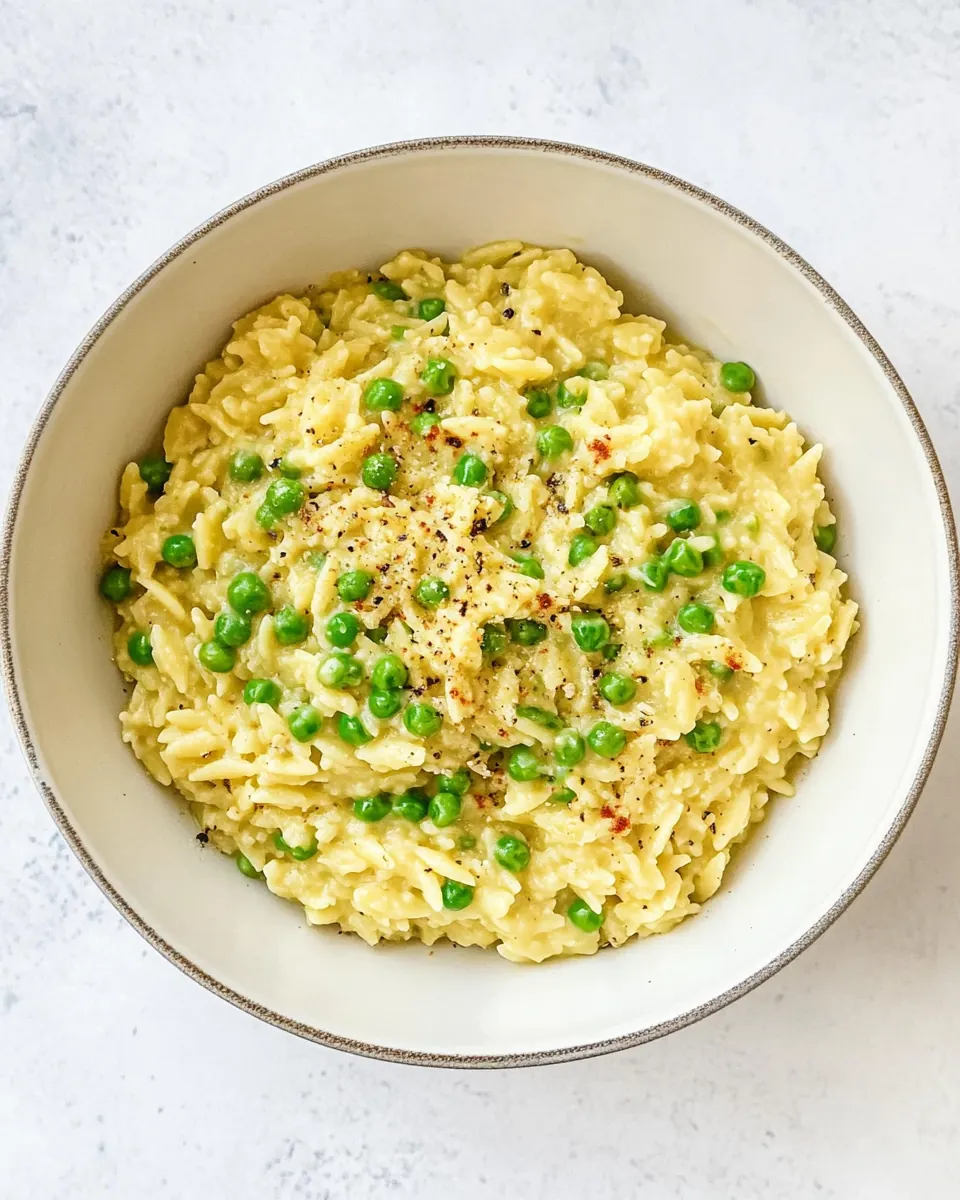
This list is about harmony. The ingredient roster is short but purposeful, built around orzo as the starch that carries flavor, and a handful of dairy and seasoning elements that create a silky, comforting sauce. The key players are the broth that infuses depth, the Parmesan cheese and butter that provide richness, and the peas and lemon that brighten the whole pot.
- 2 tablespoons olive oil: Heat and flavor the pan; provides a fruity base with a moderate smoke point ideal for sautéing onions and toasting orzo briefly.
- 1 small yellow onion (peeled and grated): Add sweetness and savory depth when grated; releases juices and integrates smoothly into the cooking liquid for a silky texture.
- 1/4 teaspoon salt: Season and enhance other flavors; helps draw out moisture from the onion and balances the richness of the cream and butter.
- 1 quart reduced-sodium chicken broth (or vegetable broth): Supply simmering liquid and savory backbone; keeps orzo cooking evenly while contributing mild, savory notes without overpowering the dish.
- 8 ounces orzo pasta: Provide the primary body and texture; cooks to a tender, rice-like consistency that absorbs the flavored broth and creamy elements.
- 1 cup grated Parmesan cheese: Contribute salty, nutty umami and creamy mouthfeel when stirred in; helps bind the sauce and brighten the overall flavor.
- 1 cup heavy cream (or half-and-half): Impart richness and a luscious finish; creates a velvety sauce that clings to the orzo and carries the cheese and peas.
- 2 tablespoons unsalted butter: Add glossy finish and rounded flavor; melts into the warm orzo to enhance silkiness and provide a buttery mouthfeel.
- 1 cup frozen peas: Introduce fresh color and sweet, vegetal pops; thaws quickly in the hot orzo, adding contrast in texture and flavor.
- Juice and zest from 1/2 lemon () (optional): Brighten and lift the dish with acidity and aromatic oils; optional citrus adds a fresh counterpoint to the creamy, savory elements.
How to Cook Orzotto with Peas
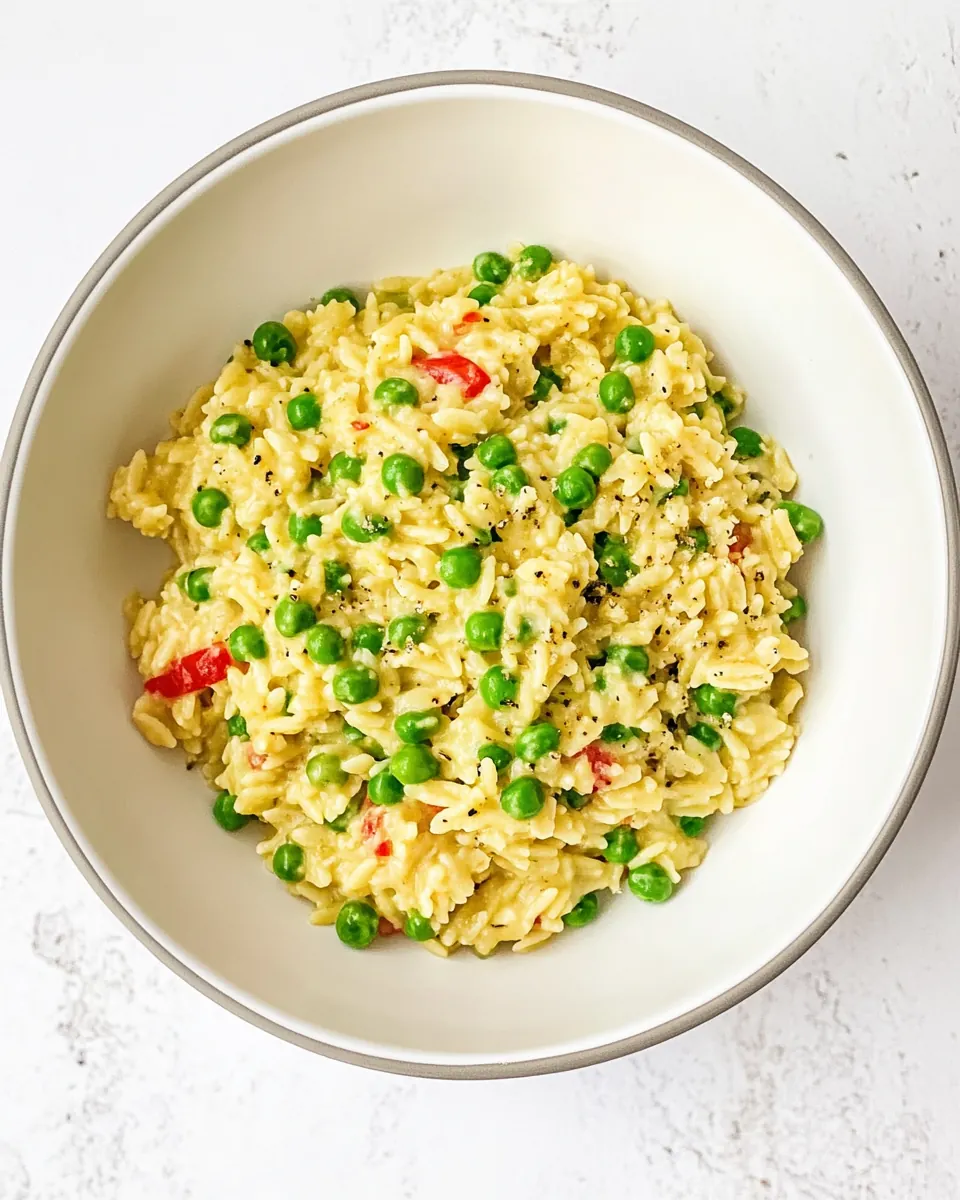
This method is straightforward, and the payoff is a silky, comfort-forward plate. I walk you through each step with sensory cues so you know when the orzo is ready, and I point out common slipups so your final texture is spot on.
- Add the olive oil to a large skillet or medium pot over medium heat. Add the onion and salt, and stir to coat. Cook for 4 minutes.: The moment the warm olive oil hits the pan you should sense a faint fruity aroma, and as the grated onion softens you will hear a gentle, steady sizzle. This step is about coaxing sweetness and mellow savory flavor from the onion , which forms the aromatic backbone of the dish. Keep the heat at medium so the onion sweats instead of browns, stirring occasionally until it turns translucent and fragrant, roughly four minutes. You want the texture to be tender and integrated, not caramelized, because browned bits can introduce an assertive flavor that competes with the delicate dairy finish. A common mistake is overheating the pan so the onion crisps at the edges; if that happens, reduce the heat and add a splash of broth to deglaze and recover the base.
- Add the broth, cover, and bring to a simmer.: When you pour in the warm broth, expect to see gentle steam and a change in the pot's aroma as the savory liquid mingles with the softened onion . Covering helps the temperature even out, and bringing it to a simmer is crucial because vigorous boiling can break the orzo later. A simmer creates steady, gentle bubbles that help the orzo cook evenly while releasing starch into the liquid. If your broth is cold, bring it to a near simmer before adding the orzo ; abrupt temperature shifts can lead to uneven cooking. Avoid a rolling boil, which can evaporate liquid too quickly and leave the pasta undercooked.
- Add the orzo and cook for 12-14 minutes, stirring occasionally, or until the liquid is almost absorbed and the pasta is tender. (It's okay if there is some liquid left when the pasta is tender as it will continue to be absorbed by the pasta.): As the orzo simmers, you will notice the pot growing creamier as starch leaches into the broth. The sound is a soft, rhythmic simmer and the surface will look slightly glossy. After about twelve minutes begin tasting a piece every minute; you are aiming for tender with a gentle bite, not mushy. Stirring occasionally prevents sticking and promotes even starch distribution, which yields that risotto like creaminess. If you see the pot drying out too fast, add a splash of hot broth, because maintaining gentle moisture is the secret to an evenly cooked orzo . A common pitfall is walking away and letting the bottom scorch, so stir and watch for visual cues like plump, opaque grains and a creamy sheen on the surface.
- Stir in the Parmesan, cream, butter, and peas; add lemon juice and zest, if using. Let sit for about 5 minutes to thicken, if needed. Serve warm.: Once the orzo reaches the desired tenderness, you will notice the pot release a rich, savory perfume as you fold in the grated Parmesan cheese . The cheese melting into the warm grain creates a thick, velvety sauce; adding the heavy cream softens the mouthfeel and smooths any edges. Fold in the cold butter last to enrich and produce a glossy finish. When you stir in the peas , they will go from frosty to bright green and tender in seconds, adding pops of sweetness. If you opt for lemon , its citrus scent will lift the dish immediately; use sparingly and taste as you go. Letting the pot sit for five minutes off heat lets the sauce bind and the flavors knit together. Overstirring while the dairy is still scorching hot can cause separation, so gentle incorporation followed by a brief rest is best. One common mistake is adding cold dairy to a scalding pot which can lead to curdling, so temper the dairy by stirring quickly and off the highest heat when possible.
- Serve warm.: The final presentation is simple: spoon the Orzotto with Peas into bowls while it is still glossy and slightly loose, so it continues to thicken at the table. You should notice a silky texture and a harmonious balance of savory, creamy, and bright notes. Serve immediately because the orzo will continue to absorb liquid as it cools, which can change the texture to denser. A common serving misstep is waiting too long to plate, which results in a stiff bowl; if this happens, stir in a splash of warm broth or a small pat of butter to revive the creaminess.
Tips and Tricks about Orzotto with Peas
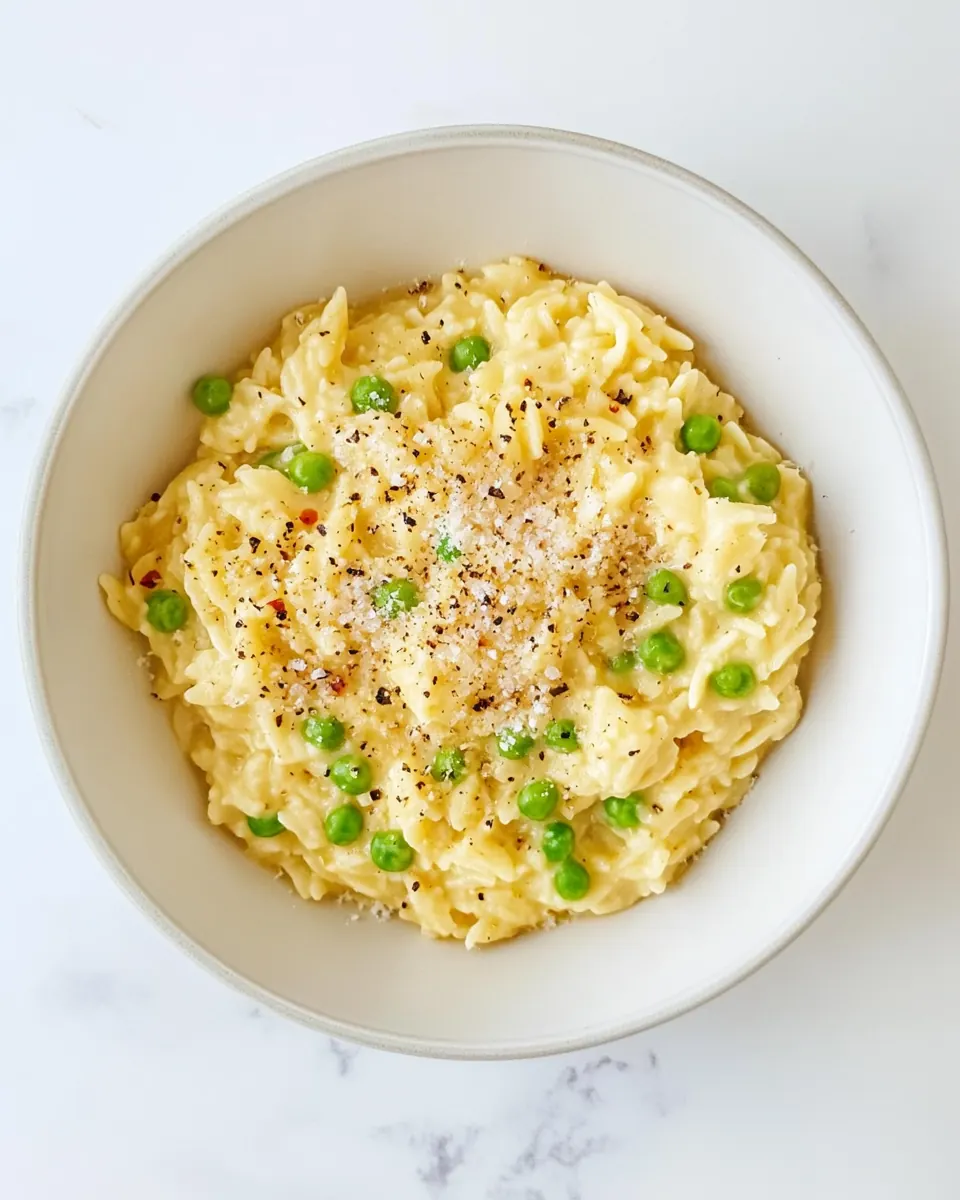
I like to keep a few practical moves in mind when making Orzotto with Peas so the result is consistent and satisfying. These tips focus on texture, temperature, and timing so you get a glossy finish and bright flavor every time.
- Warm your broth: Heating the broth slightly before adding it to the pot keeps the cooking temperature steady and helps the orzo come to a gentle simmer quickly, which promotes even cooking and prevents a gummy texture.
- Grate cheese fresh: Freshly grated Parmesan cheese melts more smoothly and offers brighter umami than pre grated options, improving both flavor and mouthfeel dramatically.
- Control salt carefully: Because the broth and Parmesan cheese contribute sodium, add a small amount of salt early and adjust after you mix in the cheese and cream to avoid over seasoning.
- Use frozen peas for convenience: Frozen peas thaw quickly and keep a firm pop when added at the end, delivering sweet, fresh flavor with minimal fuss.
- Finish off heat: Stir in the Parmesan cheese, butter, and cream off the burner when possible to avoid overheating the dairy, which can cause separation or a grainy texture.
- Revive leftovers gently: If the dish firms up in the fridge, stir in a splash of warm broth while reheating in short bursts to restore the original creaminess without overcooking the grains.
How to Enjoy Orzotto with Peas
This dish fits so many moments, from casual weeknight dinners to relaxed weekend lunches with friends. Below are serving suggestions, pairings, and storage notes to help you enjoy the pot to its fullest.
- Weeknight dinner: Serve Orzotto with Peas warm with a simple green salad on the side, the fresh greens cutting the richness and keeping the meal balanced for an easy family supper.
- Light lunch: Spoon a smaller portion into a shallow bowl for lunch, pairing it with crusty bread or a lemon dressed arugula salad to add a peppery contrast that brightens the plate.
- Occasions and gatherings: This recipe scales well, so for small gatherings you can make a larger pot and serve it family style, finishing with extra grated Parmesan cheese at the table so guests can season to taste.
- Storage tips: Cool leftovers quickly and store in an airtight container for up to five days. To reheat, sprinkle with a little water or broth and heat in 30 second increments, stirring between bursts, until warm and coating the orzo again.
- Seasonal pairings: In spring I love adding extra fresh peas or herbs on top for brightness. The subtle green notes complement the creamy base and make the dish feel lighter for warmer days.
- Serving style: For an elegant touch, serve in shallow bowls and finish with a small knob of butter and a light grating of Parmesan cheese, letting guests stir it in so each portion looks freshly finished.
FAQ
Conclusion
What makes this recipe special is its ability to be both effortless and deeply satisfying, with a creamy texture and bright accents from peas and lemon. The technique of cooking orzo in broth until it releases starch creates a silky sauce that feels luxurious without elaborate steps. I encourage you to give Orzotto with Peas a try on a weeknight when you want comfort and speed together. It’s a forgiving dish, straightforward to scale, and rewarding in the way a simple, well executed dinner should be.
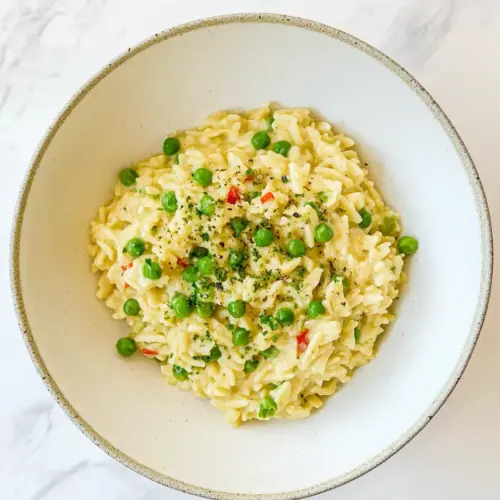
Orzotto with Peas
Equipment
- Calphalon 5-Quart Pot
- Storage Containers
- Cutting Board
Ingredients
- 2 tablespoons olive oil Heat and flavor the pan; provides a fruity base with a moderate smoke point ideal for sautéing onions and toasting orzo briefly.
- 1 small yellow onion (peeled and grated) Add sweetness and savory depth when grated; releases juices and integrates smoothly into the cooking liquid for a silky texture.
- 1/4 teaspoon salt Season and enhance other flavors; helps draw out moisture from the onion and balances the richness of the cream and butter.
- 1 quart reduced-sodium chicken broth (or vegetable broth) Supply simmering liquid and savory backbone; keeps orzo cooking evenly while contributing mild, savory notes without overpowering the dish.
- 8 ounces orzo pasta Provide the primary body and texture; cooks to a tender, rice-like consistency that absorbs the flavored broth and creamy elements.
- 1 cup grated Parmesan cheese Contribute salty, nutty umami and creamy mouthfeel when stirred in; helps bind the sauce and brighten the overall flavor.
- 1 cup heavy cream (or half-and-half) Impart richness and a luscious finish; creates a velvety sauce that clings to the orzo and carries the cheese and peas.
- 2 tablespoons unsalted butter Add glossy finish and rounded flavor; melts into the warm orzo to enhance silkiness and provide a buttery mouthfeel.
- 1 cup frozen peas Introduce fresh color and sweet, vegetal pops; thaws quickly in the hot orzo, adding contrast in texture and flavor.
- Juice and zest from 1/2 lemon (optional) Brighten and lift the dish with acidity and aromatic oils; optional citrus adds a fresh counterpoint to the creamy, savory elements.
Instructions
- Add the olive oil to a large skillet or medium pot over medium heat. Add the onion and salt, and stir to coat. Cook for 4 minutes.: The moment the warm olive oil hits the pan you should sense a faint fruity aroma, and as the grated onion softens you will hear a gentle, steady sizzle. This step is about coaxing sweetness and mellow savory flavor from the onion , which forms the aromatic backbone of the dish. Keep the heat at medium so the onion sweats instead of browns, stirring occasionally until it turns translucent and fragrant, roughly four minutes. You want the texture to be tender and integrated, not caramelized, because browned bits can introduce an assertive flavor that competes with the delicate dairy finish. A common mistake is overheating the pan so the onion crisps at the edges; if that happens, reduce the heat and add a splash of broth to deglaze and recover the base.
- Add the broth, cover, and bring to a simmer.: When you pour in the warm broth, expect to see gentle steam and a change in the pot's aroma as the savory liquid mingles with the softened onion . Covering helps the temperature even out, and bringing it to a simmer is crucial because vigorous boiling can break the orzo later. A simmer creates steady, gentle bubbles that help the orzo cook evenly while releasing starch into the liquid. If your broth is cold, bring it to a near simmer before adding the orzo ; abrupt temperature shifts can lead to uneven cooking. Avoid a rolling boil, which can evaporate liquid too quickly and leave the pasta undercooked.
- Add the orzo and cook for 12-14 minutes, stirring occasionally, or until the liquid is almost absorbed and the pasta is tender. (It's okay if there is some liquid left when the pasta is tender as it will continue to be absorbed by the pasta.): As the orzo simmers, you will notice the pot growing creamier as starch leaches into the broth. The sound is a soft, rhythmic simmer and the surface will look slightly glossy. After about twelve minutes begin tasting a piece every minute; you are aiming for tender with a gentle bite, not mushy. Stirring occasionally prevents sticking and promotes even starch distribution, which yields that risotto like creaminess. If you see the pot drying out too fast, add a splash of hot broth, because maintaining gentle moisture is the secret to an evenly cooked orzo . A common pitfall is walking away and letting the bottom scorch, so stir and watch for visual cues like plump, opaque grains and a creamy sheen on the surface.
- Stir in the Parmesan, cream, butter, and peas; add lemon juice and zest, if using. Let sit for about 5 minutes to thicken, if needed. Serve warm.: Once the orzo reaches the desired tenderness, you will notice the pot release a rich, savory perfume as you fold in the grated Parmesan cheese . The cheese melting into the warm grain creates a thick, velvety sauce; adding the heavy cream softens the mouthfeel and smooths any edges. Fold in the cold butter last to enrich and produce a glossy finish. When you stir in the peas , they will go from frosty to bright green and tender in seconds, adding pops of sweetness. If you opt for lemon , its citrus scent will lift the dish immediately; use sparingly and taste as you go. Letting the pot sit for five minutes off heat lets the sauce bind and the flavors knit together. Overstirring while the dairy is still scorching hot can cause separation, so gentle incorporation followed by a brief rest is best. One common mistake is adding cold dairy to a scalding pot which can lead to curdling, so temper the dairy by stirring quickly and off the highest heat when possible.
- Serve warm.: The final presentation is simple: spoon the Orzotto with Peas into bowls while it is still glossy and slightly loose, so it continues to thicken at the table. You should notice a silky texture and a harmonious balance of savory, creamy, and bright notes. Serve immediately because the orzo will continue to absorb liquid as it cools, which can change the texture to denser. A common serving misstep is waiting too long to plate, which results in a stiff bowl; if this happens, stir in a splash of warm broth or a small pat of butter to revive the creaminess.
Notes
- Warm your broth: Heating the broth slightly before adding it to the pot keeps the cooking temperature steady and helps the orzo come to a gentle simmer quickly, which promotes even cooking and prevents a gummy texture.
- Grate cheese fresh: Freshly grated Parmesan cheese melts more smoothly and offers brighter umami than pre grated options, improving both flavor and mouthfeel dramatically.
- Control salt carefully: Because the broth and Parmesan cheese contribute sodium, add a small amount of salt early and adjust after you mix in the cheese and cream to avoid over seasoning.
- Use frozen peas for convenience: Frozen peas thaw quickly and keep a firm pop when added at the end, delivering sweet, fresh flavor with minimal fuss.
- Finish off heat: Stir in the Parmesan cheese, butter, and cream off the burner when possible to avoid overheating the dairy, which can cause separation or a grainy texture.
- Revive leftovers gently: If the dish firms up in the fridge, stir in a splash of warm broth while reheating in short bursts to restore the original creaminess without overcooking the grains.
