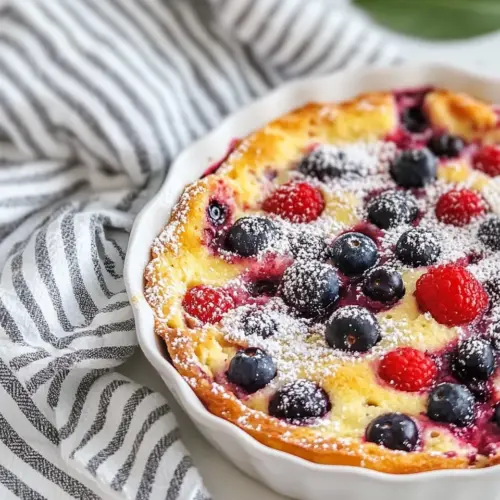
Flaugnarde of Mixed Berries
Flaugnarde of Mixed Berries is a light, custardy fruit bake with a tender texture and juicy pockets of berry sweetness. This easy summer dessert is creamy yet bright, making it an ideal easy weeknight dessert or brunch showstopper. With simple ingredients and minimal fuss, it is a compelling reason to celebrate ripe berries while they are at their peak.
Equipment
- Baking Dish
- Whisk
- Large Bowl
- Wire Rack
Ingredients
- 2 1/2 cups mixed fresh berries, such as blackberries, blueberries, raspberries Provide vibrant tartness and natural sweetness while contributing texture and color to the flaugnarde; toss gently to distribute evenly and prevent crushing, and scatter across the batter before baking for even fruit pockets.
- 3 large eggs Bind the custard base and give structure to the batter by coagulating proteins when heated; whisk until smooth and slightly aerated to yield a tender, set custard that holds the fruit in place.
- 10 tbsp light agave nectar, or sugar Sweeten the batter and promote browning during baking while adding moisture; dissolve fully into the eggs or milk to ensure an even sweetness and adjust amount to taste based on berry tartness.
- 1/2 cup unbleached all-purpose flour, sifted Thicken the custard and provide body to the flaugnarde, creating a delicate, pancake-like texture; sift and incorporate gradually to avoid lumps and maintain a light, tender crumb.
- 1/8 tsp salt Enhance overall flavor balance by intensifying sweetness and rounding other tastes; dissolve into the dry ingredients to ensure even season and prevent any metallic notes in the finished custard.
- 1 cup 1% milk Add creaminess and loosen the batter to create a silky custard texture while contributing mild dairy richness; incorporate gradually to control consistency and avoid overrun that could thin the batter too much.
- 2 tsp vanilla extract Impart aromatic sweetness and depth to the batter, enhancing the fruit flavors and rounding the custard’s profile; add with the milk or eggs for uniform distribution and subtle perfume.
- powdered sugar for dusting Add a delicate finishing touch of sweetness and visual appeal by dusting lightly over the cooled flaugnarde; sprinkle just before serving to avoid melting into the surface and blurring decorative contrast.
- baking spray Prevent sticking and allow the flaugnarde to release cleanly from the pan while browning evenly; coat the baking dish thoroughly before adding batter to ensure an intact, attractive presentation.
Instructions
- Preheat the oven to 350 F°.: The moment you preheat, the kitchen begins to smell faintly warm and anticipatory, and your oven reaches the steady environment the flaugnarde needs to set evenly. You want the oven fully warmed so the batter puffs gently and cooks through without overbrowning. A common mistake is putting the dish into a not fully heated oven, which can cause uneven rising and a dense center. Listen for the oven clicking off the preheat cycle, and if you have an oven thermometer, confirm it reads around 350 F° to ensure accuracy.
- Lightly spray a baking dish with baking spray and dust with a little flour. Toss in the berries.: The scented oil from the spray and the dusting of flour create a release layer, so the flaugnarde lifts cleanly when sliced. As you toss the mixed fresh berries into the dish, you'll hear a soft patting sound and notice the colorful fruit settling into a casual pattern. This layering helps fruit remain distributed rather than sinking. Avoid packing the berries tightly, because overcrowding can yield soggy pockets rather than beautifully roasted bits. If you skip dusting, the bottom may stick, making serving messy.
- Whisk the eggs, agave, salt, and flour together in a large bowl until smooth. Add the milk and vanilla extract. Whisk until smooth then pour into the baking dish.: As you whisk, the batter will take on a satiny texture, no lumps visible, and a faint vanilla aroma will emerge. The batter should be smooth enough to coat the back of a spoon, indicating proper emulsification between the eggs , flour , and milk . Pouring the mixture over the fruit, you will see the berries sink slightly and the batter weave around them. The reason this order matters is to prevent flour lumps and ensure an even bake. A typical error is not fully dissolving the sweetener, which leaves a gritty texture, so whisk until everything seems homogenous.
- Bake for 45 - 50 minutes or until lightly browned and a toothpick inserted into the center comes out clean.: During baking the kitchen fills with a warm aroma of cooked berries and vanilla, and the top develops a gentle golden color. You may hear soft crackling as the top sets, and the edges will pull away slightly from the dish. The toothpick test verifies the custard has set without being overbaked. If you bake too long, the texture will dry out, so begin checking around 45 minutes. An often overlooked sign of doneness is a slight jiggle in the center, which is acceptable because it will continue to set as it cools.
- When you pull it out of the oven it will wiggle a bit which is completely normal. Cool on a wire rack. The flaugnarde will have puffed up a bit and will deflate while cooling.: As it rests, you will smell intensified berry sweetness and notice steam gently rising. The puffing and deflating are part of the custard setting process; it indicates air pockets collapsing and the structure stabilizing. Cooling on a wire rack prevents sogginess from trapped steam under the dish. Resist the urge to cut into it while piping hot, because the interior needs time to finish setting. A common pitfall is serving too soon and getting a runny interior, so be patient for a firmer texture.
- When cool, dust with powdered sugar and serve.: The final dusting of powdered sugar adds a refined visual contrast and a whisper of sweetness on top. As you slice, the surface yields a gentle crack and the fragrant berry aroma becomes more pronounced. Serve warm or at room temperature to catch the best texture, and observe the interplay of custard and fruit in each forkful. Avoid pre dusting too early, as moisture will dissolve the sugar and dull the presentation.
Notes
- Adjust sweetness to taste, if your berries are particularly sweet reduce the agave to avoid an overly sugary final dish.
- Sifting matters, sifting the flour eliminates lumps and creates a silkier batter that bakes more evenly and looks more refined.
- Room temperature eggs blend better, let eggs sit on the counter for a few minutes before whisking to avoid a lumpy batter and ensure a smooth custard.
- Use a shallow baking dish, a shallow dish encourages even baking and a pleasing ratio of browned edges to custardy center.
- Swap sweeteners carefully, if you replace agave with sugar, dissolve it fully in the eggs or milk to prevent graininess in the finished custard.
- Keep presentation simple, a light dusting of powdered sugar is all you need to make this dessert look elegant without overshadowing the berries.