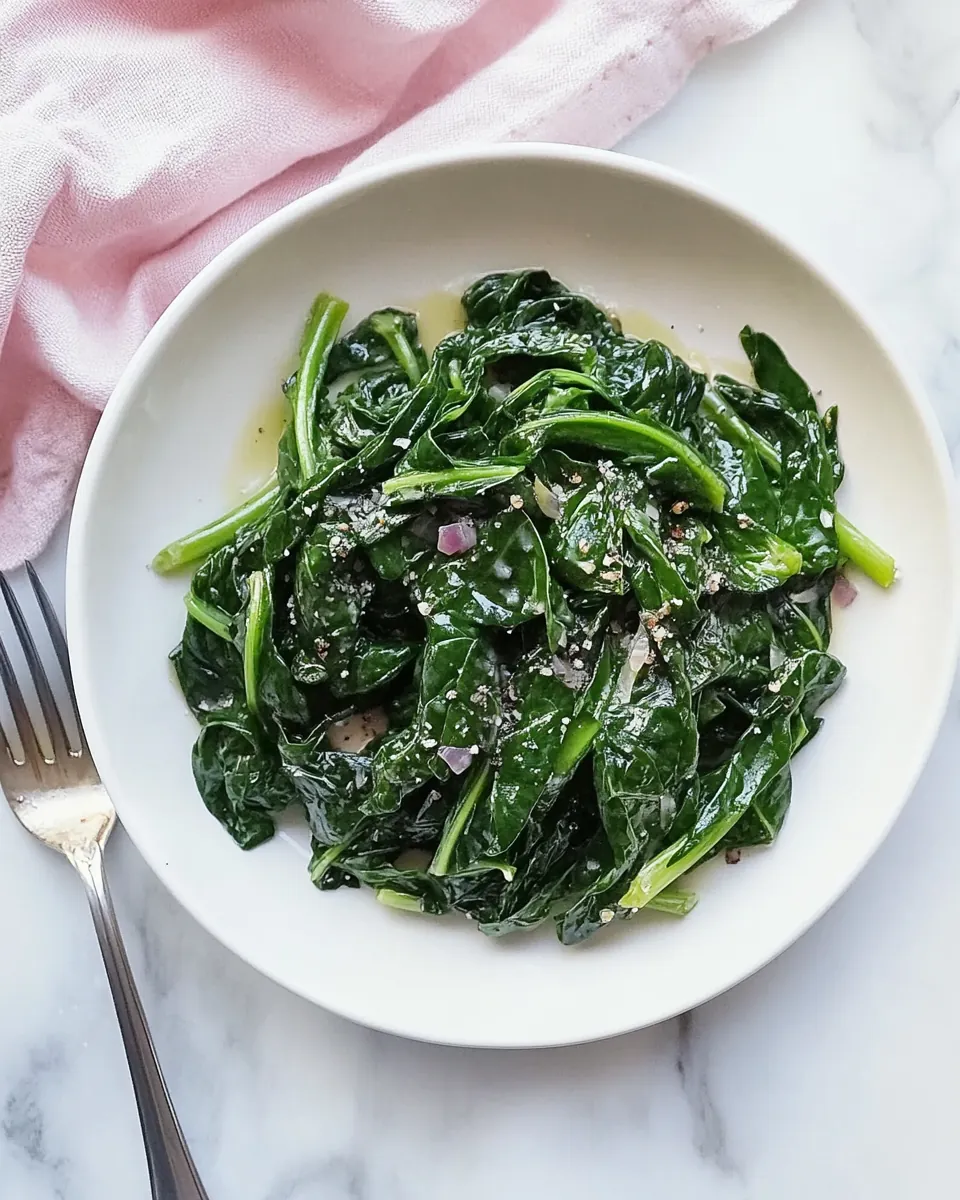
Wilted Spinach
Wilted Spinach is the kind of simple comfort I reach for when I want something green that feels both homey and a little indulgent. The first time I made Wilted Spinach I was rushing between errands, with a grocery bag full of produce and just a single skillet to save the day. I remember the sound of the garlic hitting the hot oil, that immediate fragrant puff that tells you dinner is actually happening, and the way the spinach collapsed into glossy, tender leaves in under a minute.
Over the years I’ve learned small rituals that make this humble dish sing. Sometimes I serve Wilted Spinach alongside roasted proteins on a weeknight, other times I spoon it over warm grains for a quick solo meal. Each time the result surprises me with its balance of bright, leafy texture and warm savory flavor. I often think of this as my kitchen’s little green rescue, the thing that turns an ordinary night into something quietly satisfying.
Recipe Snapshot
10 mins
5 mins
5 mins
Easy
60 kcal
Mediterranean
Vegan, Gluten-Free
Side Dishes
Large skillet, Tongs
Why Try This Wilted Spinach
Speed and Simplicity
I love that Wilted Spinach comes together faster than you can decide what else to cook. The minimal ingredients and the short skillet time mean you get a fresh vegetable on the table in minutes, which keeps weeknight stress low and flavor high. For me, speed does not mean sacrificing taste, and this dish proves it.
Punchy Garlic Flavor
The aroma of garlic sizzling in olive oil is a small ritual I savor. That first minute of sautéing releases a savory perfume that flavors every leaf. Because the garlic is gently cooked rather than burned, it lends sweetness and depth which clings to the spinach beautifully.
Versatility at Its Best
Wilted Spinach is a true kitchen workhorse. I use it as a bed for roasted fish, stirred into pasta, or spooned over bowls of grains. Its mildness makes it adaptable to many palettes, and the texture adds a reassuring warmth to otherwise cool plates.
Nutrition Without Fuss
I appreciate how Wilted Spinach packs nutrients without complicated prep. A quick rinse and a moment in the pan retain bright color and vitamins, so you get a nourishing side with little effort. That ease encourages me to eat greens more frequently, which is always a good thing.
Consistent Results
Because the technique is straightforward, you get reliably tender, glossy leaves each time. I rely on Wilted Spinach when I need something predictable but pleasing, and the simple seasoning of salt and pepper keeps the flavors clean and comforting.
Recipe Ingredients for Wilted Spinach
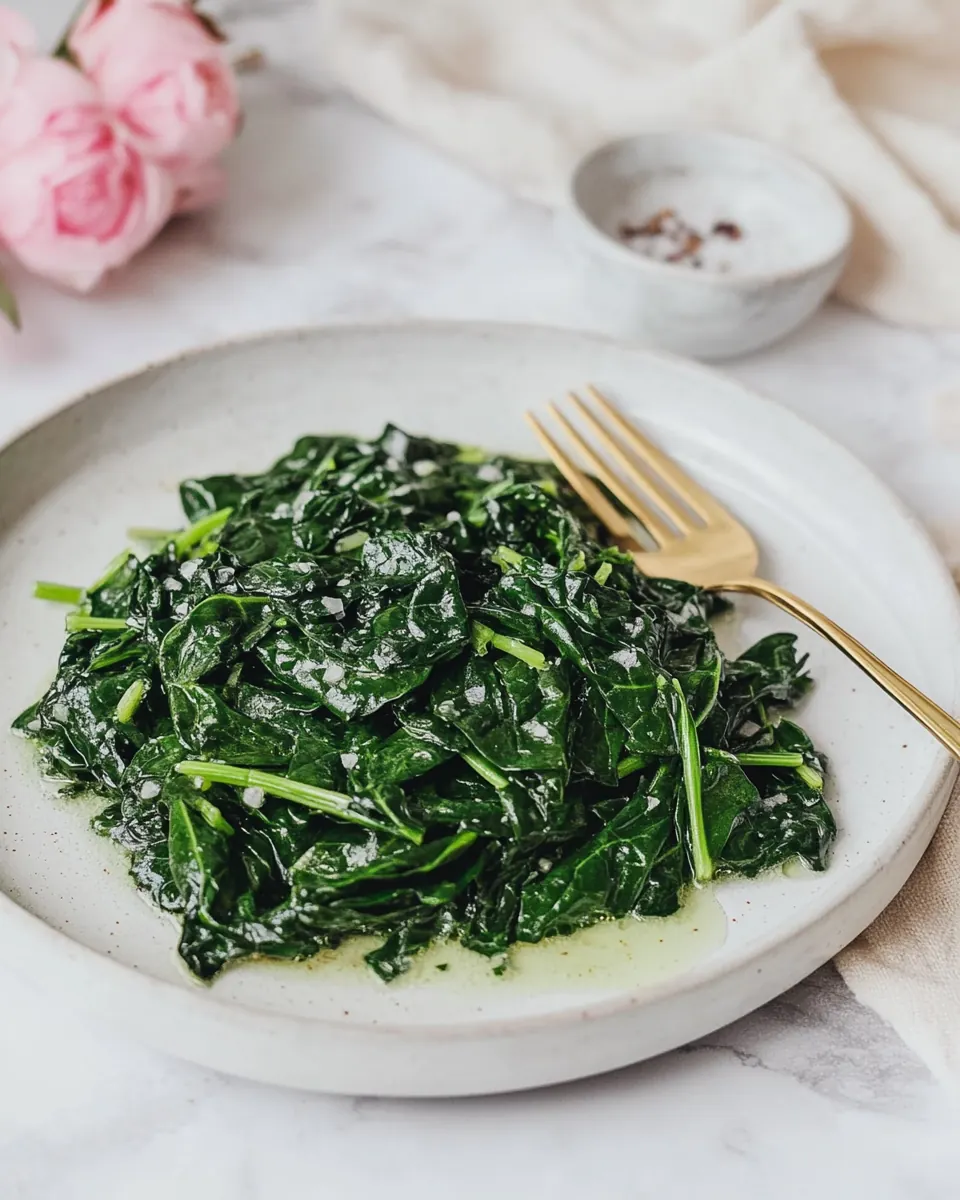
These ingredients are deliberately short and focused, built to highlight the freshness of the leaves and the aromatic lift from the seasoning. The key players are the leafy spinach, the fragrant garlic, and the silky olive oil. They work together to create a glossy coating that carries seasoning deep into the folds of the wilted leaves.
- 10 ounces fresh spinach: Provide a tender base that wilts quickly when heated, offering a mild, slightly earthy flavor and vibrant green color; toss gently so leaves soften without becoming soggy and retain nutrients and visual appeal.
- 2 tablespoons olive oil: Add a fruity, mellow fat that helps transfer heat and prevent sticking; warm before adding garlic to bloom aromatics and create a glossy coating on the spinach for better texture and mouthfeel.
- 2 cloves garlic minced: Deliver pungent, aromatic notes that infuse the oil with savory depth; mince finely and sauté briefly until fragrant to avoid bitterness while building the dish's flavor foundation.
- Salt and pepper to taste: Season to enhance and balance flavors, using salt to bring out the spinach's natural taste and pepper to add subtle heat; adjust to preference and taste at the end to avoid over-salting.
How to Prepare Wilted Spinach
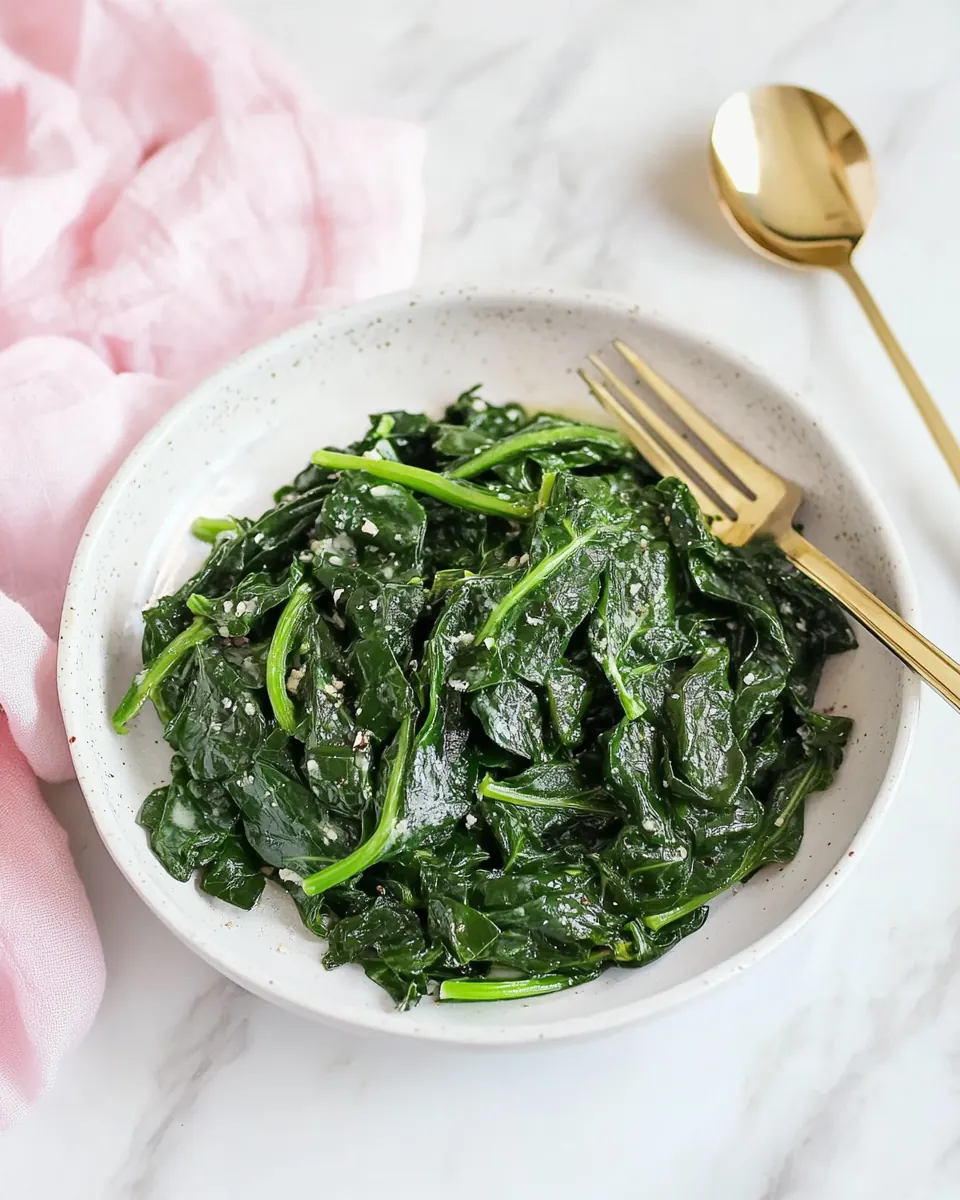
These few steps transform raw leaves into tender, glossy greens. I often say that paying attention to small sensory cues makes the technique foolproof, so listen and smell as you go to know when the pan is ready and when the spinach is perfectly wilted.
- Rinse the spinach leaves and shake off excess water, but keep them slightly damp.: Right after rinsing, you should still feel a slight dampness on the leaves, not dripping wet. That cling of moisture helps the leaves steam and wilt gently, creating a tender texture and a glossy finish. You will notice a fresh, green scent as you handle them. A common mistake is leaving the leaves soaking, which dilutes flavor and makes the pan sputter excessively when you add them, so aim for slightly damp rather than saturated.
- Heat olive oil over medium heat in a large skillet. Add minced garlic and sauté until fragrant, about 1 minute.: The oil should shimmer gently when ready, sending up a faint aromatic hum but not smoking. Medium heat allows the garlic to release its sweet, aromatic oils into the pan without burning. You can test readiness by flicking a drop of water into the oil to see a soft sizzle. An error I often see is using too high heat, which can scorch the garlic quickly and leave a bitter note, so keep it moderate.
- Add the damp spinach leaves to the skillet. Season with salt and black pepper. Toss with tongs for about 2-3 minutes, until the spinach is just wilted. Remove from heat immediately.: Within seconds the kitchen will fill with the warm, savory smell of garlic softening in the olive oil . The sound here is subtle, a gentle sizzle, and the garlic will begin to turn pale gold. Watch it closely because it goes from fragrant to brown to bitter fast. If you notice any dark browning, remove the pan from heat briefly to stop the cooking and prevent an acrid flavor.
- Add the damp spinach leaves to the skillet: As soon as the leaves hit the pan you'll hear a louder sizzle and see them begin to collapse. The steam from their dampness helps wilt them quickly, and the oil and garlic cling to the surfaces, making the leaves glossy. Visually, they change from bright and puffed to dark and tender in moments. A frequent slip is overcrowding the pan so the leaves steam unevenly; if that happens, wilt in batches to keep texture consistent.
- Season with salt and black pepper: Sprinkle salt and freshly ground pepper evenly so the flavor is balanced across all leaves. The salt not only seasons but also helps draw out excess moisture, concentrating the spinach's flavor. Taste a small portion to adjust seasoning, because wilted spinach tastes more intense than raw. Avoid over-salting early on, since the concentration increases as the liquid reduces.
- Toss with tongs for about 2 to 3 minutes until the spinach is just wilted: Use tongs to gently turn the leaves so the oil and garlic coat every piece, listening for a softer sizzle as the water content decreases. The right moment is when leaves are tender but not limp, retaining a touch of structure and a vibrant dark green color. If you continue cooking past this point they will become mushy and lose their bright appeal. A common troubleshooting tip is to remove the pan from heat slightly earlier and let residual warmth finish the wilting.
- Remove from heat immediately: Taking the skillet off the heat stops carryover cooking and keeps the leaves tender rather than overdone. You may notice the final shimmer of oil and the concentrated aroma of garlic when you lift the pan. Leaving it on the hot burner will darken the color and risk a soggy texture, so I always transfer it at once to a serving dish.
Pro Tips and Tweaks
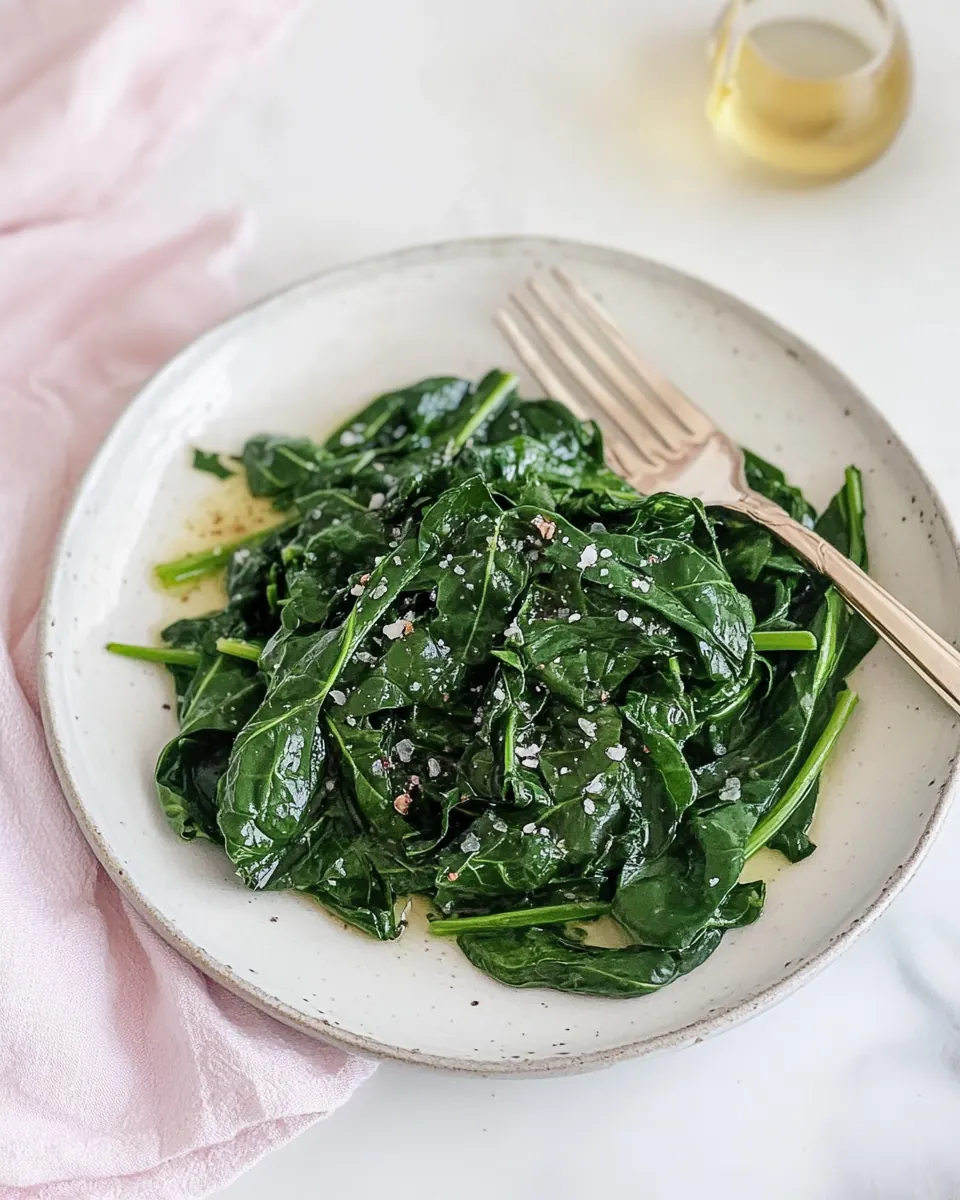
Even simple dishes benefit from small refinements. Below are practical tweaks I rely on to make Wilted Spinach sing, and adjustments you can use depending on your pantry and mood.
- Control the garlic browning Use medium heat and watch closely because garlic goes from golden to bitter very quickly. If you see it darken too fast, pull the pan off the burner briefly and swirl to cool.
- Keep leaves slightly damp The residual moisture helps steam and create a glossy finish, but too much water will dilute flavor and cause sputtering in the pan.
- Don’t overcrowd the pan Wilt in batches if needed, because overcrowding leads to uneven steaming and soggy texture rather than a quick, bright wilt.
- Taste and adjust at the end Flavor concentrates as the spinach wilts, so add a little salt and pepper after cooking rather than all at once at the beginning.
- Serve right away Spinach loses its best texture as it cools, so plan to plate it immediately after removing from the heat for optimal color and mouthfeel.
Serve This Wilted Spinach With
Wilted Spinach is flexible enough to pair with many mains and sides, and how you serve it can shift the meal tone from casual to more formal. Below are ideas for pairings, occasions, and storage that make the most of its texture and flavor.
- Weeknight mains Serve alongside roasted or pan seared proteins for a quick, balanced plate that works well for dinner. The clean flavors of the spinach complement richer mains without competing.
- Grain bowls Spoon the warm spinach over cooked grains for an easy lunch or light dinner opportunity. The wilted leaves add moisture and a tender bite that pairs well with hearty textures.
- Holiday and seasonal use In spring and other fresh produce seasons, use this as a bright side that balances heavier traditional dishes, adding a vibrant green to the table.
- Storage tips Store cooled spinach in an airtight container in the refrigerator for up to two days, though the best texture is immediate. Reheat gently in a skillet to refresh it without overcooking.
- Serving style Present the spinach warm, spooned onto plates or family style in a shallow bowl, so the glossy leaves retain their appeal and each diner can scoop as desired.
- Occasions Works well for weeknight dinners, light lunches, and as a simple side for gatherings where you want an easy vegetable that feels thoughtfully prepared.
FAQ
Conclusion
What makes this Wilted Spinach special is its ability to deliver big garlicky flavor and tender, glossy greens with almost no fuss. The quick sauté and slight steam from damp leaves create a comforting texture that complements many meals. I hope you give it a try the next time you need a fast, healthful side; it’s one of those small dishes that reliably elevates a dinner without demanding time or exotic ingredients. Enjoy the simple pleasure of warm, fragrant greens on your plate.
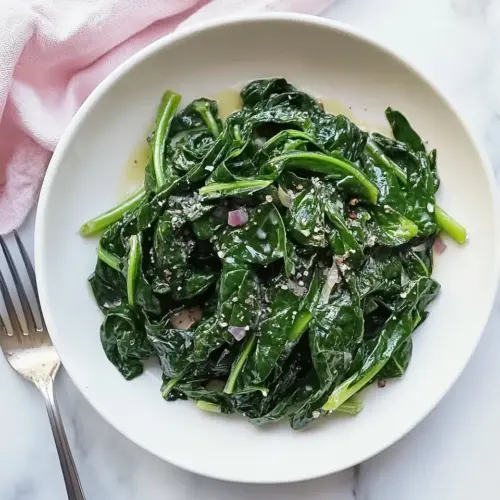
Wilted Spinach
Equipment
- Large Skillet
- Tongs
Ingredients
- 10 ounces fresh spinach Provide a tender base that wilts quickly when heated, offering a mild, slightly earthy flavor and vibrant green color; toss gently so leaves soften without becoming soggy and retain nutrients and visual appeal.
- 2 tablespoons olive oil Add a fruity, mellow fat that helps transfer heat and prevent sticking; warm before adding garlic to bloom aromatics and create a glossy coating on the spinach for better texture and mouthfeel.
- 2 cloves garlic minced Deliver pungent, aromatic notes that infuse the oil with savory depth; mince finely and sauté briefly until fragrant to avoid bitterness while building the dish's flavor foundation.
- Salt and pepper to taste Season to enhance and balance flavors, using salt to bring out the spinach's natural taste and pepper to add subtle heat; adjust to preference and taste at the end to avoid over-salting.
Instructions
- Rinse the spinach leaves and shake off excess water, but keep them slightly damp.: Right after rinsing, you should still feel a slight dampness on the leaves, not dripping wet. That cling of moisture helps the leaves steam and wilt gently, creating a tender texture and a glossy finish. You will notice a fresh, green scent as you handle them. A common mistake is leaving the leaves soaking, which dilutes flavor and makes the pan sputter excessively when you add them, so aim for slightly damp rather than saturated.
- Heat olive oil over medium heat in a large skillet. Add minced garlic and sauté until fragrant, about 1 minute.: The oil should shimmer gently when ready, sending up a faint aromatic hum but not smoking. Medium heat allows the garlic to release its sweet, aromatic oils into the pan without burning. You can test readiness by flicking a drop of water into the oil to see a soft sizzle. An error I often see is using too high heat, which can scorch the garlic quickly and leave a bitter note, so keep it moderate.
- Add the damp spinach leaves to the skillet. Season with salt and black pepper. Toss with tongs for about 2-3 minutes, until the spinach is just wilted. Remove from heat immediately.: Within seconds the kitchen will fill with the warm, savory smell of garlic softening in the olive oil . The sound here is subtle, a gentle sizzle, and the garlic will begin to turn pale gold. Watch it closely because it goes from fragrant to brown to bitter fast. If you notice any dark browning, remove the pan from heat briefly to stop the cooking and prevent an acrid flavor.
- Add the damp spinach leaves to the skillet: As soon as the leaves hit the pan you'll hear a louder sizzle and see them begin to collapse. The steam from their dampness helps wilt them quickly, and the oil and garlic cling to the surfaces, making the leaves glossy. Visually, they change from bright and puffed to dark and tender in moments. A frequent slip is overcrowding the pan so the leaves steam unevenly; if that happens, wilt in batches to keep texture consistent.
- Season with salt and black pepper: Sprinkle salt and freshly ground pepper evenly so the flavor is balanced across all leaves. The salt not only seasons but also helps draw out excess moisture, concentrating the spinach's flavor. Taste a small portion to adjust seasoning, because wilted spinach tastes more intense than raw. Avoid over-salting early on, since the concentration increases as the liquid reduces.
- Toss with tongs for about 2 to 3 minutes until the spinach is just wilted: Use tongs to gently turn the leaves so the oil and garlic coat every piece, listening for a softer sizzle as the water content decreases. The right moment is when leaves are tender but not limp, retaining a touch of structure and a vibrant dark green color. If you continue cooking past this point they will become mushy and lose their bright appeal. A common troubleshooting tip is to remove the pan from heat slightly earlier and let residual warmth finish the wilting.
- Remove from heat immediately: Taking the skillet off the heat stops carryover cooking and keeps the leaves tender rather than overdone. You may notice the final shimmer of oil and the concentrated aroma of garlic when you lift the pan. Leaving it on the hot burner will darken the color and risk a soggy texture, so I always transfer it at once to a serving dish.
Notes
- Control the garlic browning Use medium heat and watch closely because garlic goes from golden to bitter very quickly. If you see it darken too fast, pull the pan off the burner briefly and swirl to cool.
- Keep leaves slightly damp The residual moisture helps steam and create a glossy finish, but too much water will dilute flavor and cause sputtering in the pan.
- Don't overcrowd the pan Wilt in batches if needed, because overcrowding leads to uneven steaming and soggy texture rather than a quick, bright wilt.
- Taste and adjust at the end Flavor concentrates as the spinach wilts, so add a little salt and pepper after cooking rather than all at once at the beginning.
- Serve right away Spinach loses its best texture as it cools, so plan to plate it immediately after removing from the heat for optimal color and mouthfeel.