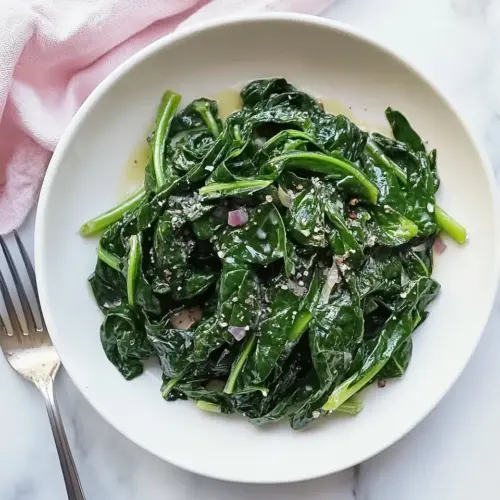
Wilted Spinach
Wilted Spinach is a quick, creamy textured side with garlicky aroma and glossy leaves, perfect for an easy weeknight dinner. Bright, tender spinach tossed in fragrant olive oil and minced garlic delivers big flavor with minimal effort. Make it when you need a healthy, fast green that pairs with almost any main, and enjoy a simple, satisfying reason to cook tonight.
Equipment
- Large Skillet
- Tongs
Ingredients
- 10 ounces fresh spinach Provide a tender base that wilts quickly when heated, offering a mild, slightly earthy flavor and vibrant green color; toss gently so leaves soften without becoming soggy and retain nutrients and visual appeal.
- 2 tablespoons olive oil Add a fruity, mellow fat that helps transfer heat and prevent sticking; warm before adding garlic to bloom aromatics and create a glossy coating on the spinach for better texture and mouthfeel.
- 2 cloves garlic minced Deliver pungent, aromatic notes that infuse the oil with savory depth; mince finely and sauté briefly until fragrant to avoid bitterness while building the dish's flavor foundation.
- Salt and pepper to taste Season to enhance and balance flavors, using salt to bring out the spinach's natural taste and pepper to add subtle heat; adjust to preference and taste at the end to avoid over-salting.
Instructions
- Rinse the spinach leaves and shake off excess water, but keep them slightly damp.: Right after rinsing, you should still feel a slight dampness on the leaves, not dripping wet. That cling of moisture helps the leaves steam and wilt gently, creating a tender texture and a glossy finish. You will notice a fresh, green scent as you handle them. A common mistake is leaving the leaves soaking, which dilutes flavor and makes the pan sputter excessively when you add them, so aim for slightly damp rather than saturated.
- Heat olive oil over medium heat in a large skillet. Add minced garlic and sauté until fragrant, about 1 minute.: The oil should shimmer gently when ready, sending up a faint aromatic hum but not smoking. Medium heat allows the garlic to release its sweet, aromatic oils into the pan without burning. You can test readiness by flicking a drop of water into the oil to see a soft sizzle. An error I often see is using too high heat, which can scorch the garlic quickly and leave a bitter note, so keep it moderate.
- Add the damp spinach leaves to the skillet. Season with salt and black pepper. Toss with tongs for about 2-3 minutes, until the spinach is just wilted. Remove from heat immediately.: Within seconds the kitchen will fill with the warm, savory smell of garlic softening in the olive oil . The sound here is subtle, a gentle sizzle, and the garlic will begin to turn pale gold. Watch it closely because it goes from fragrant to brown to bitter fast. If you notice any dark browning, remove the pan from heat briefly to stop the cooking and prevent an acrid flavor.
- Add the damp spinach leaves to the skillet: As soon as the leaves hit the pan you'll hear a louder sizzle and see them begin to collapse. The steam from their dampness helps wilt them quickly, and the oil and garlic cling to the surfaces, making the leaves glossy. Visually, they change from bright and puffed to dark and tender in moments. A frequent slip is overcrowding the pan so the leaves steam unevenly; if that happens, wilt in batches to keep texture consistent.
- Season with salt and black pepper: Sprinkle salt and freshly ground pepper evenly so the flavor is balanced across all leaves. The salt not only seasons but also helps draw out excess moisture, concentrating the spinach's flavor. Taste a small portion to adjust seasoning, because wilted spinach tastes more intense than raw. Avoid over-salting early on, since the concentration increases as the liquid reduces.
- Toss with tongs for about 2 to 3 minutes until the spinach is just wilted: Use tongs to gently turn the leaves so the oil and garlic coat every piece, listening for a softer sizzle as the water content decreases. The right moment is when leaves are tender but not limp, retaining a touch of structure and a vibrant dark green color. If you continue cooking past this point they will become mushy and lose their bright appeal. A common troubleshooting tip is to remove the pan from heat slightly earlier and let residual warmth finish the wilting.
- Remove from heat immediately: Taking the skillet off the heat stops carryover cooking and keeps the leaves tender rather than overdone. You may notice the final shimmer of oil and the concentrated aroma of garlic when you lift the pan. Leaving it on the hot burner will darken the color and risk a soggy texture, so I always transfer it at once to a serving dish.
Notes
- Control the garlic browning Use medium heat and watch closely because garlic goes from golden to bitter very quickly. If you see it darken too fast, pull the pan off the burner briefly and swirl to cool.
- Keep leaves slightly damp The residual moisture helps steam and create a glossy finish, but too much water will dilute flavor and cause sputtering in the pan.
- Don't overcrowd the pan Wilt in batches if needed, because overcrowding leads to uneven steaming and soggy texture rather than a quick, bright wilt.
- Taste and adjust at the end Flavor concentrates as the spinach wilts, so add a little salt and pepper after cooking rather than all at once at the beginning.
- Serve right away Spinach loses its best texture as it cools, so plan to plate it immediately after removing from the heat for optimal color and mouthfeel.