Asparagus and Chicken Enchiladas
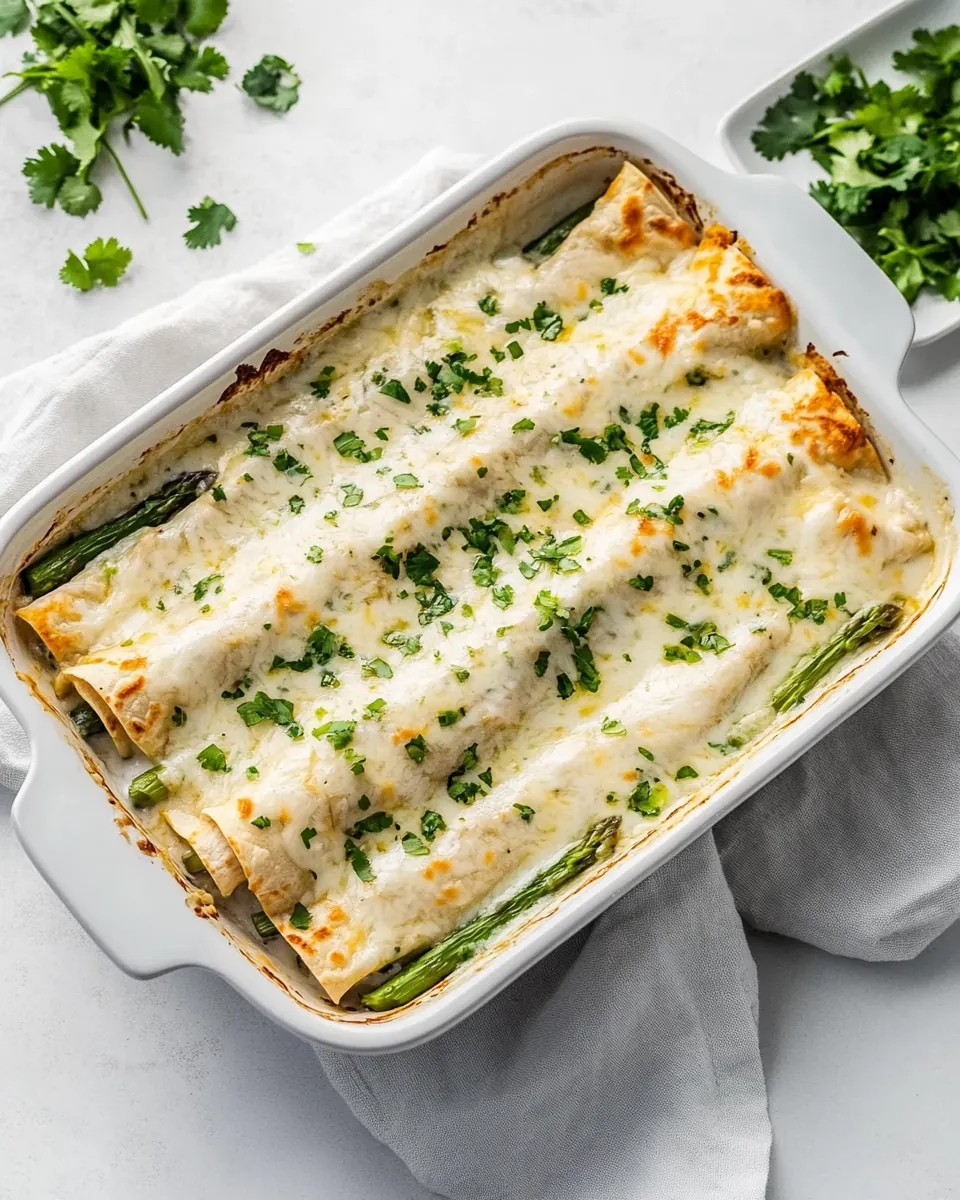
Asparagus and Chicken Enchiladas is one of those dishes I turn to when I want something comforting yet a little unexpected. The first time I made it I was balancing a tired weeknight and a bag of overly abundant asparagus from the farmer’s market, and the result surprised everyone at the table. I remember the moment I pulled the pan from the oven, the top bubbling and the edges turning a light golden color, feeling proud that simple ingredients could feel so celebratory.
I love how this recipe brings together tender chicken and crisp asparagus inside warm flour tortillas, all wrapped in a creamy, tangy sauce that tastes like home. There is a rhythm to assembling the enchiladas, a satisfying repetition that makes the kitchen feel calm. Each bite gives you a mix of textures, from the soft shredded chicken to the bright snap of asparagus and the melty, gooey Monterey Jack cheese. It is a crowd pleaser, but also one I make when I want leftovers that reheat beautifully for an easy next-day meal.
Recipe Snapshot
55 mins
25 mins
30 mins
Medium
400 kcal
Mexican
Gluten-Free, Low FODMAP
Dinner
Oven, Medium saucepan, Whisk, Glass baking dish
Why This Asparagus and Chicken Enchiladas Works
They balance fresh and comforting elements
I adore how Asparagus and Chicken Enchiladas bridge fresh seasonal produce and classic comfort. The asparagus adds a lively snap and green flavor that cuts through the richness of the creamy sauce and melted Monterey Jack cheese. I often choose this recipe in spring when markets are full of bright stalks, because it feels seasonal yet familiar.
Easy weeknight assembly with big payoff
We can assemble these enchiladas quickly, and the payoff is huge. The technique of rolling, arranging, and topping with sauce means the oven does most of the work, giving you time to set the table or relax for a moment. I appreciate recipes that let me be sociable while delivering bold flavor.
Versatile and forgiving
This recipe is forgiving about quantities and small swaps, which I count as a big plus. If you have a touch more chicken or a little less cheese, it still turns out well. The sauce binds everything and hides minor measurement slips, so you can cook with confidence even when life is hectic.
Textural contrast keeps each bite interesting
The combination of creamy sauce, melty cheese, tender shredded chicken, and just-blanched asparagus gives you a spectrum of textures. That contrast is what turns a simple casserole into a memorable meal. I find myself closing my eyes at the first bite, noticing the silky sauce and the slight bite of the vegetables.
Great for sharing and leftovers
I love that this recipe feeds a crowd and reheats beautifully. Whether you serve it for a family dinner or bring it to a potluck, the flavor holds up. Leftovers make a fantastic next-day lunch that tastes almost as good as fresh, and that reliability makes it a staple in my rotation.
Ingredients to Make Asparagus and Chicken Enchiladas
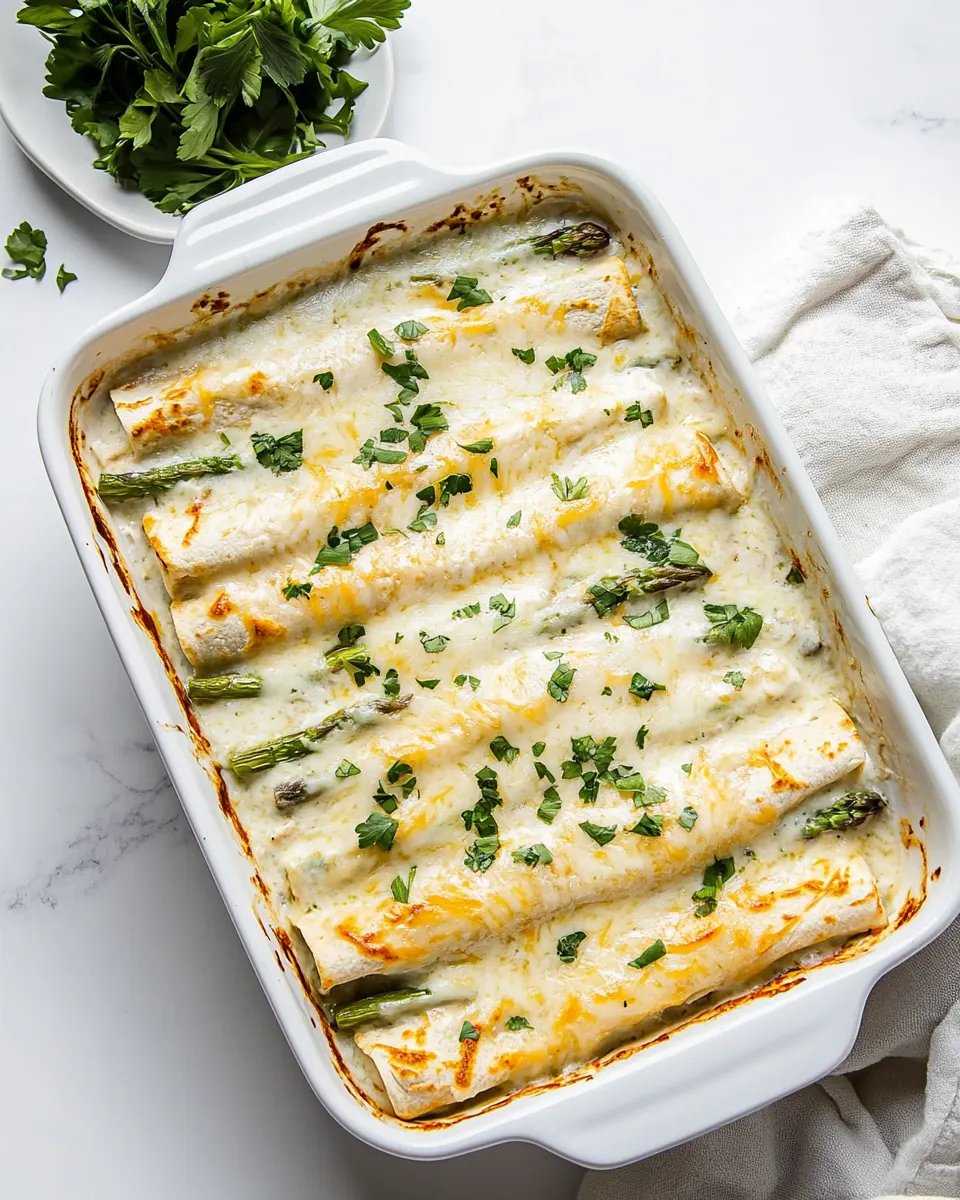
These ingredients are chosen to create a creamy, lightly tangy enchilada that highlights spring asparagus and hearty chicken. The sauce components build a velvety base, the cheeses add melt and richness, and the tortillas hold everything together. Each element plays a role in balancing texture and flavor so every bite feels cohesive.
- 1/2 cup (1 stick) butter: Melted adds richness and a silky mouthfeel to sauces and fillings; used to create a roux base for the enchilada sauce and to enrich the cream sauce that coats the filling. Provides buttery flavor and helps carry other seasonings into the dish for a cohesive taste experience.
- 1/2 cup all purpose flour: Whisked forms the roux when cooked with butter, which thickens the chicken broth into a smooth, velvety sauce for the enchiladas. Offers neutral, starchy body that stabilizes the sauce and contributes a tender texture to the final filling.
- 3 cups chicken broth: Simmered supplies the liquid backbone for the sauce, dissolving the roux to produce a flavorful, savory base that binds the filling together. Imparts chicken flavor and saline balance while helping achieve the desired saucy consistency for easy rolling and baking.
- 8 ounces sour cream: Folded into the sauce to add tang, creaminess, and a lush texture that rounds out the savory elements of the filling and topping. Balances acidity and provides a smooth finish that complements the green taco sauce and cheeses.
- 1/2 cup green taco sauce: Poured lends a tangy, mildly spicy flavor that seasons both the filling and the sauce, giving the enchiladas a characteristic enchilada-green profile. Contributes acidity and a touch of heat, helping to brighten rich dairy components.
- Twelve 8 inch flour tortillas: Wrapped serve as the vessel for the filling and melted cheeses, softening when warmed and holding shape after baking for easy serving. Provide a neutral, slightly chewy canvas that pairs well with creamy sauce, shredded chicken, and vegetables.
- 3 cups chicken, cooked and shredded: Mixed provides the protein and hearty texture for the enchilada filling, supplying savory depth and substance to each roll. Carries seasonings and absorbs sauce, ensuring flavorful, satisfying bites throughout the dish.
- 1/2 cup sweet onion, finely chopped: Sautéed adds sweetness and aromatic depth when softened, helping to build the flavor base for the filling without overpowering delicate asparagus and chicken. Offers a tender contrast and contributes subtle sharpness that melds with cheeses and sauces.
- 12 ounces Monterey Jack cheese, shredded: Sprinkled melts into the hot enchiladas, contributing a creamy, gooey texture and mild, buttery flavor that enhances the overall richness. Forms attractive, golden pockets of cheese and helps bind the filling components when baked.
- 2 1/2 pounds asparagus, trimmed and blanched: Blanched then chopped provides a bright, vegetal component with tender-crisp texture that complements the richness of the cheeses and cream sauce. Adds fresh, slightly grassy flavor and a pleasant springtime element that lightens the dish.
- 1/2 cup Parmesan cheese, grated: Grated finishes the casserole with nutty, savory notes and a delicate umami lift when sprinkled over or mixed into the filling. Enhances browning and adds a sharp, salty contrast that balances creaminess.
Putting Together Asparagus and Chicken Enchiladas
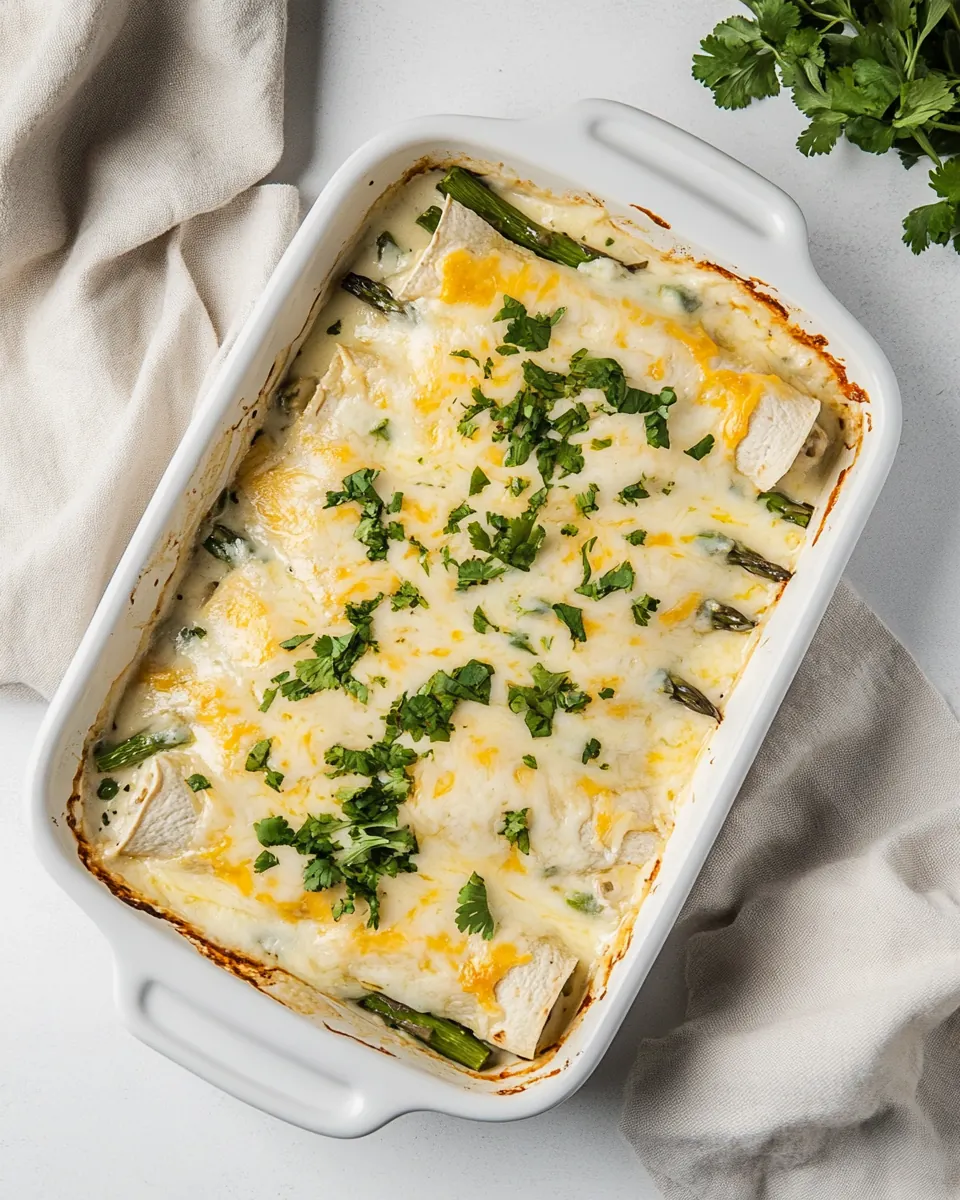
Assembling these enchiladas moves quickly once you have the sauce prepared and the filling ready. Work station organization will make rolling easier. Keep a warm damp towel over the tortillas if you need them more pliable while assembling.
- Preheat the oven to 425 ℉. Spray two 9×9 inch glass dishes (or one large 9×13 inch glass dish) with nonstick spray.: The kitchen fills with a steady wave of warm air as the oven climbs to temperature, and you may hear the hum and occasional click as it stabilizes. Getting the oven hot ensures the top of the enchiladas becomes slightly golden and the sauce bubbles up around the edges, which is a key visual cue that they are done. One reason this matters is that a properly preheated oven produces even baking, preventing soggy tortillas. A common mistake is putting the dish into an oven that is not fully heated, which can lengthen bake time and leave the interior less cohesive.
- In a medium saucepan, melt the butter over medium heat. Whisk in the flour and cook, stirring 1 minute. Gradually add the broth and cook, whisking, until thick (about 5 minutes). Remove from heat. Whisk in the sour cream and taco sauce and set aside.: The surfaces should glisten lightly to prevent sticking, and the nonstick coating also helps the underside of the enchiladas brown a touch. Using glass gives you visual feedback, so you can see bubbling around the edges. If you skip this step, cheese can glue the tortillas to the dish, making serving messy and difficult. Wipe any excess spray off the rim so it does not burn in the oven.
- Lay out a tortilla onto a working surface. Place 2 tablespoons of Jack cheese, 1/4 cup chicken, onions and asparagus down the center of the tortilla. Spoon 3 tablespoons of the sauce on top of the mixture. Roll and place seam down. Place 6 enchiladas in each dish. Sprinkle with Jack cheese, sauce and Parmesan.: As the butter melts it will foam and then settle, releasing a warm, nutty aroma. This is the foundation for the roux, and medium heat keeps the butter from browning too quickly. If the butter browns, the flavor may become more toasty than desired for this creamy sauce. Stir gently to promote even melting and avoid pockets of overheated fat.
- Bake for 25 minutes, or until light golden color and bubbly.: The mixture will thicken and take on a pasty texture, and you may notice a faint toasted scent as the raw flour cooks off. This brief cook prevents a floury taste in the finished sauce and ensures smooth thickening when liquid is added. Stir constantly to avoid clumps forming, and use a whisk to keep the texture silky. A common mistake is undercooking the flour, which can leave a raw flavor.
- Gradually add the broth and cook, whisking, until thick about 5 minutes: Pour the chicken broth slowly in a thin stream while whisking vigorously so the sauce becomes glossy and lump free. The sauce will transition from thin to creamy, and you should hear a gentle simmer as it thickens. This step builds the body of the sauce so it will cling to the filling. If you add the broth too quickly, you risk lumps, so patience and persistent whisking are key. If it flowers or separates, reduce the heat and whisk until smooth.
- Remove from heat: Once the sauce reaches a velvety thickness, lift the pan off the burner to prevent overcooking. This pause avoids breaking the emulsion when you add dairy. Leaving it on the heat can cause curdling when the sour cream is incorporated. If the pan sits too long and skin forms, whisk gently to reincorporate.
- Whisk in the sour cream and taco sauce and set aside: Adding the sour cream brings a tangy silkiness while the green taco sauce adds brightness and subtle spice; whisking until homogeneous gives the sauce its signature flavor and sheen. The sauce should be smooth and slightly runny, perfect for drizzling. If it seems too thin, it will still thicken in the oven as it bakes with the fillings; if clumpy, warm it gently while whisking. Avoid boiling after adding the sour cream to prevent separation.
- Lay out a tortilla onto a working surface: The tortillas should be room temperature and pliable; if they are stiff, briefly warming them will make rolling easier and prevent tearing. A soft tortilla folds neatly around the filling and forms a tidy roll that bakes evenly. Cold tortillas are more likely to crack when rolled, so warm them for a few seconds in a microwave or on a skillet.
- Place 2 tablespoons of Jack cheese, 1/4 cup chicken, onions and asparagus down the center of the tortilla: The filling balance here is crucial, offering a creamy, cheesy center, the savory chicken , the onion's sweet notes, and the crisp asparagus . Arrange ingredients so they form an even line; uneven distribution can cause some enchiladas to be overloaded while others are sparse. Overfilling will make rolling difficult and may cause sauce to leak during baking.
- Spoon 3 tablespoons of the sauce on top of the mixture: The sauce moistens the filling and helps the cheese melt into the chicken and vegetables, creating cohesive bites. Three tablespoons provides enough moisture without making the tortilla soggy. If you add too much sauce raw, tortillas may become limp; if too little, the filling can be dry after baking. Aim for an even coating that will meld during the oven time.
- Roll and place seam down: Rolling tightly but gently ensures each enchilada holds together and that the seam sits against the dish so it does not unroll while baking. A seam-down placement makes for a neat presentation and helps the tops brown evenly. If you roll too loosely the filling may spill, and if you roll too tightly you can squeeze out the sauce and compress the texture.
- Place 6 enchiladas in each dish: Arrange them snugly so they support each other, which helps maintain shape while the cheese melts and the sauce bubbles. This close placement also encourages even browning across the top. If you leave too much space between rolls, the edges can crisp excessively while the centers stay softer.
- Sprinkle with Jack cheese sauce and Parmesan: A final shower of Monterey Jack cheese and grated Parmesan cheese creates a luscious, golden surface that browns and bubbles invitingly. The cheeses develop flavor and texture as they melt, producing those irresistible pull-apart strands. Be sure the cheese is evenly distributed for consistent browning; clumps can burn and leave uneven texture.
- Bake for 25 minutes until light golden color and bubbly: As the dish bakes you will hear gentle bubbling and see the sauce rise slightly around the edges; the top should take on a pale golden tone and the cheese should be fully melted. This baking step sets the tortillas, melds flavors, and finishes the textural transformation. Overbaking will dry the enchiladas and toughen the tortillas, while underbaking leaves the interior cooler and less cohesive, so watch for those visual cues to determine doneness.
Ways to Customize
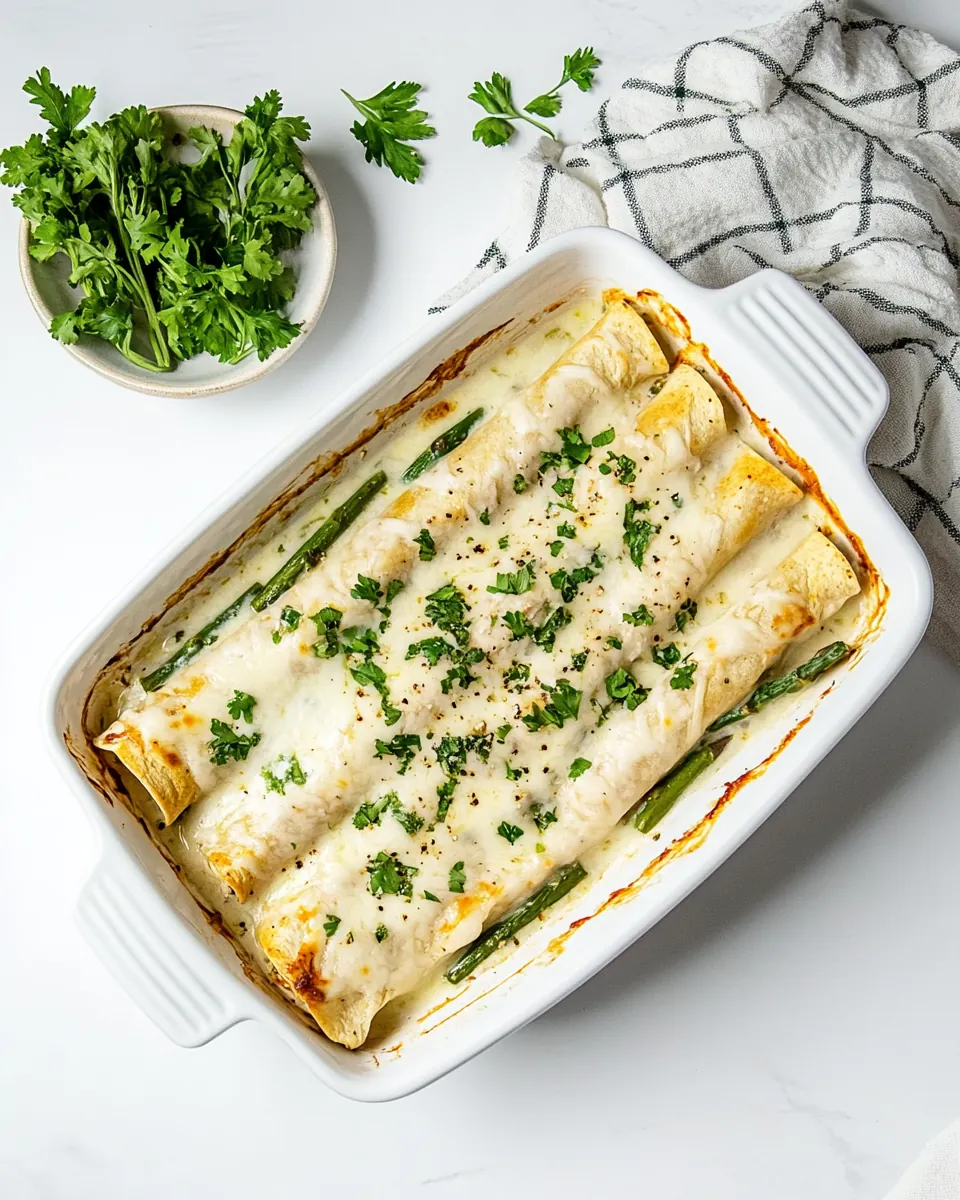
This dish is flexible and responds well to small tweaks that emphasize heat, herbiness, or texture. Below I share ways I like to tailor the recipe, each presented as a practical idea you can try without changing the core method.
- Add heat: If you want spice, stir in red pepper flakes or a few dashes of hot sauce into the sauce to lift the flavor without overpowering the asparagus.
- Mix cheeses: Try part Monterey Jack and part a sharper melting cheese to deepen the savory profile while keeping the gooey texture intact.
- Herb brightness: Fold chopped fresh herbs into the filling after baking to add a fresh contrast to the warm, creamy interior.
- Make ahead: Assemble the enchiladas, cover, and refrigerate for a few hours before baking to save time on a busy day while still achieving a fresh bake finish.
- Change tortillas: You can use larger tortillas to make fewer, heartier rolls if you prefer a more rustic presentation without changing the filling ratios significantly.
- Control texture: Blanch the asparagus for a shorter time for a crisper bite, or a touch longer for more tenderness, depending on your preference.
What Goes Well With This Asparagus and Chicken Enchiladas
These enchiladas pair well with bright, simple sides that balance the creamy richness. Think crisp salads or light vegetable sides to complement the warm, cheesy main. They work for weeknight dinners, brunches, or festive spring gatherings.
- Simple green salad: A lightly dressed leafy salad provides a refreshing counterpoint and cleanses the palate between rich bites.
- Roasted vegetables: Seasonal roasted vegetables offer warm earthiness and pair well for a heartier meal at dinner.
- Rice side: A plain or lightly seasoned rice helps soak up extra sauce and makes the meal more filling for family dinners.
- Occasions: Serve for lunch, casual dinner, or springtime gatherings when asparagus is plentiful; the dish feels appropriate for both everyday meals and special occasions.
- Storage tips: Refrigerate leftovers covered for up to four days and reheat gently in the oven so the cheese remelts evenly; individual portions reheat well in the microwave for convenience.
- Seasonal pairing: This recipe shines in spring when asparagus is in season, bringing brightness to the table while still feeling comforting.
FAQ
Conclusion
This recipe stands out because it marries seasonal brightness with classic, comforting flavors in a way that feels both elegant and approachable. The crisp snap of asparagus, the tender shredded chicken, and the creamy, cheesy sauce create a satisfying ensemble that works beautifully for weeknights or feeding a crowd. Give these enchiladas a try when asparagus is in season, and you may find it becoming a reliable favorite. I hope you enjoy the textures and flavors as much as I do, and that it adds a little extra joy to your table.
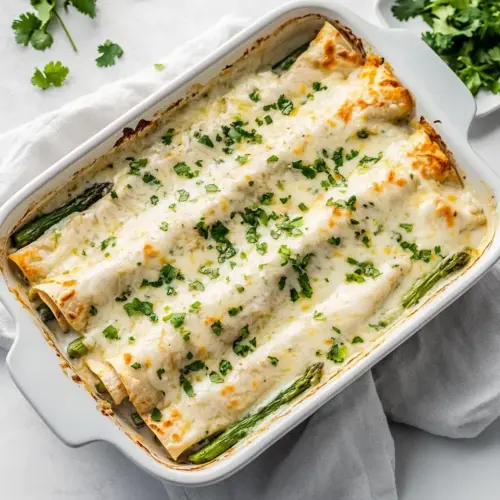
Asparagus and Chicken Enchiladas
Equipment
- Oven
- Medium Saucepan
- Whisk
- Glass baking dish
Ingredients
- 1/2 cup (1 stick) butter Melted adds richness and a silky mouthfeel to sauces and fillings; used to create a roux base for the enchilada sauce and to enrich the cream sauce that coats the filling. Provides buttery flavor and helps carry other seasonings into the dish for a cohesive taste experience.
- 1/2 cup all purpose flour Whisked forms the roux when cooked with butter, which thickens the chicken broth into a smooth, velvety sauce for the enchiladas. Offers neutral, starchy body that stabilizes the sauce and contributes a tender texture to the final filling.
- 3 cups chicken broth Simmered supplies the liquid backbone for the sauce, dissolving the roux to produce a flavorful, savory base that binds the filling together. Imparts chicken flavor and saline balance while helping achieve the desired saucy consistency for easy rolling and baking.
- 8 ounces sour cream Folded into the sauce to add tang, creaminess, and a lush texture that rounds out the savory elements of the filling and topping. Balances acidity and provides a smooth finish that complements the green taco sauce and cheeses.
- 1/2 cup green taco sauce Poured lends a tangy, mildly spicy flavor that seasons both the filling and the sauce, giving the enchiladas a characteristic enchilada-green profile. Contributes acidity and a touch of heat, helping to brighten rich dairy components.
- Twelve 8 inch flour tortillas Wrapped serve as the vessel for the filling and melted cheeses, softening when warmed and holding shape after baking for easy serving. Provide a neutral, slightly chewy canvas that pairs well with creamy sauce, shredded chicken, and vegetables.
- 3 cups chicken, cooked and shredded Mixed provides the protein and hearty texture for the enchilada filling, supplying savory depth and substance to each roll. Carries seasonings and absorbs sauce, ensuring flavorful, satisfying bites throughout the dish.
- 1/2 cup sweet onion, finely chopped Sautéed adds sweetness and aromatic depth when softened, helping to build the flavor base for the filling without overpowering delicate asparagus and chicken. Offers a tender contrast and contributes subtle sharpness that melds with cheeses and sauces.
- 12 ounces Monterey Jack cheese, shredded Sprinkled melts into the hot enchiladas, contributing a creamy, gooey texture and mild, buttery flavor that enhances the overall richness. Forms attractive, golden pockets of cheese and helps bind the filling components when baked.
- 2 1/2 pounds asparagus, trimmed and blanched Blanched then chopped provides a bright, vegetal component with tender-crisp texture that complements the richness of the cheeses and cream sauce. Adds fresh, slightly grassy flavor and a pleasant springtime element that lightens the dish.
- 1/2 cup Parmesan cheese, grated Grated finishes the casserole with nutty, savory notes and a delicate umami lift when sprinkled over or mixed into the filling. Enhances browning and adds a sharp, salty contrast that balances creaminess.
Instructions
- Preheat the oven to 425 ℉. Spray two 9×9 inch glass dishes (or one large 9×13 inch glass dish) with nonstick spray.: The kitchen fills with a steady wave of warm air as the oven climbs to temperature, and you may hear the hum and occasional click as it stabilizes. Getting the oven hot ensures the top of the enchiladas becomes slightly golden and the sauce bubbles up around the edges, which is a key visual cue that they are done. One reason this matters is that a properly preheated oven produces even baking, preventing soggy tortillas. A common mistake is putting the dish into an oven that is not fully heated, which can lengthen bake time and leave the interior less cohesive.
- In a medium saucepan, melt the butter over medium heat. Whisk in the flour and cook, stirring 1 minute. Gradually add the broth and cook, whisking, until thick (about 5 minutes). Remove from heat. Whisk in the sour cream and taco sauce and set aside.: The surfaces should glisten lightly to prevent sticking, and the nonstick coating also helps the underside of the enchiladas brown a touch. Using glass gives you visual feedback, so you can see bubbling around the edges. If you skip this step, cheese can glue the tortillas to the dish, making serving messy and difficult. Wipe any excess spray off the rim so it does not burn in the oven.
- Lay out a tortilla onto a working surface. Place 2 tablespoons of Jack cheese, 1/4 cup chicken, onions and asparagus down the center of the tortilla. Spoon 3 tablespoons of the sauce on top of the mixture. Roll and place seam down. Place 6 enchiladas in each dish. Sprinkle with Jack cheese, sauce and Parmesan.: As the butter melts it will foam and then settle, releasing a warm, nutty aroma. This is the foundation for the roux, and medium heat keeps the butter from browning too quickly. If the butter browns, the flavor may become more toasty than desired for this creamy sauce. Stir gently to promote even melting and avoid pockets of overheated fat.
- Bake for 25 minutes, or until light golden color and bubbly.: The mixture will thicken and take on a pasty texture, and you may notice a faint toasted scent as the raw flour cooks off. This brief cook prevents a floury taste in the finished sauce and ensures smooth thickening when liquid is added. Stir constantly to avoid clumps forming, and use a whisk to keep the texture silky. A common mistake is undercooking the flour, which can leave a raw flavor.
- Gradually add the broth and cook, whisking, until thick about 5 minutes: Pour the chicken broth slowly in a thin stream while whisking vigorously so the sauce becomes glossy and lump free. The sauce will transition from thin to creamy, and you should hear a gentle simmer as it thickens. This step builds the body of the sauce so it will cling to the filling. If you add the broth too quickly, you risk lumps, so patience and persistent whisking are key. If it flowers or separates, reduce the heat and whisk until smooth.
- Remove from heat: Once the sauce reaches a velvety thickness, lift the pan off the burner to prevent overcooking. This pause avoids breaking the emulsion when you add dairy. Leaving it on the heat can cause curdling when the sour cream is incorporated. If the pan sits too long and skin forms, whisk gently to reincorporate.
- Whisk in the sour cream and taco sauce and set aside: Adding the sour cream brings a tangy silkiness while the green taco sauce adds brightness and subtle spice; whisking until homogeneous gives the sauce its signature flavor and sheen. The sauce should be smooth and slightly runny, perfect for drizzling. If it seems too thin, it will still thicken in the oven as it bakes with the fillings; if clumpy, warm it gently while whisking. Avoid boiling after adding the sour cream to prevent separation.
- Lay out a tortilla onto a working surface: The tortillas should be room temperature and pliable; if they are stiff, briefly warming them will make rolling easier and prevent tearing. A soft tortilla folds neatly around the filling and forms a tidy roll that bakes evenly. Cold tortillas are more likely to crack when rolled, so warm them for a few seconds in a microwave or on a skillet.
- Place 2 tablespoons of Jack cheese, 1/4 cup chicken, onions and asparagus down the center of the tortilla: The filling balance here is crucial, offering a creamy, cheesy center, the savory chicken , the onion's sweet notes, and the crisp asparagus . Arrange ingredients so they form an even line; uneven distribution can cause some enchiladas to be overloaded while others are sparse. Overfilling will make rolling difficult and may cause sauce to leak during baking.
- Spoon 3 tablespoons of the sauce on top of the mixture: The sauce moistens the filling and helps the cheese melt into the chicken and vegetables, creating cohesive bites. Three tablespoons provides enough moisture without making the tortilla soggy. If you add too much sauce raw, tortillas may become limp; if too little, the filling can be dry after baking. Aim for an even coating that will meld during the oven time.
- Roll and place seam down: Rolling tightly but gently ensures each enchilada holds together and that the seam sits against the dish so it does not unroll while baking. A seam-down placement makes for a neat presentation and helps the tops brown evenly. If you roll too loosely the filling may spill, and if you roll too tightly you can squeeze out the sauce and compress the texture.
- Place 6 enchiladas in each dish: Arrange them snugly so they support each other, which helps maintain shape while the cheese melts and the sauce bubbles. This close placement also encourages even browning across the top. If you leave too much space between rolls, the edges can crisp excessively while the centers stay softer.
- Sprinkle with Jack cheese sauce and Parmesan: A final shower of Monterey Jack cheese and grated Parmesan cheese creates a luscious, golden surface that browns and bubbles invitingly. The cheeses develop flavor and texture as they melt, producing those irresistible pull-apart strands. Be sure the cheese is evenly distributed for consistent browning; clumps can burn and leave uneven texture.
- Bake for 25 minutes until light golden color and bubbly: As the dish bakes you will hear gentle bubbling and see the sauce rise slightly around the edges; the top should take on a pale golden tone and the cheese should be fully melted. This baking step sets the tortillas, melds flavors, and finishes the textural transformation. Overbaking will dry the enchiladas and toughen the tortillas, while underbaking leaves the interior cooler and less cohesive, so watch for those visual cues to determine doneness.
Notes
- Add heat: If you want spice, stir in red pepper flakes or a few dashes of hot sauce into the sauce to lift the flavor without overpowering the asparagus.
- Mix cheeses: Try part Monterey Jack and part a sharper melting cheese to deepen the savory profile while keeping the gooey texture intact.
- Herb brightness: Fold chopped fresh herbs into the filling after baking to add a fresh contrast to the warm, creamy interior.
- Make ahead: Assemble the enchiladas, cover, and refrigerate for a few hours before baking to save time on a busy day while still achieving a fresh bake finish.
- Change tortillas: You can use larger tortillas to make fewer, heartier rolls if you prefer a more rustic presentation without changing the filling ratios significantly.
- Control texture: Blanch the asparagus for a shorter time for a crisper bite, or a touch longer for more tenderness, depending on your preference.