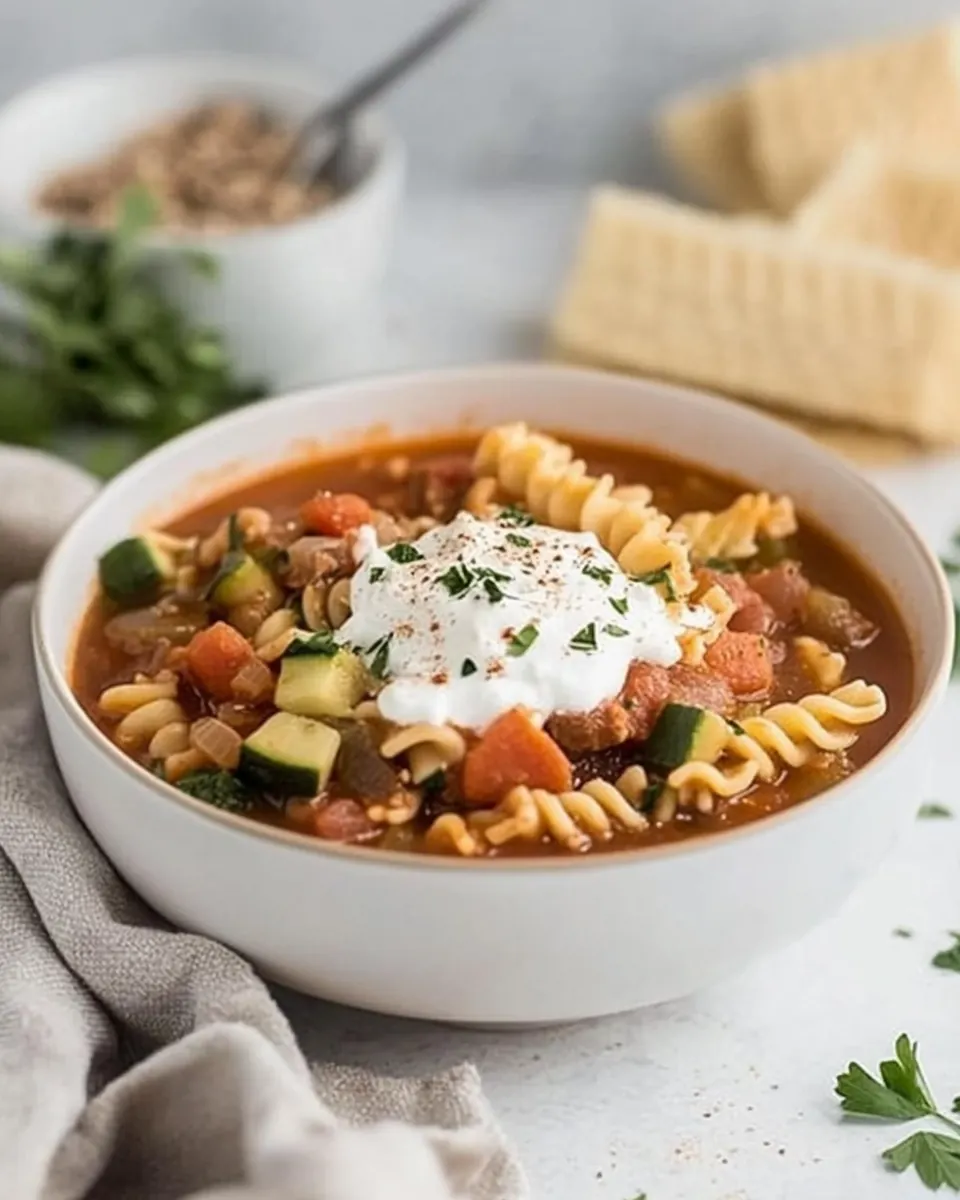
Veggie Lasagna Soup
Veggie Lasagna Soup is the kind of bowl I reach for when I want comfort without the fuss.
Years ago I started making this when I had leftover lasagna noodles and a crate of tired vegetables, and it instantly became a weeknight favorite. I love that this soup captures the layered, cheesy feeling of lasagna in a spoonable form, and it is forgiving when my pantry is hit or miss. Over time I learned little habits that make the soup sing, from how long to sauté the onion and carrots to the exact moment to drop in the pasta so it stays tender but not floury. There is a cozy rhythm to stirring a pot of simmering tomatoes and beans while the kitchen fills with warm, herb-laced steam.
I also cherish how adaptable this recipe is. Some nights I spoon the full cheesy topping over steaming bowls and other nights I stir in a scoop and let it melt into ribbons of creamy richness. It’s a recipe that feels like home, but still excites visitors when I serve it. I often make it when friends drop by, since it comes together fast and everyone loves the rustic, familiar flavors.
Recipe Snapshot
35 mins
10 mins
25 mins
Medium
300 kcal
Italian
Gluten-Free, Vegan
Soups
Large pot, Mixing bowl, Wooden spoon
The Charm of This Veggie Lasagna Soup
Layered Lasagna Flavor in Soup Form
I adore how Veggie Lasagna Soup manages to echo traditional lasagna without the assembly work. The combination of crushed tomatoes, ricotta cheese, and shredded mozzarella recreates that creamy tang and stringy finish, so you get the essence of baked lasagna in every spoonful.
Vegetable Forward, But Hearty
We get bright texture from zucchini, a savory backbone from white beans, and sweetness from sautéed carrots. Together they make the soup feel satisfying and complete, not like a light starter, which is perfect for a simple dinner night.
Fast and Flexible
I love that this recipe comes together quickly. With a short sauté and a simmer while you mix the cheese topping, you can have bowls on the table in under an hour. That makes it ideal for busy weeknights, yet attractive enough for casual guests.
Kid Friendly and Crowd Pleasing
My family responds to the cheesy topping every time. Kids enjoy spooning the ricotta mixture on top, and the broken lasagna pasta is familiar and fun to eat. When I serve this at gatherings, it vanishes fast because it hits familiar comfort food notes.
Easy to Customize
We can easily swap ingredients to fit diets or pantry limits. The soup is naturally vegetable forward so you can make dairy free or gluten free swaps without losing the core flavor. I personally appreciate recipes that let me adjust without worry, and this one delivers just that.
What You’ll Need for Veggie Lasagna Soup
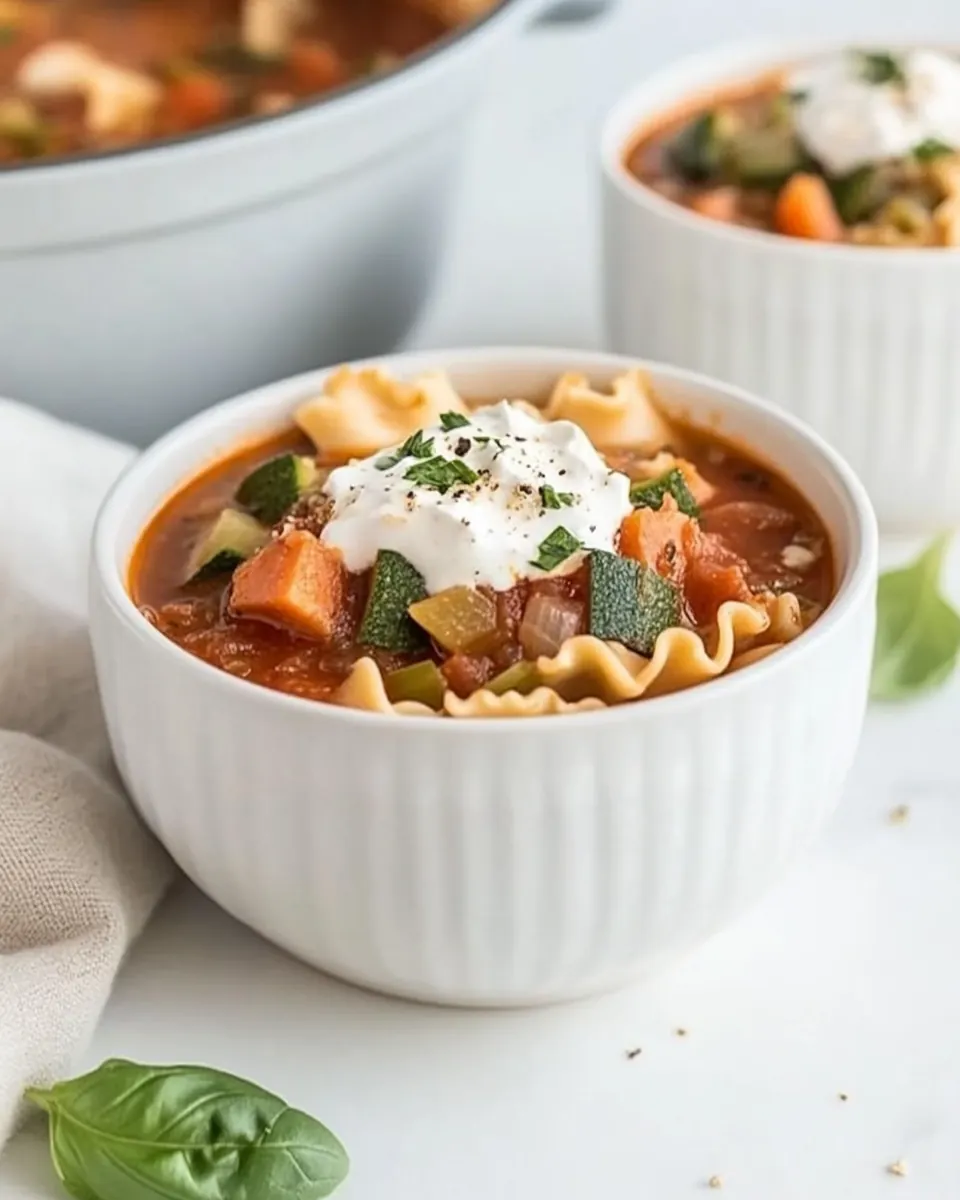
The philosophy behind these ingredients is simple: build layered flavor from humble components. Bright aromatics like onion and garlic form a savory base, while crushed tomatoes and Italian seasoning provide the herby, tomatoey backbone. Starchy lasagna pasta and creamy cheeses give the soup its comforting, lasagna like mouthfeel, and beans add protein and body so bowls feel complete.
- 2 tablespoons olive oil: Heat olive oil in a large pot to sauté aromatics and vegetables, providing a flavorful fat base that helps meld seasonings and soften ingredients evenly.
- 1/2 medium yellow onion (diced, about 1 cup): Finely dice yellow onion to release natural sweetness and savory depth when sautéed, building the soup's foundational aromatic layer and enhancing overall complexity.
- 2 medium carrots (diced, about 1 cup): Dice medium carrots to contribute natural sweetness, body, and texture while simmering, helping balance acidity from tomatoes and adding visual color contrast.
- 1 tablespoon Italian seasoning: Use Italian seasoning to introduce a blend of dried herbs that infuses the broth with classic Mediterranean flavors, creating herbaceous background notes throughout the soup.
- 3 medium garlic cloves (minced): Mince garlic cloves to deliver pungent, aromatic intensity that brightens the soup; add early while sautéing to mellow sharpness and deepen savory flavor.
- 4 cups low-sodium vegetable broth: Pour in low-sodium vegetable broth to create the soup's liquid base, control overall saltiness, and provide a clean, vegetable-forward canvas for other ingredients.
- 15 ounces crushed tomatoes (1 can): Add crushed tomatoes to supply rich tomato flavor, acidity, and body to the broth, forming the core of the soup's lasagna-inspired tomato base.
- 15 ounces small white beans (aka navy beans, drained and rinsed): Stir in small white beans after draining and rinsing to contribute creamy texture, plant-based protein, and a hearty element that mimics ricotta-like richness.
- 1/2 teaspoon kosher salt (+ more to taste): Season with kosher salt to enhance and balance flavors throughout the soup, adjusting quantity later to taste and accounting for salty components like cheese.
- 1/4 teaspoon freshly ground black pepper (+ more to taste): Grind fresh black pepper to add bright, mild heat and aromatic lift, cutting through richness and complementing the herb and tomato notes.
- 1 small zucchini (diced, about 1 cup): Dice zucchini to introduce tender, slightly sweet vegetable flesh that absorbs flavors while adding lightness and a subtle textural contrast to beans and pasta.
- 4 ounces lasagna pasta (about a quarter of a box, broken into approx. 1-inch pieces): Break lasagna pasta into approximately 1-inch pieces to provide familiar pasta texture and heartiness, cooking directly in the soup to thicken and make it comforting.
- 1 teaspoon sugar (, to cut acidity) (optional): Stir in sugar if desired to gently temper tomato acidity, rounding sharp edges without making the soup noticeably sweet and preserving overall balance.
- 2 cups baby spinach (lightly chopped): Chop baby spinach lightly to fold in quick-cooking leafy greens that wilt into the soup, contributing color, nutrients, and a fresh vegetal note.
- 1/2 cup fresh parsley (chopped + more for garnish): Chop fresh parsley to add bright, herbaceous freshness and a clean finish when stirred in or used as a garnish, lifting heavier flavors.
- 1 cup ricotta cheese: Spoon ricotta cheese to swirl into individual bowls or stir into the soup for creamy, slightly tangy richness that echoes lasagna filling and adds silkiness.
- 1/2 cup shredded mozzarella: Sprinkle shredded mozzarella to melt into the hot soup or top bowls for gooey, cheesy texture and comforting dairy richness reminiscent of lasagna.
- 1/4 cup grated Parmesan: Grate Parmesan to offer nutty, savory umami that deepens the soup's flavor profile and provides a salty finishing note when stirred in or sprinkled atop.
- 1/4 teaspoon kosher salt: Add kosher salt to the cheese mixture to season it properly, ensuring the ricotta and other dairy components have balanced flavor before serving.
- 1/8 teaspoon freshly ground black pepper: Crack fresh black pepper into the cheese or final garnish to add subtle spiciness and aromatic complexity, complementing the soup's savory and herbal elements.
Step by Step Instructions for Veggie Lasagna Soup
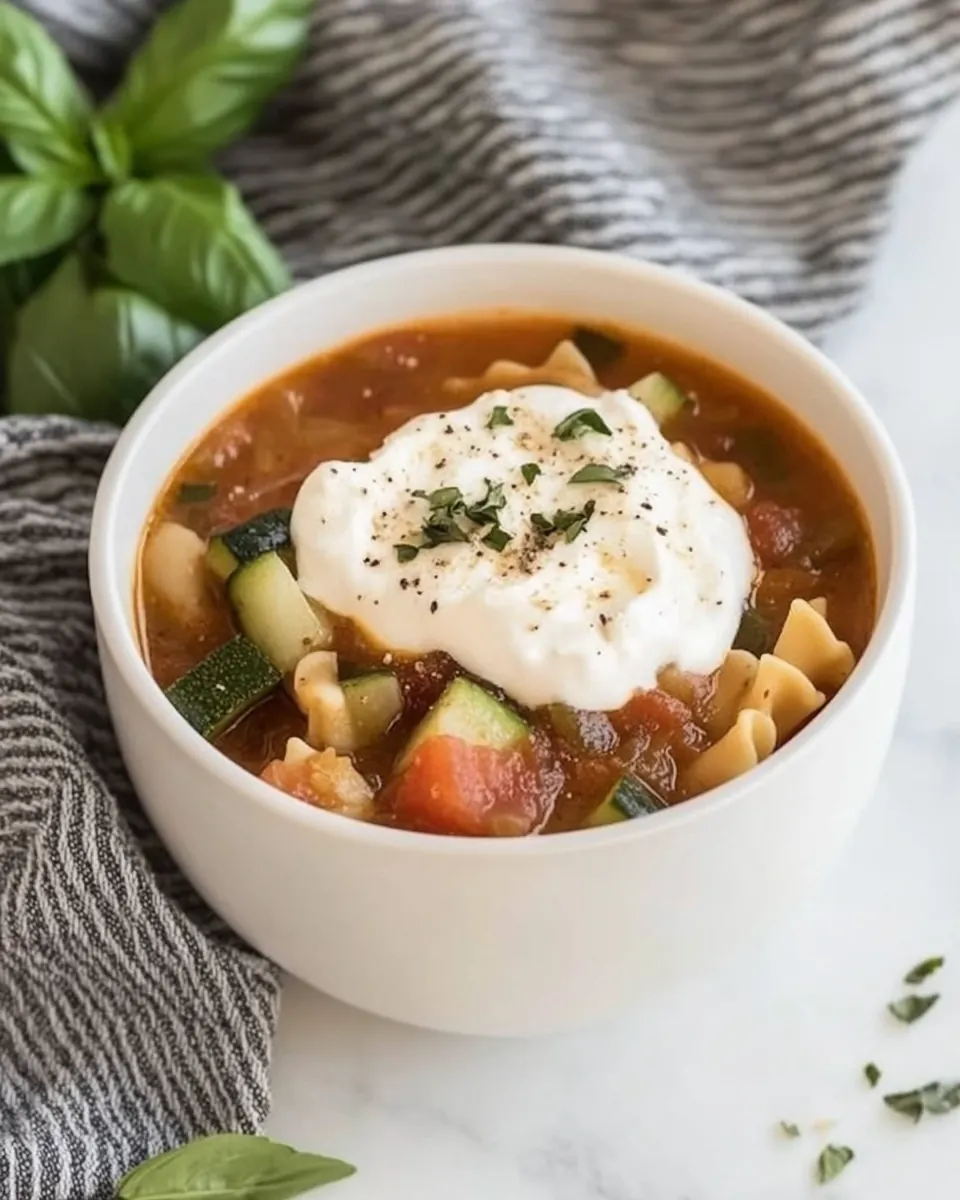
This recipe is straightforward, but the techniques matter for the best texture and flavor. Follow the timing for the vegetables and pasta, and give the cheese topping a moment to come together while the soup simmers. Below are the cleaned steps from the original directions, expanded into vivid, sensory guidance so you know when each stage is done and how to avoid common problems.
- Set a large pot over medium-low heat and add the olive oil. When hot, add the onion, carrots, and Italian seasoning. Cook, stirring occasionally, until the onion and carrots are tender but not browned, about 8 minutes.: As the oil warms you should see it shimmer gently and smell a faint fruity note if the oil is fresh. The moderate heat allows you to sweat the onion and carrots without browning, releasing sweet, vegetal aromas that build the soup base. You will hear a quiet sizzle when ingredients hit the pan, and the onion will become translucent; that is the visual cue to proceed. If the oil smokes or the aromatics start to brown quickly, lower the heat immediately, because early browning will introduce bitter notes that clash with the delicate tomato flavor. A common mistake here is rushing the step with high heat, which creates unevenly cooked vegetables and a harsher flavor profile.
- Add the garlic and cook, stirring frequently, for another minute.: When you add the minced garlic its scent will bloom fast, filling the kitchen with warm, pungent fragrance. Stirring frequently keeps the garlic from settling and touching the hot surface long enough to brown, which would turn it bitter. The minute is short; you are aiming for softened, fragrant garlic rather than crisped bits. If you accidentally overcook the garlic and catch it on the pan, remove the pot from the heat and add a splash of broth to cool the bottom before proceeding, because burnt garlic will taint the whole pot.
- Add the vegetable broth, crushed tomatoes, beans, 1/2 teaspoon salt, and 1/4 teaspoon pepper. Bring to a boil, and add the zucchini and pasta. Reduce to a simmer. Stir and continue to simmer until the pasta is cooked through, 15-20 minutes, continuing to stir occasionally to help keep the pasta from sticking together.: As you pour in the vegetable broth and crushed tomatoes , the mixture will hiss slightly and steam will rise, carrying tomato and herb aromas. Stir in the white beans and seasonings so flavors begin to marry. Bring the pot to a boil, which will be visible as rolling bubbles across the surface; then add the zucchini and pasta and reduce to a gentle simmer. The simmer should produce soft bubbling and occasional movement of ingredients without violent tossing. This step is crucial because boiling too hard can make the pasta release starch and gum up the broth, while too gentle a simmer will delay cooking. A common slip is not stirring enough after adding pasta, which can lead to clumping; gently stir occasionally to keep pieces separated and check for doneness by tasting a piece.
- While the soup simmers, make the cheese topping. In a small bowl, mix together the ricotta, mozzarella, Parmesan, 1/4 teaspoon salt, and 1/8 teaspoon pepper. Set aside.: The cheese mixture should be creamy and well combined, with ricotta cheese as the base and shredded mozzarella and grated Parmesan folded in along with a small pinch of salt and pepper. Use a bowl and a spoon to blend until smooth, adjusting texture if the ricotta is too loose by adding a little more Parmesan . The contrast between warm simmering soup and cool, creamy topping is part of the joy of this dish. Avoid overworking the cheeses into a gluey paste; you want a light, slightly airy scoopable topping that will gently melt on contact with the hot broth.
- Add the spinach and parsley to the soup, then taste it and, if it's too acidic for your tastes, add the sugar. I almost always add sugar (or honey) personally to mellow out any acidity from the tomatoes, but I wanted to make this ingredient optional in case you don't want to use the added sugar or your particular canned tomatoes are not too acidic.: When you stir in the chopped spinach and parsley they will wilt quickly, changing from vivid green to a softer shade and releasing a fresh herbal scent. Taste the broth after the greens have settled; acidity from canned crushed tomatoes varies, and a tiny bit of sugar can round it out if needed. I like a tad of sweetness to balance tomato sharpness, but add sparingly; too much sweet will mute tomato complexity. A misstep here is to over sweeten right away. Always taste before and after adjustments, because once sugar dissolves it is hard to counterbalance without more acid or salt.
- Taste again and add more salt and pepper if desired.: After all components have joined and the pasta is tender, the flavors will have melded, so final seasoning is essential. Use small increments of salt and freshly ground black pepper , tasting between additions, because salt amplifies certain flavors and can quickly dominate. If you oversalt, adding more broth or a peeled potato to the pot can help absorb excess sodium, but it is better to adjust slowly to avoid remedial steps.
- Scoop lasagna soup into bowls and top with a generous spoonful of the cheese topping. Sprinkle with more parsley if desired, and serve.: Serve straight from the pot into warmed bowls, spooning a liberal portion of the cheese mixture on top so it rests on the hot broth and begins to melt. The contrast of hot, tomato scented soup and cool, creamy ricotta topping will create ribbons of richness as you stir them together. Garnish with extra chopped parsley if desired for color and brightness. A frequent mistake is letting the soup sit too long before serving, which can cause the pasta to absorb too much liquid and result in a stodgy texture; ladle quickly and enjoy immediately for the best experience.
Pro Tips and Tweaks
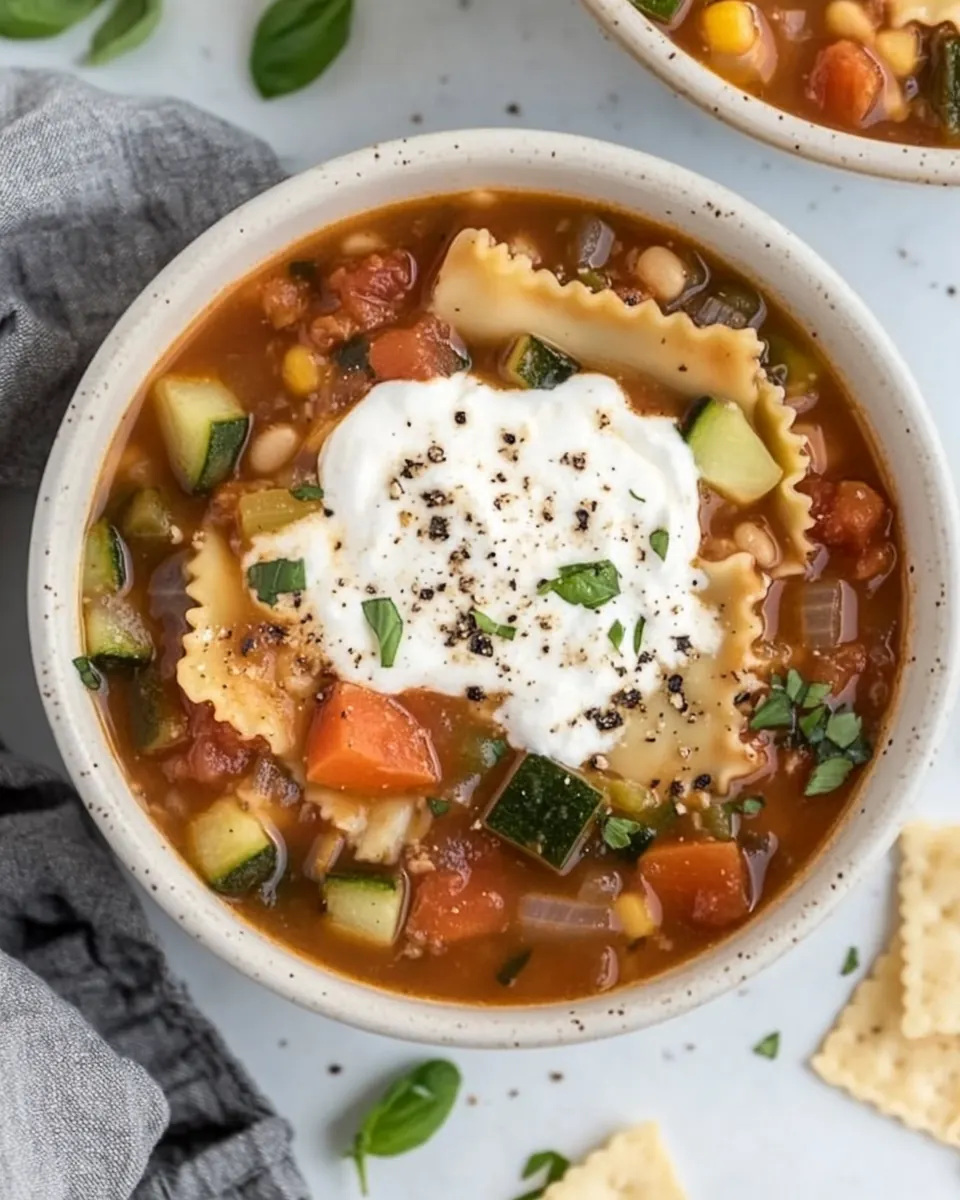
I like to keep a few tricks in my back pocket when making Veggie Lasagna Soup. These tips cover texture, timing, and simple swaps that preserve the soul of the dish while fitting different diets. They will help you get consistent results every time.
- Room temperature cheeses help the topping blend smoothly, so remove the ricotta cheese and shredded mozzarella from the fridge about 15 minutes before mixing.
- Gentle simmering is key to prevent the pasta from releasing too much starch into the broth, which keeps the soup clear and prevents it from becoming gluey.
- Fresh herbs at the end preserve brightness, so stir in chopped parsley and a handful of spinach near the finish to maintain color and flavor.
- Optional sugar should be added sparingly to balance tomato acidity; taste first because canned tomatoes vary widely.
- Make ahead note Refrigerate the soup without the cheese topping for up to three days, and reheat gently with a splash of broth to revive the texture before serving.
Perfect Pairings for Veggie Lasagna Soup
This soup pairs beautifully with a few simple sides and occasions. Think warm, relaxed meals where bowls are the centerpiece, and keep accompaniments light and textural to complement the creamy, tomatoey broth. Below are serving ideas, storage tips, and occasions that elevate the experience.
- Crusty bread for dipping A warm, crusty loaf complements the soup by soaking up the broth and providing a crunchy counterpoint to the creamy cheese topping.
- Simple green salad A crisp salad dressed with a bright vinaigrette cuts through the richness and adds fresh texture to the meal.
- Family dinner nights Serve as a main for weeknight or weekend family dinners because the bowl is hearty and satisfying without being heavy.
- Meal prep and leftovers Store the soup in the refrigerator up to three days and reheat gently with a splash of broth to loosen the texture, adding the cheese topping fresh when serving.
- Gluten free option Use gluten free pasta to keep the dish accessible, and follow the same timing while checking for pasta doneness early to avoid overcooking.
- Dairy free or vegan option Prepare the soup as written but swap the cheese topping for almond ricotta and vegan mozzarella, adding nutritional yeast for savory depth if desired.
FAQ
Conclusion
Veggie Lasagna Soup shines because it captures the essence of lasagna in a simple, cozy bowl that comes together quickly. Give it a try on a busy night when you want comforting, hearty flavors without the fuss of layering and baking. Borrow the cheese topping idea for other soups too, and don’t be afraid to tweak the vegetables based on what you have on hand. This recipe is forgiving, flavorful, and one of those dishes that feels both special and familiar, so scoop a bowl, gather around the table, and enjoy the comforting warmth it brings.

Veggie Lasagna Soup
Equipment
- Large Pot
- Mixing Bowl
- Wooden Spoon
Ingredients
- 2 tablespoons olive oil Heat olive oil in a large pot to sauté aromatics and vegetables, providing a flavorful fat base that helps meld seasonings and soften ingredients evenly.
- 1/2 medium yellow onion (diced, about 1 cup) Finely dice yellow onion to release natural sweetness and savory depth when sautéed, building the soup's foundational aromatic layer and enhancing overall complexity.
- 2 medium carrots (diced, about 1 cup) Dice medium carrots to contribute natural sweetness, body, and texture while simmering, helping balance acidity from tomatoes and adding visual color contrast.
- 1 tablespoon Italian seasoning Use Italian seasoning to introduce a blend of dried herbs that infuses the broth with classic Mediterranean flavors, creating herbaceous background notes throughout the soup.
- 3 medium garlic cloves (minced) Mince garlic cloves to deliver pungent, aromatic intensity that brightens the soup; add early while sautéing to mellow sharpness and deepen savory flavor.
- 4 cups low-sodium vegetable broth Pour in low-sodium vegetable broth to create the soup's liquid base, control overall saltiness, and provide a clean, vegetable-forward canvas for other ingredients.
- 15 ounces crushed tomatoes (1 can) Add crushed tomatoes to supply rich tomato flavor, acidity, and body to the broth, forming the core of the soup's lasagna-inspired tomato base.
- 15 ounces small white beans (aka navy beans, drained and rinsed) Stir in small white beans after draining and rinsing to contribute creamy texture, plant-based protein, and a hearty element that mimics ricotta-like richness.
- 1/2 teaspoon kosher salt (+ more to taste) Season with kosher salt to enhance and balance flavors throughout the soup, adjusting quantity later to taste and accounting for salty components like cheese.
- 1/4 teaspoon freshly ground black pepper (+ more to taste) Grind fresh black pepper to add bright, mild heat and aromatic lift, cutting through richness and complementing the herb and tomato notes.
- 1 small zucchini (diced, about 1 cup) Dice zucchini to introduce tender, slightly sweet vegetable flesh that absorbs flavors while adding lightness and a subtle textural contrast to beans and pasta.
- 4 ounces lasagna pasta (about a quarter of a box, broken into approx. 1-inch pieces) Break lasagna pasta into approximately 1-inch pieces to provide familiar pasta texture and heartiness, cooking directly in the soup to thicken and make it comforting.
- 1 teaspoon sugar (optional, to cut acidity) Stir in sugar if desired to gently temper tomato acidity, rounding sharp edges without making the soup noticeably sweet and preserving overall balance.
- 2 cups baby spinach (lightly chopped) Chop baby spinach lightly to fold in quick-cooking leafy greens that wilt into the soup, contributing color, nutrients, and a fresh vegetal note.
- 1/2 cup fresh parsley (chopped + more for garnish) Chop fresh parsley to add bright, herbaceous freshness and a clean finish when stirred in or used as a garnish, lifting heavier flavors.
- 1 cup ricotta cheese Spoon ricotta cheese to swirl into individual bowls or stir into the soup for creamy, slightly tangy richness that echoes lasagna filling and adds silkiness.
- 1/2 cup shredded mozzarella Sprinkle shredded mozzarella to melt into the hot soup or top bowls for gooey, cheesy texture and comforting dairy richness reminiscent of lasagna.
- 1/4 cup grated Parmesan Grate Parmesan to offer nutty, savory umami that deepens the soup's flavor profile and provides a salty finishing note when stirred in or sprinkled atop.
- 1/4 teaspoon kosher salt Add kosher salt to the cheese mixture to season it properly, ensuring the ricotta and other dairy components have balanced flavor before serving.
- 1/8 teaspoon freshly ground black pepper Crack fresh black pepper into the cheese or final garnish to add subtle spiciness and aromatic complexity, complementing the soup's savory and herbal elements.
Instructions
- Set a large pot over medium-low heat and add the olive oil. When hot, add the onion, carrots, and Italian seasoning. Cook, stirring occasionally, until the onion and carrots are tender but not browned, about 8 minutes.: As the oil warms you should see it shimmer gently and smell a faint fruity note if the oil is fresh. The moderate heat allows you to sweat the onion and carrots without browning, releasing sweet, vegetal aromas that build the soup base. You will hear a quiet sizzle when ingredients hit the pan, and the onion will become translucent; that is the visual cue to proceed. If the oil smokes or the aromatics start to brown quickly, lower the heat immediately, because early browning will introduce bitter notes that clash with the delicate tomato flavor. A common mistake here is rushing the step with high heat, which creates unevenly cooked vegetables and a harsher flavor profile.
- Add the garlic and cook, stirring frequently, for another minute.: When you add the minced garlic its scent will bloom fast, filling the kitchen with warm, pungent fragrance. Stirring frequently keeps the garlic from settling and touching the hot surface long enough to brown, which would turn it bitter. The minute is short; you are aiming for softened, fragrant garlic rather than crisped bits. If you accidentally overcook the garlic and catch it on the pan, remove the pot from the heat and add a splash of broth to cool the bottom before proceeding, because burnt garlic will taint the whole pot.
- Add the vegetable broth, crushed tomatoes, beans, 1/2 teaspoon salt, and 1/4 teaspoon pepper. Bring to a boil, and add the zucchini and pasta. Reduce to a simmer. Stir and continue to simmer until the pasta is cooked through, 15-20 minutes, continuing to stir occasionally to help keep the pasta from sticking together.: As you pour in the vegetable broth and crushed tomatoes , the mixture will hiss slightly and steam will rise, carrying tomato and herb aromas. Stir in the white beans and seasonings so flavors begin to marry. Bring the pot to a boil, which will be visible as rolling bubbles across the surface; then add the zucchini and pasta and reduce to a gentle simmer. The simmer should produce soft bubbling and occasional movement of ingredients without violent tossing. This step is crucial because boiling too hard can make the pasta release starch and gum up the broth, while too gentle a simmer will delay cooking. A common slip is not stirring enough after adding pasta, which can lead to clumping; gently stir occasionally to keep pieces separated and check for doneness by tasting a piece.
- While the soup simmers, make the cheese topping. In a small bowl, mix together the ricotta, mozzarella, Parmesan, 1/4 teaspoon salt, and 1/8 teaspoon pepper. Set aside.: The cheese mixture should be creamy and well combined, with ricotta cheese as the base and shredded mozzarella and grated Parmesan folded in along with a small pinch of salt and pepper. Use a bowl and a spoon to blend until smooth, adjusting texture if the ricotta is too loose by adding a little more Parmesan . The contrast between warm simmering soup and cool, creamy topping is part of the joy of this dish. Avoid overworking the cheeses into a gluey paste; you want a light, slightly airy scoopable topping that will gently melt on contact with the hot broth.
- Add the spinach and parsley to the soup, then taste it and, if it's too acidic for your tastes, add the sugar. I almost always add sugar (or honey) personally to mellow out any acidity from the tomatoes, but I wanted to make this ingredient optional in case you don't want to use the added sugar or your particular canned tomatoes are not too acidic.: When you stir in the chopped spinach and parsley they will wilt quickly, changing from vivid green to a softer shade and releasing a fresh herbal scent. Taste the broth after the greens have settled; acidity from canned crushed tomatoes varies, and a tiny bit of sugar can round it out if needed. I like a tad of sweetness to balance tomato sharpness, but add sparingly; too much sweet will mute tomato complexity. A misstep here is to over sweeten right away. Always taste before and after adjustments, because once sugar dissolves it is hard to counterbalance without more acid or salt.
- Taste again and add more salt and pepper if desired.: After all components have joined and the pasta is tender, the flavors will have melded, so final seasoning is essential. Use small increments of salt and freshly ground black pepper , tasting between additions, because salt amplifies certain flavors and can quickly dominate. If you oversalt, adding more broth or a peeled potato to the pot can help absorb excess sodium, but it is better to adjust slowly to avoid remedial steps.
- Scoop lasagna soup into bowls and top with a generous spoonful of the cheese topping. Sprinkle with more parsley if desired, and serve.: Serve straight from the pot into warmed bowls, spooning a liberal portion of the cheese mixture on top so it rests on the hot broth and begins to melt. The contrast of hot, tomato scented soup and cool, creamy ricotta topping will create ribbons of richness as you stir them together. Garnish with extra chopped parsley if desired for color and brightness. A frequent mistake is letting the soup sit too long before serving, which can cause the pasta to absorb too much liquid and result in a stodgy texture; ladle quickly and enjoy immediately for the best experience.
Notes
- Room temperature cheeses help the topping blend smoothly, so remove the ricotta cheese and shredded mozzarella from the fridge about 15 minutes before mixing.
- Gentle simmering is key to prevent the pasta from releasing too much starch into the broth, which keeps the soup clear and prevents it from becoming gluey.
- Fresh herbs at the end preserve brightness, so stir in chopped parsley and a handful of spinach near the finish to maintain color and flavor.
- Optional sugar should be added sparingly to balance tomato acidity; taste first because canned tomatoes vary widely.
- Make ahead note Refrigerate the soup without the cheese topping for up to three days, and reheat gently with a splash of broth to revive the texture before serving.