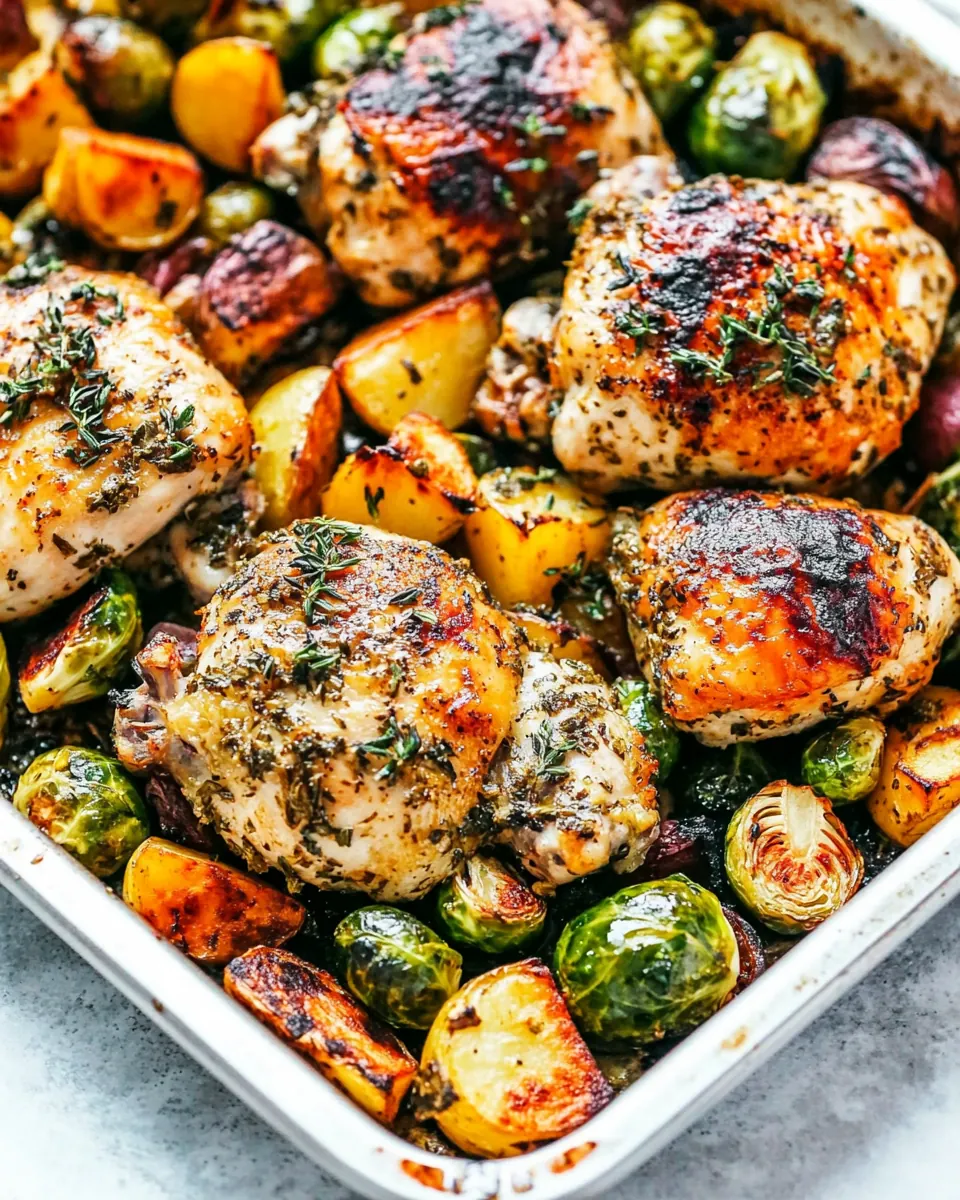
Sheet Pan Roasted Garlic Butter Herb Chicken with Potatoes and Brussels Sprouts
Sheet Pan Roasted Garlic Butter Herb Chicken with Potatoes and Brussels Sprouts is one of those dinners I reach for when I want something hearty, effortless, and totally forgiving.
I remember the first time I tossed everything onto a single sheet pan after a long day, craving comfort without fuss. The kitchen smelled of warm garlic and melted butter, and the sound of the pan sizzling made the whole apartment feel cozy. As the edges of the potatoes caramelized and the brussels sprouts crisped, the juices from the chicken mingled with the herbs to create a sauce that begged for bread, though we simply spooned it back onto our plates.
That week it became my go to for easy weeknight entertaining, because people always comment on how full of flavor it tastes despite being so simple to prepare. I like the way the fresh herbs brighten the dish, and how the crispy skin gives way to tender chicken beneath. Every time I roast these ingredients together I learn a small trick about timing or seasoning, and I love that this recipe forgives small mistakes while still delivering a memorable meal.
Recipe Snapshot
45 mins
15 mins
30 mins
Medium
450 kcal
American
Gluten-Free, Paleo
Dinner
Baking sheet, Small bowl, Pastry brush, Meat thermometer
Why Try This Sheet Pan Roasted Garlic Butter Herb Chicken with Potatoes and Brussels Sprouts
Simple, Honest Flavor
I love that Sheet Pan Roasted Garlic Butter Herb Chicken with Potatoes and Brussels Sprouts relies on real ingredients, not gimmicks. The combination of garlic, butter, and fresh herbs lets each element sing, so you get deep savory notes without fuss.
Minimal Cleanup, Maximum Impact
We only use one pan, which means fewer dishes and more time to relax after cooking. That practical advantage never gets old, especially on busy nights when I want a satisfying meal without a sink full of plates.
Balanced Textures
The contrast between the crisp, golden edges of the potatoes and the tender chicken makes every bite interesting. I find that this textural play is what keeps people coming back for seconds.
Flexible and Forgiving
I’ve adapted this recipe for larger groups and smaller kitchens, and it always performs. You can swap sizes of vegetables or use boneless chicken if you prefer, and the meal still turns out delicious. That flexibility is a major reason I rely on it.
Seasonal Appeal
This dish feels especially right in cooler months when root vegetables and roasted flavors are comforting. The herbs lend brightness so it never tastes heavy, making it suitable for family dinners and casual gatherings alike.
Main Ingredients for Sheet Pan Roasted Garlic Butter Herb Chicken with Potatoes and Brussels Sprouts
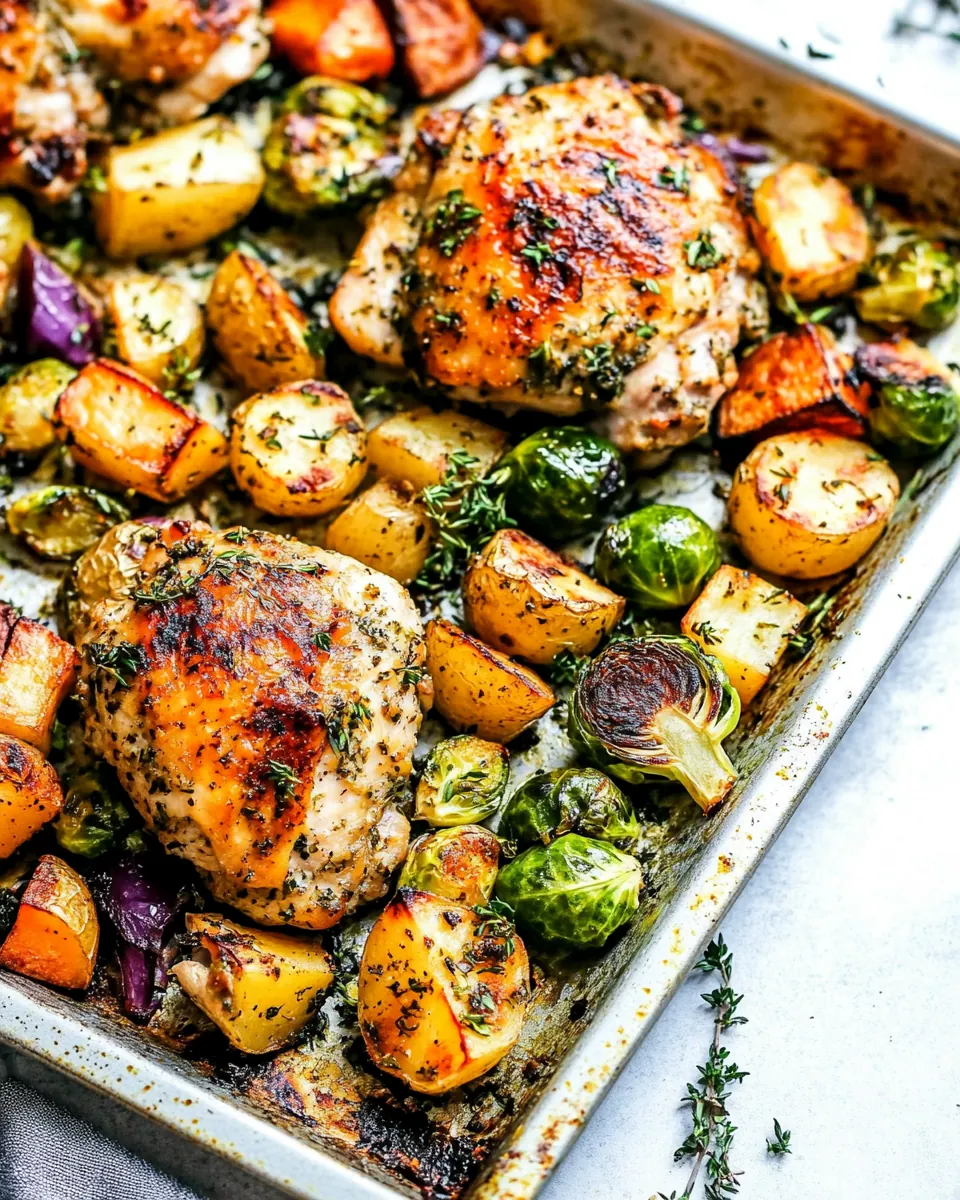
These ingredients form a simple, harmonious lineup. The starchy potatoes soak up savory juices, the bright herbs lift the overall flavor, and the rich butter with sharp garlic creates a lacquer that crisps the exterior of the chicken while keeping the interior juicy. Each component plays a role in texture, seasoning, and aroma so the finished sheet pan tastes layered and thoughtfully composed.
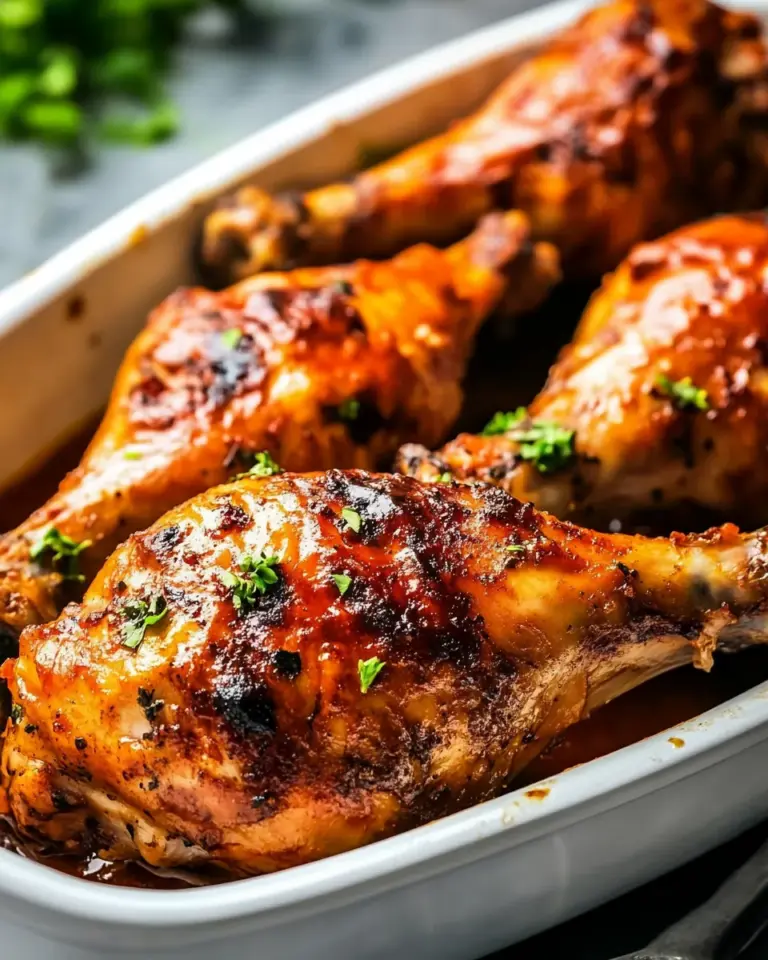
- 4 bone-in skin-on chicken breasts, boneless will also work: Roasted to crispy perfection with skin-on to lock in juices and provide rich flavor, bone-in chicken breasts deliver deep savory notes and a satisfying texture when cooked on a sheet pan. Season and space them evenly so heat circulates for even browning while the meat stays tender and moist.
- 2 peeled and cubed large sweet potatoes: Cubed and peeled large sweet potatoes add natural sweetness and a creamy interior that contrasts nicely with savory chicken, caramelizing at the edges as they roast. Cut into uniform pieces so they finish at the same time as the other vegetables and absorb herb-butter flavors.
- 1 pound halved or quartered baby red potatoes: Halved or quartered baby red potatoes offer a waxy, firm texture that holds shape during roasting and provides earthy balance to the dish. Parboil briefly if desired for extra tenderness, then toss with butter and seasonings to develop a golden exterior.
- 1 pound halved Brussels sprouts: Halved Brussels sprouts bring a slightly bitter, nutty element and crisp outer leaves when roasted, complementing the sweetness of the potatoes and richness of the chicken. Arrange cut sides down to encourage caramelization and even cooking alongside the other components.
- salt and pepper to taste: Seasoned to taste with salt and pepper, this classic combination enhances and balances the natural flavors of the chicken and vegetables without overpowering the herbs and garlic. Apply evenly before roasting to promote a well-seasoned crust and improved overall depth.
- 1 tablespoon fresh thyme: Added fresh for a bright, earthy aroma, thyme offers subtle lemony and floral undertones that meld beautifully with butter and garlic during roasting. Sprinkle whole or chopped leaves over the pan to infuse the entire dish with its fragrant warmth.
- 1 tablespoon minced fresh oregano: Minced fresh oregano contributes robust, slightly peppery and aromatic notes that enhance the savory profile of the chicken and roasted vegetables. Use sparingly to avoid overpowering; it pairs particularly well with garlic and butter to create a Mediterranean flair.
- 1 tablespoon minced fresh basil: Minced fresh basil provides sweet, slightly peppery, and aromatic lift when added toward the end or as a finishing herb, brightening the roasted components. Tear or mince to release oils so the herb permeates the dish without turning bitter from overcooking.
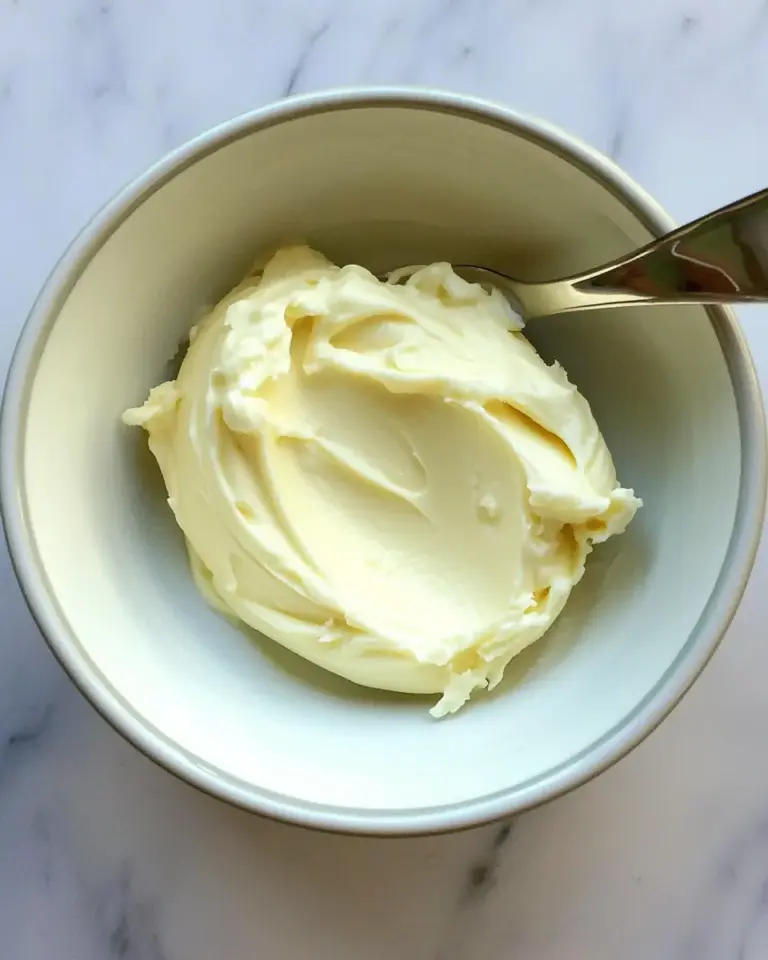
- 1/4 cup melted butter: Melted butter creates a glossy coating that helps herbs and garlic adhere to the chicken and vegetables while promoting browning and rich flavor during roasting. Pour over the pan or brush onto ingredients to introduce comforting, savory richness throughout.
- 6 cloves minced garlic: Minced garlic infuses the dish with pungent, aromatic depth and a toasty, caramelized note as it roasts, pairing perfectly with butter and fresh herbs. Distribute evenly to ensure each bite captures its bold, savory essence without burning.
- chopped fresh parsley for garnish: Chopped fresh parsley used for garnish adds a final burst of green color and a clean, slightly peppery freshness that lifts the overall dish. Sprinkle over finished plates to provide visual contrast and a bright, herbaceous finish.
Cooking Instructions for Sheet Pan Roasted Garlic Butter Herb Chicken with Potatoes and Brussels Sprouts
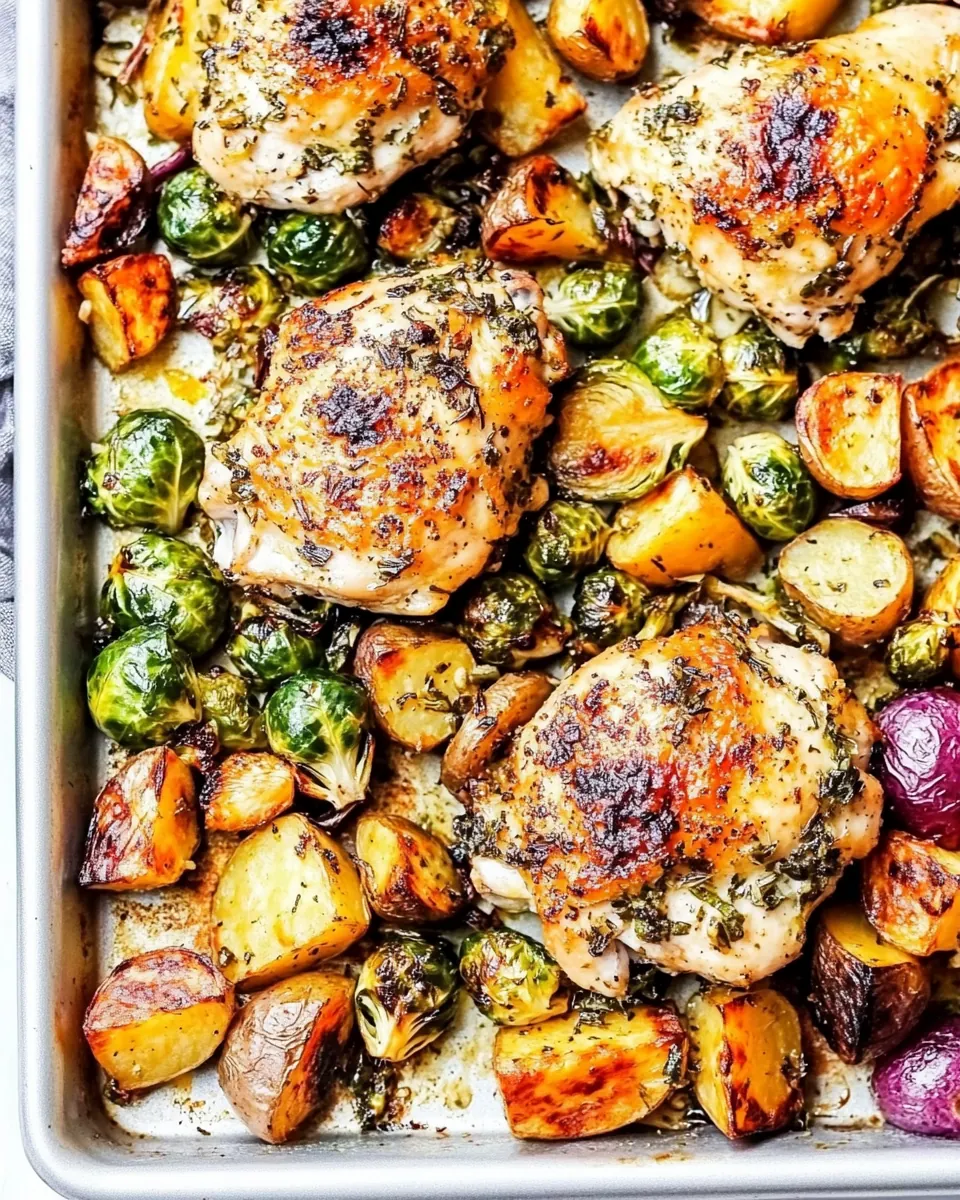
Roasting everything together is straightforward, but the technique matters. You want golden, crisp exteriors and juicy interiors, so timing and arrangement on the sheet pan are important. Read each step slowly, listen for sizzles, and smell for caramelization as cues the dish is progressing.
- Preheat oven to 400 degrees Fahrenheit. On a large baking sheet, evenly spread 2 peeled and cubed large sweet potatoes, 1 pound halved or quartered baby red potatoes, and 1 pound halved Brussels sprouts. Lay 4 bone-in skin-on chicken breasts on top and season with salt and pepper.: Warm air circulating in a fully heated oven creates an even roast, and you should notice a faint hum as the oven stabilizes. Before placing the pan in, make sure racks are in the correct position, usually centered so heat reaches the food evenly. If your oven is cold when you start, the potatoes and chicken will take longer to brown and may dry. A common pitfall is not allowing the oven to reach temperature, which leads to pale, unappetizing surfaces.
- Mix 1 tablespoon fresh thyme, 1 tablespoon minced fresh oregano, 1 tablespoon minced fresh basil, 1/4 cup melted butter, and 6 cloves minced garlic in a small bowl. Brush evenly over chicken and veggies.: When the vegetables are arranged in a single layer, air circulates and surfaces caramelize, producing a satisfying crunch and sweet roasted aroma. Even spacing prevents steaming, which would yield limp vegetables rather than crisp edges. Use a rimmed sheet to catch drippings for flavor and easier cleanup. Avoid piling veggies on top of each other, because crowded pan leads to steaming instead of roasting.
- Roast in the oven for 25-30 minutes until golden brown and cooked through. Broil for 2-3 minutes to caramelize the top of the chicken and veggies. Garnish with chopped parsley if desired and serve.: Placing the chicken on top allows juices to drip onto the vegetables, creating cohesive flavor. As the skin renders and browns, its aroma becomes rich and savory, and you will hear faint sizzling as fats melt. Season evenly so each bite is balanced. Common errors include under seasoning or unevenly seasoned meat, resulting in bland areas.
- Mix 1 tablespoon fresh thyme, 1 tablespoon minced fresh oregano, 1 tablespoon minced fresh basil, 1/4 cup melted butter, and 6 cloves minced garlic in a small bowl: Combining herbs with warm melted butter releases their essential oils and helps the flavors distribute across the pan. The warm butter dissolves aromatic compounds in the herbs and garlic , making a glossy coating that will baste during roasting. If the butter is too hot it can begin to brown the garlic before roasting, so let it cool slightly. Avoid using cold, solid butter which will not spread evenly.
- Brush evenly over chicken and veggies: A generous, even brush ensures every piece picks up that herb garlic butter, so flavors are consistent. As the mixture hits the hot pan and ingredients, it begins to sizzle and perfume the air, signaling the Maillard reactions at work. Proper coverage prevents dry spots on the chicken and helps the vegetable surfaces caramelize. One mistake is skimping on the butter mixture, which leaves some bites under seasoned and dull.
- Roast in the oven for 25 to 30 minutes until golden brown and cooked through: During this time you will notice the aroma deepen, edges crisp, and juices bubble in the pan. The chicken should register a safe internal temperature, and the vegetables should be tender when pierced with a fork. Cooking until golden ensures the skin and vegetable edges develop complex roasted notes. Overcooking will dry the chicken , while undercooking leaves it unsafe or rubbery.
- Broil for 2 to 3 minutes to caramelize the top of the chicken and veggies: Brief, high heat produces blistered spots and intensified browning, adding a final layer of texture and visual appeal. Watch closely while broiling because the transformation happens quickly, and the smell shifts from roasted to richly caramelized. A common slip is leaving the oven door open while broiling, which can interrupt the broiler and reduce effectiveness.
- Garnish with chopped parsley if desired and serve: Fresh chopped parsley brightens the dish and provides a herbaceous contrast to the rich pan juices. The last-minute garnish keeps the presentation lively and adds a fresh scent as you plate. Adding garnish too early causes it to wilt from residual heat, so sprinkle right before serving. Avoid skipping the garnish entirely if you want that fresh note against the roasted flavors.
Expert Tips about Sheet Pan Roasted Garlic Butter Herb Chicken with Potatoes and Brussels Sprouts
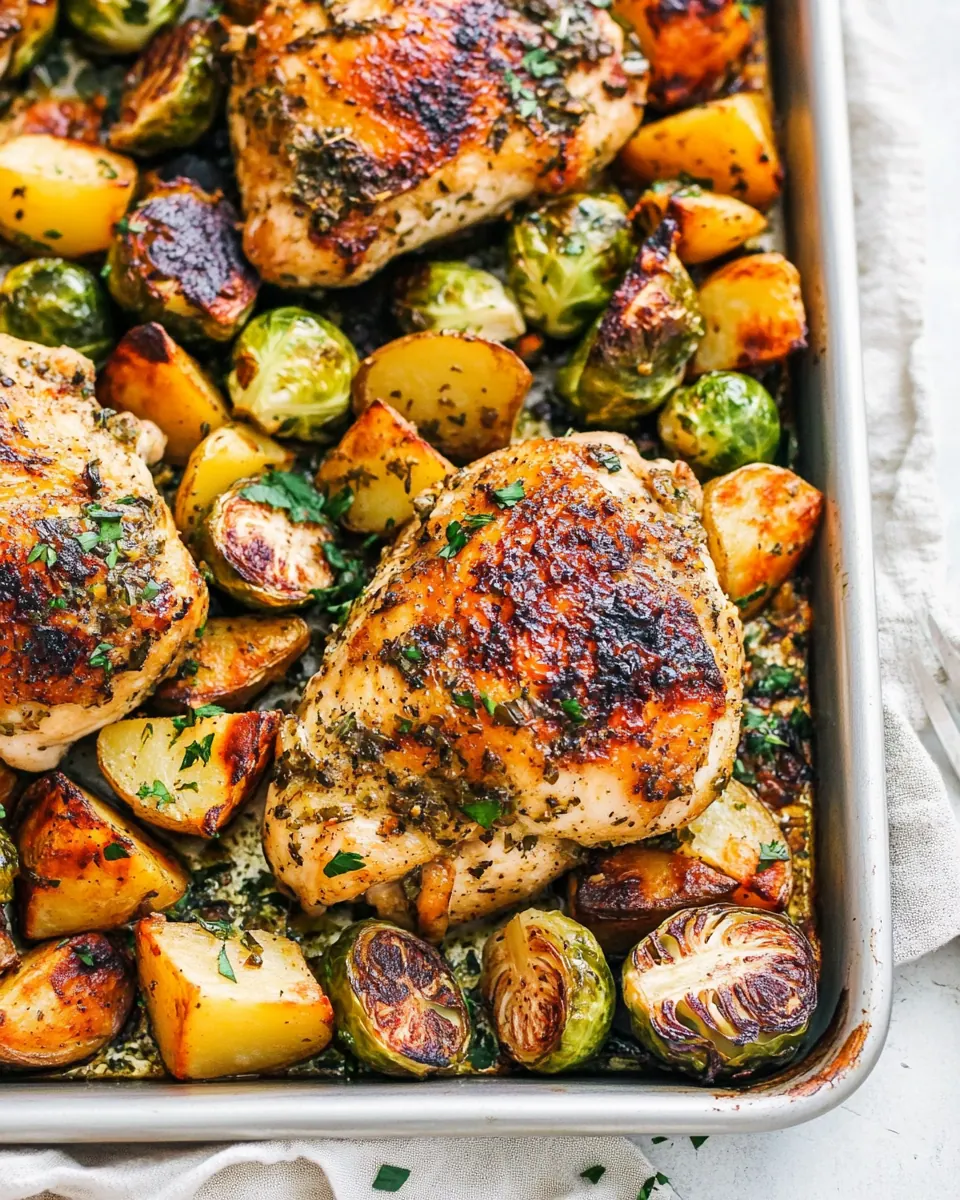
This recipe shines when small technique adjustments are applied. Below are detailed tips to improve texture, timing, and flavor so your sheet pan meal turns out restaurant worthy every time.
- Use room temperature chicken to ensure even cooking; cold poultry placed in the oven can cook unevenly, leaving the exterior overdone while the interior remains underdone.
- Dry the chicken skin thoroughly with paper towels to promote crisping; moisture traps steam which prevents golden browning and makes the skin soggy.
- Toss vegetables in oil briefly before adding the herb butter to help them develop a crisp surface, as oil encourages the Maillard reaction that creates deep roasted flavors.
- Rotate the pan halfway through roasting for even color and doneness, especially if your oven has hot spots that can cause uneven browning.
- Broil at the end for color but watch vigilantly; the high heat adds caramelized notes quickly and will burn if left unattended for more than a minute or two.
- Rest the chicken briefly after roasting to let juices redistribute, which yields a moister result when you slice into the meat.
What to Pair With Sheet Pan Roasted Garlic Butter Herb Chicken with Potatoes and Brussels Sprouts
This dish is versatile and suits many occasions, from cozy family dinners to casual gatherings. Below are practical pairing ideas, serving styles, and storage tips to make the most of the meal.
- Serve with a crisp green salad for balance, using bright vinaigrette to cut through the richness of the butter and roasted flavors.
- Offer warm crusty bread to mop up pan juices and herb butter, turning the roast into a more indulgent, communal meal.
- Plate for weeknight dinners by portioning onto warm plates and adding a lemon wedge for a quick acidic lift that brightens each bite.
- Arrange for casual entertaining by serving straight from the sheet pan at the table, letting guests help themselves to the roasted bounty.
- Store leftovers in an airtight container in the refrigerator for up to three days, and reheat gently in the oven to preserve texture rather than microwaving.
- Seasonal pairing works well in fall when root vegetables are at their best, though this recipe is flexible and comfortable any time you crave roasted savory flavors.
FAQ
Conclusion
This sheet pan meal stands out because it marries simple technique with bold, layered flavors, producing crisp roasted edges and juicy, herb kissed meat. Give it a try on a weeknight or when you want a fuss free yet impressive dish; the one pan approach means less cleanup and more time to enjoy the meal. I hope you enjoy how the garlic butter and fresh herbs elevate everyday ingredients into a comforting, memorable dinner.
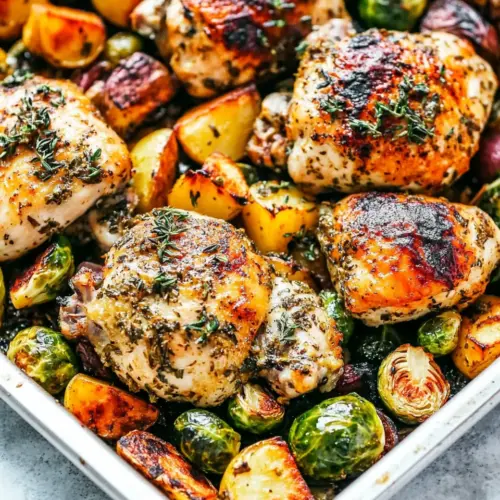
Sheet Pan Roasted Garlic Butter Herb Chicken with Potatoes and Brussels Sprouts
Equipment
- Baking Sheet
- Small Bowl
- Pastry Brush
- Meat Thermometer
Ingredients
- 4 bone-in skin-on chicken breasts, boneless will also work Roasted to crispy perfection with skin-on to lock in juices and provide rich flavor, bone-in chicken breasts deliver deep savory notes and a satisfying texture when cooked on a sheet pan. Season and space them evenly so heat circulates for even browning while the meat stays tender and moist.
- 2 peeled and cubed large sweet potatoes Cubed and peeled large sweet potatoes add natural sweetness and a creamy interior that contrasts nicely with savory chicken, caramelizing at the edges as they roast. Cut into uniform pieces so they finish at the same time as the other vegetables and absorb herb-butter flavors.
- 1 pound halved or quartered baby red potatoes Halved or quartered baby red potatoes offer a waxy, firm texture that holds shape during roasting and provides earthy balance to the dish. Parboil briefly if desired for extra tenderness, then toss with butter and seasonings to develop a golden exterior.
- 1 pound halved Brussels sprouts Halved Brussels sprouts bring a slightly bitter, nutty element and crisp outer leaves when roasted, complementing the sweetness of the potatoes and richness of the chicken. Arrange cut sides down to encourage caramelization and even cooking alongside the other components.
- salt and pepper to taste Seasoned to taste with salt and pepper, this classic combination enhances and balances the natural flavors of the chicken and vegetables without overpowering the herbs and garlic. Apply evenly before roasting to promote a well-seasoned crust and improved overall depth.
- 1 tablespoon fresh thyme Added fresh for a bright, earthy aroma, thyme offers subtle lemony and floral undertones that meld beautifully with butter and garlic during roasting. Sprinkle whole or chopped leaves over the pan to infuse the entire dish with its fragrant warmth.
- 1 tablespoon minced fresh oregano Minced fresh oregano contributes robust, slightly peppery and aromatic notes that enhance the savory profile of the chicken and roasted vegetables. Use sparingly to avoid overpowering; it pairs particularly well with garlic and butter to create a Mediterranean flair.
- 1 tablespoon minced fresh basil Minced fresh basil provides sweet, slightly peppery, and aromatic lift when added toward the end or as a finishing herb, brightening the roasted components. Tear or mince to release oils so the herb permeates the dish without turning bitter from overcooking.
- 1/4 cup melted butter Melted butter creates a glossy coating that helps herbs and garlic adhere to the chicken and vegetables while promoting browning and rich flavor during roasting. Pour over the pan or brush onto ingredients to introduce comforting, savory richness throughout.
- 6 cloves minced garlic Minced garlic infuses the dish with pungent, aromatic depth and a toasty, caramelized note as it roasts, pairing perfectly with butter and fresh herbs. Distribute evenly to ensure each bite captures its bold, savory essence without burning.
- chopped fresh parsley for garnish Chopped fresh parsley used for garnish adds a final burst of green color and a clean, slightly peppery freshness that lifts the overall dish. Sprinkle over finished plates to provide visual contrast and a bright, herbaceous finish.
Instructions
- Preheat oven to 400 degrees Fahrenheit. On a large baking sheet, evenly spread 2 peeled and cubed large sweet potatoes, 1 pound halved or quartered baby red potatoes, and 1 pound halved Brussels sprouts. Lay 4 bone-in skin-on chicken breasts on top and season with salt and pepper.: Warm air circulating in a fully heated oven creates an even roast, and you should notice a faint hum as the oven stabilizes. Before placing the pan in, make sure racks are in the correct position, usually centered so heat reaches the food evenly. If your oven is cold when you start, the potatoes and chicken will take longer to brown and may dry. A common pitfall is not allowing the oven to reach temperature, which leads to pale, unappetizing surfaces.
- Mix 1 tablespoon fresh thyme, 1 tablespoon minced fresh oregano, 1 tablespoon minced fresh basil, 1/4 cup melted butter, and 6 cloves minced garlic in a small bowl. Brush evenly over chicken and veggies.: When the vegetables are arranged in a single layer, air circulates and surfaces caramelize, producing a satisfying crunch and sweet roasted aroma. Even spacing prevents steaming, which would yield limp vegetables rather than crisp edges. Use a rimmed sheet to catch drippings for flavor and easier cleanup. Avoid piling veggies on top of each other, because crowded pan leads to steaming instead of roasting.
- Roast in the oven for 25-30 minutes until golden brown and cooked through. Broil for 2-3 minutes to caramelize the top of the chicken and veggies. Garnish with chopped parsley if desired and serve.: Placing the chicken on top allows juices to drip onto the vegetables, creating cohesive flavor. As the skin renders and browns, its aroma becomes rich and savory, and you will hear faint sizzling as fats melt. Season evenly so each bite is balanced. Common errors include under seasoning or unevenly seasoned meat, resulting in bland areas.
- Mix 1 tablespoon fresh thyme, 1 tablespoon minced fresh oregano, 1 tablespoon minced fresh basil, 1/4 cup melted butter, and 6 cloves minced garlic in a small bowl: Combining herbs with warm melted butter releases their essential oils and helps the flavors distribute across the pan. The warm butter dissolves aromatic compounds in the herbs and garlic , making a glossy coating that will baste during roasting. If the butter is too hot it can begin to brown the garlic before roasting, so let it cool slightly. Avoid using cold, solid butter which will not spread evenly.
- Brush evenly over chicken and veggies: A generous, even brush ensures every piece picks up that herb garlic butter, so flavors are consistent. As the mixture hits the hot pan and ingredients, it begins to sizzle and perfume the air, signaling the Maillard reactions at work. Proper coverage prevents dry spots on the chicken and helps the vegetable surfaces caramelize. One mistake is skimping on the butter mixture, which leaves some bites under seasoned and dull.
- Roast in the oven for 25 to 30 minutes until golden brown and cooked through: During this time you will notice the aroma deepen, edges crisp, and juices bubble in the pan. The chicken should register a safe internal temperature, and the vegetables should be tender when pierced with a fork. Cooking until golden ensures the skin and vegetable edges develop complex roasted notes. Overcooking will dry the chicken , while undercooking leaves it unsafe or rubbery.
- Broil for 2 to 3 minutes to caramelize the top of the chicken and veggies: Brief, high heat produces blistered spots and intensified browning, adding a final layer of texture and visual appeal. Watch closely while broiling because the transformation happens quickly, and the smell shifts from roasted to richly caramelized. A common slip is leaving the oven door open while broiling, which can interrupt the broiler and reduce effectiveness.
- Garnish with chopped parsley if desired and serve: Fresh chopped parsley brightens the dish and provides a herbaceous contrast to the rich pan juices. The last-minute garnish keeps the presentation lively and adds a fresh scent as you plate. Adding garnish too early causes it to wilt from residual heat, so sprinkle right before serving. Avoid skipping the garnish entirely if you want that fresh note against the roasted flavors.
Notes
- Use room temperature chicken to ensure even cooking; cold poultry placed in the oven can cook unevenly, leaving the exterior overdone while the interior remains underdone.
- Dry the chicken skin thoroughly with paper towels to promote crisping; moisture traps steam which prevents golden browning and makes the skin soggy.
- Toss vegetables in oil briefly before adding the herb butter to help them develop a crisp surface, as oil encourages the Maillard reaction that creates deep roasted flavors.
- Rotate the pan halfway through roasting for even color and doneness, especially if your oven has hot spots that can cause uneven browning.
- Broil at the end for color but watch vigilantly; the high heat adds caramelized notes quickly and will burn if left unattended for more than a minute or two.
- Rest the chicken briefly after roasting to let juices redistribute, which yields a moister result when you slice into the meat.