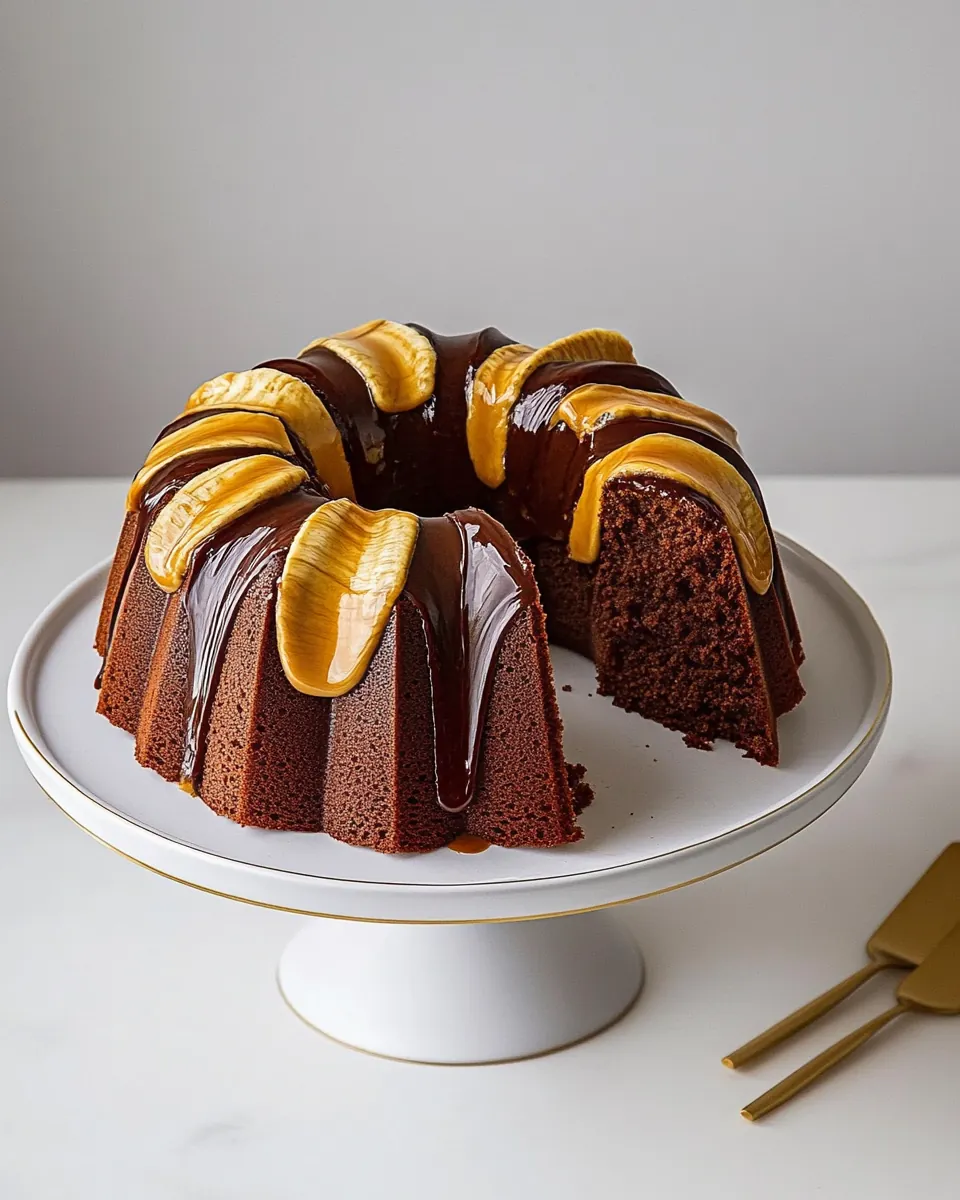
Peanut Butter Banana Bundt Cake
Peanut Butter Banana Bundt Cake feels like the kind of dessert that arrives at family gatherings with an easy smile, one that I selfishly make whenever I have a couple of brown bananas and a craving for something cozy. The first time I baked this cake I remember the kitchen filling with a warm, nutty aroma while the bananas lent their soft sweetness, and I kept sneaking crumbs from the cooling rack. I love how the batter is forgiving, so even when life gets busy it’s a recipe I return to again and again.
There is something almost nostalgic about a Bundt cake, the elegant silhouette giving a homemade treat a special moment. I like to think of this as a weekday luxury, something you can pull together without drama yet with results that feel celebratory. The texture is tender and slightly dense, which pairs beautifully with a glossy chocolate finish. Each bite balances the earthiness of peanut butter and the mellow fruitiness of bananas, and that combination always wins over a mixed crowd when I serve it for coffee or dessert.
Recipe Snapshot
1 hr 10 mins
15 mins
55 mins
Medium
350 kcal
American
Gluten-Free, Low FODMAP
Desserts
Large bowl, Medium bowl, Whisk, 10-cup Bundt pan, Wire rack, Instant-read thermometer
What Sets This Peanut Butter Banana Bundt Cake Apart
Comforting flavor pairing
I adore how peanut butter and banana work together, because they create a rich, familiar profile that never feels overpowered. The cake manages to be both indulgent and comforting, which is why I reach for it when I want something reliable yet special.
Simple, pantry friendly
This recipe uses straightforward ingredients I usually have on hand, so I can throw it together when the mood strikes. I find that having a go to Bundt cake like this reduces decision fatigue and still yields an impressive result for unexpected guests.
Texture that satisfies
The crumb is moist without being gummy, thanks to the balance of wet and dry ingredients. I appreciate how the crumb holds together when sliced, making it ideal for serving at brunch or packing for picnics.
Versatile finishing options
While the recipe references a Chocolate Glaze, the cake stands on its own. I often vary the topping depending on who I am feeding, and that flexibility is one of the reasons I keep this recipe in heavy rotation.
Crowd pleasing presentation
A Bundt pan makes simple batter look elegant, and I love the applause it gets when I turn out a perfectly shaped cake. The visual appeal means less fussing with garnishes, and more time enjoying conversation and coffee with friends.
Everything You Need for Peanut Butter Banana Bundt Cake
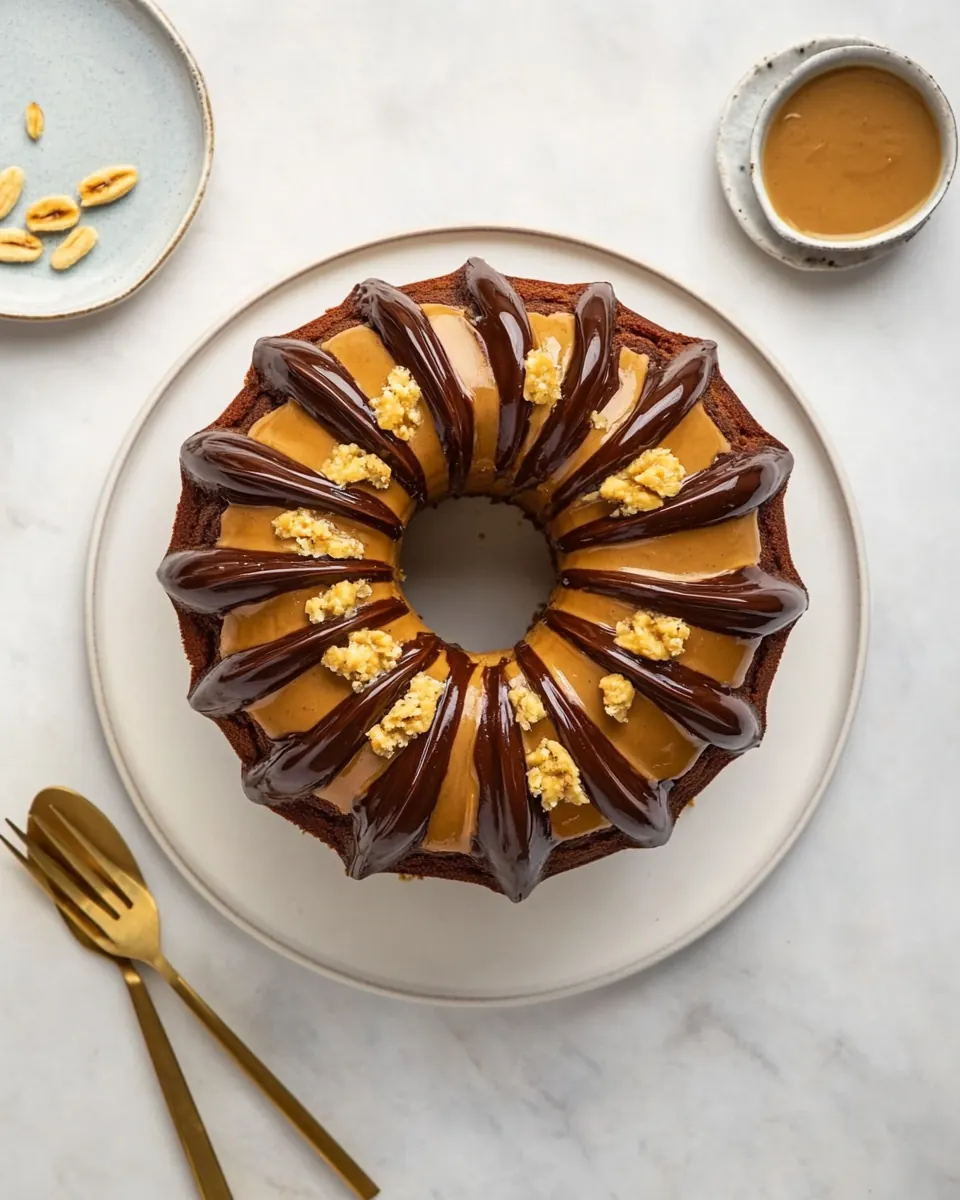
These ingredients come together to build layered flavor and a tender crumb. The key players are the bananas for natural sweetness and moisture, the peanut butter for richness and depth, and the mix of sugars and fats to create structure and tenderness. Each item has a role, and when balanced correctly they yield a cake that slices cleanly and tastes deeply satisfying.
- 1 cup (200 grams) granulated sugar: Sweeten the cake batter and help tenderize the crumb while promoting even browning during baking; granulated sugar also dissolves to assist with moisture retention and structure when creamed with fats and liquids.
- 3/4 cup (168 grams) neutral oil: Provide a neutral-flavored fat that contributes richness and moistness to the cake without adding additional flavor notes; oil also helps maintain a tender, soft crumb and improves shelf life by keeping the cake moist.
- 3/4 cup (185 grams) mashed very ripe banana (about 2 medium bananas): Add concentrated banana flavor and natural sweetness while contributing moisture and a soft texture; mashed very ripe banana also reacts with leaveners to enhance tenderness and provides subtle fruit aroma.
- 1/2 cup (110 grams) firmly packed light brown sugar: Bring deep, caramel-like sweetness and extra moisture, enriching the cake's flavor and contributing to a chewier crumb; firmly packed light brown sugar also supplies a hint of molasses that complements the peanut butter and banana.
- 1/2 cup (128 grams) creamy peanut butter: Introduce creamy peanut flavor and a dense, rich texture while adding fat and emulsifying properties that help bind the batter; peanut butter also reinforces the cake's nutty profile and contributes to moistness.
- 2 large eggs (150 grams), room temperature: Incorporate structure and lift by providing proteins that set during baking; eggs also contribute moisture, richness, and emulsification for a cohesive, tender crumb when beaten with sugars and fats.
- 2 teaspoons (8 grams) vanilla extract: Impart aromatic sweetness and roundness to the flavor profile, enhancing the banana and peanut butter notes; vanilla extract also helps balance and unify the overall taste of the cake.
- 1 cup (240 grams) whole buttermilk, room temperature: Add tangy moisture and acidity that reacts with leaveners to produce a lighter, more tender crumb; whole buttermilk also contributes richness and a subtle tang that complements the banana and peanut flavors.
- 2 1/2 cups (313 grams) all-purpose flour: Form the cake's structure by supplying gluten and starch that set during baking; all-purpose flour also balances hydration and works with leaveners to create proper rise and crumb texture.
- 1 teaspoon (5 grams) baking powder: Act as a chemical leavening agent to produce carbon dioxide, helping the cake rise and develop a light crumb; baking powder also helps balance acidity from buttermilk for even lift.
- 1 teaspoon (3 grams) kosher salt: Enhance overall flavor and control yeast/bacterial growth by contributing salinity; kosher salt also strengthens gluten structure slightly and balances sweetness in the finished cake.
- 1/4 teaspoon (1.25 grams) baking soda: Provide additional leavening that reacts with acidic buttermilk to release carbon dioxide, aiding rise and crumb tenderness; smaller quantity ensures proper balance with the baking powder.
- Chocolate Glaze recipe follows: Supply a glossy, sweet finish when prepared as a glaze to complement the cake; chocolate glaze adds rich chocolate flavor, sheen, and a contrasting texture to the moist bundt cake.
Cooking Instructions for Peanut Butter Banana Bundt Cake
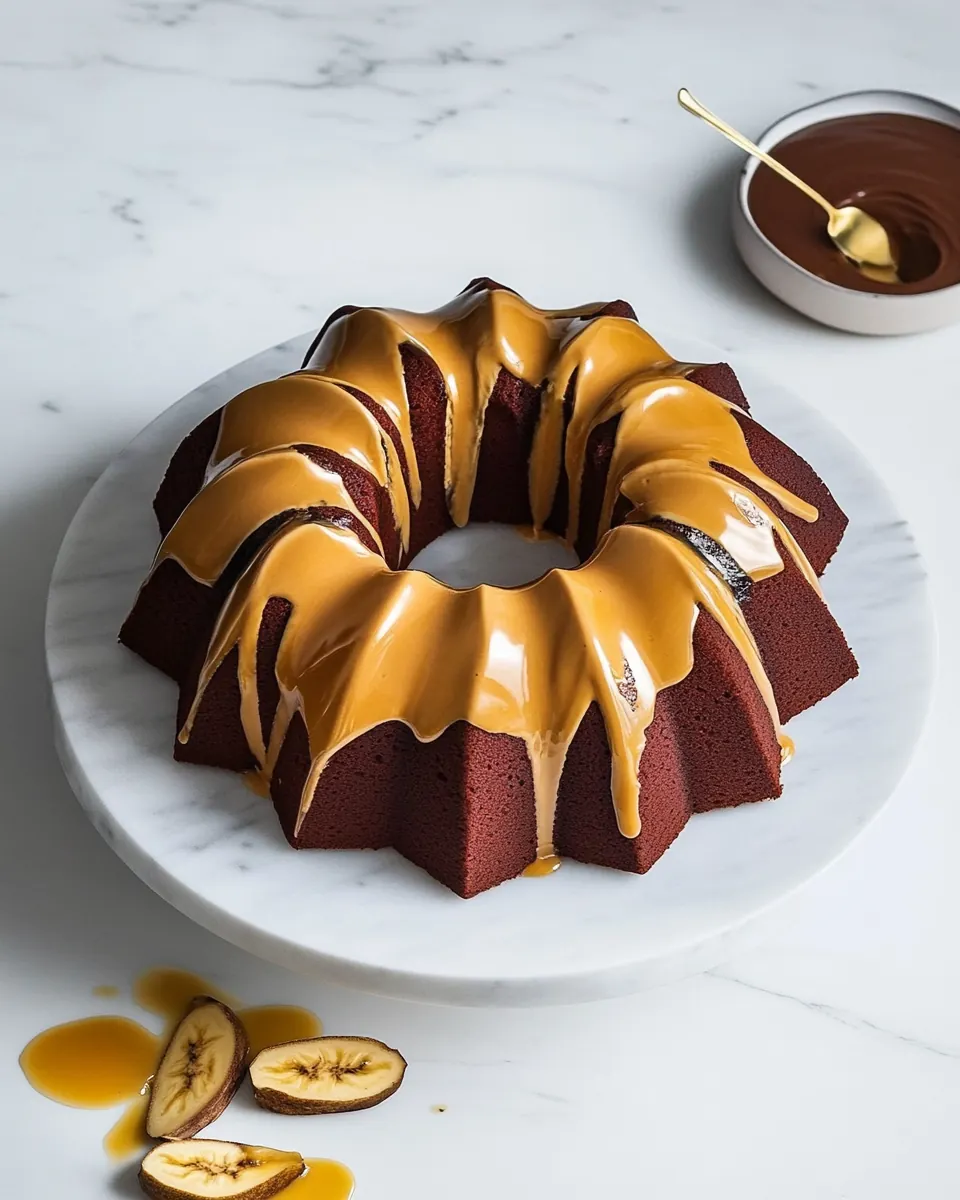
These directions will guide you through mixing, baking, and finishing the cake with a conversational, hands on approach. I want you to feel confident at each stage, noticing the small cues that indicate success. Take your time and enjoy the sensory changes as the batter transforms into cake.
- Preheat oven to 325°F (170°C).: As the oven warms you will smell a neutral warmth, and preheating ensures the cake rises evenly from the moment it goes in. This temperature gives the Bundt enough time to bake through without overbrowning. A common error is skipping preheat, which leads to uneven texture, so always wait until your oven reaches the set temperature.
- In a large bowl, whisk together granulated sugar, oil, banana, brown sugar, and peanut butter until well combined, about 1 minute. Add eggs and vanilla, and whisk until well combined. Whisk in buttermilk.: You will notice the mixture becoming glossy and uniform, with the peanut butter dispersing through the sweet base; the aroma becomes richer and slightly toasty. This step helps emulsify fats and liquids so your batter holds air for a tender crumb. Overmixing beyond this point can create excess gluten, so stop once smooth.
- In a medium bowl, whisk together flour, baking powder, salt, and baking soda. Gradually whisk flour mixture into sugar mixture until just combined, stopping to scrape sides of bowl. (Do not overmix.): After adding the eggs the mixture will look more cohesive, slightly thicker and silkier, and you may hear a soft whisking sound as it comes together. Eggs bind and add structure while vanilla sharpens the profile. Avoid adding cold eggs straight from the fridge, as they can chill the batter and affect rise.
- Spray a 10-cup Bundt pan with baking spray with flour. Pour batter into prepared pan. Tap pan on a kitchen towel-lined surface 4 to 5 times to settle batter and release any air bubbles.: When you pour in room temperature buttermilk the batter loosens and gains a gentle tang, smelling fresher and more balanced. This acid reacts later with the baking soda to aid lift. If you add cold buttermilk, the batter can seize and not blend smoothly, so bring it to room temperature first.
- Bake until golden brown, a wooden pick inserted near center comes out clean, and an instant-read thermometer inserted near center registers 205°F (96°C), 50 to 55 minutes, covering with foil after 40 minutes of baking to prevent excess browning. Let cool in pan for 15 minutes. Invert cake onto a wire rack, and let cool completely.: Dry ingredients should be pale and powdery, and whisking them aerates the mix so the cake is lighter. This also ensures even distribution of leaveners to avoid tunnels or dense pockets. A common mistake is scooping flour directly with the measuring cup which packs it tight; spoon and level or weigh to prevent a dry, dense cake.
- When ready to serve, spoon Chocolate Glaze on top of cooled cake.: You will see the batter thicken and take on a uniform, slightly glossy finish. The crumb develops when flour absorbs the liquids without overworking. Stir just until you no longer see streaks of flour, because overmixing develops gluten and makes the cake tough.
- Spray a 10-cup Bundt pan with baking spray with flour.: Coating the pan prevents sticking and helps the cake release cleanly, which preserves the decorative shape. I tap the pan gently to spread the spray evenly so no pockets remain. Not preparing the pan well often results in chunks of cake left behind, so be thorough.
- Pour batter into prepared pan.: As the batter flows into the pan you will hear a soft thump and see it level itself slightly; the surface will be glossy and thick. Pouring carefully avoids splattering and keeps the pan edges clean for a neat final presentation. Overfilling will cause spillover, so ensure your pan is the correct size.
- Tap pan on a kitchen towel-lined surface 4 to 5 times to settle batter and release any air bubbles.: The gentle taps will quiet the batter and reveal any remaining air that might form large holes; the surface will smooth slightly. This step helps produce an even crumb and prevents big cavities. Be careful not to slam the pan hard, which can deflate too much air and make the cake heavy.
- Bake until golden brown, a wooden pick inserted near center comes out clean, and an instant-read thermometer inserted near center registers 205°F (96°C), 50 to 55 minutes, covering with foil after 40 minutes of baking to prevent excess browning.: During baking the kitchen fills with a nutty, caramel scent and the top will become golden and set. Using an instant-read thermometer helps ensure the interior is fully cooked without overbaking. If you skip the foil and the top browns too quickly, tent it to avoid a bitter crust.
- Let cool in pan for 15 minutes.: The cake will relax and slightly pull away from the pan walls, releasing steam and stabilizing the crumb; you will notice a softer scent and reduced steam as it cools. This rest prevents the cake from breaking when inverted. Trying to unmold while piping hot is a frequent mistake, causing the cake to crack or stick.
- Invert cake onto a wire rack, and let cool completely.: As you flip the pan the cake should release smoothly with a satisfying sight of an intact silhouette; cooling on a rack prevents condensation underneath which keeps the crust tender. Full cooling is essential if you plan to glaze, because a warm cake will cause the glaze to slide off. Glazing too soon is a common misstep that ruins presentation.
- When ready to serve, spoon Chocolate Glaze on top of cooled cake.: The glossy glaze will pool and highlight the Bundt ridges, adding a shiny contrast and deep chocolate aroma. Applying glaze slowly allows it to settle evenly and fill the crevices. If the glaze is too hot it will melt and run off, so cool it slightly before spooning.
Recipe Tips about Peanut Butter Banana Bundt Cake
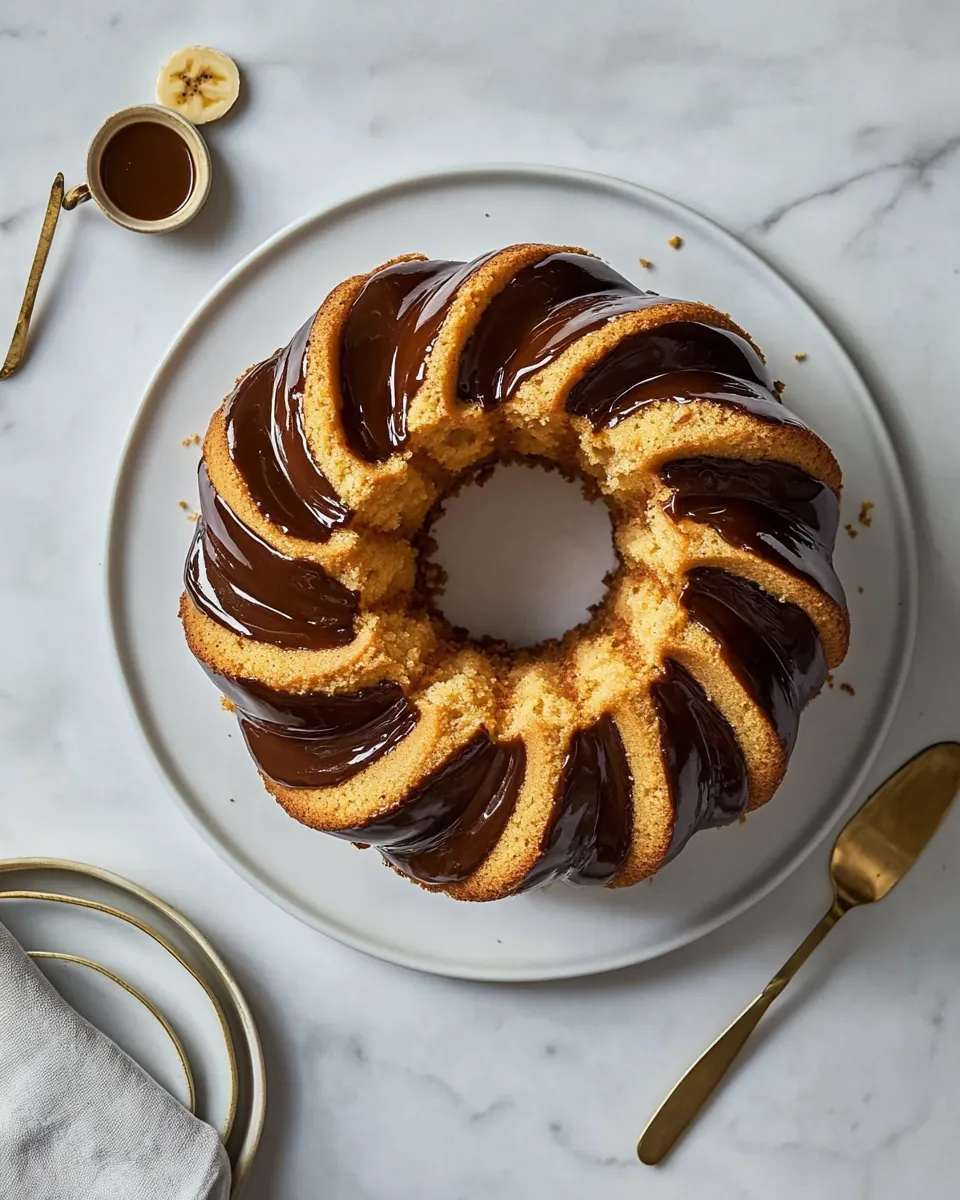
This cake rewards small attentions, and a few practical tips will make baking it feel effortless. I share details I use in my kitchen so you can avoid pitfalls and get a tidy, delicious result every time.
- Weigh your dry ingredients: Using a scale for the all-purpose flour and sugars ensures you do not accidentally pack too much in the cup, which keeps the crumb tender and consistent.
- Room temperature ingredients: Bring the eggs and buttermilk to room temperature before mixing so the batter emulsifies smoothly and traps air effectively for a better rise.
- Check oven accuracy: Use an oven thermometer to confirm your oven is at 325°F (170°C), because many ovens run hot or cold and that affects baking time and browning.
- Tap to remove air: After filling the Bundt pan, tapping it on a towel helps eliminate large bubbles that can create holes in the final crumb.
- Cooling patience pays off: Let the cake sit for 15 minutes in the pan and then cool completely on a rack before glazing so the topping adheres without melting away.
What to Pair With Peanut Butter Banana Bundt Cake
This cake pairs beautifully with beverages and light accompaniments, and thinking about serving contexts helps you choose the perfect pairing. I often serve it for brunch, afternoon coffee, or a relaxed dessert after dinner. Below are ideas, storage notes, and occasion suggestions you can mix and match.
- Morning coffee service: Serve slices with strong brewed coffee or a milky latte to balance the cake’s sweetness, perfect for weekend brunches.
- Tea time: Offer the cake with a full bodied black tea or a chai for a cozy afternoon gathering, complementing the nutty and banana notes.
- Casual dessert: Present with a scoop of vanilla ice cream for an easy after dinner treat that contrasts warm and cool textures.
- Picnic friendly: Slice and pack the cake in a container with parchment to keep it moist, making it great for outdoor gatherings and potlucks.
- Special occasions: The Bundt silhouette makes it appropriate for birthdays or small celebrations where you want something pretty without fuss.
- Storage: Store wrapped at room temperature for up to two days, or refrigerate up to five days; bring to room temperature before serving for best flavor.
- Seasonal pairing: The cake works year round, but I especially enjoy it in cooler months when warm, nutty flavors feel comforting.
FAQ
Conclusion
This Peanut Butter Banana Bundt Cake stands out for its comforting balance of nutty richness and ripe banana sweetness, plus an inviting Bundt presentation. I hope you give it a try the next time you have a couple of brown bananas or want a no fuss dessert that still feels special. It’s the sort of recipe that rewards small attentions, and sharing a slice is an easy way to brighten someone’s day.
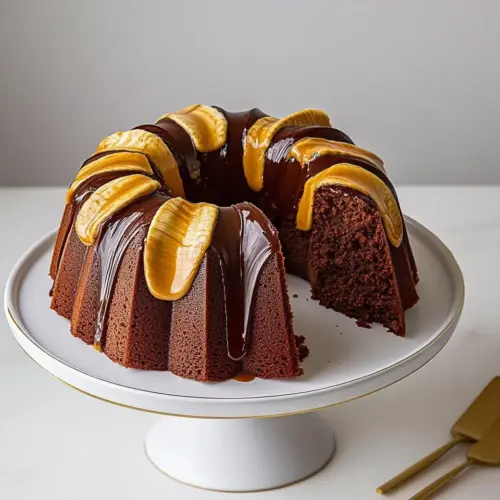
Peanut Butter Banana Bundt Cake
Equipment
- Large Bowl
- Medium Bowl
- Whisk
- 10 cup Bundt pan
- Wire Rack
- Instant read thermometer
Ingredients
- 1 cup (200 grams) granulated sugar Sweeten the cake batter and help tenderize the crumb while promoting even browning during baking; granulated sugar also dissolves to assist with moisture retention and structure when creamed with fats and liquids.
- 3/4 cup (168 grams) neutral oil Provide a neutral-flavored fat that contributes richness and moistness to the cake without adding additional flavor notes; oil also helps maintain a tender, soft crumb and improves shelf life by keeping the cake moist.
- 3/4 cup (185 grams) mashed very ripe banana (about 2 medium bananas) Add concentrated banana flavor and natural sweetness while contributing moisture and a soft texture; mashed very ripe banana also reacts with leaveners to enhance tenderness and provides subtle fruit aroma.
- 1/2 cup (110 grams) firmly packed light brown sugar Bring deep, caramel-like sweetness and extra moisture, enriching the cake's flavor and contributing to a chewier crumb; firmly packed light brown sugar also supplies a hint of molasses that complements the peanut butter and banana.
- 1/2 cup (128 grams) creamy peanut butter Introduce creamy peanut flavor and a dense, rich texture while adding fat and emulsifying properties that help bind the batter; peanut butter also reinforces the cake's nutty profile and contributes to moistness.
- 2 large eggs (150 grams), room temperature Incorporate structure and lift by providing proteins that set during baking; eggs also contribute moisture, richness, and emulsification for a cohesive, tender crumb when beaten with sugars and fats.
- 2 teaspoons (8 grams) vanilla extract Impart aromatic sweetness and roundness to the flavor profile, enhancing the banana and peanut butter notes; vanilla extract also helps balance and unify the overall taste of the cake.
- 1 cup (240 grams) whole buttermilk, room temperature Add tangy moisture and acidity that reacts with leaveners to produce a lighter, more tender crumb; whole buttermilk also contributes richness and a subtle tang that complements the banana and peanut flavors.
- 2 1/2 cups (313 grams) all-purpose flour Form the cake's structure by supplying gluten and starch that set during baking; all-purpose flour also balances hydration and works with leaveners to create proper rise and crumb texture.
- 1 teaspoon (5 grams) baking powder Act as a chemical leavening agent to produce carbon dioxide, helping the cake rise and develop a light crumb; baking powder also helps balance acidity from buttermilk for even lift.
- 1 teaspoon (3 grams) kosher salt Enhance overall flavor and control yeast/bacterial growth by contributing salinity; kosher salt also strengthens gluten structure slightly and balances sweetness in the finished cake.
- 1/4 teaspoon (1.25 grams) baking soda Provide additional leavening that reacts with acidic buttermilk to release carbon dioxide, aiding rise and crumb tenderness; smaller quantity ensures proper balance with the baking powder.
- Chocolate Glaze recipe follows Supply a glossy, sweet finish when prepared as a glaze to complement the cake; chocolate glaze adds rich chocolate flavor, sheen, and a contrasting texture to the moist bundt cake.
Instructions
- Preheat oven to 325°F (170°C).: As the oven warms you will smell a neutral warmth, and preheating ensures the cake rises evenly from the moment it goes in. This temperature gives the Bundt enough time to bake through without overbrowning. A common error is skipping preheat, which leads to uneven texture, so always wait until your oven reaches the set temperature.
- In a large bowl, whisk together granulated sugar, oil, banana, brown sugar, and peanut butter until well combined, about 1 minute. Add eggs and vanilla, and whisk until well combined. Whisk in buttermilk.: You will notice the mixture becoming glossy and uniform, with the peanut butter dispersing through the sweet base; the aroma becomes richer and slightly toasty. This step helps emulsify fats and liquids so your batter holds air for a tender crumb. Overmixing beyond this point can create excess gluten, so stop once smooth.
- In a medium bowl, whisk together flour, baking powder, salt, and baking soda. Gradually whisk flour mixture into sugar mixture until just combined, stopping to scrape sides of bowl. (Do not overmix.): After adding the eggs the mixture will look more cohesive, slightly thicker and silkier, and you may hear a soft whisking sound as it comes together. Eggs bind and add structure while vanilla sharpens the profile. Avoid adding cold eggs straight from the fridge, as they can chill the batter and affect rise.
- Spray a 10-cup Bundt pan with baking spray with flour. Pour batter into prepared pan. Tap pan on a kitchen towel-lined surface 4 to 5 times to settle batter and release any air bubbles.: When you pour in room temperature buttermilk the batter loosens and gains a gentle tang, smelling fresher and more balanced. This acid reacts later with the baking soda to aid lift. If you add cold buttermilk, the batter can seize and not blend smoothly, so bring it to room temperature first.
- Bake until golden brown, a wooden pick inserted near center comes out clean, and an instant-read thermometer inserted near center registers 205°F (96°C), 50 to 55 minutes, covering with foil after 40 minutes of baking to prevent excess browning. Let cool in pan for 15 minutes. Invert cake onto a wire rack, and let cool completely.: Dry ingredients should be pale and powdery, and whisking them aerates the mix so the cake is lighter. This also ensures even distribution of leaveners to avoid tunnels or dense pockets. A common mistake is scooping flour directly with the measuring cup which packs it tight; spoon and level or weigh to prevent a dry, dense cake.
- When ready to serve, spoon Chocolate Glaze on top of cooled cake.: You will see the batter thicken and take on a uniform, slightly glossy finish. The crumb develops when flour absorbs the liquids without overworking. Stir just until you no longer see streaks of flour, because overmixing develops gluten and makes the cake tough.
- Spray a 10-cup Bundt pan with baking spray with flour.: Coating the pan prevents sticking and helps the cake release cleanly, which preserves the decorative shape. I tap the pan gently to spread the spray evenly so no pockets remain. Not preparing the pan well often results in chunks of cake left behind, so be thorough.
- Pour batter into prepared pan.: As the batter flows into the pan you will hear a soft thump and see it level itself slightly; the surface will be glossy and thick. Pouring carefully avoids splattering and keeps the pan edges clean for a neat final presentation. Overfilling will cause spillover, so ensure your pan is the correct size.
- Tap pan on a kitchen towel-lined surface 4 to 5 times to settle batter and release any air bubbles.: The gentle taps will quiet the batter and reveal any remaining air that might form large holes; the surface will smooth slightly. This step helps produce an even crumb and prevents big cavities. Be careful not to slam the pan hard, which can deflate too much air and make the cake heavy.
- Bake until golden brown, a wooden pick inserted near center comes out clean, and an instant-read thermometer inserted near center registers 205°F (96°C), 50 to 55 minutes, covering with foil after 40 minutes of baking to prevent excess browning.: During baking the kitchen fills with a nutty, caramel scent and the top will become golden and set. Using an instant-read thermometer helps ensure the interior is fully cooked without overbaking. If you skip the foil and the top browns too quickly, tent it to avoid a bitter crust.
- Let cool in pan for 15 minutes.: The cake will relax and slightly pull away from the pan walls, releasing steam and stabilizing the crumb; you will notice a softer scent and reduced steam as it cools. This rest prevents the cake from breaking when inverted. Trying to unmold while piping hot is a frequent mistake, causing the cake to crack or stick.
- Invert cake onto a wire rack, and let cool completely.: As you flip the pan the cake should release smoothly with a satisfying sight of an intact silhouette; cooling on a rack prevents condensation underneath which keeps the crust tender. Full cooling is essential if you plan to glaze, because a warm cake will cause the glaze to slide off. Glazing too soon is a common misstep that ruins presentation.
- When ready to serve, spoon Chocolate Glaze on top of cooled cake.: The glossy glaze will pool and highlight the Bundt ridges, adding a shiny contrast and deep chocolate aroma. Applying glaze slowly allows it to settle evenly and fill the crevices. If the glaze is too hot it will melt and run off, so cool it slightly before spooning.
Notes
- Weigh your dry ingredients: Using a scale for the all-purpose flour and sugars ensures you do not accidentally pack too much in the cup, which keeps the crumb tender and consistent.
- Room temperature ingredients: Bring the eggs and buttermilk to room temperature before mixing so the batter emulsifies smoothly and traps air effectively for a better rise.
- Check oven accuracy: Use an oven thermometer to confirm your oven is at 325°F (170°C), because many ovens run hot or cold and that affects baking time and browning.
- Tap to remove air: After filling the Bundt pan, tapping it on a towel helps eliminate large bubbles that can create holes in the final crumb.
- Cooling patience pays off: Let the cake sit for 15 minutes in the pan and then cool completely on a rack before glazing so the topping adheres without melting away.