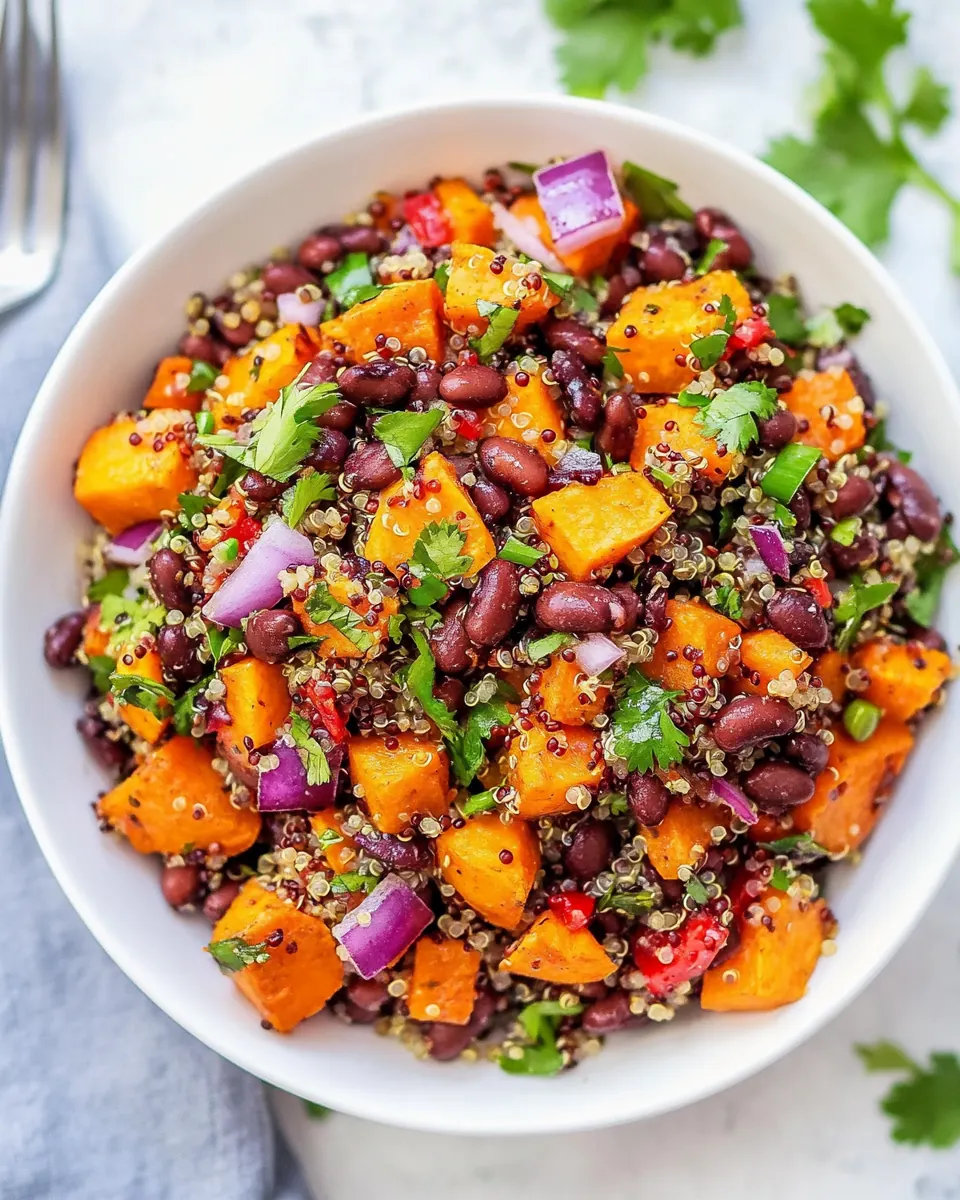
Roasted Sweet Potato Quinoa Black Bean Salad
Roasted Sweet Potato Quinoa Black Bean Salad became my go to when I wanted a meal that felt like a warm hug and still left room for a second helping. The first time I tossed together roasted sweet potatoes with nutty quinoa and hearty black beans I remember the kitchen filling with an earthy, caramelized aroma that made me slow down and savor the moment. I loved how the roasted pieces held their shape yet gave a silky, almost creamy bite that contrasted beautifully with the grainy quinoa.
That evening I served it to friends who kept asking for the recipe between second and third helpings. We ate straight from the bowl, forks clinking, enjoying sharp pops of lime and the bright, herbal lift from chopped cilantro. It felt nourishing yet festive, the kind of dish you can make on a weeknight and still be proud to serve at a small gathering. I started making variations right away, playing with the dressing balance and the roast time for the sweet potatoes.
Over time this Roasted Sweet Potato Quinoa Black Bean Salad became a staple for potlucks and for quiet Sunday lunches. I keep the components simple, so each ingredient can shine. It travels well, keeps in the fridge for days, and is forgiving if you swap a few elements. When I want a dish that is colorful, full of texture, and effortless, I reach for this recipe without hesitation.
Recipe Snapshot
40 mins
15 mins
25 mins
Easy
350 kcal
American
Vegan, Gluten-Free
Salads
Oven, Baking sheet, Large mixing bowl, Small bowl or measuring cup, Saucepan for quinoa
What We Adore About This Roasted Sweet Potato Quinoa Black Bean Salad
Comfort and nutrition in one bowl
I adore how Roasted Sweet Potato Quinoa Black Bean Salad manages to be comforting and nourishing at the same time. The roasted sweet potatoes lend natural sweetness and a soft, melting texture that complements the firm chew of quinoa. That balance makes it feel like a complete plate, rather than just a salad.
Meal prep friendly
One of the reasons I reach for this recipe is how well it stores. You can roast the sweet potatoes a day ahead, cook the quinoa in advance, and mix everything just before serving. It saves time and reduces last minute stress, which I appreciate on busy days.
Flavor layering and bright finishing touch
The dressing, with lime zest, lime juice, and a touch of maple, cuts through the richness and lifts every bite. I love that the acidity brightens the whole bowl, and the smoked paprika adds a whisper of warmth without overpowering the fresh elements like chopped cilantro and diced bell pepper.
Textural variety
Texture is a big reason this recipe stands out. You get tender roasted sweet potatoes, fluffy quinoa, and creamy yet whole black beans. The diced red onion and bell pepper add crisp, refreshing bites. That range keeps the dish interesting spoon after spoon.
Versatility at the table
This salad adapts to many occasions. Serve it warm if you want comfort, or chilled for picnic friendly fare. It pairs well with simple greens or acts as a hearty main on its own. I love versatile recipes that let me switch roles from side to main without losing flavor or texture.
Main Ingredients for Roasted Sweet Potato Quinoa Black Bean Salad
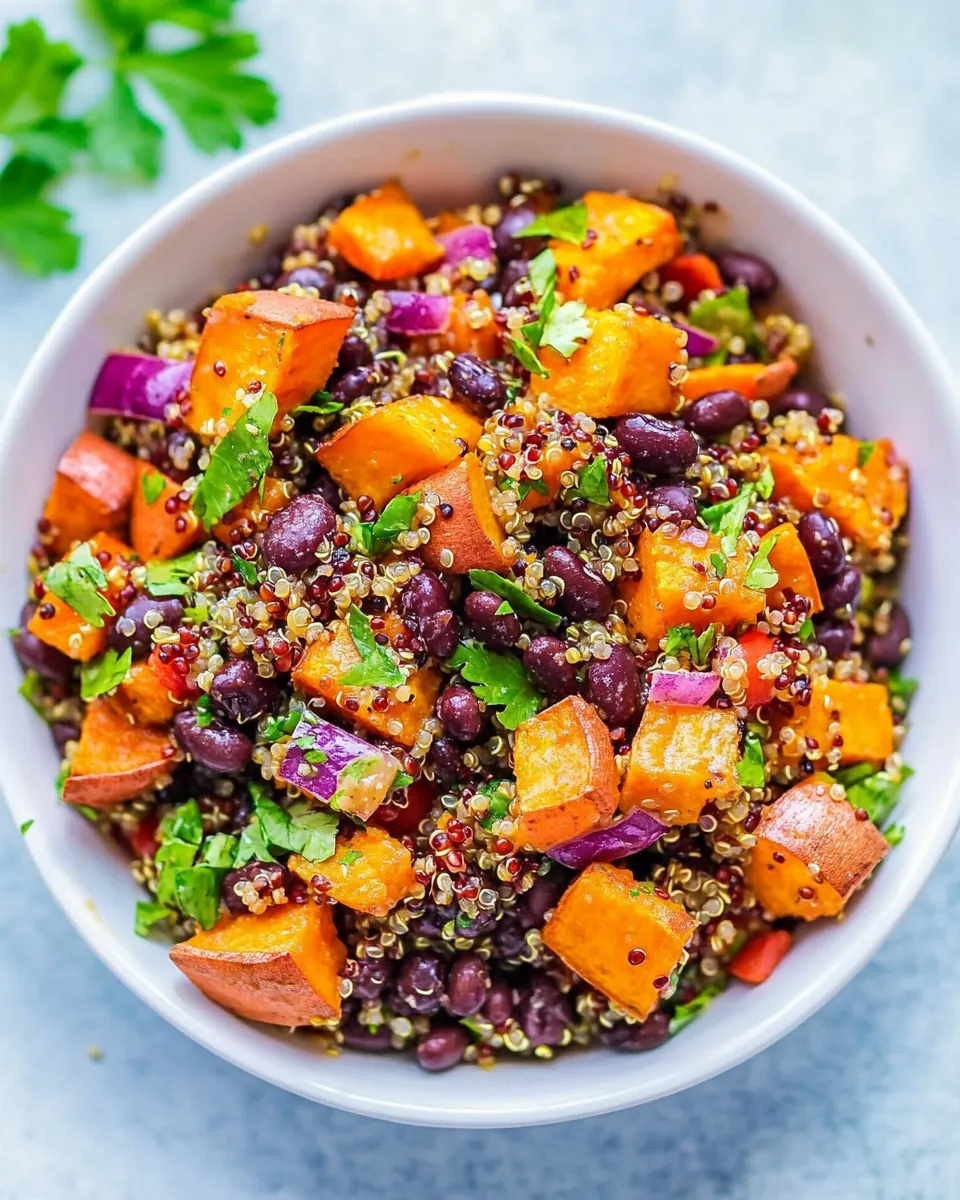
The philosophy behind these components is straightforward: every element pulls its weight. The roasted sweet potatoes provide body and natural sweetness, quinoa contributes nutty bulk and protein, and black beans add creaminess and fiber. Aromatics like red onion and garlic and the citrusy lift from lime keep the bowl bright, while spices and olive oil tie everything together.
- 1 1/4 pounds sweet potatoes scrubbed and peeled (about 3 small/medium), cut into 1/2-inch chunks: Scrubbed and peeled then cut into 1/2-inch chunks to provide tender, caramelized roasted sweet potato pieces that add natural sweetness and hearty texture to the salad. Roasting concentrates flavors and creates a slightly crisp exterior while maintaining a creamy interior, balancing the other savory components. Keeps chunks uniform so they cook evenly and integrate well with quinoa and beans.
- 1 large red onion cut into 1/2-inch chunks: Cut into 1/2-inch chunks to soften and develop sweet, savory notes when roasted alongside the sweet potatoes. Provides a sharp, slightly sweet contrast and adds color and bite to the salad. Helps build a caramelized base flavor that complements the dressing and spices.
- 4 tablespoons extra virgin olive oil divided: Divided between roasting and dressing to add richness and help vegetables brown while also creating a cohesive, flavorful vinaigrette. Extra virgin olive oil brings a fruity, smooth mouthfeel and carries fat-soluble flavors like smoked paprika and chili powder. Using it sparingly ensures a balanced coating without greasiness.
- 2 teaspoons ground chili powder: Sprinkled over the sweet potatoes to contribute warm, smoky heat and a subtle earthy depth. Ground chili powder enhances the roasted vegetables and ties into the Latin-inspired flavor profile. Blends well with smoked paprika and salt to season evenly.
- 1 teaspoon smoked paprika: Added for smoky, aromatic flavor that deepens the overall profile and pairs beautifully with chili powder. Smoked paprika contributes color and a sweet-smoky accent that complements roasted vegetables and the dressing. Works with the lime and maple syrup to balance savory and bright notes.
- 1/2 teaspoon kosher salt: Used to season the vegetables and overall salad, enhancing and balancing sweet and acidic components. Kosher salt helps draw out moisture during roasting and elevates other flavors without overpowering. Adjusts overall seasoning to taste after combining all elements.
- 1 1/2 cups cooked quinoa from 1/2 cup dry: Prepared from 1/2 cup dry and fluffed to contribute a nutty, slightly chewy base that adds bulk and protein to the salad. Cooked quinoa soaks up dressing and binds with beans and vegetables for a satisfying texture. Provides a gluten-free grain component that makes the salad more substantial.
- Zest and juice of 2 limes 3 tablespoons lime juice total: Zested and juiced to provide bright citrus acidity and aromatic oils that lift the flavors and balance richness. Lime zest adds concentrated citrus perfume while lime juice contributes tang and freshness to the dressing. The combined juice amount ensures a pronounced, lively acidity throughout the salad.
- 2 teaspoons pure maple syrup or substitute honey or light agave nectar: Stirred into the dressing to add subtle sweetness and to round out the lime's acidity. Pure maple syrup (or honey/agave) tempers heat and enhances caramelized notes from the roasted vegetables. Acts as a balancing agent so savory, salty, and acidic elements harmonize.
- 1 clove garlic minced: Minced finely to add pungent, savory depth and a touch of herbal bite to the dressing. Garlic brings aromatic complexity and complements the smoky spices and lime. Distributes evenly in the vinaigrette to infuse the entire salad with flavor.
- 1 can reduced sodium black beans (15 ounces), rinsed and drained: Rinsed and drained before adding to provide protein, fiber, and a creamy, earthy counterpoint to the sweet potatoes. Reduced sodium black beans contribute heartiness and absorb dressing flavors while adding visual contrast. Proper rinsing removes excess sodium and packing liquid.
- 1 large bell pepper cored and diced: Cored and diced to contribute fresh crunch, bright flavor, and colorful contrast to the salad. Bell pepper adds juiciness and mild sweetness that complements roasted vegetables and beans. Uniform dicing ensures pleasant texture distribution in every bite.
- 3/4 cup freshly chopped cilantro: Freshly chopped to impart bright, herbaceous notes and a vibrant green finish that livens the dish. Cilantro provides citrusy, slightly peppery flavor that pairs well with lime and the southwestern spice mix. Stirred in at the end to preserve freshness and visual appeal.
Cooking Instructions for Roasted Sweet Potato Quinoa Black Bean Salad
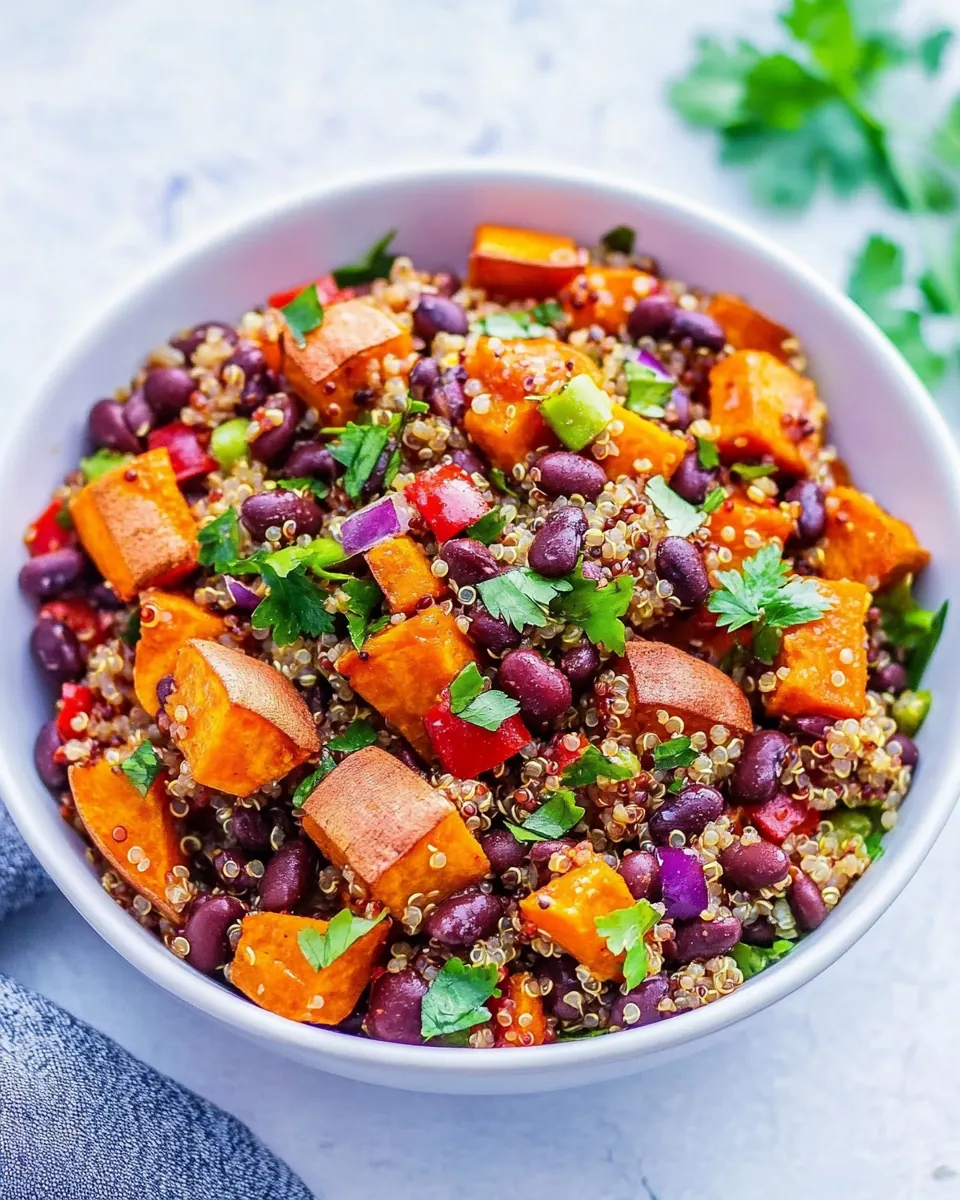
These directions guide you from roasting and cooking to assembling a balanced bowl. Follow sensory cues and small technique notes to get consistent results. The order matters, because building layers saves time and preserves texture.
- Preheat the oven to 400 degrees F. Place the cubed sweet potatoes and red onion on a large baking sheet. Drizzle with 1 tablespoon olive oil, then sprinkle with the chili powder, smoked paprika, and salt. Toss to coat and spread into a single layer. Bake until the potatoes are just tender, about 25 minutes, turning halfway through. Remove from the oven and set aside.: Warm air filling the oven creates a stable environment so the exterior of the sweet potatoes can brown while the interior softens. You should feel heat radiant when you open the oven door and hear nothing at first, then later a gentle crackle as vegetables roast. A common mistake is not letting the oven reach full temperature, which leads to pale, steamed cubes instead of caramelized edges. If your oven runs cool, allow an extra 5 to 10 minutes so the pan heats thoroughly before the vegetables go in. Use an oven thermometer if you are unsure about the true temperature.
- While the potatoes bake, cook the quinoa (if needed). In a small bowl or large measuring cup, whisk together the remaining 3 tablespoons extra virgin olive oil, lime juice and zest, maple syrup, and garlic (or shake the ingredients together in a mason jar with a tight-fitting lid).: When the cut sweet potatoes and red onion are spread out on a roomy sheet, they roast evenly and develop crisp edges. You want them in a single layer with space between pieces so hot air circulates. Pressing them too close will trap steam, resulting in limp texture instead of golden browning. If you notice steaming instead of browning, gently separate pieces and finish under the broiler for a minute or two while watching closely.
- In a large mixing bowl, combine the cooked quinoa, black beans, bell pepper, cilantro, and roasted sweet potatoes and onions. Pour the dressing over the top, then toss to combine. Enjoy warm or at room temperature.: Coating the vegetables in a thin layer of olive oil helps heat transfer and encourages the Maillard reaction, producing color and savory notes. The spices cling to the oil and toast slightly, releasing aroma. If you add too much oil you will get greasy edges, and too little will prevent proper browning. Toss gently so the seasoning distributes evenly across pieces for uniform flavor.
- Toss to coat and spread into a single layer: Ensuring an even coat means every bite has spice and caramelization. Use tongs or a spatula to mix, and then flatten the pieces so they have direct contact with the pan. If some pieces overlap, those areas will steam rather than roast. A common error is crowding the pan; if necessary, roast in two batches to achieve color and texture.
- Bake until the potatoes are just tender, about 25 minutes, turning halfway through: You will notice the aroma deepen and edges turning golden brown to amber as they roast. The sound is quiet, but when you check the pan the vegetables should give slightly when pierced with a fork while retaining shape. Turning halfway promotes even browning on all sides. Avoid overbaking, or the cubes will collapse and become mushy. Test at about 20 minutes if your oven tends to run hot, so you can stop when tender but still holding form.
- Remove from the oven and set aside: Allowing the roasted pieces to rest briefly lets steam escape and prevents the salad from becoming watery. You should see a slight sheen where oil remained, and the roasted sugars will settle. If you toss immediately while still very hot, juices can loosen textures in the bowl. A common oversight is leaving them on the hot sheet, which continues cooking; transfer to a bowl to cool slightly before combining.
- While the potatoes bake, cook the quinoa (if needed): Properly cooked quinoa is fluffy and each grain is separate, not gluey. As it cooks you will see little spirals unfurl from each seed, and the texture turns tender with a slight chew. Rinsing the dry quinoa first removes any bitter coating and improves the final flavor. Overcooking leads to a mushy base, while undercooking leaves a grainy center, so keep an eye on the pot and follow the grain to decide doneness.
- In a small bowl or large measuring cup, whisk together the remaining 3 tablespoons extra virgin olive oil, lime juice and zest, maple syrup, and garlic: The dressing should be glossy and slightly thick, with the lime scent bright and the maple adding muted sweetness. Whisking emulsifies the olive oil with the acid so it clings to quinoa and vegetables. If you skip the zest, you lose aromatic oils, and if the garlic is too coarse you may get sharp bites. Taste and adjust balance; if too tart, add a fraction more maple, if flat, a pinch of salt wakes it up.
- Or shake the ingredients together in a mason jar with a tight-fitting lid: Shaking creates a quick emulsion and is travel friendly if you are prepping ahead. You should hear the liquid move and see it turn slightly opaque when emulsified. Failure to shake well may leave the oil separated, so re-emulsify before tossing. This method is handy when you want a dressing that holds together for a few hours without refrigeration briefly, but always store dressings chilled when not in use.
- In a large mixing bowl, combine the cooked quinoa, black beans, bell pepper, cilantro, and roasted sweet potatoes and onions: When these components join, you will notice a colorful mosaic of textures and aromas, the warm roasted scent from the sweet potatoes blending with the fresh citrus and herb notes. Toss gently so the beans remain whole and the roasted pieces do not disintegrate. A common mistake is over mixing vigorously, which breaks down the soft elements and makes the salad mushy. Use a wide bowl and fold rather than stir hard to preserve texture.
- Pour the dressing over the top, then toss to combine: After adding the glossy dressing, you should see it coat grains and vegetables without pooling at the bottom. Tossing distributes flavor evenly and brings ingredients into harmony. If the salad seems dry, add a touch more dressing sparingly, because too much will weigh everything down. Let the salad sit a few minutes so flavors marry; the aroma will become rounded and inviting.
- Enjoy warm or at room temperature: This salad shines both warm, with softened textures and vivid roast aromas, and at room temperature when the dressing and herbs have mingled. You will notice taste differences, warm being comforting and bright, room temperature being cohesive and refreshing. Avoid leaving it unrefrigerated for long periods; if not serving immediately, chill within two hours to maintain quality and safety.
Helpful Notes about Roasted Sweet Potato Quinoa Black Bean Salad
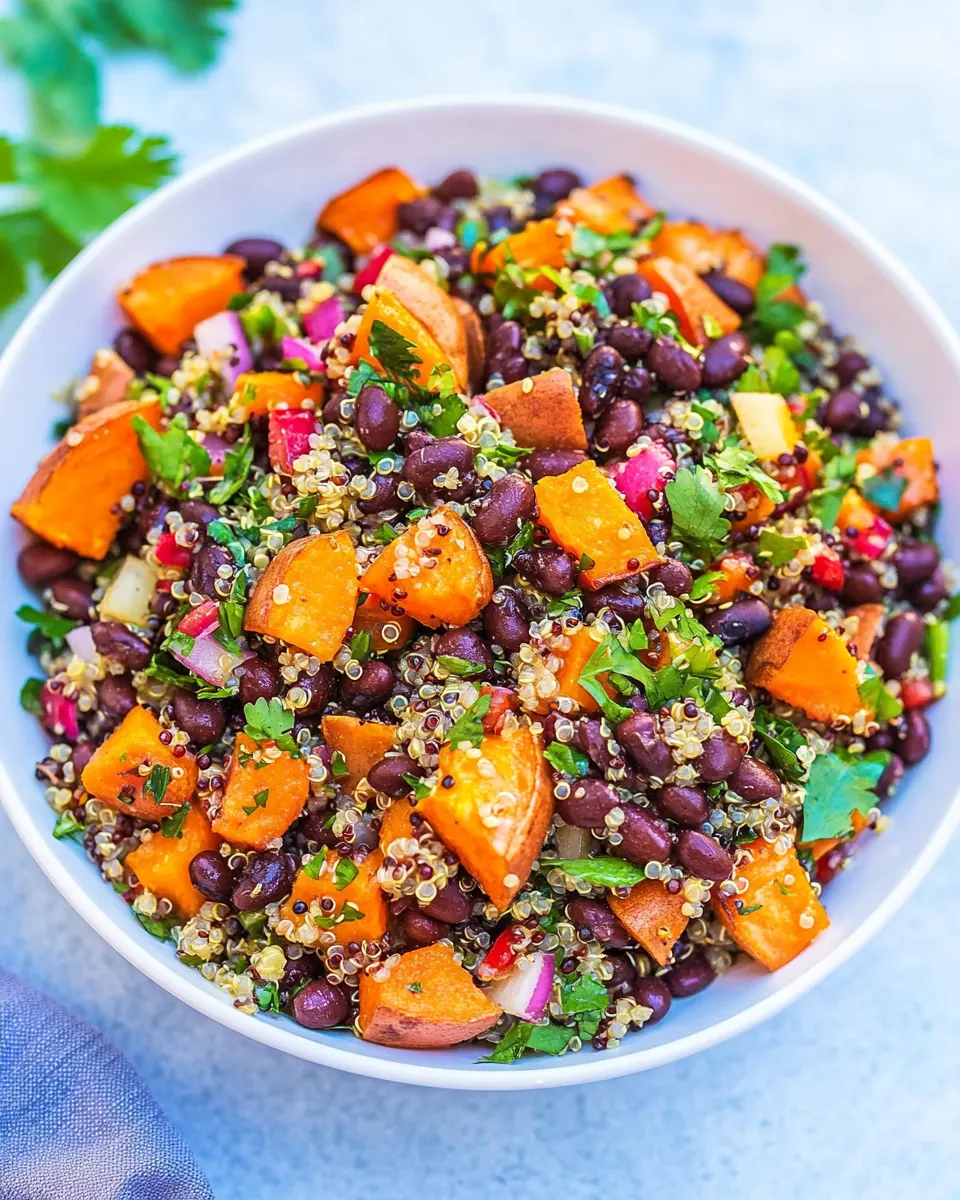
This cluster of tips expands on technique, storage, and small upgrades that elevate the salad. I focus on practical notes that save time and enhance flavor without changing the ingredient list.
- Make ahead: Roast the sweet potatoes and cook the quinoa up to one day in advance to streamline assembly and let flavors meld for a more cohesive salad.
- Storage: Keep leftovers in an airtight container in the refrigerator for up to five days, stirring gently before serving to redistribute any settled dressing.
- Room temperature serving: If serving at a gathering, allow the salad to come to room temperature for 20 to 30 minutes to maximize aroma and flavor, especially the citrus and herb notes.
- Adjusting acidity: If the dressing feels too tart, add a small pinch more maple syrup to balance; if flat, a touch more lime juice brightens instantly.
- Even roasting: Cut the sweet potatoes into uniform pieces so they cook evenly and offer consistent texture throughout the salad.
How to Enjoy Roasted Sweet Potato Quinoa Black Bean Salad
This salad fits many occasions from casual lunches to festive potlucks. Serve strategies vary depending on whether you want to highlight warmth, freshness, or portability. The list below outlines serving ideas, pairings, and storage guidance to make the most of the dish.
- Weeknight main: Plate warm with an extra drizzle of dressing for a satisfying, balanced dinner that is quick to prepare.
- Potluck side: Bring it at room temperature so the flavors are pronounced and no reheating is needed, making it convenient for buffet style service.
- Picnic friendly: Pack chilled in a sealed container, keeping dressing separate if you want to avoid sogginess during transport, then toss before serving.
- Meal prep bowls: Portion into containers with a wedge of lime on the side for brightening before eating; store up to five days for easy lunches.
- Seasonal pairing: In fall, emphasize the roasted sweet potatoes by serving alongside simple roasted vegetables or a crisp green salad for contrast.
- Serving size suggestions: Offer as a main for 2 to 3 people or as a side for 5 to 6, depending on appetite and accompanying dishes.
- Garnish ideas: Finish with an extra handful of chopped cilantro and a squeeze of fresh lime for bright color and aroma right before serving.
- Leftover use: Turn leftovers into tacos or bowls by reheating and adding a fresh squeeze of lime to revive the dressing.
- Occasions: Works well for casual family dinners, office potlucks, or lunches during Ramadan evenings when you want something nourishing and easy to share.
- Temperature notes: Serve warm for comforting textures or at room temperature to highlight the citrus and herb synergy.
FAQ
Conclusion
This Roasted Sweet Potato Quinoa Black Bean Salad is special because it balances roasted comfort with bright, fresh flavors in a single bowl. It’s a recipe I return to when I want nourishing food that travels well, stores easily, and pleases a crowd. Try it warm for a cozy meal or at room temperature for a potluck friendly dish; either way, the combination of textures and the lively lime dressing make it memorable. I hope you give it a go and enjoy how simple techniques and thoughtful seasoning transform humble ingredients into something you will want to make again and again.
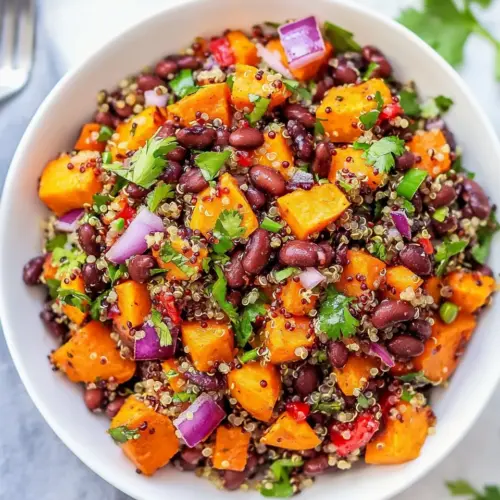
Roasted Sweet Potato Quinoa Black Bean Salad
Equipment
- Oven
- Baking Sheet
- Large Mixing Bowl
- Small bowl or measuring cup
- Saucepan for quinoa
Ingredients
- 1 1/4 pounds sweet potatoes scrubbed and peeled (about 3 small/medium), cut into 1/2-inch chunks Scrubbed and peeled then cut into 1/2-inch chunks to provide tender, caramelized roasted sweet potato pieces that add natural sweetness and hearty texture to the salad. Roasting concentrates flavors and creates a slightly crisp exterior while maintaining a creamy interior, balancing the other savory components. Keeps chunks uniform so they cook evenly and integrate well with quinoa and beans.
- 1 large red onion cut into 1/2-inch chunks Cut into 1/2-inch chunks to soften and develop sweet, savory notes when roasted alongside the sweet potatoes. Provides a sharp, slightly sweet contrast and adds color and bite to the salad. Helps build a caramelized base flavor that complements the dressing and spices.
- 4 tablespoons extra virgin olive oil divided Divided between roasting and dressing to add richness and help vegetables brown while also creating a cohesive, flavorful vinaigrette. Extra virgin olive oil brings a fruity, smooth mouthfeel and carries fat-soluble flavors like smoked paprika and chili powder. Using it sparingly ensures a balanced coating without greasiness.
- 2 teaspoons ground chili powder Sprinkled over the sweet potatoes to contribute warm, smoky heat and a subtle earthy depth. Ground chili powder enhances the roasted vegetables and ties into the Latin-inspired flavor profile. Blends well with smoked paprika and salt to season evenly.
- 1 teaspoon smoked paprika Added for smoky, aromatic flavor that deepens the overall profile and pairs beautifully with chili powder. Smoked paprika contributes color and a sweet-smoky accent that complements roasted vegetables and the dressing. Works with the lime and maple syrup to balance savory and bright notes.
- 1/2 teaspoon kosher salt Used to season the vegetables and overall salad, enhancing and balancing sweet and acidic components. Kosher salt helps draw out moisture during roasting and elevates other flavors without overpowering. Adjusts overall seasoning to taste after combining all elements.
- 1 1/2 cups cooked quinoa from 1/2 cup dry Prepared from 1/2 cup dry and fluffed to contribute a nutty, slightly chewy base that adds bulk and protein to the salad. Cooked quinoa soaks up dressing and binds with beans and vegetables for a satisfying texture. Provides a gluten-free grain component that makes the salad more substantial.
- Zest and juice of 2 limes 3 tablespoons lime juice total Zested and juiced to provide bright citrus acidity and aromatic oils that lift the flavors and balance richness. Lime zest adds concentrated citrus perfume while lime juice contributes tang and freshness to the dressing. The combined juice amount ensures a pronounced, lively acidity throughout the salad.
- 2 teaspoons pure maple syrup or substitute honey or light agave nectar Stirred into the dressing to add subtle sweetness and to round out the lime's acidity. Pure maple syrup (or honey/agave) tempers heat and enhances caramelized notes from the roasted vegetables. Acts as a balancing agent so savory, salty, and acidic elements harmonize.
- 1 clove garlic minced Minced finely to add pungent, savory depth and a touch of herbal bite to the dressing. Garlic brings aromatic complexity and complements the smoky spices and lime. Distributes evenly in the vinaigrette to infuse the entire salad with flavor.
- 1 can reduced sodium black beans (15 ounces), rinsed and drained Rinsed and drained before adding to provide protein, fiber, and a creamy, earthy counterpoint to the sweet potatoes. Reduced sodium black beans contribute heartiness and absorb dressing flavors while adding visual contrast. Proper rinsing removes excess sodium and packing liquid.
- 1 large bell pepper cored and diced Cored and diced to contribute fresh crunch, bright flavor, and colorful contrast to the salad. Bell pepper adds juiciness and mild sweetness that complements roasted vegetables and beans. Uniform dicing ensures pleasant texture distribution in every bite.
- 3/4 cup freshly chopped cilantro Freshly chopped to impart bright, herbaceous notes and a vibrant green finish that livens the dish. Cilantro provides citrusy, slightly peppery flavor that pairs well with lime and the southwestern spice mix. Stirred in at the end to preserve freshness and visual appeal.
Instructions
- Preheat the oven to 400 degrees F. Place the cubed sweet potatoes and red onion on a large baking sheet. Drizzle with 1 tablespoon olive oil, then sprinkle with the chili powder, smoked paprika, and salt. Toss to coat and spread into a single layer. Bake until the potatoes are just tender, about 25 minutes, turning halfway through. Remove from the oven and set aside.: Warm air filling the oven creates a stable environment so the exterior of the sweet potatoes can brown while the interior softens. You should feel heat radiant when you open the oven door and hear nothing at first, then later a gentle crackle as vegetables roast. A common mistake is not letting the oven reach full temperature, which leads to pale, steamed cubes instead of caramelized edges. If your oven runs cool, allow an extra 5 to 10 minutes so the pan heats thoroughly before the vegetables go in. Use an oven thermometer if you are unsure about the true temperature.
- While the potatoes bake, cook the quinoa (if needed). In a small bowl or large measuring cup, whisk together the remaining 3 tablespoons extra virgin olive oil, lime juice and zest, maple syrup, and garlic (or shake the ingredients together in a mason jar with a tight-fitting lid).: When the cut sweet potatoes and red onion are spread out on a roomy sheet, they roast evenly and develop crisp edges. You want them in a single layer with space between pieces so hot air circulates. Pressing them too close will trap steam, resulting in limp texture instead of golden browning. If you notice steaming instead of browning, gently separate pieces and finish under the broiler for a minute or two while watching closely.
- In a large mixing bowl, combine the cooked quinoa, black beans, bell pepper, cilantro, and roasted sweet potatoes and onions. Pour the dressing over the top, then toss to combine. Enjoy warm or at room temperature.: Coating the vegetables in a thin layer of olive oil helps heat transfer and encourages the Maillard reaction, producing color and savory notes. The spices cling to the oil and toast slightly, releasing aroma. If you add too much oil you will get greasy edges, and too little will prevent proper browning. Toss gently so the seasoning distributes evenly across pieces for uniform flavor.
- Toss to coat and spread into a single layer: Ensuring an even coat means every bite has spice and caramelization. Use tongs or a spatula to mix, and then flatten the pieces so they have direct contact with the pan. If some pieces overlap, those areas will steam rather than roast. A common error is crowding the pan; if necessary, roast in two batches to achieve color and texture.
- Bake until the potatoes are just tender, about 25 minutes, turning halfway through: You will notice the aroma deepen and edges turning golden brown to amber as they roast. The sound is quiet, but when you check the pan the vegetables should give slightly when pierced with a fork while retaining shape. Turning halfway promotes even browning on all sides. Avoid overbaking, or the cubes will collapse and become mushy. Test at about 20 minutes if your oven tends to run hot, so you can stop when tender but still holding form.
- Remove from the oven and set aside: Allowing the roasted pieces to rest briefly lets steam escape and prevents the salad from becoming watery. You should see a slight sheen where oil remained, and the roasted sugars will settle. If you toss immediately while still very hot, juices can loosen textures in the bowl. A common oversight is leaving them on the hot sheet, which continues cooking; transfer to a bowl to cool slightly before combining.
- While the potatoes bake, cook the quinoa (if needed): Properly cooked quinoa is fluffy and each grain is separate, not gluey. As it cooks you will see little spirals unfurl from each seed, and the texture turns tender with a slight chew. Rinsing the dry quinoa first removes any bitter coating and improves the final flavor. Overcooking leads to a mushy base, while undercooking leaves a grainy center, so keep an eye on the pot and follow the grain to decide doneness.
- In a small bowl or large measuring cup, whisk together the remaining 3 tablespoons extra virgin olive oil, lime juice and zest, maple syrup, and garlic: The dressing should be glossy and slightly thick, with the lime scent bright and the maple adding muted sweetness. Whisking emulsifies the olive oil with the acid so it clings to quinoa and vegetables. If you skip the zest, you lose aromatic oils, and if the garlic is too coarse you may get sharp bites. Taste and adjust balance; if too tart, add a fraction more maple, if flat, a pinch of salt wakes it up.
- Or shake the ingredients together in a mason jar with a tight-fitting lid: Shaking creates a quick emulsion and is travel friendly if you are prepping ahead. You should hear the liquid move and see it turn slightly opaque when emulsified. Failure to shake well may leave the oil separated, so re-emulsify before tossing. This method is handy when you want a dressing that holds together for a few hours without refrigeration briefly, but always store dressings chilled when not in use.
- In a large mixing bowl, combine the cooked quinoa, black beans, bell pepper, cilantro, and roasted sweet potatoes and onions: When these components join, you will notice a colorful mosaic of textures and aromas, the warm roasted scent from the sweet potatoes blending with the fresh citrus and herb notes. Toss gently so the beans remain whole and the roasted pieces do not disintegrate. A common mistake is over mixing vigorously, which breaks down the soft elements and makes the salad mushy. Use a wide bowl and fold rather than stir hard to preserve texture.
- Pour the dressing over the top, then toss to combine: After adding the glossy dressing, you should see it coat grains and vegetables without pooling at the bottom. Tossing distributes flavor evenly and brings ingredients into harmony. If the salad seems dry, add a touch more dressing sparingly, because too much will weigh everything down. Let the salad sit a few minutes so flavors marry; the aroma will become rounded and inviting.
- Enjoy warm or at room temperature: This salad shines both warm, with softened textures and vivid roast aromas, and at room temperature when the dressing and herbs have mingled. You will notice taste differences, warm being comforting and bright, room temperature being cohesive and refreshing. Avoid leaving it unrefrigerated for long periods; if not serving immediately, chill within two hours to maintain quality and safety.
Notes
- Make ahead: Roast the sweet potatoes and cook the quinoa up to one day in advance to streamline assembly and let flavors meld for a more cohesive salad.
- Storage: Keep leftovers in an airtight container in the refrigerator for up to five days, stirring gently before serving to redistribute any settled dressing.
- Room temperature serving: If serving at a gathering, allow the salad to come to room temperature for 20 to 30 minutes to maximize aroma and flavor, especially the citrus and herb notes.
- Adjusting acidity: If the dressing feels too tart, add a small pinch more maple syrup to balance; if flat, a touch more lime juice brightens instantly.
- Even roasting: Cut the sweet potatoes into uniform pieces so they cook evenly and offer consistent texture throughout the salad.