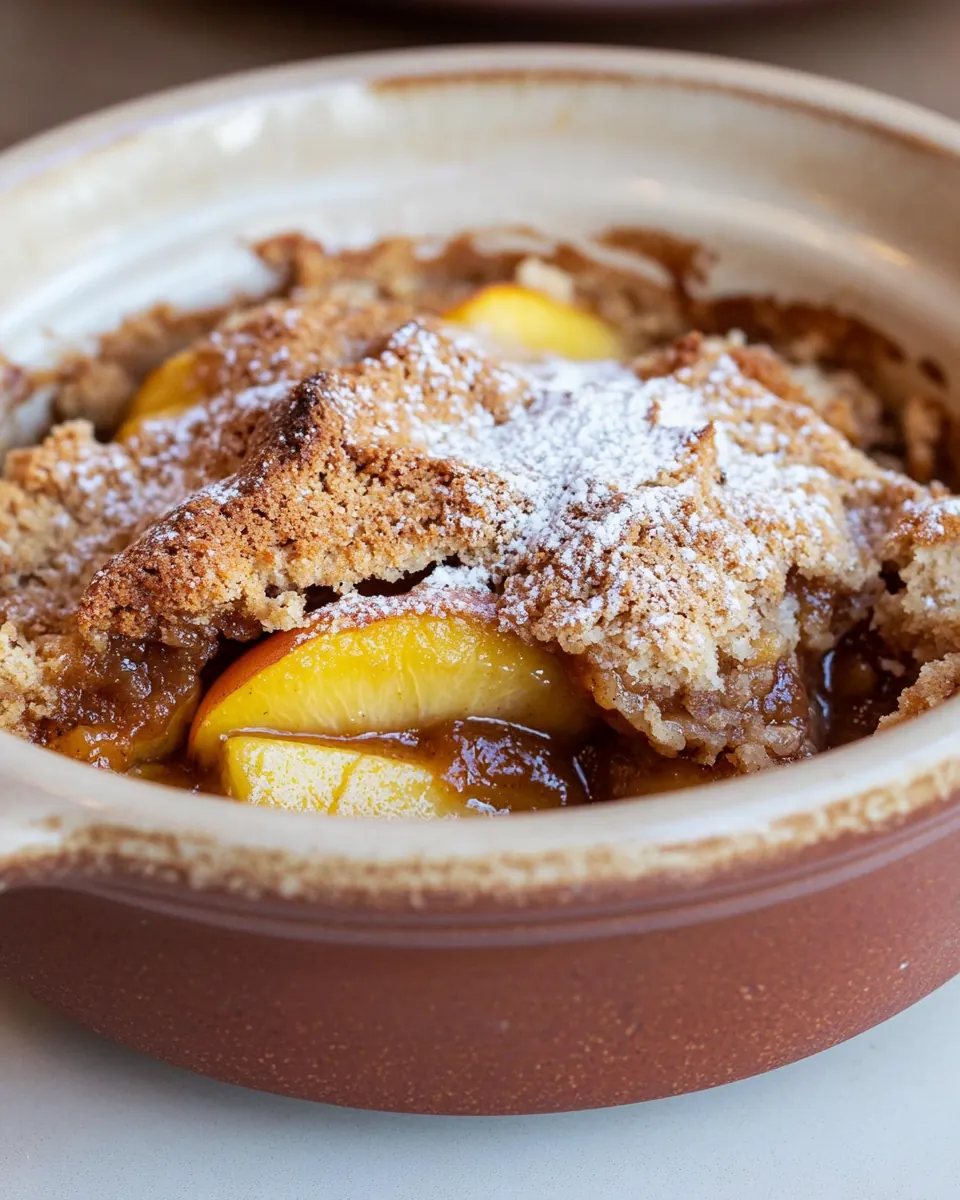
Texas Peach Cobbler
Texas Peach Cobbler is the kind of dessert I turn to when peaches are at their peak and the house smells like summer warmth. The first time I made it, a neighbor dropped by with a box of ripe peaches, and I wanted something simple that would showcase their sweetness. I remember standing at the counter, the skin of a peach flaking under my knife, juices gathering like tiny suns on the board, and knowing that this cobbler would be the answer.
Over the years I have adapted small habits into the recipe that make a real difference. I brown the unsalted butter a touch longer for a nutty undertone, and I always zest a lemon because that bright pop keeps the peaches from tasting too cloying. Friends have said this version tastes like a cross between a rustic pie and a warm fruit pudding, and I love hearing that because it captures exactly what I aim for: relaxed, comforting, and a bit nostalgic.
When serving Texas Peach Cobbler I like to let it rest a bit so the bubbling juices settle, then spoon it straight into bowls with a scoop of something cold alongside. It is not about perfect slices, it is about the contrast of warm fruit and a tender, biscuit like topping. Each bite should feel homey, slightly sticky, and full of peach flavor.
Recipe Snapshot
55 mins
15 mins
40 mins
Medium
300 kcal
American
Gluten-Free, Vegan
Desserts
8 inch square baking pan, Skillet, Whisk, Mixing bowl, Wire rack
Why This Texas Peach Cobbler Is So Good
Peach forward, not sugar forward
I want the Texas Peach Cobbler to celebrate the fruit. When peaches are ripe they bring delicate acidity and fragrance, so I keep the sugar balanced to let natural flavor shine. I often taste the sliced peaches with a little sprinkle of granulated sugar to see how much sweetness they really need, and that small test helps me avoid over sweetening.
Easy technique, big payoff
I love that this recipe relies on simple motions rather than complicated pastry work. The batter is whisked in one bowl, poured over melted butter, then the fruit goes on top. The visual of batter rising up around the peaches while it bakes is always satisfying. For home cooks who want confidence, this method is forgiving and yields a lovely contrast between tender fruit and golden topping.
Textural contrast matters
The interplay of browned butter and a batter that bakes into pockets of tenderness is central to why I keep making this cobbler. The browned fat gives toasted notes, while the scattered light brown sugar on top caramelizes into sticky specks. That combination delivers a soft interior with crunchy, caramelized edges that make each bite interesting.
Budget friendly and seasonal
I often turn to this dish when peaches are abundant and inexpensive. You do not need fancy equipment or obscure ingredients, just pantry staples like flour, baking powder, and milk. Because it highlights a seasonal fruit, it feels special without requiring hours or costly components.
Comfort food with flexibility
Finally, I appreciate how adaptable this cobbler is. You can serve it casually from the pan or dress it up with a dollop of something cool on the side. The recipe suits family dinners, potlucks, and relaxed weekend gatherings, and it travels well when you want to share a warm dessert with neighbors.
Recipe Ingredients for Texas Peach Cobbler
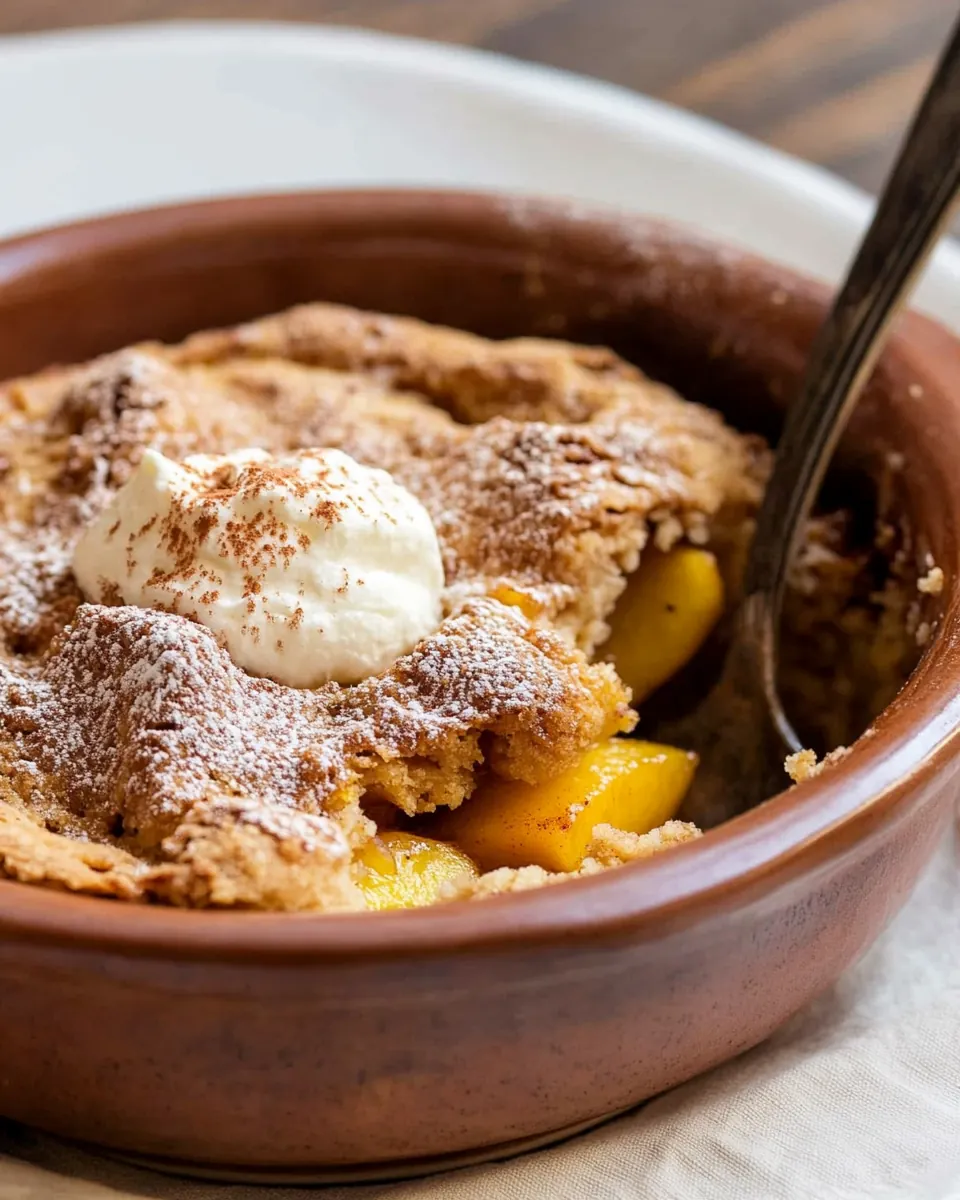
These ingredients are chosen to create a balance of buttery richness, tender cake like topping, and fresh fruit brightness. The key players are the unsalted butter which is browned for depth, the flour and baking powder that form a fluffy batter, and the fresh peaches which provide juice and aroma. Small accents like lemon zest and ground cinnamon elevate the peach flavor without overwhelming it.
- 4 ounces (115 g) unsalted butter, cubed: Melted and cubed to create a rich, tender base that browns and flavors the cobbler; distributes heat for even baking and helps produce a crisp, buttery crust when combined with the batter.
- 1 cup (140 g) flour: Measured to provide structure and body to the batter; develops gluten when mixed with liquids, helping the cobbler rise modestly and hold together while yielding a soft crumb.
- 1 cup (200 g) granulated sugar: Adds sweetness and contributes to browning and moisture retention in the cobbler; helps balance the tartness of peaches and enhances flavor depth through caramelization.
- 2 teaspoons baking powder, preferably aluminum-free: Leavened to introduce lift and lightness into the batter; reacts with wet ingredients to create tiny air pockets so the topping becomes fluffy rather than dense.
- 1 teaspoon freshly grated lemon zest: Zested to contribute bright citrus aroma and a hint of acidity; cuts through the sweetness of the cobbler and elevates the fruit flavors without adding liquid.
- 1/4 teaspoons salt: Seasoned sparingly to enhance overall flavor and balance sweetness; heightens other flavors and prevents the dessert from tasting flat.
- 3/4 cup milk, whole or lowfat: Added to hydrate the dry ingredients and form the batter; provides richness and tenderness while controlling consistency for proper spreading and baking.
- 1/2 teaspoon vanilla extract: Flavored to impart a warm, sweet aroma and subtle depth to the batter; complements the peaches and rounds out the dessert’s flavor profile.
- 3 cups sliced, peeled peaches, (about 5 medium peaches): Prepared by slicing and peeling to provide the main fruity component and texture; releases juices during baking that soak into the batter and create a syrupy filling.
- 1/2 teaspoon ground cinnamon: Spiced to add warmth and complexity to the fruit filling; pairs with the peaches to accentuate their sweetness and create a classic cobbler flavor.
- 4 tablespoons light brown sugar: Sprinkled on top to melt and caramelize during baking, adding a sweet, slightly crunchy finish; enhances both appearance and taste by intensifying the peach topping.
Recipe Steps for Texas Peach Cobbler
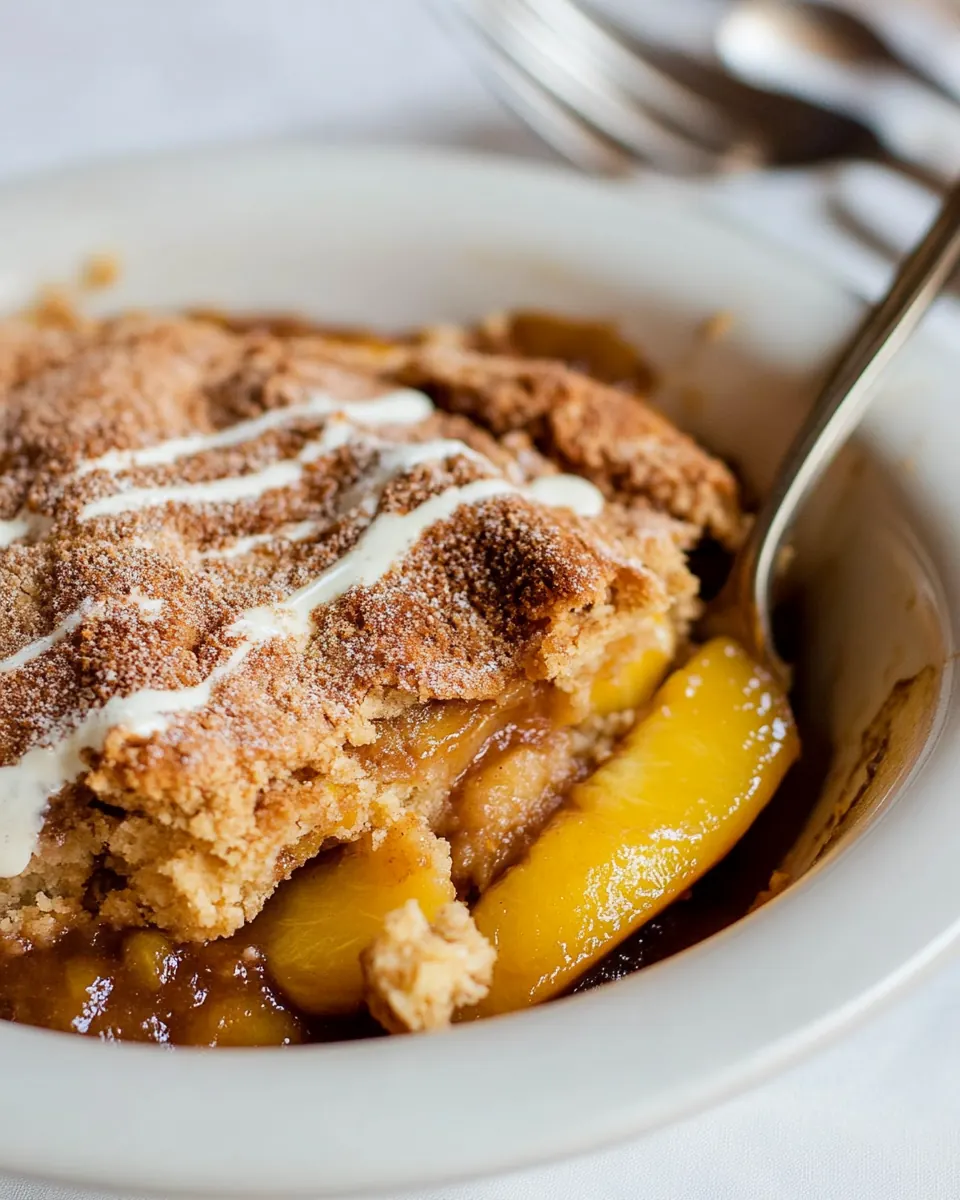
I approach the steps like a relaxed ritual: prepare the butter and batter, arrange the peaches, and let the oven do most of the work. Each phase offers sensory cues that tell you when you are on track, so pay attention to smell, color, and texture as you go.
- Preheat the oven to 350ºF (180ºC). Melt the butter in a skillet, watching it carefully and swirling it gently. When it starts to take on a light brown color and smells a little nutty, and the bubbles begin to subside, pour the browned butter into an 8-inch (20 cm) square baking pan, leaving the blackened bits back in the skillet.: You will notice a toasty, nutty aroma and small brown flecks forming in the butter , which signals the Maillard reaction adding depth. The sizzling sound will quiet as the water evaporates; that is your cue to act. Pouring the hot fat into the pan creates a base that the batter will contact and eventually bake into a tender crust, so do this step carefully to avoid splatters. If you burn the butter , it will smell acrid and impart bitterness, so remove it from heat as soon as the scent turns pleasantly nutty. Use an oven mitt and tilt the skillet slowly to control the flow, leaving the darker solids behind so they do not overwhelm the dish.
- In a medium bowl mix together the flour, sugar, baking powder, lemon zest, and salt with a whisk. Add the milk and vanilla extract, and stir until smooth.: As you whisk dry ingredients like flour and baking powder , you should see a uniform pale mixture with flecks of lemon zest scattered through. Adding the milk and vanilla extract transforms this into a glossy batter; it should pour slowly but not be runny. Stirring until smooth eliminates lumps, but do not overwork the batter or it may develop a chewy texture. If you see pockets of unincorporated flour, fold gently until integrated. A common mistake is over mixing which makes the topping dense, so stop when streaks are gone and the batter looks cohesive.
- Pour the milk mixture over the butter in the pan without stirring. (Don't worry, the batter will rise up over the peaches as they are baking.) Toss the peach slices with the cinnamon and strew them over the batter in an even layer. Crumble the brown sugar over the top and bake until the top is golden brown and the center of the cobbler feels just set, about 40 minutes. Remove from the oven and cool on a wire rack.: When the batter hits the hot butter , you will hear a faint hiss and see a ripple as the two layers settle. Leaving them separate allows the batter to bake into pockets that rise up around the fruit, producing a light, tender crumb. Resist the urge to mix; stirring collapses those layers and changes the texture. If you accidentally stir, the cobbler will still bake but will be more uniform and less airy, so pour gently and level the surface with a light shake if needed.
- Toss the peach slices with the cinnamon and strew them over the batter in an even layer: As you mix the sliced peaches with ground cinnamon , the spice will perfume the fruit and release a warm scent. Arrange the slices in a single even layer so heat reaches each piece uniformly; overlapping can create uneven cooking where some parts become mushy while others remain underdone. The peaches will sink and the batter will rise around them, creating that classic cobbler texture. Avoid piling slices in the center, instead distribute them to encourage even bubbling.
- Crumble the brown sugar over the top and bake until the top is golden brown and the center of the cobbler feels just set, about 40 minutes. Remove from the oven and cool on a wire rack: As the cobbler bakes you will see bubbling juices around the edges and a golden top forming where the light brown sugar caramelizes. The scent will shift to warm, toffee notes with peach perfume. Testing the center should reveal a gentle jiggle but not a liquid center; that is how you know it is set. Overbaking dries the topping and underbaking leaves a raw batter taste, so aim for a golden color and a barely set middle. Let it cool slightly on a wire rack so the juices thicken and you can serve without losing all the sauce to the plate.
Substitutions and Tips
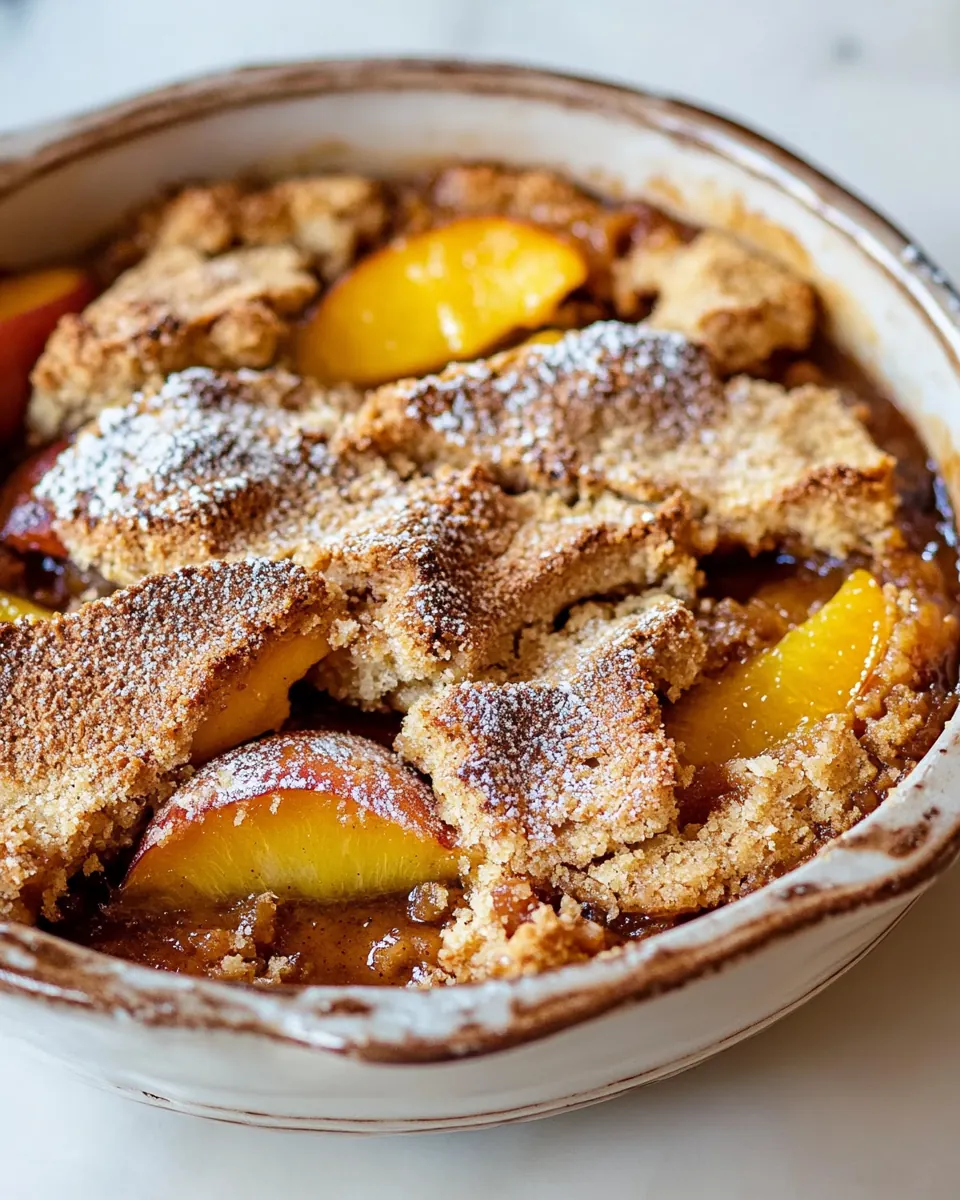
This list digs into practical substitutions and pro tips I use when making Texas Peach Cobbler. Each item starts with a bold phrase to highlight the main idea, then goes into detail so you can adapt confidently while preserving the core flavors.
- Use ripe peaches: Fresh, ripe peaches give the best flavor and natural sweetness. If they are not at peak, you can briefly macerate slices with a teaspoon of granulated sugar to coax out juices and soften them before assembling. Do not soak, you only want a light release of juices.
- Butter technique: Browning the unsalted butter adds complexity, but keep an eye on color and smell. Remove from heat when you get light brown specks and a nutty aroma to avoid bitterness that comes from darker scorch marks.
- Flour handling: Whisk the flour and baking powder together to aerate and evenly distribute leavening. This helps the batter rise evenly and prevents pockets of unrisen dough in the finished cobbler.
- Milk choice: Whole milk yields richer results, but lowfat works if you want a lighter finish. If your batter seems too thick, add a tablespoon of milk at a time until the pour consistency is achieved.
- Cinnamon balance: Use just a light sprinkle of ground cinnamon with the peaches so the spice complements rather than overwhelms. Cinnamon warms the fruit but can dominate if overused.
- Storing leftovers: Cool the cobbler completely, then cover and refrigerate. Reheat gently in a 325ºF oven until warm. Do not microwave too long or the topping becomes soggy.
- Serving variations: Serve warm straight from the pan with a scoop of something cold on the side. The contrast between warm fruit and cold accompaniment is what creates that memorable final bite.
Serving Ideas for Texas Peach Cobbler
I always think about serving Texas Peach Cobbler as a relaxed, warm dish that welcomes company. Whether you are making it for a casual family supper or a summer gathering, these serving ideas help the dessert feel effortless and seasonal.
- Serve warm with a cold scoop: A scoop of creamy accompaniment on top contrasts with the hot cobbler, creating a lovely temperature and texture interplay.
- Family style from the pan: Spoon directly from the baking dish for a homey presentation that invites guests to help themselves, perfect for potlucks and informal dinners.
- Portion into bowls: Use small bowls for individual servings, which is great for casual dessert after a weeknight meal or for outdoor dining when you want easy cleanup.
- Occasion pairing: This dessert works well for summer gatherings, weekend lunches, and holiday evenings when you want something unfussy yet comforting.
- Storage tips: Keep leftovers covered in the refrigerator for up to one day. Reheat gently in an oven to revive the crust and warm the filling without making it soggy.
- Seasonal pairings: Pair with fresh berries or a light salad for a summer menu, or serve with warm drinks during cooler months to highlight the cozy spices.
FAQ
Conclusion
Texas Peach Cobbler stands out because it turns ripe peaches into a warm, comforting dessert with minimal fuss and maximum flavor. I encourage you to try it when peaches are in season, because the simple combination of browned butter, tender batter, and caramelized fruit is hard to beat. This recipe is forgiving, friendly to home cooks, and perfect for sharing with family or neighbors. Make it for a relaxed weekend dessert or a summer gathering, and enjoy the cozy, fruity results.
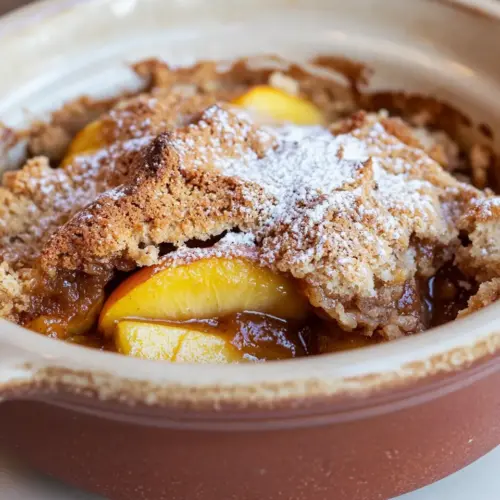
Texas Peach Cobbler
Equipment
- 8-inch square baking pan
- Skillet
- Whisk
- Mixing Bowl
- Wire Rack
Ingredients
- 4 ounces (115 g) unsalted butter, cubed Melted and cubed to create a rich, tender base that browns and flavors the cobbler; distributes heat for even baking and helps produce a crisp, buttery crust when combined with the batter.
- 1 cup (140 g) flour Measured to provide structure and body to the batter; develops gluten when mixed with liquids, helping the cobbler rise modestly and hold together while yielding a soft crumb.
- 1 cup (200 g) granulated sugar Adds sweetness and contributes to browning and moisture retention in the cobbler; helps balance the tartness of peaches and enhances flavor depth through caramelization.
- 2 teaspoons baking powder, preferably aluminum-free Leavened to introduce lift and lightness into the batter; reacts with wet ingredients to create tiny air pockets so the topping becomes fluffy rather than dense.
- 1 teaspoon freshly grated lemon zest Zested to contribute bright citrus aroma and a hint of acidity; cuts through the sweetness of the cobbler and elevates the fruit flavors without adding liquid.
- 1/4 teaspoons salt Seasoned sparingly to enhance overall flavor and balance sweetness; heightens other flavors and prevents the dessert from tasting flat.
- 3/4 cup milk, whole or lowfat Added to hydrate the dry ingredients and form the batter; provides richness and tenderness while controlling consistency for proper spreading and baking.
- 1/2 teaspoon vanilla extract Flavored to impart a warm, sweet aroma and subtle depth to the batter; complements the peaches and rounds out the dessert’s flavor profile.
- 3 cups sliced, peeled peaches, (about 5 medium peaches) Prepared by slicing and peeling to provide the main fruity component and texture; releases juices during baking that soak into the batter and create a syrupy filling.
- 1/2 teaspoon ground cinnamon Spiced to add warmth and complexity to the fruit filling; pairs with the peaches to accentuate their sweetness and create a classic cobbler flavor.
- 4 tablespoons light brown sugar Sprinkled on top to melt and caramelize during baking, adding a sweet, slightly crunchy finish; enhances both appearance and taste by intensifying the peach topping.
Instructions
- Preheat the oven to 350ºF (180ºC). Melt the butter in a skillet, watching it carefully and swirling it gently. When it starts to take on a light brown color and smells a little nutty, and the bubbles begin to subside, pour the browned butter into an 8-inch (20 cm) square baking pan, leaving the blackened bits back in the skillet.: You will notice a toasty, nutty aroma and small brown flecks forming in the butter , which signals the Maillard reaction adding depth. The sizzling sound will quiet as the water evaporates; that is your cue to act. Pouring the hot fat into the pan creates a base that the batter will contact and eventually bake into a tender crust, so do this step carefully to avoid splatters. If you burn the butter , it will smell acrid and impart bitterness, so remove it from heat as soon as the scent turns pleasantly nutty. Use an oven mitt and tilt the skillet slowly to control the flow, leaving the darker solids behind so they do not overwhelm the dish.
- In a medium bowl mix together the flour, sugar, baking powder, lemon zest, and salt with a whisk. Add the milk and vanilla extract, and stir until smooth.: As you whisk dry ingredients like flour and baking powder , you should see a uniform pale mixture with flecks of lemon zest scattered through. Adding the milk and vanilla extract transforms this into a glossy batter; it should pour slowly but not be runny. Stirring until smooth eliminates lumps, but do not overwork the batter or it may develop a chewy texture. If you see pockets of unincorporated flour, fold gently until integrated. A common mistake is over mixing which makes the topping dense, so stop when streaks are gone and the batter looks cohesive.
- Pour the milk mixture over the butter in the pan without stirring. (Don't worry, the batter will rise up over the peaches as they are baking.) Toss the peach slices with the cinnamon and strew them over the batter in an even layer. Crumble the brown sugar over the top and bake until the top is golden brown and the center of the cobbler feels just set, about 40 minutes. Remove from the oven and cool on a wire rack.: When the batter hits the hot butter , you will hear a faint hiss and see a ripple as the two layers settle. Leaving them separate allows the batter to bake into pockets that rise up around the fruit, producing a light, tender crumb. Resist the urge to mix; stirring collapses those layers and changes the texture. If you accidentally stir, the cobbler will still bake but will be more uniform and less airy, so pour gently and level the surface with a light shake if needed.
- Toss the peach slices with the cinnamon and strew them over the batter in an even layer: As you mix the sliced peaches with ground cinnamon , the spice will perfume the fruit and release a warm scent. Arrange the slices in a single even layer so heat reaches each piece uniformly; overlapping can create uneven cooking where some parts become mushy while others remain underdone. The peaches will sink and the batter will rise around them, creating that classic cobbler texture. Avoid piling slices in the center, instead distribute them to encourage even bubbling.
- Crumble the brown sugar over the top and bake until the top is golden brown and the center of the cobbler feels just set, about 40 minutes. Remove from the oven and cool on a wire rack: As the cobbler bakes you will see bubbling juices around the edges and a golden top forming where the light brown sugar caramelizes. The scent will shift to warm, toffee notes with peach perfume. Testing the center should reveal a gentle jiggle but not a liquid center; that is how you know it is set. Overbaking dries the topping and underbaking leaves a raw batter taste, so aim for a golden color and a barely set middle. Let it cool slightly on a wire rack so the juices thicken and you can serve without losing all the sauce to the plate.
Notes
- Use ripe peaches: Fresh, ripe peaches give the best flavor and natural sweetness. If they are not at peak, you can briefly macerate slices with a teaspoon of granulated sugar to coax out juices and soften them before assembling. Do not soak, you only want a light release of juices.
- Butter technique: Browning the unsalted butter adds complexity, but keep an eye on color and smell. Remove from heat when you get light brown specks and a nutty aroma to avoid bitterness that comes from darker scorch marks.
- Flour handling: Whisk the flour and baking powder together to aerate and evenly distribute leavening. This helps the batter rise evenly and prevents pockets of unrisen dough in the finished cobbler.
- Milk choice: Whole milk yields richer results, but lowfat works if you want a lighter finish. If your batter seems too thick, add a tablespoon of milk at a time until the pour consistency is achieved.
- Cinnamon balance: Use just a light sprinkle of ground cinnamon with the peaches so the spice complements rather than overwhelms. Cinnamon warms the fruit but can dominate if overused.
- Storing leftovers: Cool the cobbler completely, then cover and refrigerate. Reheat gently in a 325ºF oven until warm. Do not microwave too long or the topping becomes soggy.
- Serving variations: Serve warm straight from the pan with a scoop of something cold on the side. The contrast between warm fruit and cold accompaniment is what creates that memorable final bite.