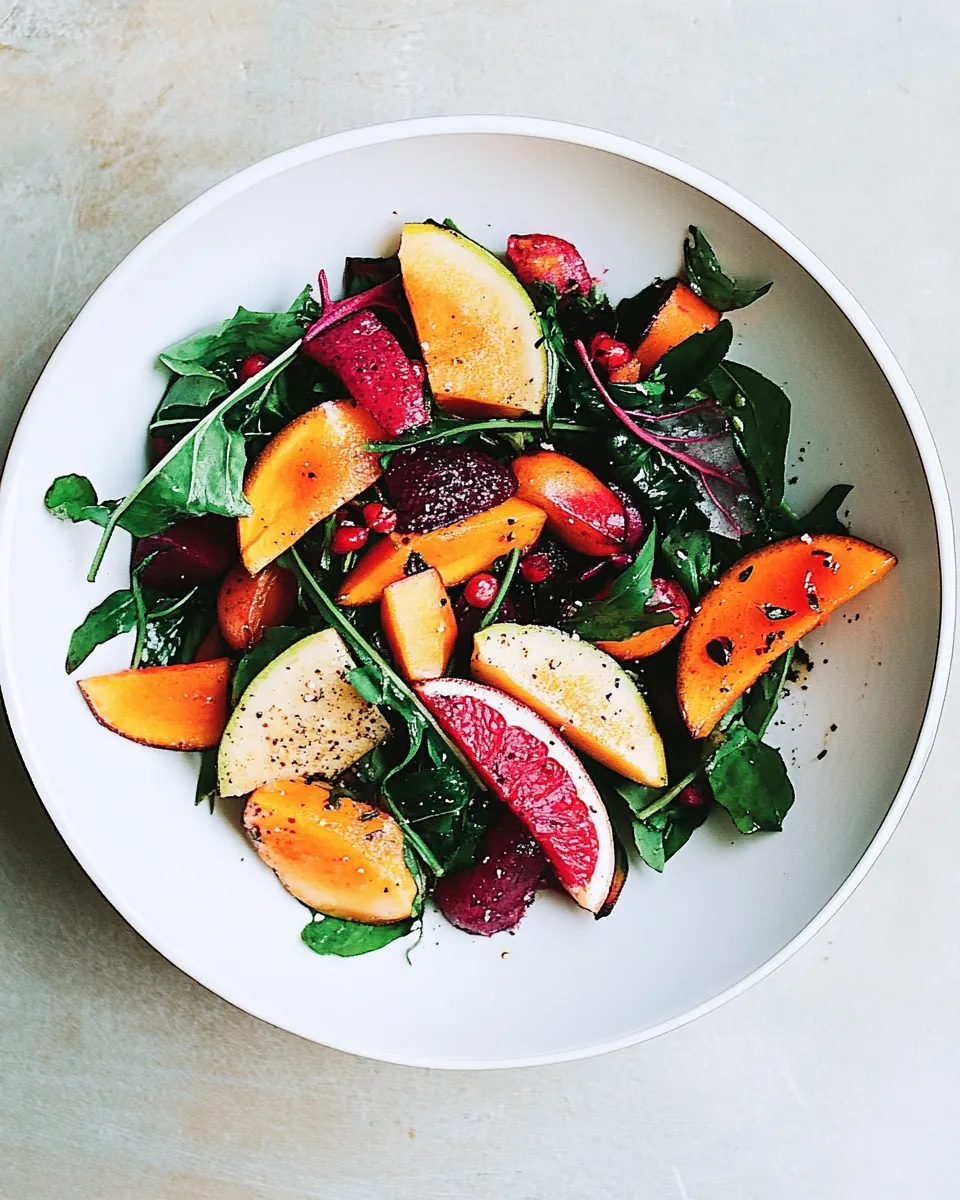
Tropical Fall Salad
Tropical Fall Salad came to me on an unexpectedly crisp October morning when I wanted something bright, juicy, and a little cheeky against the cooling weather.
I was walking through the farmers market, hands wrapped around a steaming cup of tea, when a vendor offered a fragrant slice of pineapple. The sweet, aromatic hit contrasted so wonderfully with the day that I began to imagine combining tropical fruit with peppery greens. That impulse led to a bowl that balanced autumnal comfort with sunny freshness.
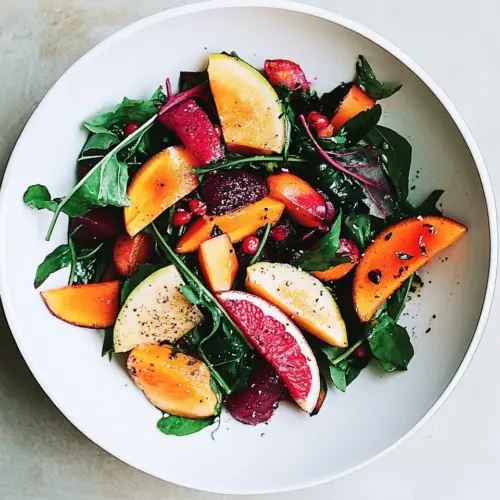
Back in my kitchen, I grabbed a wooden bowl and started arranging fruit like it was a tiny palette. The mix of pineapple, papaya, and mango felt bold, while strawberries and figs added texture and a soft, jammy note. A handful of baby arugula gave the whole thing a peppery lift, and a honey lime dressing with a whisper of cardamom finished it with warmth and silk.
Recipe Snapshot
10 mins
10 mins
Easy
200 kcal
American
Paleo, Gluten-Free
Salads
Large bowl, Medium bowl, Whisk, Knife, Cutting board
What You’ll Enjoy About This Tropical Fall Salad
Flavor contrasts that actually sing
I love how the sweet tropical fruit meets the subtle pepper of baby arugula. The bright acidity of the lime juice and the floral sweetness of the honey tie everything together, so each bite is layered and surprising. This salad proves you can have lively flavors in fall without relying on heaviness.
Simple prep, impressive result
Because most of the work is chopping and tossing, I often make this when I want something quick but memorable. I appreciate recipes that let ingredients shine, and this one rewards minimal effort with maximum appeal. It is perfect for when guests arrive unexpectedly, or when you want something nourishing at lunch.
Textural brilliance
The combination of soft mango and papaya with the slight chew of figs and the snap of halved strawberries keeps every forkful interesting. The pineapple adds juice and a tiny bit of fibrous texture, which helps the dressing cling and creates pleasant contrasts.
Versatile and seasonal
I find this bowl transitions beautifully through the season. It feels festive enough for a weekend brunch, yet simple enough for a weeknight. The dressing is flexible, and the salad can be scaled up for groups without losing its charm.
Healthy but indulgent
There is a satisfying richness from the extra-virgin olive oil and honey, but the salad still reads as refreshingly light. You get sweetness, bright acid, and leafy greens in every bite, so it can serve as a main for lighter appetites or a vibrant side.
What to Buy for Tropical Fall Salad
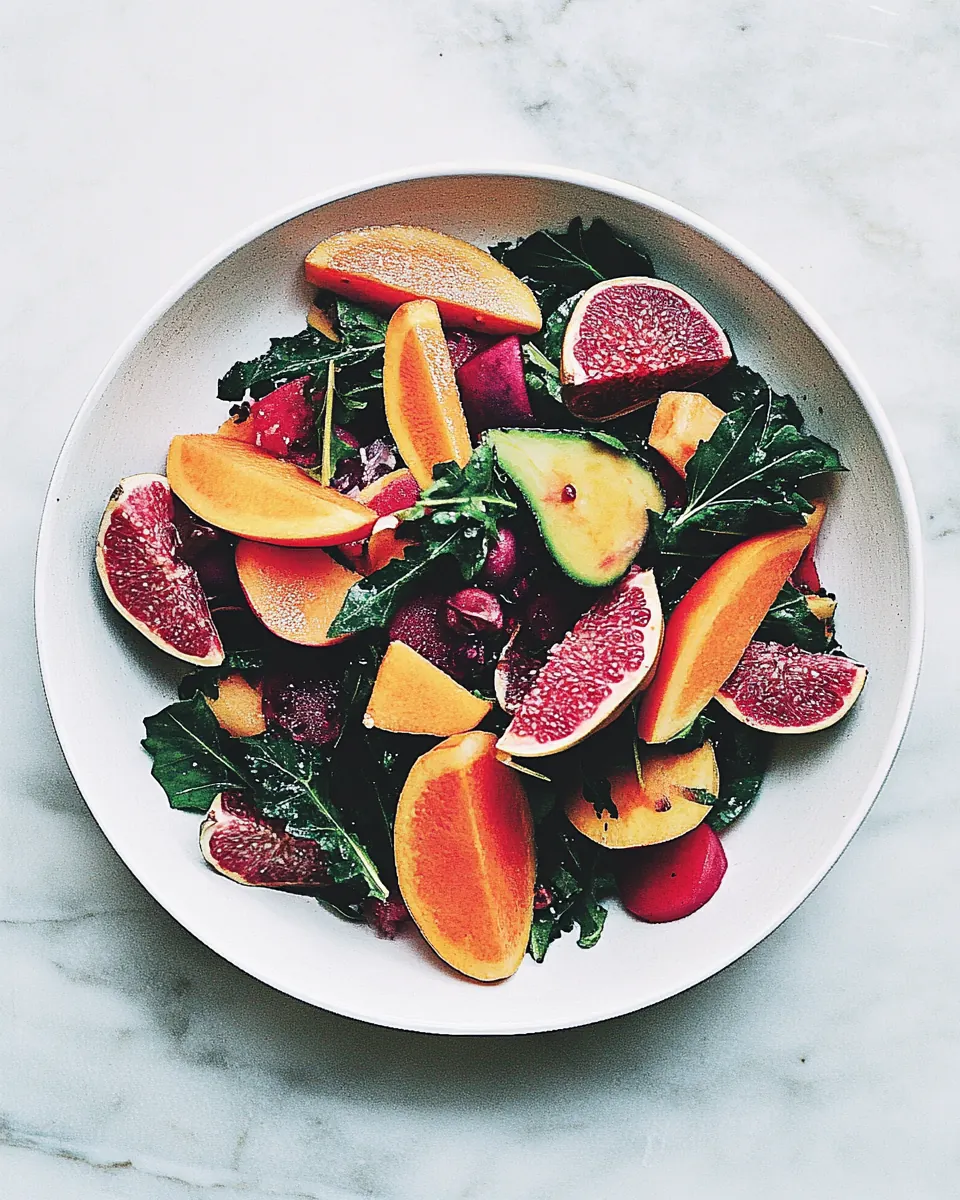
These ingredients are curated to balance sweetness, peppery green, and warm spice. I focus on ripe, fragrant fruit and a simple dressing that highlights each element. The key players are the tropical trio, the berries and figs for complexity, and the dressing that brings the whole bowl into harmony.
- 1 cup (1/2-inch cubed) pineapple: Add vibrant sweetness and tropical acidity that brightens the salad; complements richer fruits while providing juicy texture. Cut into 1/2-inch cubes to distribute flavor evenly throughout the dish and prevent overpowering softer components.
- 1 cup (1/2-inch cubed) papaya: Bring mild tropical sweetness and buttery texture that balances the sharper pineapple flavors; adds a tender, slightly musky bite. Cube to match other fruits so each forkful includes a harmonious mix of textures and flavors.
- 1 cup (1/2-inch cubed) mango: Provide luscious, aromatic sweetness with a smooth, fibrous texture that enhances the salad’s tropical profile. Cube to maintain consistency with other fruits and to deliver concentrated mango flavor in each bite.
- 8 medium strawberries, halved lengthwise: Offer fresh berry brightness and a subtle tartness that contrasts with the tropical fruits; halving lengthwise exposes flesh for better dressing absorption. Use medium strawberries for consistent size and visual appeal, adding color and slight acidity.
- 8 black mission figs, quartered: Contribute deep, jammy sweetness and earthy undertones that add depth and seasonal character; quartering reveals seeds and flesh that mingle with other fruits. Black mission figs also bring a soft chew and natural sugars that pair well with honey-based dressings.
- 8 ounces fresh baby arugula: Introduce peppery, slightly bitter greens that provide a crisp, leafy base and contrast the sweetness of fruit. Use fresh baby arugula for tender leaves and a bold flavor that balances the salad’s overall sweetness and richness.
- 1/2 cup extra-virgin olive oil: Incorporate rich, fruity fat that binds the dressing and carries aromatics; helps coat fruits and greens for a silky mouthfeel. Use extra–virgin olive oil to add depth and to mellow the sweetness of honey and lime.
- 1/2 cup honey: Add natural sweetness and a sticky glaze that enhances the fruit flavors while helping the dressing adhere; also promotes caramelized notes when mixed. Use honey to create a balanced, sweet component that pairs well with citrus and spices.
- 1/4 cup lime juice: Provide bright acidity that cuts through sweetness and fat, lifting flavors and adding freshness to the salad. Use lime juice to introduce zesty citrus notes that brighten the dressing and balance the honey and oil.
- 1 teaspoon ground cardamom: Impart warm, floral spice that adds aromatic complexity and a subtle exotic note to the dressing; a small amount enhances without overpowering. Use ground cardamom to complement the tropical fruits and to elevate the salad’s overall flavor profile.
Step by Step Instructions for Tropical Fall Salad
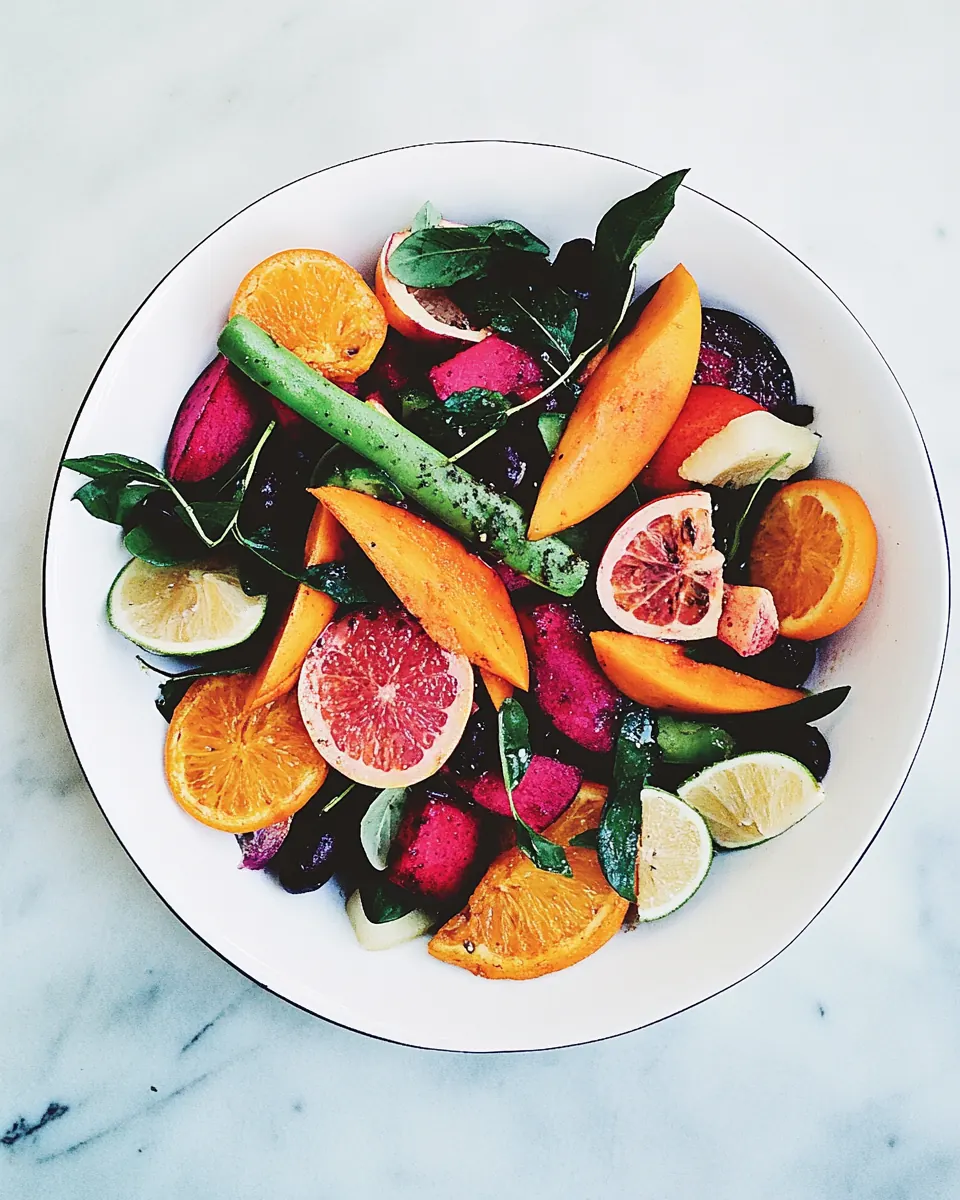
This is a forgiving, quick salad that relies on timing and gentle handling. Read through the steps so you know the sensory cues and how to avoid common mistakes. Keep your dressing nearby so you can toss the greens just before serving.
- Place pineapple, papaya, mango, strawberries, and figs in a large bowl, and refrigerate while you make the dressing.: The fruit should feel cool and slightly firm, with juices clinging to the bowl as you lift the spoon, which signals freshness. Chilling tightens flavors and keeps the baby arugula from wilting when combined. You will notice a fragrant mix of sweet and tropical aromas, and the bowl should look vibrant with contrasting colors. One common mistake is chopping too early and letting the fruit sit at room temperature, which makes it release excess juice and turn mushy. To avoid that, keep the fruit chilled and only toss with the dressing at the last moment so pieces keep their shape and texture.
- In a medium bowl, whisk together extra-virgin olive oil, honey, lime juice, and cardamom until the dressing is emulsified, 2 to 3 minutes. Toss fruit and arugula with dressing.: When you whisk, watch for the dressing to take on a glossy sheen and slightly thicken, which indicates the extra–virgin olive oil and honey are binding with the lime juice . You should be able to see tiny bubbles and the aroma of citrus and cardamom rising, giving a perfume that promises balance. If the dressing separates, it usually means the oil was added too quickly or the ingredients were not at similar temperatures; whisk vigorously or add a small splash of water to help it come together. Over-whisking is not a problem, but under-whisking yields a thin, unstable dressing that will slide off the fruit instead of coating it.
- Toss fruit and arugula with dressing: At this stage, your hands or tongs should feel the slick, honeyed coating as you gently lift and turn the pieces, ensuring every bite will carry flavor. The sound is soft, a light clink of fruit against bowl edges, and the visual cue is an even sheen across surfaces. Be mindful to add the baby arugula last to prevent wilting, and toss just until leaves are lightly dressed. A frequent error is overdressing, which makes the salad soggy and sweet rather than bright; if that happens, add a few fresh arugula leaves or a squeeze of extra lime juice to rebalance. Use a gentle folding motion so delicate fruit retains shape and the dressing is distributed evenly.
How to Switch It Up
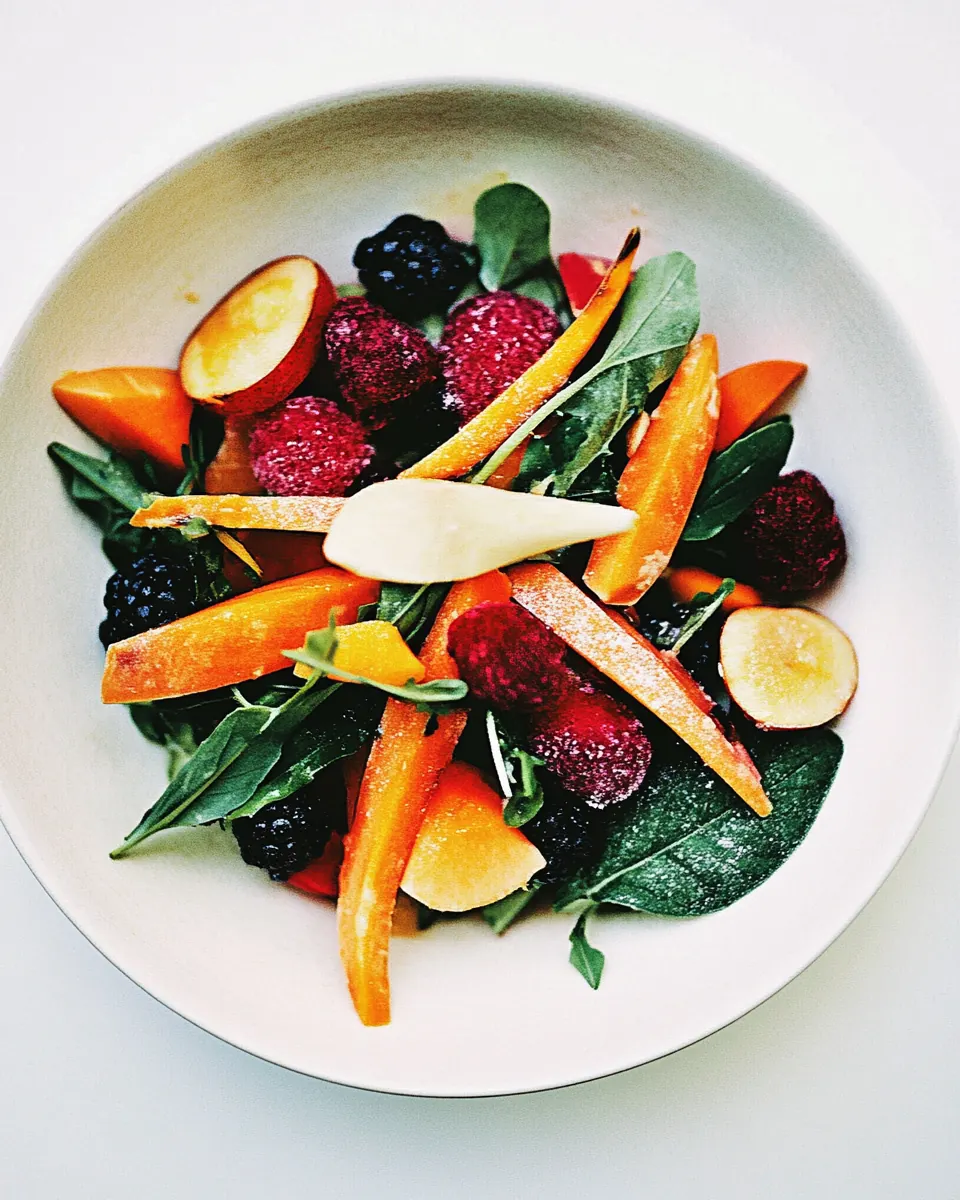
There are small ways to alter this salad while keeping the core spirit intact. Each idea below highlights an easy swap or technique to suit mood or occasion, with practical notes so you can adjust confidently.
- Make it more herbaceous Add a handful of finely chopped fresh mint or basil to brighten the bowl, but add herbs just before serving so they stay vibrant and not limp.
- Swap the sweetener Replace part of the honey with a tablespoon of maple syrup for a deeper note suited to fall, keeping in mind that maple is less floral and more caramel like.
- Toast seeds for crunch Quickly toast a small handful of pumpkin or sunflower seeds to sprinkle on top for texture, watching closely to avoid burning which turns them bitter.
- Adjust acidity If you prefer a sharper dressing, increase the lime juice by a tablespoon at a time to preserve balance without overwhelming the fruit.
- Chill components separately Keep the dressing chilled and add to fruit straight from the fridge to maintain temperature contrast, which enhances perceived freshness.
What Goes Well With This Tropical Fall Salad
This salad pairs beautifully with light proteins and seasonal sides. Below are serving ideas, occasions, and practical storage tips so you can plan meals around the salad easily.
- Serve as a starter Offer the salad before a simple roasted chicken or grilled fish to cleanse the palate and add a bright counterpoint to savory mains.
- Brunch centerpiece Place the salad on a brunch table alongside pastries and soft cheeses for a fresh, fruity option that balances richer items.
- Light lunch Pair with crusty bread and a spread for a satisfying midday meal, making the salad the star when you want something not heavy.
- Seasonal occasions Use it for fall gatherings or holiday lunches when you want a dish that nods to the season without feeling heavy.
- Storage tips Store dressing separately and keep fruit chilled, assembling up to an hour before serving to preserve texture. Leftovers are best eaten within a day as the fruit releases juice over time.
- Scaling for crowds Multiply ingredients proportionally and keep components chilled. Toss just before serving to maintain brightness when serving a group.
FAQ
Conclusion
This salad stands out because it marries tropical brightness with autumnal warmth in a bowl that is both lively and comforting. Give it a try when you want a colorful, easy dish that feels special without fuss. The combination of juicy fruit, peppery arugula, and a honey lime cardamom dressing creates a memorable balance you will come back to, whether for a casual lunch or a seasonal gathering. Enjoy the playful contrasts and the simple pleasure of fresh ingredients prepared with care.
Tropical Fall Salad
Equipment
- Large Bowl
- Medium Bowl
- Whisk
- Knife
- Cutting Board
Ingredients
- 1 cup (1/2-inch cubed) pineapple Add vibrant sweetness and tropical acidity that brightens the salad; complements richer fruits while providing juicy texture. Cut into 1/2-inch cubes to distribute flavor evenly throughout the dish and prevent overpowering softer components.
- 1 cup (1/2-inch cubed) papaya Bring mild tropical sweetness and buttery texture that balances the sharper pineapple flavors; adds a tender, slightly musky bite. Cube to match other fruits so each forkful includes a harmonious mix of textures and flavors.
- 1 cup (1/2-inch cubed) mango Provide luscious, aromatic sweetness with a smooth, fibrous texture that enhances the salad’s tropical profile. Cube to maintain consistency with other fruits and to deliver concentrated mango flavor in each bite.
- 8 medium strawberries, halved lengthwise Offer fresh berry brightness and a subtle tartness that contrasts with the tropical fruits; halving lengthwise exposes flesh for better dressing absorption. Use medium strawberries for consistent size and visual appeal, adding color and slight acidity.
- 8 black mission figs, quartered Contribute deep, jammy sweetness and earthy undertones that add depth and seasonal character; quartering reveals seeds and flesh that mingle with other fruits. Black mission figs also bring a soft chew and natural sugars that pair well with honey-based dressings.
- 8 ounces fresh baby arugula Introduce peppery, slightly bitter greens that provide a crisp, leafy base and contrast the sweetness of fruit. Use fresh baby arugula for tender leaves and a bold flavor that balances the salad’s overall sweetness and richness.
- 1/2 cup extra-virgin olive oil Incorporate rich, fruity fat that binds the dressing and carries aromatics; helps coat fruits and greens for a silky mouthfeel. Use extra-virgin olive oil to add depth and to mellow the sweetness of honey and lime.
- 1/2 cup honey Add natural sweetness and a sticky glaze that enhances the fruit flavors while helping the dressing adhere; also promotes caramelized notes when mixed. Use honey to create a balanced, sweet component that pairs well with citrus and spices.
- 1/4 cup lime juice Provide bright acidity that cuts through sweetness and fat, lifting flavors and adding freshness to the salad. Use lime juice to introduce zesty citrus notes that brighten the dressing and balance the honey and oil.
- 1 teaspoon ground cardamom Impart warm, floral spice that adds aromatic complexity and a subtle exotic note to the dressing; a small amount enhances without overpowering. Use ground cardamom to complement the tropical fruits and to elevate the salad’s overall flavor profile.
Instructions
- Place pineapple, papaya, mango, strawberries, and figs in a large bowl, and refrigerate while you make the dressing.: The fruit should feel cool and slightly firm, with juices clinging to the bowl as you lift the spoon, which signals freshness. Chilling tightens flavors and keeps the baby arugula from wilting when combined. You will notice a fragrant mix of sweet and tropical aromas, and the bowl should look vibrant with contrasting colors. One common mistake is chopping too early and letting the fruit sit at room temperature, which makes it release excess juice and turn mushy. To avoid that, keep the fruit chilled and only toss with the dressing at the last moment so pieces keep their shape and texture.
- In a medium bowl, whisk together extra-virgin olive oil, honey, lime juice, and cardamom until the dressing is emulsified, 2 to 3 minutes. Toss fruit and arugula with dressing.: When you whisk, watch for the dressing to take on a glossy sheen and slightly thicken, which indicates the extra-virgin olive oil and honey are binding with the lime juice . You should be able to see tiny bubbles and the aroma of citrus and cardamom rising, giving a perfume that promises balance. If the dressing separates, it usually means the oil was added too quickly or the ingredients were not at similar temperatures; whisk vigorously or add a small splash of water to help it come together. Over-whisking is not a problem, but under-whisking yields a thin, unstable dressing that will slide off the fruit instead of coating it.
- Toss fruit and arugula with dressing: At this stage, your hands or tongs should feel the slick, honeyed coating as you gently lift and turn the pieces, ensuring every bite will carry flavor. The sound is soft, a light clink of fruit against bowl edges, and the visual cue is an even sheen across surfaces. Be mindful to add the baby arugula last to prevent wilting, and toss just until leaves are lightly dressed. A frequent error is overdressing, which makes the salad soggy and sweet rather than bright; if that happens, add a few fresh arugula leaves or a squeeze of extra lime juice to rebalance. Use a gentle folding motion so delicate fruit retains shape and the dressing is distributed evenly.
Notes
- Make it more herbaceous Add a handful of finely chopped fresh mint or basil to brighten the bowl, but add herbs just before serving so they stay vibrant and not limp.
- Swap the sweetener Replace part of the honey with a tablespoon of maple syrup for a deeper note suited to fall, keeping in mind that maple is less floral and more caramel like.
- Toast seeds for crunch Quickly toast a small handful of pumpkin or sunflower seeds to sprinkle on top for texture, watching closely to avoid burning which turns them bitter.
- Adjust acidity If you prefer a sharper dressing, increase the lime juice by a tablespoon at a time to preserve balance without overwhelming the fruit.
- Chill components separately Keep the dressing chilled and add to fruit straight from the fridge to maintain temperature contrast, which enhances perceived freshness.
