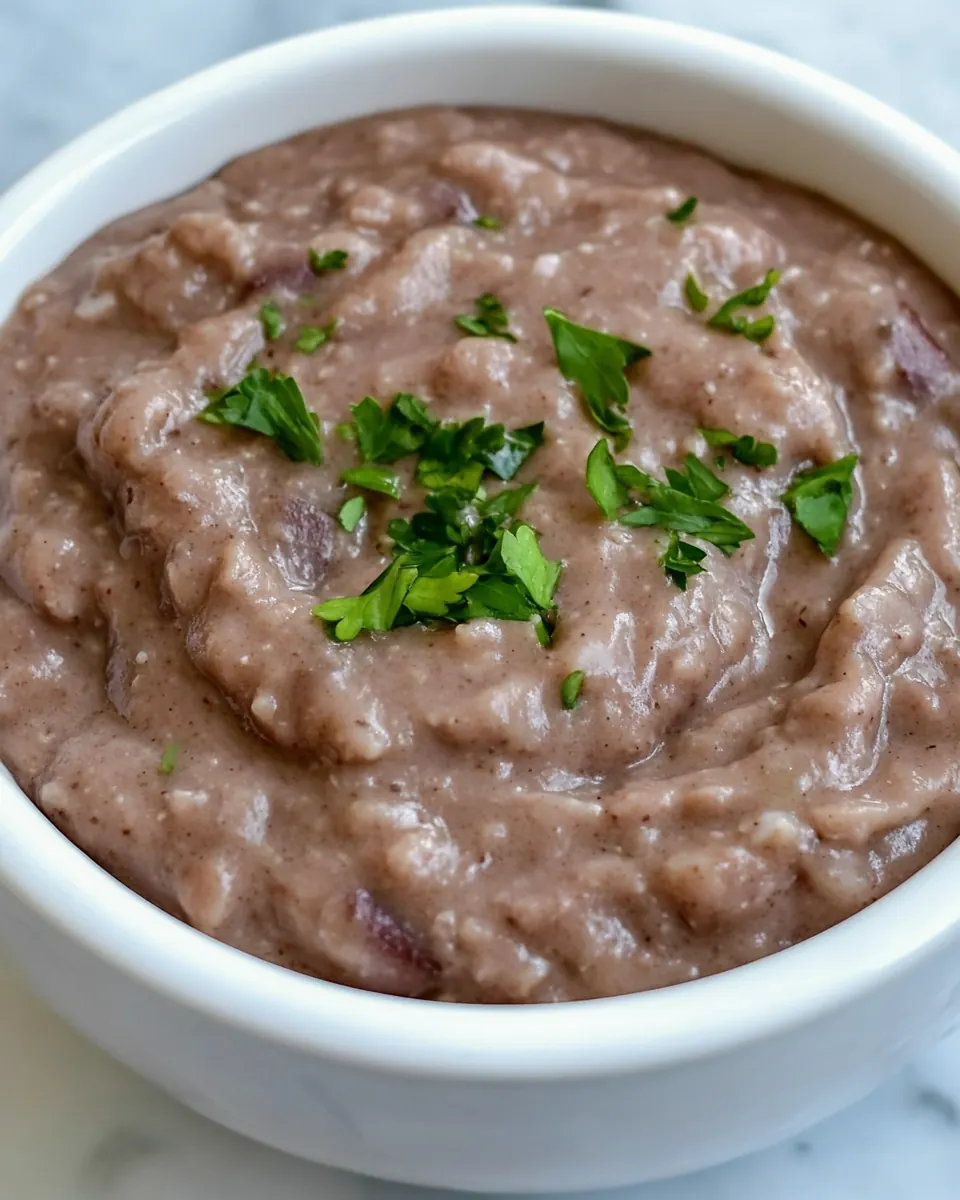
Refried Beans
Refried Beans have been a kitchen companion for me since college, when I learned to stretch simple pantry staples into comforting meals that felt like a hug on a plate.
I remember standing over a tiny dorm room hotplate, stirring a humble skillet of beans while friends argued over a movie choice, the warm, earthy aroma filling the room and turning instant ramen into a proper dinner. Over the years, that same skillet technique became my go to for weeknight sides, quick taco nights, and when I wanted something filling but not fussy. Each time I make Refried Beans, I think about that first time I mashed them by hand and how the texture transformed from whole to silky, the way a little reserved cooking liquid can loosen them just enough to be spoonable but still substantial.
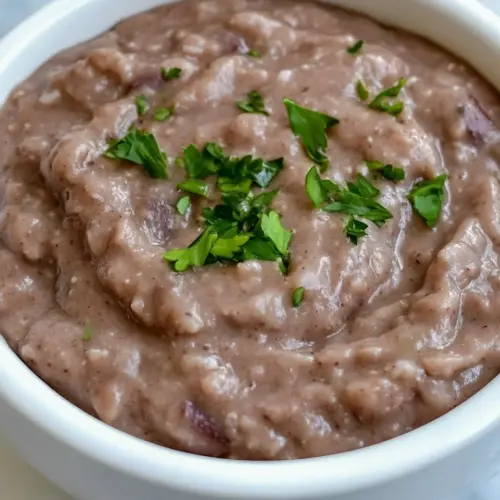
Now, when I make Refried Beans at home, I prefer starting with either freshly cooked pinto beans or a good quality canned version, and I pay attention to small details like gently sautéing onion and garlic to bring sweetness and depth. The cumin and black pepper are subtle but vital, giving a warm, savory backbone. I tend to serve them warm right from the skillet so they retain that faint sizzle and glossy surface that says they are freshly finished. This recipe is the kind of thing I turn to when I want something honest, adaptable, and reliably satisfying.
Recipe Snapshot
20 mins
5 mins
15 mins
Easy
200 kcal
Mexican
Vegan, Gluten-Free
Side Dishes
Large skillet, Potato masher, Wooden spoon
What You’ll Enjoy About This Refried Beans
Hearty, comforting simplicity
I love Refried Beans because they turn a few pantry ingredients into a rich, nourishing side that feels homemade. The texture is creamy yet a bit rustic, and that combination makes them more interesting than a plain mash. They pair effortlessly with fresh toppings or bold mains, and they are forgiving if you want to tweak the seasoning on the fly.
Speed without compromise
One of the reasons I reach for this skillet method is how quickly it comes together. With about 5 minutes of prep and a short sauté, you can have a warm bowl in under 20 minutes. For busy evenings when time is tight, this recipe delivers deep flavor with minimal fuss, which keeps weeknight dinners delicious and doable.
Flexible texture and control
I appreciate that you can control the texture easily, from a chunky, spoonable mash to a smoother spread. Using the reserved cooking liquid or a splash of starchy canned liquid helps you glide between textures, and mashing by hand lets you feel when the beans are just right. That tactile feedback matters to me, it makes cooking interactive and rewarding.
Frugal and filling
Beans are one of the most economical proteins, and this recipe stretches a little into a lot. Whether you use leftover cooked pinto beans or a can, Refried Beans are an excellent value for the comfort they provide. I often make a big batch to use throughout the week for bowls, tacos, or as a simple dip.
Customizable flavor profile
This version showcases a straightforward spice palette, but I love how easy it is to adjust. A touch more cumin lifts earthiness, while extra black pepper adds bite. The onion and garlic are optional, so you can adapt the dish to what you have on hand or your personal preferences, and it still shines.
Everything You Need for Refried Beans
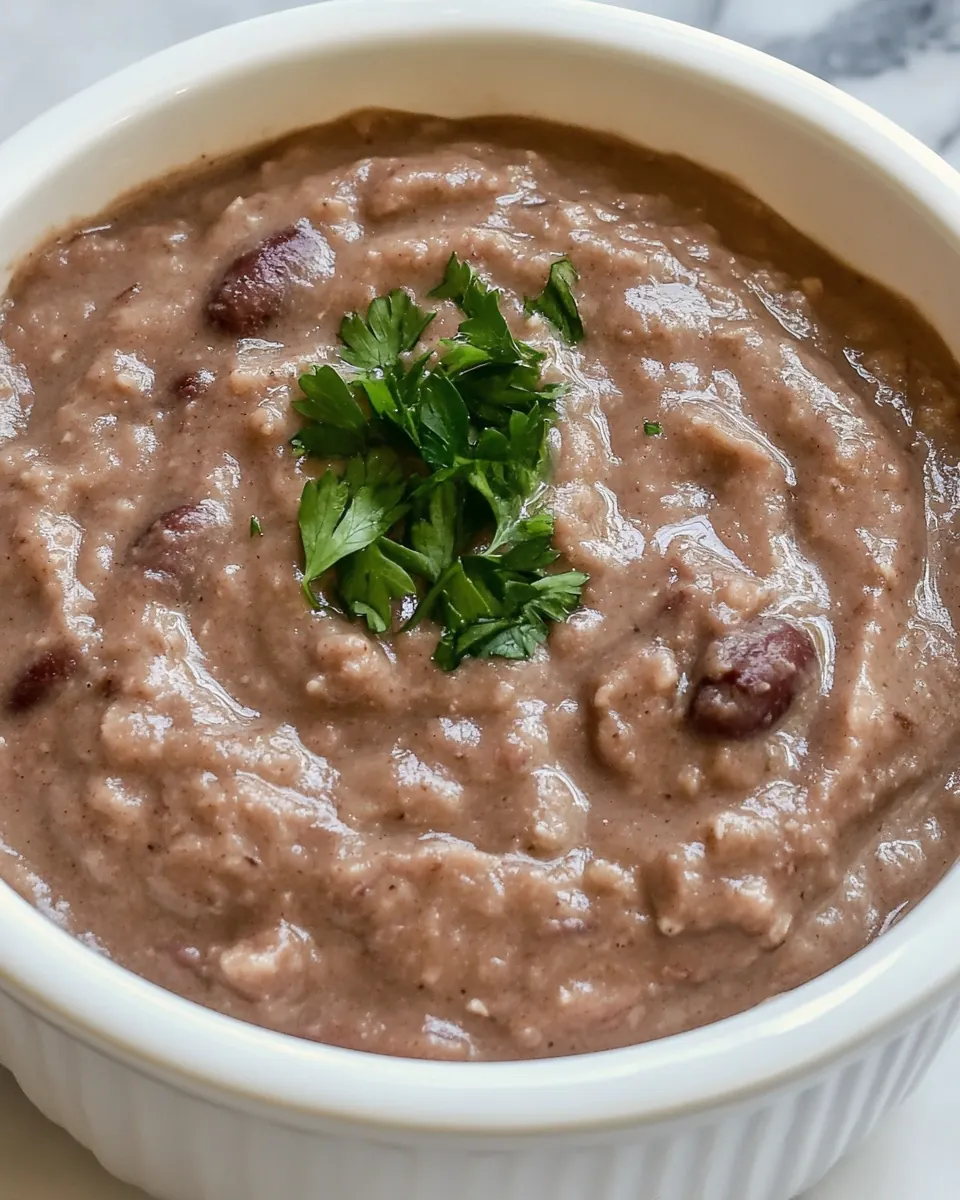
These ingredients are intentionally simple yet purposeful. Each item pulls its weight: the beans provide body and creaminess, the olive oil adds sheen and mouthfeel, while the aromatics and spices build depth. Together they create a balanced, close textured side dish that feels both rustic and refined.
- 2 cups cooked pinto beans, drained with cooking liquid reserved or 1 (15-ounce) can: Provide creamy body and authentic flavor, using cooked pinto beans either homemade with reserved cooking liquid or from a 15-ounce can; mash or blend to achieve desired texture and incorporate cooking liquid to adjust thickness while preserving starchiness and fiber.
- 1 tablespoon olive oil: Add a subtle fruity richness and help sauté aromatics without burning; heat the olive oil gently to release flavors from onion and garlic and to create a smooth base for frying the mashed beans for better mouthfeel.
- 1/2 cup chopped onion (optional): Contribute sweet-savory aromatic notes and soften when cooked; sauté until translucent to build depth, then mash into the beans so the softened onion integrates and enhances overall savory complexity.
- 2 cloves garlic, minced (optional): Provide pungent, savory aroma and a layer of depth when minced and briefly cooked; add toward the end of sautéing to avoid bitterness and to release its essential oils into the beans for fuller flavor.
- 1 teaspoon ground cumin: Lend warm, earthy, and slightly smoky undertones that complement beans; measure precisely to avoid overpowering, and toast briefly in the pan if desired to amplify its fragrance before mixing into the mash.
- 1 1/2 teaspoons kosher salt: Enhance overall seasoning and bring out natural flavors; dissolve evenly into the beans to season throughout, using kosher salt for its clean taste and ease of control when adjusting final seasoning.
- 1 teaspoon ground black pepper: Introduce bright, sharp heat and subtle bitterness to balance richness; grind freshly or use pre-ground to finish seasoning, adjusting to taste to create contrast with the creamy beans and salty notes.
Recipe Steps for Refried Beans
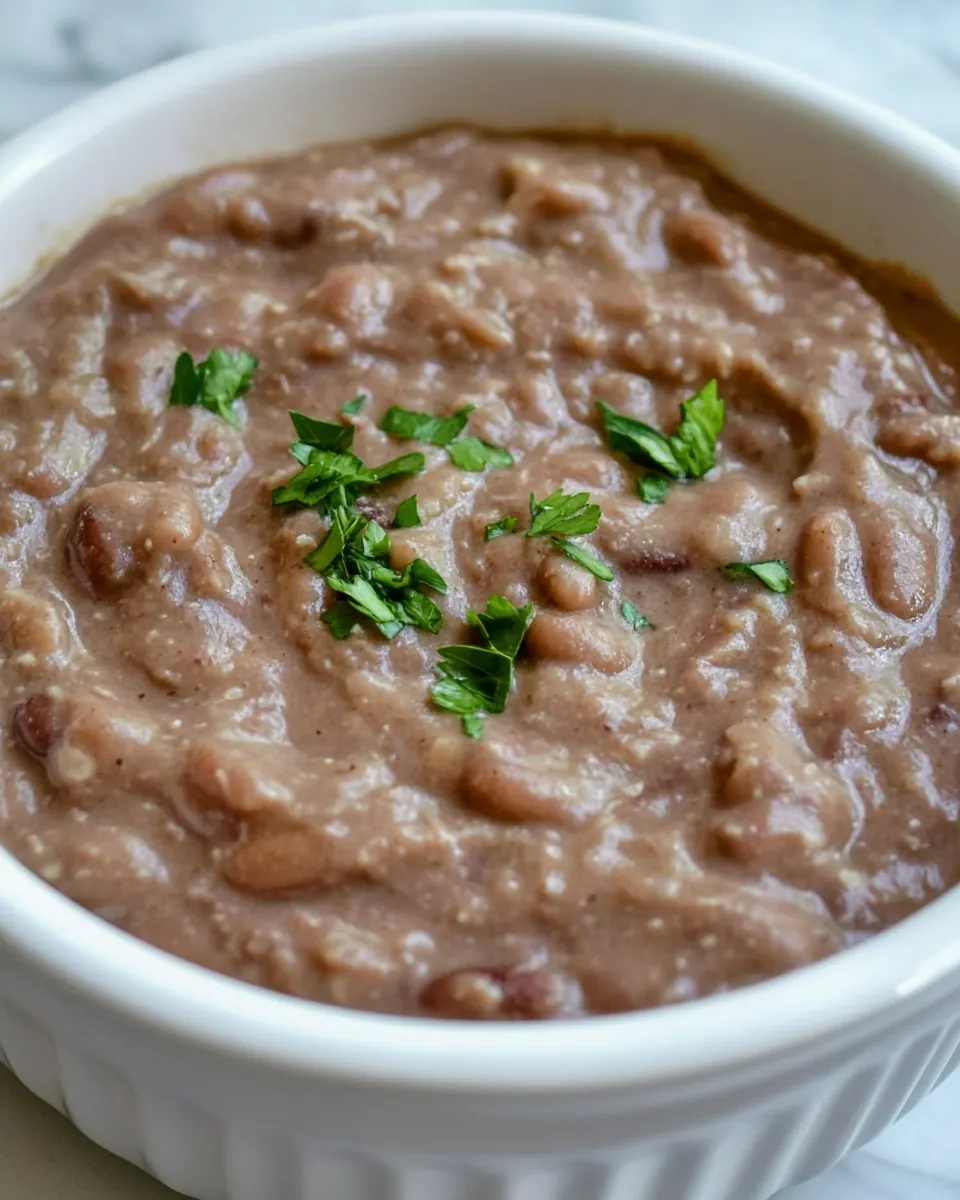
These steps are straightforward, designed to guide you through texture, seasoning, and timing so the final beans are warm, well seasoned, and perfectly mashable. Move at a steady pace, and pay attention to the sensory cues described in each step for the best result.
- Add the olive oil to a large skillet set over medium heat. Add the onion and garlic and saute until tender and translucent. Add beans, cumin, salt, and pepper to the skillet. Add reserved liquid a little at a time until beans are at desired consistency and not dry. Cook until beans are heated throughout. Mash beans with a potato masher or the back of a wooden spoon to your desired texture. Remove from heat and serve.: As the oil warms, you should notice it shimmer slightly and spread easily across the pan surface, which indicates the skillet is ready. The oil functions as the flavor carrier, delivering heat to the onion and garlic while preventing sticking. If the oil smokes, the pan is too hot, so reduce to medium, because overheating will burn delicate aromatics and create bitter flavors. Listen for a very light sizzle when you add aromatics, it tells you the temperature is right. A common mistake is heating the oil too high which leads to rapid browning, instead allow a gentle heat so the vegetables soften slowly and release sweetness.
- Add the onion and garlic and saute until tender and translucent: During this stage, the onion should go from opaque to translucent and the aroma should shift from sharp to sweet and mellow; the garlic will perfume the air. Stir frequently so the pieces cook evenly and no spots brown prematurely. Visually, you want the onion strands to be glossy and soft, not browned or crisp. If the garlic begins to brown quickly, lower the heat and stir, because burnt garlic will add bitterness. A good signal you're doing it right is a gentle, steady sizzling and a rounded aromatic lift without any burnt notes.
- Add beans, cumin, salt, and pepper to the skillet: As you add the pinto beans , you'll hear a soft settling sound and see the beans coat with the oil and spices. The cumin should become fragrant, releasing a warm, earthy scent as it meets the heated oil and beans. Salt will draw moisture from the bean surfaces, slightly loosening them, while black pepper adds a bright bite. Stir to combine so the spices distribute evenly; if the mixture looks dry right away, reserve liquid will be needed. Avoid adding too much salt at once, taste as you go to prevent oversalting.
- Add reserved liquid a little at a time until beans are at desired consistency and not dry: Introduce the reserved cooking or can liquid in small splashes, watching how it changes the texture; the beans will go from clumpy to spoonable and glossy. Stop once you reach a spreadable yet substantial texture, because adding too much liquid will make them soupy and dilute flavor. The right consistency is when a wooden spoon drags through the mixture leaving a visible trail but the beans still hold some body. A frequent error is pouring all the liquid at once, which removes control, so add gradually and pause to assess.
- Cook until beans are heated throughout: Keep the skillet over medium to medium low heat while the beans warm through, and watch for gentle bubbling around the edges which signals even heating. This step helps flavors meld and allows moisture to integrate, improving mouthfeel. Smell and appearance are good guides, you should get a warm, savory aroma and glossy surface without rapid bubbling. Avoid prolonged vigorous boiling because it can break down texture excessively and make the beans gummy; maintain a gentle simmer instead.
- Mash beans with a potato masher or the back of a wooden spoon to your desired texture: As you mash, note the change from whole to creamed, and listen for the soft tearing of beans which indicates tenderness. Mashing by hand gives you tactile control over chunkiness, creating anything from rustic lumps to a smoother spread. The action also incorporates any remaining liquid so the texture becomes cohesive. If you find the mash too stiff, add another splash of reserved liquid, but if too loose, cook a bit to reduce. A common misstep is overmashing which can produce an overly pasty feel; stop when the texture pleases you.
- Remove from heat and serve: Once removed, the beans will continue to settle and thicken slightly as they cool, so serve while warm to retain that soft, glossy quality. Spoon them into a bowl or plate and note the surface sheen, which signals proper oil integration. If holding briefly, cover to keep heat and moisture, because uncovered cooling can form an undesirable skin. Avoid serving them cold right away unless you intend a chilled preparation, because the flavors and mouthfeel are best when the beans are warm and freshly mashed.
Tips and Variations
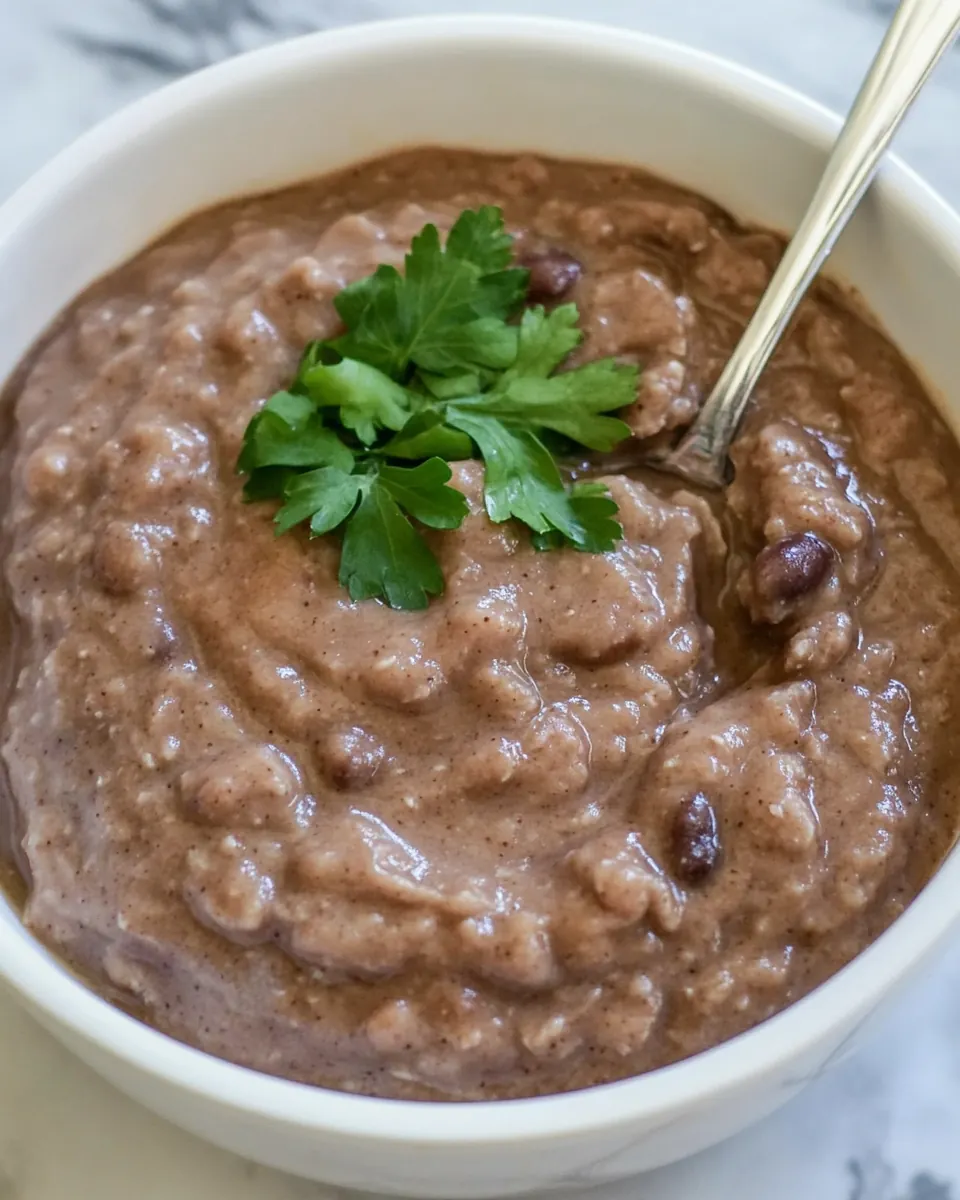
These tips will help you refine texture, seasoning, and serving. Each suggestion highlights a simple technique that elevates the dish without complicating the process. Use them to personalize the recipe to your taste and pantry.
- Control the texture by adding the reserved cooking or can liquid one tablespoon at a time, stopping when the beans reach a spoonable yet substantial consistency.
- Mind the aromatics by cooking onion and garlic gently until translucent and fragrant, because rushed browning creates bitter notes.
- Adjust seasoning last since reduction during cooking concentrates salt, so taste toward the end and correct gradually to avoid oversalting.
- Make ahead by preparing the beans fully and refrigerating, then rewarm them gently with a splash of reserved liquid to revive their creaminess before serving.
- Storage tip store cooled beans in an airtight container for up to four days in the refrigerator, and freeze portions for longer keeping, thawing slowly in the refrigerator before reheating.
What to Serve Alongside Refried Beans
Refried Beans are versatile and pair beautifully with many dishes and meals. They work well for casual gatherings, weeknight dinners, and festive spreads alike, and they can be dressed up or down depending on the occasion.
- Tacos and burritos serve warm beans as a hearty layer inside tortillas, adding texture and creamy contrast to fresh toppings like chopped herbs or salsa.
- Rice bowls pair the beans with steamed rice for a simple, filling bowl; drizzle a bit of reserved liquid when reheating to keep the beans creamy.
- Vegetarian mains use the beans as a protein rich side for roasted vegetables or grilled halloumi style cheeses for a balanced plate.
- Party dips spread the beans on a platter, top with sautéed peppers or a sprinkle of cheese, and serve with chips for an instant crowd pleaser.
- Everyday meals keep a batch in the fridge to add to omelets, quesadillas, or as a base for a quick, nourishing lunch; they are excellent for stretching meals across a week.
- Storage and reheating rewarm gently over low heat, stirring in a little reserved liquid to restore creaminess, and store leftovers sealed for up to four days in the refrigerator.
FAQ
Conclusion
Refried Beans are a simple yet soulful side that brings warmth, texture, and comfort to many meals. Give this skillet method a try, you will appreciate how quickly pantry staples transform into a creamy, savory accompaniment. It’s an ideal recipe for busy nights, casual gatherings, or when you want a reliable, satisfying dish without fuss. Make a batch, serve it warm, and enjoy how a little attention to texture and seasoning turns humble ingredients into something special.
Refried Beans
Equipment
- Large Skillet
- Potato Masher
- Wooden Spoon
Ingredients
- 2 cups cooked pinto beans, drained with cooking liquid reserved or 1 (15-ounce) can Provide creamy body and authentic flavor, using cooked pinto beans either homemade with reserved cooking liquid or from a 15-ounce can; mash or blend to achieve desired texture and incorporate cooking liquid to adjust thickness while preserving starchiness and fiber.
- 1 tablespoon olive oil Add a subtle fruity richness and help sauté aromatics without burning; heat the olive oil gently to release flavors from onion and garlic and to create a smooth base for frying the mashed beans for better mouthfeel.
- 1/2 cup chopped onion, optional Contribute sweet-savory aromatic notes and soften when cooked; sauté until translucent to build depth, then mash into the beans so the softened onion integrates and enhances overall savory complexity.
- 2 cloves garlic, minced, optional Provide pungent, savory aroma and a layer of depth when minced and briefly cooked; add toward the end of sautéing to avoid bitterness and to release its essential oils into the beans for fuller flavor.
- 1 teaspoon ground cumin Lend warm, earthy, and slightly smoky undertones that complement beans; measure precisely to avoid overpowering, and toast briefly in the pan if desired to amplify its fragrance before mixing into the mash.
- 1 1/2 teaspoons kosher salt Enhance overall seasoning and bring out natural flavors; dissolve evenly into the beans to season throughout, using kosher salt for its clean taste and ease of control when adjusting final seasoning.
- 1 teaspoon ground black pepper Introduce bright, sharp heat and subtle bitterness to balance richness; grind freshly or use pre-ground to finish seasoning, adjusting to taste to create contrast with the creamy beans and salty notes.
Instructions
- Add the olive oil to a large skillet set over medium heat. Add the onion and garlic and saute until tender and translucent. Add beans, cumin, salt, and pepper to the skillet. Add reserved liquid a little at a time until beans are at desired consistency and not dry. Cook until beans are heated throughout. Mash beans with a potato masher or the back of a wooden spoon to your desired texture. Remove from heat and serve.: As the oil warms, you should notice it shimmer slightly and spread easily across the pan surface, which indicates the skillet is ready. The oil functions as the flavor carrier, delivering heat to the onion and garlic while preventing sticking. If the oil smokes, the pan is too hot, so reduce to medium, because overheating will burn delicate aromatics and create bitter flavors. Listen for a very light sizzle when you add aromatics, it tells you the temperature is right. A common mistake is heating the oil too high which leads to rapid browning, instead allow a gentle heat so the vegetables soften slowly and release sweetness.
- Add the onion and garlic and saute until tender and translucent: During this stage, the onion should go from opaque to translucent and the aroma should shift from sharp to sweet and mellow; the garlic will perfume the air. Stir frequently so the pieces cook evenly and no spots brown prematurely. Visually, you want the onion strands to be glossy and soft, not browned or crisp. If the garlic begins to brown quickly, lower the heat and stir, because burnt garlic will add bitterness. A good signal you're doing it right is a gentle, steady sizzling and a rounded aromatic lift without any burnt notes.
- Add beans, cumin, salt, and pepper to the skillet: As you add the pinto beans , you'll hear a soft settling sound and see the beans coat with the oil and spices. The cumin should become fragrant, releasing a warm, earthy scent as it meets the heated oil and beans. Salt will draw moisture from the bean surfaces, slightly loosening them, while black pepper adds a bright bite. Stir to combine so the spices distribute evenly; if the mixture looks dry right away, reserve liquid will be needed. Avoid adding too much salt at once, taste as you go to prevent oversalting.
- Add reserved liquid a little at a time until beans are at desired consistency and not dry: Introduce the reserved cooking or can liquid in small splashes, watching how it changes the texture; the beans will go from clumpy to spoonable and glossy. Stop once you reach a spreadable yet substantial texture, because adding too much liquid will make them soupy and dilute flavor. The right consistency is when a wooden spoon drags through the mixture leaving a visible trail but the beans still hold some body. A frequent error is pouring all the liquid at once, which removes control, so add gradually and pause to assess.
- Cook until beans are heated throughout: Keep the skillet over medium to medium low heat while the beans warm through, and watch for gentle bubbling around the edges which signals even heating. This step helps flavors meld and allows moisture to integrate, improving mouthfeel. Smell and appearance are good guides, you should get a warm, savory aroma and glossy surface without rapid bubbling. Avoid prolonged vigorous boiling because it can break down texture excessively and make the beans gummy; maintain a gentle simmer instead.
- Mash beans with a potato masher or the back of a wooden spoon to your desired texture: As you mash, note the change from whole to creamed, and listen for the soft tearing of beans which indicates tenderness. Mashing by hand gives you tactile control over chunkiness, creating anything from rustic lumps to a smoother spread. The action also incorporates any remaining liquid so the texture becomes cohesive. If you find the mash too stiff, add another splash of reserved liquid, but if too loose, cook a bit to reduce. A common misstep is overmashing which can produce an overly pasty feel; stop when the texture pleases you.
- Remove from heat and serve: Once removed, the beans will continue to settle and thicken slightly as they cool, so serve while warm to retain that soft, glossy quality. Spoon them into a bowl or plate and note the surface sheen, which signals proper oil integration. If holding briefly, cover to keep heat and moisture, because uncovered cooling can form an undesirable skin. Avoid serving them cold right away unless you intend a chilled preparation, because the flavors and mouthfeel are best when the beans are warm and freshly mashed.
Notes
- Control the texture by adding the reserved cooking or can liquid one tablespoon at a time, stopping when the beans reach a spoonable yet substantial consistency.
- Mind the aromatics by cooking onion and garlic gently until translucent and fragrant, because rushed browning creates bitter notes.
- Adjust seasoning last since reduction during cooking concentrates salt, so taste toward the end and correct gradually to avoid oversalting.
- Make ahead by preparing the beans fully and refrigerating, then rewarm them gently with a splash of reserved liquid to revive their creaminess before serving.
- Storage tip store cooled beans in an airtight container for up to four days in the refrigerator, and freeze portions for longer keeping, thawing slowly in the refrigerator before reheating.