Vegetarian Baked Samosas
Vegetarian Baked Samosas came into my weeknight rotation the night I wanted something crispy but not greasy, familiar yet a little elevated. I remember pulling a stack of fragile phyllo dough from the fridge and feeling both intimidated and excited, because flaky pastry seemed fancy but the filling was pure home cooking comfort. I could tell my family would crowd the kitchen, curious about the golden triangles while the aroma of spices gently filled the air.
I learned to treat these as a small ritual, one that starts with simple prep and ends with a pan of warm, crunchy pockets everyone wants to pick at. I like to play soft music while I fold, because the repetitive motion calms me and keeps my hands steady. Sometimes a story or two gets traded around the counter while we brush each strip with melted butter, and by the time they are in the oven the mood in the house has shifted to cozy and anticipatory.
Recipe Snapshot
45 mins
15 mins
30 mins
Medium
200 kcal
Indian
Vegan, Gluten-Free
Appetizers
Saucepan, Baking sheet, Pastry brush, Knife
Why This Vegetarian Baked Samosas Hits Different
Comfort without heaviness
I love how Vegetarian Baked Samosas deliver that satisfying crunch while staying light, because baking replaces deep frying and lets the filling shine. The texture is crisp and layered, and the centers stay soft, which I find endlessly appealing when serving friends who prefer lighter fare.
Simple pantry stars
These samosas rely on humble staples like russet potatoes and frozen peas, which means I can assemble them on a weekday without a special grocery run. I often make the filling ahead and keep it chilled, because the flavors meld and the workload on the day of baking becomes pleasant rather than frantic.
Kid friendly and customizable
When my kids help, they love placing the filling and folding the triangles, so Vegetarian Baked Samosas are as much about family time as they are about dinner. You can tweak the spice level by adjusting the garlic powder and ground cumin, which means the same recipe can please a range of palates at one table.
Great for feeding a crowd
I often double or triple the batch for gatherings because these travel well from kitchen to party table. They stay crunchy for a surprising amount of time when stored properly, and guests appreciate a bite sized savory option alongside dips or a salad.
Make ahead friendly
I prepare the filling and thaw the phyllo dough in advance, which makes assembly brisk. That planning keeps the final bake relaxed, and it means you can chat with guests instead of getting stuck at the oven door.
Ingredients Required for Vegetarian Baked Samosas

These ingredients are straightforward and complementary. The starchy russet potatoes form a creamy, binding base while the grated carrot and sweet frozen corn and peas add texture and bright pops. Warm spices like ground cumin and turmeric lift the flavor, and the phyllo dough gives the dish its signature flaky crunch. Melted butter ensures the layers brown to an appealing golden color.
- 2 russet potatoes, peeled and cubed: Boil until tender then mash or cube to provide a hearty, starchy base that adds body and texture to the samosa filling; absorbent nature helps bind spices and other vegetables while contributing a creamy mouthfeel when mixed.
- 1 large carrot, peeled and grated: Grate finely to introduce natural sweetness, color, and slight moisture that balances the starchy potatoes; soft shredded carrot also adds subtle crunch and visual appeal while contributing dietary fiber.
- 1/4 cup frozen corn kernels, defrosted: Defrost and fold in to offer bursts of sweet corn flavor and juicy kernels that contrast the savory filling; small size and mild sweetness help brighten the overall taste without overwhelming spices.
- 1/4 cup frozen peas, defrosted: Thaw and incorporate for bright green color, mild sweetness, and tender pop; peas add protein, texture contrast, and help bulk up the filling for a satisfying vegetarian samosa.
- 1 teaspoon garlic powder: Sprinkle to provide an easy, consistent allium flavor that seasons the filling evenly; powdered form distributes quickly and enhances savory depth without adding moisture.
- 1/4 teaspoon ground cumin: Toast lightly or mix in to impart warm, earthy, and slightly citrusy notes that complement the potato and carrot; ground cumin adds classic savory complexity to Indian-inspired samosa spice profiles.
- 1/4 teaspoon turmeric: Add for warm, slightly bitter, and mustard-like aroma that lends golden color and traditional South Asian flavor; turmeric also contributes subtle earthiness and visual appeal.
- 1/2 teaspoon kosher salt: Season to balance and enhance all flavors while controlling overall taste; kosher salt brings out natural sweetness of vegetables and helps with moisture extraction during cooking.
- 1 package (20 sheets) 9×14 phyllo dough: Layer sheets carefully to create a thin, crisp, and flaky pastry shell that becomes golden and crunchy when baked; phyllo provides structure while allowing for delicate, multi-layered texture.
- 4 tablespoons melted butter: Brush liberally between phyllo layers or on the exterior to promote browning, create flakiness, and help sheets adhere; melted butter adds rich flavor and a crisp, glossy finish when baked.
Recipe Steps for Vegetarian Baked Samosas
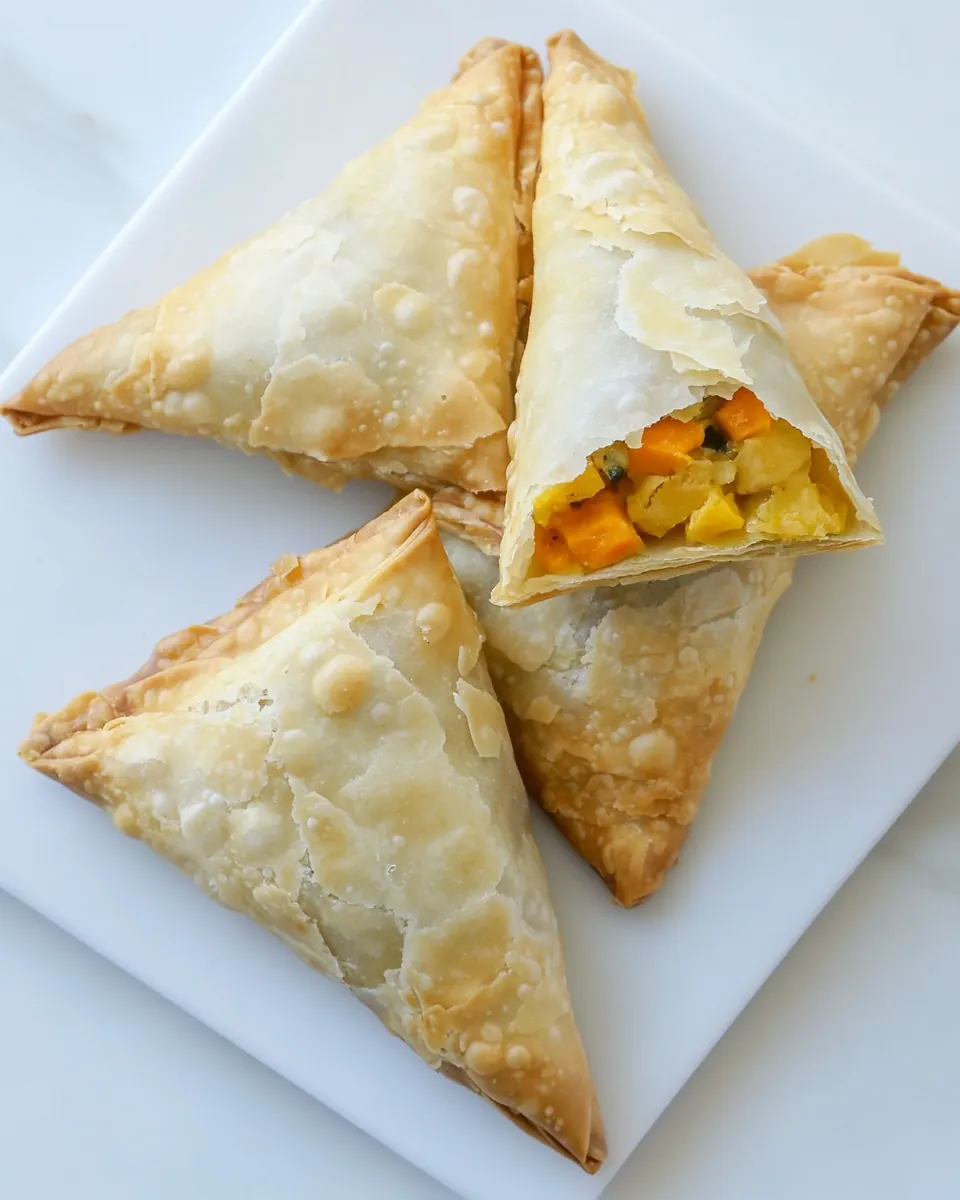
These steps guide you through from warming the oven to pulling golden triangles from the tray. I like to set up an assembly line so the process feels calm and rhythmic rather than rushed. Keep the phyllo dough covered and your melted butter handy, because timing and moisture control are what make these samosas flawless.
- Preheat oven to 350 F: The kitchen should already smell faintly warm and anticipatory when you set the oven to 350 F , because consistent heat guarantees even browning. A preheated oven gives the phyllo a rapid, dry blast that crisps every layer while the filling gently warms through. If you skip full preheating, the pastry can bake unevenly and stay pale in spots, so always wait until the oven reaches the target temperature before baking.
- Thaw the phyllo dough following the directions on the package. Unroll and cover with a damp paper towel to prevent drying.: When you open the package the dough should feel cold and supple; keeping it covered with a slightly damp towel prevents the sheets from curling and cracking. The scent is neutral but the texture is fragile, so work quickly and avoid drafts. If the sheets begin to dry and tear, they will not form neat layers, so replace the towel and work in small batches if needed.
- Place the potatoes in a saucepan, cover with water, and bring to a boil.: The pot should hiss briefly as it comes to a rolling boil, and steam will rise in a comforting cloud, a sign the potatoes are on their way to tenderness. Covering with cold water ensures even cooking, preventing the outside from disintegrating before the inside cooks. A frequent error is using too small a pot, which can cause uneven cooking and longer boil times, so choose a pot with room for water to circulate.
- Boil the potatoes until fork tender, about 10 minutes. Mash the potatoes until smooth.: You will hear a gentle bubbling rhythm and see the water transition from energetic to steady boil; test doneness with a fork, which should slide through easily. Mash while hot for a silkier texture, and work out lumps so the filling binds uniformly. Overmashing can make the potatoes gluey, so stop once smooth and fluffy textures are achieved.
- Add the carrots, corn, peas, garlic powder, cumin, turmeric, and salt to the mashed potatoes and stir to mix well.: Folding these elements in creates a mosaic of colors and aromas, from the sweet snap of corn to the toasty perfume of cumin . Stir gently to maintain some texture, and taste to adjust seasoning. A common slip is adding too much moisture here; if the filling feels wet, let it cool uncovered to firm up before filling the pastry.
- Place one phyllo sheet down and brush with melted butter using a pastry brush. Repeat with two more sheets so you have 3 sheets of phyllo stacked in front of you. Cut lengthwise into 3 strips.: The brushing should be even and light so each layer becomes a golden flake, and the stack will glisten slightly under your brush strokes. Cutting into strips reveals neat rectangles that will fold into tidy triangles. If you let the sheets dry between brushes they will flake and crack, so keep them covered and work briskly.
- Place 1 tablespoon of the filling at the bottom end of each strip. Fold the corner of the dough over the filling to form a triangle. Continue to fold the triangle over itself. Brush the top with melted butter. Repeat with remaining phyllo and filling.: The filling should be cool enough to handle so the pastry does not wilt; each fold produces a crisp edge that toasts beautifully. The sound is faint as layers meet, and the final brushed surface will shimmer before baking. Avoid overfilling, because excess filling can burst seams and leak during baking.
- Place triangles, seam side down, on a baking sheet. Bake for 30 minutes, until golden brown.: The oven will transform the buttered layers into a crunchy, nutty crust that sends a warm, buttery scent through the kitchen, and you will see the phyllo turn from pale to a rich golden brown at the edges. Bake until the color is even and the pastry sounds hollow when tapped gently. Opening the oven too often can drop the temperature and prevent full crisping, so resist frequent checks and rely on visual cues instead.
Change It Up

Small adjustments make a big difference when you want to vary textures or flavors. Below are practical ideas I use to adapt the recipe while keeping the technique intact. Each tip highlights a single change so you can try what suits your pantry and guests.
- Swap the potatoes for sweet potatoes: Use mashed sweet potatoes for a naturally sweet filling and a vibrant color contrast with the golden phyllo.
- Add toasted cumin seeds to the filling: Lightly toast whole cumin seeds in a dry pan until fragrant, then crush and fold in for a deeper, nuttier spice profile.
- Brush with a flavored butter: Melt butter with a pinch of turmeric or a little garlic powder to give the exterior an extra savory boost.
- Make mini samosas: Cut the phyllo strips narrower to produce bite sized pockets that work wonderfully for parties and appetizers.
- Prep the filling ahead: Store the cooled filling in the fridge for up to two days; it firms up and becomes easier to portion into neat triangles.
- Use a convection oven setting: If available, bake on convection to achieve a crisper, more evenly browned crust in slightly less time.
Accompaniments for Vegetarian Baked Samosas
These samosas shine most when paired thoughtfully, because contrast in texture and temperature elevates each bite. I enjoy offering at least two dipping options and a light salad to balance the richness. Below I outline serving ideas for casual family dinners, festive tables, and make ahead situations.
- Classic chutneys: A cool mint or cilantro chutney provides herbal brightness that cuts through the buttery phyllo. Serve in small bowls so guests can customize each bite.
- Tamarind sauce: A tangy tamarind glaze adds sweet acidity that complements the earthy filling, excellent for a festive spread or as a finishing drizzle.
- Simple yogurt dip: Stir plain yogurt with a pinch of salt and a squeeze of lemon for a creamy, cooling contrast that pairs well with spiced vegetables.
- Side salad: A crisp salad of shredded cabbage, carrot, and a light vinaigrette brings crunch and freshness, balancing the warm samosas on the plate.
- Occasions: These are ideal for a casual lunch, appetizer at dinner gatherings, or as part of a Ramadan iftar spread where light, shareable bites are appreciated.
- Storage tips: Refrigerate cooled samosas in an airtight container for up to three days, then reheat in the oven to restore crispness rather than microwaving.
- Make ahead tips: Assemble unbaked samosas and freeze on a tray; once solid, transfer to a freezer bag and bake from frozen, adding a few extra minutes to the bake time.
FAQ
Conclusion
Vegetarian Baked Samosas stand out because they deliver flaky, buttery pastry and a warm, spiced vegetable filling without deep frying. They are approachable to make, welcome at casual dinners or gatherings, and adaptable to make ahead or freeze for later. Try them once and you will likely find yourself planning them into your rotation for snacks, appetizers, or a light dinner. I encourage you to enjoy the process of folding and baking, and to share the golden results with family or friends who appreciate hand made, comforting bites.

Vegetarian Baked Samosas
Equipment
- Saucepan
- Baking Sheet
- Pastry Brush
- Knife
Ingredients
- 2 russet potatoes, peeled and cubed Boil until tender then mash or cube to provide a hearty, starchy base that adds body and texture to the samosa filling; absorbent nature helps bind spices and other vegetables while contributing a creamy mouthfeel when mixed.
- 1 large carrot, peeled and grated Grate finely to introduce natural sweetness, color, and slight moisture that balances the starchy potatoes; soft shredded carrot also adds subtle crunch and visual appeal while contributing dietary fiber.
- 1/4 cup frozen corn kernels, defrosted Defrost and fold in to offer bursts of sweet corn flavor and juicy kernels that contrast the savory filling; small size and mild sweetness help brighten the overall taste without overwhelming spices.
- 1/4 cup frozen peas, defrosted Thaw and incorporate for bright green color, mild sweetness, and tender pop; peas add protein, texture contrast, and help bulk up the filling for a satisfying vegetarian samosa.
- 1 teaspoon garlic powder Sprinkle to provide an easy, consistent allium flavor that seasons the filling evenly; powdered form distributes quickly and enhances savory depth without adding moisture.
- 1/4 teaspoon ground cumin Toast lightly or mix in to impart warm, earthy, and slightly citrusy notes that complement the potato and carrot; ground cumin adds classic savory complexity to Indian-inspired samosa spice profiles.
- 1/4 teaspoon turmeric Add for warm, slightly bitter, and mustard-like aroma that lends golden color and traditional South Asian flavor; turmeric also contributes subtle earthiness and visual appeal.
- 1/2 teaspoon kosher salt Season to balance and enhance all flavors while controlling overall taste; kosher salt brings out natural sweetness of vegetables and helps with moisture extraction during cooking.
- 1 package (20 sheets) 9×14 phyllo dough Layer sheets carefully to create a thin, crisp, and flaky pastry shell that becomes golden and crunchy when baked; phyllo provides structure while allowing for delicate, multi-layered texture.
- 4 tablespoons melted butter Brush liberally between phyllo layers or on the exterior to promote browning, create flakiness, and help sheets adhere; melted butter adds rich flavor and a crisp, glossy finish when baked.
Instructions
- Preheat oven to 350 F: The kitchen should already smell faintly warm and anticipatory when you set the oven to 350 F , because consistent heat guarantees even browning. A preheated oven gives the phyllo a rapid, dry blast that crisps every layer while the filling gently warms through. If you skip full preheating, the pastry can bake unevenly and stay pale in spots, so always wait until the oven reaches the target temperature before baking.
- Thaw the phyllo dough following the directions on the package. Unroll and cover with a damp paper towel to prevent drying.: When you open the package the dough should feel cold and supple; keeping it covered with a slightly damp towel prevents the sheets from curling and cracking. The scent is neutral but the texture is fragile, so work quickly and avoid drafts. If the sheets begin to dry and tear, they will not form neat layers, so replace the towel and work in small batches if needed.
- Place the potatoes in a saucepan, cover with water, and bring to a boil.: The pot should hiss briefly as it comes to a rolling boil, and steam will rise in a comforting cloud, a sign the potatoes are on their way to tenderness. Covering with cold water ensures even cooking, preventing the outside from disintegrating before the inside cooks. A frequent error is using too small a pot, which can cause uneven cooking and longer boil times, so choose a pot with room for water to circulate.
- Boil the potatoes until fork tender, about 10 minutes. Mash the potatoes until smooth.: You will hear a gentle bubbling rhythm and see the water transition from energetic to steady boil; test doneness with a fork, which should slide through easily. Mash while hot for a silkier texture, and work out lumps so the filling binds uniformly. Overmashing can make the potatoes gluey, so stop once smooth and fluffy textures are achieved.
- Add the carrots, corn, peas, garlic powder, cumin, turmeric, and salt to the mashed potatoes and stir to mix well.: Folding these elements in creates a mosaic of colors and aromas, from the sweet snap of corn to the toasty perfume of cumin . Stir gently to maintain some texture, and taste to adjust seasoning. A common slip is adding too much moisture here; if the filling feels wet, let it cool uncovered to firm up before filling the pastry.
- Place one phyllo sheet down and brush with melted butter using a pastry brush. Repeat with two more sheets so you have 3 sheets of phyllo stacked in front of you. Cut lengthwise into 3 strips.: The brushing should be even and light so each layer becomes a golden flake, and the stack will glisten slightly under your brush strokes. Cutting into strips reveals neat rectangles that will fold into tidy triangles. If you let the sheets dry between brushes they will flake and crack, so keep them covered and work briskly.
- Place 1 tablespoon of the filling at the bottom end of each strip. Fold the corner of the dough over the filling to form a triangle. Continue to fold the triangle over itself. Brush the top with melted butter. Repeat with remaining phyllo and filling.: The filling should be cool enough to handle so the pastry does not wilt; each fold produces a crisp edge that toasts beautifully. The sound is faint as layers meet, and the final brushed surface will shimmer before baking. Avoid overfilling, because excess filling can burst seams and leak during baking.
- Place triangles, seam side down, on a baking sheet. Bake for 30 minutes, until golden brown.: The oven will transform the buttered layers into a crunchy, nutty crust that sends a warm, buttery scent through the kitchen, and you will see the phyllo turn from pale to a rich golden brown at the edges. Bake until the color is even and the pastry sounds hollow when tapped gently. Opening the oven too often can drop the temperature and prevent full crisping, so resist frequent checks and rely on visual cues instead.
Notes
- Swap the potatoes for sweet potatoes: Use mashed sweet potatoes for a naturally sweet filling and a vibrant color contrast with the golden phyllo.
- Add toasted cumin seeds to the filling: Lightly toast whole cumin seeds in a dry pan until fragrant, then crush and fold in for a deeper, nuttier spice profile.
- Brush with a flavored butter: Melt butter with a pinch of turmeric or a little garlic powder to give the exterior an extra savory boost.
- Make mini samosas: Cut the phyllo strips narrower to produce bite sized pockets that work wonderfully for parties and appetizers.
- Prep the filling ahead: Store the cooled filling in the fridge for up to two days; it firms up and becomes easier to portion into neat triangles.
- Use a convection oven setting: If available, bake on convection to achieve a crisper, more evenly browned crust in slightly less time.