Cottage Cheese Salad with Za’atar
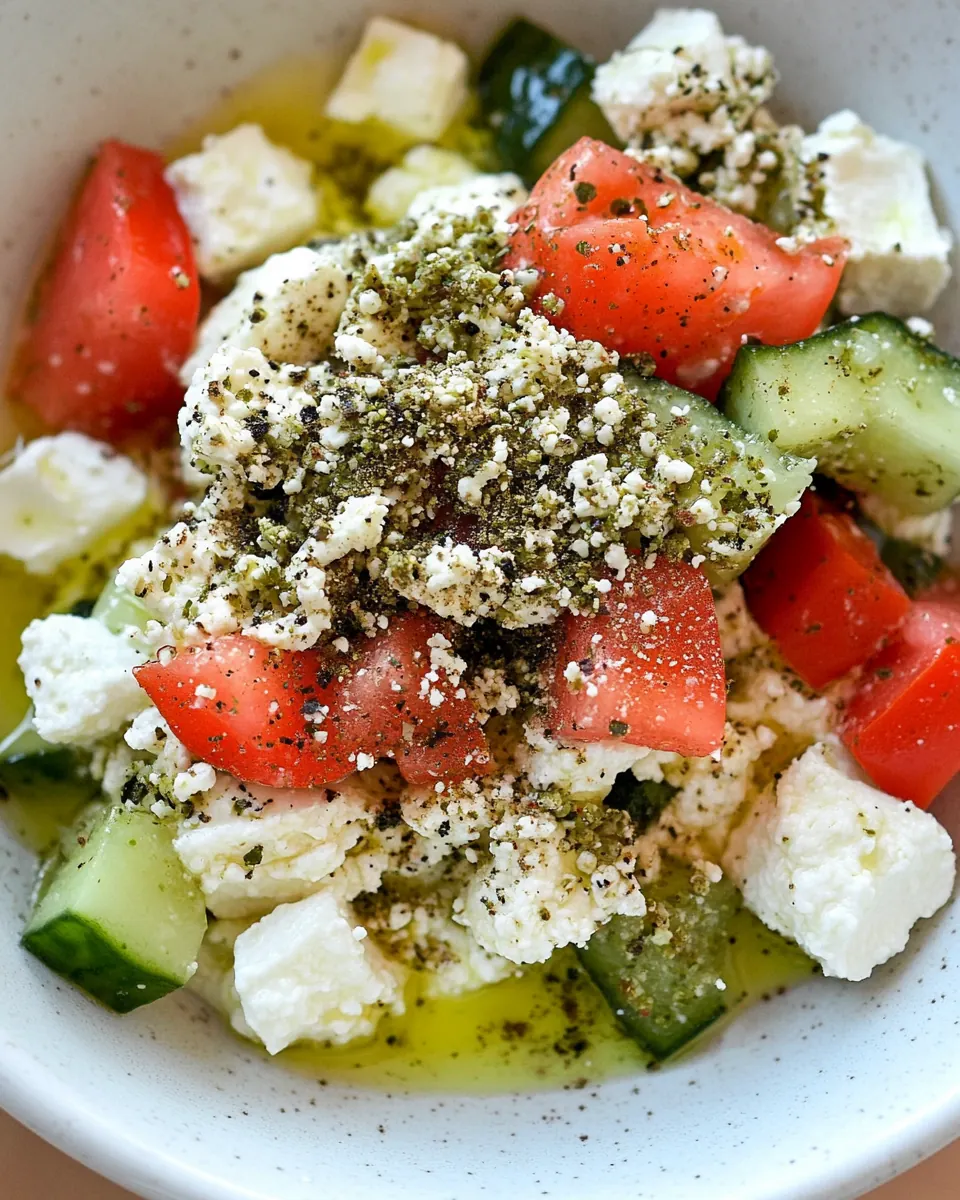
Cottage Cheese Salad with Za’atar has been one of my quickest fixes on busy summer afternoons, a bowl that feels bright, fresh, and surprisingly indulgent without fuss. The first time I tossed these crisp Persian cucumbers with juicy tomatoes and a spoonful of aromatic Za’atar, I remember thinking how effortlessly the creamy tang of cottage cheese pulled everything together, making a simple plate feel thoughtfully composed. I often bring it to casual lunches, because it keeps its texture and charm even after a short rest, and friends always ask for the recipe.
When I make Cottage Cheese Salad with Za’atar, I like to savor the ritual of slicing cucumbers thin enough to make a gentle crunch, and choosing tomatoes that are firm but ripe, so they pop gently in your mouth. I rarely follow exact measurements for the olive oil or Za’atar, preferring to adjust by smell and taste. There is a humble joy in layering the salad rather than mixing the cottage cheese right away; the contrast in textures is part of what keeps me coming back to this dish. Over time I learned little tricks, like slicing the olives just right or using green onion for a bright allium lift, that make it feel balanced and satisfying.
Recipe Snapshot
15 mins
15 mins
Easy
200 kcal
Mediterranean
Keto, Gluten-Free
Salads
Knife, Cutting board, Salad bowl
The Magic of This Cottage Cheese Salad with Za’atar
Freshness that sings
I adore how the combination of crisp Persian cucumbers and diced tomatoes brings a lively textural duet to Cottage Cheese Salad with Za’atar. The cucumbers offer a clean, watery crunch, while the tomatoes provide a gentle, juicy counterpoint. Together they keep each bite interesting, and the coolness of the vegetables makes the salad a perfect warm weather companion.
Comforting creaminess without heaviness
Using cottage cheese gives the salad a creamy, curdy body that feels indulgent but remains light. I like the way the curds nestle among the vegetables, giving pockets of dairy richness without overpowering the palate. If you want a satisfying mouthfeel that won’t weigh you down, this is the technique I reach for.
Herby, savory Za’atar magic
Za’atar is the secret charm here, lending a warm, herby, slightly toasty flavor that ties the salad together. I sprinkle it with confidence, because it elevates the simplest ingredients into something aromatic and memorable. The seasoning plays nicely with the olive oil drizzle, creating little islands of flavor throughout the bowl.
Speed and versatility
I love how fast this comes together, which makes Cottage Cheese Salad with Za’atar an excellent option for busy weeknights or last minute guests. You can plate it as a side, a light lunch, or part of a mezze spread. The quick assembly means you can focus on presentation and small finishing touches, and still have dinner on the table in minutes.
Balanced salty and bright notes
The addition of sliced olives and thinly sliced green onion gives the salad a lovely contrast of briny and bright flavors. The olives lend a savory depth, while the green onion adds a fresh bite, so each forkful feels thoughtfully layered. This interplay is why I keep returning to this recipe whenever I want something simple that still feels composed.
Ingredients You’ll Need for Cottage Cheese Salad with Za’atar
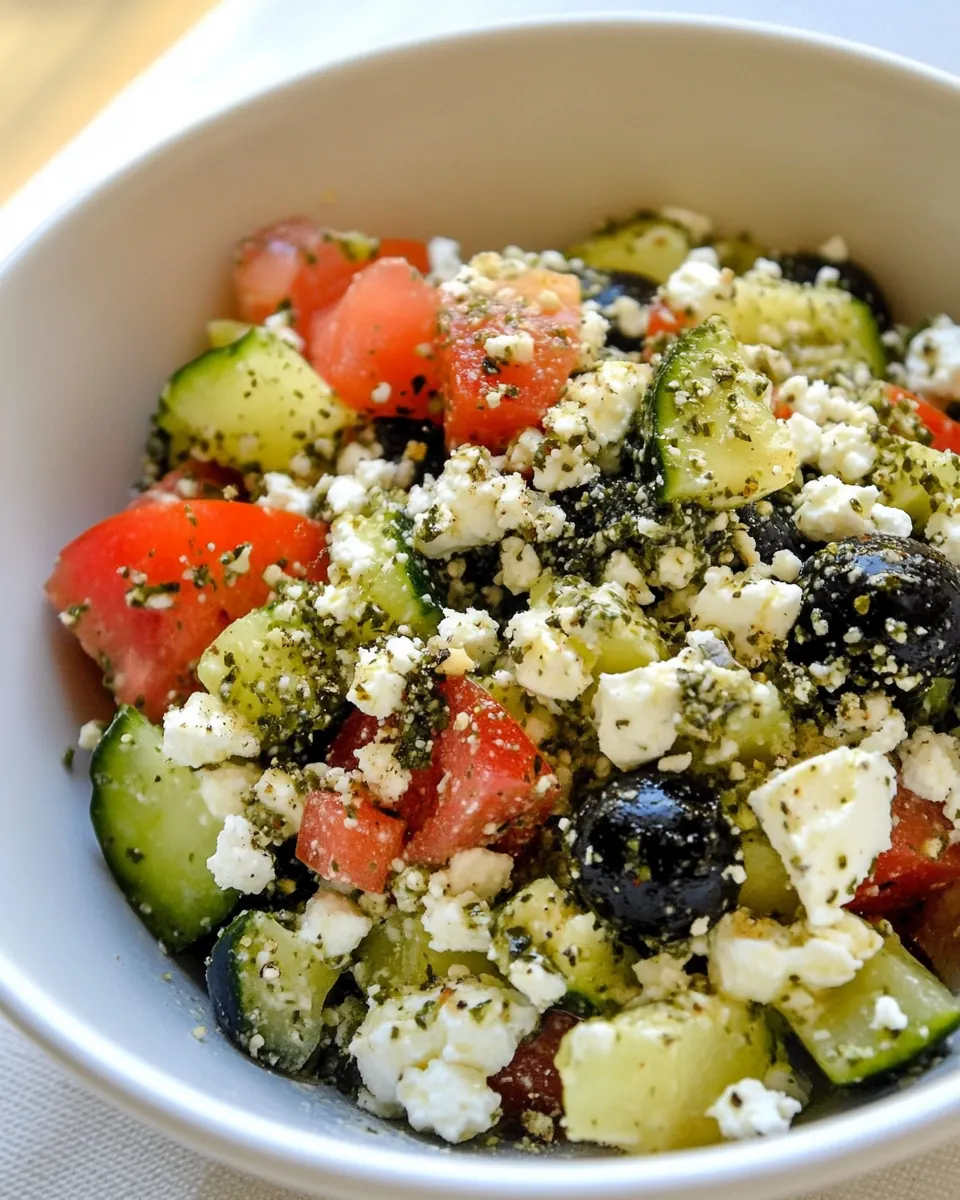
These ingredients form a straightforward, harmonious salad that celebrates texture and bright Mediterranean flavors. The key players are the crisp Persian cucumbers and juicy tomatoes, which provide freshness, while the creamy cottage cheese offers body. A drizzle of olive oil and a sprinkle of Za’atar bring aromatic lift, and the olives and green onion introduce savory and zesty notes that complete the bowl.
- 4 small Persian cucumbers: Slice thinly for a crisp, refreshing bite that provides structure and mild sweetness; works as the primary crunchy element that balances creaminess.
- 1 cup diced fresh tomatoes (see notes): Dice finely to add juicy acidity and bright color, contributing fresh tomato flavor and moisture that melds with the cheese; helps brighten each forkful.
- 1/4 cup thinly sliced green onion: Slice thinly to lend a mild allium sharpness and tender green color; offers subtle aromatic lift and textural contrast when mixed into the salad.
- 1/2 cup sliced olives (see notes): Slice or halve to introduce briny, savory notes and chewy texture; acts as a salty counterpoint that enhances overall savory balance.
- 1 cup cottage cheese: Spoon in as the creamy, tangy base that binds components and adds rich dairy protein; supplies a smooth mouthfeel and mild tang.
- 2 T olive oil (a generous drizzle): Drizzle to coat ingredients lightly and add fruity richness and mouth-coating fat; helps carry flavors and gives the salad a silky finish.
- 1 T Za’atar (more or less to taste): Sprinkle to impart herbaceous, slightly tangy, and toasty flavors; functions as the signature seasoning that defines the salad's Mediterranean profile.
Preparation Steps for Cottage Cheese Salad with Za’atar
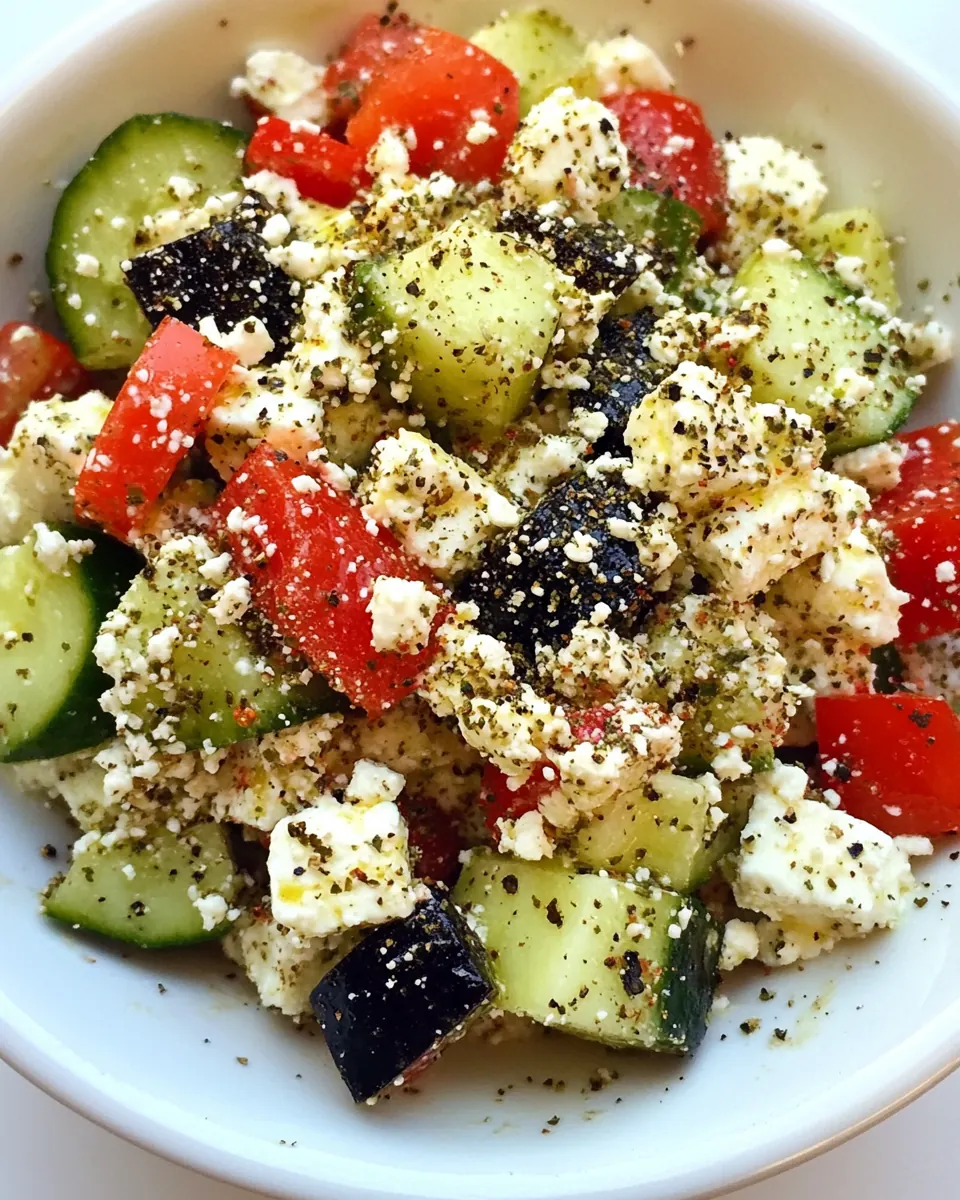
This salad is refreshingly simple to prepare, and it rewards careful, sensory-minded execution. Take a moment to notice textures as you work, and adjust seasoning to your preferences. Below are the cleaned directions expanded into detailed, personal steps to guide you through every tactile cue.
- Cut the Persian cucumbers into fourths lengthwise and then cut into slices. (If you have to use regular cucumbers, they may need to be fully or partially peeled.): The cucumbers should sound crisp as you slice them, a clean, watery snap that tells you they are fresh and ready. Visually aim for slender slices so each bite remains delicate and light rather than chunky. This step matters because thin slices distribute cucumber evenly through the bowl, ensuring contrast with the creamy cottage cheese . If you hear a dull thud instead of a crisp snap, the cukes may be overripe, which can make the salad soggy. A common mistake is cutting too thick, which overwhelms the other textures, so take your time and use a sharp knife.
- Dice the tomatoes, slice the green onions, and slice the olives.: When you dice tomatoes , they should release a faint, sweet aroma and a little juice, signaling ripeness without being mushy. Thinly sliced green onion should look bright and vibrant, offering a fresh green accent. Slice the olives uniformly to ensure consistent bursts of brininess. The purpose here is balance, so that no single element dominates the bowl. Avoid dicing tomatoes that are overly soft as they will macerate and make the salad watery.
- Combine the vegetables in a salad bowl, large enough to toss the ingredients together.: Tossing the cut vegetables together should create a colorful mosaic in the bowl, with the scent of tomato and green onion mingling. Use a bowl roomy enough to move ingredients without spilling, so you can dress and toss evenly later. This technique matters because it helps the olive oil and seasonings to coat everything uniformly. Do not overcrowd the bowl, as ingredients need space to tumble and mix properly, or they will not marry their flavors evenly.
- Put the cottage cheese on top of the tossed vegetables.: Spoon the cottage cheese in gentle mounds on top so it remains visually distinct, creating a pleasing contrast between creamy curds and crisp vegetables. This layering preserves texture, allowing the dairy to soften slightly against the warm bowl if present, yet still remain curdy. The reason for adding it on top is to keep some pockets of creaminess intact rather than having everything uniformly soggy. A frequent misstep is stirring it in too early, which can make the salad homogenous and less interesting.
- Drizzle with a generous amount of olive oil, sprinkle with Za’atar to taste, and toss again.: As you drizzle the olive oil , breathe in the fruity aroma; it should smell fresh and grassy. The Za’atar will give an earthy, nutty scent that becomes more pronounced as you toss. Toss gently so the cottage cheese incorporates without completely breaking down, aiming for visible swirls of cream throughout. This technique matters because even coating ensures balanced bites of herb, oil, and dairy. Over-tossing is a common slip that can mash the curds, so be delicate.
- Serve right away, with more Za’atar to be added at the table.: Serve the salad promptly so the vegetables retain their crispness and the cottage cheese stays pleasantly cool. At the table, offering extra Za’atar lets guests personalize the herb intensity, which I find keeps the dish exciting bite to bite. The sensory cue for readiness is that the bowl should look glossy from the olive oil and fragrant from the herbs. A warning: letting the salad sit too long can cause the tomatoes to soften and release liquid, diluting the flavors, so serve soon after tossing.
Helpful Notes about Cottage Cheese Salad with Za’atar
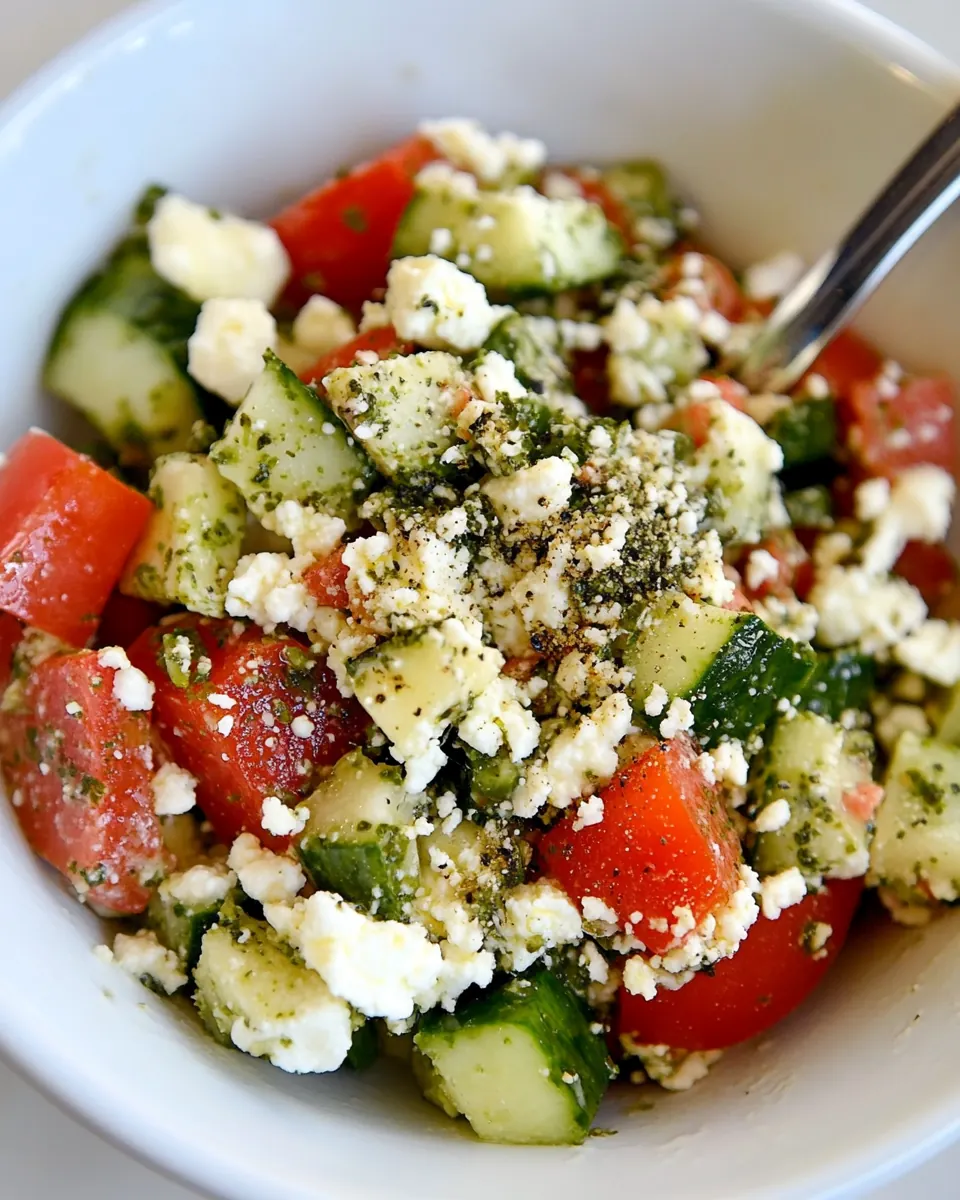
This salad rewards small adjustments and mindful assembly. Below are practical tips I use when making Cottage Cheese Salad with Za’atar, expanded for clarity and ease in the kitchen.
- Choose the right tomatoes — Opt for firm, ripe tomatoes so they hold their shape when diced, adding juiciness without turning the salad watery. If you only have very soft tomatoes, drain the seeds briefly on a paper towel.
- Adjust Za’atar slowly — Sprinkle a little at first, then taste. Since Za’atar blends vary, adding gradually helps you find the perfect balance without overpowering the other ingredients.
- Keep cottage cheese chilled — Store the cottage cheese in the fridge until the last minute; cold curds contrast beautifully with room temperature vegetables and keep the salad feeling fresh.
- Slice cucumbers uniformly — Aim for even slices so each bite has consistent texture. A mandoline works well if you want precise, paper thin slices, but a sharp knife is fine for casual prep.
- Serve immediately — This dish is best right after tossing, before tomatoes release too much liquid. If preparing ahead, keep components separate and assemble just before serving.
Perfect Pairings for Cottage Cheese Salad with Za’atar
This salad is flexible and pairs well with many simple sides and occasions. Below are thoughtful serving suggestions, storage tips, and seasonal ideas to help you present it beautifully. Use the list to mix and match pairings depending on your meal plan.
- Light lunch pairing — Serve alongside warm flatbread and a simple hummus for a satisfying midday meal that balances creamy and hearty elements.
- Summer barbecue side — Pair with grilled vegetables or skewered kebabs for a cooling contrast to smoky flavors during outdoor gatherings.
- Mezze platter component — Add this salad to a spread with roasted eggplant dips and stuffed grape leaves for a varied Mediterranean-inspired selection.
- Weeknight dinner side — Offer it with pan-seared fish or roasted chicken as a fresh counterpoint that brightens richer mains.
- Storage tips — Keep the salad components separate if you must store leftovers, especially the cottage cheese and diced tomatoes; combine just before serving to maintain texture.
- Seasonal pairing — This shines in summer when garden tomatoes and cucumbers are at their peak, but it also works in late spring when produce begins to sweeten.
FAQ
Conclusion
What makes this salad special is the interplay between crisp vegetables and creamy cottage cheese, all lifted by the warm herbiness of Za’atar. It’s quick to prepare, bright in flavor, and versatile, so it fits casual lunches or relaxed dinner gatherings with equal ease. Give it a try the next time you want something that feels both comforting and fresh, and enjoy how a few simple ingredients transform into a satisfying dish.
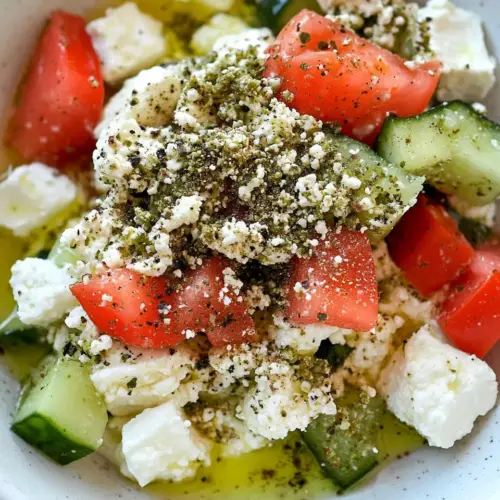
Cottage Cheese Salad with Za’atar
Equipment
- Knife
- Cutting Board
- Salad Bowl
Ingredients
- 4 small Persian cucumbers Slice thinly for a crisp, refreshing bite that provides structure and mild sweetness; works as the primary crunchy element that balances creaminess.
- 1 cup diced fresh tomatoes (see notes) Dice finely to add juicy acidity and bright color, contributing fresh tomato flavor and moisture that melds with the cheese; helps brighten each forkful.
- 1/4 cup thinly sliced green onion Slice thinly to lend a mild allium sharpness and tender green color; offers subtle aromatic lift and textural contrast when mixed into the salad.
- 1/2 cup sliced olives (see notes) Slice or halve to introduce briny, savory notes and chewy texture; acts as a salty counterpoint that enhances overall savory balance.
- 1 cup cottage cheese Spoon in as the creamy, tangy base that binds components and adds rich dairy protein; supplies a smooth mouthfeel and mild tang.
- 2 T olive oil (a generous drizzle) Drizzle to coat ingredients lightly and add fruity richness and mouth-coating fat; helps carry flavors and gives the salad a silky finish.
- 1 T Za’atar (more or less to taste) Sprinkle to impart herbaceous, slightly tangy, and toasty flavors; functions as the signature seasoning that defines the salad's Mediterranean profile.
Instructions
- Cut the Persian cucumbers into fourths lengthwise and then cut into slices. (If you have to use regular cucumbers, they may need to be fully or partially peeled.): The cucumbers should sound crisp as you slice them, a clean, watery snap that tells you they are fresh and ready. Visually aim for slender slices so each bite remains delicate and light rather than chunky. This step matters because thin slices distribute cucumber evenly through the bowl, ensuring contrast with the creamy cottage cheese . If you hear a dull thud instead of a crisp snap, the cukes may be overripe, which can make the salad soggy. A common mistake is cutting too thick, which overwhelms the other textures, so take your time and use a sharp knife.
- Dice the tomatoes, slice the green onions, and slice the olives.: When you dice tomatoes , they should release a faint, sweet aroma and a little juice, signaling ripeness without being mushy. Thinly sliced green onion should look bright and vibrant, offering a fresh green accent. Slice the olives uniformly to ensure consistent bursts of brininess. The purpose here is balance, so that no single element dominates the bowl. Avoid dicing tomatoes that are overly soft as they will macerate and make the salad watery.
- Combine the vegetables in a salad bowl, large enough to toss the ingredients together.: Tossing the cut vegetables together should create a colorful mosaic in the bowl, with the scent of tomato and green onion mingling. Use a bowl roomy enough to move ingredients without spilling, so you can dress and toss evenly later. This technique matters because it helps the olive oil and seasonings to coat everything uniformly. Do not overcrowd the bowl, as ingredients need space to tumble and mix properly, or they will not marry their flavors evenly.
- Put the cottage cheese on top of the tossed vegetables.: Spoon the cottage cheese in gentle mounds on top so it remains visually distinct, creating a pleasing contrast between creamy curds and crisp vegetables. This layering preserves texture, allowing the dairy to soften slightly against the warm bowl if present, yet still remain curdy. The reason for adding it on top is to keep some pockets of creaminess intact rather than having everything uniformly soggy. A frequent misstep is stirring it in too early, which can make the salad homogenous and less interesting.
- Drizzle with a generous amount of olive oil, sprinkle with Za’atar to taste, and toss again.: As you drizzle the olive oil , breathe in the fruity aroma; it should smell fresh and grassy. The Za’atar will give an earthy, nutty scent that becomes more pronounced as you toss. Toss gently so the cottage cheese incorporates without completely breaking down, aiming for visible swirls of cream throughout. This technique matters because even coating ensures balanced bites of herb, oil, and dairy. Over-tossing is a common slip that can mash the curds, so be delicate.
- Serve right away, with more Za’atar to be added at the table.: Serve the salad promptly so the vegetables retain their crispness and the cottage cheese stays pleasantly cool. At the table, offering extra Za’atar lets guests personalize the herb intensity, which I find keeps the dish exciting bite to bite. The sensory cue for readiness is that the bowl should look glossy from the olive oil and fragrant from the herbs. A warning: letting the salad sit too long can cause the tomatoes to soften and release liquid, diluting the flavors, so serve soon after tossing.
Notes
- Choose the right tomatoes — Opt for firm, ripe tomatoes so they hold their shape when diced, adding juiciness without turning the salad watery. If you only have very soft tomatoes, drain the seeds briefly on a paper towel.
- Adjust Za’atar slowly — Sprinkle a little at first, then taste. Since Za’atar blends vary, adding gradually helps you find the perfect balance without overpowering the other ingredients.
- Keep cottage cheese chilled — Store the cottage cheese in the fridge until the last minute; cold curds contrast beautifully with room temperature vegetables and keep the salad feeling fresh.
- Slice cucumbers uniformly — Aim for even slices so each bite has consistent texture. A mandoline works well if you want precise, paper thin slices, but a sharp knife is fine for casual prep.
- Serve immediately — This dish is best right after tossing, before tomatoes release too much liquid. If preparing ahead, keep components separate and assemble just before serving.