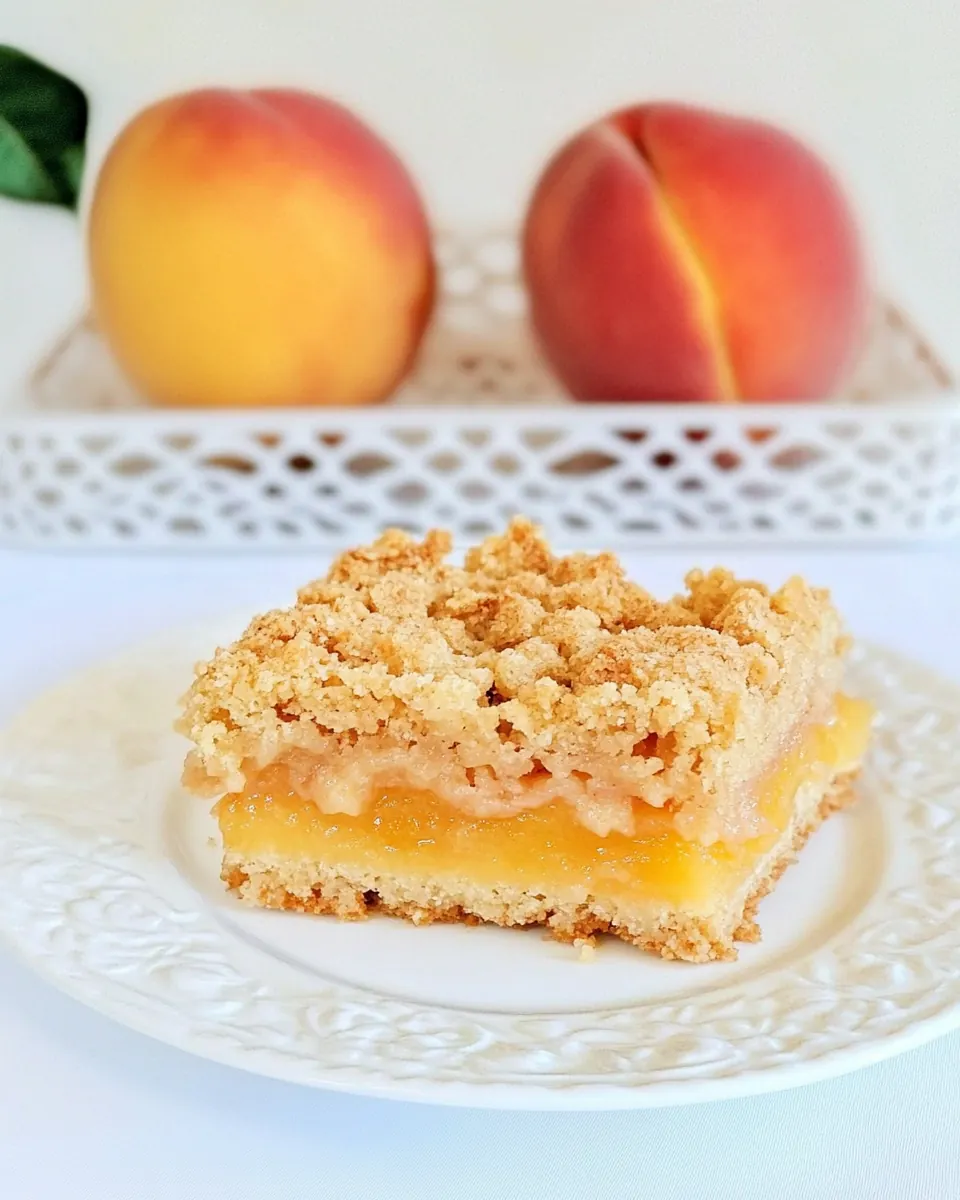
Peach Crumb Bars
Peach Crumb Bars came into my life on a hot summer afternoon when my neighbor knocked with a bowl of overripe peaches and a mischievous grin. I remember wiping my hands on my apron, smelling the sweet, sun warmed fruit, and deciding right then that I wanted something that captured that fleeting peach moment in a portable, shareable way. I wanted a dessert that felt like backyard gatherings, sticky fingers, and the sort of comfort that makes everyone ask for the recipe.
That first batch of Peach Crumb Bars was an experiment in textures. I wanted a buttery, sandy crust that held together without being cakey, and a filling that was tender but not runny. The result was a tray of bars that disappeared within an hour, a testament to how simple ingredients can feel like summer on a plate. Ever since then I find myself reaching for this recipe whenever peaches peek into season or when I need a dessert that travels well to potlucks and picnic blankets.
Recipe Snapshot
1 hr 5 mins
20 mins
45 mins
Medium
200 kcal
American
Gluten-Free, Low FODMAP
Desserts
9×13 inch baking pan, wire rack, large bowl, pastry blender
The Charm of This Peach Crumb Bars
They celebrate summer fruit at its best
I love how Peach Crumb Bars spotlight the natural sweetness of peaches without drowning it in heavy sauces. When peaches are ripe, their aroma is floral and honeyed, and this recipe keeps those notes front and center. I often say good fruit needs gentle treatment, and this bar format does just that, letting each bite sing.
Texture play that keeps you coming back
What gets me every time is the contrast between the tender peach layer and the crumbly, buttery topping. The crust is sandy, the filling slightly jammy, and the crumble adds a pleasant toothsome bite. Those multiple textures make a single serving feel like a complete experience, not just a quick sweet.
Simple pantry ingredients, outstanding results
I’m a big fan of recipes that don’t require a trip to a specialty store. The bulk of these bars comes from basic pantry staples like all purpose flour, sugar, and butter. That accessibility means I can make these bars on a whim when a box of peaches arrives, and they still taste like something I fussed over, even if I didn’t.
Versatile and crowd friendly
I always bring these bars to gatherings because they travel well, slice neatly, and please a range of palates. They adapt easily to different presentations, and they pair well with a scoop of ice cream if you want to elevate the experience. I appreciate that versatility, especially on days when plans change and I need a dessert that holds up.
Reliable and forgiving technique
Lastly, I value recipes that forgive small mistakes. Peach Crumb Bars let you be human. Whether your peaches are a bit firmer or your crumble slightly more rustic, the end result is still deeply satisfying. That forgiving nature makes me reach for this recipe again and again.
Key Ingredients for Peach Crumb Bars
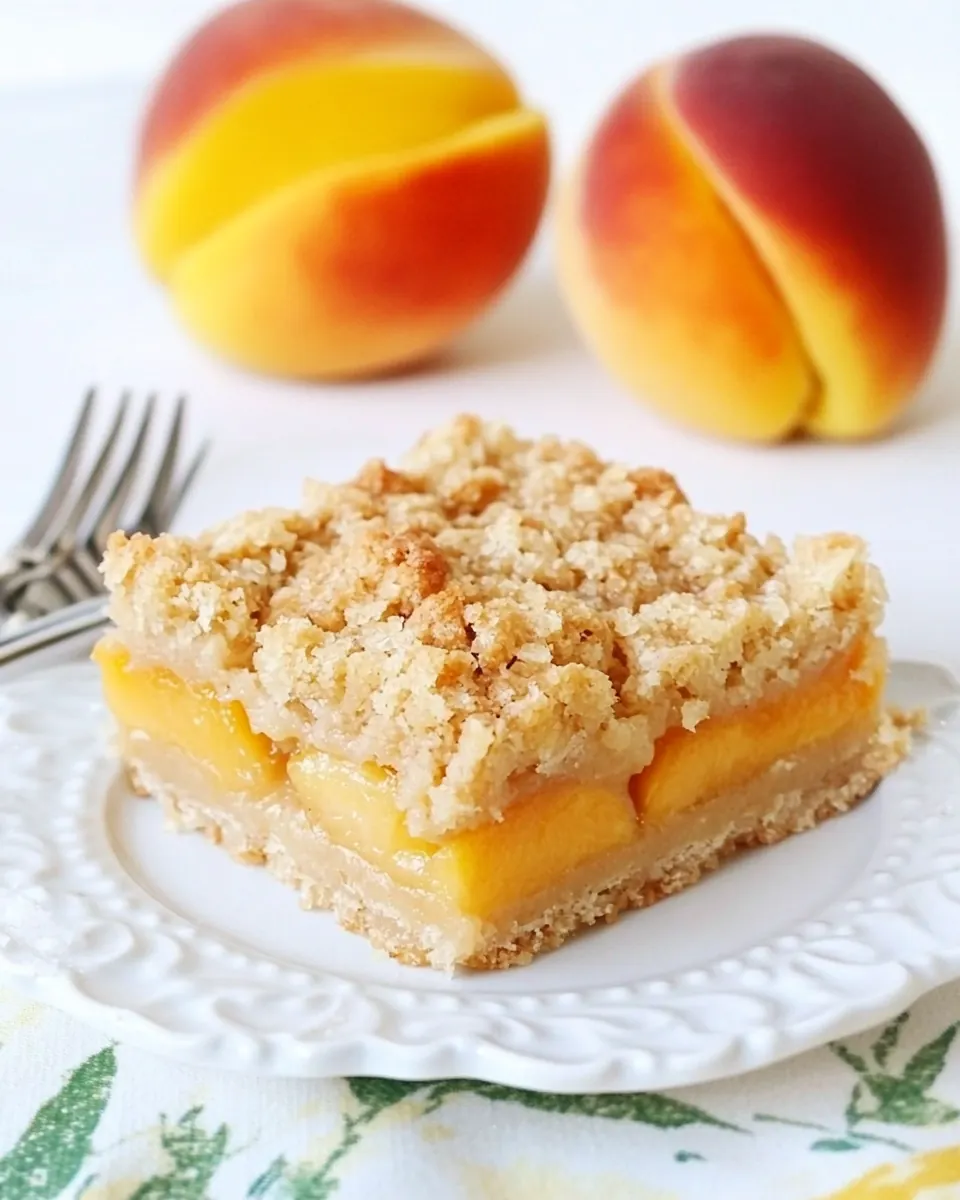
These ingredients are all about balance, each playing a clear role in the finished bar. The peaches provide juicy brightness, the flours create structure, sugar brings sweetness and helps with caramelization, and butter lends a tender, crumbly texture. Together they form layers that are both comforting and vibrant, letting the fruit shine while the crust and crumble support it with richness and crunch.
- 5 cups diced peeled peaches: Provide diced peeled peaches that supply juicy, sweet fruit and tender texture to the bars; macerate briefly with sugar to release juices and enhance natural flavor. Add fruit early in the filling assembly so it integrates with thickeners and spices for an even consistency. Ensure pieces are evenly sized to bake uniformly and avoid soggy or undercooked pockets.
- 2 tablespoons fresh lemon juice: Add fresh lemon juice to brighten the peach flavor and balance sweetness with acidity; help prevent fruit oxidation and browning during preparation. Combine with the peaches before cooking or assembling to distribute acidity evenly and maintain a lively fruit profile.
- 1/2 cup all-purpose flour: Supply all-purpose flour to help absorb excess peach juices and provide body to the filling; bolster the structure for a cohesive, sliceable bar. Whisk with cornstarch and sugar so it blends smoothly into the fruit without forming lumps.
- 1 teaspoon cornstarch: Thicken the peach filling by using cornstarch to create a glossy, set interior that holds shape after baking and cooling. Dissolve first in a small amount of liquid from the fruit to avoid clumping and ensure even thickening when heated.
- 1 cup granulated sugar: Sweeten the peach mixture with granulated sugar to enhance natural fruit sugars and create syrupy juices that meld with the crumb layers. Measure accurately so the filling achieves balanced sweetness without becoming overly runny after baking.
- 1/4 teaspoons salt: Season with salt in a small amount to amplify the overall flavors and balance sweetness within the fruit filling. Disperse evenly among dry components to ensure subtle, consistent enhancement rather than noticeable saltiness.
- 1/2 teaspoon ground cinnamon: Add ground cinnamon to the filling to introduce warm, aromatic spice that complements peaches and deepens flavor complexity. Blend thoroughly with the sugar and flour so the spice infuses the entire fruit layer.
- 1/4 teaspoon ground nutmeg: Include ground nutmeg sparingly to lend a warm, slightly nutty undertone that enhances the fruit and cinnamon notes without overpowering them. Mix into the filling so background spice is evenly distributed throughout the bars.
- 3 cups all-purpose flour: Provide additional all-purpose flour for the crumb topping and base to create structure, tenderness, and a golden crust. Combine with sugar, baking powder, and spices prior to cutting in butter for an even, crumbly texture.
- 1 cup granulated sugar: Sweeten the crumb dough with granulated sugar to add sweetness and contribute to crisp, caramelized edges during baking. Incorporate evenly with the dry ingredients so sweetness is balanced throughout the crust and topping.
- 1 teaspoon baking powder: Leaven the crumb mixture slightly with baking powder to give a lightness to the base and prevent an overly dense crust. Sift or whisk into the dry ingredients to ensure even distribution and consistent rise.
- 1/4 teaspoons salt: Season the dough with a pinch of salt to enhance the overall flavors of the crust and balance the sweetness in the bars. Mix with other dry ingredients so the salt is distributed uniformly for subtle flavor lift.
- 1/4 teaspoon cinnamon: Add ground cinnamon to the crumb mixture to mirror the filling’s warm spice and create aromatic cohesion between layers. Blend into the flour and sugar so the spice is present in both base and topping.
- 1 cup cold unsalted butter cut into small pieces: Cut cold unsalted butter into small pieces to produce a flaky, tender crumb when incorporated into the dry mixture; cold butter creates distinct pockets that melt during baking. Work quickly to maintain cold pieces until baking so texture remains crumbly rather than greasy.
- 1 egg lightly beaten: Brush or bind components with a lightly beaten egg to help the crumb top brown, set, and hold together when sliced. Apply evenly and avoid overmixing to preserve the desired tender crumb structure.
- 1/2 teaspoon vanilla extract: Enhance flavor and aroma with vanilla extract added to the dough or egg wash to provide sweet, rounded depth that complements the peaches and spices. Stir in last with the egg to distribute the flavor evenly without evaporating volatile aromatics.
- Cinnamon and sugar for sprinkling on top of the bars: Sprinkle a cinnamon and sugar blend on top of the bars to create a sweet, crunchy finish that adds visual appeal and extra spice on the crust. Apply just before baking for a caramelized, slightly crisp topping that contrasts with the tender filling.
Making Peach Crumb Bars
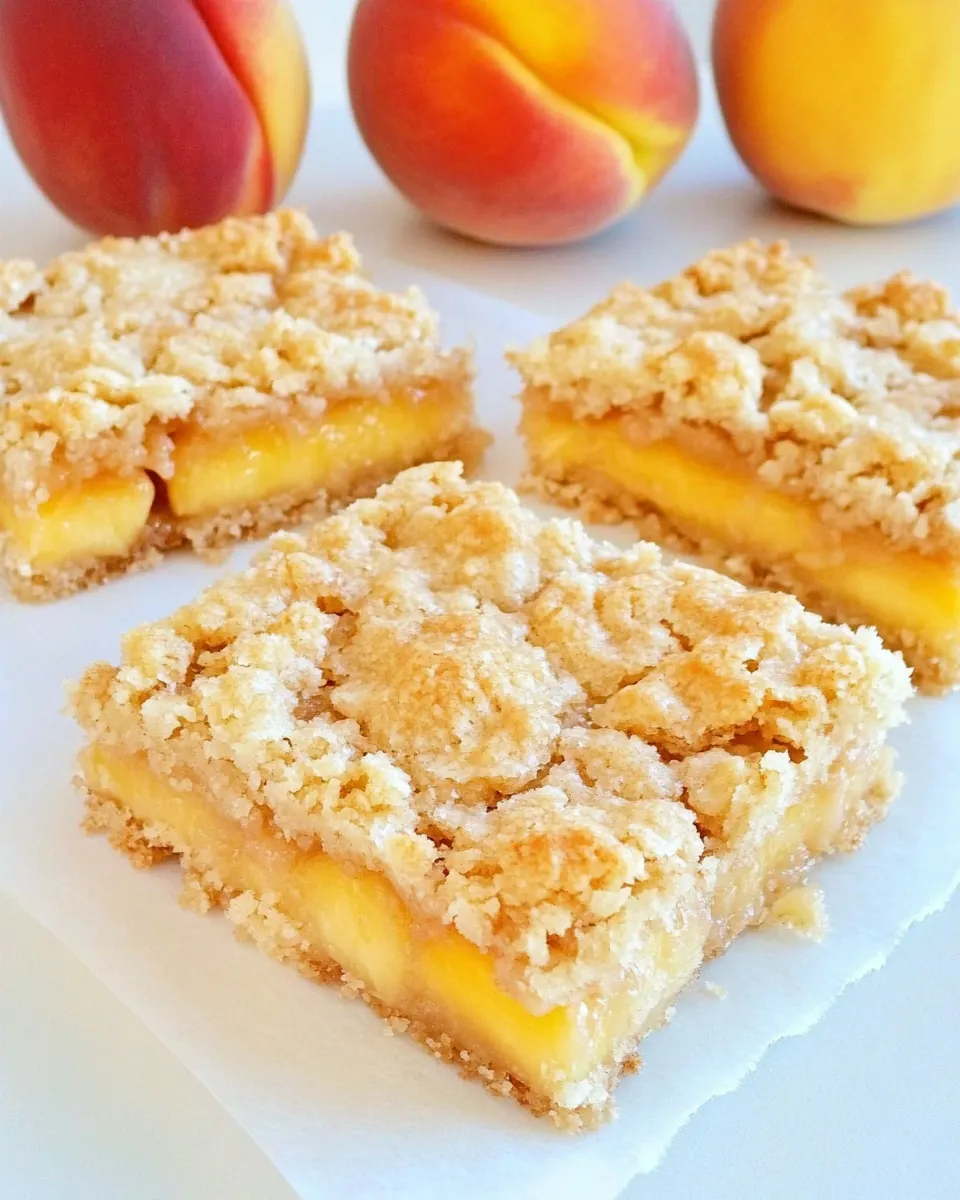
I enjoy the rhythm of assembling these bars, from tossing the peaches with the binder to pressing the base and crumbling the remainder on top. The process is straightforward, but paying attention to temperatures and textures makes a noticeable difference. Below, I break down each step with sensory cues and troubleshooting tips to help you achieve consistent results.
- Preheat the oven to 375 degrees F. Spray a 9×13-inch baking pan with cooking spray and set aside.: As the oven warms you will likely notice a faint metallic hum that indicates stable heat. Proper preheating ensures the base begins to set when it goes in, giving the bars structure. If you skip this, the dough can spread too quickly and become dense. A common mistake is putting the pan into an oven that is not fully heated, which can make the filling soggy and the top pale rather than golden. I like to wait until the oven indicator signals true readiness, and if your oven runs cool, allow an extra five minutes for accuracy.
- For the peach filling, place the diced peaches in a large bowl and sprinkle with lemon juice. Mix gently. In a separate bowl whisk together flour, cornstarch, sugar, salt, cinnamon and nutmeg. Pour over the peaches and carefully combine. Set aside.: The light sheen of spray prevents sticking and encourages even browning at the edges. When the pan is ready your dough will release cleanly, and slices will have neat edges. Avoid using too much spray, which can pool and cause greasy spots under the crust. If your pan is warped, the filling may pool mid pan, so use a sturdy pan for even baking.
- For the dough, in a large bowl whisk together the flour, sugar, baking powder, salt, and cinnamon. Cut in the butter with a pastry blender until butter is mixed in, but you still have small chunks of butter. Mix the vanilla and egg together. Add into the flour and butter mixture and combine. The dough will be crumbly. Pat half of the dough into the prepared pan.: You should hear the faint clink of fruit against the bowl as you stir, and notice how the lemon juice brightens the aroma immediately. The lemon also helps prevent browning. A common pitfall is not tossing gently enough, which can crush the fruit and create excess juice; fold carefully so pieces stay intact but evenly coated.
- Spread the peach mixture evenly over the bottom crust. Crumble the remaining dough over the peach layer. Sprinkle with cinnamon and sugar.: This dry mixture should smell warm and spicy from the cinnamon and nutmeg, and feel powdery between your fingers. Whisking distributes the thickening agent so the juices bind uniformly during baking. If you skip whisking, the cornstarch can clump and leave patches of starchy texture. Be sure to break up any lumps with a fork or sieve.
- Bake for 45 minutes, or until the top is golden brown. Cool completely on a wire rack. Cut into squares and serve.: As you fold the dry mix into the peaches you will see juices take on a glossy look and the fruit becoming shelled in a slightly thickened coat. This is the moment the filling forms its body, so combine until the mixture is evenly coated without pulverizing the fruit. Overmixing will make the filling mushy, while undermixing leaves dry pockets of flour. Use a gentle folding motion for best results.
- Note: these bars are delicious on their own, but if you want an extra special dessert, add a scoop of vanilla ice cream.: Allowing the filling to rest briefly helps the dry ingredients hydrate, producing a uniform texture when baked. You might notice a slight firming of the juices as the cornstarch begins to bind. A common misstep is letting it sit too long and become watery as sugars draw more liquid; prepare the dough while the filling rests so everything moves to the pan quickly.
- For the dough in a large bowl whisk together the flour sugar baking powder salt and cinnamon: The dry dough mixture should smell warm from the cinnamon, and look evenly combined. This even distribution ensures consistent flavor and proper lift. If you do not whisk thoroughly, some pockets may taste flat or overly salty. Make sure to break up any clumps so the texture stays homogeneous.
- Cut in the butter with a pastry blender until butter is mixed in but you still have small chunks of butter: The butter should remain cold and pebble like, creating pockets that melt in the oven to give a tender crumb. You want little lumps, not a uniform paste. If the butter warms too much, the dough will become greasy; keep your hands cool and work quickly. A food processor can overwork the mix, turning it past crumb into a paste, so use caution with mechanical tools.
- Mix the vanilla and egg together: This amalgam should look smooth and slightly glossy. The egg brings structure and moisture while vanilla adds depth. If you add a warm egg to cold dough it may soften the butter too much, so ensure the butter is still fairly cool. Whisk briefly until combined for even distribution.
- Add into the flour and butter mixture and combine: When the wet mixture meets the dry, the dough will take on a coarse, crumbly texture rather than a smooth ball. That texture is intentional because you will press half into the pan and crumble the rest on top. Resist over mixing, which can activate gluten and make the base tough. Stop mixing once the components hold together when pressed.
- The dough will be crumbly: This is the desired consistency; it should hold when pressed yet easily break apart for crumbling on top. If it seems too dry, a teaspoon of cold water can help, added sparingly. Conversely, too wet a dough will compact and lose flakiness. Troubleshoot by chilling briefly to firm the butter if it feels overly soft.
- Pat half of the dough into the prepared pan: Pressing firmly creates a cohesive base that bakes into a sturdy yet tender crust. Use even pressure so the layer is consistent in thickness, which ensures even baking. If you press too hard the crust can be dense, while too light a press may cause it to fall apart when sliced. Aim for a smooth surface that is evenly packed.
- Spread the peach mixture evenly over the bottom crust: Distribute the filling so each bite will have fruit and crust. You should see glossy swathes of peach and a slightly thickened syrup. Avoid piling too high, which can lead to leaking during baking. A level filling keeps slices tidy and ensures even cooking.
- Crumble the remaining dough over the peach layer: The crumbled topping should be uneven and rustic, creating pockets of buttery goodness. This variety in size fosters a pleasing contrast between crunchy bits and softer crumbs. If crumbles are too large they may remain doughy; too fine and they will behave more like a streusel. Aim for mixed sizes for the best mouthfeel.
- Sprinkle with cinnamon and sugar: The final dusting caramelizes on top and gives the bars an inviting sheen. As the sugars melt they create tiny crisp crystals, adding a delightful crunch. Be light handed so the topping does not dominate the fruit. Uneven sprinkling can lead to overly sweet pockets, so try for an even layer.
- Bake for 45 minutes or until the top is golden brown: In the oven the kitchen will fill with a warm fruity aroma that signals the filling is setting and the crust is browning. Watch for a deep golden color on the crumble and bubbling at the edges which indicates the filling is hot and thickened. Undercooked bars will be too soft and messy when cut; overbaked bars can be dry. Rotate the pan halfway through if your oven has hot spots.
- Cool completely on a wire rack: Cooling lets the filling set so bars slice cleanly, and the residual steam escapes to preserve the crumb texture. You will notice the aroma mellow as the bars cool, and firmness will increase. Cutting while warm often yields gooey slices; patience here results in neat, presentable squares.
- Cut into squares and serve: When fully cooled, slices will show defined layers and hold together. Use a sharp knife and wipe between cuts for tidy edges. A common slip is cutting too soon which causes the filling to smear; let the bars reach room temperature or chill briefly for the cleanest results.
- Note these bars are delicious on their own but if you want an extra special dessert add a scoop of vanilla ice cream: The contrast of warm fruit and cold ice cream creates a pleasing temperature interplay that elevates the bars. If you choose to add this finishing touch, serve immediately to enjoy the melting interplay. Remember the rules about added ingredients if you are serving to guests with restrictions.
Helpful Notes about Peach Crumb Bars
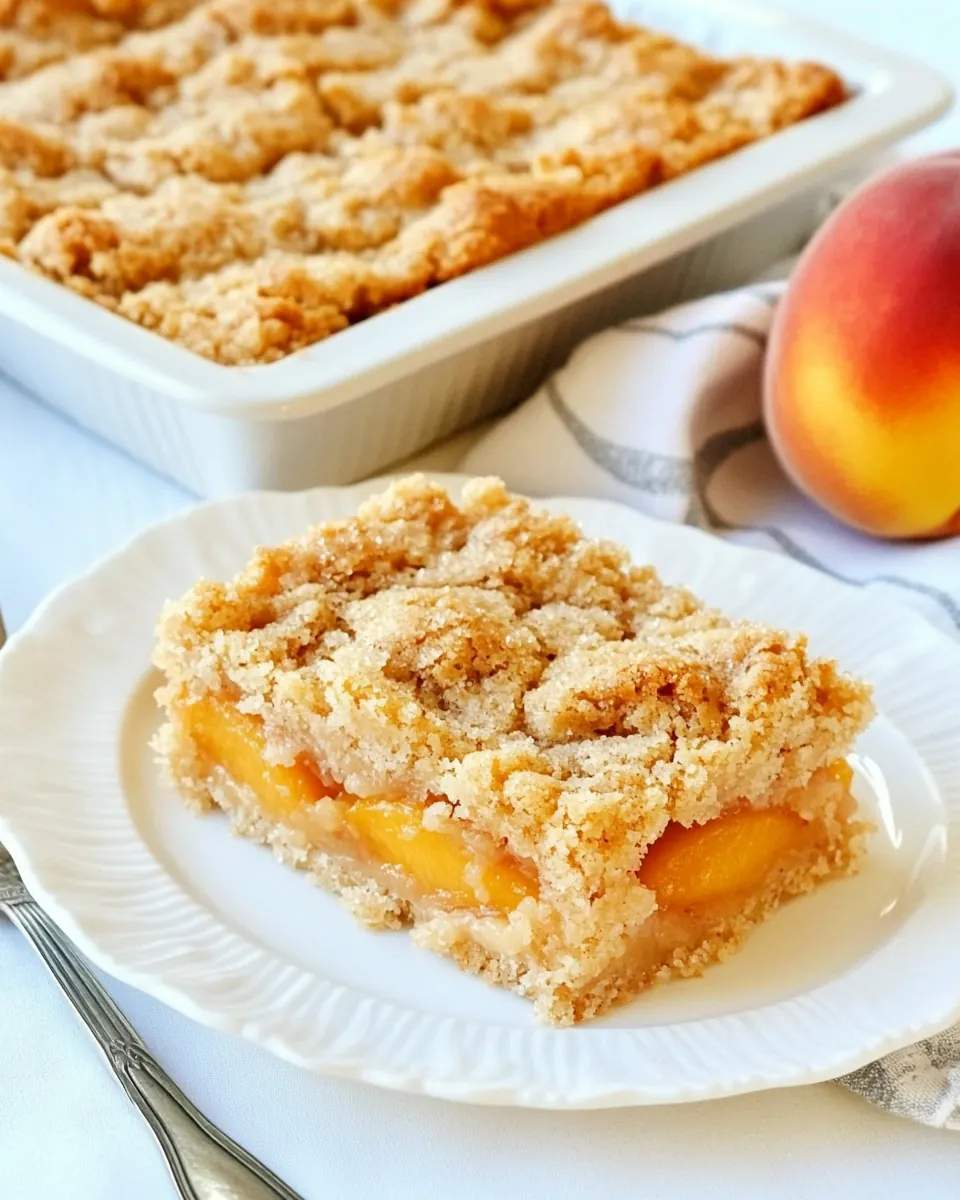
I like to jot down a few practical reminders before I bake. These notes ensure consistent results and make the baking process less stressful. Below are tips expanded into useful, actionable items you can rely on every time you make Peach Crumb Bars.
- Use sun warmed peaches when possible: They tend to be sweeter and more aromatic which reduces the amount of added sugar needed and enhances the overall peach flavor.
- Trim and dice peaches uniformly: Evenly sized pieces cook at the same rate, preventing some bits from turning to mush while others remain underdone.
- Chill the bowl if your kitchen is warm: A brief chill helps keep the butter from softening as you cut it in, maintaining the desired crumb texture.
- Line the pan for easier removal: If you prefer, use parchment to lift the whole slab out after cooling for the cleanest slices and simpler serving.
- Store leftovers properly: Room temperature for a day is fine, but for longer keep the bars covered in the fridge to preserve texture and freshness.
Serving Suggestions
These bars are wonderfully adaptable and suit many occasions. Whether you are packing them for a picnic, bringing them to a casual get together, or serving them as an easy weeknight dessert, a few small presentation choices make them feel special. Below I list serving ideas, pairings, and storage tips to help you get the most from each batch.
- Serve room temperature for easy transport: These bars travel well and hold their shape without refrigeration for a few hours, making them ideal for picnics and potlucks.
- Pair with a scoop of vanilla ice cream for a classic finish: The cold creaminess contrasts beautifully with the warm, fruity notes and adds a luxe touch for guests.
- Offer with hot beverages for a cozy treat: A cup of coffee or herbal tea complements the cinnamon and nutmeg in the bars, perfect for casual gatherings or afternoon tea.
- For festive occasions slice into smaller squares: Bite sized pieces are excellent for buffet style serving or dessert tables during summer parties and celebrations.
- Store in an airtight container: Keep the bars in a single layer or separated with parchment to maintain the crumble texture, refrigerate for up to five days for freshness.
- Freeze for longer storage: Wrap tightly and freeze up to three months, thaw overnight in the refrigerator and bring to room temperature before serving for best texture.
- Use as a breakfast treat: These bars can work as a sweet morning option alongside yogurt or fruit, especially during peach season when fruit is at its peak.
- Bring to summer gatherings: Their fresh fruit focus and easy slicing make them a crowd pleasing dessert for outdoor dinners and neighborhood potlucks.
- Serve on a dessert platter with garnishes: Add a few thin peach slices or a light dusting of powdered sugar for a pretty presentation without changing the flavor profile.
- Consider portion control for events: Cutting into smaller squares stretches the batch farther and is ideal when serving larger crowds.
FAQ
Conclusion
Peach Crumb Bars shine because they combine bright seasonal fruit with a buttery, crumbly crust that everyone loves. Give this recipe a try the next time peaches are in season, and you will likely find it becomes a go to for gatherings and warm weather desserts. Bake a pan, share with friends, and enjoy the simple pleasure of good fruit treated with care.
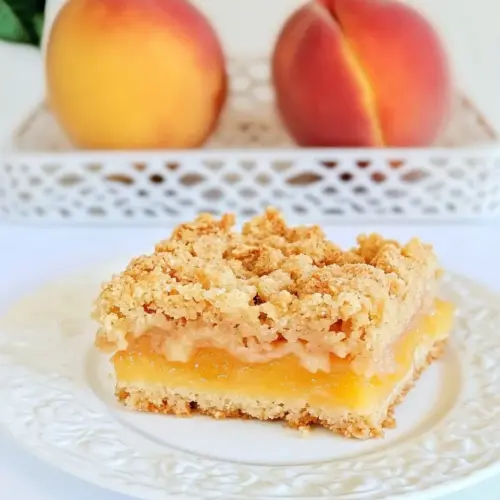
Peach Crumb Bars
Equipment
- 9x13-inch Baking Pan
- Wire Rack
- Large Bowl
- Pastry blender
Ingredients
- 5 cups diced peeled peaches Provide diced peeled peaches that supply juicy, sweet fruit and tender texture to the bars; macerate briefly with sugar to release juices and enhance natural flavor. Add fruit early in the filling assembly so it integrates with thickeners and spices for an even consistency. Ensure pieces are evenly sized to bake uniformly and avoid soggy or undercooked pockets.
- 2 tablespoons fresh lemon juice Add fresh lemon juice to brighten the peach flavor and balance sweetness with acidity; help prevent fruit oxidation and browning during preparation. Combine with the peaches before cooking or assembling to distribute acidity evenly and maintain a lively fruit profile.
- 1/2 cup all-purpose flour Supply all-purpose flour to help absorb excess peach juices and provide body to the filling; bolster the structure for a cohesive, sliceable bar. Whisk with cornstarch and sugar so it blends smoothly into the fruit without forming lumps.
- 1 teaspoon cornstarch Thicken the peach filling by using cornstarch to create a glossy, set interior that holds shape after baking and cooling. Dissolve first in a small amount of liquid from the fruit to avoid clumping and ensure even thickening when heated.
- 1 cup granulated sugar Sweeten the peach mixture with granulated sugar to enhance natural fruit sugars and create syrupy juices that meld with the crumb layers. Measure accurately so the filling achieves balanced sweetness without becoming overly runny after baking.
- 1/4 teaspoons salt Season with salt in a small amount to amplify the overall flavors and balance sweetness within the fruit filling. Disperse evenly among dry components to ensure subtle, consistent enhancement rather than noticeable saltiness.
- 1/2 teaspoon ground cinnamon Add ground cinnamon to the filling to introduce warm, aromatic spice that complements peaches and deepens flavor complexity. Blend thoroughly with the sugar and flour so the spice infuses the entire fruit layer.
- 1/4 teaspoon ground nutmeg Include ground nutmeg sparingly to lend a warm, slightly nutty undertone that enhances the fruit and cinnamon notes without overpowering them. Mix into the filling so background spice is evenly distributed throughout the bars.
- 3 cups all-purpose flour Provide additional all-purpose flour for the crumb topping and base to create structure, tenderness, and a golden crust. Combine with sugar, baking powder, and spices prior to cutting in butter for an even, crumbly texture.
- 1 cup granulated sugar Sweeten the crumb dough with granulated sugar to add sweetness and contribute to crisp, caramelized edges during baking. Incorporate evenly with the dry ingredients so sweetness is balanced throughout the crust and topping.
- 1 teaspoon baking powder Leaven the crumb mixture slightly with baking powder to give a lightness to the base and prevent an overly dense crust. Sift or whisk into the dry ingredients to ensure even distribution and consistent rise.
- 1/4 teaspoons salt Season the dough with a pinch of salt to enhance the overall flavors of the crust and balance the sweetness in the bars. Mix with other dry ingredients so the salt is distributed uniformly for subtle flavor lift.
- 1/4 teaspoon cinnamon Add ground cinnamon to the crumb mixture to mirror the filling’s warm spice and create aromatic cohesion between layers. Blend into the flour and sugar so the spice is present in both base and topping.
- 1 cup cold unsalted butter cut into small pieces Cut cold unsalted butter into small pieces to produce a flaky, tender crumb when incorporated into the dry mixture; cold butter creates distinct pockets that melt during baking. Work quickly to maintain cold pieces until baking so texture remains crumbly rather than greasy.
- 1 egg lightly beaten Brush or bind components with a lightly beaten egg to help the crumb top brown, set, and hold together when sliced. Apply evenly and avoid overmixing to preserve the desired tender crumb structure.
- 1/2 teaspoon vanilla extract Enhance flavor and aroma with vanilla extract added to the dough or egg wash to provide sweet, rounded depth that complements the peaches and spices. Stir in last with the egg to distribute the flavor evenly without evaporating volatile aromatics.
- Cinnamon and sugar for sprinkling on top of the bars Sprinkle a cinnamon and sugar blend on top of the bars to create a sweet, crunchy finish that adds visual appeal and extra spice on the crust. Apply just before baking for a caramelized, slightly crisp topping that contrasts with the tender filling.
Instructions
- Preheat the oven to 375 degrees F. Spray a 9×13-inch baking pan with cooking spray and set aside.: As the oven warms you will likely notice a faint metallic hum that indicates stable heat. Proper preheating ensures the base begins to set when it goes in, giving the bars structure. If you skip this, the dough can spread too quickly and become dense. A common mistake is putting the pan into an oven that is not fully heated, which can make the filling soggy and the top pale rather than golden. I like to wait until the oven indicator signals true readiness, and if your oven runs cool, allow an extra five minutes for accuracy.
- For the peach filling, place the diced peaches in a large bowl and sprinkle with lemon juice. Mix gently. In a separate bowl whisk together flour, cornstarch, sugar, salt, cinnamon and nutmeg. Pour over the peaches and carefully combine. Set aside.: The light sheen of spray prevents sticking and encourages even browning at the edges. When the pan is ready your dough will release cleanly, and slices will have neat edges. Avoid using too much spray, which can pool and cause greasy spots under the crust. If your pan is warped, the filling may pool mid pan, so use a sturdy pan for even baking.
- For the dough, in a large bowl whisk together the flour, sugar, baking powder, salt, and cinnamon. Cut in the butter with a pastry blender until butter is mixed in, but you still have small chunks of butter. Mix the vanilla and egg together. Add into the flour and butter mixture and combine. The dough will be crumbly. Pat half of the dough into the prepared pan.: You should hear the faint clink of fruit against the bowl as you stir, and notice how the lemon juice brightens the aroma immediately. The lemon also helps prevent browning. A common pitfall is not tossing gently enough, which can crush the fruit and create excess juice; fold carefully so pieces stay intact but evenly coated.
- Spread the peach mixture evenly over the bottom crust. Crumble the remaining dough over the peach layer. Sprinkle with cinnamon and sugar.: This dry mixture should smell warm and spicy from the cinnamon and nutmeg, and feel powdery between your fingers. Whisking distributes the thickening agent so the juices bind uniformly during baking. If you skip whisking, the cornstarch can clump and leave patches of starchy texture. Be sure to break up any lumps with a fork or sieve.
- Bake for 45 minutes, or until the top is golden brown. Cool completely on a wire rack. Cut into squares and serve.: As you fold the dry mix into the peaches you will see juices take on a glossy look and the fruit becoming shelled in a slightly thickened coat. This is the moment the filling forms its body, so combine until the mixture is evenly coated without pulverizing the fruit. Overmixing will make the filling mushy, while undermixing leaves dry pockets of flour. Use a gentle folding motion for best results.
- Note: these bars are delicious on their own, but if you want an extra special dessert, add a scoop of vanilla ice cream.: Allowing the filling to rest briefly helps the dry ingredients hydrate, producing a uniform texture when baked. You might notice a slight firming of the juices as the cornstarch begins to bind. A common misstep is letting it sit too long and become watery as sugars draw more liquid; prepare the dough while the filling rests so everything moves to the pan quickly.
- For the dough in a large bowl whisk together the flour sugar baking powder salt and cinnamon: The dry dough mixture should smell warm from the cinnamon, and look evenly combined. This even distribution ensures consistent flavor and proper lift. If you do not whisk thoroughly, some pockets may taste flat or overly salty. Make sure to break up any clumps so the texture stays homogeneous.
- Cut in the butter with a pastry blender until butter is mixed in but you still have small chunks of butter: The butter should remain cold and pebble like, creating pockets that melt in the oven to give a tender crumb. You want little lumps, not a uniform paste. If the butter warms too much, the dough will become greasy; keep your hands cool and work quickly. A food processor can overwork the mix, turning it past crumb into a paste, so use caution with mechanical tools.
- Mix the vanilla and egg together: This amalgam should look smooth and slightly glossy. The egg brings structure and moisture while vanilla adds depth. If you add a warm egg to cold dough it may soften the butter too much, so ensure the butter is still fairly cool. Whisk briefly until combined for even distribution.
- Add into the flour and butter mixture and combine: When the wet mixture meets the dry, the dough will take on a coarse, crumbly texture rather than a smooth ball. That texture is intentional because you will press half into the pan and crumble the rest on top. Resist over mixing, which can activate gluten and make the base tough. Stop mixing once the components hold together when pressed.
- The dough will be crumbly: This is the desired consistency; it should hold when pressed yet easily break apart for crumbling on top. If it seems too dry, a teaspoon of cold water can help, added sparingly. Conversely, too wet a dough will compact and lose flakiness. Troubleshoot by chilling briefly to firm the butter if it feels overly soft.
- Pat half of the dough into the prepared pan: Pressing firmly creates a cohesive base that bakes into a sturdy yet tender crust. Use even pressure so the layer is consistent in thickness, which ensures even baking. If you press too hard the crust can be dense, while too light a press may cause it to fall apart when sliced. Aim for a smooth surface that is evenly packed.
- Spread the peach mixture evenly over the bottom crust: Distribute the filling so each bite will have fruit and crust. You should see glossy swathes of peach and a slightly thickened syrup. Avoid piling too high, which can lead to leaking during baking. A level filling keeps slices tidy and ensures even cooking.
- Crumble the remaining dough over the peach layer: The crumbled topping should be uneven and rustic, creating pockets of buttery goodness. This variety in size fosters a pleasing contrast between crunchy bits and softer crumbs. If crumbles are too large they may remain doughy; too fine and they will behave more like a streusel. Aim for mixed sizes for the best mouthfeel.
- Sprinkle with cinnamon and sugar: The final dusting caramelizes on top and gives the bars an inviting sheen. As the sugars melt they create tiny crisp crystals, adding a delightful crunch. Be light handed so the topping does not dominate the fruit. Uneven sprinkling can lead to overly sweet pockets, so try for an even layer.
- Bake for 45 minutes or until the top is golden brown: In the oven the kitchen will fill with a warm fruity aroma that signals the filling is setting and the crust is browning. Watch for a deep golden color on the crumble and bubbling at the edges which indicates the filling is hot and thickened. Undercooked bars will be too soft and messy when cut; overbaked bars can be dry. Rotate the pan halfway through if your oven has hot spots.
- Cool completely on a wire rack: Cooling lets the filling set so bars slice cleanly, and the residual steam escapes to preserve the crumb texture. You will notice the aroma mellow as the bars cool, and firmness will increase. Cutting while warm often yields gooey slices; patience here results in neat, presentable squares.
- Cut into squares and serve: When fully cooled, slices will show defined layers and hold together. Use a sharp knife and wipe between cuts for tidy edges. A common slip is cutting too soon which causes the filling to smear; let the bars reach room temperature or chill briefly for the cleanest results.
- Note these bars are delicious on their own but if you want an extra special dessert add a scoop of vanilla ice cream: The contrast of warm fruit and cold ice cream creates a pleasing temperature interplay that elevates the bars. If you choose to add this finishing touch, serve immediately to enjoy the melting interplay. Remember the rules about added ingredients if you are serving to guests with restrictions.
Notes
- Use sun warmed peaches when possible: They tend to be sweeter and more aromatic which reduces the amount of added sugar needed and enhances the overall peach flavor.
- Trim and dice peaches uniformly: Evenly sized pieces cook at the same rate, preventing some bits from turning to mush while others remain underdone.
- Chill the bowl if your kitchen is warm: A brief chill helps keep the butter from softening as you cut it in, maintaining the desired crumb texture.
- Line the pan for easier removal: If you prefer, use parchment to lift the whole slab out after cooling for the cleanest slices and simpler serving.
- Store leftovers properly: Room temperature for a day is fine, but for longer keep the bars covered in the fridge to preserve texture and freshness.