Easy White Chocolate Easter Bark
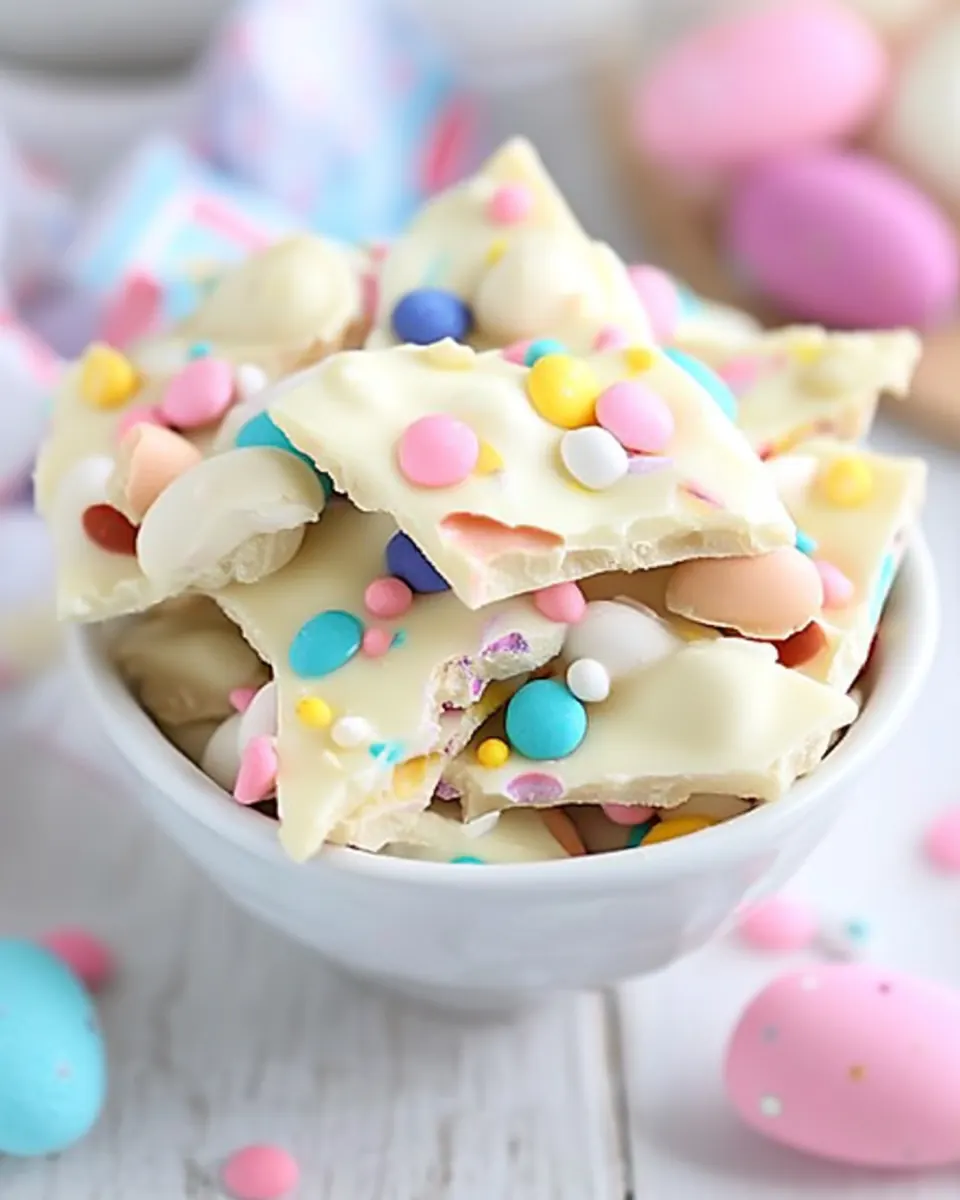
Easy White Chocolate Easter Bark is the sort of recipe I pull out when I want something festive, quick, and absolutely kid approved. The first time I made it, my kitchen looked like a confetti storm after a craft project, with pastel sprinkles underfoot and a handful of candy casualties on the counter. I remember grinning as guests dipped their fingers into the cooling sheet, each bite a little celebration of spring flavors and textures.
Years later I still return to this simple treat whenever I need a no fuss dessert that reads like a party. There is comfort in the ritual of melting chocolate, the hypnotic stir as the glossy white mass comes together, and the joyful chaos of scattering Sprinkles and small Easter candies across the surface. It is easy to personalize, and I love how a single sheet can transform into bite sized gifts for neighbors, classroom parties, or a last minute centerpiece for a brunch table.
Recipe Snapshot
20 mins
15 mins
5 mins
Easy
250 kcal
American
Keto, Gluten-Free
Desserts
Microwave safe bowl, Parchment lined baking sheet, Offset spatula or spoon
What Makes This Easy White Chocolate Easter Bark Special
One ingredient, maximum payoff
I adore how Easy White Chocolate Easter Bark relies on a tiny list yet delivers a big impression. Using high quality white chocolate means the flavor is creamy and sweet without needing complicated steps, so the star ingredient truly shines.
Fast and forgiving
We can get this on the table in under an hour if we hurry, and even at a leisurely pace it is almost impossible to mess up. The technique is forgiving, which is perfect for busy mornings when I want something festive but low stress.
Customizable for every celebration
I switch up the small Easter candies and Sprinkles depending on the season or who I am serving. This recipe adapts for color themes, dietary needs, and whatever candy stash I have on hand, making it a reliable crowd pleaser.
Great for gifting and parties
Because it slices into shards, Easy White Chocolate Easter Bark is inherently shareable. I love packaging pieces in clear bags tied with ribbon, they are instant homemade gifts that look like I spent far more time than I did.
Textural joy in every bite
The contrast between smooth melted white chocolate and crunchy small Easter candies is delightful. The sprinkles add little pops of color and an extra layer of crunch, so every bite feels playful and celebratory.
Ingredients Overview for Easy White Chocolate Easter Bark
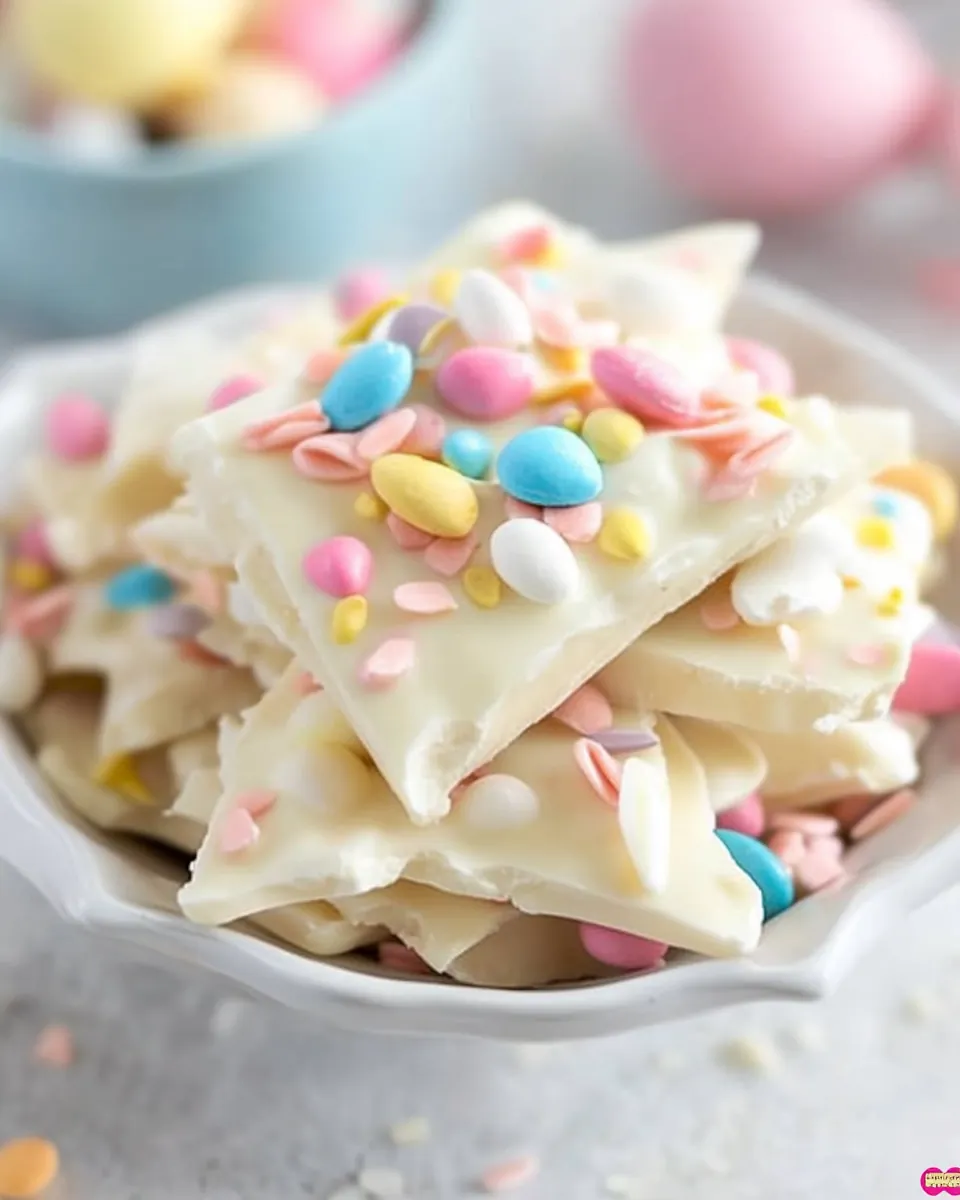
This recipe celebrates simplicity. The philosophy is to let a few excellent ingredients do heavy lifting: creamy white chocolate forms a luscious base, while colorful small Easter candies and Sprinkles provide contrast in texture and visual fun. Together they create a candy bark that is elegant in its ease, and intentionally flexible so you can personalize color and crunch.
- 2 pounds white chocolate, chopped (8 4-ounce Ghirardelli white chocolate bars): Melted and creamy, provides the sweet, smooth base that binds the bark and delivers rich white chocolate flavor when melted and tempered into sheets.
- 1 + cup small Easter candies of your choice, I used M & M's and mini Robin Eggs: Colorful and crunchy, adds bursts of candy-coated texture and vibrant Easter-themed flavor spots when sprinkled over the melted chocolate before it sets.
- Sprinkles, colors that will coordinate with your candies: Decorative and festive, contributes bright visual contrast and a playful finish that enhances the bark’s appearance and adds a slight sugary crunch.
Step by Step Instructions for Easy White Chocolate Easter Bark
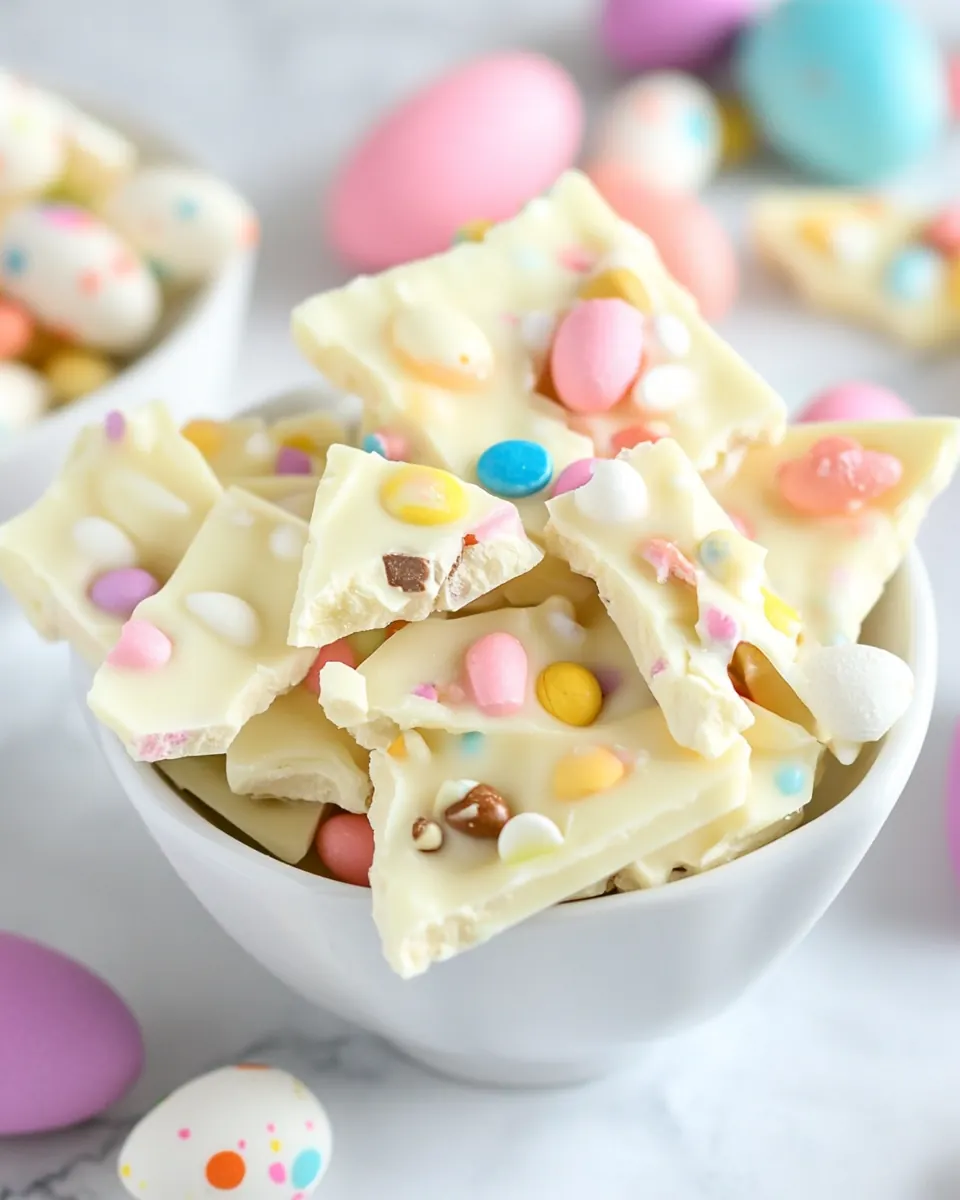
These steps walk you through melting, spreading, and decorating patiently, with sensory cues so you know when each stage is complete. I like to move deliberately so the chocolate stays glossy and the final shards are clean and crisp. Keep tools and toppings ready, because timing matters once the chocolate is melted.
- Place chopped chocolate in a microwave-safe bowl. Microwave for 30-second intervals, stopping and stirring as needed until the mixture is smooth.: Start by placing the chopped white chocolate into a microwave safe bowl . The visual cue here is a pile of pearly white pieces, and the aroma is faintly sweet and milky. Using a microwave safe bowl helps distribute heat evenly, reducing the chance of scorching. A common mistake is using a very deep bowl which makes stirring awkward, so choose a wide bowl to reach every piece. Stirring surfaces matters because trapped lumps can overheat while the rest remains unmelted.
- Spread white chocolate onto a parchment-lined baking sheet to a thickness of about 1/4 inch.: As the white chocolate warms, you will notice it soften around the edges then collapse into glossy ribbons when stirred. The sound is silent, but you will see a silky sheen form, signaling readiness. This interval method prevents overheating, which can make the chocolate grainy. If you rush it, you risk burning or seizing the chocolate, leading to a dull finish. If some pieces remain, keep stirring gently to use residual heat to finish melting the chocolate evenly.
- Sprinkle with candies, then sprinkles. Gently press the candy so they will adhere to the chocolate as it cools.: Scoop the molten white chocolate onto a parchment lined baking sheet and spread it with the back of a spoon or an offset spatula so it is even. Aim for about 1/4 inch thickness so each shard has a satisfying bite without being too thick. Visually, look for a uniform, glossy surface with no streaks. If you press too hard when spreading you can create thin spots that will break or hold toppings differently, so keep strokes light and confident.
- Let rest at room temperature until solid, about 2 hours. May place it in the refrigerator to hurry the cooling process.: Scatter the small Easter candies and then the Sprinkles evenly over the surface while the chocolate is still warm and tacky. You will feel a gentle stick as pieces attach, and the color contrast becomes instantly festive. Press each candy lightly to secure it, but do not push so far that it sinks into the chocolate. A typical mistake is waiting too long to add toppings, which results in them not adhering well, or pressing too hard which buries them. Aim for balance: secure, but visible and textured on top.
- Gently press the candy so they will adhere to the chocolate as it cools.: After arranging, give each piece a careful press with your fingers or the back of a spoon. The goal is light contact to prevent toppings from falling off when the bark sets, and you will notice the chocolate slightly spread around the candy edges. This step improves presentation and shelf life of the pieces. Avoid over handling which warms the chocolate too much, causing melting or dull spots. If candies shift, lift and replace them quickly to maintain an attractive pattern.
- Let rest at room temperature until solid, about 2 hours.: Allow the sheet to set undisturbed on the counter, where the ambient air will gradually cool the chocolate, turning it from glossy and soft to dull and firm. You will see the sheen fade and the surface becoming rigid under gentle pressure. Patience here yields crisp shards that snap cleanly. A common misstep is trying to cut or break it too soon, creating ragged edges and sticky hands. If you are in a hurry, place the sheet in the refrigerator briefly to speed up setting, but avoid condensation by giving it time to come back to room temperature before storing.
- May place it in the refrigerator to hurry the cooling process.: If you choose the refrigeration option, place the baking sheet on a flat surface in the refrigerator to accelerate solidification; expect the chocolate to firm within 20 to 30 minutes depending on thickness. You will notice the surface lose its sheen quickly and feel cold to the touch. Rapid cooling is handy for last minute plans, but beware condensation when returning to warmer air, which can dull the surface. Avoid leaving the bark in the fridge too long in a humid environment, as moisture can create a whitish bloom on the chocolate.
Tips for Success
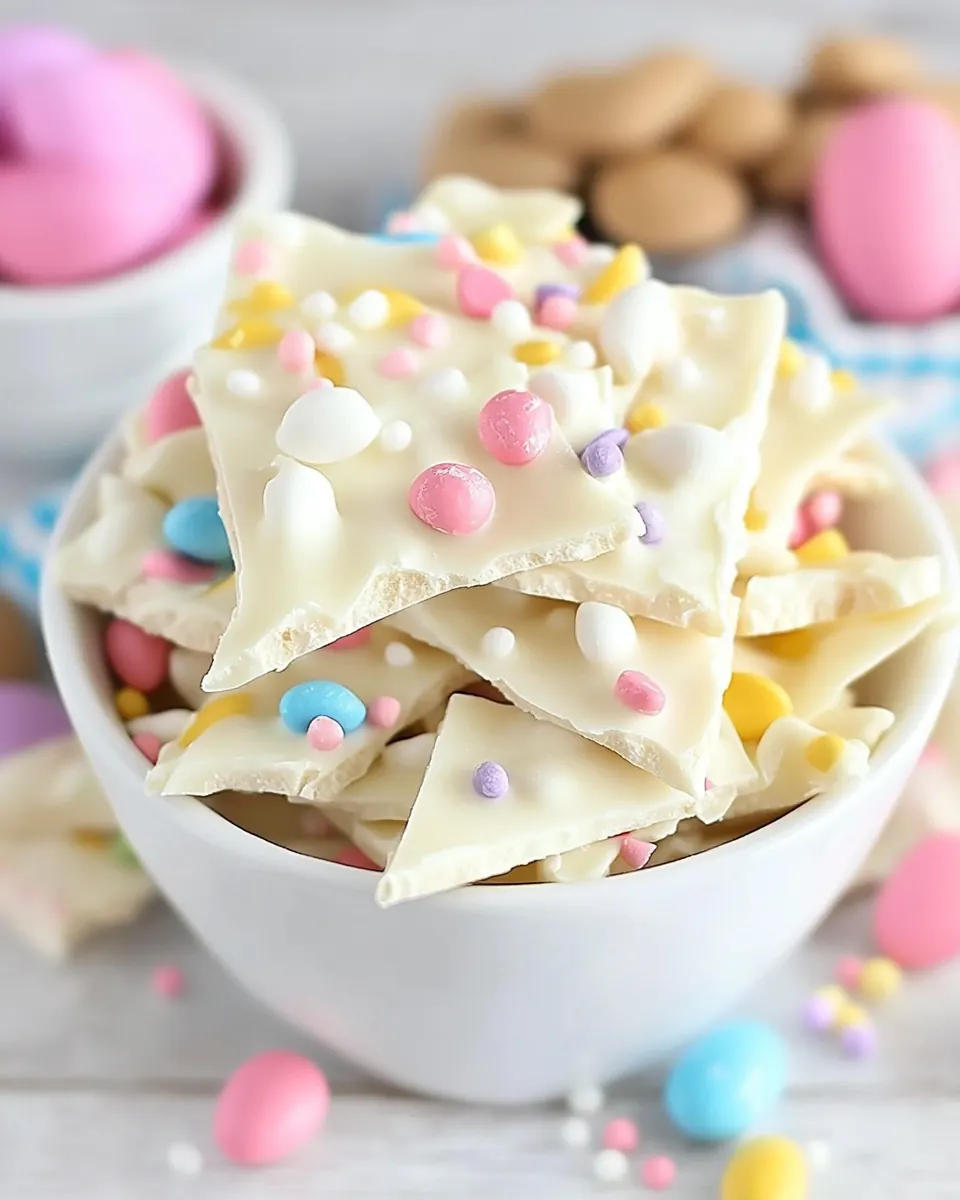
This section highlights practical tricks I use every time I make Easy White Chocolate Easter Bark. They help with melting, setting, and presentation so your bark looks and tastes its best. I like to organize toppings before I melt chocolate so the process is smooth from start to finish.
- Choose high quality chocolate: Better white chocolate melts to a silkier finish and tastes less waxy. Look for bars with cocoa butter to keep texture smooth.
- Chop evenly: Uniform pieces of white chocolate ensure even melting and prevent hot spots which can burn the chocolate.
- Use gentle heat: Microwave in short bursts and stir frequently to avoid seizing, which creates a grainy texture that is hard to recover from.
- Prepare toppings ahead: Arrange your small Easter candies and Sprinkles in bowls so you can decorate quickly while the chocolate is still tacky.
- Press lightly: Gently press candies into the surface to secure them without sinking, preserving a pretty top layer.
- Store properly: Keep the bark in an airtight container at cool room temperature, layered with parchment to prevent sticking and preserve crunch.
Serving Options for Easy White Chocolate Easter Bark
I love serving Easy White Chocolate Easter Bark in ways that feel thoughtful and festive. It works as a casual party snack, a thoughtful homemade gift, or a colorful dessert at a spring brunch. Here are detailed ideas and practical storage notes to make the most of every batch.
- Party Platter: Break the bark into varied shard sizes and arrange on a decorative platter. Mix shapes and colors to create visual appeal, and place small bowls of extra small Easter candies for guests to customize pieces.
- Gift Bags: Package 3 to 5 shards in clear cellophane bags and tie with ribbon. This is a simple, charming favor for classroom parties or neighbors, and it keeps well for several days if sealed.
- Brunch Dessert: Serve small squares as a sweet note after a spring brunch. The light, creamy white chocolate pairs well with coffee and tea, and the colorful toppings make it feel seasonal.
- Picnic Addition: Pack shards in a rigid container with parchment layers to prevent breakage. Keep out of direct sun and serve at cool room temperature to avoid melting.
- Storage Tips: Store in an airtight container at a cool room temperature for up to one week. If you must refrigerate, allow the bark to return to room temperature before serving to avoid condensation and loss of sheen.
- Occasions: This bark is ideal for Easter, spring gatherings, kids parties, and anytime you want a quick, festive treat that looks special with minimal fuss.
FAQ
Conclusion
Easy White Chocolate Easter Bark stands out because it transforms minimal ingredients into a festive, shareable treat with minimal effort. The combination of creamy melted white chocolate and crunchy, colorful toppings creates a satisfying contrast in every bite. I encourage you to give it a try for your next spring gathering or to package as simple homemade gifts. It is forgiving, customizable, and reliably cheerful, so you can focus on the fun of decorating rather than stressing in the kitchen.
Easy White Chocolate Easter Bark
Equipment
- Microwave-safe Bowl
- Parchment lined baking sheet
- Offset spatula or spoon
Ingredients
- 2 pounds white chocolate, chopped (8 4-ounce Ghirardelli white chocolate bars) Melted and creamy, provides the sweet, smooth base that binds the bark and delivers rich white chocolate flavor when melted and tempered into sheets.
- 1 + cup small Easter candies of your choice, I used M & M's and mini Robin Eggs Colorful and crunchy, adds bursts of candy-coated texture and vibrant Easter-themed flavor spots when sprinkled over the melted chocolate before it sets.
- Sprinkles, colors that will coordinate with your candies Decorative and festive, contributes bright visual contrast and a playful finish that enhances the bark’s appearance and adds a slight sugary crunch.
Instructions
- Place chopped chocolate in a microwave-safe bowl. Microwave for 30-second intervals, stopping and stirring as needed until the mixture is smooth.: Start by placing the chopped white chocolate into a microwave safe bowl . The visual cue here is a pile of pearly white pieces, and the aroma is faintly sweet and milky. Using a microwave safe bowl helps distribute heat evenly, reducing the chance of scorching. A common mistake is using a very deep bowl which makes stirring awkward, so choose a wide bowl to reach every piece. Stirring surfaces matters because trapped lumps can overheat while the rest remains unmelted.
- Spread white chocolate onto a parchment-lined baking sheet to a thickness of about 1/4 inch.: As the white chocolate warms, you will notice it soften around the edges then collapse into glossy ribbons when stirred. The sound is silent, but you will see a silky sheen form, signaling readiness. This interval method prevents overheating, which can make the chocolate grainy. If you rush it, you risk burning or seizing the chocolate, leading to a dull finish. If some pieces remain, keep stirring gently to use residual heat to finish melting the chocolate evenly.
- Sprinkle with candies, then sprinkles. Gently press the candy so they will adhere to the chocolate as it cools.: Scoop the molten white chocolate onto a parchment lined baking sheet and spread it with the back of a spoon or an offset spatula so it is even. Aim for about 1/4 inch thickness so each shard has a satisfying bite without being too thick. Visually, look for a uniform, glossy surface with no streaks. If you press too hard when spreading you can create thin spots that will break or hold toppings differently, so keep strokes light and confident.
- Let rest at room temperature until solid, about 2 hours. May place it in the refrigerator to hurry the cooling process.: Scatter the small Easter candies and then the Sprinkles evenly over the surface while the chocolate is still warm and tacky. You will feel a gentle stick as pieces attach, and the color contrast becomes instantly festive. Press each candy lightly to secure it, but do not push so far that it sinks into the chocolate. A typical mistake is waiting too long to add toppings, which results in them not adhering well, or pressing too hard which buries them. Aim for balance: secure, but visible and textured on top.
- Gently press the candy so they will adhere to the chocolate as it cools.: After arranging, give each piece a careful press with your fingers or the back of a spoon. The goal is light contact to prevent toppings from falling off when the bark sets, and you will notice the chocolate slightly spread around the candy edges. This step improves presentation and shelf life of the pieces. Avoid over handling which warms the chocolate too much, causing melting or dull spots. If candies shift, lift and replace them quickly to maintain an attractive pattern.
- Let rest at room temperature until solid, about 2 hours.: Allow the sheet to set undisturbed on the counter, where the ambient air will gradually cool the chocolate, turning it from glossy and soft to dull and firm. You will see the sheen fade and the surface becoming rigid under gentle pressure. Patience here yields crisp shards that snap cleanly. A common misstep is trying to cut or break it too soon, creating ragged edges and sticky hands. If you are in a hurry, place the sheet in the refrigerator briefly to speed up setting, but avoid condensation by giving it time to come back to room temperature before storing.
- May place it in the refrigerator to hurry the cooling process.: If you choose the refrigeration option, place the baking sheet on a flat surface in the refrigerator to accelerate solidification; expect the chocolate to firm within 20 to 30 minutes depending on thickness. You will notice the surface lose its sheen quickly and feel cold to the touch. Rapid cooling is handy for last minute plans, but beware condensation when returning to warmer air, which can dull the surface. Avoid leaving the bark in the fridge too long in a humid environment, as moisture can create a whitish bloom on the chocolate.
Notes
- Choose high quality chocolate: Better white chocolate melts to a silkier finish and tastes less waxy. Look for bars with cocoa butter to keep texture smooth.
- Chop evenly: Uniform pieces of white chocolate ensure even melting and prevent hot spots which can burn the chocolate.
- Use gentle heat: Microwave in short bursts and stir frequently to avoid seizing, which creates a grainy texture that is hard to recover from.
- Prepare toppings ahead: Arrange your small Easter candies and Sprinkles in bowls so you can decorate quickly while the chocolate is still tacky.
- Press lightly: Gently press candies into the surface to secure them without sinking, preserving a pretty top layer.
- Store properly: Keep the bark in an airtight container at cool room temperature, layered with parchment to prevent sticking and preserve crunch.