
Blueberry Muffins with Lemon Glaze
Blueberry Muffins with Lemon Glaze were the first muffins I learned to bake for weekend brunches with friends, and they still bring back the exact same warmth and chatter every time I pull a tray from the oven.
I remember the way the kitchen smelled the morning I perfected this recipe, sunlight pooling on the counter while I measured out all purpose flour and zested a lemon until my fingers tingled. One friend declared them better than any bakery, and another asked for the recipe that afternoon. Over the years I adjusted the oil and added a touch more lemon juice to sharpen the glaze, and those small edits made these muffins reliably tender and bright. Baking them now feels like visiting an old friend, and I hope the same comfort fills your home when you make them.
When you bite into a warm muffin, the soft crumb gives way to bursts of juicy blueberries followed by a lift of citrus from the glaze. I like to serve them slightly warm so the glaze glimmers and the aroma of lemon zest is strongest. If you are hosting a casual coffee morning or need a sweet treat that travels well, these muffins are my go to. They are approachable enough for a beginner yet rewarding for seasoned bakers who enjoy tweaking textures and balance.
Recipe Snapshot
30 mins
8 mins
22 mins
Easy
220 kcal
American
Gluten-Free, Low FODMAP
Breakfast
Muffin tin, Electric mixer, Mixing bowls, Spatula, Wire rack
The Magic of This Blueberry Muffins with Lemon Glaze
Bright, balanced flavor
I love how Blueberry Muffins with Lemon Glaze combine juicy blueberries with a clean citrus note from the lemon juice and lemon zest. The glaze cuts through the sweetness, and I find that balance keeps each bite interesting, not cloying.
Simple pantry ingredients
Most of the recipe relies on everyday items like all purpose flour, granulated sugar, and eggs. Because the ingredient list is straightforward, I can usually hop in and bake these the same day a craving hits, which is one reason I keep this recipe in heavy rotation.
Quick and forgiving method
The mixing steps are fast, and the batter tolerates a gentle hand. I often tell friends that the technique matters, but there is wiggle room for small mistakes. That forgiving nature makes these muffins a consistent win for casual bakers like me.
Flexible for gatherings
I appreciate that this recipe scales easily and holds up during transport. The muffins travel well to potlucks, and the glaze can be applied right before serving if you want a glossy finish. I often double the batch for neighborhood brunches.
Textural contrast
The tender crumb from the sour cream and oil, paired with the slight pop of warm blueberries and the silky lemon glaze, creates a lovely mouthfeel that keeps people reaching for more. I always notice how the textures make the experience feel special.
What You’ll Need for Blueberry Muffins with Lemon Glaze
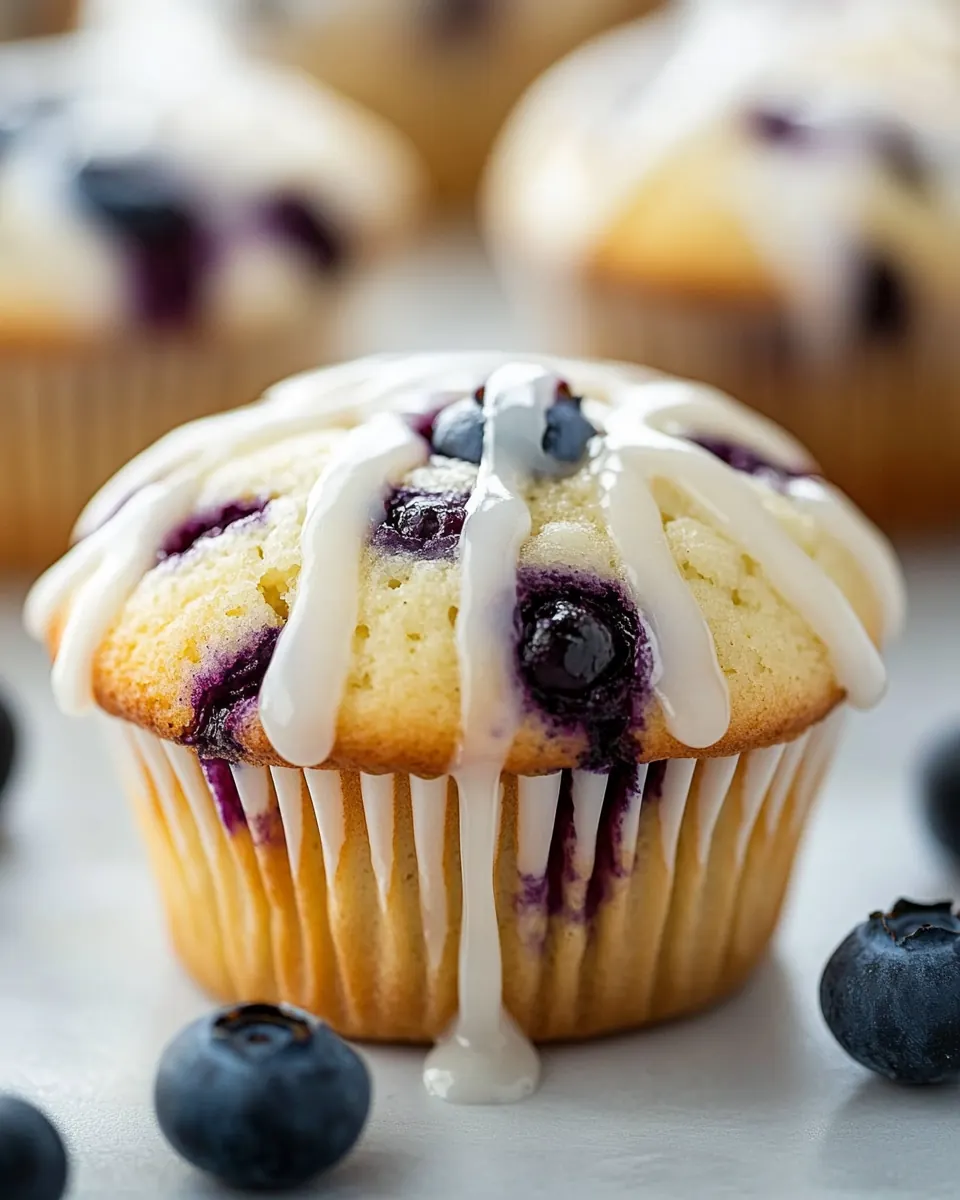
These ingredients are chosen to create a moist, tender muffin with bright citrus notes. The key players are the all purpose flour for structure, sour cream for moisture and tang, and blueberries for bursts of juice. The oil keeps crumbs tender, while the baking powder gives lift. The glaze, made from confectioners sugar and lemon juice, ties it all together with a glossy finish.
- 2 large eggs, room temperature: Whisked warmly to incorporate air and bind the batter; eggs provide structure, moisture, and lift when combined with leaveners and heat. Use room temperature eggs to ensure even mixing and a tender crumb in the muffins.
- 1 cup granulated sugar: Sweetened granules adding bulk, sweetness, and tenderness while helping with browning; sugar promotes caramelization and balances the tartness of lemon and sour cream. Measure accurately to maintain proper texture and prevent overly dense muffins.
- 1 cup sour cream: Thick and tangy dairy that adds moisture, acidity, and richness while tenderizing the crumb; sour cream reacts with baking powder to enhance lift. Spoon or lightly pack when measuring to avoid adding extra liquid to the batter.
- 1/2 cup extra LIGHT olive oil, (not extra virgin), or vegetable oil: Poured lightly to contribute fat for moistness and a softer crumb; extra LIGHT olive oil offers a mild flavor while keeping texture tender. Choose a neutral oil (not extra virgin) or vegetable oil to prevent overpowering the muffins' delicate flavors.
- 1 tsp vanilla extract: Added aromatically to enhance overall flavor with warm vanilla notes; vanilla extract balances the tart lemon and complements the sweetness. Stir into the wet ingredients to evenly distribute its flavor throughout the batter.
- 1/4 tsp sea salt: Sprinkled sparingly to heighten flavors and balance sweetness; sea salt sharpens the overall taste profile and strengthens the dough’s structure. Dissolve into the wet ingredients for even seasoning across the batter.
- 2 cups all-purpose flour, *measured correctly: Sifted and measured carefully to form the dry structure of the muffins; all-purpose flour provides the necessary proteins for gluten formation and support. Measure correctly using spoon-and-level or a scale to ensure proper texture and avoid toughness.
- 2 tsp baking powder: Leavened chemically to produce lift and a light crumb by releasing gas when heated; baking powder ensures the muffins rise evenly. Combine with dry ingredients and avoid overmixing after adding liquids to retain the leavening effect.
- 2 tsp lemon zest, from 1 large lemon: Zested finely to impart bright, concentrated citrus oils and aroma; lemon zest adds fresh lemon character without extra acidity. Grate only the yellow part to avoid bitterness from the pith and distribute into the batter for even flavor.
- 2 tbsp lemon juice, from 1 large lemon: Squeezed freshly to provide bright vinegar-like acidity and citrus flavor that complements the zest; lemon juice adds a tangy note and helps balance sweetness. Use fresh juice for best flavor and measure precisely to maintain batter consistency.
- 1 1/2 cups fresh blueberries, rinsed and dried: Folded gently to add bursts of fruity flavor and moist pockets within the muffins; fresh blueberries contribute juiciness and visual appeal. Rinse and dry thoroughly, then fold in carefully to prevent color bleeding and overmixing the batter.
- 1 cup confectioners sugar: Sifted finely to form a smooth, sweet coating for the glaze; confectioners sugar dissolves easily to create a silky lemon glaze. Combine with lemon juice gradually to achieve the desired drizzle consistency.
- 1 1/2 tbsp fresh lemon juice, (use 1 1/2 to 2 Tbsp): Measured tangily to adjust glaze acidity and brightness; fresh lemon juice thins the confectioners sugar and provides a fresh citrus punch. Use between 1 1/2 and 2 tablespoons to control sweetness-acidity balance in the glaze.
- 1/2 tsp lemon zest: Grated lightly to finish the glaze with a subtle citrus aroma and tiny flecks of zest; a half teaspoon amplifies lemon intensity without overpowering sweetness. Sprinkle or whisk into the glaze for an attractive, flavorful finish.
How to Make Blueberry Muffins with Lemon Glaze
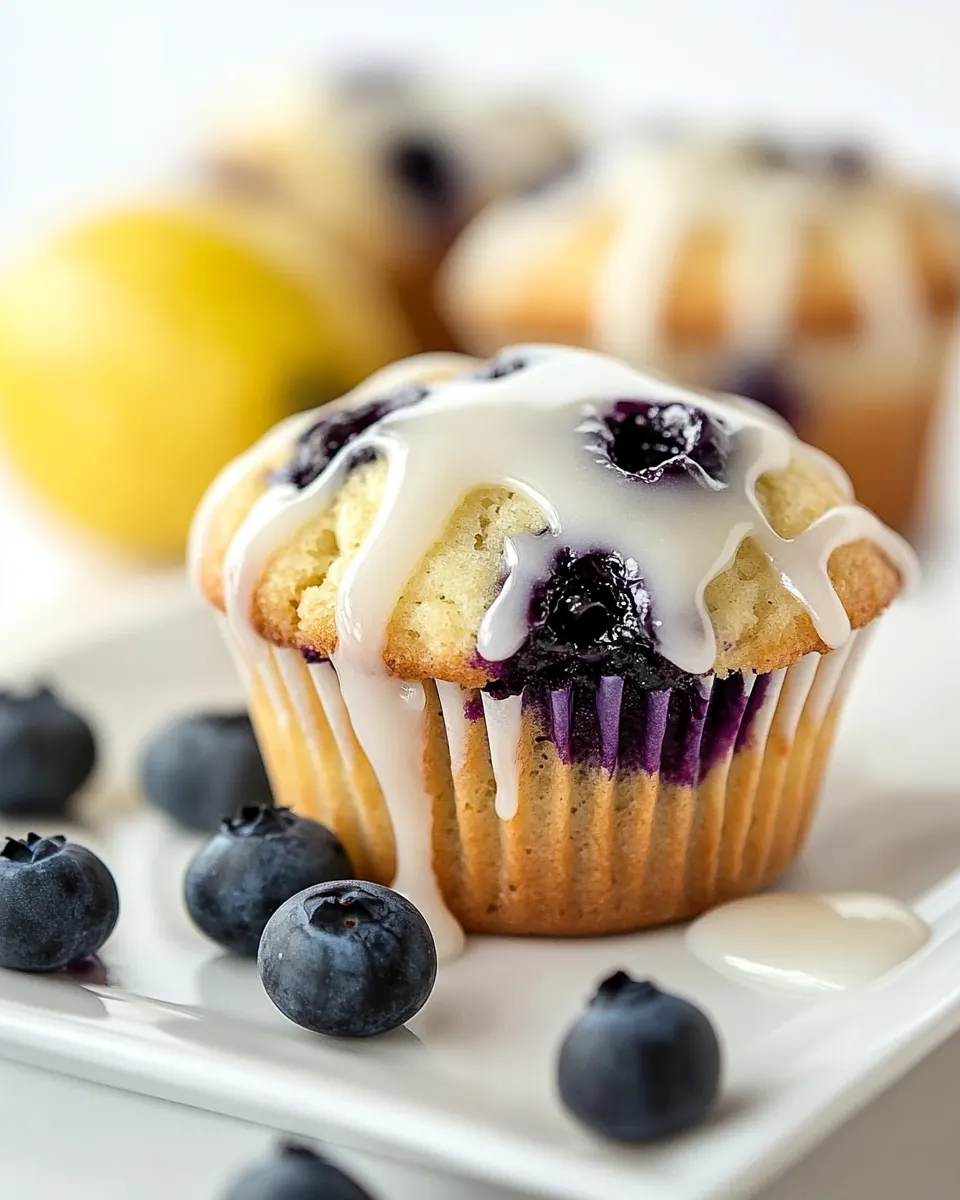
These steps are straightforward but rewarding. I like to keep my mise en place ready so the process flows, and I pay attention to visual and tactile cues as I go. Read each step, then move at a steady pace to preserve the batter’s lightness and the integrity of the blueberries.
- Line a 12-count muffin/cupcake tin with cupcake liners. Preheat oven to 400˚F. In a large mixing bowl, beat together 2 eggs and 1 cup granulated sugar with electric mixer on high speed 5 minutes. It should be thick and light in color.: As you preheat, notice the oven warming and the faint mechanical hum changing as it reaches temperature. A properly preheated oven ensures even rise and golden tops. If the oven is not hot enough, the muffins will spread instead of doming, so use an oven thermometer if yours runs cool or hot.
- Add 1 cup sour cream, 1/2 cup oil, 1 tsp vanilla and 1/4 tsp salt. Set the mixer to low speed and mix just until combined.: You'll sense the batter transform as it whips, becoming pale and voluminous, with a ribbon-like fall when the beaters lift. This aeration gives the muffins lift and a tender crumb. Underbeating leaves dense texture, while overbeating after adding dry ingredients can develop gluten, so hit the right time and stop when the mixture looks fluffy and satin.
- In a small bowl, add 2 cups flour and 2 tsp baking powder and whisk to combine. Using a hand held whisk, add flour mixture into the batter 1/3 at a time, stirring with each addition just until incorporated. DO NOT OVERMIX or muffins can become dense.: At low speed the batter will relax and become glossy, the sour cream folding in to add moisture. You should hear a softer motor sound and see a smooth batter with no streaks. Overmixing here can thin the structure; mix until homogenous and stop.
- Add 2 tsp lemon zest, 2 tbsp lemon juice and whisk in just until combined. Use a spatula to fold in 1 1/2 cups blueberries, folding just until combined.: Whisking incorporates the baking powder evenly so each scoop of flour has leavening. The dry mixture should look uniform and free of clumps. A common issue is uneven rise from unblended leavening, so take the extra moment to whisk thoroughly.
- Divide batter into muffin tin filling liners to the top or until all of the batter is used up. Bake at 400˚F for 20-25 minutes or until tops are golden and a toothpick inserted into the center come out clean without wet dough. Remove muffins from tin and cool on a wire rack until room temperature then drizzle with lemon glaze.: Adding the dry ingredients in thirds lets you fold gently and maintain air. After each addition, the batter will go from glossy to slightly thicker, and you should stop mixing when streaks disappear. Overworking encourages gluten, producing a tight crumb, so fold with gentle strokes until combined.
- In a small bowl, combine 1 cup powdered sugar, 1/2 tsp lemon zest and 1 1/2 to 2 tbsp lemon juice, adding lemon juice until desired consistency is reached. Stir until smooth. To thin the glaze more, add a little lemon juice or water. To thicken, add a little more powdered sugar.: The batter will smell bright from the fresh lemon zest and will loosen slightly with the juice, creating pockets of citrus. When folding in blueberries , watch for tiny purple streaks, stop once evenly distributed to avoid color bleeding and smashed berries. A common mistake is vigorous stirring that bursts the fruit, so be gentle to keep whole berries intact.
- Divide batter into muffin tin filling liners to the top or until all of the batter is used up.: As you scoop, aim for even portions so each muffin bakes uniformly. The batter should be spoonable and hold some height; if it seems too thin something may be off with measurements. Uneven filling leads to mixed baking times, so use an ice cream scoop for consistency.
- Bake at 400˚F for 20 to 25 minutes or until tops are golden and a toothpick inserted into the center come out clean without wet dough.: During baking, listen for a gentle crackle as the tops set and watch the tops turn golden, a cue they're nearly done. The smell will shift from raw batter to baked sweet bread and lemon. Pull them when a toothpick shows a few moist crumbs but not raw batter; overbaking dries the crumb, so check at the lower end of the time range.
- Remove muffins from tin and cool on a wire rack until room temperature then drizzle with lemon glaze.: Cooling on a rack prevents steam buildup and soggy bottoms. You'll feel warm steam rise and see the muffin surface firm slightly. Apply glaze once cooled to room temperature to avoid it melting away. Glazing too soon will yield a runny finish, while waiting too long might make the glaze not adhere as well.
- In a small bowl, combine 1 cup powdered sugar, 1/2 tsp lemon zest and 1 1/2 to 2 tbsp lemon juice, adding lemon juice until desired consistency is reached.: As you stir, watch the glaze change from a thick powder to a glossy, pourable sauce that catches the light. Start with the smaller amount of lemon juice and add more to thin if needed. If the glaze is lumpy, whisk vigorously or sift the sugar first. Too watery a glaze will run off, so aim for a ribbon that settles on the muffin top.
- Stir until smooth. To thin the glaze more, add a little lemon juice or water. To thicken, add a little more powdered sugar.: The final texture should coat the back of a spoon and finish shiny on the muffins. Taste carefully; the glaze should be bright but not overwhelmingly tart. If you over dilute the glaze, it will not set, so correct by adding small amounts of sugar to reach the proper viscosity.
Helpful Notes about Blueberry Muffins with Lemon Glaze
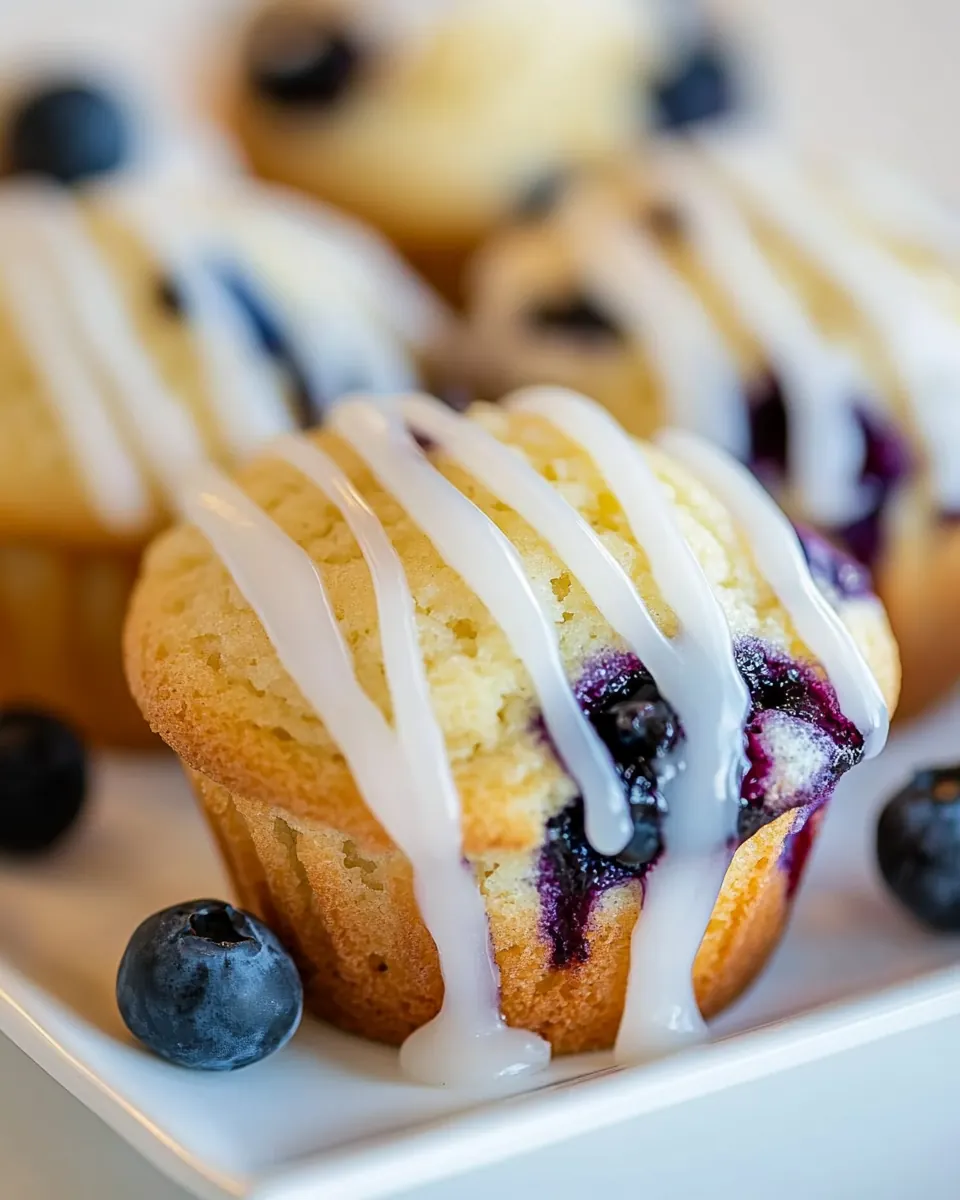
These notes will help you refine technique and get consistent results. I expand on common pitfalls and small adjustments that make a big difference, so read them before you mix and again before you bake.
- Room temperature eggs improve texture Take eggs out of the fridge about 30 minutes before baking so they incorporate better with granulated sugar, yielding a lighter batter. Cold eggs reduce volume and can make the muffins dense.
- Handle blueberries gently Fold blueberries in with a spatula using just a few strokes to avoid crushing them. Overmixing will stain the batter and create uneven texture.
- Check oven accuracy Use an oven thermometer to ensure the oven reads true to 400˚F. An oven that runs cool will produce flat muffins, while one that runs hot will brown them too quickly.
- Sift confectioners sugar for silky glaze If your glaze seems gritty, sift the confectioners sugar before mixing to remove lumps and get a glossy finish that sets beautifully.
- Adjust glaze thickness slowly Add lemon juice a little at a time to the powdered sugar to reach the desired pourable consistency, and stop when the glaze coats the back of a spoon without running off too quickly.
- Store properly Keep muffins in an airtight container at room temperature for up to two days, or freeze for longer storage, and add glaze after thawing for best texture.
What to Pair With Blueberry Muffins with Lemon Glaze
These muffins fit many occasions and pair beautifully with simple beverages and light dishes. Below I suggest pairings, serving styles, and storage ideas to help you plan gatherings or weekday treats.
- Morning coffee or tea Serve warm with a cup of coffee or a bright green tea to complement the citrus notes and balance the sweetness.
- Brunch spread Pair with fresh fruit and simple yogurt for a balanced brunch plate that showcases the muffins without overpowering them.
- Picnic friendly The muffins travel well in a basket for outdoor gatherings, making them a convenient sweet option for daytime events.
- Casual dessert Offer them as an after lunch treat with a light whipped cream or a small scoop of sorbet for warm weather meals.
- Storage and reheating Store in an airtight container at room temperature for up to two days, or freeze individually wrapped for up to two months. Reheat gently in a low oven to revive warmth before serving.
- Seasonal serving In spring, highlight the muffins with seasonal berries and a sprig of mint for a bright presentation; in cooler months, serve alongside spiced tea for contrast.
FAQ
Conclusion
These Blueberry Muffins with Lemon Glaze are special because they marry a tender, tangy crumb with pops of juicy fruit and a bright, silky glaze. Give them a try for your next brunch or coffee break, and notice how the simple ingredients transform into something comforting and memorable. I hope this recipe becomes one you reach for often, whether you are baking for a crowd or treating yourself to a sunny morning bite.
Blueberry Muffins with Lemon Glaze
Equipment
- Muffin Tin
- Electric Mixer
- Mixing Bowls
- Spatula
- Wire Rack
Ingredients
- 2 large eggs, room temperature Whisked warmly to incorporate air and bind the batter; eggs provide structure, moisture, and lift when combined with leaveners and heat. Use room temperature eggs to ensure even mixing and a tender crumb in the muffins.
- 1 cup granulated sugar Sweetened granules adding bulk, sweetness, and tenderness while helping with browning; sugar promotes caramelization and balances the tartness of lemon and sour cream. Measure accurately to maintain proper texture and prevent overly dense muffins.
- 1 cup sour cream Thick and tangy dairy that adds moisture, acidity, and richness while tenderizing the crumb; sour cream reacts with baking powder to enhance lift. Spoon or lightly pack when measuring to avoid adding extra liquid to the batter.
- 1/2 cup extra LIGHT olive oil, (not extra virgin), or vegetable oil Poured lightly to contribute fat for moistness and a softer crumb; extra LIGHT olive oil offers a mild flavor while keeping texture tender. Choose a neutral oil (not extra virgin) or vegetable oil to prevent overpowering the muffins' delicate flavors.
- 1 tsp vanilla extract Added aromatically to enhance overall flavor with warm vanilla notes; vanilla extract balances the tart lemon and complements the sweetness. Stir into the wet ingredients to evenly distribute its flavor throughout the batter.
- 1/4 tsp sea salt Sprinkled sparingly to heighten flavors and balance sweetness; sea salt sharpens the overall taste profile and strengthens the dough’s structure. Dissolve into the wet ingredients for even seasoning across the batter.
- 2 cups all-purpose flour, *measured correctly Sifted and measured carefully to form the dry structure of the muffins; all-purpose flour provides the necessary proteins for gluten formation and support. Measure correctly using spoon-and-level or a scale to ensure proper texture and avoid toughness.
- 2 tsp baking powder Leavened chemically to produce lift and a light crumb by releasing gas when heated; baking powder ensures the muffins rise evenly. Combine with dry ingredients and avoid overmixing after adding liquids to retain the leavening effect.
- 2 tsp lemon zest, from 1 large lemon Zested finely to impart bright, concentrated citrus oils and aroma; lemon zest adds fresh lemon character without extra acidity. Grate only the yellow part to avoid bitterness from the pith and distribute into the batter for even flavor.
- 2 tbsp lemon juice, from 1 large lemon Squeezed freshly to provide bright vinegar-like acidity and citrus flavor that complements the zest; lemon juice adds a tangy note and helps balance sweetness. Use fresh juice for best flavor and measure precisely to maintain batter consistency.
- 1 1/2 cups fresh blueberries, rinsed and dried Folded gently to add bursts of fruity flavor and moist pockets within the muffins; fresh blueberries contribute juiciness and visual appeal. Rinse and dry thoroughly, then fold in carefully to prevent color bleeding and overmixing the batter.
- 1 cup confectioners sugar Sifted finely to form a smooth, sweet coating for the glaze; confectioners sugar dissolves easily to create a silky lemon glaze. Combine with lemon juice gradually to achieve the desired drizzle consistency.
- 1 1/2 tbsp fresh lemon juice, (use 1 1/2 to 2 Tbsp) Measured tangily to adjust glaze acidity and brightness; fresh lemon juice thins the confectioners sugar and provides a fresh citrus punch. Use between 1 1/2 and 2 tablespoons to control sweetness-acidity balance in the glaze.
- 1/2 tsp lemon zest Grated lightly to finish the glaze with a subtle citrus aroma and tiny flecks of zest; a half teaspoon amplifies lemon intensity without overpowering sweetness. Sprinkle or whisk into the glaze for an attractive, flavorful finish.
Instructions
- Line a 12-count muffin/cupcake tin with cupcake liners. Preheat oven to 400˚F. In a large mixing bowl, beat together 2 eggs and 1 cup granulated sugar with electric mixer on high speed 5 minutes. It should be thick and light in color.: As you preheat, notice the oven warming and the faint mechanical hum changing as it reaches temperature. A properly preheated oven ensures even rise and golden tops. If the oven is not hot enough, the muffins will spread instead of doming, so use an oven thermometer if yours runs cool or hot.
- Add 1 cup sour cream, 1/2 cup oil, 1 tsp vanilla and 1/4 tsp salt. Set the mixer to low speed and mix just until combined.: You'll sense the batter transform as it whips, becoming pale and voluminous, with a ribbon-like fall when the beaters lift. This aeration gives the muffins lift and a tender crumb. Underbeating leaves dense texture, while overbeating after adding dry ingredients can develop gluten, so hit the right time and stop when the mixture looks fluffy and satin.
- In a small bowl, add 2 cups flour and 2 tsp baking powder and whisk to combine. Using a hand held whisk, add flour mixture into the batter 1/3 at a time, stirring with each addition just until incorporated. DO NOT OVERMIX or muffins can become dense.: At low speed the batter will relax and become glossy, the sour cream folding in to add moisture. You should hear a softer motor sound and see a smooth batter with no streaks. Overmixing here can thin the structure; mix until homogenous and stop.
- Add 2 tsp lemon zest, 2 tbsp lemon juice and whisk in just until combined. Use a spatula to fold in 1 1/2 cups blueberries, folding just until combined.: Whisking incorporates the baking powder evenly so each scoop of flour has leavening. The dry mixture should look uniform and free of clumps. A common issue is uneven rise from unblended leavening, so take the extra moment to whisk thoroughly.
- Divide batter into muffin tin filling liners to the top or until all of the batter is used up. Bake at 400˚F for 20-25 minutes or until tops are golden and a toothpick inserted into the center come out clean without wet dough. Remove muffins from tin and cool on a wire rack until room temperature then drizzle with lemon glaze.: Adding the dry ingredients in thirds lets you fold gently and maintain air. After each addition, the batter will go from glossy to slightly thicker, and you should stop mixing when streaks disappear. Overworking encourages gluten, producing a tight crumb, so fold with gentle strokes until combined.
- In a small bowl, combine 1 cup powdered sugar, 1/2 tsp lemon zest and 1 1/2 to 2 tbsp lemon juice, adding lemon juice until desired consistency is reached. Stir until smooth. To thin the glaze more, add a little lemon juice or water. To thicken, add a little more powdered sugar.: The batter will smell bright from the fresh lemon zest and will loosen slightly with the juice, creating pockets of citrus. When folding in blueberries , watch for tiny purple streaks, stop once evenly distributed to avoid color bleeding and smashed berries. A common mistake is vigorous stirring that bursts the fruit, so be gentle to keep whole berries intact.
- Divide batter into muffin tin filling liners to the top or until all of the batter is used up.: As you scoop, aim for even portions so each muffin bakes uniformly. The batter should be spoonable and hold some height; if it seems too thin something may be off with measurements. Uneven filling leads to mixed baking times, so use an ice cream scoop for consistency.
- Bake at 400˚F for 20 to 25 minutes or until tops are golden and a toothpick inserted into the center come out clean without wet dough.: During baking, listen for a gentle crackle as the tops set and watch the tops turn golden, a cue they're nearly done. The smell will shift from raw batter to baked sweet bread and lemon. Pull them when a toothpick shows a few moist crumbs but not raw batter; overbaking dries the crumb, so check at the lower end of the time range.
- Remove muffins from tin and cool on a wire rack until room temperature then drizzle with lemon glaze.: Cooling on a rack prevents steam buildup and soggy bottoms. You'll feel warm steam rise and see the muffin surface firm slightly. Apply glaze once cooled to room temperature to avoid it melting away. Glazing too soon will yield a runny finish, while waiting too long might make the glaze not adhere as well.
- In a small bowl, combine 1 cup powdered sugar, 1/2 tsp lemon zest and 1 1/2 to 2 tbsp lemon juice, adding lemon juice until desired consistency is reached.: As you stir, watch the glaze change from a thick powder to a glossy, pourable sauce that catches the light. Start with the smaller amount of lemon juice and add more to thin if needed. If the glaze is lumpy, whisk vigorously or sift the sugar first. Too watery a glaze will run off, so aim for a ribbon that settles on the muffin top.
- Stir until smooth. To thin the glaze more, add a little lemon juice or water. To thicken, add a little more powdered sugar.: The final texture should coat the back of a spoon and finish shiny on the muffins. Taste carefully; the glaze should be bright but not overwhelmingly tart. If you over dilute the glaze, it will not set, so correct by adding small amounts of sugar to reach the proper viscosity.
Notes
- Room temperature eggs improve texture Take eggs out of the fridge about 30 minutes before baking so they incorporate better with granulated sugar, yielding a lighter batter. Cold eggs reduce volume and can make the muffins dense.
- Handle blueberries gently Fold blueberries in with a spatula using just a few strokes to avoid crushing them. Overmixing will stain the batter and create uneven texture.
- Check oven accuracy Use an oven thermometer to ensure the oven reads true to 400˚F. An oven that runs cool will produce flat muffins, while one that runs hot will brown them too quickly.
- Sift confectioners sugar for silky glaze If your glaze seems gritty, sift the confectioners sugar before mixing to remove lumps and get a glossy finish that sets beautifully.
- Adjust glaze thickness slowly Add lemon juice a little at a time to the powdered sugar to reach the desired pourable consistency, and stop when the glaze coats the back of a spoon without running off too quickly.
- Store properly Keep muffins in an airtight container at room temperature for up to two days, or freeze for longer storage, and add glaze after thawing for best texture.
