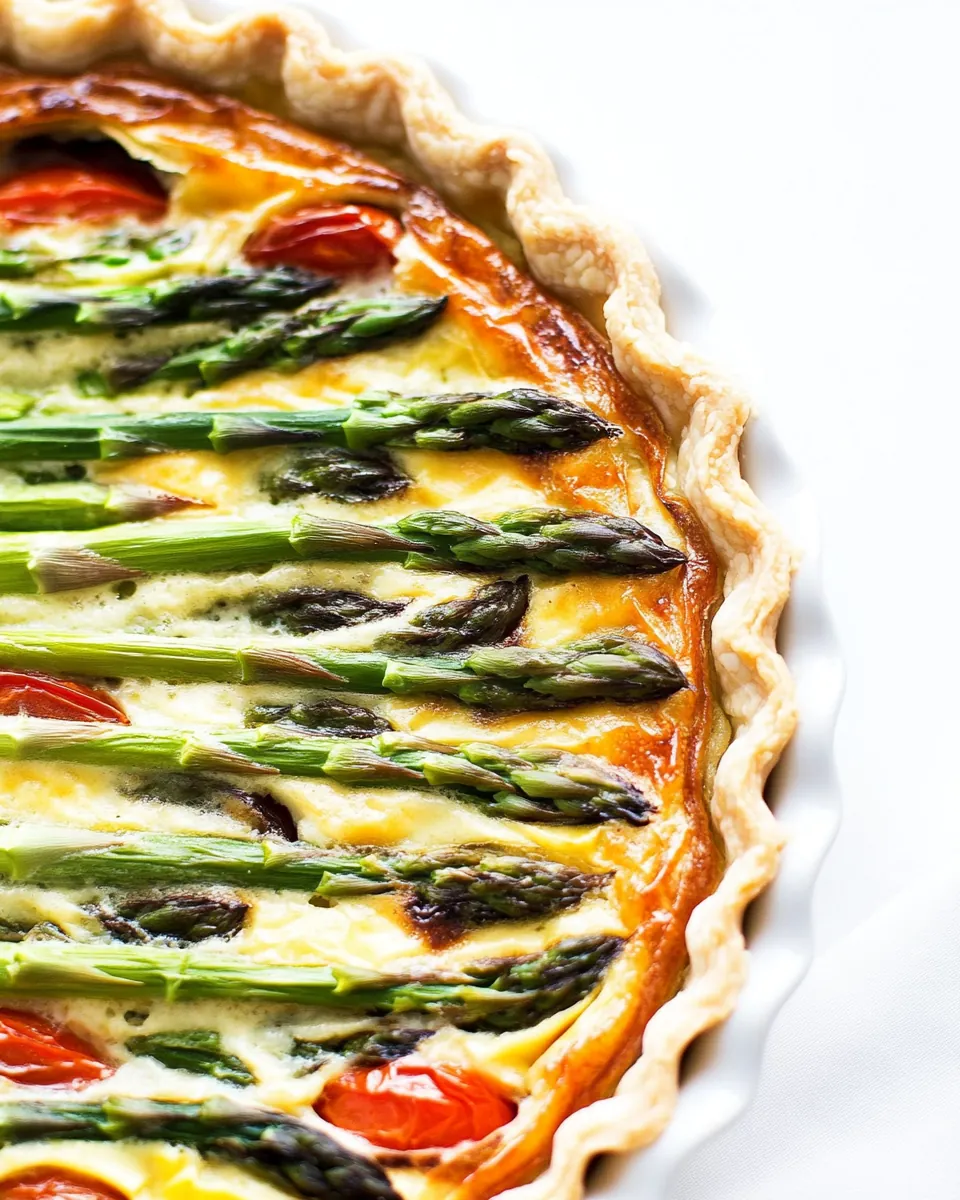
Easy Asparagus Quiche
Easy Asparagus Quiche has been one of my go to brunch heroes since the first time I folded warm slices onto my plate on a sunlit weekend morning. I still remember the day I adapted this into a weeknight winner, when a pile of market fresh asparagus met a crisp sheet of puff pastry in my tiny oven and the kitchen smelled like butter and spring. It felt like a small celebration, the sort of recipe that makes any ordinary day feel a bit more festive.
When I cook Easy Asparagus Quiche for friends, conversations slow and forks pause as everyone savors the creamy filling and the flaky, golden base. I love how the bright snap of blanched asparagus contrasts with the rich custard made from eggs, heavy cream, and whole milk. The occasional bite with grape tomatoes adds an unexpected pop that keeps people coming back for more. Over time I tweaked the mix of cheeses and textures to land on a version that is simple, reliable, and crowd pleasing.
We’ve served this quiche at casual backyard gatherings and at slow mornings when the table is heavy with newspapers and chatter. What I love is its flexibility, it travels well to potlucks, and it reheats beautifully for a savory breakfast the next day. If you crave comfort with a bright seasonal note, then this recipe will become a quiet favorite in your repertoire.
Recipe Snapshot
45 mins
15 mins
30 mins
Medium
350 kcal
American
Gluten-Free, Keto
Dinner
10.5 x 7.5 removable bottom tart pan or 9 inch round removable bottom tart pan, Mixing bowl, Whisk, Oven
Why You’ll Love This Easy Asparagus Quiche
Bright seasonal flavor
I adore how Easy Asparagus Quiche showcases the fresh vegetal sweetness of asparagus. When you blanch the stalks briefly, they keep a lively color and tender snap, which balances the lush custard.
Easy, impressive presentation
It looks like you spent hours, yet the assembly is straightforward. Pressing a sheet of thawed puff pastry into a tart pan gives an elegant, flaky shell that wows guests without extra fuss.
Comforting creamy filling
The marriage of eggs, heavy cream, and whole milk produces a silky, custardy interior. The texture is smooth and satisfying, and it holds the cheddar cheese and other mix ins in every bite.
Versatile and forgiving
Whether you want to add cooked sausage for a savory punch or leave it out for a lighter plate, this quiche adapts. Little changes in cheese or mix ins shift the profile without breaking the foundation.
Great for gatherings
Because it can be made ahead and served warm or at room temperature, Easy Asparagus Quiche is ideal for weekend brunches, potlucks, or casual dinners. I love that I can prepare it in stages and then relax while guests arrive.
Ingredients to Make Easy Asparagus Quiche
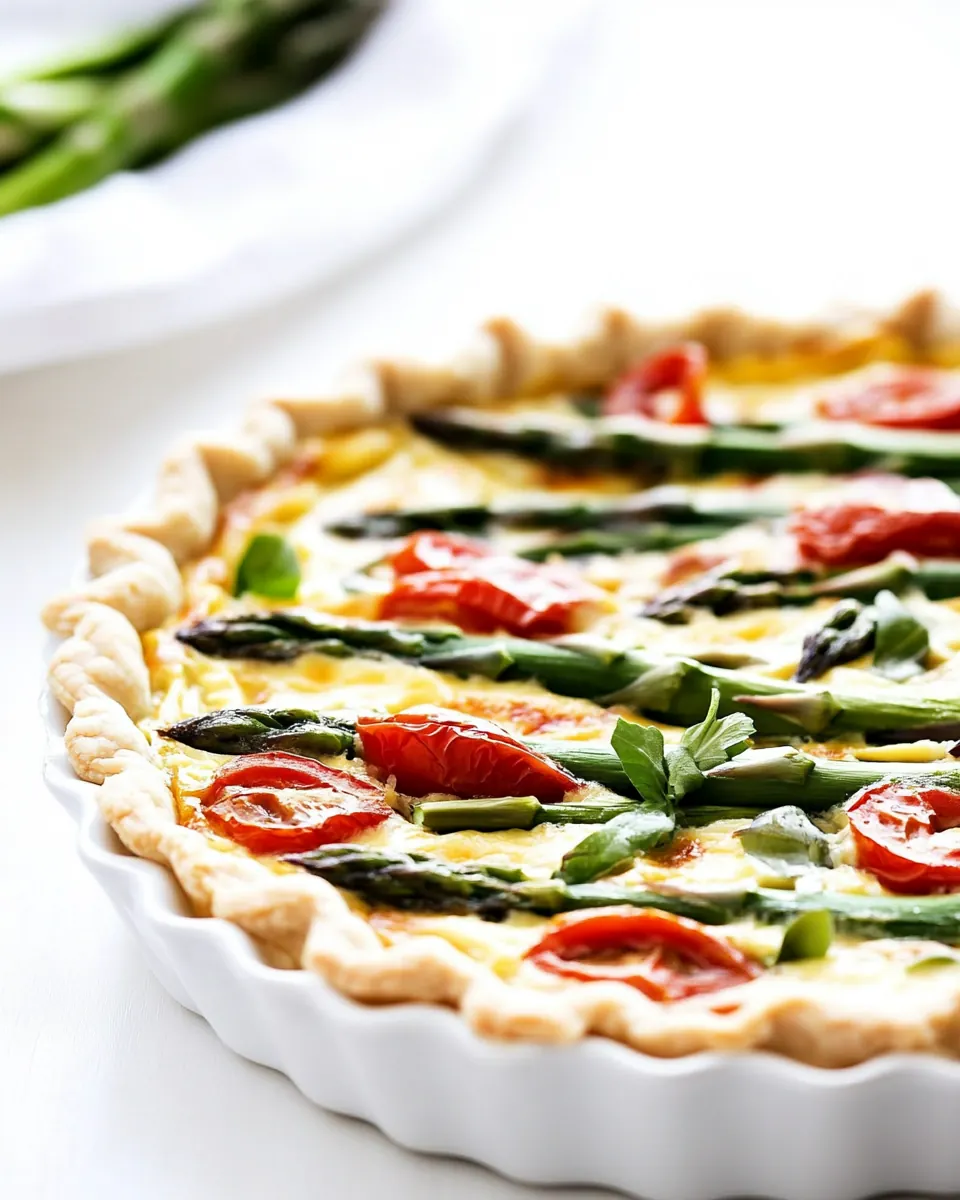
These ingredients work together to create a balance of flaky texture, rich creaminess, and bright vegetable notes. The star players are the puff pastry which provides a delicate, buttery shell, and the custard of eggs, heavy cream and whole milk which sets into a silky interior. The cheddar cheese melts into pockets of savory richness, while asparagus and broccoli add freshness and texture. Cooked sausage brings a meaty note for those who prefer a heartier slice, and the grape tomatoes add a bright acidic contrast.
- 1 sheet puff pastry, thawed according to package: Thaw according to package directions to provide a flaky, buttery crust that lines the quiche dish and holds the filling together during baking. Ensure it is fully thawed but still cold to prevent shrinking and soggy bottom. Press gently into the pan and dock the base to allow even baking and crisp texture.
- 1 3 oz. sweet Italian sausage link, case link removed, sausage cooked and cooled: Remove casing, cook fully, and cool before chopping to add savory, spiced meatiness and umami depth to the quiche. Brown gently to render fat and concentrate flavors, then drain excess grease to avoid a greasy custard. Scatter evenly over the pastry to distribute savory pockets throughout each slice.
- 1/2 cup heavy cream: Whisk into the egg mixture to create a rich, silky custard that sets into a creamy texture when baked. Use heavy cream to increase richness and mouthfeel, balancing the milk for a tender custard. Pour slowly into the pastry to combine with eggs and other fillings for a smooth final texture.
- 1/2 cup whole milk: Combine with cream and eggs to lighten the custard while keeping it tender and not overly dense. Whole milk contributes moisture and helps the custard set without becoming rubbery. Stir thoroughly so the dairy integrates with eggs and disperses richness evenly.
- 3 large eggs: Whisk thoroughly to bind the dairy and other ingredients into a cohesive custard that sets upon baking and provides structure. Use large eggs for consistent volume and stability, which helps the quiche hold its sliceable shape. Beat until homogeneous to ensure even cooking and smooth texture.
- 1 cup sharp cheddar cheese: Grate or shred to add sharp, melty cheese flavor that complements the savory sausage and vegetables while contributing to custard creaminess. Sharp cheddar provides tang and richness, browning slightly on top for appealing color and taste. Sprinkle evenly to ensure molten cheese pockets in each bite.
- 1 tablespoon sundried tomato, drained and chopped (optional): Drain and chop to introduce concentrated tomato sweetness and chewy texture for bright, savory notes, used optionally to accent flavors. Sundried tomatoes add umami and a slight tartness that contrasts with creamy custard and salty sausage. Scatter sparingly if used to avoid overpowering delicate vegetables.
- 1 teaspoon kosher salt: Season generously to enhance overall flavor and bring out savory notes from the sausage, cheese, and vegetables. Use kosher salt for a clean, balanced seasoning that dissolves into the custard and distributed fillings. Add carefully and taste if possible, since sausage and cheese already contribute saltiness.
- 1 teaspoon cracked black pepper: Crack fresh to add bright, pungent heat and aromatic complexity that lifts the rich custard and cuts through fat. Coarsely cracked pepper adds texture and bursts of spice across the filling, enhancing the savory profile. Grind fresh for best flavor and distribute evenly for balanced heat.
- 1 small head (.50 oz.) broccoli, florets finely chopped: Chop finely to provide tender, slightly sweet florets that mimic asparagus texture while adding color and vegetable nutrition throughout the filling. Small broccoli pieces soften during baking and blend into the custard without creating large pockets. Sauté briefly or add raw depending on desired texture to ensure even cooking.
- 10 stalks (10 oz.) asparagus, trimmed and blanched: Trim and blanche to retain bright color, tender-crisp texture, and fresh asparagus flavor that pairs well with eggs and cheese. Blanching stops enzymes and prevents overcooking during the quiche bake, keeping stalks vibrant and pleasant. Arrange or chop as desired to distribute spears or pieces evenly in the quiche.
- 8 10 grape tomatoes, halved: Halve to add bursts of sweetness, acidity, and juicy freshness that cut through the richness of the custard and cheese. Grape tomatoes roast slightly in the oven, concentrating flavor while providing contrasting texture. Scatter on top or within the filling for colorful, flavorful bites.
Cooking Instructions for Easy Asparagus Quiche
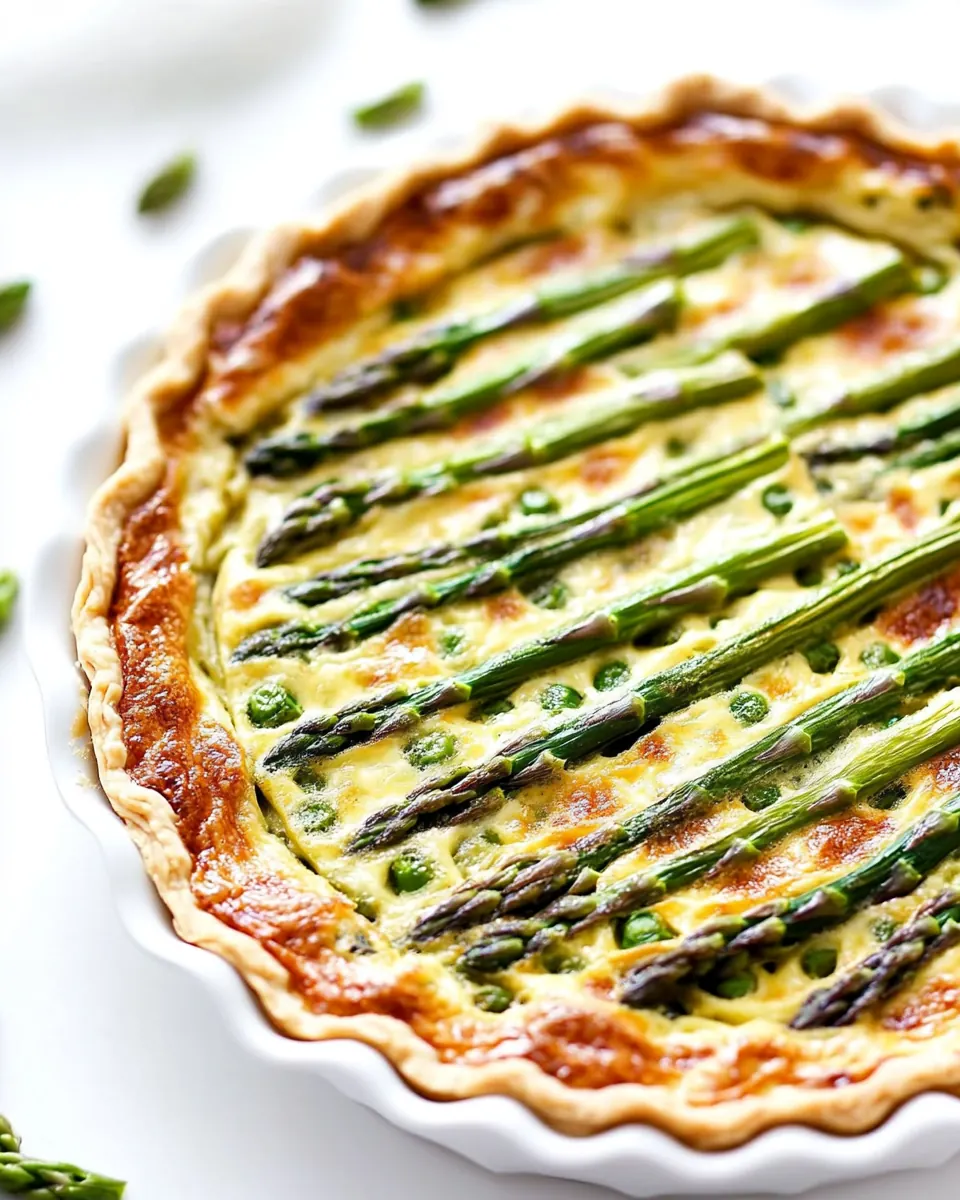
I like to approach the assembly with a relaxed rhythm, prepping each component and pausing between steps so textures stay true. Below I break down each direction into clear, sensory rich guidance so you can tell when things look, smell, and feel right. Keep your pan nearby and preheat the oven so the pastry bakes evenly.
- Press thawed puff pastry into a 10.5" x 7.5" removeable bottom tart pan (as seen in the picture) or into a 9" round removeable bottom tart pan; set aside.: The pastry should feel cool and slightly pliable, not sticky; when you press it gently into the pan you will hear a faint rustle as the layers settle. Smooth it into the corners with your fingertips or a small rolling pin, ensuring no thin spots remain, and trim any excess so the edges will brown evenly. This step matters because an even shell bakes uniformly, avoiding soggy or undercooked sections. A common mistake is overworking the pastry which warms the butter layers, causing a dense crust, so if it becomes too soft, chill it for 10 to 15 minutes before continuing. Visually you want an even layer with a little overhang to create a neat rim after baking.
- Place sausage, eggs, cream, milk, cheese, sundried tomato, salt and pepper in a bowl and whisk to combine. Pour mixture into prepared pan. Sprinkle sausage and broccoli on top. Place blanched asparagus into mixture and scatter grape tomatoes on top.: As you whisk, the mixture will turn glossy and slightly thick, and the aroma of sausage and cheddar cheese will rise, hinting at the savory depth to come. Pour steadily so the custard nests into the shell without splashing, then press the sausage and chopped broccoli evenly so every slice gets texture. When you place the blanched asparagus across the top, the green will gleam against the pale custard, and the halved grape tomatoes will add red contrast. This assembly order helps delicate vegetables stay visible and prevents heavy ingredients from sinking. Avoid over mixing after pouring, as this can create air pockets that cause the filling to puff unevenly; if bubbles appear, gently tap the pan on the counter to release them.
- Bake at 375 degrees F for about 30 minutes or until the center is firm. Let cool for about 10 minutes before serving.: In the oven, the pastry will go from pale to golden, and the filling will rise slightly and then settle as proteins set; you should see the edges set before the center firms. The kitchen will fill with a warm, buttery fragrance and the sound of gentle oven hums. An instant read thermometer inserted near the center should read around 160 degrees F when done, and the top will be lightly golden with no visible jiggle in the center. This timing ensures a custard that is creamy yet fully set; underbaking leaves a runny center, while overbaking makes it dry and rubbery. If the edges brown too quickly, tent the tart with foil to prevent burning while the center finishes cooking. After removing from the oven, cooling for 10 minutes helps the custard finish setting and makes slicing cleaner.
- Notes** (1) For a different flavor try using Gruyere or Fontina in place of the cheddar cheese. (2) To make this vegetarian, skip the sausage. (3) The sundried tomatoes are optional, but it does add another layer of flavor.: You will notice subtle changes if you swap cheeses, like a nuttier profile with Gruyere or a creamier melt with Fontina, which can complement the asparagus differently. Skipping the sausage lightens the dish and lets the vegetables shine, useful when serving a mixed group. Sundried tomatoes add concentrated sweet acidity when included, but omit them if you prefer a simpler flavor. The why here is that small swaps affect the balance of fat, salt, and acid in the custard, changing mouthfeel and pairing dynamics. A common slip is not adjusting salt when using different cheeses, so taste cautiously if you alter components.
Ways to Customize
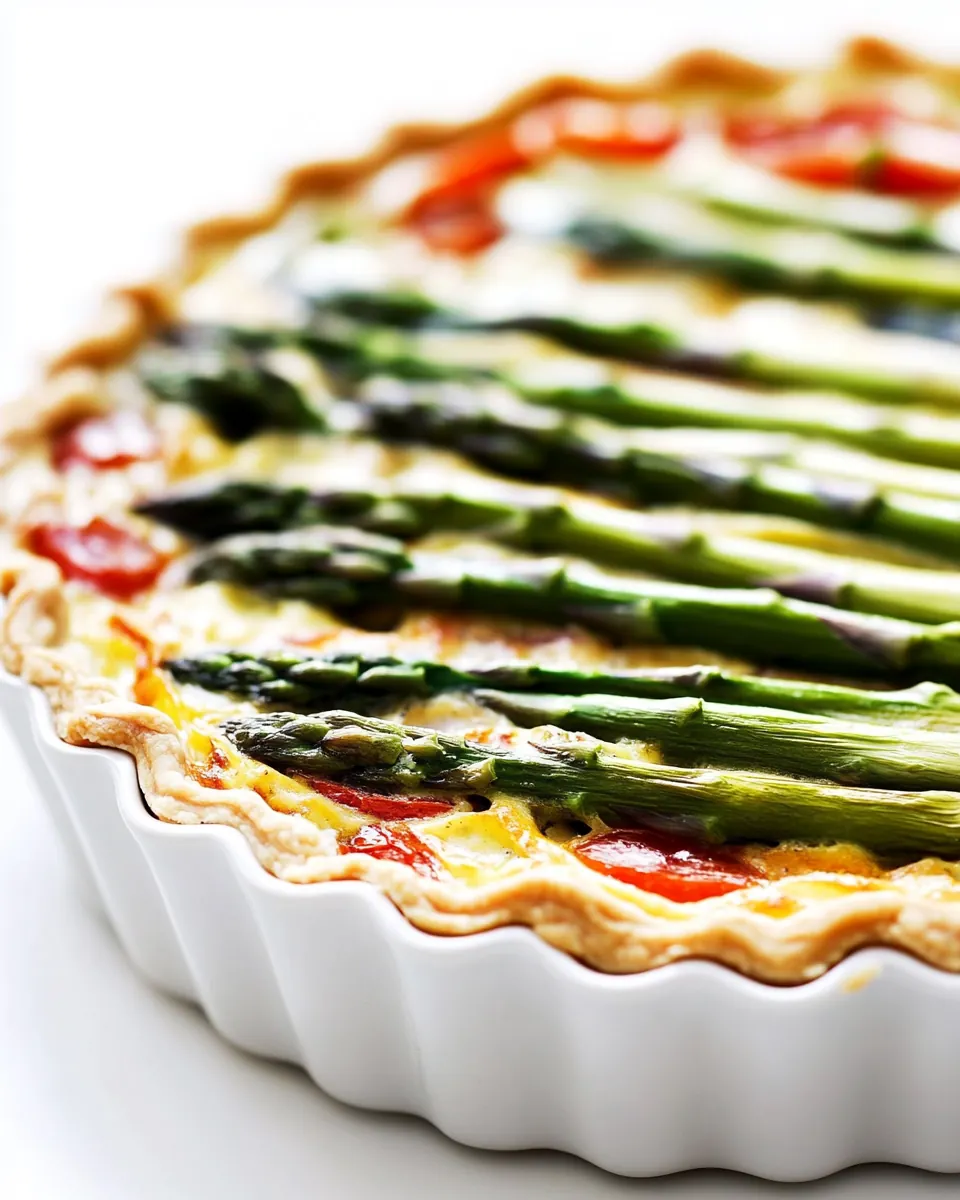
This quiche is a fantastic canvas for flavor experiments and small swaps that still yield a composed, elegant tart. Below I share practical ideas for customizing texture, dairy, and mix ins while preserving the recipe structure and balance.
- Cheese swap: Replace the cheddar cheese with Gruyere for a nuttier, more alpine flavor that melts smoothly through the custard.
- Vegetarian option: Omit the sausage and increase the broccoli or add extra tomatoes for more vegetal presence and volume.
- Herb lift: Fold in a tablespoon or two of chopped fresh herbs like parsley or chives into the custard to brighten the aroma and add fresh contrast to the richness.
- Make ahead: Assemble the tart up to the point of baking, cover and refrigerate, then bake from chilled which helps with planning for brunch or gatherings.
- Crust alternatives: Use a homemade shortcrust pastry if you prefer a sturdier base, chilling it thoroughly before blind baking for best results.
What to Pair With Easy Asparagus Quiche
This section suggests complementary dishes and serving occasions so you can present Easy Asparagus Quiche with confidence. Think in terms of texture contrasts, seasonal greens, and relaxed formats for brunch or light dinner menus.
- Simple green salad: A crisp salad of peppery greens with a lemon vinaigrette cuts through the richness and refreshes the palate, ideal for a brunch spread.
- Roasted potatoes: Small, crispy roasted potatoes or fingerling potatoes add a hearty component that pairs well for a leisurely lunch or dinner.
- Light soup: A bowl of clear vegetable broth or a chilled cucumber soup makes a delicate starter to keep the meal balanced.
- Occasions: Serve this quiche for weekend brunch, a casual lunch, or a springtime gathering; it also travels well for potlucks and showers.
- Storage tips: Refrigerate leftover slices in an airtight container for up to three days, and rewarm gently in a low oven to maintain flakiness and avoid sogginess.
- Seasonal pairings: Emphasize spring vegetables and fresh herbs when asparagus is at peak, and add roasted tomatoes in late summer for extra sweetness.
FAQ
Conclusion
What makes this recipe special is its balance of flaky pastry, silky custard, and bright spring vegetables, which together create a comforting yet fresh tart. I hope you give Easy Asparagus Quiche a try soon, whether for a leisurely weekend brunch or a simple weeknight meal. It rewards a little prep with a lot of charm, and once you taste how the asparagus and creamy filling pair, it will likely become one of your reliable go to dishes.
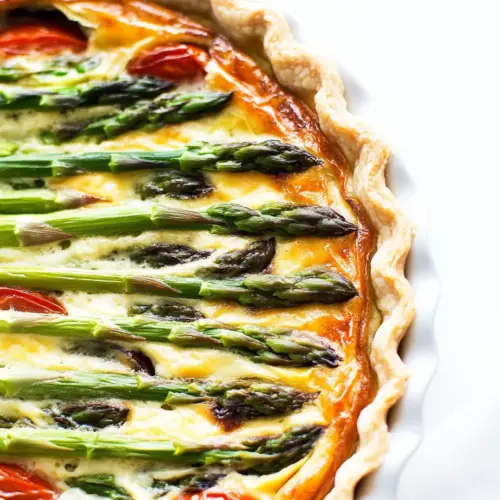
Easy Asparagus Quiche
Equipment
- 10.5 x 7.5 removable bottom tart pan or 9 inch round removable bottom tart pan
- Mixing Bowl
- Whisk
- Oven
Ingredients
- 1 sheet puff pastry, thawed according to package Thaw according to package directions to provide a flaky, buttery crust that lines the quiche dish and holds the filling together during baking. Ensure it is fully thawed but still cold to prevent shrinking and soggy bottom. Press gently into the pan and dock the base to allow even baking and crisp texture.
- 1 3 oz. sweet Italian sausage link, case link removed, sausage cooked and cooled Remove casing, cook fully, and cool before chopping to add savory, spiced meatiness and umami depth to the quiche. Brown gently to render fat and concentrate flavors, then drain excess grease to avoid a greasy custard. Scatter evenly over the pastry to distribute savory pockets throughout each slice.
- 1/2 cup heavy cream Whisk into the egg mixture to create a rich, silky custard that sets into a creamy texture when baked. Use heavy cream to increase richness and mouthfeel, balancing the milk for a tender custard. Pour slowly into the pastry to combine with eggs and other fillings for a smooth final texture.
- 1/2 cup whole milk Combine with cream and eggs to lighten the custard while keeping it tender and not overly dense. Whole milk contributes moisture and helps the custard set without becoming rubbery. Stir thoroughly so the dairy integrates with eggs and disperses richness evenly.
- 3 large eggs Whisk thoroughly to bind the dairy and other ingredients into a cohesive custard that sets upon baking and provides structure. Use large eggs for consistent volume and stability, which helps the quiche hold its sliceable shape. Beat until homogeneous to ensure even cooking and smooth texture.
- 1 cup sharp cheddar cheese Grate or shred to add sharp, melty cheese flavor that complements the savory sausage and vegetables while contributing to custard creaminess. Sharp cheddar provides tang and richness, browning slightly on top for appealing color and taste. Sprinkle evenly to ensure molten cheese pockets in each bite.
- 1 tablespoon sundried tomato, drained and chopped, optional Drain and chop to introduce concentrated tomato sweetness and chewy texture for bright, savory notes, used optionally to accent flavors. Sundried tomatoes add umami and a slight tartness that contrasts with creamy custard and salty sausage. Scatter sparingly if used to avoid overpowering delicate vegetables.
- 1 teaspoon kosher salt Season generously to enhance overall flavor and bring out savory notes from the sausage, cheese, and vegetables. Use kosher salt for a clean, balanced seasoning that dissolves into the custard and distributed fillings. Add carefully and taste if possible, since sausage and cheese already contribute saltiness.
- 1 teaspoon cracked black pepper Crack fresh to add bright, pungent heat and aromatic complexity that lifts the rich custard and cuts through fat. Coarsely cracked pepper adds texture and bursts of spice across the filling, enhancing the savory profile. Grind fresh for best flavor and distribute evenly for balanced heat.
- 1 small head (.50 oz.) broccoli, florets finely chopped Chop finely to provide tender, slightly sweet florets that mimic asparagus texture while adding color and vegetable nutrition throughout the filling. Small broccoli pieces soften during baking and blend into the custard without creating large pockets. Sauté briefly or add raw depending on desired texture to ensure even cooking.
- 10 stalks (10 oz.) asparagus, trimmed and blanched Trim and blanche to retain bright color, tender-crisp texture, and fresh asparagus flavor that pairs well with eggs and cheese. Blanching stops enzymes and prevents overcooking during the quiche bake, keeping stalks vibrant and pleasant. Arrange or chop as desired to distribute spears or pieces evenly in the quiche.
- 8 -10 grape tomatoes, halved Halve to add bursts of sweetness, acidity, and juicy freshness that cut through the richness of the custard and cheese. Grape tomatoes roast slightly in the oven, concentrating flavor while providing contrasting texture. Scatter on top or within the filling for colorful, flavorful bites.
Instructions
- Press thawed puff pastry into a 10.5" x 7.5" removeable bottom tart pan (as seen in the picture) or into a 9" round removeable bottom tart pan; set aside.: The pastry should feel cool and slightly pliable, not sticky; when you press it gently into the pan you will hear a faint rustle as the layers settle. Smooth it into the corners with your fingertips or a small rolling pin, ensuring no thin spots remain, and trim any excess so the edges will brown evenly. This step matters because an even shell bakes uniformly, avoiding soggy or undercooked sections. A common mistake is overworking the pastry which warms the butter layers, causing a dense crust, so if it becomes too soft, chill it for 10 to 15 minutes before continuing. Visually you want an even layer with a little overhang to create a neat rim after baking.
- Place sausage, eggs, cream, milk, cheese, sundried tomato, salt and pepper in a bowl and whisk to combine. Pour mixture into prepared pan. Sprinkle sausage and broccoli on top. Place blanched asparagus into mixture and scatter grape tomatoes on top.: As you whisk, the mixture will turn glossy and slightly thick, and the aroma of sausage and cheddar cheese will rise, hinting at the savory depth to come. Pour steadily so the custard nests into the shell without splashing, then press the sausage and chopped broccoli evenly so every slice gets texture. When you place the blanched asparagus across the top, the green will gleam against the pale custard, and the halved grape tomatoes will add red contrast. This assembly order helps delicate vegetables stay visible and prevents heavy ingredients from sinking. Avoid over mixing after pouring, as this can create air pockets that cause the filling to puff unevenly; if bubbles appear, gently tap the pan on the counter to release them.
- Bake at 375 degrees F for about 30 minutes or until the center is firm. Let cool for about 10 minutes before serving.: In the oven, the pastry will go from pale to golden, and the filling will rise slightly and then settle as proteins set; you should see the edges set before the center firms. The kitchen will fill with a warm, buttery fragrance and the sound of gentle oven hums. An instant read thermometer inserted near the center should read around 160 degrees F when done, and the top will be lightly golden with no visible jiggle in the center. This timing ensures a custard that is creamy yet fully set; underbaking leaves a runny center, while overbaking makes it dry and rubbery. If the edges brown too quickly, tent the tart with foil to prevent burning while the center finishes cooking. After removing from the oven, cooling for 10 minutes helps the custard finish setting and makes slicing cleaner.
- Notes** (1) For a different flavor try using Gruyere or Fontina in place of the cheddar cheese. (2) To make this vegetarian, skip the sausage. (3) The sundried tomatoes are optional, but it does add another layer of flavor.: You will notice subtle changes if you swap cheeses, like a nuttier profile with Gruyere or a creamier melt with Fontina, which can complement the asparagus differently. Skipping the sausage lightens the dish and lets the vegetables shine, useful when serving a mixed group. Sundried tomatoes add concentrated sweet acidity when included, but omit them if you prefer a simpler flavor. The why here is that small swaps affect the balance of fat, salt, and acid in the custard, changing mouthfeel and pairing dynamics. A common slip is not adjusting salt when using different cheeses, so taste cautiously if you alter components.
Notes
- Cheese swap: Replace the cheddar cheese with Gruyere for a nuttier, more alpine flavor that melts smoothly through the custard.
- Vegetarian option: Omit the sausage and increase the broccoli or add extra tomatoes for more vegetal presence and volume.
- Herb lift: Fold in a tablespoon or two of chopped fresh herbs like parsley or chives into the custard to brighten the aroma and add fresh contrast to the richness.
- Make ahead: Assemble the tart up to the point of baking, cover and refrigerate, then bake from chilled which helps with planning for brunch or gatherings.
- Crust alternatives: Use a homemade shortcrust pastry if you prefer a sturdier base, chilling it thoroughly before blind baking for best results.