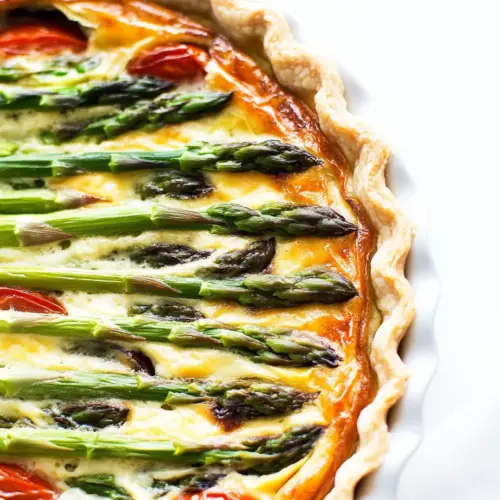
Easy Asparagus Quiche
Easy Asparagus Quiche is a creamy, flaky springtime tart that blends tender asparagus with a rich custard of eggs, heavy cream, and whole milk. Sharp cheddar cheese and optional cooked sausage add savory depth, while grape tomatoes bring bright pops of acidity. Perfect for an easy weeknight dinner or a relaxed weekend brunch, this quiche is simple to assemble and impressive to serve.
Equipment
- 10.5 x 7.5 removable bottom tart pan or 9 inch round removable bottom tart pan
- Mixing Bowl
- Whisk
- Oven
Ingredients
- 1 sheet puff pastry, thawed according to package Thaw according to package directions to provide a flaky, buttery crust that lines the quiche dish and holds the filling together during baking. Ensure it is fully thawed but still cold to prevent shrinking and soggy bottom. Press gently into the pan and dock the base to allow even baking and crisp texture.
- 1 3 oz. sweet Italian sausage link, case link removed, sausage cooked and cooled Remove casing, cook fully, and cool before chopping to add savory, spiced meatiness and umami depth to the quiche. Brown gently to render fat and concentrate flavors, then drain excess grease to avoid a greasy custard. Scatter evenly over the pastry to distribute savory pockets throughout each slice.
- 1/2 cup heavy cream Whisk into the egg mixture to create a rich, silky custard that sets into a creamy texture when baked. Use heavy cream to increase richness and mouthfeel, balancing the milk for a tender custard. Pour slowly into the pastry to combine with eggs and other fillings for a smooth final texture.
- 1/2 cup whole milk Combine with cream and eggs to lighten the custard while keeping it tender and not overly dense. Whole milk contributes moisture and helps the custard set without becoming rubbery. Stir thoroughly so the dairy integrates with eggs and disperses richness evenly.
- 3 large eggs Whisk thoroughly to bind the dairy and other ingredients into a cohesive custard that sets upon baking and provides structure. Use large eggs for consistent volume and stability, which helps the quiche hold its sliceable shape. Beat until homogeneous to ensure even cooking and smooth texture.
- 1 cup sharp cheddar cheese Grate or shred to add sharp, melty cheese flavor that complements the savory sausage and vegetables while contributing to custard creaminess. Sharp cheddar provides tang and richness, browning slightly on top for appealing color and taste. Sprinkle evenly to ensure molten cheese pockets in each bite.
- 1 tablespoon sundried tomato, drained and chopped, optional Drain and chop to introduce concentrated tomato sweetness and chewy texture for bright, savory notes, used optionally to accent flavors. Sundried tomatoes add umami and a slight tartness that contrasts with creamy custard and salty sausage. Scatter sparingly if used to avoid overpowering delicate vegetables.
- 1 teaspoon kosher salt Season generously to enhance overall flavor and bring out savory notes from the sausage, cheese, and vegetables. Use kosher salt for a clean, balanced seasoning that dissolves into the custard and distributed fillings. Add carefully and taste if possible, since sausage and cheese already contribute saltiness.
- 1 teaspoon cracked black pepper Crack fresh to add bright, pungent heat and aromatic complexity that lifts the rich custard and cuts through fat. Coarsely cracked pepper adds texture and bursts of spice across the filling, enhancing the savory profile. Grind fresh for best flavor and distribute evenly for balanced heat.
- 1 small head (.50 oz.) broccoli, florets finely chopped Chop finely to provide tender, slightly sweet florets that mimic asparagus texture while adding color and vegetable nutrition throughout the filling. Small broccoli pieces soften during baking and blend into the custard without creating large pockets. Sauté briefly or add raw depending on desired texture to ensure even cooking.
- 10 stalks (10 oz.) asparagus, trimmed and blanched Trim and blanche to retain bright color, tender-crisp texture, and fresh asparagus flavor that pairs well with eggs and cheese. Blanching stops enzymes and prevents overcooking during the quiche bake, keeping stalks vibrant and pleasant. Arrange or chop as desired to distribute spears or pieces evenly in the quiche.
- 8 -10 grape tomatoes, halved Halve to add bursts of sweetness, acidity, and juicy freshness that cut through the richness of the custard and cheese. Grape tomatoes roast slightly in the oven, concentrating flavor while providing contrasting texture. Scatter on top or within the filling for colorful, flavorful bites.
Instructions
- Press thawed puff pastry into a 10.5" x 7.5" removeable bottom tart pan (as seen in the picture) or into a 9" round removeable bottom tart pan; set aside.: The pastry should feel cool and slightly pliable, not sticky; when you press it gently into the pan you will hear a faint rustle as the layers settle. Smooth it into the corners with your fingertips or a small rolling pin, ensuring no thin spots remain, and trim any excess so the edges will brown evenly. This step matters because an even shell bakes uniformly, avoiding soggy or undercooked sections. A common mistake is overworking the pastry which warms the butter layers, causing a dense crust, so if it becomes too soft, chill it for 10 to 15 minutes before continuing. Visually you want an even layer with a little overhang to create a neat rim after baking.
- Place sausage, eggs, cream, milk, cheese, sundried tomato, salt and pepper in a bowl and whisk to combine. Pour mixture into prepared pan. Sprinkle sausage and broccoli on top. Place blanched asparagus into mixture and scatter grape tomatoes on top.: As you whisk, the mixture will turn glossy and slightly thick, and the aroma of sausage and cheddar cheese will rise, hinting at the savory depth to come. Pour steadily so the custard nests into the shell without splashing, then press the sausage and chopped broccoli evenly so every slice gets texture. When you place the blanched asparagus across the top, the green will gleam against the pale custard, and the halved grape tomatoes will add red contrast. This assembly order helps delicate vegetables stay visible and prevents heavy ingredients from sinking. Avoid over mixing after pouring, as this can create air pockets that cause the filling to puff unevenly; if bubbles appear, gently tap the pan on the counter to release them.
- Bake at 375 degrees F for about 30 minutes or until the center is firm. Let cool for about 10 minutes before serving.: In the oven, the pastry will go from pale to golden, and the filling will rise slightly and then settle as proteins set; you should see the edges set before the center firms. The kitchen will fill with a warm, buttery fragrance and the sound of gentle oven hums. An instant read thermometer inserted near the center should read around 160 degrees F when done, and the top will be lightly golden with no visible jiggle in the center. This timing ensures a custard that is creamy yet fully set; underbaking leaves a runny center, while overbaking makes it dry and rubbery. If the edges brown too quickly, tent the tart with foil to prevent burning while the center finishes cooking. After removing from the oven, cooling for 10 minutes helps the custard finish setting and makes slicing cleaner.
- Notes** (1) For a different flavor try using Gruyere or Fontina in place of the cheddar cheese. (2) To make this vegetarian, skip the sausage. (3) The sundried tomatoes are optional, but it does add another layer of flavor.: You will notice subtle changes if you swap cheeses, like a nuttier profile with Gruyere or a creamier melt with Fontina, which can complement the asparagus differently. Skipping the sausage lightens the dish and lets the vegetables shine, useful when serving a mixed group. Sundried tomatoes add concentrated sweet acidity when included, but omit them if you prefer a simpler flavor. The why here is that small swaps affect the balance of fat, salt, and acid in the custard, changing mouthfeel and pairing dynamics. A common slip is not adjusting salt when using different cheeses, so taste cautiously if you alter components.
Notes
- Cheese swap: Replace the cheddar cheese with Gruyere for a nuttier, more alpine flavor that melts smoothly through the custard.
- Vegetarian option: Omit the sausage and increase the broccoli or add extra tomatoes for more vegetal presence and volume.
- Herb lift: Fold in a tablespoon or two of chopped fresh herbs like parsley or chives into the custard to brighten the aroma and add fresh contrast to the richness.
- Make ahead: Assemble the tart up to the point of baking, cover and refrigerate, then bake from chilled which helps with planning for brunch or gatherings.
- Crust alternatives: Use a homemade shortcrust pastry if you prefer a sturdier base, chilling it thoroughly before blind baking for best results.