Cucumber Hummus Bites
Cucumber Hummus Bites came into my life on a hot summer afternoon when I was scrambling to bring something fresh and effortless to a casual get together. I had a crisp cucumber in the fridge and a tub of hummus that needed to be used, so I started layering a few simple flavors together and before long everyone was reaching for more. That first batch felt like a small victory, a snack that was light but satisfying, and it quickly became my go to when I needed a no fuss, refreshing bite.
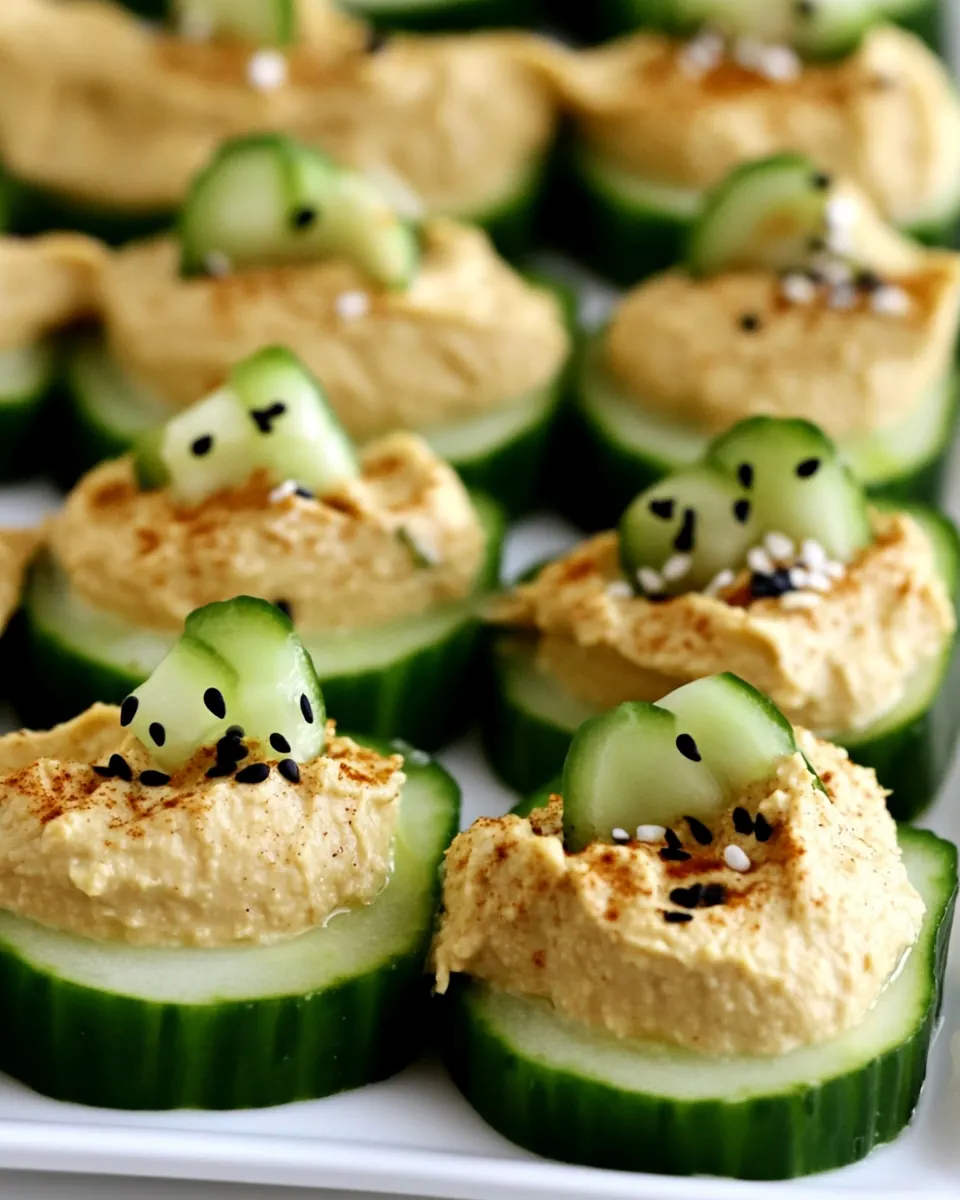
I remember the sound of ice clinking in glasses and the soft chatter around the kitchen island as I arranged the rounds on a serving tray. The contrast between the cool, watery crunch of the cucumber and the creamy, slightly tangy hummus was immediately addictive. I liked sprinkling tiny seeds on top because they added that little pop of texture and a visual finish that made the plate feel special. Over time I learned small tricks to keep these bites tidy, like pressing the cucumber lightly if it seems watery and piping the hummus so each mound looks uniform.
These little appetizers are also one of those recipes that let me breathe easy when guests arrive unexpectedly. I keep the ingredient list short, so assembling them becomes almost meditative, a few relaxing minutes that turn into a beautiful platter. Friends always ask how I made them, and I love answering with practical pointers rather than fussy techniques. They are perfect for casual afternoons, potlucks, or as a cooling snack after a long day outdoors.
Recipe Snapshot
15 mins
15 mins
Easy
120 kcal
Mediterranean
Vegan, Gluten-Free
Appetizers
Knife, Cutting Board, Plastic Bag, Plate or Serving Tray
Why This Cucumber Hummus Bites Works
I keep it simple, and that matters
One reason I keep making Cucumber Hummus Bites is how incredibly simple they are to pull together, yet they feel thoughtful. With just cucumber and hummus at the center, the preparation is fast, which means I can spend less time cooking and more time talking with friends. This simplicity also makes them perfect for last minute hosting, because the result is always fresh and appealing.
Freshness in every bite
The crisp, cool texture of the cucumber gives an immediate refreshment that heavier appetizers rarely deliver. When you press the surface lightly to remove excess moisture, the cucumber holds the hummus better and provides a pleasant crunch that complements the creamy top. I love how the two textures play off each other, and guests always comment on how refreshing the bites feel.
It’s flexible and friendly
I appreciate that Cucumber Hummus Bites fit many diets and occasions. They are naturally light and vegetarian friendly, and because the ingredient list is short you can adjust the quantities easily. I often scale the amount of hummus depending on whether I want a dainty canapé or a heartier snack. This adaptability makes them a reliable choice for casual parties or afternoon nibbling.
Texture and presentation win
A small sprinkle of sesame seeds transforms the appearance and adds a subtle nutty note that rounds out the flavor. I find that presentation matters when you want a simple recipe to feel special, so I take an extra minute to pipe the hummus and scatter seeds right before serving. That tiny step elevates the whole plate and makes people excited to dig in.
Minimal cleanup, maximum reward
Finally, these bites are so low maintenance that I can relax after serving. There are no pans to scrub or complicated garnishes, and the clean kitchen afterward is always a relief. For busy days when I want something quick, pretty, and satisfying, Cucumber Hummus Bites are my go to solution.
What Goes Into Cucumber Hummus Bites
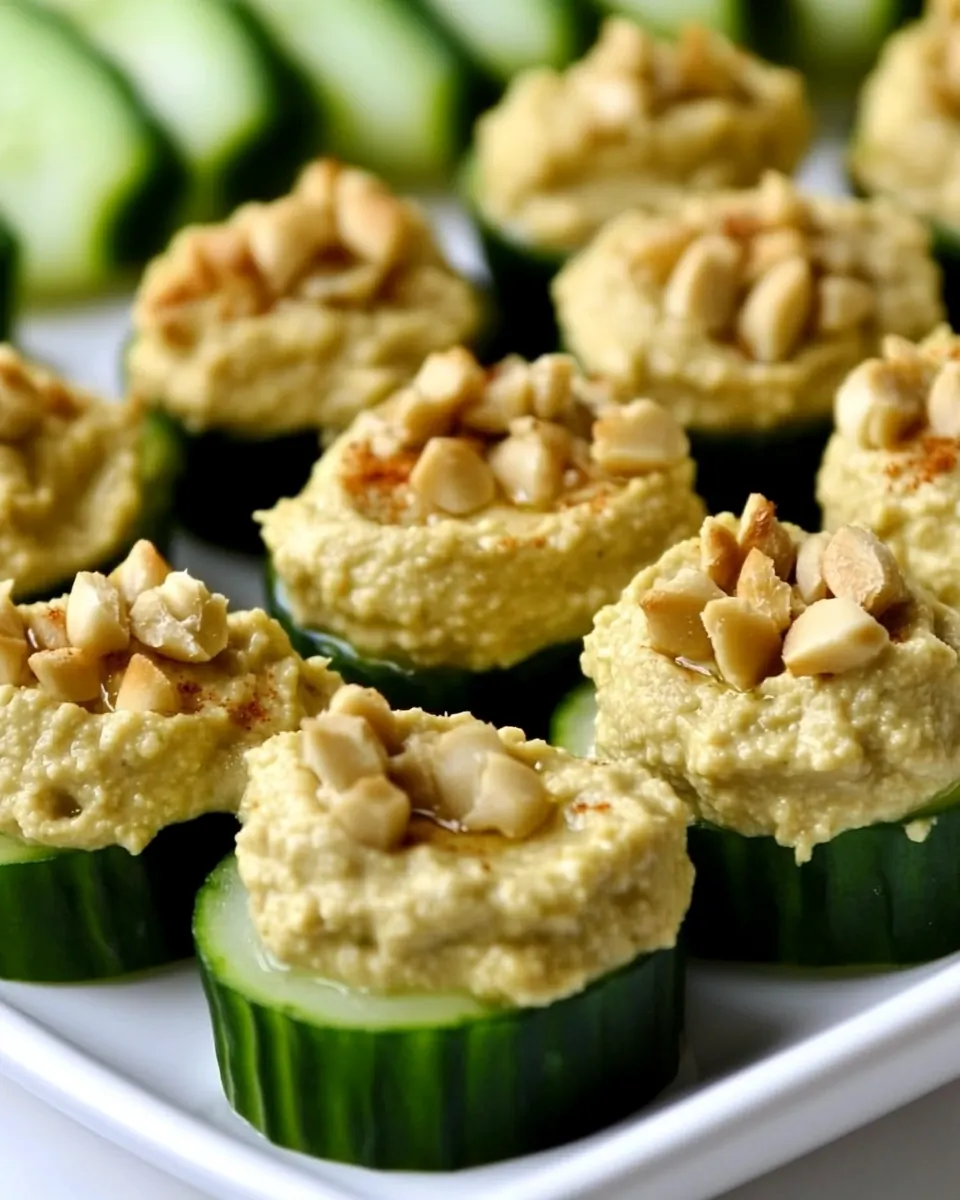
These ingredients are deliberately few and functional. The focus is on a crisp base, a creamy topping, and a finish for texture. Together they create a balanced bite where each component has room to shine without competing. The cucumber gives cool crunch, the hummus provides richness and body, and the sesame seeds offer tiny pops of nuttiness and visual contrast.
- 1 large European cucumber (see notes): Provide a crisp, refreshing base and sturdy rounds for topping; choose a large European cucumber for thinner skin and fewer seeds which improves texture. Slice into 1/4–1/2-inch rounds and scoop a small shallow well to hold toppings without slipping. Chill before assembling to keep bites firm and visually appealing.
- 1/2 cup hummus: Offer a creamy, savory spread that adds moisture and rich flavor while binding toppings to cucumber rounds. Use about half a cup total, dolloping or piping onto each slice to provide balanced saltiness and a smooth mouthfeel. Select plain or lightly flavored hummus to complement without overpowering other elements.
- black or white sesame seeds: Add a nutty, crunchy garnish and visual contrast with either black or white sesame seeds sprinkled on top. Provide a subtle toasted flavor and appealing speckled appearance that elevates simple bites. Use sparingly to avoid overwhelming delicate cucumber texture.
Making Cucumber Hummus Bites
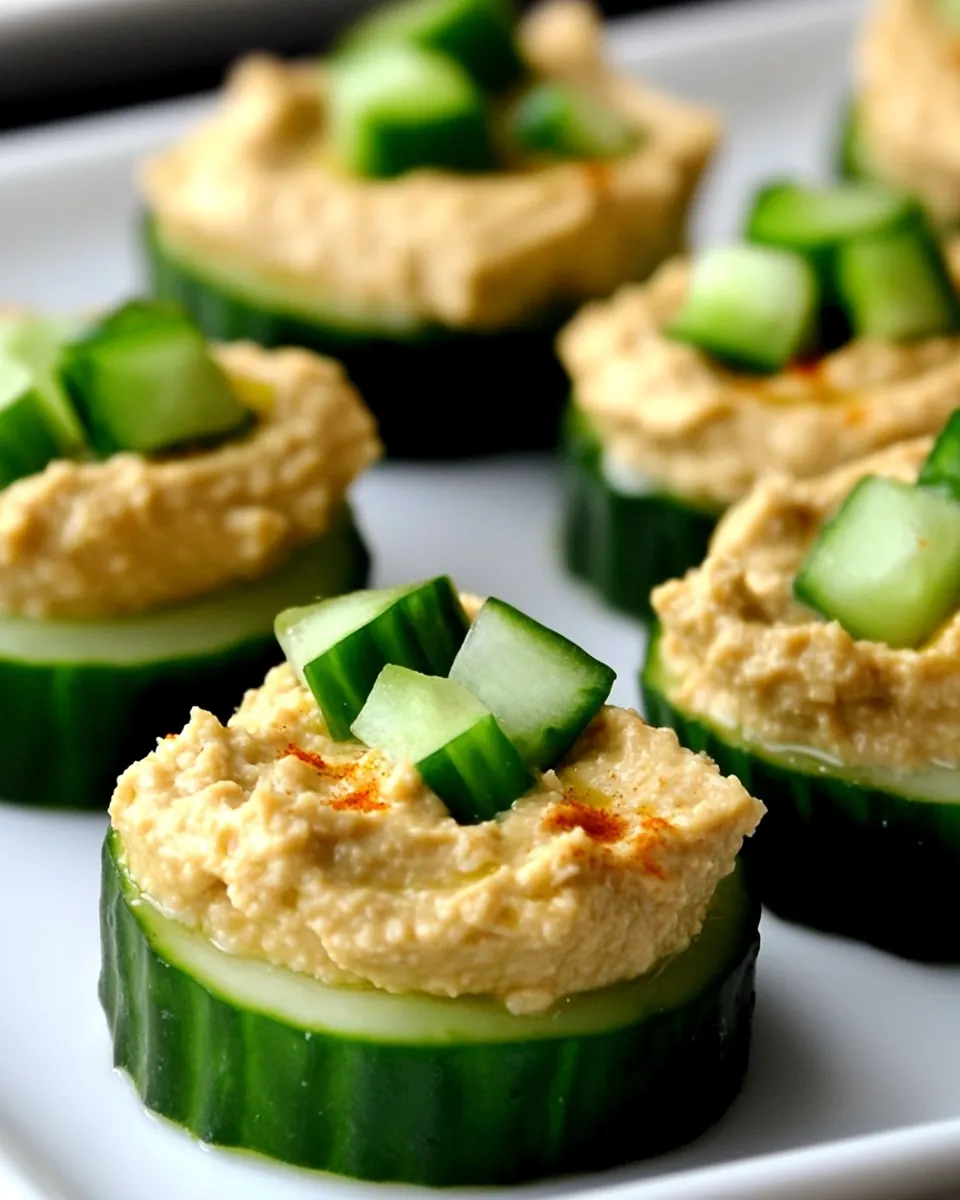
These steps are straightforward, and the real art is in the small details that make each bite tidy and tasty. Take your time to notice the textures as you assemble, and prepare a tidy workspace so plating feels relaxed rather than rushed. Below I turn the original directions into a sensory rich guide to get the best results.
- Peel cucumber, either leaving strips of green (if the cucumber has thin skin) or peeling all the skin (if the cucumber has thick waxy skin).: The first thing you will notice is the fresh, green aroma as the cucumber skin comes away, and leaving alternating strips of skin gives a pretty striped look and a hint of bitterness that some people love. If you choose to peel all the skin, the surface will feel smoother and the bites will be milder in flavor. One common mistake is using a cucumber that is overripe and soft, which yields a soggy base; always pick a firm specimen.
- Slice cucumber into thick slices about 3/4 – 1 inch thick. If the cucumbers seem watery, use a paper towel to press down on both sides to absorb some of the water and dry the surface of the cucumber.: You should hear a crisp, clean sound as the knife cuts through the flesh, and the cut faces should look glossy and moist but not dripping. Drying the rounds briefly with a paper towel helps the hummus adhere, and pressing gently will release excess surface water without crushing the structure. Avoid slicing them too thin, which makes them flop under the topping, or too thick, which can overwhelm the balance of bite to topping.
- Put hummus into a small bag made of thick plastic. I used 1/2 cup hummus to make 14 appetizers; you can always add more hummus to the bag if you prefer a thicker mound of hummus.: When you spoon the hummus into a bag the texture becomes more controllable, and you will notice the cool, creamy smell of chickpeas and tahini as you work. The bag method creates neat mounds quickly, which is especially helpful when serving a group. A common slip is cutting too large a bag tip, which leads to puddles rather than neat swirls, so cut a small opening first and enlarge if needed.
- Cut off one corner of the bag so you can squeeze the hummus out, taking care not to make the hole too big.: A small opening produces a clean, dense dollop, while a large hole leads to a flat smear. As you squeeze, watch for smooth, even piping and listen for the gentle squish as the hummus moves through the bag. If the texture is too thick to squeeze easily, soften it slightly with a teaspoon of water and mix, but be careful not to make it runny. The typical error here is impatience, which results in uneven mounds; steady, even pressure creates the best shape.
- Arrange cucumber slices on a plate or serving tray, then squeeze a mound of hummus on to the top of each cucumber slice.: The visual impact is important, so arrange the rounds in a tidy grid or in concentric circles for effect. As you deposit the hummus , notice the contrast between the pale cream and the green cucumber; that contrast is part of the appeal. If a mound feels unstable, press it gently into the cucumber so it adheres without flattening. A frequent misstep is overcrowding the tray, which leads to messy handling when guests reach for them, so leave some space between pieces.
- Sprinkle slices with sesame seeds just before serving.: The final flourish should be light and deliberate, adding a whisper of toasty aroma and tiny crunchy pops. Sprinkling just before serving helps the seeds stay crisp and keeps the presentation fresh. If you do this too early, the seeds can settle into the hummus and lose their texture. One simple troubleshooting note is that using a spoon to scatter seeds often produces uneven coverage, so I prefer pinching a small handful and gently scattering for a more controlled finish.
Ways to Customize
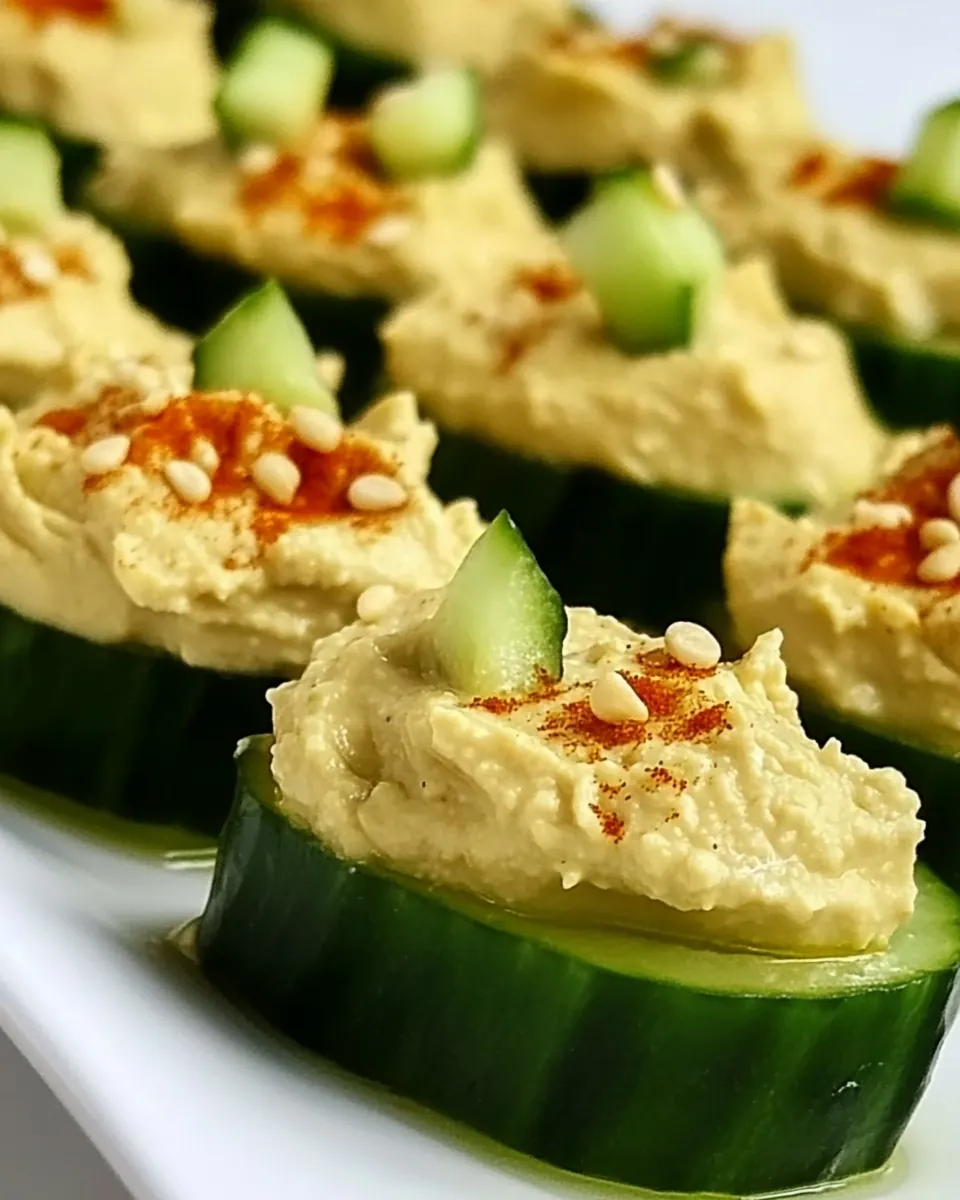
These simple swaps and small additions let you tailor Cucumber Hummus Bites to different moods and gatherings. Below are focused ideas that keep the core recipe intact while adding texture, color, or flavor accents you can control easily.
- Swap hummus texture — Choose a smooth hummus for clean piping, or a chunky style if you want more rustic texture. A softer hummus will spread more easily, while a firmer one holds shape better.
- Change sesame seed color — Use black seeds for visual contrast or white seeds for a subtler look. The difference is mainly aesthetic, but black seeds offer a striking pop on the pale hummus.
- Adjust mound size — Increase the amount of hummus in the bag if you prefer a heartier bite, or reduce for a lighter canapé that pairs well with cocktails.
- Peel pattern — Leave thin strips of skin for a striped presentation, or peel completely for a smoother, cleaner appearance; both choices affect the look and slight bitterness of the peel.
- Serving temperature — Keep the cucumber cold for the freshest texture, and serve the hummus at cool room temperature so the flavor is more pronounced and easier to pipe.
Serving Options for Cucumber Hummus Bites
These bites are versatile across settings, and the way you present them can elevate a simple snack into a centerpiece. Below are practical serving ideas that help you choose occasions and pairings, plus storage notes to keep leftovers crisp.
- Casual gatherings — Arrange the bites on a large serving tray with space between pieces so guests can pick them up easily. They work well as finger food for a backyard visit or a light afternoon get together.
- Healthy lunch or snack — Serve a small plate of these with a few additional raw vegetables to make a light, balanced snack. They are simple enough for a quick solo lunch when you want something cool and satisfying.
- Ramadan iftar or seasonal occasions — Because these are light and refreshing, they are a nice starter to break a fast; serve them early in a spread to offer a cooling contrast to richer dishes later.
- Storage tips — Keep the cucumber slices in a sealed container lined with a paper towel to absorb moisture, and store the hummus separately. Assemble just before serving for best texture. If preassembled, they will become watery after several hours.
- Presentation styles — For a formal look, pipe neat, uniform mounds and sprinkle seeds individually. For a relaxed platter, scatter seeds liberally and stack rounds slightly overlapping for a bountiful effect.
- Seasonal pairings — During warmer months these bites pair well with chilled beverages and light salads, while in cooler months they make a bright counterpoint to heartier warm dishes.
FAQ
Conclusion
Cucumber Hummus Bites are special because they combine crisp, cool cucumber with creamy hummus and a finishing crunch for a bite that always impresses with minimal effort. Give them a try the next time you want a light, elegant appetizer that comes together quickly and keeps cleanup easy. I hope they become one of your dependable go to snacks for warm afternoons and casual gatherings, bringing a little freshness to the table every time.
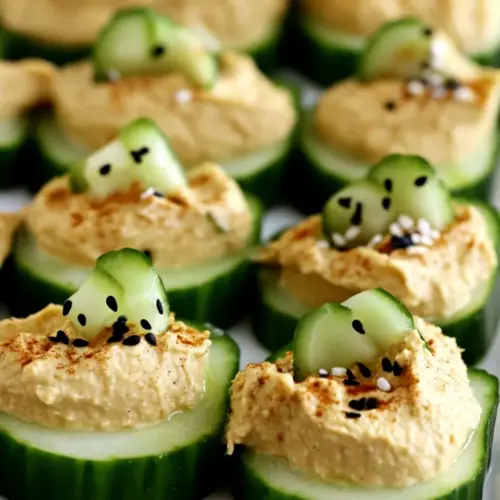
Cucumber Hummus Bites
Equipment
- Knife
- Cutting Board
- Plastic Bag
- Plate or Serving Tray
Ingredients
- 1 large European cucumber (see notes) Provide a crisp, refreshing base and sturdy rounds for topping; choose a large European cucumber for thinner skin and fewer seeds which improves texture. Slice into 1/4–1/2-inch rounds and scoop a small shallow well to hold toppings without slipping. Chill before assembling to keep bites firm and visually appealing.
- 1/2 cup hummus Offer a creamy, savory spread that adds moisture and rich flavor while binding toppings to cucumber rounds. Use about half a cup total, dolloping or piping onto each slice to provide balanced saltiness and a smooth mouthfeel. Select plain or lightly flavored hummus to complement without overpowering other elements.
- black or white sesame seeds Add a nutty, crunchy garnish and visual contrast with either black or white sesame seeds sprinkled on top. Provide a subtle toasted flavor and appealing speckled appearance that elevates simple bites. Use sparingly to avoid overwhelming delicate cucumber texture.
Instructions
- Peel cucumber, either leaving strips of green (if the cucumber has thin skin) or peeling all the skin (if the cucumber has thick waxy skin).: The first thing you will notice is the fresh, green aroma as the cucumber skin comes away, and leaving alternating strips of skin gives a pretty striped look and a hint of bitterness that some people love. If you choose to peel all the skin, the surface will feel smoother and the bites will be milder in flavor. One common mistake is using a cucumber that is overripe and soft, which yields a soggy base; always pick a firm specimen.
- Slice cucumber into thick slices about 3/4 – 1 inch thick. If the cucumbers seem watery, use a paper towel to press down on both sides to absorb some of the water and dry the surface of the cucumber.: You should hear a crisp, clean sound as the knife cuts through the flesh, and the cut faces should look glossy and moist but not dripping. Drying the rounds briefly with a paper towel helps the hummus adhere, and pressing gently will release excess surface water without crushing the structure. Avoid slicing them too thin, which makes them flop under the topping, or too thick, which can overwhelm the balance of bite to topping.
- Put hummus into a small bag made of thick plastic. I used 1/2 cup hummus to make 14 appetizers; you can always add more hummus to the bag if you prefer a thicker mound of hummus.: When you spoon the hummus into a bag the texture becomes more controllable, and you will notice the cool, creamy smell of chickpeas and tahini as you work. The bag method creates neat mounds quickly, which is especially helpful when serving a group. A common slip is cutting too large a bag tip, which leads to puddles rather than neat swirls, so cut a small opening first and enlarge if needed.
- Cut off one corner of the bag so you can squeeze the hummus out, taking care not to make the hole too big.: A small opening produces a clean, dense dollop, while a large hole leads to a flat smear. As you squeeze, watch for smooth, even piping and listen for the gentle squish as the hummus moves through the bag. If the texture is too thick to squeeze easily, soften it slightly with a teaspoon of water and mix, but be careful not to make it runny. The typical error here is impatience, which results in uneven mounds; steady, even pressure creates the best shape.
- Arrange cucumber slices on a plate or serving tray, then squeeze a mound of hummus on to the top of each cucumber slice.: The visual impact is important, so arrange the rounds in a tidy grid or in concentric circles for effect. As you deposit the hummus , notice the contrast between the pale cream and the green cucumber; that contrast is part of the appeal. If a mound feels unstable, press it gently into the cucumber so it adheres without flattening. A frequent misstep is overcrowding the tray, which leads to messy handling when guests reach for them, so leave some space between pieces.
- Sprinkle slices with sesame seeds just before serving.: The final flourish should be light and deliberate, adding a whisper of toasty aroma and tiny crunchy pops. Sprinkling just before serving helps the seeds stay crisp and keeps the presentation fresh. If you do this too early, the seeds can settle into the hummus and lose their texture. One simple troubleshooting note is that using a spoon to scatter seeds often produces uneven coverage, so I prefer pinching a small handful and gently scattering for a more controlled finish.
Notes
- Swap hummus texture — Choose a smooth hummus for clean piping, or a chunky style if you want more rustic texture. A softer hummus will spread more easily, while a firmer one holds shape better.
- Change sesame seed color — Use black seeds for visual contrast or white seeds for a subtler look. The difference is mainly aesthetic, but black seeds offer a striking pop on the pale hummus.
- Adjust mound size — Increase the amount of hummus in the bag if you prefer a heartier bite, or reduce for a lighter canapé that pairs well with cocktails.
- Peel pattern — Leave thin strips of skin for a striped presentation, or peel completely for a smoother, cleaner appearance; both choices affect the look and slight bitterness of the peel.
- Serving temperature — Keep the cucumber cold for the freshest texture, and serve the hummus at cool room temperature so the flavor is more pronounced and easier to pipe.