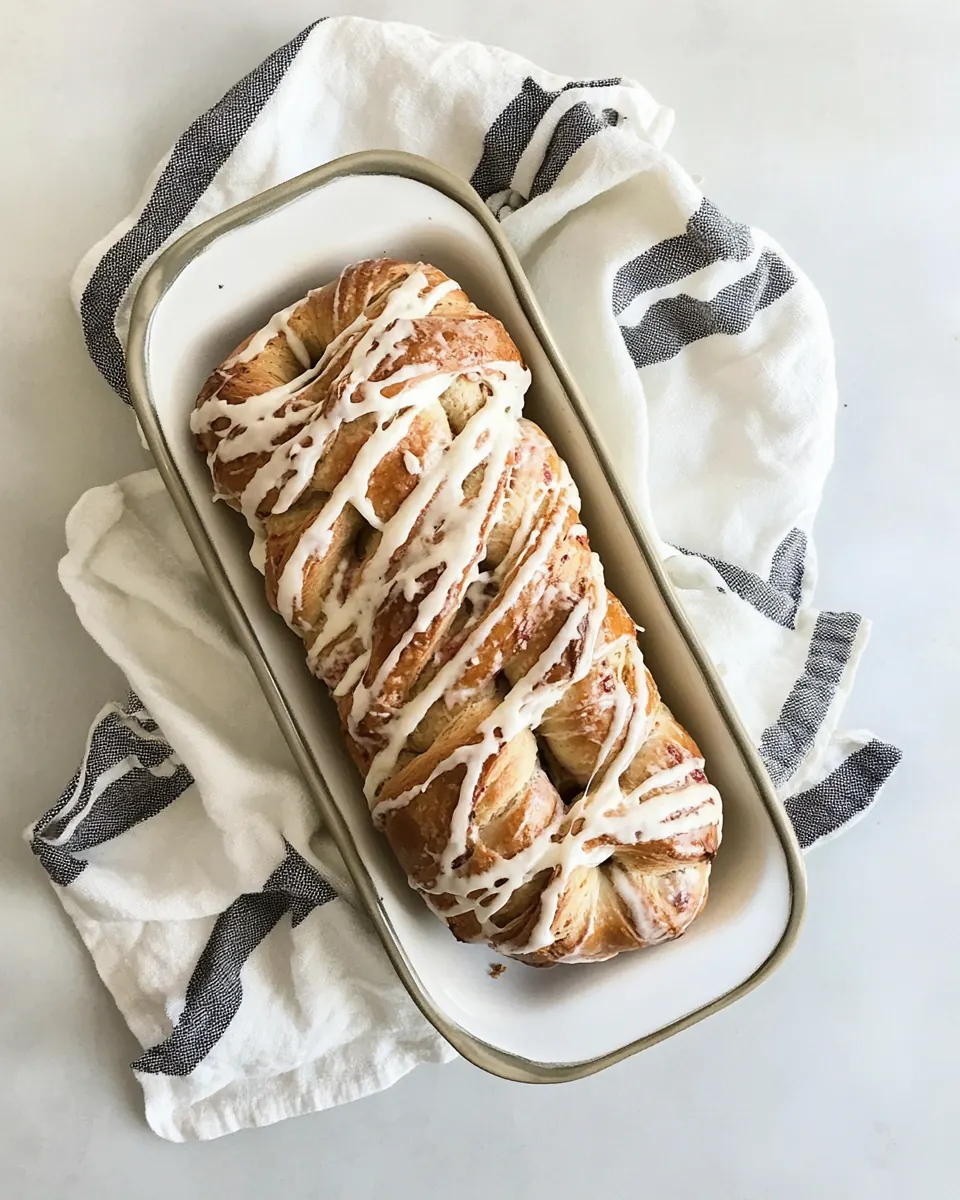
Danish Braided Strawberry Bread
Danish Braided Strawberry Bread has been one of those recipes I return to whenever I need a simple showstopper for brunch or a cozy weekend bake.
My first memory of this bread is from a sunlit Saturday when I wanted something that smelled like a bakery but was actually baked in my tiny apartment oven. The braid looked intimidating at first, yet once I felt the dough in my hands it transformed into something comforting and playful. The filling of cream cheese and jam gave a sweet tang that balanced the honey in the dough, and the glaze finished it like a quiet encore.
I like to make the dough in the morning, let it rise slowly, and sneak tastes of the filling while no one is around. There is something quietly satisfying about cutting those 1/2 inch strips and folding them to make a tidy braid. Over the years I refined little rituals, like chilling the dough for easier shaping and using scissors instead of a paring knife for neat, even strips.
Recipe Snapshot
50 mins
15 mins
35 mins
Medium
250 kcal
American
Gluten-Free, Low FODMAP
Desserts
Mixing bowl, Stand up mixer or strong spoon, Rolling pin, Baking sheet, Parchment paper, Kitchen scissors or paring knife
What You’ll Enjoy About This Danish Braided Strawberry Bread
Comforting, not fussy
I love that Danish Braided Strawberry Bread delivers big bakery flavors without demanding professional technique. The dough is forgiving, and the rise time means you can come back to it while you prep coffee or tidy the kitchen. I often tell friends you do not need a stand mixer to get great results, just patience and a warm spot for the dough to puff up.
Versatile for occasions
We use this braid for lazy brunches, celebratory breakfasts, and tea with neighbors. The recipe scales well so you can make one or two loaves, and the filling choices make it fitting for casual weekend treats or a more polished holiday table. I find it pairs easily with fresh fruit and light spreads, which makes serving simple and elegant.
Texture and balance
The interplay of soft enriched dough, tangy cream cheese, and sweet jam creates a multilayered bite. The honey and butter in the dough add tender crumbs and a delicate sheen when baked. When you brush that egg yolk wash on, the crust comes out golden and slightly crisp, offering contrast to the creamy center.
Make ahead friendly
I often make the dough a day ahead and refrigerate it, which improves flavor and makes shaping easier. This flexibility matters when you have guests or a busy morning, because you can bake and glaze the loaves right before serving and still have them taste fresh and impressive.
Simple ingredients, big payoff
Everything here is pantry friendly, yet the final result looks like you spent hours. The powdered sugar glaze adds a bright finish that ties the loaves together visually and in flavor. I enjoy how straightforward substitutions like different jams or citrus zest can make each braid feel new.
What You’ll Need for Danish Braided Strawberry Bread

The philosophy behind these ingredients is balance. The dough is enriched with honey, butter, and eggs so it bakes tender and golden, while the cream cheese and jam bring a creamy, fruity center. The flour and yeast provide structure, and the final glaze gives a glossy, sweet finish that makes each slice feel special.
- 2 large eggs, lightly beaten: Lightly beaten to incorporate air and help bind the dough, contributing tenderness and structure while enriching flavor and color.
- 3/4 cup + 2 tablespoons lukewarm water, 100F or below: Lukewarm and measured precisely to activate yeast without killing it; provides hydration for gluten development and dough consistency.
- 1 1/2 teaspoons granulated yeast: Granulated yeast added to leaven the dough, producing carbon dioxide for rise and contributing characteristic yeasty aroma and lightness.
- 1 1/2 teaspoons kosher salt: Kosher salt used to strengthen gluten, regulate yeast activity, and enhance overall flavor balance throughout the bread.
- 1/4 cup honey: Honey used to tenderize the crumb, add subtle sweetness and richness, and feed the yeast for a milder fermentation.
- 4 tablespoons unsalted butter, melted: Melted unsalted butter incorporated for richness, moisture, and a tender crumb while allowing precise control of salt level.
- 3 1/2 bread flour: Bread flour selected for higher protein to develop strong gluten networks, giving the braided loaf structure and chew.
- 8 ounces cream cheese: Cream cheese softened to create a tangy, creamy filling that adds moisture, richness, and contrasts with the jam.
- 1 teaspoon grated lemon zest: Grated lemon zest added to brighten flavors, lift the sweetness, and provide fresh citrus aromatics to the filling.
- 2 tablespoons sugar: Sugar used to sweeten the cream cheese mixture, balance tartness, and slightly caramelize during baking for color.
- 1/2 cup your favorite store-bought jam (I used half apricot and half strawberry jam): Store–bought jam spooned into the braid for concentrated fruit flavor, sweetness, and glossy, spreadable filling consistency.
- Egg yolk wash, 1 egg yolk beaten with 1 tablespoon water, for brushing the braids: Egg yolk wash brushed over braids to promote even browning, glossy finish, and a slightly richer crust after baking.
- 1 cup powdered sugar: Powdered sugar used in the glaze to provide smooth sweetness and help create a pourable icing when combined with cream.
- 4 to 6 tablespoons heavy cream, or more as needed to reach the proper consistency: Heavy cream added to thin the powdered sugar into a silky glaze, contributing richness and allowing adjustable consistency.
How to Prepare Danish Braided Strawberry Bread
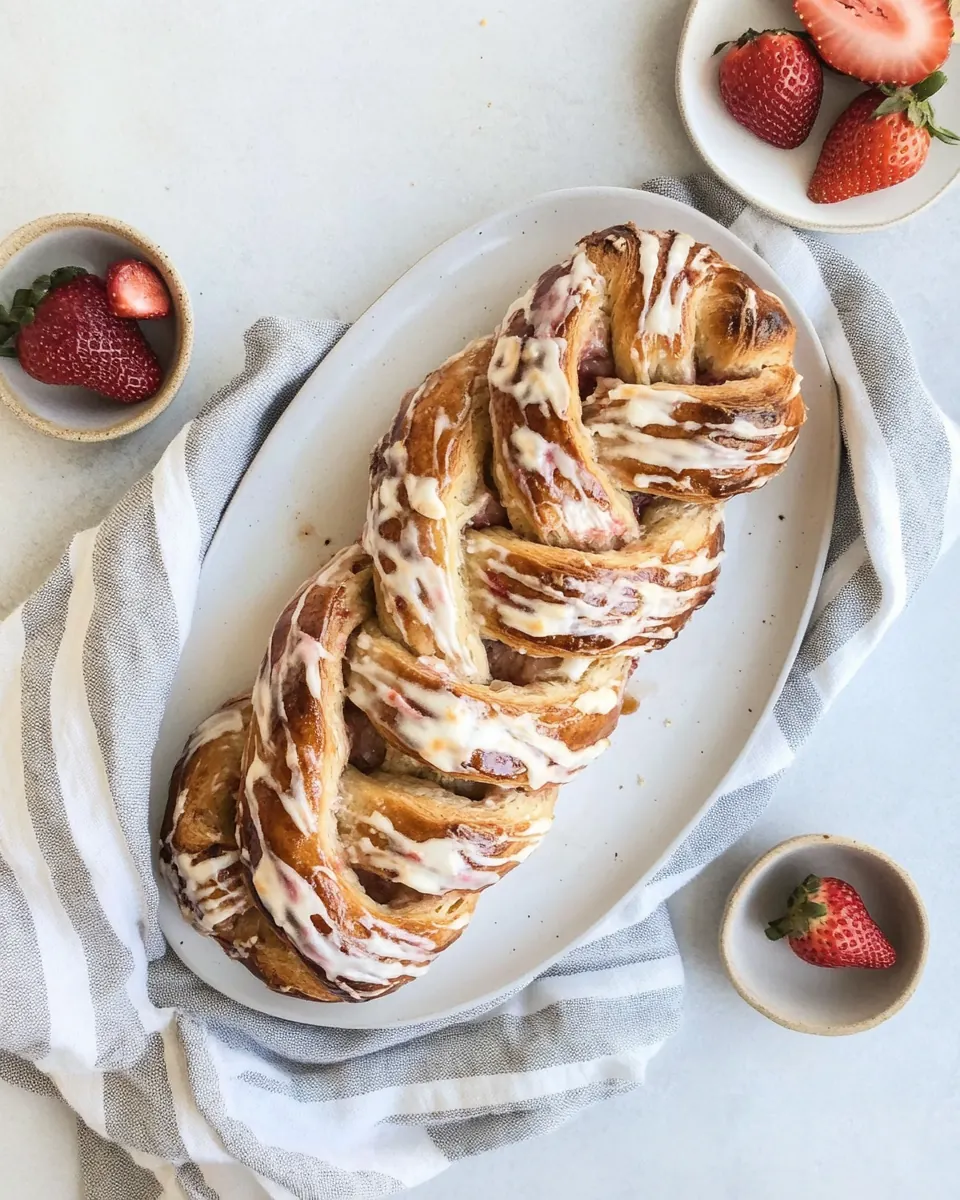
This method walks you through a relaxed, step by step approach so you can focus on texture and flavor. Expect to spend time layering smells and watching the dough change as it rises. Keep tools ready and your workspace floured for efficient shaping.
- You can use a big bowl with a strong spoon or a stand-up mixer with the paddle attachment.: The kitchen will smell faintly of flour and butter as you choose your mixing method, and using a stand up mixer saves time when you have a lot of dough to move. You'll feel the dough come together more smoothly with mechanical mixing, which reduces hand fatigue. One common mistake here is overworking the dough if you use the wrong attachment, so stop once ingredients are evenly combined and allow resting time for gluten to relax.
- To the bowl, add the beaten eggs, lukewarm water, yeast, kosher salt, honey and melted butter. Mix.: As the liquids mingle, you will notice a glossy sheen and a sweet, yeasty aroma developing. Mixing at this stage hydrates the yeast and dissolves the honey and salt, which helps with consistent fermentation. If the liquid feels too warm, cool it down slightly before adding yeast because heat can kill the yeast and prevent rising.
- Add the flour – without kneading — and mix until combined. Cover the dough with a clean kitchen towel and place in a warm-ish area in your kitchen. Allow the dough to rise for 2 hours.: The dough will appear shaggy at first and then begin to hold together in a loose mass. The texture should be slightly tacky, not dry. This initial gentle mixing builds enough structure for the first rise while keeping the dough tender. A typical error is adding too much extra flour, which yields a dense loaf, so resist the urge to overflour the mixture.
- The dough can be used immediately after the initial rise, though it is easier to handle when it’s cold. Refrigerate the container and use over the next 5 days.: Over the next couple of hours you will see the dough puff and almost double in volume, releasing a pleasant fermented scent. This is the yeast working, creating air pockets that lighten the crumb. If your kitchen is cold, place the bowl in an oven with just the light on to provide gentle warmth; a common misstep is expecting a dramatic rise in a cold space which will lengthen proofing time.
- Mix the cream cheese, lemon zest, and sugar in a bowl until smooth. Set aside.: Chilling firms the dough so it is less sticky and much easier to shape into neat braids. Flavor deepens slightly in the fridge as fermentation continues slowly. A pitfall is leaving it out too long at room temperature after the first rise which can lead to overproofing and collapse.
- Line a baking sheet with parchment paper or a silicon mat.: As you whip these ingredients, the bowl will smell bright and tangy from the zest while the cream cheese becomes silky. Achieving a lump free filling ensures even pockets of creaminess in every slice. If the cream cheese is too cold, it will stay lumpy, so allow it to soften to room temperature for easiest smoothing.
- Dust the surface of the refrigerated dough with flour and divide in half. Dust the first piece with flour and shape into a rough ball by stretching the surface of the dough around to the bottom, rotating the ball a quarter-turn as you go.: Lined sheets help the braid slide off easily and prevent sticking, while the parchment also collects any small drips from the filling. The surface texture supports even browning and makes cleanup effortless. Avoid skipping a liner, as the glaze and jam can stick and burn on bare metal.
- Using a rolling pin, roll the first piece of dough out to a 1/4-inch-thick rectangle, about 9 x 12 inches. As you roll out the dough, add flour as needed to prevent sticking.: When you perform this motion, the dough surface tightens, building a smooth skin that resists tearing when rolled. This creates an ideal canvas for rolling into a rectangle. A common oversight is working with overly warm dough, which will stick and tear, so keep flour handy and chill the dough again briefly if needed.
- Transfer the dough onto the lined baking sheet. Place the cream cheese filled down the length of the dough in a 3-inch strip in the center, and add the jam on top in an even layer.: You will feel the dough gradually thin and spread under the pin, and the small cloud of flour prevents it from adhering to the board. Try to maintain even thickness so the braid bakes uniformly. Rolling unevenly leads to thin spots that brown too quickly, so rotate and check thickness as you go.
- Using a sharp paring knife or a pair of kitchen scissors (I found the scissors to actually work best), cut about 1/2-inch-wide strips down each side. Twist and then fold the strips, left over right, crisscrossing over the filling. Lightly press the strips together you move down the pastry, creating a braid.: The contrast of pale dough around the bright filling is satisfying visually, and the thickness of the filling determines how moist the center will be. Spread the cream cheese evenly to avoid pockets of dryness. Overfilling can cause leaks during baking, so keep the filling confined to the center strip.
- Repeat with the second braided loaf.: The snip and fold motion creates a woven pattern that traps the filling and makes attractive layers when sliced. Listen for the quiet snip of scissors and feel the dough give as you fold, which indicates a good tension. If strips are cut too wide, the braid looks sloppy, so aim for consistent 1/2 inch slices for the best presentation.
- Cover loosely with plastic wrap and allow them to rest at room temperature for 60 minutes.: As you repeat the process the motion becomes rhythmic and satisfying, and both loaves will take shape with similar appearance. This repetition helps you refine strip width and folding technique. Don't rush the second loaf, because uneven shaping can cause one loaf to bake differently than the other.
- Preheat the oven to 350 degrees F, with a rack placed in the center of the oven.: During this rest the braids relax and gain a final puff, producing a lighter crumb after baking. The surface will look slightly pillowy and soft to the touch. A frequent mistake is allowing them to overproof here which will cause flattening in the oven, so check for gentle spring back when pressed lightly.
- Brush the braids lightly with egg wash. Bake the braided loaves for 30 to 35 minutes, or until golden brown. Allow to cool.: A properly preheated oven ensures even color and correct oven spring, contributing to the golden crust. You will notice a warm, enveloping smell as the oven reaches temperature. Putting cold loaves into an oven that has not reached temperature can lead to uneven baking, so wait for full preheat before inserting pans.
- While the braid is cooling, mix together the powdered sugar and cream. I wanted the drizzle to be prettier, so I transferred to a piping bag, snipped off the end and drizzled the glaze on the both of the braids. A spoon would also work!: The egg wash produces a glossy, deep golden finish while baking. As the loaves cook you will hear faint crackles and smell the honey sweeten, and the filling will set into a creamy ribbon. If the tops brown too quickly, tent with foil to prevent overbrowning while allowing the centers to finish baking.
- While the braid is cooling mix together the powdered sugar and cream I wanted the drizzle to be prettier so I transferred to a piping bag snipped off the end and drizzled the glaze on the both of the braids A spoon would also work: The glaze will pour in a smooth ribbon and set to a glossy finish that brightens each slice. The contrast of the cool glaze and still warm loaf creates an irresistible sheen. If the glaze is too thin, add more powdered sugar a tablespoon at a time to thicken it slightly, and if too thick, thin with a bit more cream.
Make It Your Own
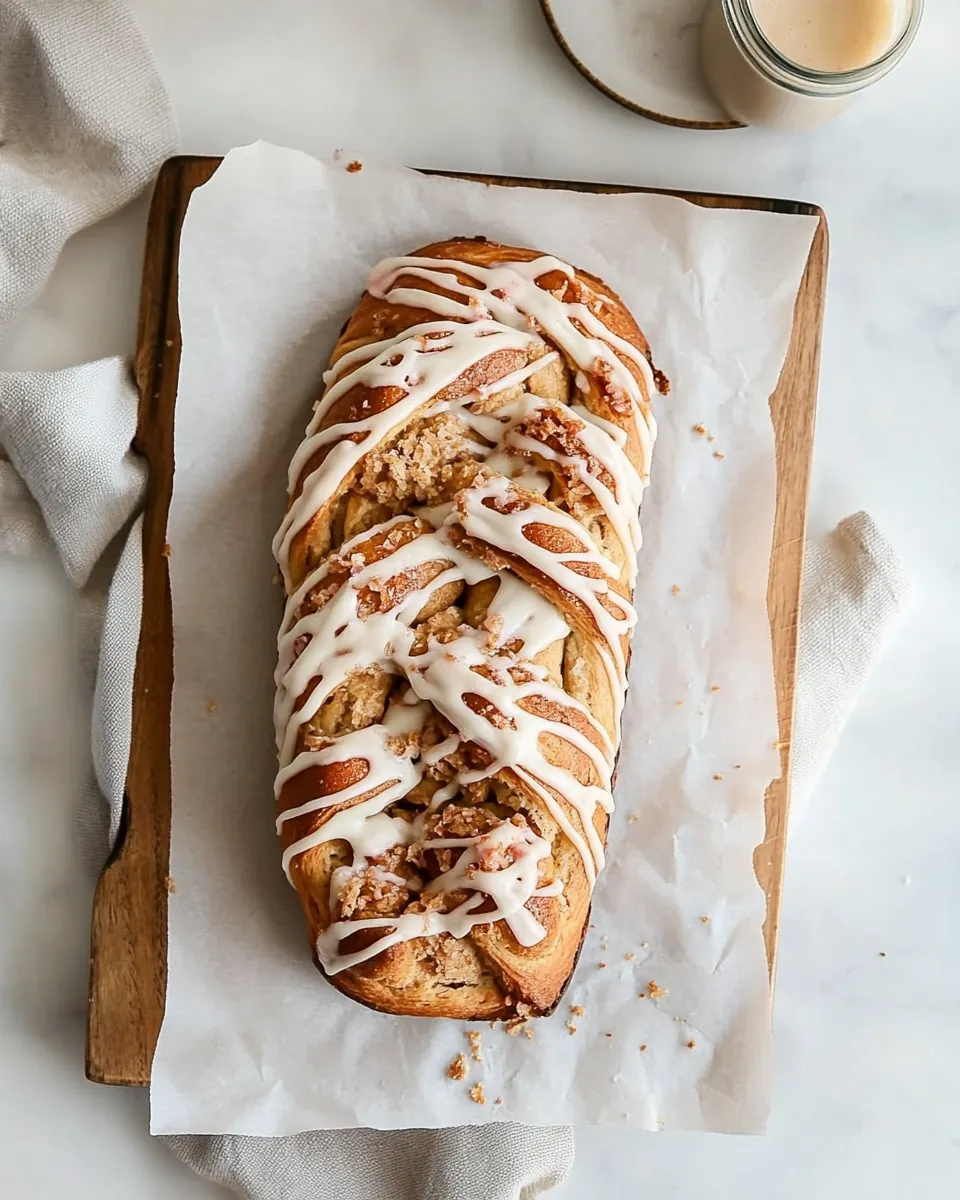
This recipe is forgiving and lends itself to small swaps that change character without breaking technique. Try different jams or citrus zests, and consider chilling schedules to fit your timeline. The list below expands on the single ‘Notes’ section from the original data, offering practical variations and storage ideas.
- Make ahead: Prepare the dough the day before and refrigerate it to mellow the flavors and firm the dough for easier handling. Chilling also allows you to bake fresh in the morning with minimal hands on effort.
- Bake then store: You can bake the loaves the night before and drizzle the glaze just before serving the next morning. Wrapped well, they will stay delicious for up to three days.
- Jam mix: Use a single jam or combine two for depth, such as mixing apricot with strawberry for a nuanced fruit profile that melts into the cream cheese beautifully.
- Chill for cleaner cuts: If you want tidy slices for serving, chill the cooled loaf briefly before slicing, which firms the filling and reduces smearing.
- Glaze consistency: Adjust the heavy cream one tablespoon at a time until the glaze reaches a drizzle like thickness; too thin and it will pool, too thick and it will not spread evenly.
- Keep it tidy: When cutting the strips, use scissors for consistent widths, which helps the braid look even and professional when baked.
What to Serve Alongside Danish Braided Strawberry Bread
This braid works beautifully across occasions, whether you are hosting brunch or looking for a comforting breakfast. Serve simply to let the bread shine, and pair with items that contrast texture and temperature. Below are ideas for sides, occasions, storage, and seasonal pairings.
- Fresh fruit platter: Seasonal berries or sliced stone fruit add bright, juicy contrast to the sweet, creamy braid, and they refresh the palate between bites.
- Coffee and tea pairings: Robust coffee or a fragrant tea balances the sweetness and brings warmth to the table, making this ideal for morning gatherings.
- Brunch occasion: Serve slices alongside savory egg dishes and a simple green salad to create a balanced spread suitable for leisurely weekend meals.
- Holiday mornings: This braid suits celebratory breakfasts during spring holidays or family gatherings, offering a pretty centerpiece that is easy to transport and share.
- Storage tips: Keep leftover loaves wrapped tightly at room temperature for one to two days, or refrigerate for up to three days. For longer storage freeze whole loaves wrapped well, and thaw overnight in the fridge before serving.
- Seasonal variations: Swap jams to match the season, such as stone fruit in summer or spiced preserves in cooler months, to make the braid feel timely and fresh.
FAQ
Conclusion
This Danish Braided Strawberry Bread stands out for its tender enriched dough, creamy filling, and beautiful braided presentation. It s a recipe that looks impressive yet stays approachable, whether you re hosting brunch or treating yourself on a quiet morning. Try chilling the dough ahead to simplify shaping and experiment with jam blends to make the flavor your own. Have fun with the assembly, and enjoy the warm aroma that will fill your kitchen when these loaves bake.
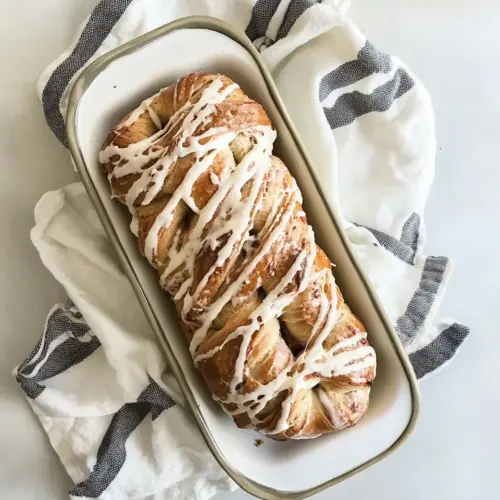
Danish Braided Strawberry Bread
Equipment
- Mixing Bowl
- Stand up mixer or strong spoon
- Rolling Pin
- Baking Sheet
- Parchment Paper
- Kitchen scissors or paring knife
Ingredients
- 2 large eggs, lightly beaten Lightly beaten to incorporate air and help bind the dough, contributing tenderness and structure while enriching flavor and color.
- 3/4 cup + 2 tablespoons lukewarm water, 100F or below Lukewarm and measured precisely to activate yeast without killing it; provides hydration for gluten development and dough consistency.
- 1 1/2 teaspoons granulated yeast Granulated yeast added to leaven the dough, producing carbon dioxide for rise and contributing characteristic yeasty aroma and lightness.
- 1 1/2 teaspoons kosher salt Kosher salt used to strengthen gluten, regulate yeast activity, and enhance overall flavor balance throughout the bread.
- 1/4 cup honey Honey used to tenderize the crumb, add subtle sweetness and richness, and feed the yeast for a milder fermentation.
- 4 tablespoons unsalted butter, melted Melted unsalted butter incorporated for richness, moisture, and a tender crumb while allowing precise control of salt level.
- 3 1/2 bread flour Bread flour selected for higher protein to develop strong gluten networks, giving the braided loaf structure and chew.
- 8 ounces cream cheese Cream cheese softened to create a tangy, creamy filling that adds moisture, richness, and contrasts with the jam.
- 1 teaspoon grated lemon zest Grated lemon zest added to brighten flavors, lift the sweetness, and provide fresh citrus aromatics to the filling.
- 2 tablespoons sugar Sugar used to sweeten the cream cheese mixture, balance tartness, and slightly caramelize during baking for color.
- 1/2 cup your favorite store-bought jam (I used half apricot and half strawberry jam) Store-bought jam spooned into the braid for concentrated fruit flavor, sweetness, and glossy, spreadable filling consistency.
- Egg yolk wash, 1 egg yolk beaten with 1 tablespoon water, for brushing the braids Egg yolk wash brushed over braids to promote even browning, glossy finish, and a slightly richer crust after baking.
- 1 cup powdered sugar Powdered sugar used in the glaze to provide smooth sweetness and help create a pourable icing when combined with cream.
- 4 to 6 tablespoons heavy cream, or more as needed to reach the proper consistency Heavy cream added to thin the powdered sugar into a silky glaze, contributing richness and allowing adjustable consistency.
Instructions
- You can use a big bowl with a strong spoon or a stand-up mixer with the paddle attachment.: The kitchen will smell faintly of flour and butter as you choose your mixing method, and using a stand up mixer saves time when you have a lot of dough to move. You'll feel the dough come together more smoothly with mechanical mixing, which reduces hand fatigue. One common mistake here is overworking the dough if you use the wrong attachment, so stop once ingredients are evenly combined and allow resting time for gluten to relax.
- To the bowl, add the beaten eggs, lukewarm water, yeast, kosher salt, honey and melted butter. Mix.: As the liquids mingle, you will notice a glossy sheen and a sweet, yeasty aroma developing. Mixing at this stage hydrates the yeast and dissolves the honey and salt, which helps with consistent fermentation. If the liquid feels too warm, cool it down slightly before adding yeast because heat can kill the yeast and prevent rising.
- Add the flour – without kneading — and mix until combined. Cover the dough with a clean kitchen towel and place in a warm-ish area in your kitchen. Allow the dough to rise for 2 hours.: The dough will appear shaggy at first and then begin to hold together in a loose mass. The texture should be slightly tacky, not dry. This initial gentle mixing builds enough structure for the first rise while keeping the dough tender. A typical error is adding too much extra flour, which yields a dense loaf, so resist the urge to overflour the mixture.
- The dough can be used immediately after the initial rise, though it is easier to handle when it’s cold. Refrigerate the container and use over the next 5 days.: Over the next couple of hours you will see the dough puff and almost double in volume, releasing a pleasant fermented scent. This is the yeast working, creating air pockets that lighten the crumb. If your kitchen is cold, place the bowl in an oven with just the light on to provide gentle warmth; a common misstep is expecting a dramatic rise in a cold space which will lengthen proofing time.
- Mix the cream cheese, lemon zest, and sugar in a bowl until smooth. Set aside.: Chilling firms the dough so it is less sticky and much easier to shape into neat braids. Flavor deepens slightly in the fridge as fermentation continues slowly. A pitfall is leaving it out too long at room temperature after the first rise which can lead to overproofing and collapse.
- Line a baking sheet with parchment paper or a silicon mat.: As you whip these ingredients, the bowl will smell bright and tangy from the zest while the cream cheese becomes silky. Achieving a lump free filling ensures even pockets of creaminess in every slice. If the cream cheese is too cold, it will stay lumpy, so allow it to soften to room temperature for easiest smoothing.
- Dust the surface of the refrigerated dough with flour and divide in half. Dust the first piece with flour and shape into a rough ball by stretching the surface of the dough around to the bottom, rotating the ball a quarter-turn as you go.: Lined sheets help the braid slide off easily and prevent sticking, while the parchment also collects any small drips from the filling. The surface texture supports even browning and makes cleanup effortless. Avoid skipping a liner, as the glaze and jam can stick and burn on bare metal.
- Using a rolling pin, roll the first piece of dough out to a 1/4-inch-thick rectangle, about 9 x 12 inches. As you roll out the dough, add flour as needed to prevent sticking.: When you perform this motion, the dough surface tightens, building a smooth skin that resists tearing when rolled. This creates an ideal canvas for rolling into a rectangle. A common oversight is working with overly warm dough, which will stick and tear, so keep flour handy and chill the dough again briefly if needed.
- Transfer the dough onto the lined baking sheet. Place the cream cheese filled down the length of the dough in a 3-inch strip in the center, and add the jam on top in an even layer.: You will feel the dough gradually thin and spread under the pin, and the small cloud of flour prevents it from adhering to the board. Try to maintain even thickness so the braid bakes uniformly. Rolling unevenly leads to thin spots that brown too quickly, so rotate and check thickness as you go.
- Using a sharp paring knife or a pair of kitchen scissors (I found the scissors to actually work best), cut about 1/2-inch-wide strips down each side. Twist and then fold the strips, left over right, crisscrossing over the filling. Lightly press the strips together you move down the pastry, creating a braid.: The contrast of pale dough around the bright filling is satisfying visually, and the thickness of the filling determines how moist the center will be. Spread the cream cheese evenly to avoid pockets of dryness. Overfilling can cause leaks during baking, so keep the filling confined to the center strip.
- Repeat with the second braided loaf.: The snip and fold motion creates a woven pattern that traps the filling and makes attractive layers when sliced. Listen for the quiet snip of scissors and feel the dough give as you fold, which indicates a good tension. If strips are cut too wide, the braid looks sloppy, so aim for consistent 1/2 inch slices for the best presentation.
- Cover loosely with plastic wrap and allow them to rest at room temperature for 60 minutes.: As you repeat the process the motion becomes rhythmic and satisfying, and both loaves will take shape with similar appearance. This repetition helps you refine strip width and folding technique. Don't rush the second loaf, because uneven shaping can cause one loaf to bake differently than the other.
- Preheat the oven to 350 degrees F, with a rack placed in the center of the oven.: During this rest the braids relax and gain a final puff, producing a lighter crumb after baking. The surface will look slightly pillowy and soft to the touch. A frequent mistake is allowing them to overproof here which will cause flattening in the oven, so check for gentle spring back when pressed lightly.
- Brush the braids lightly with egg wash. Bake the braided loaves for 30 to 35 minutes, or until golden brown. Allow to cool.: A properly preheated oven ensures even color and correct oven spring, contributing to the golden crust. You will notice a warm, enveloping smell as the oven reaches temperature. Putting cold loaves into an oven that has not reached temperature can lead to uneven baking, so wait for full preheat before inserting pans.
- While the braid is cooling, mix together the powdered sugar and cream. I wanted the drizzle to be prettier, so I transferred to a piping bag, snipped off the end and drizzled the glaze on the both of the braids. A spoon would also work!: The egg wash produces a glossy, deep golden finish while baking. As the loaves cook you will hear faint crackles and smell the honey sweeten, and the filling will set into a creamy ribbon. If the tops brown too quickly, tent with foil to prevent overbrowning while allowing the centers to finish baking.
- While the braid is cooling mix together the powdered sugar and cream I wanted the drizzle to be prettier so I transferred to a piping bag snipped off the end and drizzled the glaze on the both of the braids A spoon would also work: The glaze will pour in a smooth ribbon and set to a glossy finish that brightens each slice. The contrast of the cool glaze and still warm loaf creates an irresistible sheen. If the glaze is too thin, add more powdered sugar a tablespoon at a time to thicken it slightly, and if too thick, thin with a bit more cream.
Notes
- Make ahead: Prepare the dough the day before and refrigerate it to mellow the flavors and firm the dough for easier handling. Chilling also allows you to bake fresh in the morning with minimal hands on effort.
- Bake then store: You can bake the loaves the night before and drizzle the glaze just before serving the next morning. Wrapped well, they will stay delicious for up to three days.
- Jam mix: Use a single jam or combine two for depth, such as mixing apricot with strawberry for a nuanced fruit profile that melts into the cream cheese beautifully.
- Chill for cleaner cuts: If you want tidy slices for serving, chill the cooled loaf briefly before slicing, which firms the filling and reduces smearing.
- Glaze consistency: Adjust the heavy cream one tablespoon at a time until the glaze reaches a drizzle like thickness; too thin and it will pool, too thick and it will not spread evenly.
- Keep it tidy: When cutting the strips, use scissors for consistent widths, which helps the braid look even and professional when baked.