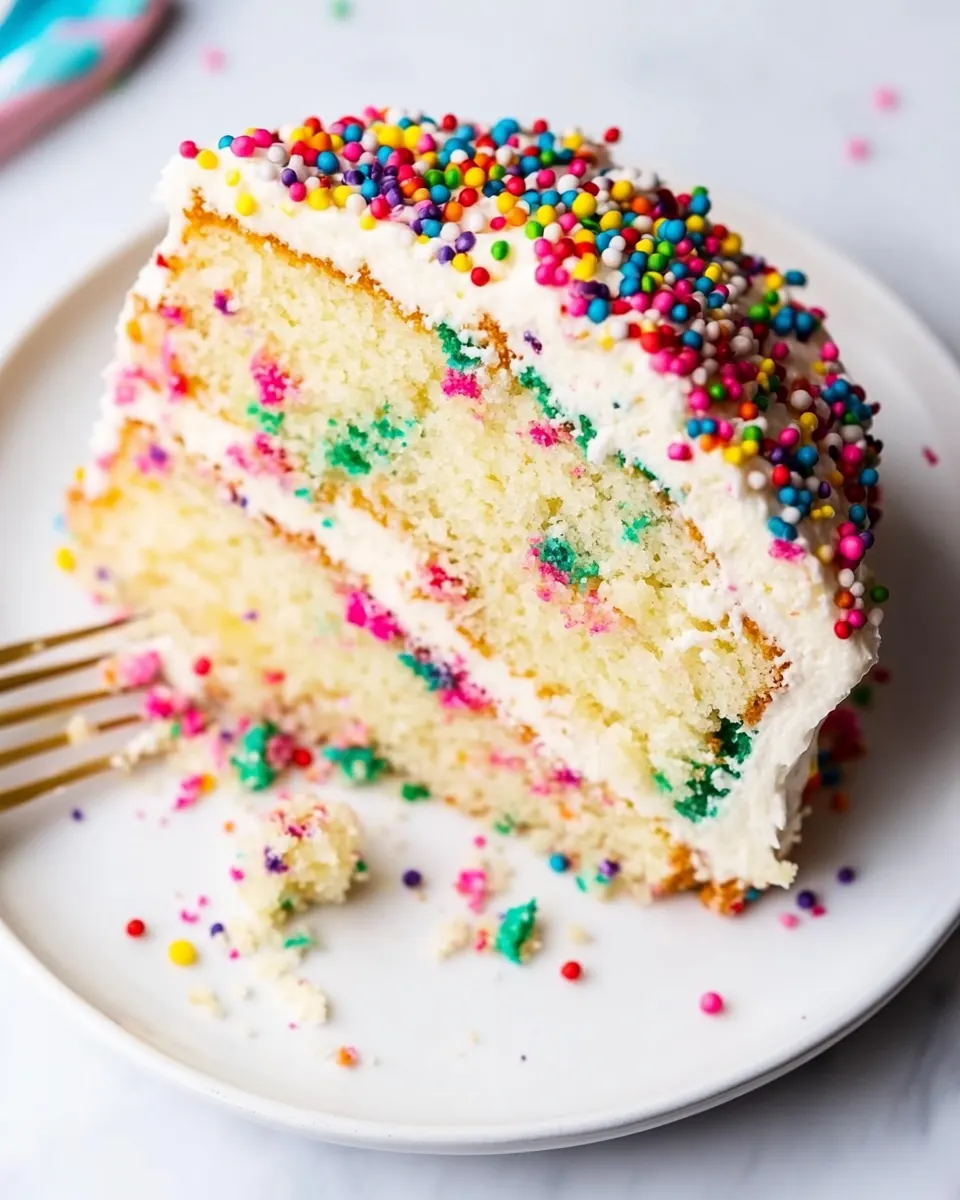
Funfetti Cake
Funfetti Cake has always been my go to celebration cake when I want something that reads like a party on the plate and still feels unfussy to make.
The first time I baked this I was nervous about the sprinkles bleeding into the batter, but the final crumb stayed tender and dotted with cheerful color, which made everyone smile. Over the years, I have tweaked the mixing order and the frosting to suit different celebrations, and each version brings back a warm memory of birthdays, small wins, and impromptu tea time. I often pick this cake when I want a showy dessert without a long list of steps, because it balances playful visuals with reliably good texture.
Recipe Snapshot
30 mins
5 mins
25 mins
Easy
350 kcal
American
Vegan, Gluten-Free
Desserts
8 inch springform cake pans, Mixing bowl, Spatula, Oven, Skewer, Knife
Why This Funfetti Cake Is a Winner
It feels joyful
I love how Funfetti Cake immediately lifts the mood. The flecks of rainbow sprinkles make every slice look festive, so you do not need extra decorations. I have found that guests respond to it with a smile before they even taste it, which is a simple, priceless win.
Simple pantry staples
This recipe uses common items like all purpose flour, sugar, oil, and vanilla extract, so you rarely need a special shopping trip. I appreciate recipes that let me assemble something memorable without running to the store, especially on short notice when a gathering pops up.
Reliable texture
When I follow the mixing technique and temperature guidelines, the crumb comes out tender and not gummy. The balance of baking soda and the acid from vinegar gives a lift that keeps the layers light yet sturdy enough to stack. That dependable structure means the cake slices cleanly and looks neat on the plate.
Flexible for frosting
I often swap frostings depending on the occasion, and Funfetti Cake pairs well with a simple vanilla frosting or a richer buttercream. You can dress it up with extra sprinkles or keep it understated, which makes it easy to adapt the cake for casual afternoons or more formal celebrations.
Kid friendly and crowd pleasing
I can always count on this cake to be a hit at family gatherings. The familiar flavors and playful appearance appeal to kids and adults alike, and because it uses straightforward techniques, I can involve helpers of all ages when assembling and frosting the layers.
Ingredients for Funfetti Cake
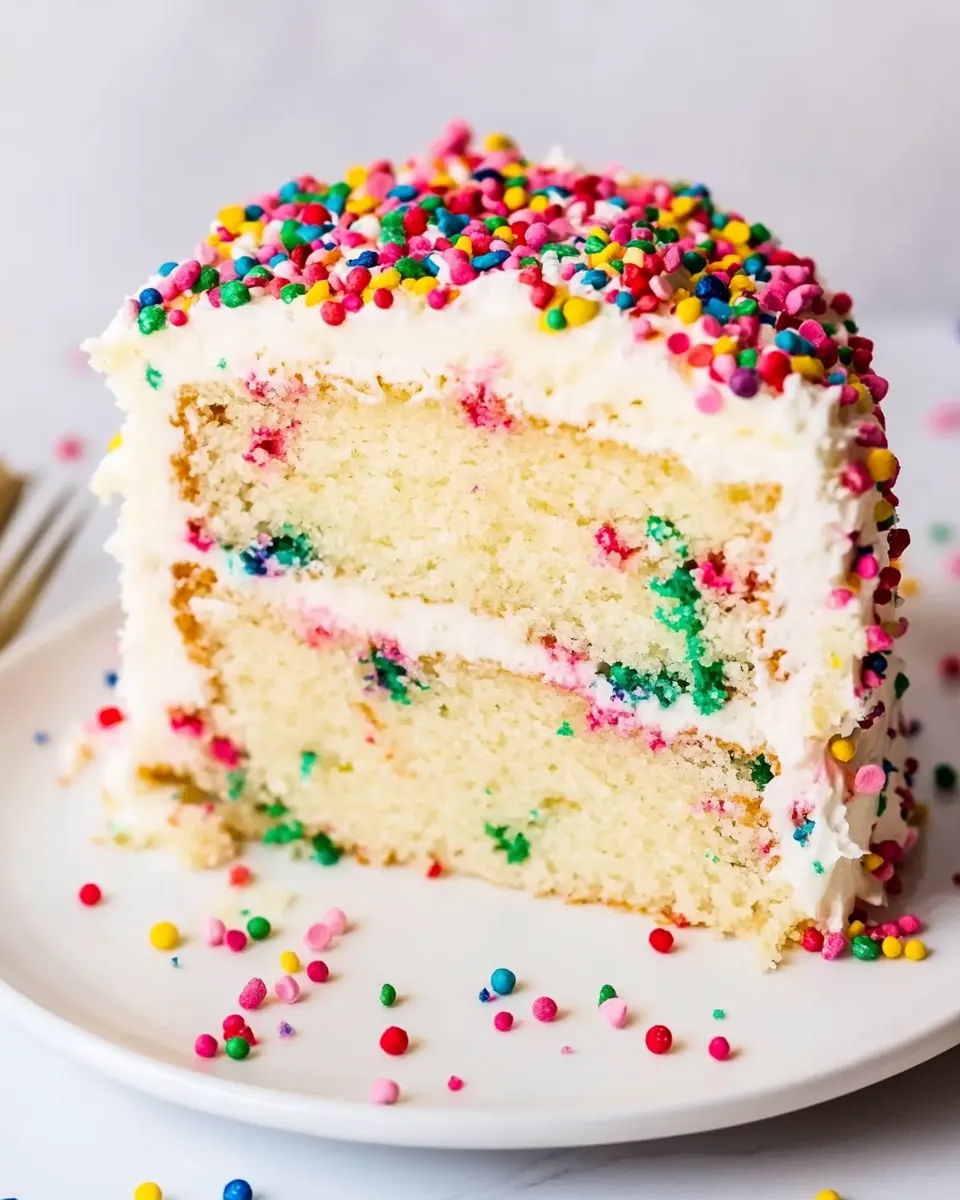
These ingredients form a simple, cohesive system. The dry ingredients provide structure, the liquid ingredients hydrate and tenderize, and the sprinkles bring the unmistakable party look. The key players are the all purpose flour for the crumb, sugar for sweetness and browning, and vanilla extract for aroma. Together they produce a balanced cake that holds up to multiple layers and a creamy vanilla frosting.
- 3 cups all purpose flour* See notes: Provide structure and bulk to the cake batter, creating the crumb and absorbing liquids; sift for lighter texture and measure accurately for consistent results.
- 2 cups sugar: Sweeten the cake and help tenderize the crumb by interacting with fats and liquids; creaming with oil produces moisture and supports browning during baking.
- 2 teaspoon baking soda: Leaven the batter by producing carbon dioxide when combined with acidic ingredients, giving lift and a tender crumb; whisk thoroughly into dry ingredients for even rise.
- 1 teaspoons salt: Season the cake and enhance other flavors while balancing sweetness; dissolve salt evenly in the dry mix to avoid localized salty pockets.
- 1 tablespoon vanilla extract: Impart fragrant, warm vanilla flavor that elevates overall taste profile and complements the sweetness; add with liquids to distribute aroma evenly.
- 2 teaspoon vinegar: React with baking soda to generate additional lift and a subtle tang, improving texture and rise; mix with liquids to activate fully before baking.
- 1/2 cup + 2 tablespoons oil I used vegetable oil: Contribute moisture and richness while keeping the crumb tender; choose a neutral oil for subtle flavor and mix with other wet ingredients until smooth.
- 2 cups water: Hydrate dry ingredients to form the batter, activate leaveners, and control consistency; use room-temperature water for easier incorporation and even mixing.
- 1/4 cups sprinkles use rainbow jimmies: Provide colorful bursts and a festive appearance throughout the cake without melting if using jimmies; fold in gently to prevent color bleed and clumping.
- 2 cups vanilla frosting any frosting of choice: Add creamy sweetness and moisture on top while complementing the cake’s flavor; spread or pipe after cooling for best presentation and texture.
How to Make Funfetti Cake
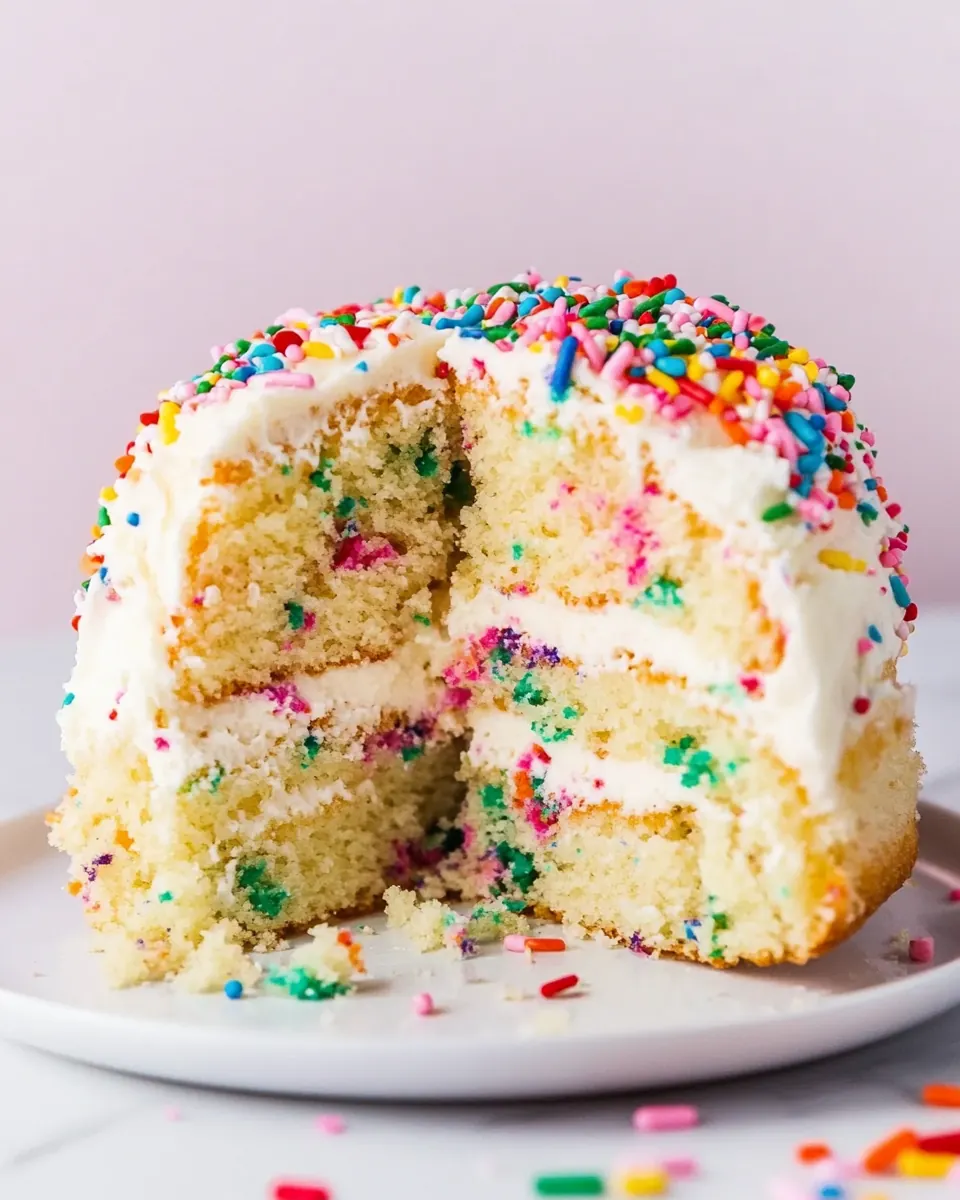
This cake comes together quickly, and the steps focus on simple mixing, even baking, and careful layering. Follow the order closely for consistent texture and appearance. Below I expand each direction with sensory cues and troubleshooting tips so you can feel confident at every turn.
- Preheat the oven to 180 C/350 F. Grease two 8-inch springform cake pans and set aside.: You should feel the warmth of the kitchen as the oven climbs to 180 C/350 F , and the smell of warm air signals readiness. Greasing the pans creates a glossy sheen on the metal, and a light dusting of flour after greasing will give the cakes a smooth release. The reason this matters is that even heat and cleanly released layers make assembly far easier, and the pans reaching temperature before the batter goes in helps give the edges a gentle set. If your oven runs hot or cool, use an oven thermometer to double check, because uneven heat can bake the edges too fast while leaving the center underdone. A common mistake is skipping the greasing step, which can tear the cake when you remove it from the pans. If you hear the oven fan cycle louder than normal, give it another five minutes to stabilize before you slide the pans in.
- In a large mixing bowl, add your dry ingredients and mix well. Add the wet ingredients and mix until a thick batter remains. Fold through the sprinkles.: As you stir the combined all purpose flour , sugar , baking soda , and salt , notice the uniform pale color and faint flour scent, which tells you the dry blend is even. When the wet ingredients join the party, the batter transforms into a glossy, cohesive mass with a slow ribboning motion as the spatula lifts through it, indicating the correct hydration. Folding in the sprinkles last keeps their colors intact and prevents excessive bleeding. This technique matters because overmixing now will develop gluten, making the cake chewy rather than tender. If the batter feels grainy, you may have unevenly measured flour, so check your scooping method next time. One slip people often make is using an electric mixer at high speed during this stage, which whips too much air and can cause collapse; gentle folding is the safer path.
- Distribute the batter evenly amongst the two cake pans. Bake for 27-30 minutes, until a skewer comes out clean.: When you pour the batter into the prepared pans, you should see a smooth top that levels itself with a light tap on the counter, and the batter will slightly bounce back when nudged. Placing the pans on the center rack helps uniform oven circulation, and toward the end of the bake you will notice the edges pulling slightly from the pan and a golden top forming. The skewer test is the reliable cue, and a clean skewer means the interior crumb set properly. The purpose of even distribution is to ensure both layers finish at the same time, so weigh or eyeball as evenly as you can. A typical pitfall is checking the oven too early and opening the door repeatedly, which drops oven temperature and can lead to sinkage. If the top is browning too quickly, tent a piece of foil loosely over the cakes for the last five to ten minutes.
- Remove the cakes from the oven and let them cool completely. Once cool, remove them from the springform pans. Using a wet knife, carefully slice through the center of the cakes, leaving 4 thin layers of cakes.: The cooling stage is when the internal steam redistributes and the crumb firms up, so patience here pays off. When the cakes are room temperature, the surface will feel just slightly springy, and you will smell a warm vanilla sweetness without any raw batter notes. Releasing them from the springform should be smooth if the pans were properly greased, revealing even, golden sides. To create four thin layers, I run a sharp knife under warm water and dry it between cuts to get clean, even slices; the wet blade glides through without tearing. This matters because neat layers stack more uniformly and create an elegant profile. A common error is slicing while the cake is still warm, which can compress and crumble the layers. If you encounter tearing, chill the cakes for ten to fifteen minutes to firm them up before reattempting.
- Place one layer of cake onto a flat surface and spread with frosting. Repeat the process until you have a four layer cake. Cover the exterior of the cake with extra frosting and let the cake sit for 30 minutes before serving.: When spreading the vanilla frosting , you should feel a smooth resistance as the knife moves, and the frosting should hold gentle peaks rather than sliding off the blade. Layering creates a beautiful contrast between the tender cake and creamy frosting, and pressing lightly with the palm helps set each layer without squashing them. Crumb coating with a thin layer first traps crumbs and gives a polished final surface when you add the outer layer of frosting. Letting the cake rest for 30 minutes allows the frosting to set and the flavors to meld, making for cleaner slices. The reason to let it sit is that cold or freshly spread frosting can slip when cut, so resting prevents that. A misstep I see is overfilling each layer with too much frosting, which causes the cake to lean or slide; apply moderate amounts and adjust as needed.
Helpful Hints
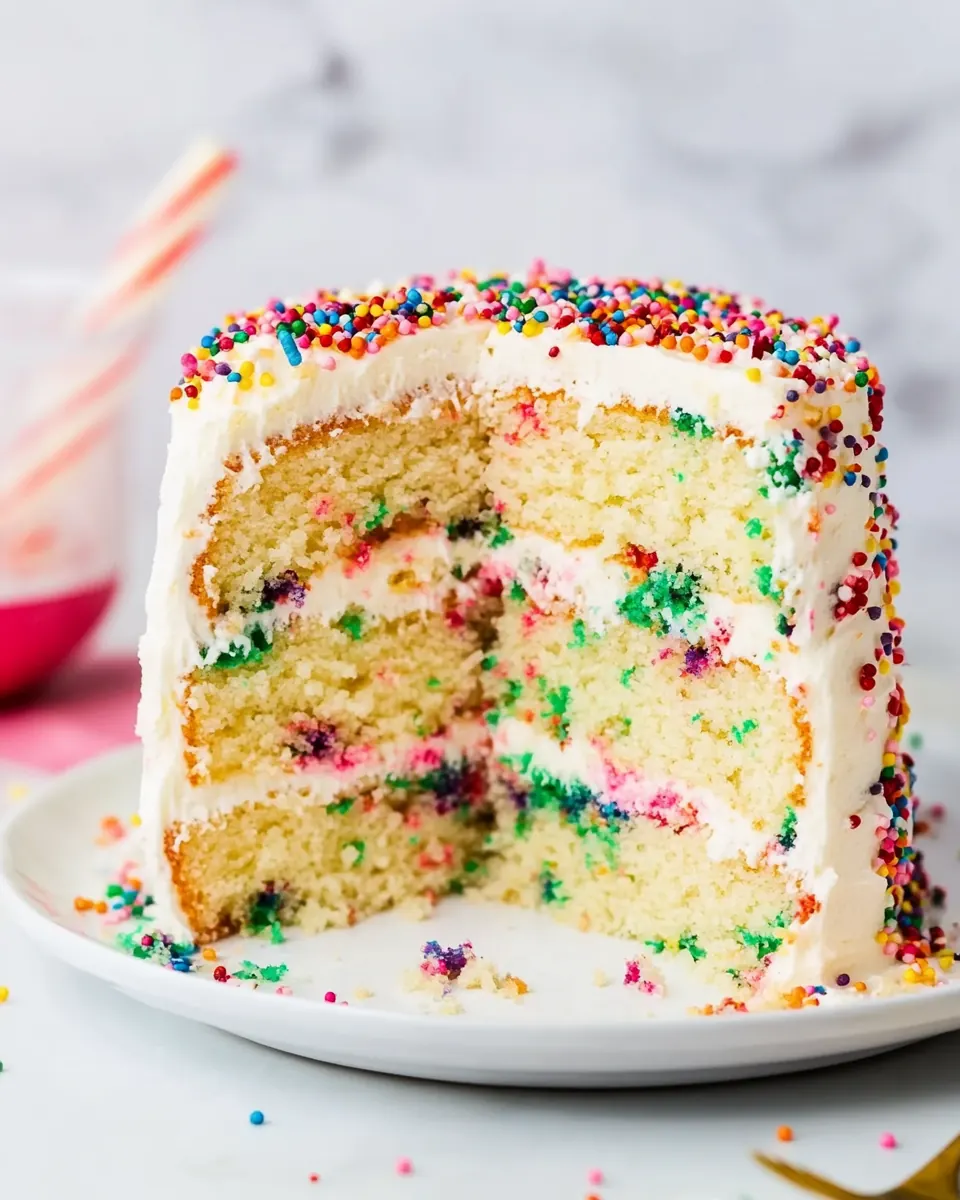
I like to share these extra pointers so your Funfetti Cake turns out reliably gorgeous and tasty. These are practical, easy to follow, and based on things I learned the hard way. Read them before you start mixing to avoid common pitfalls.
- Room temperature ingredients: Bring your wet ingredients to room temperature so the batter emulsifies smoothly and the crumb bakes evenly.
- Even pans: Use matching 8 inch pans and rotate them if your oven has hot spots for uniform browning.
- Fresh leavening: Test your baking soda by adding a drop of vinegar to a pinch; it should fizz actively if fresh.
- Sprinkle choice: Choose jimmies rather than nonpareils to minimize color bleed inside the batter for brighter flecks.
- Skewer test: Insert a skewer near the center to check doneness, a few crumbs are fine but raw batter is not.
- Storage: Store the cake covered in the refrigerator and let it sit 30 minutes at room temperature before serving for best flavor.
What to Pair With Funfetti Cake
This cake pairs well with simple beverages and light accompaniments that complement its sweet, vanilla forward flavor. I often serve it with a light brew or a cold glass that balances the sugar. For occasions, it works for birthdays, baby showers, and casual get togethers where a festive dessert is welcome. Consider the season when choosing extras, but the cake itself is evergreen in appeal.
- Light tea or coffee: A mild cup balances the sweetness without overpowering the cake.
- Fresh fruit: Serve small bowls of berries to add a bright contrast and a bit of acidity.
- Celebration table: Use the cake as the centerpiece for birthdays and informal parties where its colorful slices will stand out.
- Storage tip: Refrigerate covered and remove 30 minutes before serving so the frosting softens and flavors open up.
- Freezing: Slice and wrap pieces individually if you plan to freeze portions for longer keeping.
FAQ
Conclusion
What makes this cake special is its joyful, colorful crumb combined with a tender, reliable texture. Try it because it is approachable for bakers of all levels, and it brings an instant celebratory vibe to any table. I hope you enjoy how effortless it is to create a striking, tasty dessert that becomes a favorite for birthdays and spontaneous gatherings.
Funfetti Cake
Equipment
- 8 inch springform cake pans
- Mixing Bowl
- Spatula
- Oven
- Skewer
- Knife
Ingredients
- 3 cups all purpose flour* See notes Provide structure and bulk to the cake batter, creating the crumb and absorbing liquids; sift for lighter texture and measure accurately for consistent results.
- 2 cups sugar Sweeten the cake and help tenderize the crumb by interacting with fats and liquids; creaming with oil produces moisture and supports browning during baking.
- 2 teaspoon baking soda Leaven the batter by producing carbon dioxide when combined with acidic ingredients, giving lift and a tender crumb; whisk thoroughly into dry ingredients for even rise.
- 1 teaspoons salt Season the cake and enhance other flavors while balancing sweetness; dissolve salt evenly in the dry mix to avoid localized salty pockets.
- 1 tablespoon vanilla extract Impart fragrant, warm vanilla flavor that elevates overall taste profile and complements the sweetness; add with liquids to distribute aroma evenly.
- 2 teaspoon vinegar React with baking soda to generate additional lift and a subtle tang, improving texture and rise; mix with liquids to activate fully before baking.
- 1/2 cup + 2 tablespoons oil I used vegetable oil Contribute moisture and richness while keeping the crumb tender; choose a neutral oil for subtle flavor and mix with other wet ingredients until smooth.
- 2 cups water Hydrate dry ingredients to form the batter, activate leaveners, and control consistency; use room-temperature water for easier incorporation and even mixing.
- 1/4 cups sprinkles use rainbow jimmies Provide colorful bursts and a festive appearance throughout the cake without melting if using jimmies; fold in gently to prevent color bleed and clumping.
- 2 cups vanilla frosting any frosting of choice Add creamy sweetness and moisture on top while complementing the cake’s flavor; spread or pipe after cooling for best presentation and texture.
Instructions
- Preheat the oven to 180 C/350 F. Grease two 8-inch springform cake pans and set aside.: You should feel the warmth of the kitchen as the oven climbs to 180 C/350 F , and the smell of warm air signals readiness. Greasing the pans creates a glossy sheen on the metal, and a light dusting of flour after greasing will give the cakes a smooth release. The reason this matters is that even heat and cleanly released layers make assembly far easier, and the pans reaching temperature before the batter goes in helps give the edges a gentle set. If your oven runs hot or cool, use an oven thermometer to double check, because uneven heat can bake the edges too fast while leaving the center underdone. A common mistake is skipping the greasing step, which can tear the cake when you remove it from the pans. If you hear the oven fan cycle louder than normal, give it another five minutes to stabilize before you slide the pans in.
- In a large mixing bowl, add your dry ingredients and mix well. Add the wet ingredients and mix until a thick batter remains. Fold through the sprinkles.: As you stir the combined all purpose flour , sugar , baking soda , and salt , notice the uniform pale color and faint flour scent, which tells you the dry blend is even. When the wet ingredients join the party, the batter transforms into a glossy, cohesive mass with a slow ribboning motion as the spatula lifts through it, indicating the correct hydration. Folding in the sprinkles last keeps their colors intact and prevents excessive bleeding. This technique matters because overmixing now will develop gluten, making the cake chewy rather than tender. If the batter feels grainy, you may have unevenly measured flour, so check your scooping method next time. One slip people often make is using an electric mixer at high speed during this stage, which whips too much air and can cause collapse; gentle folding is the safer path.
- Distribute the batter evenly amongst the two cake pans. Bake for 27-30 minutes, until a skewer comes out clean.: When you pour the batter into the prepared pans, you should see a smooth top that levels itself with a light tap on the counter, and the batter will slightly bounce back when nudged. Placing the pans on the center rack helps uniform oven circulation, and toward the end of the bake you will notice the edges pulling slightly from the pan and a golden top forming. The skewer test is the reliable cue, and a clean skewer means the interior crumb set properly. The purpose of even distribution is to ensure both layers finish at the same time, so weigh or eyeball as evenly as you can. A typical pitfall is checking the oven too early and opening the door repeatedly, which drops oven temperature and can lead to sinkage. If the top is browning too quickly, tent a piece of foil loosely over the cakes for the last five to ten minutes.
- Remove the cakes from the oven and let them cool completely. Once cool, remove them from the springform pans. Using a wet knife, carefully slice through the center of the cakes, leaving 4 thin layers of cakes.: The cooling stage is when the internal steam redistributes and the crumb firms up, so patience here pays off. When the cakes are room temperature, the surface will feel just slightly springy, and you will smell a warm vanilla sweetness without any raw batter notes. Releasing them from the springform should be smooth if the pans were properly greased, revealing even, golden sides. To create four thin layers, I run a sharp knife under warm water and dry it between cuts to get clean, even slices; the wet blade glides through without tearing. This matters because neat layers stack more uniformly and create an elegant profile. A common error is slicing while the cake is still warm, which can compress and crumble the layers. If you encounter tearing, chill the cakes for ten to fifteen minutes to firm them up before reattempting.
- Place one layer of cake onto a flat surface and spread with frosting. Repeat the process until you have a four layer cake. Cover the exterior of the cake with extra frosting and let the cake sit for 30 minutes before serving.: When spreading the vanilla frosting , you should feel a smooth resistance as the knife moves, and the frosting should hold gentle peaks rather than sliding off the blade. Layering creates a beautiful contrast between the tender cake and creamy frosting, and pressing lightly with the palm helps set each layer without squashing them. Crumb coating with a thin layer first traps crumbs and gives a polished final surface when you add the outer layer of frosting. Letting the cake rest for 30 minutes allows the frosting to set and the flavors to meld, making for cleaner slices. The reason to let it sit is that cold or freshly spread frosting can slip when cut, so resting prevents that. A misstep I see is overfilling each layer with too much frosting, which causes the cake to lean or slide; apply moderate amounts and adjust as needed.
Notes
- Room temperature ingredients: Bring your wet ingredients to room temperature so the batter emulsifies smoothly and the crumb bakes evenly.
- Even pans: Use matching 8 inch pans and rotate them if your oven has hot spots for uniform browning.
- Fresh leavening: Test your baking soda by adding a drop of vinegar to a pinch; it should fizz actively if fresh.
- Sprinkle choice: Choose jimmies rather than nonpareils to minimize color bleed inside the batter for brighter flecks.
- Skewer test: Insert a skewer near the center to check doneness, a few crumbs are fine but raw batter is not.
- Storage: Store the cake covered in the refrigerator and let it sit 30 minutes at room temperature before serving for best flavor.