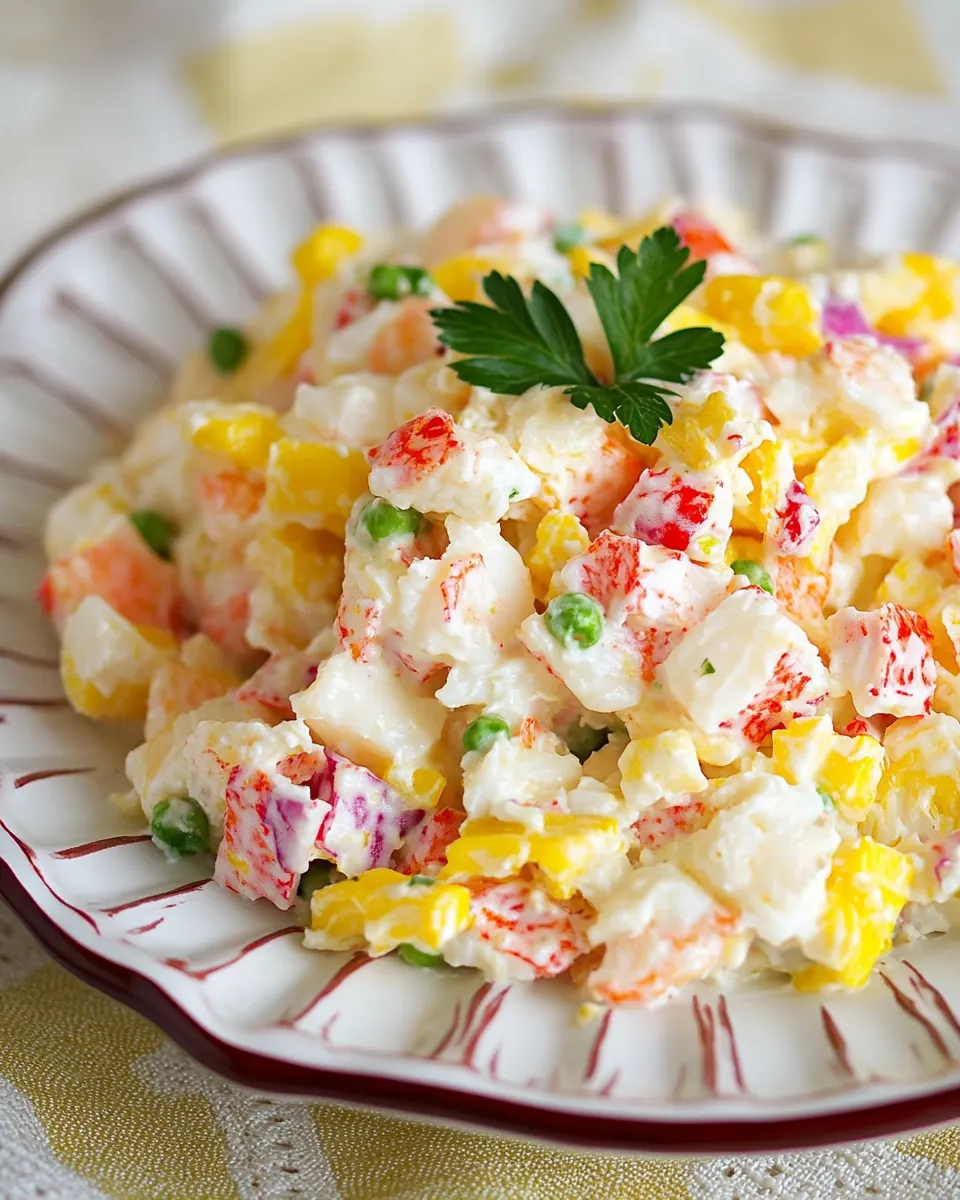
Crab Salad
Crab Salad has been one of those dishes I turn to when I want something bright, cool, and unfussy on the table.
I first met this version at a sunlit family potluck, where a neighbor brought a big bowl that vanished within an hour. I loved how the tender shredded crab and the soft bite of diced eggs played against sweet kernels of corn and pops of peas. Over time I nudged the dressing toward a tangy, creamy mix with a hint of heat from horseradish, and it became a signature I took to picnics and lazy summer lunches.
When I make Crab Salad at home I often start by chilling the bowl and tools, it keeps everything crisp and helps flavors stay bright. I do not fuss with complicated techniques; instead I focus on clean chopping and gentle folding so the texture stays light. This is the kind of recipe that rewards simple gestures, like tasting for salt late in the process and letting it rest a little so the dressing melds with the other ingredients. Friends always ask for the recipe because it feels both festive and effortless.
Recipe Snapshot
16 mins
15 mins
1 mins
Easy
300 kcal
American
Gluten-Free, Low FODMAP
Salads
Cutting Board, Sharp Knife, Large Bowl, Spoon or Spatula
The Magic of This Crab Salad
Fresh, bright flavors
I love how Crab Salad combines delicate seafood notes with crisp vegetables. The sweetness from the corn and the slight snap of the peas lift the whole dish, so it never tastes heavy. I usually taste as I go, adjusting the seasoning so the flavors stay lively rather than muted.
Textural contrast
One reason I keep making this recipe is the contrast in texture. The soft, flaky bits of imitation crab sit alongside creamy dressing and the tender bite of diced eggs. That variety in each spoonful keeps people coming back for more, and it’s what makes the salad feel thoughtfully composed despite being simple to prepare.
Great for gatherings
I’ve brought Crab Salad to barbecues and potlucks because it scales easily and travels well. It’s forgiving in a bowl, and you can make it ahead so the flavors meld while you get other things ready. I usually pack it cold and give it a quick stir before serving to refresh the dressing.
Flexible and forgiving
I find this salad to be wonderfully adaptable. If you like a little more tang, a touch more horseradish wakes it up. If you want it milder, simply ease back on that ingredient. The backbone of the recipe stays the same, so small changes make a big difference without risking the whole dish.
Comfort with a clean finish
Finally, I adore that Crab Salad feels like comfort food that still cleans the palate. It works as a light main or a generous side, and it fits summer afternoons and casual dinners alike. For me, it’s a reliably bright, approachable recipe that gets compliments, every time.
Key Ingredients for Crab Salad
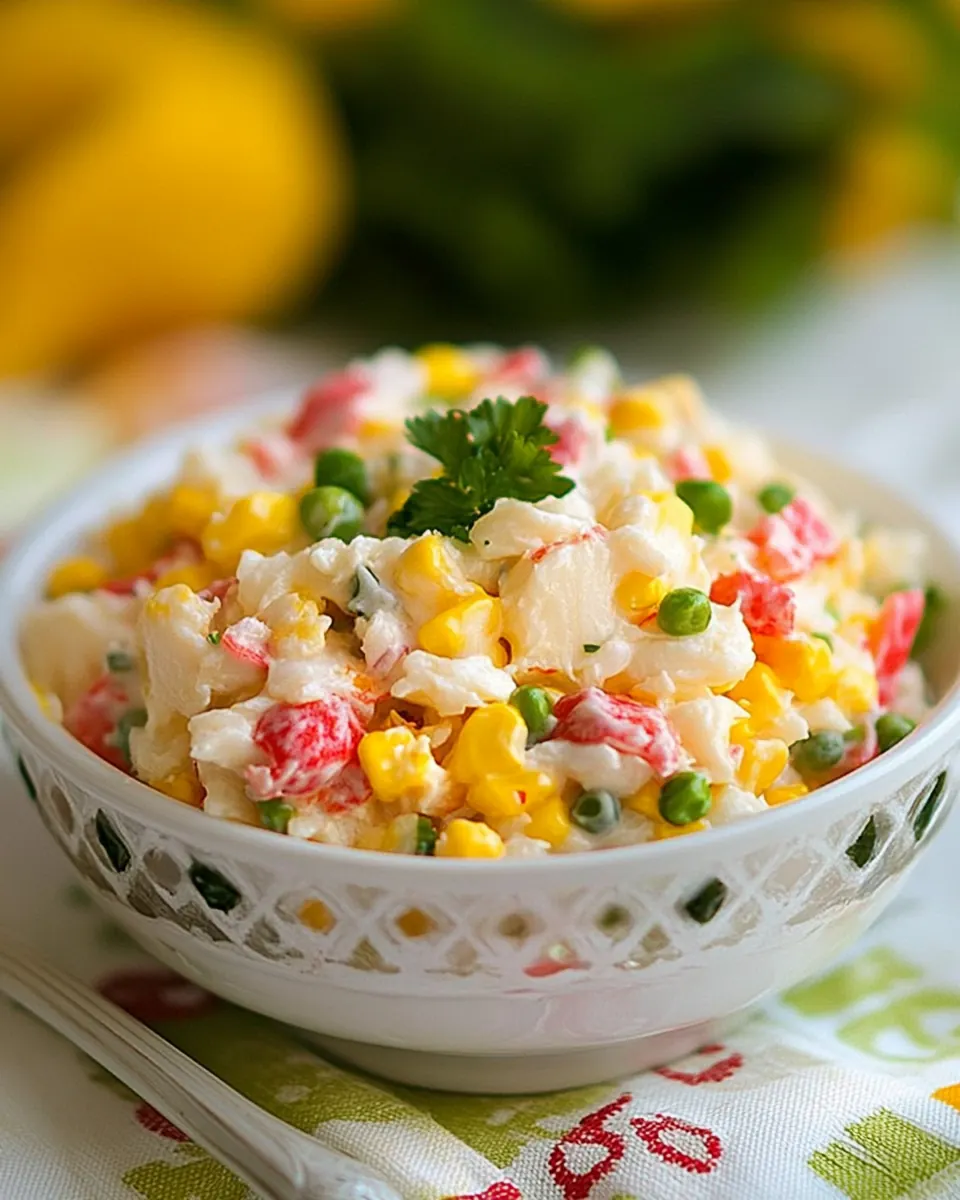
The philosophy behind these ingredients is simple balance. The imitation crab provides the savory, seafood like backbone, while the eggs add creaminess and substance. The onion lends a sharp, aromatic note that cuts through the richness of the mayonnaise. Sweetness and pop come from the corn and the peas, creating contrast in every bite.
- 1 1/2 pounds imitation crab meat, chopped – using a knife or food processor: Chopped to provide a flaky seafood-like texture and mild sweetness; adds bulk and visual appeal to the salad. Use a knife or food processor to achieve uniform bite-sized pieces that mix well with other ingredients. Helps carry dressing and seasonings for balanced flavor throughout the dish.
- 6 or 7 hard boiled eggs, diced: Diced to contribute a rich, creamy mouthfeel and extra protein; offers contrasting texture to the crab meat. Hard boiling develops a firm yolk that crumbles slightly when mixed, enriching the salad. Adds color and heartiness, making the salad more filling.
- 1 small onion, finely diced: Finely diced to add a mild sharpness and slight crunch that brightens the salad. Small pieces distribute evenly so every bite has a touch of savory bite without overpowering the other flavors. Helps balance creamy elements and boosts overall flavor complexity.
- 1 cup mayonnaise: Provides a smooth, creamy base that binds the ingredients together and adds richness. Use as the primary dressing component to coat crab, eggs, vegetables, and seasonings evenly. Can be adjusted for thickness by adding a little liquid or more mayonnaise to taste.
- 1 tsp cream-style horseradish sauce: Adds a tangy, pungent kick that lifts the overall flavor with a subtle heat and horseradish character. Mix into the mayonnaise to introduce brightness and depth without overwhelming the salad. Enhances savory notes and pairs well with seafood elements.
- 115 oz can corn (well-drained): Well–drained to contribute sweet, starchy kernels that add pop and natural sweetness to the salad. Canned corn provides convenient texture contrast and visual color, complementing the creamy dressing and savory components. Drain thoroughly to avoid diluting the dressing.
- 115 oz can peas (well-drained): Well–drained to provide tender, slightly sweet peas that add color and a gentle bite to the salad. Canned peas blend easily into the mixture and contribute a pleasant vegetable note that balances richer ingredients. Drain well to keep the dressing from becoming too thin.
Step by Step Instructions for Crab Salad
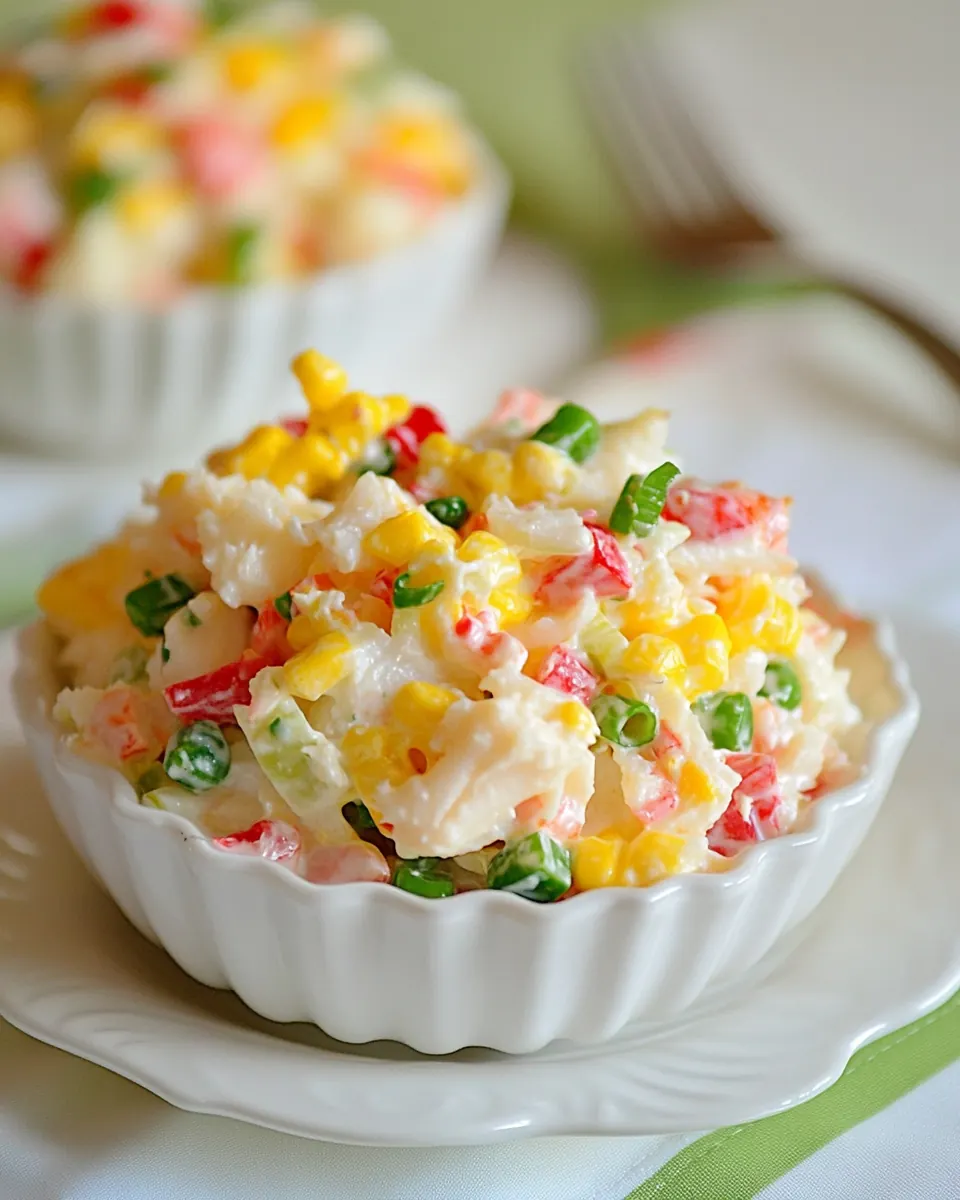
These steps are straightforward, but I like to be deliberate with texture and temperature so the salad stays fresh and lively. Read each step fully, and take a moment to tune your senses before moving on.
- Prepare all of the ingredients by chopping 1 1/2 lb of crab meat, dicing 6 hard boiled eggs, dicing 1 small onion and adding 1 can of drained and rinsed corn. Add them to a large bowl.: The moment you chop the imitation crab you will notice its tender, flaky texture and faint seafood aroma, which signals it is ready to be combined. Work on a clean board and use a sharp knife so the pieces are neat, this helps with even distribution. When you dice the eggs , aim for uniformity so each bite has balanced texture, and finely dicing the onion ensures its bite does not overwhelm. Drain and rinse the canned corn , listen for that distinct plink as kernels fall into the bowl, it means they are not waterlogged. One common error here is crowding the cutting board, which leads to uneven pieces, so clean as you go. The reason for these prep choices is that consistent sizes mean every forkful paints the same flavor portrait, and any liquid removed from the canned items prevents the dressing from becoming runny. If your crab feels a bit clumpy, gently separate the strands with your fingers for better texture. Keep everything cold to preserve the crispness of the vegetables.
- Add 1 cup of mayo and 1 tsp of horseradish sauce, than mix everything together.: At this stage you will smell the creaminess of the mayonnaise and the faint bite of the horseradish, which together create a rounded dressing. Use a wooden spoon or spatula to fold gently, working from the center outwards so the dressing coats without crushing the ingredients. The sound here is soft and quiet, an indicator you are not overworking the mixture. The 'why' is simple, folding preserves the shapes of the crab and vegetables for a pleasing mouthfeel, while mixing vigorously would break them down. A frequent pitfall is adding too much dressing too early, which can make the salad heavy; start with the cup called for and adjust after it rests. If the dressing seems too thick, you can thin slightly with a teaspoon of cold water, but add sparingly. As you mix, taste for balance, remembering the horseradish should be a subtle lift rather than the dominant flavor. Keep the bowl chilled if your kitchen is warm, it helps maintain structure.
- Finally fold in the peas. Adding peas last, keeps them from breaking.: When you add the drained peas , you should hear a gentle rustle as they settle into the bowl, their rounded shape contrasting with the shredded crab and diced eggs . Folding them in last prevents excessive mashing and preserves their pretty green color, which brightens the whole salad visually. Use a light touch and fold under rather than stirring across, that motion cradles the peas into the mixture. This technique matters because intact peas add textural pops and prevent a uniformly soft salad. A common mistake is dumping them in and stirring hard, which yields a grayish, mushy texture, so be deliberate. After folding, pause and give the salad a quick taste; if it needs a touch more salt or horseradish, adjust in tiny increments. Let the salad rest in the fridge for a short while to allow flavors to meld before serving.
Helpful Hints
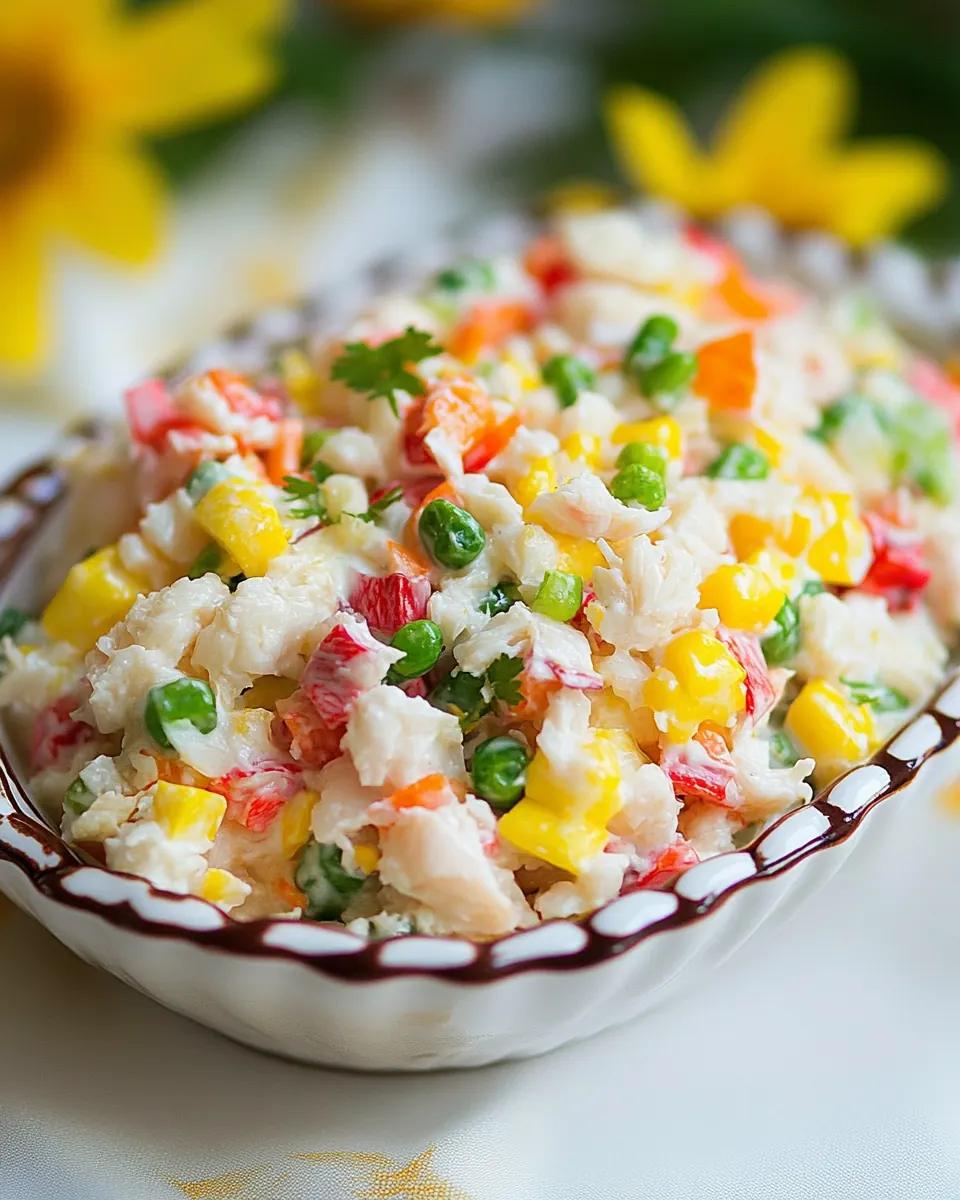
This section shares practical tips I use when making Crab Salad. They help with texture, flavor balance, and presentation. Read through and pick the ones that fit your kitchen habits.
- Chill your bowl before mixing to keep the salad crisp and the dressing firm as you combine ingredients.
- Use a gentle folding motion to incorporate the dressing so the imitation crab and vegetables retain their structure.
- Measure the horseradish carefully, because a little goes a long way and it should brighten, not overpower.
- Drain canned items well to prevent excess liquid from thinning the dressing and making the salad soggy.
- Adjust seasoning after chilling since flavors settle and a small tweak can bring everything into balance.
What to Serve Alongside Crab Salad
Crab Salad pairs well with a variety of sides and occasions. It transitions from a simple lunch to an elegant picnic item, and the suggestions below help you craft a full menu. Think about texture contrast and temperature when pairing dishes.
- Light grilled vegetables: Serve alongside cool Crab Salad to add warmth and a smoky note that contrasts with the salad’s creaminess.
- Crusty bread or rolls: Offer slices of bread so guests can make small open faced bites, which adds a pleasant chew to each mouthful.
- Green side salad: A crisp leaf salad with a light vinaigrette complements the richer texture of the mayonnaise in the salad.
- Occasion suggestions: Perfect for summer picnics, potlucks, and casual brunches, where you want a make ahead dish that still feels special.
- Storage tips: Keep in an airtight container in the refrigerator for up to three days, stirring gently before serving to refresh the texture.
- Seasonal pairings: In summer serve with fresh fruit and chilled drinks, while in cooler months pair with roasted root vegetables to add warmth to the meal.
FAQ
Conclusion
What makes this Crab Salad special is its effortless balance of creamy dressing, tender imitation crab, and bright vegetal pops from corn and peas. It’s a dish that feels thoughtful and approachable at once, perfect for summer gatherings or simple weeknight meals. I encourage you to give it a try, keep the textures distinct, and adjust the small details like horseradish to suit your taste. Enjoy the easy prep and the way it brings people together around a bowl.
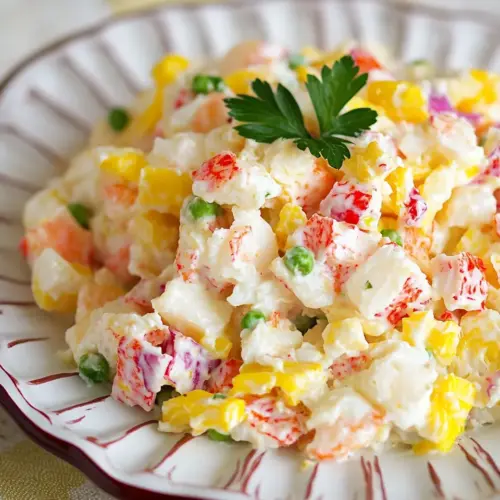
Crab Salad
Equipment
- Cutting Board
- Sharp Knife
- Large Bowl
- Spoon or spatula
Ingredients
- 1 1/2 pounds imitation crab meat, chopped - using a knife or food processor Chopped to provide a flaky seafood-like texture and mild sweetness; adds bulk and visual appeal to the salad. Use a knife or food processor to achieve uniform bite-sized pieces that mix well with other ingredients. Helps carry dressing and seasonings for balanced flavor throughout the dish.
- 6 or 7 hard boiled eggs, diced Diced to contribute a rich, creamy mouthfeel and extra protein; offers contrasting texture to the crab meat. Hard boiling develops a firm yolk that crumbles slightly when mixed, enriching the salad. Adds color and heartiness, making the salad more filling.
- 1 small onion, finely diced Finely diced to add a mild sharpness and slight crunch that brightens the salad. Small pieces distribute evenly so every bite has a touch of savory bite without overpowering the other flavors. Helps balance creamy elements and boosts overall flavor complexity.
- 1 cup mayonnaise Provides a smooth, creamy base that binds the ingredients together and adds richness. Use as the primary dressing component to coat crab, eggs, vegetables, and seasonings evenly. Can be adjusted for thickness by adding a little liquid or more mayonnaise to taste.
- 1 tsp cream-style horseradish sauce Adds a tangy, pungent kick that lifts the overall flavor with a subtle heat and horseradish character. Mix into the mayonnaise to introduce brightness and depth without overwhelming the salad. Enhances savory notes and pairs well with seafood elements.
- 115 oz can corn (well-drained) Well-drained to contribute sweet, starchy kernels that add pop and natural sweetness to the salad. Canned corn provides convenient texture contrast and visual color, complementing the creamy dressing and savory components. Drain thoroughly to avoid diluting the dressing.
- 115 oz can peas (well-drained) Well-drained to provide tender, slightly sweet peas that add color and a gentle bite to the salad. Canned peas blend easily into the mixture and contribute a pleasant vegetable note that balances richer ingredients. Drain well to keep the dressing from becoming too thin.
Instructions
- Prepare all of the ingredients by chopping 1 1/2 lb of crab meat, dicing 6 hard boiled eggs, dicing 1 small onion and adding 1 can of drained and rinsed corn. Add them to a large bowl.: The moment you chop the imitation crab you will notice its tender, flaky texture and faint seafood aroma, which signals it is ready to be combined. Work on a clean board and use a sharp knife so the pieces are neat, this helps with even distribution. When you dice the eggs , aim for uniformity so each bite has balanced texture, and finely dicing the onion ensures its bite does not overwhelm. Drain and rinse the canned corn , listen for that distinct plink as kernels fall into the bowl, it means they are not waterlogged. One common error here is crowding the cutting board, which leads to uneven pieces, so clean as you go. The reason for these prep choices is that consistent sizes mean every forkful paints the same flavor portrait, and any liquid removed from the canned items prevents the dressing from becoming runny. If your crab feels a bit clumpy, gently separate the strands with your fingers for better texture. Keep everything cold to preserve the crispness of the vegetables.
- Add 1 cup of mayo and 1 tsp of horseradish sauce, than mix everything together.: At this stage you will smell the creaminess of the mayonnaise and the faint bite of the horseradish, which together create a rounded dressing. Use a wooden spoon or spatula to fold gently, working from the center outwards so the dressing coats without crushing the ingredients. The sound here is soft and quiet, an indicator you are not overworking the mixture. The 'why' is simple, folding preserves the shapes of the crab and vegetables for a pleasing mouthfeel, while mixing vigorously would break them down. A frequent pitfall is adding too much dressing too early, which can make the salad heavy; start with the cup called for and adjust after it rests. If the dressing seems too thick, you can thin slightly with a teaspoon of cold water, but add sparingly. As you mix, taste for balance, remembering the horseradish should be a subtle lift rather than the dominant flavor. Keep the bowl chilled if your kitchen is warm, it helps maintain structure.
- Finally fold in the peas. Adding peas last, keeps them from breaking.: When you add the drained peas , you should hear a gentle rustle as they settle into the bowl, their rounded shape contrasting with the shredded crab and diced eggs . Folding them in last prevents excessive mashing and preserves their pretty green color, which brightens the whole salad visually. Use a light touch and fold under rather than stirring across, that motion cradles the peas into the mixture. This technique matters because intact peas add textural pops and prevent a uniformly soft salad. A common mistake is dumping them in and stirring hard, which yields a grayish, mushy texture, so be deliberate. After folding, pause and give the salad a quick taste; if it needs a touch more salt or horseradish, adjust in tiny increments. Let the salad rest in the fridge for a short while to allow flavors to meld before serving.
Notes
- Chill your bowl before mixing to keep the salad crisp and the dressing firm as you combine ingredients.
- Use a gentle folding motion to incorporate the dressing so the imitation crab and vegetables retain their structure.
- Measure the horseradish carefully, because a little goes a long way and it should brighten, not overpower.
- Drain canned items well to prevent excess liquid from thinning the dressing and making the salad soggy.
- Adjust seasoning after chilling since flavors settle and a small tweak can bring everything into balance.