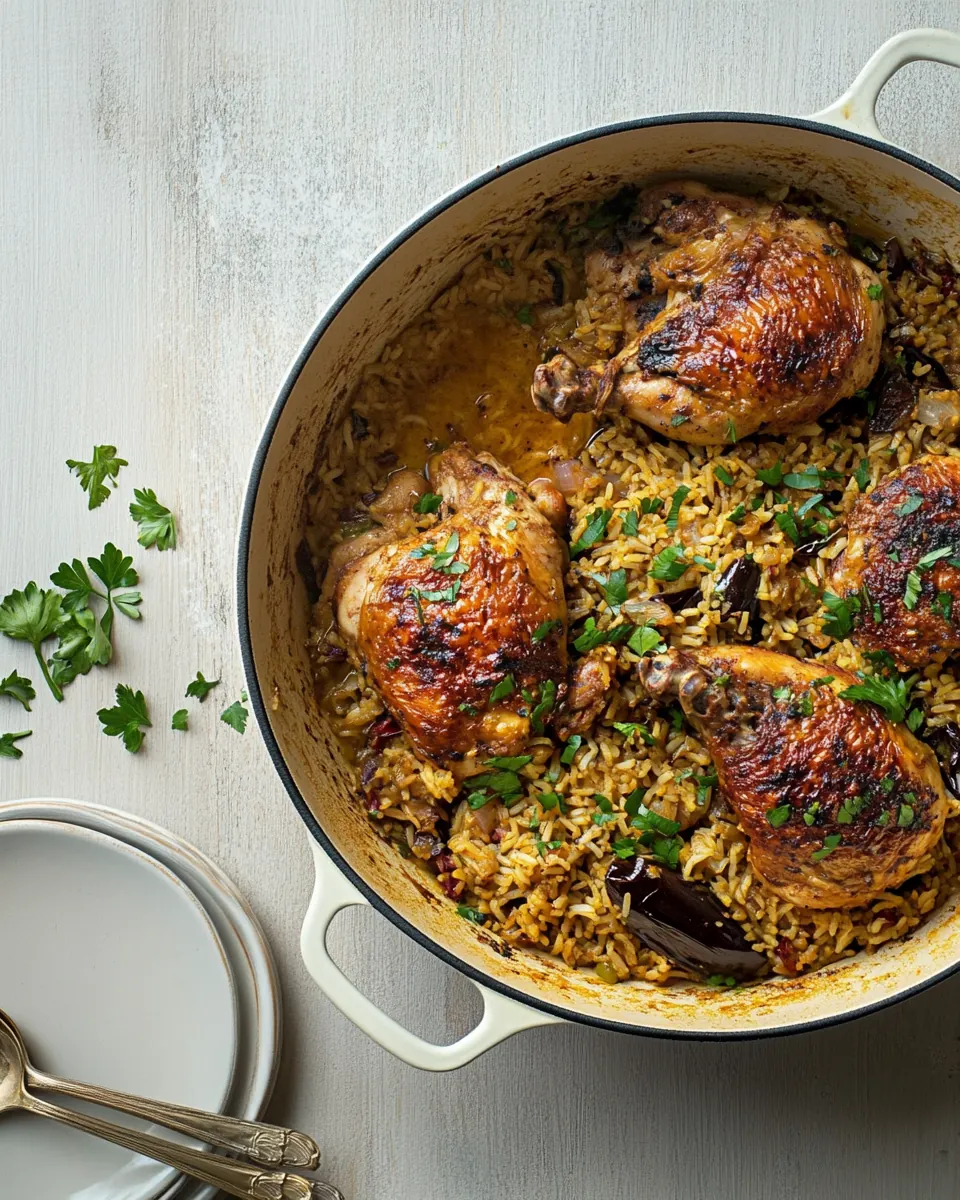
Moroccan chicken and rice with aubergine
Moroccan chicken and rice with aubergine is the kind of dish I turn to when I want something that feels celebratory but is honest and unfussy. I remember the first time I made it on a blustery autumn evening, the whole kitchen filling with warm, smoky spice while the house hummed with curiosity as the scent of chicken and rice rose from the oven. That night taught me how a few bold pantry items can transform simple ingredients into a meal people ask for again and again.
Cooking this Moroccan chicken and rice with aubergine always brings back memories of gathering friends around a single pan, serving straight from the casserole while everyone digs in. I love the way the softened aubergine soaks up the spiced stock, and the little bursts of sweet from the raisins or sultanas keep each bite interesting. There is comfort here, but also an edge, thanks to the harissa and smoked paprika that lift the flavors.
Every time I make Moroccan chicken and rice with aubergine I experiment a bit with textures and garnishes. Sometimes I add crunchy pistachios for contrast, other times I scatter bright pomegranate seeds to catch the eye and a forkful of juice. It feels like a recipe that invites you to make it your own, while still keeping its authentic, cozy core. Over the years it has become my go to for weeknight dinners when I want something soulful, and for small gatherings when I want to impress without stress.
Recipe Snapshot
55 mins
10 mins
45 mins
Medium
450 kcal
Moroccan
Gluten-Free, Paleo
Dinner
Heavy based lidded casserole, Oven
The Appeal of This Moroccan chicken and rice with aubergine
Layered, balanced flavors
I love how Moroccan chicken and rice with aubergine builds flavors in layers. The smoked paprika and ground cumin add warmth, the harissa brings a focused heat, and the lemon zest and juice brighten the whole dish. Each element plays a specific role, so every spoonful feels complex yet harmonious.
One pan, big payoff
We get a lot of flavor from cooking the onion and spices in a heavy lidded casserole before adding the other ingredients. That fond, the browned bits at the bottom, becomes part of the base flavor for the rice. It makes the process efficient and the results satisfying, especially when you want an easy weeknight dinner that looks and tastes like effort.
Texture contrast
I always focus on contrast. The tender aubergine and plump raisins sit next to caramelized chicken skin, while pistachios and pomegranate seeds offer crunchy, juicy punctuation. Those contrasts keep the dish lively and memorable, rather than flat or one note.
Adaptable to your pantry
This recipe is forgiving. You can adjust the heat with the harissa paste, swap raisins for sultanas or a mix, and choose between pistachios and sliced almonds for topping. I love recipes that let me adapt based on what I have, without losing the soul of the dish.
Great for sharing
Finally, it shines when shared. The casserole presentation is warm and communal, perfect for a small gathering, an autumn dinner, or a cozy family meal. It’s the kind of dish that invites conversation, seconds, and a satisfied silence afterwards.
Recipe Ingredients for Moroccan chicken and rice with aubergine
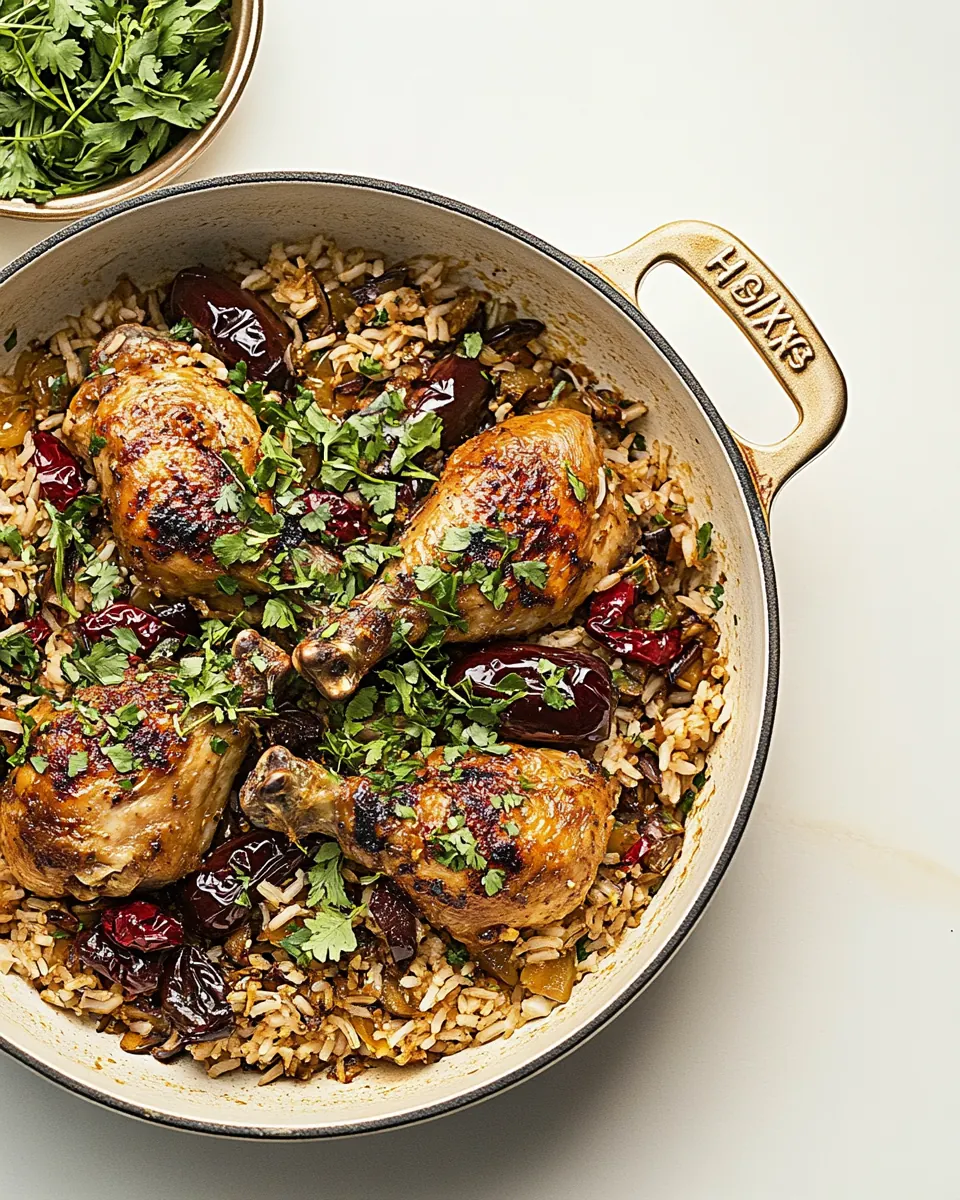
These ingredients form a palette of savory, sweet, and bright notes that work beautifully together. The key players are the chicken for richness, the rice to soak up spiced stock, and the aubergine to add creamy texture. Supporting players like raisins, olives, and lemon bring contrast, while toasted nuts and pomegranate seeds add a finishing flair that lifts every bite.
- 225 g 1 cup basmati rice: Rinse and soak briefly to remove excess starch; cooks into fluffy separate grains and absorbs the dish's aromatic liquids, providing the primary carbohydrate base and texture contrast to the chicken and aubergine.
- 2 tbsp olive oil: Heat gently at the start to create a flavorful cooking medium; imparts richness and helps brown the onion and chicken skin while carrying spices and aromatics throughout the dish.
- 1 large onion chopped: Sweat until translucent or lightly caramelized to build sweetness and depth; contributes aromatic foundation and texture contrast when combined with spices and liquids.
- 1 aubergine cut into bite size cubes: Toss and fry until golden to develop smoky, meaty notes; soaks up spice and olive oil, adding a tender, hearty vegetable element that complements the chicken and rice.
- 3 cloves garlic crushed: Crush or finely mince and sauté briefly to release pungent aroma; lifts the overall flavor profile by providing savory, aromatic depth that balances sweet and spicy components.
- 1 tsp smoked paprika: Sprinkle and toast slightly to add warm, smoky undertones; enhances color and depth of flavor while pairing well with cumin and harissa for North African character.
- 2 tsp ground cumin: Toast and bloom in fat to release earthy, warm aromas; anchors the spice blend and complements the smoked paprika and harissa for a cohesive Moroccan spice profile.
- 1 tsp ginger powder: Measure and add to provide a warm, slightly sweet backbone; supports other spices with gentle heat and a hint of citrusy warmth without overwhelming the dish.
- 4 –6 tsp harissa paste: Stir in to contribute concentrated chili heat and complex fermented flavor; controls the overall spiciness and adds smoky, tangy, and savory notes depending on quantity used.
- Zest & juice of a lemon: Zest and squeeze to add bright citrus lift and acidity; balances richness, lifts the spices, and adds fresh aromatic oils that brighten the finished dish.
- 1/2 cup raisins or sultanas or a combination of both: Soak or scatter through the rice to add bursts of sweet, chewy contrast; provides tiny pockets of sweetness that complement savory spices and the salty olives.
- 3/4 cup green olives: Halve or slice to introduce briny, salty contrast and meaty texture; cuts through sweetness and enriches the savory profile while adding Mediterranean character.
- 600 ml chicken stock: Pour in as simmering liquid to cook the rice and meld flavors; supplies savory depth and seasoning while ensuring the grains cook evenly and absorb spice-infused liquid.
- 8 chicken thighs bone in skin on: Brown with skin on to render fat and crisp skin while remaining juicy; serves as the main protein and imparts savory richness and texture to the overall dish.
- 2 tbsp olive oil: Drizzle during cooking to brown and coat ingredients; offers additional fat for frying aubergine and crisping chicken, ensuring good flavor development.
- Salt & pepper: Season generously to taste to enhance and balance all flavors; crucial for elevating the natural tastes of the chicken, rice, and vegetables while controlling overall seasoning.
- A small handful of roughly chopped pistachios to serve or sliced almonds (optional): Roughly chop and sprinkle at the end to add crunch and nutty richness; provides textural contrast and a toasted flavor note that pairs well with the sweet and spicy elements.
- 80 ml 1/3 cup pomegranate seeds to serve () (optional): Scatter sparingly for jewel-like bursts of sweetness and acidity; introduces a bright, tart pop and visual contrast that complements the savory and nutty components.
Cooking Method for Moroccan chicken and rice with aubergine
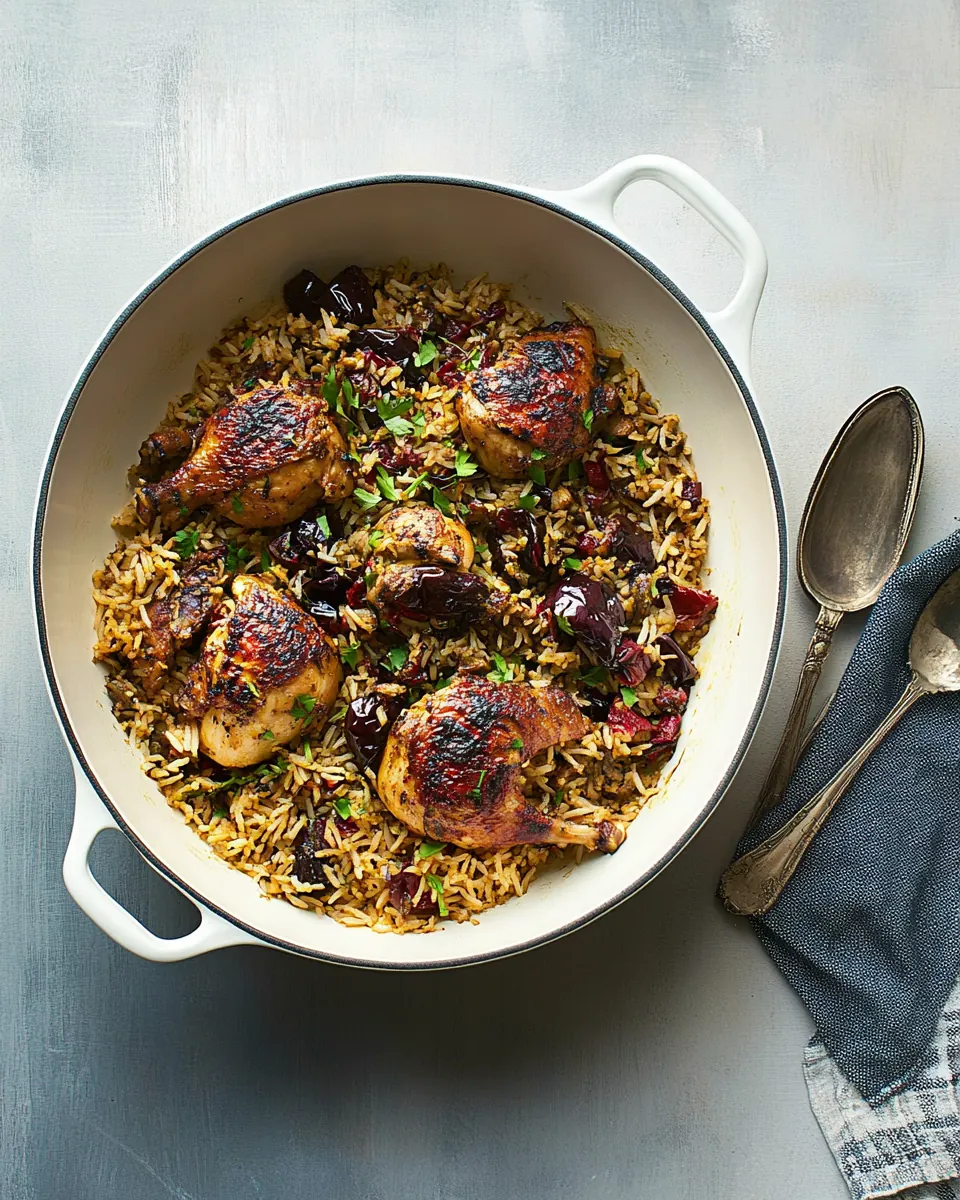
These steps will guide you through building flavor from the bottom up, finishing with perfectly roasted chicken on a bed of fragrant rice studded with silky aubergine. Read each step fully, trust your senses, and remember that small adjustments along the way yield a better final dish.
- Pre-heat the oven to 200 C/400 F.: The moment you open the oven after preheating you should feel a steady warm breath, and setting the correct oven temperature ensures the chicken skin crisps while the interior cooks gently. A properly preheated oven gives an even rise in heat, preventing undercooked pockets and ensuring the top of the casserole browns attractively. If you skip preheating, the chicken will spend too long warming up and can dry out, so always wait until the oven reaches the full temperature before placing the dish inside. Use an oven thermometer if your oven runs hot or cool, because small temperature differences change cooking times and texture.
- Soak the rice for about 15 minutes then rinse under colder water until it runs clear.: Start by feeling the grains between your fingers after soaking, they should plump slightly and be less chalky; rinsing removes excess starch so the grains cook separate rather than gummy. This simple step affects the final mouthfeel significantly, producing light, distinct grains that soak up the spiced stock without collapsing. Avoid skipping the rinse, because too much surface starch causes clumping and a gluey texture. If your water remains cloudy after several rinses, continue until it clears for the best result.
- While the rice is soaking, heat the olive oil in a heavy-based lidded casserole (30 cm works well here) and fry the onion until it starts to brown about 5 minutes. Add the garlic and spices and cook for about a minute until fragrant.: You will hear a gentle sizzle as the onion softens and begins to caramelize, releasing sweet, savory aromas that form the flavor base; when the garlic and spices hit the pan a heady perfume will rise, signaling it is time to move to the next stage. Browning the onion develops a complex savory note that simple sweating will not achieve, and the brief cooking of spices blooms their essential oils into the oil so they distribute evenly. Avoid letting the garlic burn, because that bitter char will carry through the whole dish; keep the heat at medium and stir frequently during this phase to maintain even color.
- Add the aubergine, rice, lemon zest & juice, raisins, green olives, and stock and stir until incorporated. Scrape the bottom of the pan to get any sticky bits off. Place the chicken pieces skin side up on the rice. Brush with the olive oil and sprinkle generously with salt and pepper.: When you add the aubergine and other components, the pan will make a satisfying whispering sound as the liquid and oil meet, and the colors will shift to a richer, deeper palette; stirring ensures the rice sits evenly in the liquid so it cooks uniformly. The acidity from the lemon brightens the heavy notes, and the raisins begin to plump as they absorb the stock, which balances savory flavors. Make sure to scrape the bottom of the pan to release any fond, because those browned bits are concentrated flavor; if you neglect this, you lose a key source of depth. Watch the liquid level and distribution so pockets of dry rice do not form during cooking.
- Cook uncovered for 40–45 minutes and until the chicken is golden brown and cooked through. Cook a little longer if you are unsure. Scatter the pistachios and pomegranate seeds over to serve.: The visual cue you want here is skin that looks glossy from the oil and seasoned with visible flecks of salt and pepper, which sets the stage for crisping and flavor penetration during roasting. Positioning the chicken skin side up allows direct dry heat contact from the oven, encouraging caramelization, while cooking atop the rice lets the juices mingle with the grains. Seasoning the exterior before roasting is important because it builds an immediate savory layer; under seasoning here is a common misstep, so be generous but balanced. Ensure the pieces are not crowded, or they will steam rather than brown, preventing the desirable golden crust.
- Cook uncovered for 40 to 45 minutes and until the chicken is golden brown and cooked through.: During this roast you will notice a deepening aroma of spice, and the skin should become a rich golden brown, producing a faint sizzling sound as fats render and crisp. The rice should absorb most of the stock and swell, with the aubergine turning tender and creamy; check the chicken near the bone to confirm it is fully cooked, and extend the time a little if necessary. This uncovered phase is essential for texture contrast, letting moisture evaporate and promote browning, whereas covering would trap steam and sog the skin. A common error is rushing the internal temperature check, so probe in the thickest part near the bone and look for clear juices and a temperature that feels right to your touch.
- Cook a little longer if you are unsure. Scatter the pistachios and pomegranate seeds over to serve.: After the main cook, you should hear only a soft hiss from the pan as residual moisture evaporates; adding chopped pistachios and bright pomegranate seeds at the end supplies crunchy and juicy contrasts that make every bite lively and balanced. These final additions do not need heat, and adding them too early will dull their texture and color. If the chicken seems slightly under, give it a few more minutes, because ensuring safe internal doneness is worth the extra oven time; just watch the skin as you extend cooking to avoid over browning. Present the dish immediately after garnishing so the nuts retain crunch and the seeds keep their brightness.
Recipe Variations about Moroccan chicken and rice with aubergine
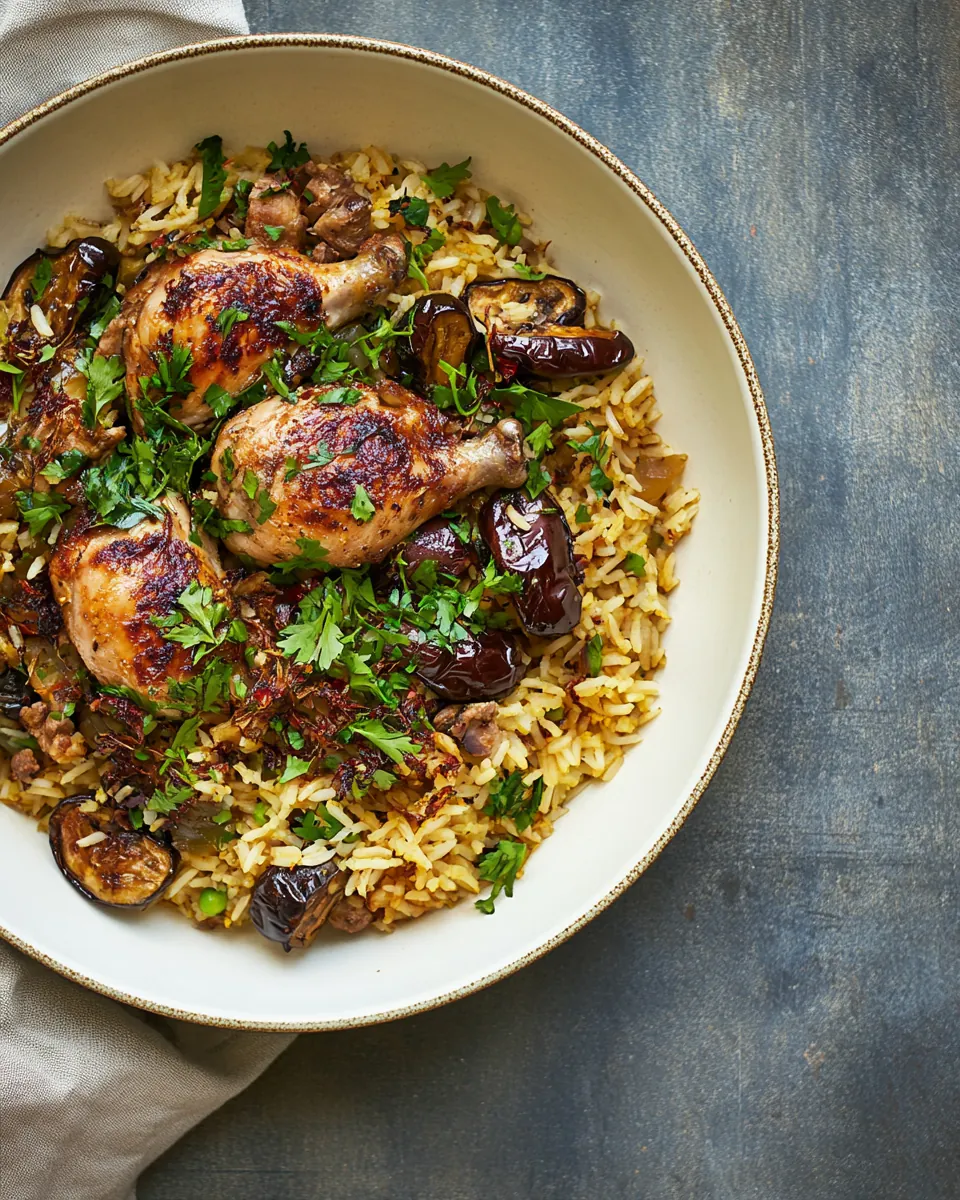
This dish is flexible, and small swaps let you tailor it to your pantry and preferences. Below are practical variations and serving ideas that keep the spirit of the recipe intact while offering different textures and flavor emphases.
- Swap or mix dried fruit: Use all raisins, all sultanas, or a mix for varied sweetness and texture; each option plumps during cooking and gives pockets of sweet contrast against the savory chicken.
- Adjust harissa for heat: Start with four teaspoons and increase to six if you like more spice, adding it into the liquid so heat disperses evenly through the rice.
- Nut options for crunch: Use pistachios or sliced almonds as listed, or lightly toast them for extra aroma; sprinkle at the end to preserve crunch and color.
- Olive choice matters: Green olives offer bright brine, while other brined olives can change the salt profile, so taste the stock before final seasoning.
- Make it milder: Reduce harissa and increase lemon to keep bright flavors without too much heat, balancing sweet and savory elements for sensitive palates.
Side Dish Ideas for Moroccan chicken and rice with aubergine
This meal pairs beautifully with simple, fresh sides that complement the warm, spiced main. Below I outline options for occasions and storage, and how to present the dish for different gatherings. Choose a few contrasting textures to make the plate sing.
- Light salad pairing: A crisp green salad with a lemony vinaigrette cuts through the richness of the chicken and rice, making a balanced weeknight dinner option.
- Vegetable sides: Roasted seasonal vegetables like carrots or squash add earthy sweetness and are easy to prepare alongside the main casserole.
- Occasion ideas: Serve for a casual family dinner, a fall gathering, or a Ramadan iftar where the aromatic, comforting nature of the dish feels fitting for shared meals.
- Storage tips: Store leftovers in an airtight container in the fridge for up to five days, and reheat gently to preserve texture; add a splash of stock or water if the rice seems dry.
- Seasonal pairings: In autumn, emphasize roasted root vegetables and warm spices; in spring, lighten sides with citrusy salads and fresh herbs to brighten the meal.
- Presentation: Serve straight from the casserole for a rustic feel, scatter fresh pomegranate seeds and chopped pistachios on top for color and crunch, and provide lemon wedges for guests to add brightness as desired.
FAQ
Conclusion
This recipe stands out because it combines bold Moroccan flavors, tender roasted chicken, and a fragrant rice base for a satisfying, textured meal. Give it a try the next time you want an easy yet impressive dinner that serves four and comes together in one pan. It is a welcoming, flavorful dish that rewards a little attention to layering spices and finishing touches like pistachios and pomegranate seeds, making it a dependable favorite for both weeknights and small gatherings.
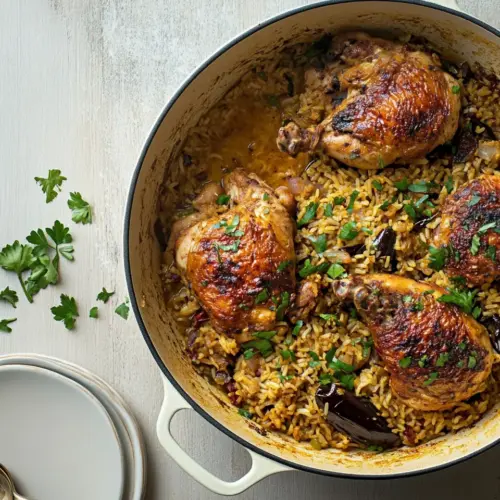
Moroccan chicken and rice with aubergine
Equipment
- Heavy based lidded casserole
- Oven
Ingredients
- 225 g 1 cup basmati rice Rinse and soak briefly to remove excess starch; cooks into fluffy separate grains and absorbs the dish's aromatic liquids, providing the primary carbohydrate base and texture contrast to the chicken and aubergine.
- 2 tbsp olive oil Heat gently at the start to create a flavorful cooking medium; imparts richness and helps brown the onion and chicken skin while carrying spices and aromatics throughout the dish.
- 1 large onion chopped Sweat until translucent or lightly caramelized to build sweetness and depth; contributes aromatic foundation and texture contrast when combined with spices and liquids.
- 1 aubergine cut into bite size cubes Toss and fry until golden to develop smoky, meaty notes; soaks up spice and olive oil, adding a tender, hearty vegetable element that complements the chicken and rice.
- 3 cloves garlic crushed Crush or finely mince and sauté briefly to release pungent aroma; lifts the overall flavor profile by providing savory, aromatic depth that balances sweet and spicy components.
- 1 tsp smoked paprika Sprinkle and toast slightly to add warm, smoky undertones; enhances color and depth of flavor while pairing well with cumin and harissa for North African character.
- 2 tsp ground cumin Toast and bloom in fat to release earthy, warm aromas; anchors the spice blend and complements the smoked paprika and harissa for a cohesive Moroccan spice profile.
- 1 tsp ginger powder Measure and add to provide a warm, slightly sweet backbone; supports other spices with gentle heat and a hint of citrusy warmth without overwhelming the dish.
- 4 –6 tsp harissa paste Stir in to contribute concentrated chili heat and complex fermented flavor; controls the overall spiciness and adds smoky, tangy, and savory notes depending on quantity used.
- Zest & juice of a lemon Zest and squeeze to add bright citrus lift and acidity; balances richness, lifts the spices, and adds fresh aromatic oils that brighten the finished dish.
- 1/2 cup raisins or sultanas or a combination of both Soak or scatter through the rice to add bursts of sweet, chewy contrast; provides tiny pockets of sweetness that complement savory spices and the salty olives.
- 3/4 cup green olives Halve or slice to introduce briny, salty contrast and meaty texture; cuts through sweetness and enriches the savory profile while adding Mediterranean character.
- 600 ml chicken stock Pour in as simmering liquid to cook the rice and meld flavors; supplies savory depth and seasoning while ensuring the grains cook evenly and absorb spice-infused liquid.
- 8 chicken thighs bone in skin on Brown with skin on to render fat and crisp skin while remaining juicy; serves as the main protein and imparts savory richness and texture to the overall dish.
- 2 tbsp olive oil Drizzle during cooking to brown and coat ingredients; offers additional fat for frying aubergine and crisping chicken, ensuring good flavor development.
- Salt & pepper Season generously to taste to enhance and balance all flavors; crucial for elevating the natural tastes of the chicken, rice, and vegetables while controlling overall seasoning.
- A small handful of roughly chopped pistachios to serve or sliced almonds, optional Roughly chop and sprinkle at the end to add crunch and nutty richness; provides textural contrast and a toasted flavor note that pairs well with the sweet and spicy elements.
- 80 ml 1/3 cup pomegranate seeds to serve (optional) Scatter sparingly for jewel-like bursts of sweetness and acidity; introduces a bright, tart pop and visual contrast that complements the savory and nutty components.
Instructions
- Pre-heat the oven to 200 C/400 F.: The moment you open the oven after preheating you should feel a steady warm breath, and setting the correct oven temperature ensures the chicken skin crisps while the interior cooks gently. A properly preheated oven gives an even rise in heat, preventing undercooked pockets and ensuring the top of the casserole browns attractively. If you skip preheating, the chicken will spend too long warming up and can dry out, so always wait until the oven reaches the full temperature before placing the dish inside. Use an oven thermometer if your oven runs hot or cool, because small temperature differences change cooking times and texture.
- Soak the rice for about 15 minutes then rinse under colder water until it runs clear.: Start by feeling the grains between your fingers after soaking, they should plump slightly and be less chalky; rinsing removes excess starch so the grains cook separate rather than gummy. This simple step affects the final mouthfeel significantly, producing light, distinct grains that soak up the spiced stock without collapsing. Avoid skipping the rinse, because too much surface starch causes clumping and a gluey texture. If your water remains cloudy after several rinses, continue until it clears for the best result.
- While the rice is soaking, heat the olive oil in a heavy-based lidded casserole (30 cm works well here) and fry the onion until it starts to brown about 5 minutes. Add the garlic and spices and cook for about a minute until fragrant.: You will hear a gentle sizzle as the onion softens and begins to caramelize, releasing sweet, savory aromas that form the flavor base; when the garlic and spices hit the pan a heady perfume will rise, signaling it is time to move to the next stage. Browning the onion develops a complex savory note that simple sweating will not achieve, and the brief cooking of spices blooms their essential oils into the oil so they distribute evenly. Avoid letting the garlic burn, because that bitter char will carry through the whole dish; keep the heat at medium and stir frequently during this phase to maintain even color.
- Add the aubergine, rice, lemon zest & juice, raisins, green olives, and stock and stir until incorporated. Scrape the bottom of the pan to get any sticky bits off. Place the chicken pieces skin side up on the rice. Brush with the olive oil and sprinkle generously with salt and pepper.: When you add the aubergine and other components, the pan will make a satisfying whispering sound as the liquid and oil meet, and the colors will shift to a richer, deeper palette; stirring ensures the rice sits evenly in the liquid so it cooks uniformly. The acidity from the lemon brightens the heavy notes, and the raisins begin to plump as they absorb the stock, which balances savory flavors. Make sure to scrape the bottom of the pan to release any fond, because those browned bits are concentrated flavor; if you neglect this, you lose a key source of depth. Watch the liquid level and distribution so pockets of dry rice do not form during cooking.
- Cook uncovered for 40–45 minutes and until the chicken is golden brown and cooked through. Cook a little longer if you are unsure. Scatter the pistachios and pomegranate seeds over to serve.: The visual cue you want here is skin that looks glossy from the oil and seasoned with visible flecks of salt and pepper, which sets the stage for crisping and flavor penetration during roasting. Positioning the chicken skin side up allows direct dry heat contact from the oven, encouraging caramelization, while cooking atop the rice lets the juices mingle with the grains. Seasoning the exterior before roasting is important because it builds an immediate savory layer; under seasoning here is a common misstep, so be generous but balanced. Ensure the pieces are not crowded, or they will steam rather than brown, preventing the desirable golden crust.
- Cook uncovered for 40 to 45 minutes and until the chicken is golden brown and cooked through.: During this roast you will notice a deepening aroma of spice, and the skin should become a rich golden brown, producing a faint sizzling sound as fats render and crisp. The rice should absorb most of the stock and swell, with the aubergine turning tender and creamy; check the chicken near the bone to confirm it is fully cooked, and extend the time a little if necessary. This uncovered phase is essential for texture contrast, letting moisture evaporate and promote browning, whereas covering would trap steam and sog the skin. A common error is rushing the internal temperature check, so probe in the thickest part near the bone and look for clear juices and a temperature that feels right to your touch.
- Cook a little longer if you are unsure. Scatter the pistachios and pomegranate seeds over to serve.: After the main cook, you should hear only a soft hiss from the pan as residual moisture evaporates; adding chopped pistachios and bright pomegranate seeds at the end supplies crunchy and juicy contrasts that make every bite lively and balanced. These final additions do not need heat, and adding them too early will dull their texture and color. If the chicken seems slightly under, give it a few more minutes, because ensuring safe internal doneness is worth the extra oven time; just watch the skin as you extend cooking to avoid over browning. Present the dish immediately after garnishing so the nuts retain crunch and the seeds keep their brightness.
Notes
- Swap or mix dried fruit: Use all raisins, all sultanas, or a mix for varied sweetness and texture; each option plumps during cooking and gives pockets of sweet contrast against the savory chicken.
- Adjust harissa for heat: Start with four teaspoons and increase to six if you like more spice, adding it into the liquid so heat disperses evenly through the rice.
- Nut options for crunch: Use pistachios or sliced almonds as listed, or lightly toast them for extra aroma; sprinkle at the end to preserve crunch and color.
- Olive choice matters: Green olives offer bright brine, while other brined olives can change the salt profile, so taste the stock before final seasoning.
- Make it milder: Reduce harissa and increase lemon to keep bright flavors without too much heat, balancing sweet and savory elements for sensitive palates.
