Butter Pecan Cake
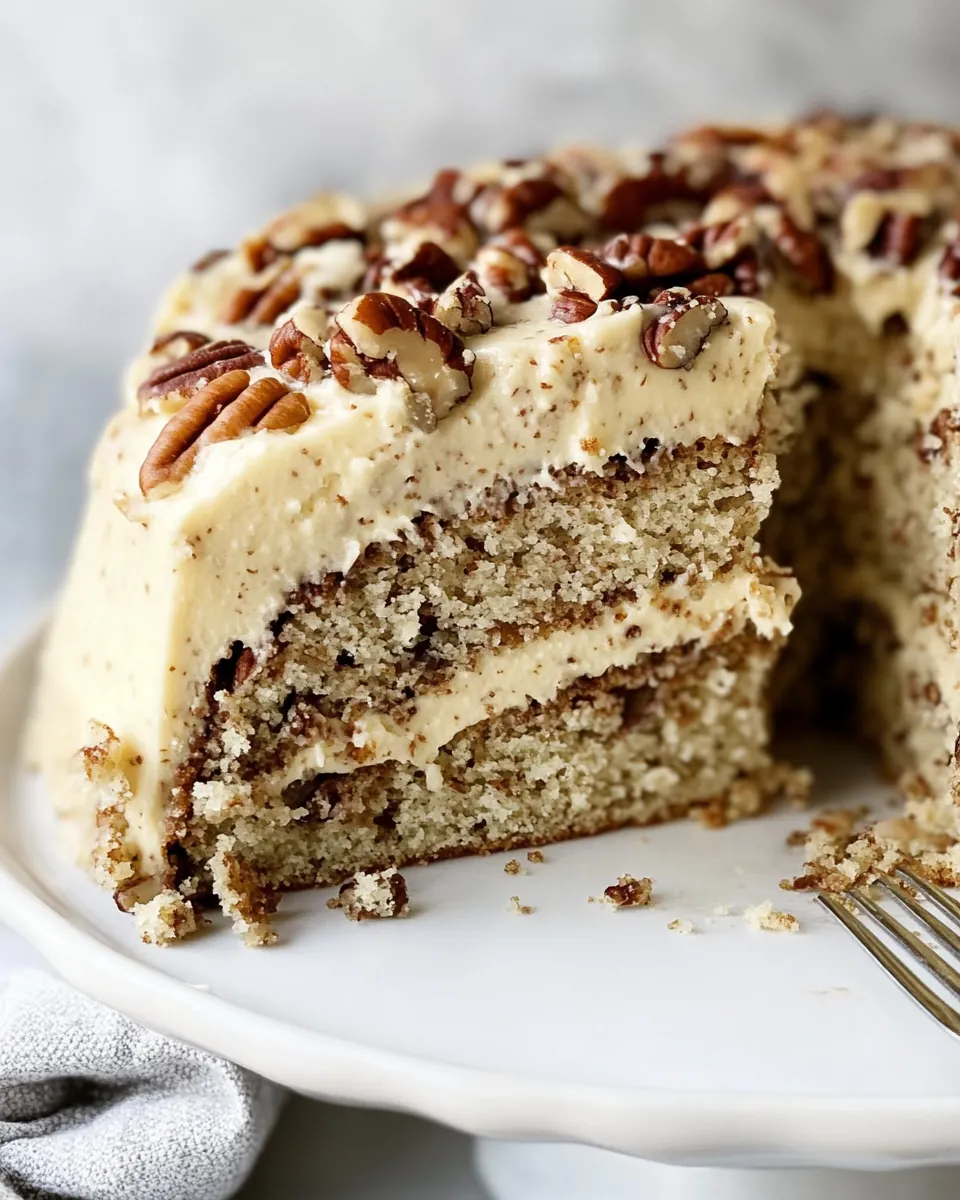
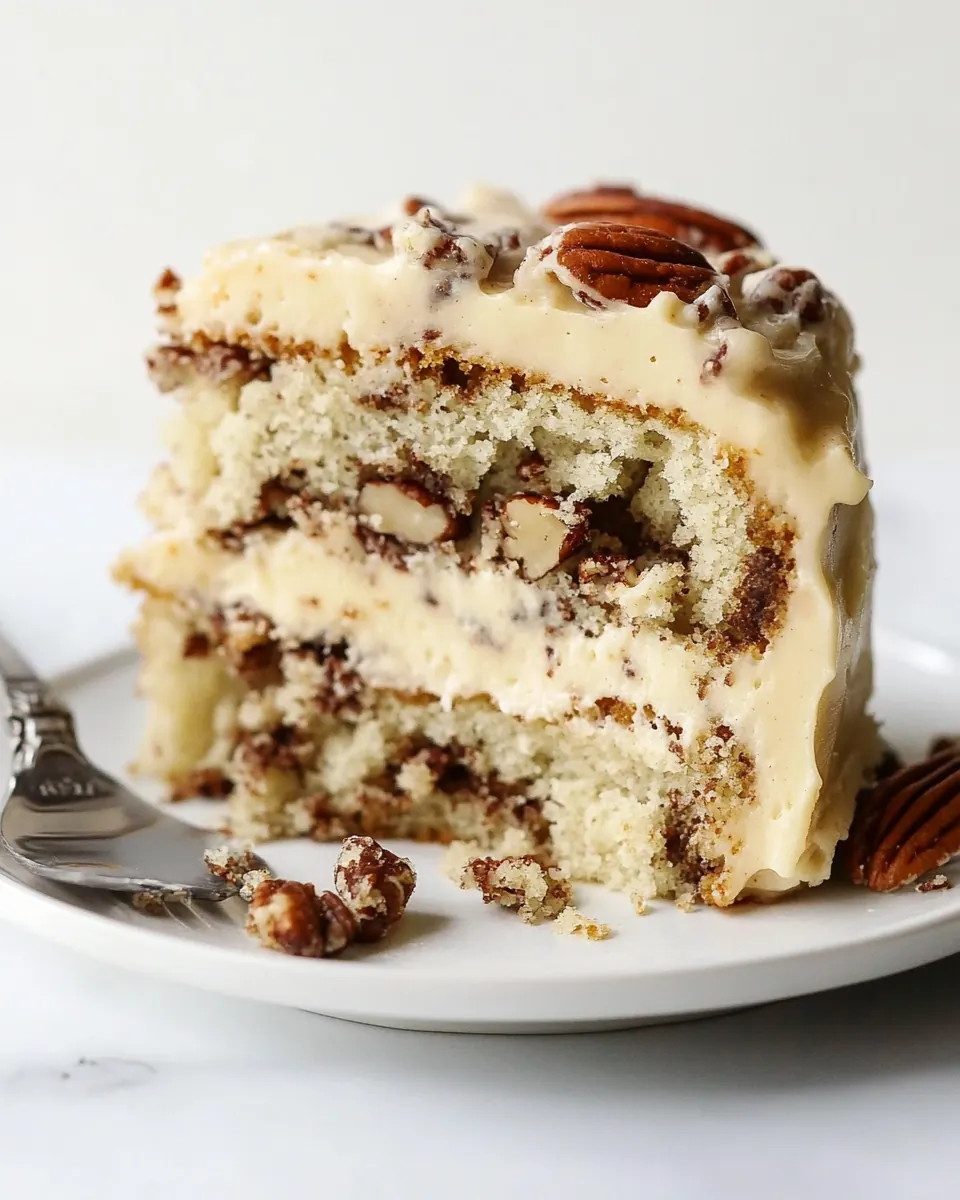
Butter Pecan Cake is the kind of dessert that makes a regular Tuesday feel like a small celebration, and I still remember the first time I brought it to a family gathering and watched people go back for thirds. The mix of nutty toasted pecans and warm browned butter has stayed with me, a cozy flavor that turns simple cake into something memorable. I love how the texture balances between tender crumb and crunchy pecans, and how the frosting adds a silky, slightly tangy finish that keeps you reaching for another bite.
That afternoon, I was juggling a busy schedule, but I wanted a cake that felt thoughtful without being fussy. This Butter Pecan Cake delivered exactly that, forgiving of small timing shifts and flexible enough for bakers of all levels. I learned a few tricks then, like how to coax the best aroma from toasted pecans and how cooling the browned butter properly preserves its flavor when incorporated into frosting. Each time I make Butter Pecan Cake now, I recall those warm kitchen conversations and the sound of laughter as people compared crumbs and frosting notes.
Recipe Snapshot
1 hr 25 mins
45 mins
40 mins
Medium
450 kcal
American
Gluten-Free, Low FODMAP
Desserts
Skillet, Stand mixer or hand mixer, 28 inch round cake pans, Offset spatula, Cooling rack
Why This Butter Pecan Cake Is So Good
1. Deep toasted nut flavor
I love toasted pecans because they bring a toasty, almost caramel like depth that plain nuts do not. When I toast the nuts properly, the aroma fills the kitchen and signals that the cake will have layers of flavor, not just sweetness.
2. Browned butter complexity
Browned butter in the frosting is a small step with a big payoff. I enjoy how it adds a toasty, nutty note that pairs perfectly with the pecans, giving the whole cake an elevated, slightly savory edge that keeps the frosting from tasting cloying.
3. Balanced sweetness and texture
Between the cake crumb and the cream cheese frosting, this recipe strikes a balance of tender crumb and creamy frosting. I find the combination of cake flour and buttermilk keeps the crumb light while the toasted pecans add satisfying crunch.
4. Approachable for bakers
Even though it tastes like something from a bakery, I appreciate that this recipe uses familiar techniques and accessible tools. I often tell friends this cake is perfect for a weekend bake because the steps are straightforward and forgiving.
5. Versatile for occasions
We serve it at casual get togethers and special events alike. I like that it sits well on a dessert table yet holds up for slicing and transporting, making it a reliable choice for celebrations.
Ingredients Required for Butter Pecan Cake
These ingredients are carefully chosen to build a cake that is tender, nut forward, and well balanced. The key players are the cake flour and buttermilk for a delicate crumb, the toasted pecans for texture and depth, and the browned butter paired with cream cheese to make a frosting that is rich but bright. Each item supports structure, moisture, or flavor, and together they create a comforting, layered dessert.
- 3 tablespoons Unsalted Butter: Melted and browned brings a rich, nutty base flavor and adds moistness to the cake batter; use immediately to capture toasted aromatics. Help enrich the crumb and provide a tender mouthfeel while complementing the pecan flavor throughout the recipe.
- 1 1/2 cup Chopped Pecans: Chopped finely delivers concentrated nutty texture and toasty flavor when folded into batter, adding pleasant crunch in every bite. Toast lightly beforehand to amplify aroma and sprinkle some into the frosting for consistency between layers.
- 2 1/4 cups Cake Flour: Sifted carefully supplies a delicate structure with lower protein content to keep the cake tender and soft; measure accurately for consistent rise. Provide the primary framework that works with leaveners to produce an even, fine crumb.
- 1 cup Granulated Sugar: Granulated white sugar sweetens and helps with structure through creaming, contributing to tenderization and lightness when beaten with fats and eggs. Promote even browning of the crust and balance the nutty and buttery flavors in the cake.
- 1/2 cup Brown Sugar: Packed or loosely measured adds deep molasses undertones and moisture retention that enriches the cake’s flavor and keeps the crumb soft. Combine with granulated sugar to provide complexity and a subtle chewiness in the final texture.
- 1 tablespoon Baking Powder: Leavening powder activates to create lift and a light crumb by releasing gas when moistened and heated; use evenly distributed in dry ingredients. Balance with baking soda and acids for correct rise without a metallic aftertaste.
- 1/2 teaspoon Baking Soda: Leavening agent adjusts acidity balance and enhances rise when combined with acidic components, contributing to tender crumb and correct browning. Use sparingly to prevent off flavors while working with baking powder for optimal lift.
- 1/2 teaspoon salt: Enhances overall taste balance by rounding out sweetness and accentuating other flavors while strengthening gluten development control when used with liquids. Add precisely to avoid oversalting which can mask delicate nuances of the cake and frosting.
- 1 cup Buttermilk: Tangy cultured milk contributes acidity and moisture, tenderizing the crumb and reacting with baking soda for leavening and flavor brightness. Substitute technique matters; keep cold and stir gently into batter to avoid curdling.
- 1/4 cup Milk: Neutral dairy liquid adjusts batter consistency and helps achieve the right hydration for a smooth, pourable texture that bakes evenly. Use whole or low-fat as specified to maintain the intended richness and crumb structure.
- 1 teaspoon Vanilla: Warm, concentrated extract imparts floral, sweet aromatic notes that complement butter and pecans; add to batter for consistent flavor throughout. Measure precisely since extracts are potent and affect the cake’s final taste profile.
- 1/2 cup Vegetable Oil: Neutral oil provides additional tenderness and moistness with a longer shelf life in the finished cake compared to whole butter. Combine with creamed butter and sugars to ensure a soft, consistent crumb and improved mouthfeel.
- 3 large Eggs: Room-temperature eggs bind ingredients, stabilize structure, and incorporate air for lift when beaten, contributing to color and richness. Separate or whole usage affects texture and density; beat as directed for optimal volume and tender crumb.
- 1 cup Unsalted Butter: Softened in baking amounts contributes butterfat for rich flavor, flakiness, and mouthfeel; key for both batter richness and frosting stability. Cream thoroughly with sugars to incorporate air and ensure an even, tender cake crumb.
- 12 ounces Cream Cheese Softened: At room temperature becomes creamy and smooth for a tangy, rich frosting base that adds moisture and balance to the sweet icing. Bring to room temperature before mixing to avoid lumps and to achieve a silky texture in the frosting.
- 1 1/2 teaspoon Vanilla Extract: Pure extract amplifies sweet, warm aromatics in the frosting and complements vanilla notes in the cake for cohesive flavoring. Add gradually to avoid overpowering the cream cheese and butter blend while maintaining balance.
- 5 cups Powdered Sugar: Finely sifted creates structure and sweetness in the frosting while stabilizing texture and thickening the cream cheese mixture for spreadability. Add gradually to prevent a gritty mouthfeel and to reach a smooth, pipeable consistency.
- Toasted pecans for decorating: Toasted and decorative adds a final crunchy texture and visually signals the flavor theme while reinforcing nutty aroma on top of the frosting. Chop or leave halves as desired for presentation and to provide a contrasting bite to the soft cake.
Making This Butter Pecan Cake
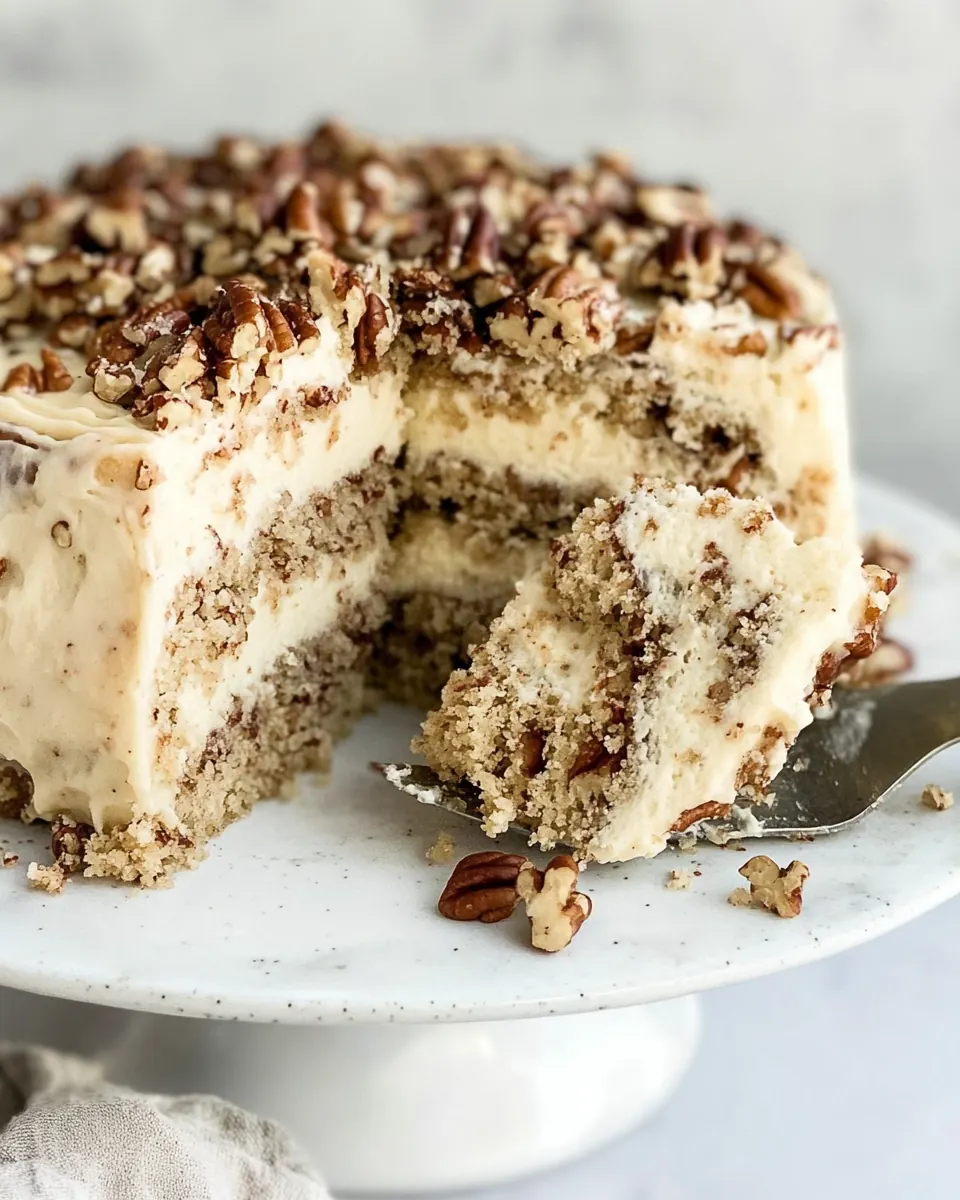
This cake comes together in stages, and I like to think of it as a sequence of flavor building steps rather than a single long task. Start by prepping your pans and toasting the pecans, then move through the dry and wet mixing phases, and finish by carefully browning butter for the frosting. Keeping the steps organized will make the whole process calm and enjoyable.
- Preheat the oven to 350°. Grease 28 inch round cake pans and set them aside.: The kitchen fills with a faint warmth that gets you in the baking mood, and preheating ensures even rise and baking from the moment the pans go in. If the oven is cooler than listed the cakes may bake unevenly or take much longer, so use an oven thermometer if yours runs hot or cold. You should feel a reliable steady heat in the air and see the preheated oven maintain temperature before placing pans inside.
- Add 3 tablespoons of butter to a skillet and melt over medium-high heat. Add the pecans and cook for about 3-4 minutes, until the nuts are toasted and fragrant. Remove from the heat and let cool completely.: Preparing the pans prevents sticking and helps the cake release cleanly after baking; lightly grease and flour or line with parchment to be safe. If you skip adequate greasing you risk tearing the layers when removing them, so take the extra minute now. The buttered surface should look evenly coated without pools of fat.
- In a large mixing bowl, whisk together the flour, granulated sugar, brown sugar, baking powder, baking soda, and salt.: As the butter melts it begins to foam and brown, releasing a warm, nutty aroma that signals the start of a flavorful frosting base. Keep stirring to distribute heat evenly and prevent scorching; a metal spatula makes scraping the pan easy later. Watch closely because the transition from browned to burnt happens quickly.
- Add the buttermilk, milk, vanilla, oil, and eggs to the dry ingredients and beat with the paddle attachment of a stand mixer or a hand mixer just until fully combined. Fold in the toasted pecans.: Toasting transforms raw pecans into crisp, aromatic morsels that taste slightly sweet and savory, with oils releasing a fragrant nuttiness. Stir constantly so they toast uniformly, and remove them from heat the moment their scent intensifies to avoid bitterness. Let them cool completely so they do not bleed oils into the batter.
- Separate the batter evenly into the two cake pans and bake for 35-40 minutes, or until the center of the cake springs back when pressed on. Let cool completely.: Cooling preserves the toasted crunch and prevents the heat from softening fats in the batter or frosting. If you add warm pecans to the batter the oils can alter the texture, so patience here protects the crumb structure. Spread them out so they release steam and cool faster.
- Frost with the browned butter cream cheese frosting and decorate with toasted pecans.: Dry mixing ensures even distribution of leavening and sugar, which creates uniform rise and sweetness throughout the cake. You should see a homogenous pale mixture, and running your fingers through it will feel free of lumps. If your baking powder is old, the cake may not rise properly, so check freshness first.
- Brown the butter by heating it over medium-high heat in a medium pan. As the butter melts, be sure to keep stirring it so it browns evenly. The butter will begin to foam as it cooks.: The batter should come together smoothly with small air pockets forming, indicating a tender crumb ahead; overmixing can develop gluten and toughen the cake, so stop as soon as the streaks disappear. The batter will be somewhat thick but pourable, and you should smell the vanilla blooming. Scrape the bowl once to ensure all dry pockets are incorporated.
- After about 5 minutes of stirring and foaming, the milk solids will begin to brown and turn fragrant and the foam will subside. Once this happens and it is a rich golden brown, transfer the butter to a heat-proof bowl to cool. Get as many of the brown toasty bits from the bottom of the pan! Let cool completely and set up.: Folding preserves the light, airy batter while distributing the crunchy pecans evenly, so the cake has texture in every slice. Use gentle strokes to avoid deflating the batter, and watch for even speckling of nuts throughout. If you stir vigorously you risk losing volume and ending with a denser cake.
- In the bowl of a mixer beat the cream cheese until smooth. Add in the completely cooled and set browned butter, again being sure to get all the browned bits added in. Beat until the butter and cream cheese are fully combined.: Even distribution ensures similar baking times and uniform layers, and you will notice the tops become golden and slightly spring back when pressed. A toothpick inserted near the center should come out clean to confirm doneness, and the edges will pull slightly away from the pan. If the tops brown too quickly tent with foil to avoid overbrowning while the centers finish baking.
- Scrape down the bowl and add the powdered sugar slowly, mixing on low until the cream cheese mixture absorbs a good amount of it. Increase the speed slowly until the powdered sugar is completely combined with the cream cheese. Scrape down the bowl again and add the vanilla extract.: This tactile check tells you the internal structure has set and the cake will finish with a tender crumb rather than being underbaked. The spring back should be gentle, not hard, indicating moistness inside. If it feels very soft, return to the oven and check every five minutes to avoid drying out.
- Beat on medium-high for about 3 minutes, until very fluffy. Use immediately to frost cooled cakes.: Cooling stabilizes the crumb and makes frosting easier, preventing melting or sliding; a warm cake will cause the frosting to soften too much. Place layers on a rack for air circulation and wait until they reach room temperature. If you are short on time chill briefly, but not so long that the cake becomes firm and loses moisture.
- Frost with the browned butter cream cheese frosting and decorate with toasted pecans: The frosting should be fluffy and glossy, coating the cake smoothly while the toasted pecans add an appealing crunch and visual contrast. Use an offset spatula to spread evenly and press pecans gently into the sides or top for a rustic look. If your frosting seems runny, chill it slightly before assembling to regain body.
- Brown the butter by heating it over medium-high heat in a medium pan: The sound of bubbling followed by occasional popping signals the water evaporating and milk solids toasting; this is when the butter develops that deep, toasty aroma essential to the frosting. Keep the butter moving so it browns evenly, and transfer immediately when amber flecks appear to avoid burning. Burnt butter will give an acrid taste, so timing is crucial.
- As the butter melts, be sure to keep stirring it so it browns evenly: Stirring creates even contact with the pan surface, promoting uniform browning of the milk solids and an even flavor. You will see the foam subside and the color move from golden to amber, with a nutty perfume filling the kitchen. If you notice black specks, discard and start over to prevent bitter notes.
- The butter will begin to foam as it cooks: That foaming is normal and indicates moisture leaving the butter, a step toward concentrating the butter solids; it will settle as browning takes place. The foam should lessen after a few minutes, revealing the brown bits that carry the toasty flavor. Avoid high heat, which can push the process from browned to burnt in a flash.
- After about 5 minutes of stirring and foaming, the milk solids will begin to brown and turn fragrant and the foam will subside: This moment is aromatic and visual, and it signals that you should be ready to remove the pan and cool the butter to preserve flavor. Transfer into a heat proof bowl promptly to stop cooking and to keep the browned bits intact. If you wait too long the butter will continue cooking and may taste burnt.
- Once this happens and it is a rich golden brown, transfer the butter to a heat proof bowl to cool: Cooling prevents the residual heat from continuing to cook the butter and lets you gather those toasty solids, which hold the most concentrated flavor. Scrape the pan to salvage the bits and stir them into the butter for maximum taste. Let it cool completely before adding to the cream cheese to avoid melting or separating.
- Get as many of the brown toasty bits from the bottom of the pan: Those solids are flavor gold; they give the frosting its signature nutty depth and visual flecks. Use a spatula to loosen them and incorporate into the cooled butter. If you leave them behind you miss an essential layer of complexity in the frosting.
- Let cool completely and set up: The browned butter should be at room temperature and slightly firm so it blends smoothly with cream cheese without causing separation. If it is still warm, the frosting can become too loose and unstable. Patience here ensures a stable, airy frosting with concentrated flavor.
- In the bowl of a mixer beat the cream cheese until smooth: Beating eliminates lumps and creates a silky base for the frosting; you want a uniform texture before adding browned butter. Stop and scrape the bowl as needed to ensure even mixing. Over beating cream cheese can make it too soft, so keep an eye on consistency.
- Add in the completely cooled and set browned butter, again being sure to get all the browned bits added in: Combining these creates a luxurious, tangy, and toasty frosting foundation; the aroma will become markedly richer as you blend. Mix until homogeneous, and the frosting should look glossy and well integrated. If the butter was not cooled, the mixture may separate and become oily.
- Beat until the butter and cream cheese are fully combined: You will notice a smooth, cohesive mixture forming that carries the browned butter flecks evenly throughout, giving the frosting both texture and flavor. Proper blending prevents pockets of butter or cream cheese and ensures a stable frosting. If separation begins, chill briefly and rebeat gently.
- Scrape down the bowl and add the powdered sugar slowly, mixing on low until the cream cheese mixture absorbs a good amount of it: Adding sugar gradually reduces dust and keeps the frosting from becoming grainy, while low speed prevents a cloud of sugar. The mixture will thicken as you add sugar and begin to look glossy and full bodied. If you add sugar too quickly the mixer can puff it everywhere, so patience is key.
- Increase the speed slowly until the powdered sugar is completely combined with the cream cheese: As the sugar integrates the frosting gains volume and smoothness, and increasing speed carefully helps achieve a light, spreadable consistency without splatter. Watch for a uniform texture and stop to scrape sides as needed. Over mixing at very high speed can aerate it too much, making it fluffy but unstable.
- Scrape down the bowl again and add the vanilla extract: The vanilla brings warmth and rounds the sweetness, enhancing the browned butter and pecan flavors; add it last to preserve its aroma. Fold it in until integrated and taste to adjust if needed. Too much vanilla can dominate, so stick to the measured amount.
- Beat on medium-high for about 3 minutes, until very fluffy: This whipping step introduces air and creates a light, pipeable frosting that holds shape yet spreads easily, giving an elegant finish to the cake. The frosting should look light and billowy, with visible brown butter flecks. If it seems too loose, chill briefly and rewhip to firm up.
- Use immediately to frost cooled cakes: Fresh frosting spreads smoothly and sets up nicely, creating defined layers and edges; chilled cakes and room temperature frosting make assembly easiest. If you wait too long the frosting can crust over or become difficult to work with. Once assembled, garnish with toasted pecans for a finishing crunch.
Making Adjustments
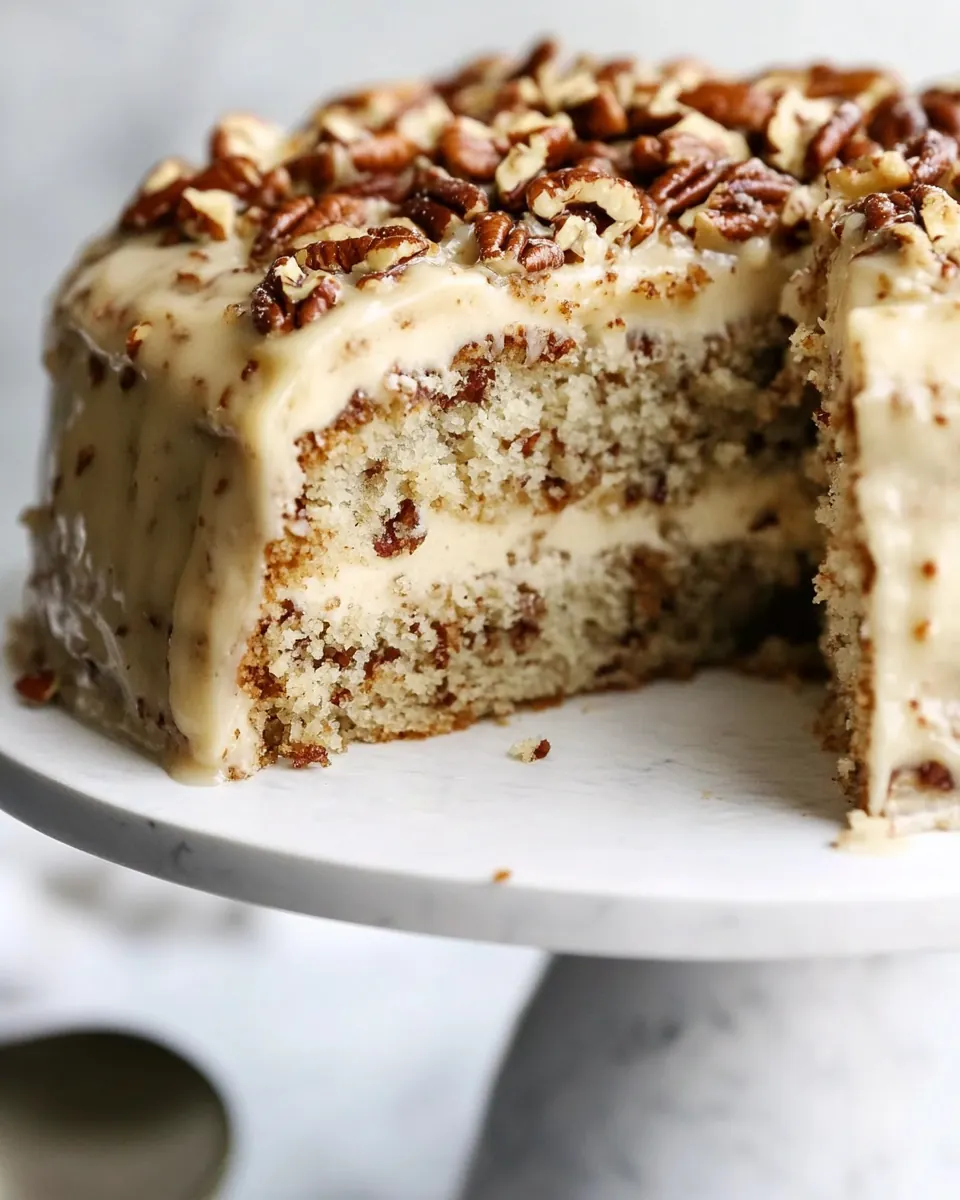
There are small adjustments that can make a big difference in how your Butter Pecan Cake turns out. Below are practical tips I use when adapting the recipe for different ovens, occasions, and textures, each expanded into a focused suggestion you can apply immediately.
- Adjust oven temperature carefully Wait for the oven to fully preheat to ensure accurate rise, and if your oven has hot spots rotate pans halfway through baking for even color and doneness.
- Control pecan texture For a finer texture, pulse the pecans briefly in a food processor, and for more crunch, roughly chop by hand and fold in gently at the end.
- Manage frosting consistency If your frosting seems too loose, chill it briefly and rewhip; if it is too stiff, add a teaspoon of milk at a time until spreadable.
- Make ahead strategy Bake the layers a day ahead and wrap tightly; assemble and frost on the day you plan to serve for the freshest appearance and flavor.
- Watch your mixing Avoid overmixing the batter once the wet and dry ingredients are combined to maintain a tender crumb rather than a chewy one.
- Salvage an overbaked cake Soak a light simple syrup and brush it over dry slices to restore moisture without overwhelming the nutty flavor.
Pairing Suggestions for Butter Pecan Cake
This cake pairs nicely with simple accompaniments that echo its nutty and creamy notes. Consider beverages and sides that are not too sweet, and think about occasions where a cozy, comforting dessert is welcome. Below I outline serving ideas, storage tips, and seasonal suggestions in detail.
- Simple coffee or tea Serve with a milky coffee or a mild black tea to complement the toasted pecans and creamy frosting without overpowering them.
- Fresh fruit A small side of lightly macerated berries adds bright acidity that contrasts the cake‘s richness, making slices feel lighter.
- Occasions Ideal for family gatherings, fall celebrations, and casual dinner parties where a nostalgic dessert fits the mood.
- Storage tips Keep frosted slices refrigerated for up to three days in an airtight container, and bring to room temperature before serving for best texture.
- Seasonal pairing In fall, serve with spiced drinks or a pear compote to heighten the cake‘s cozy, nut forward character.
- Presentation Garnish the top with additional toasted pecans and a light dusting of powdered sugar for an elegant finish that hints at the flavors inside.
FAQ
Conclusion
This Butter Pecan Cake stands out for its warm toasted pecan flavor and the luxurious browned butter cream cheese frosting that elevates every bite. I encourage you to give it a try because the steps are straightforward and the results are reliably impressive for both casual gatherings and special occasions. Baking it invites small, rewarding rituals, from toasting pecans to the satisfying swirl of frosting, and each step contributes to a cake that feels both comforting and special.
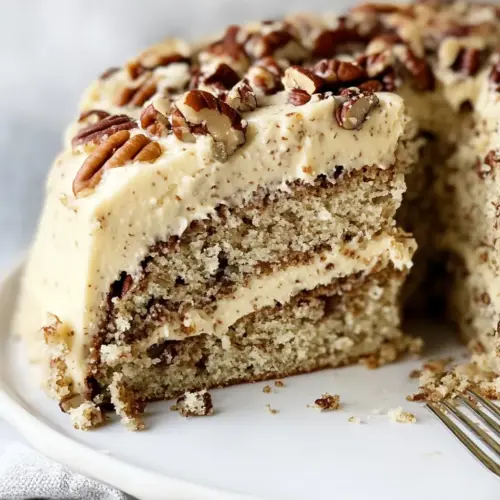
Butter Pecan Cake
Equipment
- Skillet
- Stand mixer or hand mixer
- 28 inch round cake pans
- Offset Spatula
- Cooling rack
Ingredients
- 3 tablespoons Unsalted Butter Melted and browned brings a rich, nutty base flavor and adds moistness to the cake batter; use immediately to capture toasted aromatics. Help enrich the crumb and provide a tender mouthfeel while complementing the pecan flavor throughout the recipe.
- 1 1/2 cup Chopped Pecans Chopped finely delivers concentrated nutty texture and toasty flavor when folded into batter, adding pleasant crunch in every bite. Toast lightly beforehand to amplify aroma and sprinkle some into the frosting for consistency between layers.
- 2 1/4 cups Cake Flour Sifted carefully supplies a delicate structure with lower protein content to keep the cake tender and soft; measure accurately for consistent rise. Provide the primary framework that works with leaveners to produce an even, fine crumb.
- 1 cup Granulated Sugar Granulated white sugar sweetens and helps with structure through creaming, contributing to tenderization and lightness when beaten with fats and eggs. Promote even browning of the crust and balance the nutty and buttery flavors in the cake.
- 1/2 cup Brown Sugar Packed or loosely measured adds deep molasses undertones and moisture retention that enriches the cake’s flavor and keeps the crumb soft. Combine with granulated sugar to provide complexity and a subtle chewiness in the final texture.
- 1 tablespoon Baking Powder Leavening powder activates to create lift and a light crumb by releasing gas when moistened and heated; use evenly distributed in dry ingredients. Balance with baking soda and acids for correct rise without a metallic aftertaste.
- 1/2 teaspoon Baking Soda Leavening agent adjusts acidity balance and enhances rise when combined with acidic components, contributing to tender crumb and correct browning. Use sparingly to prevent off flavors while working with baking powder for optimal lift.
- 1/2 teaspoon salt Enhances overall taste balance by rounding out sweetness and accentuating other flavors while strengthening gluten development control when used with liquids. Add precisely to avoid oversalting which can mask delicate nuances of the cake and frosting.
- 1 cup Buttermilk Tangy cultured milk contributes acidity and moisture, tenderizing the crumb and reacting with baking soda for leavening and flavor brightness. Substitute technique matters; keep cold and stir gently into batter to avoid curdling.
- 1/4 cup Milk Neutral dairy liquid adjusts batter consistency and helps achieve the right hydration for a smooth, pourable texture that bakes evenly. Use whole or low-fat as specified to maintain the intended richness and crumb structure.
- 1 teaspoon Vanilla Warm, concentrated extract imparts floral, sweet aromatic notes that complement butter and pecans; add to batter for consistent flavor throughout. Measure precisely since extracts are potent and affect the cake’s final taste profile.
- 1/2 cup Vegetable Oil Neutral oil provides additional tenderness and moistness with a longer shelf life in the finished cake compared to whole butter. Combine with creamed butter and sugars to ensure a soft, consistent crumb and improved mouthfeel.
- 3 large Eggs Room-temperature eggs bind ingredients, stabilize structure, and incorporate air for lift when beaten, contributing to color and richness. Separate or whole usage affects texture and density; beat as directed for optimal volume and tender crumb.
- 1 cup Unsalted Butter Softened in baking amounts contributes butterfat for rich flavor, flakiness, and mouthfeel; key for both batter richness and frosting stability. Cream thoroughly with sugars to incorporate air and ensure an even, tender cake crumb.
- 12 ounces Cream Cheese Softened At room temperature becomes creamy and smooth for a tangy, rich frosting base that adds moisture and balance to the sweet icing. Bring to room temperature before mixing to avoid lumps and to achieve a silky texture in the frosting.
- 1 1/2 teaspoon Vanilla Extract Pure extract amplifies sweet, warm aromatics in the frosting and complements vanilla notes in the cake for cohesive flavoring. Add gradually to avoid overpowering the cream cheese and butter blend while maintaining balance.
- 5 cups Powdered Sugar Finely sifted creates structure and sweetness in the frosting while stabilizing texture and thickening the cream cheese mixture for spreadability. Add gradually to prevent a gritty mouthfeel and to reach a smooth, pipeable consistency.
- Toasted pecans for decorating Toasted and decorative adds a final crunchy texture and visually signals the flavor theme while reinforcing nutty aroma on top of the frosting. Chop or leave halves as desired for presentation and to provide a contrasting bite to the soft cake.
Instructions
- Preheat the oven to 350°. Grease 28 inch round cake pans and set them aside.: The kitchen fills with a faint warmth that gets you in the baking mood, and preheating ensures even rise and baking from the moment the pans go in. If the oven is cooler than listed the cakes may bake unevenly or take much longer, so use an oven thermometer if yours runs hot or cold. You should feel a reliable steady heat in the air and see the preheated oven maintain temperature before placing pans inside.
- Add 3 tablespoons of butter to a skillet and melt over medium-high heat. Add the pecans and cook for about 3-4 minutes, until the nuts are toasted and fragrant. Remove from the heat and let cool completely.: Preparing the pans prevents sticking and helps the cake release cleanly after baking; lightly grease and flour or line with parchment to be safe. If you skip adequate greasing you risk tearing the layers when removing them, so take the extra minute now. The buttered surface should look evenly coated without pools of fat.
- In a large mixing bowl, whisk together the flour, granulated sugar, brown sugar, baking powder, baking soda, and salt.: As the butter melts it begins to foam and brown, releasing a warm, nutty aroma that signals the start of a flavorful frosting base. Keep stirring to distribute heat evenly and prevent scorching; a metal spatula makes scraping the pan easy later. Watch closely because the transition from browned to burnt happens quickly.
- Add the buttermilk, milk, vanilla, oil, and eggs to the dry ingredients and beat with the paddle attachment of a stand mixer or a hand mixer just until fully combined. Fold in the toasted pecans.: Toasting transforms raw pecans into crisp, aromatic morsels that taste slightly sweet and savory, with oils releasing a fragrant nuttiness. Stir constantly so they toast uniformly, and remove them from heat the moment their scent intensifies to avoid bitterness. Let them cool completely so they do not bleed oils into the batter.
- Separate the batter evenly into the two cake pans and bake for 35-40 minutes, or until the center of the cake springs back when pressed on. Let cool completely.: Cooling preserves the toasted crunch and prevents the heat from softening fats in the batter or frosting. If you add warm pecans to the batter the oils can alter the texture, so patience here protects the crumb structure. Spread them out so they release steam and cool faster.
- Frost with the browned butter cream cheese frosting and decorate with toasted pecans.: Dry mixing ensures even distribution of leavening and sugar, which creates uniform rise and sweetness throughout the cake. You should see a homogenous pale mixture, and running your fingers through it will feel free of lumps. If your baking powder is old, the cake may not rise properly, so check freshness first.
- Brown the butter by heating it over medium-high heat in a medium pan. As the butter melts, be sure to keep stirring it so it browns evenly. The butter will begin to foam as it cooks.: The batter should come together smoothly with small air pockets forming, indicating a tender crumb ahead; overmixing can develop gluten and toughen the cake, so stop as soon as the streaks disappear. The batter will be somewhat thick but pourable, and you should smell the vanilla blooming. Scrape the bowl once to ensure all dry pockets are incorporated.
- After about 5 minutes of stirring and foaming, the milk solids will begin to brown and turn fragrant and the foam will subside. Once this happens and it is a rich golden brown, transfer the butter to a heat-proof bowl to cool. Get as many of the brown toasty bits from the bottom of the pan! Let cool completely and set up.: Folding preserves the light, airy batter while distributing the crunchy pecans evenly, so the cake has texture in every slice. Use gentle strokes to avoid deflating the batter, and watch for even speckling of nuts throughout. If you stir vigorously you risk losing volume and ending with a denser cake.
- In the bowl of a mixer beat the cream cheese until smooth. Add in the completely cooled and set browned butter, again being sure to get all the browned bits added in. Beat until the butter and cream cheese are fully combined.: Even distribution ensures similar baking times and uniform layers, and you will notice the tops become golden and slightly spring back when pressed. A toothpick inserted near the center should come out clean to confirm doneness, and the edges will pull slightly away from the pan. If the tops brown too quickly tent with foil to avoid overbrowning while the centers finish baking.
- Scrape down the bowl and add the powdered sugar slowly, mixing on low until the cream cheese mixture absorbs a good amount of it. Increase the speed slowly until the powdered sugar is completely combined with the cream cheese. Scrape down the bowl again and add the vanilla extract.: This tactile check tells you the internal structure has set and the cake will finish with a tender crumb rather than being underbaked. The spring back should be gentle, not hard, indicating moistness inside. If it feels very soft, return to the oven and check every five minutes to avoid drying out.
- Beat on medium-high for about 3 minutes, until very fluffy. Use immediately to frost cooled cakes.: Cooling stabilizes the crumb and makes frosting easier, preventing melting or sliding; a warm cake will cause the frosting to soften too much. Place layers on a rack for air circulation and wait until they reach room temperature. If you are short on time chill briefly, but not so long that the cake becomes firm and loses moisture.
- Frost with the browned butter cream cheese frosting and decorate with toasted pecans: The frosting should be fluffy and glossy, coating the cake smoothly while the toasted pecans add an appealing crunch and visual contrast. Use an offset spatula to spread evenly and press pecans gently into the sides or top for a rustic look. If your frosting seems runny, chill it slightly before assembling to regain body.
- Brown the butter by heating it over medium-high heat in a medium pan: The sound of bubbling followed by occasional popping signals the water evaporating and milk solids toasting; this is when the butter develops that deep, toasty aroma essential to the frosting. Keep the butter moving so it browns evenly, and transfer immediately when amber flecks appear to avoid burning. Burnt butter will give an acrid taste, so timing is crucial.
- As the butter melts, be sure to keep stirring it so it browns evenly: Stirring creates even contact with the pan surface, promoting uniform browning of the milk solids and an even flavor. You will see the foam subside and the color move from golden to amber, with a nutty perfume filling the kitchen. If you notice black specks, discard and start over to prevent bitter notes.
- The butter will begin to foam as it cooks: That foaming is normal and indicates moisture leaving the butter, a step toward concentrating the butter solids; it will settle as browning takes place. The foam should lessen after a few minutes, revealing the brown bits that carry the toasty flavor. Avoid high heat, which can push the process from browned to burnt in a flash.
- After about 5 minutes of stirring and foaming, the milk solids will begin to brown and turn fragrant and the foam will subside: This moment is aromatic and visual, and it signals that you should be ready to remove the pan and cool the butter to preserve flavor. Transfer into a heat proof bowl promptly to stop cooking and to keep the browned bits intact. If you wait too long the butter will continue cooking and may taste burnt.
- Once this happens and it is a rich golden brown, transfer the butter to a heat proof bowl to cool: Cooling prevents the residual heat from continuing to cook the butter and lets you gather those toasty solids, which hold the most concentrated flavor. Scrape the pan to salvage the bits and stir them into the butter for maximum taste. Let it cool completely before adding to the cream cheese to avoid melting or separating.
- Get as many of the brown toasty bits from the bottom of the pan: Those solids are flavor gold; they give the frosting its signature nutty depth and visual flecks. Use a spatula to loosen them and incorporate into the cooled butter. If you leave them behind you miss an essential layer of complexity in the frosting.
- Let cool completely and set up: The browned butter should be at room temperature and slightly firm so it blends smoothly with cream cheese without causing separation. If it is still warm, the frosting can become too loose and unstable. Patience here ensures a stable, airy frosting with concentrated flavor.
- In the bowl of a mixer beat the cream cheese until smooth: Beating eliminates lumps and creates a silky base for the frosting; you want a uniform texture before adding browned butter. Stop and scrape the bowl as needed to ensure even mixing. Over beating cream cheese can make it too soft, so keep an eye on consistency.
- Add in the completely cooled and set browned butter, again being sure to get all the browned bits added in: Combining these creates a luxurious, tangy, and toasty frosting foundation; the aroma will become markedly richer as you blend. Mix until homogeneous, and the frosting should look glossy and well integrated. If the butter was not cooled, the mixture may separate and become oily.
- Beat until the butter and cream cheese are fully combined: You will notice a smooth, cohesive mixture forming that carries the browned butter flecks evenly throughout, giving the frosting both texture and flavor. Proper blending prevents pockets of butter or cream cheese and ensures a stable frosting. If separation begins, chill briefly and rebeat gently.
- Scrape down the bowl and add the powdered sugar slowly, mixing on low until the cream cheese mixture absorbs a good amount of it: Adding sugar gradually reduces dust and keeps the frosting from becoming grainy, while low speed prevents a cloud of sugar. The mixture will thicken as you add sugar and begin to look glossy and full bodied. If you add sugar too quickly the mixer can puff it everywhere, so patience is key.
- Increase the speed slowly until the powdered sugar is completely combined with the cream cheese: As the sugar integrates the frosting gains volume and smoothness, and increasing speed carefully helps achieve a light, spreadable consistency without splatter. Watch for a uniform texture and stop to scrape sides as needed. Over mixing at very high speed can aerate it too much, making it fluffy but unstable.
- Scrape down the bowl again and add the vanilla extract: The vanilla brings warmth and rounds the sweetness, enhancing the browned butter and pecan flavors; add it last to preserve its aroma. Fold it in until integrated and taste to adjust if needed. Too much vanilla can dominate, so stick to the measured amount.
- Beat on medium-high for about 3 minutes, until very fluffy: This whipping step introduces air and creates a light, pipeable frosting that holds shape yet spreads easily, giving an elegant finish to the cake. The frosting should look light and billowy, with visible brown butter flecks. If it seems too loose, chill briefly and rewhip to firm up.
- Use immediately to frost cooled cakes: Fresh frosting spreads smoothly and sets up nicely, creating defined layers and edges; chilled cakes and room temperature frosting make assembly easiest. If you wait too long the frosting can crust over or become difficult to work with. Once assembled, garnish with toasted pecans for a finishing crunch.
Notes
- Adjust oven temperature carefully Wait for the oven to fully preheat to ensure accurate rise, and if your oven has hot spots rotate pans halfway through baking for even color and doneness.
- Control pecan texture For a finer texture, pulse the pecans briefly in a food processor, and for more crunch, roughly chop by hand and fold in gently at the end.
- Manage frosting consistency If your frosting seems too loose, chill it briefly and rewhip; if it is too stiff, add a teaspoon of milk at a time until spreadable.
- Make ahead strategy Bake the layers a day ahead and wrap tightly; assemble and frost on the day you plan to serve for the freshest appearance and flavor.
- Watch your mixing Avoid overmixing the batter once the wet and dry ingredients are combined to maintain a tender crumb rather than a chewy one.
- Salvage an overbaked cake Soak a light simple syrup and brush it over dry slices to restore moisture without overwhelming the nutty flavor.