Twice Baked Potatoes
Twice Baked Potatoes have a way of turning a simple weeknight into something cozy and memorable, and I still remember the first time I plated them for guests and watched everyone go quiet as they took that first bite.
I grew up with a parent who fussed over the perfect potato skin, and over the years I tweaked the filling until it hit that spot between fluffy and indulgent. I like to think of these as comfort food with a little bit of pride, the kind of side that gets requested again and again. When I bake them, the kitchen smells buttery and slightly sweet, the oven humming softly as the skins crisp up and the interior becomes tender. I often make a double batch when friends come over, because they rarely leave leftovers.
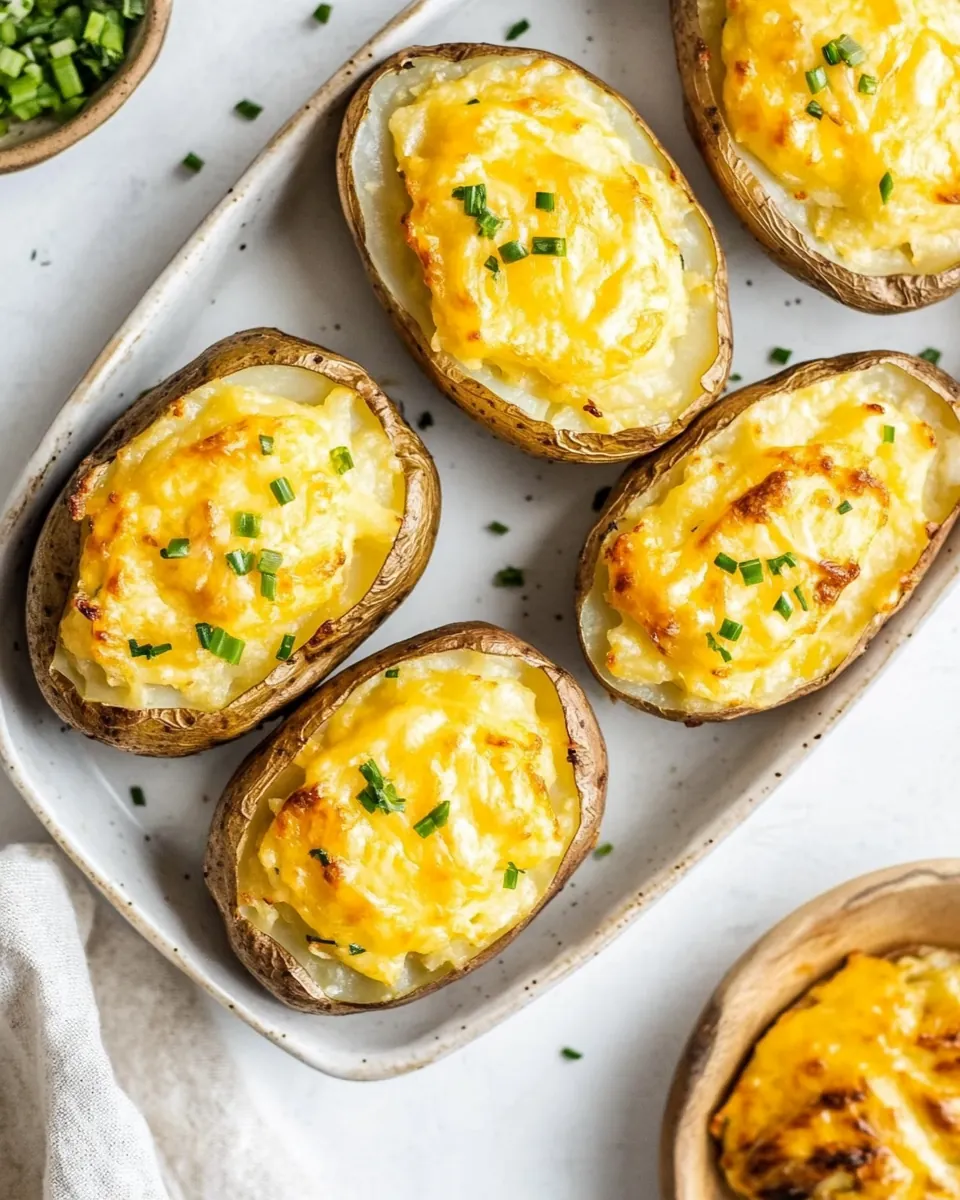
What I love about Twice Baked Potatoes is the contrast, the crisp shell holding a creamy, seasoned center studded with cheddar cheese and topped with a scatter of fresh chives. They pair beautifully alongside a simple roast, but I also serve them as the main event on nights we want something cozy without fuss. Over the years I learned small tricks, like letting the potatoes cool just enough to handle and stirring the filling gently so it stays chunky, not gluey. These techniques elevate a humble spud into a showcase side.
Recipe Snapshot
1 hr 50 mins
20 mins
90 mins
Medium
250 kcal
American
Gluten-Free, Low FODMAP
Side Dishes
Oven, Baking tray, Paring knife, Mixing bowl
What You’ll Enjoy About This Twice Baked Potatoes
Comfort and nostalgia
There is something about Twice Baked Potatoes that taps into memory. For me, this recipe brings back weekend dinners and slow conversations, because the texture and warmth invite lingering around the table. The blend of butter and sour cream gives a creamy mouthfeel that feels familiar yet special.
Big flavor with easy prep
I love that the technique is straightforward, yet the payoff is huge. Baking the whole potatoes first concentrates the flavor of the flesh, and folding in the dairy and cheddar cheese creates a rich, layered taste. You don’t need fancy skills to get a restaurant worthy result.
Textural contrast
The crisp potato skin versus the smooth mashed interior is the central win here. I find that preserving a thin border of skin gives structure, so each bite has a satisfying snap followed by creamy comfort. That contrast keeps people coming back for more.
Flexible and crowd friendly
I often scale this recipe up for gatherings because it serves a crowd without much extra effort. The flavors are broad crowd pleasers, and you can prep ahead by baking the potatoes earlier and finishing them before serving. I appreciate how forgiving the recipe is when timing is tight.
Fresh finishing touch
Finishing with chopped chives brightens the dish and cuts through the richness. I always sprinkle them at the end to retain the fresh color and oniony pop, and that final touch makes the dish look composed and inviting.
Main Ingredients for Twice Baked Potatoes
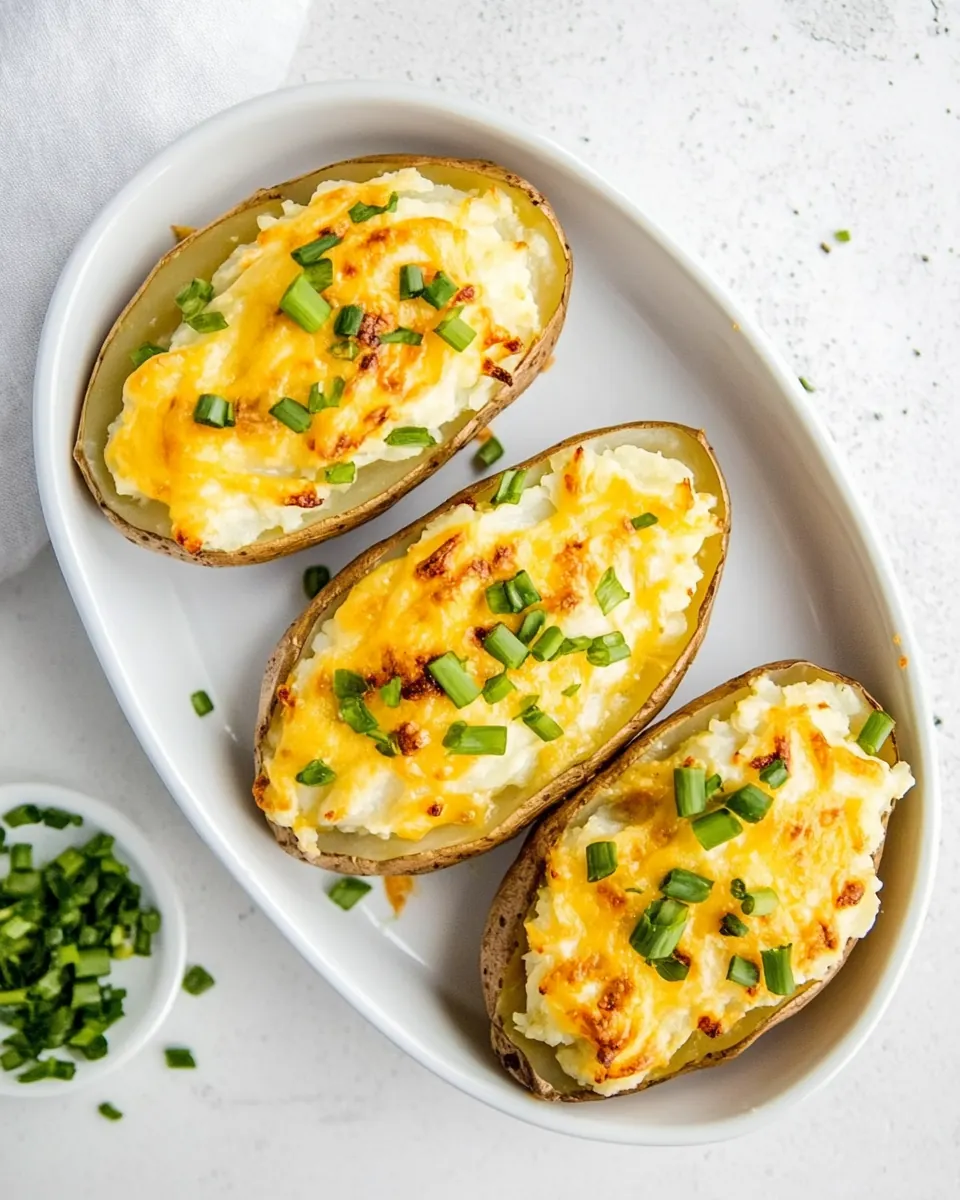
These ingredients are straightforward and each plays a clear role. The russet potatoes provide a fluffy interior that mashes beautifully, while butter, sour cream, and heavy whipping cream create a luscious, silky filling. Cheddar cheese adds savory depth and a melting top, while chives give a fresh finish. Together they balance texture, richness, and brightness.
- 4 larger russet potatoes, washed and patted dry: Scrubbed and dried, provides the starchy, fluffy base for twice baked potatoes and holds the filling after scooping. Bake until tender to develop a creamy interior that blends well with butter and dairy.
- 4 tablespoons salted butter, at room temperature: Softened at room temperature to allow easy incorporation, contributes rich, savory fat for a smooth, luxurious texture in the mashed potato filling. Melt slightly into hot potatoes to enhance mouthfeel and flavor depth.
- 4 tablespoons sour cream: Creamy and tangy, adds moisture and a subtle acidity that brightens the overall flavor of the potato mixture. Fold into the warm potato flesh to help achieve a light, velvety consistency for easy re-filling.
- 4 tablespoons heavy whipping cream: Rich and smooth, supplies additional creaminess and helps loosen the mashed potatoes for a silky, scoopable filling. Gently combine to avoid making the mixture too runny while maintaining a luscious texture.
- 1/2 teaspoons salt: Finely measured to season and enhance the natural potato flavors, ensures the filling is properly seasoned without overpowering. Sprinkle and taste as you mix to balance saltiness throughout the dish.
- 1/4 teaspoon pepper: Lightly ground to provide a gentle spicy note and background warmth, complements the richness of butter and dairy. Add gradually to control heat and maintain a balanced, savory profile.
- 2 cups shredded cheddar cheese: Sharp and melty, delivers both bold cheese flavor and a gooey topping when returned to the oven, contributing color and texture contrast. Stir some into the filling and reserve a portion for a bubbly, browned finish.
- 2 tablespoons chopped fresh chives: Finely chopped and fresh, offers a bright herbal finish and mild onion-like flavor that lifts the richness of the potatoes and dairy. Sprinkle over the finished potatoes for color, aroma, and a subtle fresh bite.
Step by Step Guide for Twice Baked Potatoes
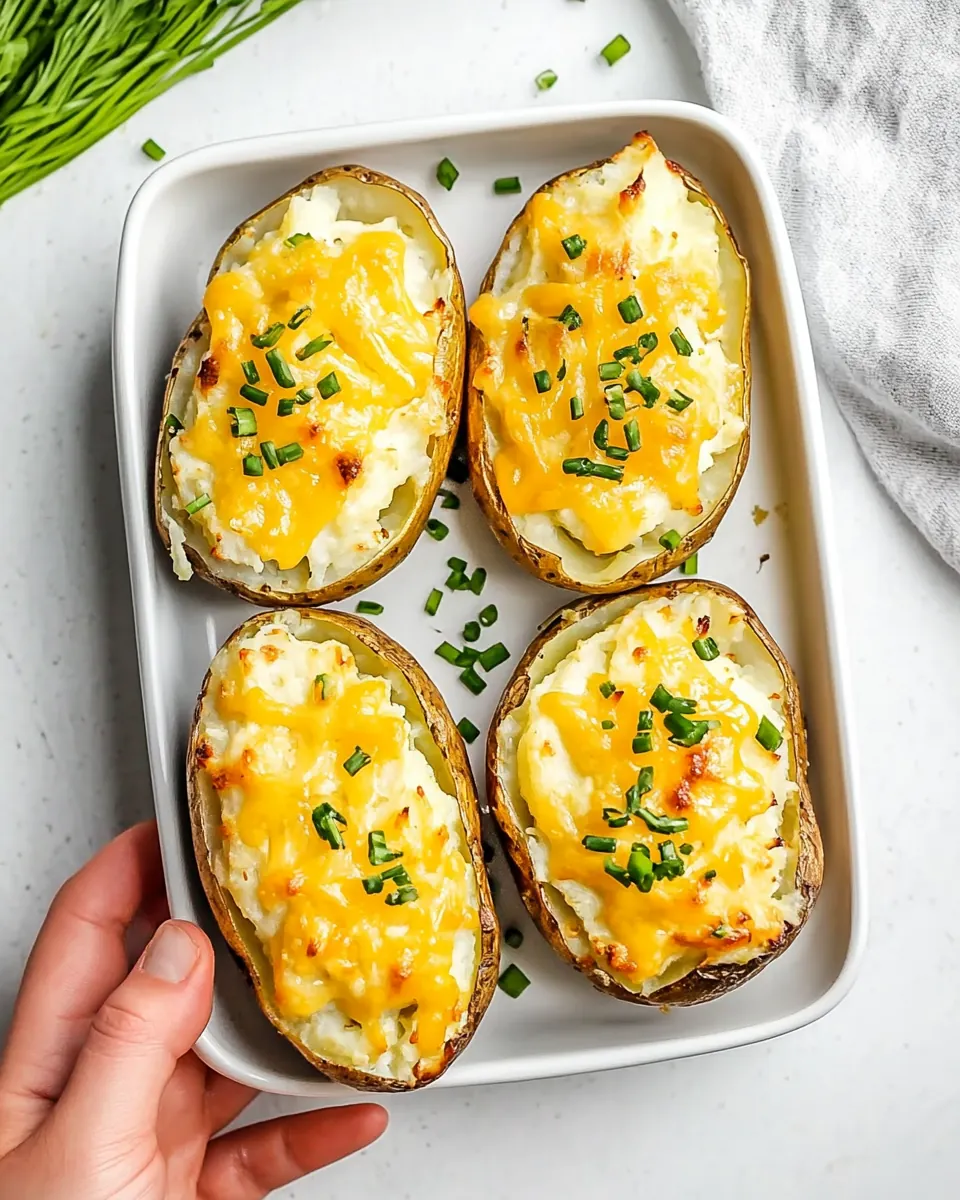
I like to think of the method as two linked bakes that build flavor and texture. Follow these steps patiently and you will be rewarded with skins that hold and fillings that melt in the mouth.
- Place a rack in the center of the oven; preheat the oven to 400 degrees F. Use a sharp paring knife to poke a few holes in each potato. Place the potatoes directly onto the oven rack. Bake until the potatoes are tender (a paring knife should easily slide in and out of the potato once it's done), about 1 hour to 1 hour, 15 minutes. Use potholders to carefully remove the potatoes from the oven. Cool until the potatoes aren’t too hot to touch.: Warmth from an evenly preheated oven yields consistent baking and a tender interior. You should smell a faint toasty scent as the oven reaches temperature, and the air inside becomes dry which helps the skins crisp while the flesh steams gently. The paring knife test later on is how you will confirm doneness. A common mistake is rushing the preheat, which leads to uneven cooking and a longer-than-expected bake time.
- Turn the oven down to 375 degrees F. Line a large baking tray with foil and spray it with nonstick cooking spray.: These small vents allow steam to escape as the potatoes bake, preventing splits and soggy pockets. The poke should be quick and shallow, leaving visible pin pricks. You may hear a faint hiss during the initial minutes, which is just steam releasing. Avoid poking large holes that will let moisture escape excessively and dry the interior.
- Cut each potato in half lengthwise. Scoop out the potato flesh, putting it into a large bowl. Leave a border about 1/4-inch thick for each potato skin. Arrange the potato skins on the prepared baking tray.: Direct contact with the rack allows hot air to circulate the skin, promoting a crisp and evenly browned exterior. As they bake, the skins will darken and firm up; you can gently tap a potato with a potholder to sense if it feels soft. Resist the urge to wrap them in foil for the first bake, as that traps steam and yields limp skins.
- To the bowl with the potato flesh, add the butter, sour cream, heavy whipping cream, salt, and black pepper. Mash everything together until it forms a chunky mash. Stir in 2/3 of the shredded cheddar.: You will notice the aroma of cooked potatoes becoming sweeter and starch rich. The paring knife test is key, slide it into the center and it should meet little resistance. If the knife meets a hard core, continue baking in 10 minute increments. A common problem is under baking which leads to dense, undercooked flesh that resists mashing.
- Scoop the potato mixture into the potato skins. Sprinkle the remaining 1/3 of the shredded cheddar on top.: Handling the hot potatoes safely protects you and preserves the structure of the skins. They will release steam when moved, so keep hands away from vents. Letting them rest for a few minutes makes them safer to handle; rushing in while they are scalding can cause burns and will make scooping more difficult.
- Bake until the potatoes are warm throughout and the cheese is melted on top, about 15 to 20 minutes. To brown the cheese on top, broil briefly. Serve warm, topped with fresh chives.: As they cool, the interior firms slightly which makes scooping cleaner and prevents burns. You should be able to touch the skin comfortably with a towel or gloved hand. If you try to scoop when they are piping hot, the filling can be watery and messy, so patience here improves texture and control.
- Turn the oven down to 375 degrees F: Lowering the temperature for the second bake ensures the filling heats through without over browning the topping too quickly. The oven will have a softer, even heat profile that melts the cheddar cheese gently. Avoid blasting them at a very high temperature which can scorch the cheese before the center warms.
- Line a large baking tray with foil and spray it with nonstick cooking spray: The prepared tray catches any escaping filling and makes cleanup effortless. The foil reflects heat slightly and the nonstick spray prevents skins from gluing to the tray. A frequent oversight is skipping the spray and then wrestling to lift stuck skins off the tray.
- Cut each potato in half lengthwise: A clean, steady cut reveals the tender interior and creates the cavity to scoop. The exposed surface will steam briefly, becoming slightly matte. Use a knife with a steady hand to avoid tearing the skin; jagged cuts make it harder to arrange the halves attractively on the tray.
- Scoop out the potato flesh, putting it into a large bowl: Leaving a border about 1/4-inch thick ensures the skins hold their shape when stuffed. As you scoop, you will notice the warm, starch forward aroma and a fluffy texture that is ideal for mashing. If you scoop too deeply and thin the skins, they can collapse when reheated, so preserve that thin wall for structure.
- Arrange the potato skins on the prepared baking tray: Position them cut side up so they form little bowls for the filling. They will firm up more on the tray as they sit, and creating a stable layout prevents tipping. A simple tip is to nestle them close but not touching, so heat distributes evenly. Overcrowding can prevent the cheese from melting uniformly.
- To the bowl with the potato flesh, add the butter, sour cream, heavy whipping cream, salt, and black pepper: As these ingredients come together, the aroma shifts to buttery and tangy notes, and the texture becomes silky. The dairy smooths the starch, while the salt amplifies the potato's natural sweetness. A common mistake is overworking the mash into a gluey mass; gently fold until just combined to keep a light, slightly chunky texture.
- Mash everything together until it forms a chunky mash: Aim for a balance between smooth and textured, so each bite has body and creaminess. You should hear a gentle squish and see small peaks and valleys in the mash. If you over mash, the potatoes will become gummy due to starch release, so stop once it holds together and is velvety yet airy.
- Stir in 2/3 of the shredded cheddar: Folding most of the cheddar cheese into the filling creates pockets of molten cheese and a cohesive savory base. As it warms from the potato heat it begins to soften and integrate. If you add all the cheese at once on top you miss the melty interior pockets that make the texture interesting.
- Scoop the potato mixture into the potato skins: Fill each shell generously but avoid overstuffing which can spill during baking. The filling should mound gently and hold its shape. If the filling seems too loose, a brief chill before baking firms it up; overpacked skins can split or drip.
- Sprinkle the remaining 1/3 of the shredded cheddar on top: This reserved cheese melts into a golden, bubbling layer that browns attractively under the broiler. The top will sizzle and then bubble, and that sound signals you are close to done. Applying cheese evenly prevents some halves from browning much more than others.
- Bake until the potatoes are warm throughout and the cheese is melted on top, about 15 to 20 minutes: You will notice a bubble and glossy sheen as the cheese melts, and the filling will register hot when tested with a small spoon. This final bake melds flavors and sets the filling. Under baking here leaves cold centers; over baking can dry the interior.
- To brown the cheese on top, broil briefly: The broiler adds direct high heat that creates small blistered spots and deep golden color on the cheddar cheese . Watch closely, as it can go from perfect to charred in seconds. A common error is leaving them unattended under the broiler which results in a bitter, burnt top.
- Serve warm, topped with fresh chives: The final sprinkle of chives brings a bright, oniony finish and a pop of color against the melted cheese. Inhale the savory steam and enjoy the contrast between crisp skin and creamy center. If you wait too long to serve, the filling can settle and lose some of its warm silkiness, so plate them promptly.
Tips and Tricks about Twice Baked Potatoes
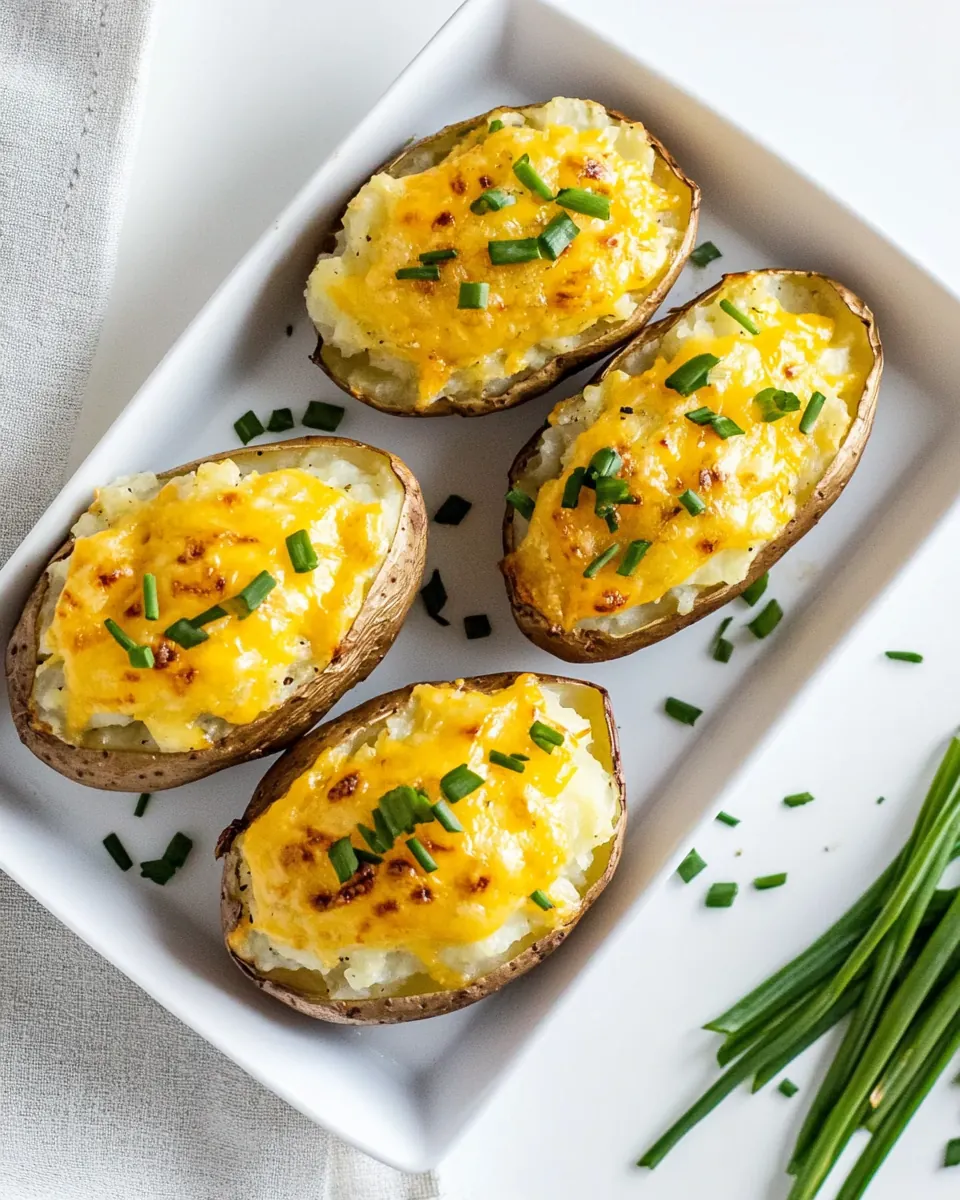
These tips will help you get consistent results and elevate the dish without changing the core ingredients. Small technique notes make the difference between good and memorable.
- Choose similar sized potatoes: Picking four russet potatoes that are close in size ensures even baking and avoids under or overcooking individual spuds.
- Preheat the oven fully: Starting in a fully hot oven promotes crisp skins and predictable timing for the initial bake.
- Do not over mash: A gentle hand yields a fluffy texture; overworking releases starch and creates a gluey filling.
- Shred cheese from a block when possible: Freshly shredded cheddar cheese melts more smoothly and tastes fresher than pre shredded options.
- Add chives last: Fresh chives lose color and aroma when cooked too long, so sprinkle them on just before serving.
- Stabilize overly loose filling: If the filling seems too soft, chill it briefly to firm it before stuffing to avoid spills while baking.
What Complements This Twice Baked Potatoes
These serving ideas will help you decide how to present the dish, whether as a hearty side or a cozy main. From casual meals to special occasions, the dish adapts well.
- Simple roast chicken or vegetables: Serve the Twice Baked Potatoes alongside a simply seasoned roast for a classic dinner pairing that balances protein and starch.
- Green salad with a vinegar forward dressing: A crisp salad cuts the richness and adds textural contrast, making the meal feel lighter.
- Family dinner or holiday side: These are perfect for gatherings because they can be prepared ahead and finished in the oven just before serving.
- Storage tips: Refrigerate cooled leftovers in an airtight container for up to 3 days, then reheat in a 350 degrees F oven until warmed through to preserve texture.
- Seasonal pairing: In fall, pair with roasted root vegetables and warm spices to lean into cozy seasonal flavors.
FAQ
Conclusion
Twice Baked Potatoes take humble ingredients and transform them into a comforting, crowd friendly dish that balances creamy filling and crisped skins. Give this recipe a try when you want something that feels indulgent yet approachable, whether for a family meal or a casual gathering. I hope you enjoy the cozy textures and savory hits of cheddar cheese and fresh chives, and that this becomes a go to side in your rotation.
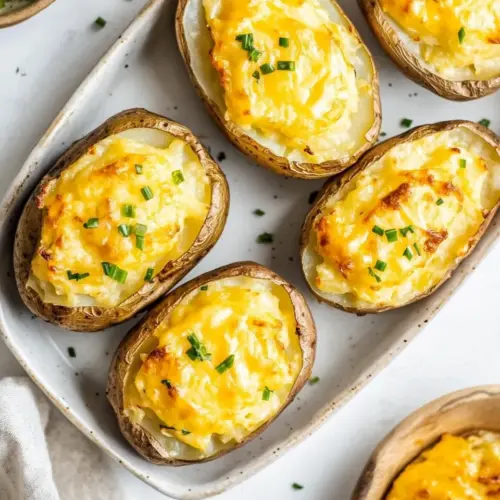
Twice Baked Potatoes
Equipment
- Oven
- Baking Tray
- Paring knife
- Mixing Bowl
Ingredients
- 4 larger russet potatoes, washed and patted dry Scrubbed and dried, provides the starchy, fluffy base for twice baked potatoes and holds the filling after scooping. Bake until tender to develop a creamy interior that blends well with butter and dairy.
- 4 tablespoons salted butter, at room temperature Softened at room temperature to allow easy incorporation, contributes rich, savory fat for a smooth, luxurious texture in the mashed potato filling. Melt slightly into hot potatoes to enhance mouthfeel and flavor depth.
- 4 tablespoons sour cream Creamy and tangy, adds moisture and a subtle acidity that brightens the overall flavor of the potato mixture. Fold into the warm potato flesh to help achieve a light, velvety consistency for easy re-filling.
- 4 tablespoons heavy whipping cream Rich and smooth, supplies additional creaminess and helps loosen the mashed potatoes for a silky, scoopable filling. Gently combine to avoid making the mixture too runny while maintaining a luscious texture.
- 1/2 teaspoons salt Finely measured to season and enhance the natural potato flavors, ensures the filling is properly seasoned without overpowering. Sprinkle and taste as you mix to balance saltiness throughout the dish.
- 1/4 teaspoon pepper Lightly ground to provide a gentle spicy note and background warmth, complements the richness of butter and dairy. Add gradually to control heat and maintain a balanced, savory profile.
- 2 cups shredded cheddar cheese Sharp and melty, delivers both bold cheese flavor and a gooey topping when returned to the oven, contributing color and texture contrast. Stir some into the filling and reserve a portion for a bubbly, browned finish.
- 2 tablespoons chopped fresh chives Finely chopped and fresh, offers a bright herbal finish and mild onion-like flavor that lifts the richness of the potatoes and dairy. Sprinkle over the finished potatoes for color, aroma, and a subtle fresh bite.
Instructions
- Place a rack in the center of the oven; preheat the oven to 400 degrees F. Use a sharp paring knife to poke a few holes in each potato. Place the potatoes directly onto the oven rack. Bake until the potatoes are tender (a paring knife should easily slide in and out of the potato once it's done), about 1 hour to 1 hour, 15 minutes. Use potholders to carefully remove the potatoes from the oven. Cool until the potatoes aren’t too hot to touch.: Warmth from an evenly preheated oven yields consistent baking and a tender interior. You should smell a faint toasty scent as the oven reaches temperature, and the air inside becomes dry which helps the skins crisp while the flesh steams gently. The paring knife test later on is how you will confirm doneness. A common mistake is rushing the preheat, which leads to uneven cooking and a longer-than-expected bake time.
- Turn the oven down to 375 degrees F. Line a large baking tray with foil and spray it with nonstick cooking spray.: These small vents allow steam to escape as the potatoes bake, preventing splits and soggy pockets. The poke should be quick and shallow, leaving visible pin pricks. You may hear a faint hiss during the initial minutes, which is just steam releasing. Avoid poking large holes that will let moisture escape excessively and dry the interior.
- Cut each potato in half lengthwise. Scoop out the potato flesh, putting it into a large bowl. Leave a border about 1/4-inch thick for each potato skin. Arrange the potato skins on the prepared baking tray.: Direct contact with the rack allows hot air to circulate the skin, promoting a crisp and evenly browned exterior. As they bake, the skins will darken and firm up; you can gently tap a potato with a potholder to sense if it feels soft. Resist the urge to wrap them in foil for the first bake, as that traps steam and yields limp skins.
- To the bowl with the potato flesh, add the butter, sour cream, heavy whipping cream, salt, and black pepper. Mash everything together until it forms a chunky mash. Stir in 2/3 of the shredded cheddar.: You will notice the aroma of cooked potatoes becoming sweeter and starch rich. The paring knife test is key, slide it into the center and it should meet little resistance. If the knife meets a hard core, continue baking in 10 minute increments. A common problem is under baking which leads to dense, undercooked flesh that resists mashing.
- Scoop the potato mixture into the potato skins. Sprinkle the remaining 1/3 of the shredded cheddar on top.: Handling the hot potatoes safely protects you and preserves the structure of the skins. They will release steam when moved, so keep hands away from vents. Letting them rest for a few minutes makes them safer to handle; rushing in while they are scalding can cause burns and will make scooping more difficult.
- Bake until the potatoes are warm throughout and the cheese is melted on top, about 15 to 20 minutes. To brown the cheese on top, broil briefly. Serve warm, topped with fresh chives.: As they cool, the interior firms slightly which makes scooping cleaner and prevents burns. You should be able to touch the skin comfortably with a towel or gloved hand. If you try to scoop when they are piping hot, the filling can be watery and messy, so patience here improves texture and control.
- Turn the oven down to 375 degrees F: Lowering the temperature for the second bake ensures the filling heats through without over browning the topping too quickly. The oven will have a softer, even heat profile that melts the cheddar cheese gently. Avoid blasting them at a very high temperature which can scorch the cheese before the center warms.
- Line a large baking tray with foil and spray it with nonstick cooking spray: The prepared tray catches any escaping filling and makes cleanup effortless. The foil reflects heat slightly and the nonstick spray prevents skins from gluing to the tray. A frequent oversight is skipping the spray and then wrestling to lift stuck skins off the tray.
- Cut each potato in half lengthwise: A clean, steady cut reveals the tender interior and creates the cavity to scoop. The exposed surface will steam briefly, becoming slightly matte. Use a knife with a steady hand to avoid tearing the skin; jagged cuts make it harder to arrange the halves attractively on the tray.
- Scoop out the potato flesh, putting it into a large bowl: Leaving a border about 1/4-inch thick ensures the skins hold their shape when stuffed. As you scoop, you will notice the warm, starch forward aroma and a fluffy texture that is ideal for mashing. If you scoop too deeply and thin the skins, they can collapse when reheated, so preserve that thin wall for structure.
- Arrange the potato skins on the prepared baking tray: Position them cut side up so they form little bowls for the filling. They will firm up more on the tray as they sit, and creating a stable layout prevents tipping. A simple tip is to nestle them close but not touching, so heat distributes evenly. Overcrowding can prevent the cheese from melting uniformly.
- To the bowl with the potato flesh, add the butter, sour cream, heavy whipping cream, salt, and black pepper: As these ingredients come together, the aroma shifts to buttery and tangy notes, and the texture becomes silky. The dairy smooths the starch, while the salt amplifies the potato's natural sweetness. A common mistake is overworking the mash into a gluey mass; gently fold until just combined to keep a light, slightly chunky texture.
- Mash everything together until it forms a chunky mash: Aim for a balance between smooth and textured, so each bite has body and creaminess. You should hear a gentle squish and see small peaks and valleys in the mash. If you over mash, the potatoes will become gummy due to starch release, so stop once it holds together and is velvety yet airy.
- Stir in 2/3 of the shredded cheddar: Folding most of the cheddar cheese into the filling creates pockets of molten cheese and a cohesive savory base. As it warms from the potato heat it begins to soften and integrate. If you add all the cheese at once on top you miss the melty interior pockets that make the texture interesting.
- Scoop the potato mixture into the potato skins: Fill each shell generously but avoid overstuffing which can spill during baking. The filling should mound gently and hold its shape. If the filling seems too loose, a brief chill before baking firms it up; overpacked skins can split or drip.
- Sprinkle the remaining 1/3 of the shredded cheddar on top: This reserved cheese melts into a golden, bubbling layer that browns attractively under the broiler. The top will sizzle and then bubble, and that sound signals you are close to done. Applying cheese evenly prevents some halves from browning much more than others.
- Bake until the potatoes are warm throughout and the cheese is melted on top, about 15 to 20 minutes: You will notice a bubble and glossy sheen as the cheese melts, and the filling will register hot when tested with a small spoon. This final bake melds flavors and sets the filling. Under baking here leaves cold centers; over baking can dry the interior.
- To brown the cheese on top, broil briefly: The broiler adds direct high heat that creates small blistered spots and deep golden color on the cheddar cheese . Watch closely, as it can go from perfect to charred in seconds. A common error is leaving them unattended under the broiler which results in a bitter, burnt top.
- Serve warm, topped with fresh chives: The final sprinkle of chives brings a bright, oniony finish and a pop of color against the melted cheese. Inhale the savory steam and enjoy the contrast between crisp skin and creamy center. If you wait too long to serve, the filling can settle and lose some of its warm silkiness, so plate them promptly.
Notes
- Choose similar sized potatoes: Picking four russet potatoes that are close in size ensures even baking and avoids under or overcooking individual spuds.
- Preheat the oven fully: Starting in a fully hot oven promotes crisp skins and predictable timing for the initial bake.
- Do not over mash: A gentle hand yields a fluffy texture; overworking releases starch and creates a gluey filling.
- Shred cheese from a block when possible: Freshly shredded cheddar cheese melts more smoothly and tastes fresher than pre shredded options.
- Add chives last: Fresh chives lose color and aroma when cooked too long, so sprinkle them on just before serving.
- Stabilize overly loose filling: If the filling seems too soft, chill it briefly to firm it before stuffing to avoid spills while baking.