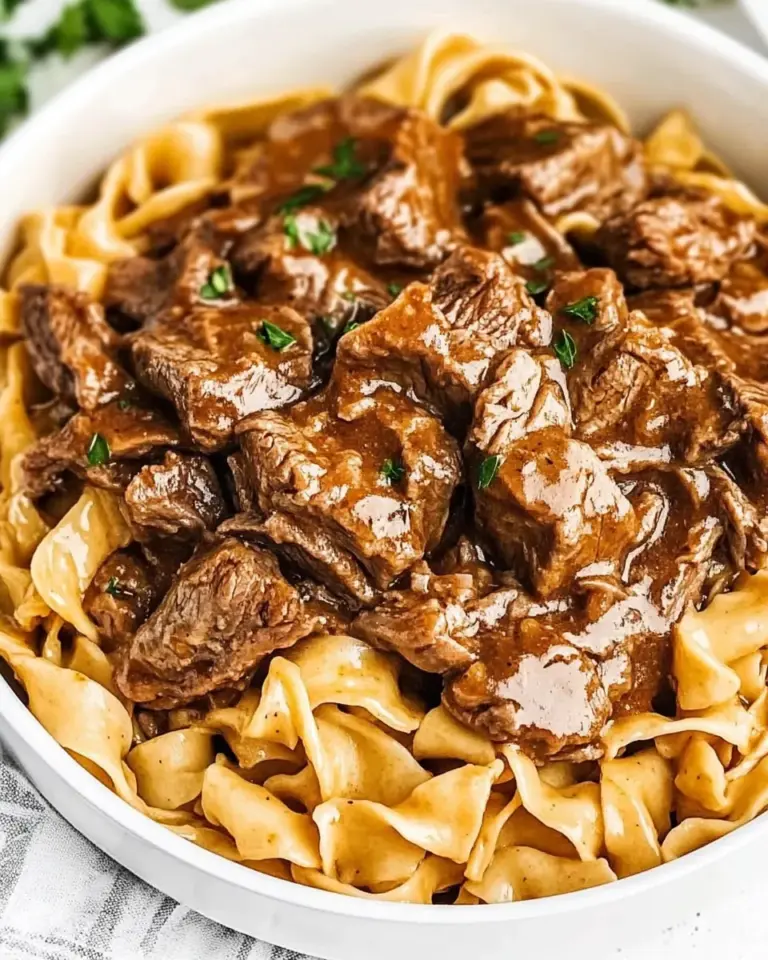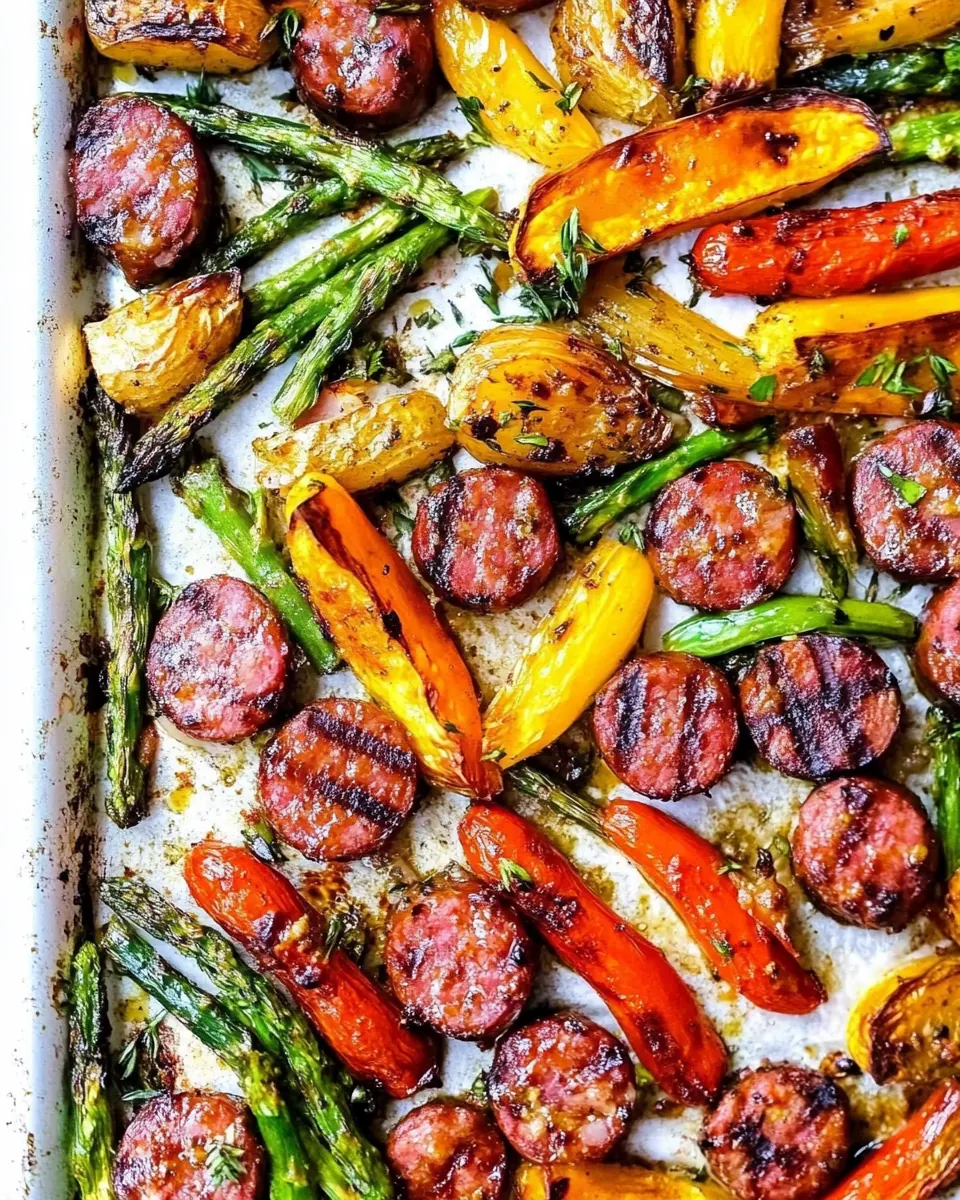
Kielbasa Veggie Sheet Pan Dinner
Kielbasa Veggie Sheet Pan Dinner is the kind of meal I reach for when the week has been full and I want something honest, colorful, and effortless on a single baking sheet. I first made this after a long spring weekend of gardening, when the asparagus in the fridge begged to be used and I had a package of turkey kielbasa waiting in the fridge. The mix of browned, savory kielbasa and tender roasted asparagus with juicy grape tomatoes felt like comfort and celebration at once.
My approach to the Kielbasa Veggie Sheet Pan Dinner is practical, not precious. I love how a hot oven concentrates flavors and caramelizes edges, creating crisp textures without babysitting a pan on the stove. There is something so satisfying about flipping a few pieces of kielbasa, scattering vegetables, drizzling a simple seasoned olive oil mix, and letting heat do the rest. Each time I serve this, people comment on the bright pepper pieces and the little pops of tomato, and I secretly love that it looks like I spent way longer than I did.
Over the years I have tweaked the seasoning balance, learned the exact time that coaxed the best bite from the kielbasa, and discovered that arranging everything in a single layer makes for even cooking and great texture. I often pair this with warm bread or a crisp salad, but it stands proud on its own as a weeknight winner. I find it perfect for spring evenings when fresh vegetables shine and you want dinner to feel both simple and special.
Recipe Snapshot
45 mins
15 mins
30 mins
Medium
350 kcal
American
Paleo, Gluten-Free
Dinner
Baking sheet, Mixing bowl, Small bowl
The Magic of This Kielbasa Veggie Sheet Pan Dinner
One pan, maximum flavor
I love how Kielbasa Veggie Sheet Pan Dinner turns one sheet into a full, balanced meal. The roasting process concentrates the grape tomatoes until they burst with sweetness, while the kielbasa caramelizes and releases savory juices that mingle with the vegetables. You get crisp edges, soft centers, and a satisfying contrast without extra pots to wash.
Speed that actually saves your evening
When time is tight, this recipe delivers. The total hands on effort is minimal, and the active steps are intuitive. I appreciate recipes that let the oven do most of the work, and this one consistently returns reliable results fast. That means more time to relax, set the table, or chat with whoever is around.
Simple seasoning, powerful results
The combination of Italian seasoning, paprika, and garlic powder finishes the vegetables with warmth and depth. I like that the seasoning plays well with the smoky-salty notes of the kielbasa, creating a unified flavor profile that feels both wholesome and comforting.
Flexible and forgiving
One of the reasons I keep returning to this Kielbasa Veggie Sheet Pan Dinner is its adaptability. If I have different vegetables on hand I can still make it work, and the method is very forgiving of slightly different oven temperatures or pan sizes. That makes it perfect for cooks of any level, from first timers to seasoned home chefs.
Bright seasonal appeal
Because this recipe highlights fresh spring ingredients like tender asparagus and colorful bell pepper, it feels like a seasonal celebration that is still casual enough for weeknights. The visual appeal on the plate matters to me, and the color contrast here always draws compliments.
Essential Ingredients for Kielbasa Veggie Sheet Pan Dinner
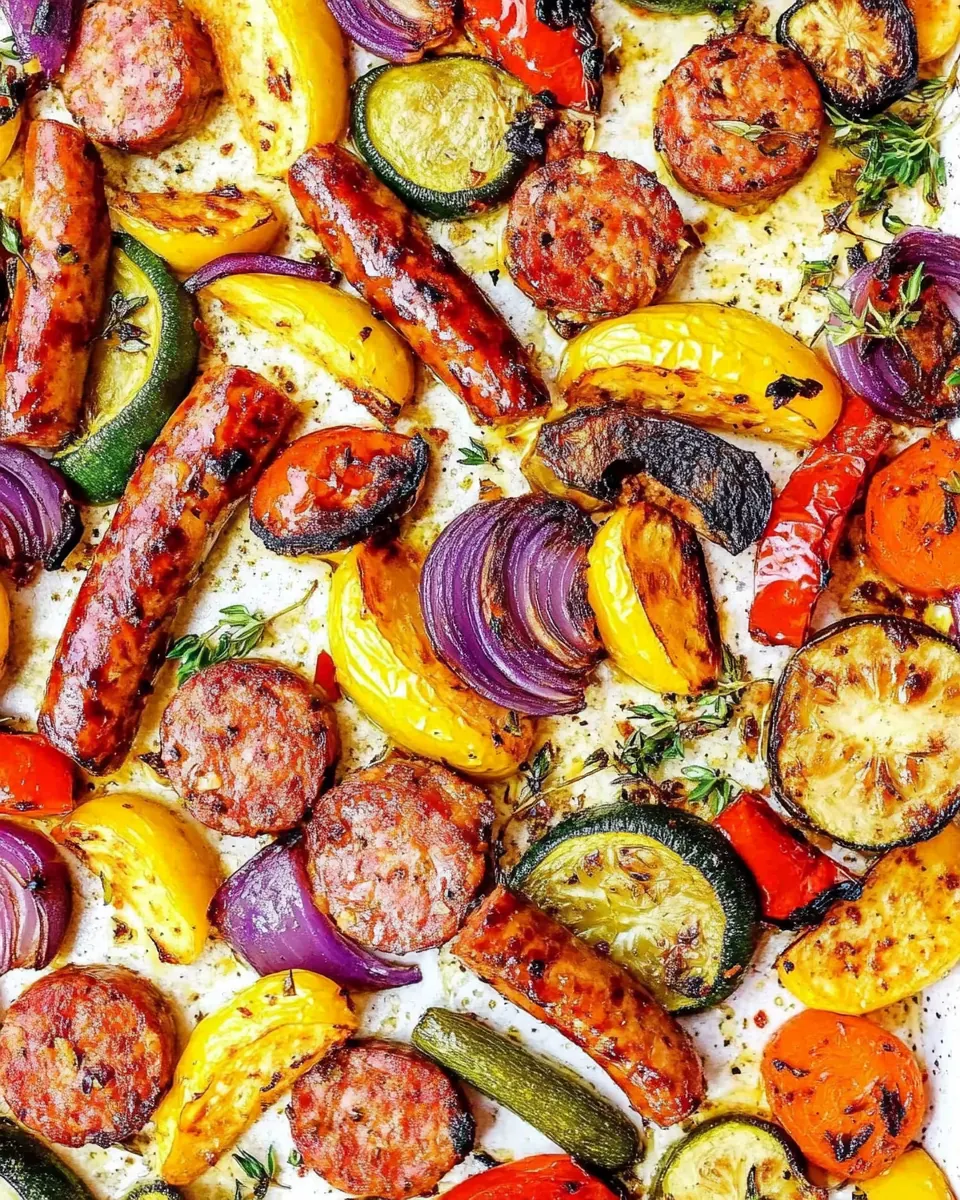
These ingredients form a straightforward, harmonious lineup. The recipe relies on a handful of strong players: hearty protein in the form of kielbasa, verdant asparagus, sweet grape tomatoes, and colorful bell pepper. A simple seasoned olive oil coating ties everything together, while a few pantry spices bring warmth and balance.
- 14 ounces turkey kielbasa, cut on the diagonal into 1/2-inch-thick slices: Provide savory, smoky slices that contribute protein and hearty texture; brown edges add caramelized flavor during roasting and pair well with vegetables for a balanced sheet-pan meal.
- 1 pound asparagus, trimmed, cut into 2-inch pieces (3 cups): Add crisp-tender green stalks offering a fresh, slightly grassy flavor and vibrant color; roast quickly alongside kielbasa to maintain a pleasant bite and nutritional value.
- 1 1/2 cups grape tomatoes, halved: Contribute juicy bursts of acidity and sweetness that soften and concentrate when roasted; halved tomatoes create pockets of flavor that brighten the whole dish.
- 1 large orange bell pepper, cut into 2-inch pieces (1 1/2 cups): Bring sweet, crunchy, colorful pieces that caramelize at the edges and add a mild peppery note; large chunks balance textures and enhance visual appeal on the sheet pan.
- 2 tablespoons olive oil: Coat all components to promote even roasting and help seasonings adhere; olive oil also encourages browning and enhances mouthfeel with healthy fats.
- 1 teaspoon salt: Season the dish to enhance natural flavors and provide basic savory balance; salt draws out moisture from vegetables for better caramelization and intensifies overall taste.
- 1 teaspoon Italian seasoning: Impart an herby Mediterranean blend that layers savory, aromatic notes across the tray; Italian seasoning complements both meat and vegetables for cohesive flavor.
- 1 teaspoon paprika: Add a warm, smoky depth and subtle sweetness that enhances the grilled-roast character; paprika helps deepen color and rounds out the spice profile.
- 1/2 teaspoon garlic powder: Provide concentrated umami and mild pungency without moisture, enhancing savory depth; garlic powder distributes evenly and avoids burning during high-heat roasting.
- 1/4 teaspoon black pepper: Contribute sharp, warm bite to balance richer flavors and highlight contrasts; black pepper adds gentle heat and complexity to the finished meal.
Step by Step Guide for Kielbasa Veggie Sheet Pan Dinner
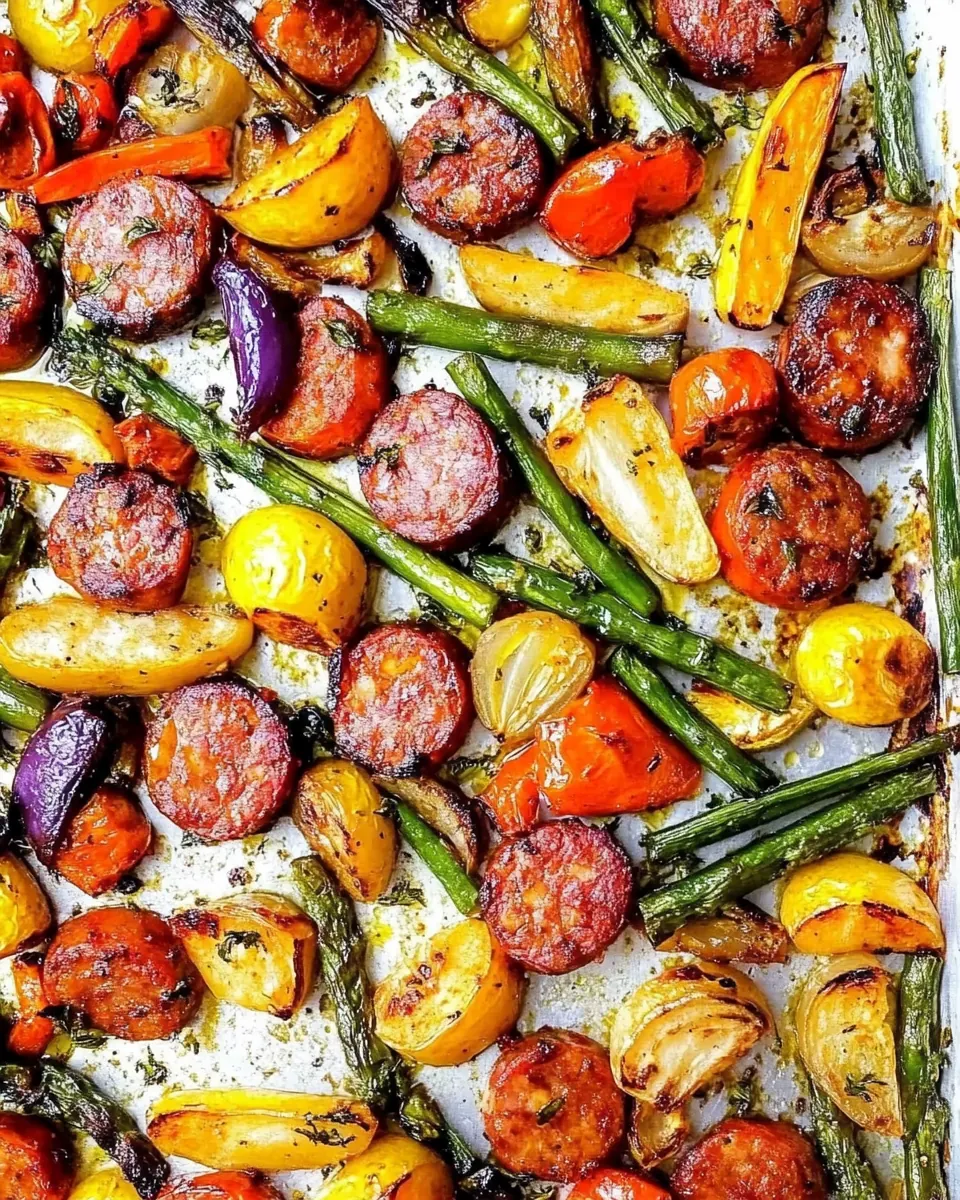
I like to keep my instructions friendly and chatty because that helps you feel confident while roasting. These steps walk you through preheating, arranging the kielbasa, tossing the vegetables with the seasoned olive oil, and finishing everything together. Follow the sensory cues and you will get consistent results that are crisp, caramelized, and full of bright flavor.
- Preheat the oven to 400°F. Line a 20 × 14-inch baking sheet or two 14 × 10-inch pans with foil and grease well.: You should notice the oven warming up and the elements quietly humming as they reach 400°F . A properly preheated oven ensures the kielbasa and vegetables begin browning on contact, which yields those desirable caramelized edges. If you skip preheating, the food can steam instead of roast, resulting in limp vegetables. A common mistake is not giving the oven enough time, so wait until the display reads 400°F and the oven is fully hot.
- Arrange the kielbasa in a single layer on the baking sheet. Roast for 12 to 15 minutes, until it starts to brown on the bottom.: The foil will catch drips and make cleanup simple, while a thin film of fat prevents sticking and encourages browning. Rub the surface with a little oil so the kielbasa slides and the vegetables sear rather than glue to the pan. If the pan is crowded or ungreased, pieces may stick and tear, so be generous when greasing.
- Meanwhile, in a large bowl, toss together the veggies.: Lay each slice of kielbasa so it has space around it, which promotes even browning. You'll hear a low sizzle as the pan goes in, and after 12 to 15 minutes the undersides should be starting to show golden brown spots, a cue that Maillard caramelization is happening. A frequent error is overlapping slices, which traps moisture and prevents crisping, so keep them separated.
- In a small bowl, whisk together the oil, salt, Italian seasoning, paprika, garlic powder, and black pepper. Pour over the veggies and toss to coat.: As the kielbasa roasts you will smell savory, roasted aromas and see edges darken. This initial roast develops deep flavor and renders fat that will later mingle with the vegetables. Avoid overcooking here, because browning too long can dry the slices out, so check for the golden underside at about 12 minutes.
- When the kielbasa is done, remove the pan from the oven but leave it on. Flip the kielbasa pieces over and move them to one side of the pan, leaving space for the veggies.: When you toss the asparagus , halved grape tomatoes , and chopped bell pepper , focus on even distribution so every piece gets seasoned later. The motion of tossing mixes textures and exposes surfaces that will brown in the oven. A common oversight is uneven cuts, which leads to inconsistent doneness, so cut everything to similar sizes.
- Arrange the veggies in a single layer on the other side of the extra-large pan, or on the second pan if using two pans.: Whisking the olive oil and spices emulsifies the coating and helps it cling to the vegetables, guaranteeing even flavor. You will see the spices suspend in the oil, and when poured over the vegetables they give a glossy sheen. Not whisking can leave dry pockets of seasoning, so mix well to ensure consistent coverage.
- Roast for 18 to 20 minutes, until the veggies are tender and the kielbasa is further browned.: After pouring the seasoned oil onto the vegetables, toss until each piece is lightly dressed and glistening. This step helps the vegetables brown uniformly and absorb the spice flavors. If the coating looks patchy, the result will be uneven seasoning, so take a few extra seconds to toss thoroughly.
- When the kielbasa is done, remove the pan from the oven but leave it on: You will feel the warmth radiate as you open the oven, and the partial resting helps the kielbasa stabilize before you rearrange. Leaving the oven on maintains temperature so the vegetables start roasting immediately. A mistake is pulling the pan out and leaving it on the counter to cool, which can sap oven heat and slow the vegetable roast.
- Flip the kielbasa pieces over and move them to one side of the pan, leaving space for the veggies: Flipping reveals the nicely browned bottoms and allows the other side to catch heat and color. Sliding the slices to one side creates an organized space for the vegetables so everything finishes together. If you stir or crowd the items too much, you lose crispness, so keep a clear zone for the vegetables.
- Arrange the veggies in a single layer on the other side of the extra-large pan, or on the second pan if using two pans: Spreading the veggies in one layer prevents steaming and helps them roast to tender crispness with charred edges. Listen for the sizzling as they hit the hot pan, and look for browning at the edges as a sign of readiness. Crowding the pan will cause soggy vegetables, so use a second pan if necessary to maintain space.
- Roast for 18 to 20 minutes, until the veggies are tender and the kielbasa is further browned: During this final roast you will notice the tomatoes soften and release juices, the asparagus tips browning, and the bell pepper edges blistering slightly, all while the kielbasa deepens in color. These sensory cues indicate the dish is ready, offering a mix of tender interior and crispy edges. Over roasting can dry the kielbasa or overly collapse the tomatoes, so check around 18 minutes and use those visual and textural signals to judge doneness.
Recipe Tips about Kielbasa Veggie Sheet Pan Dinner
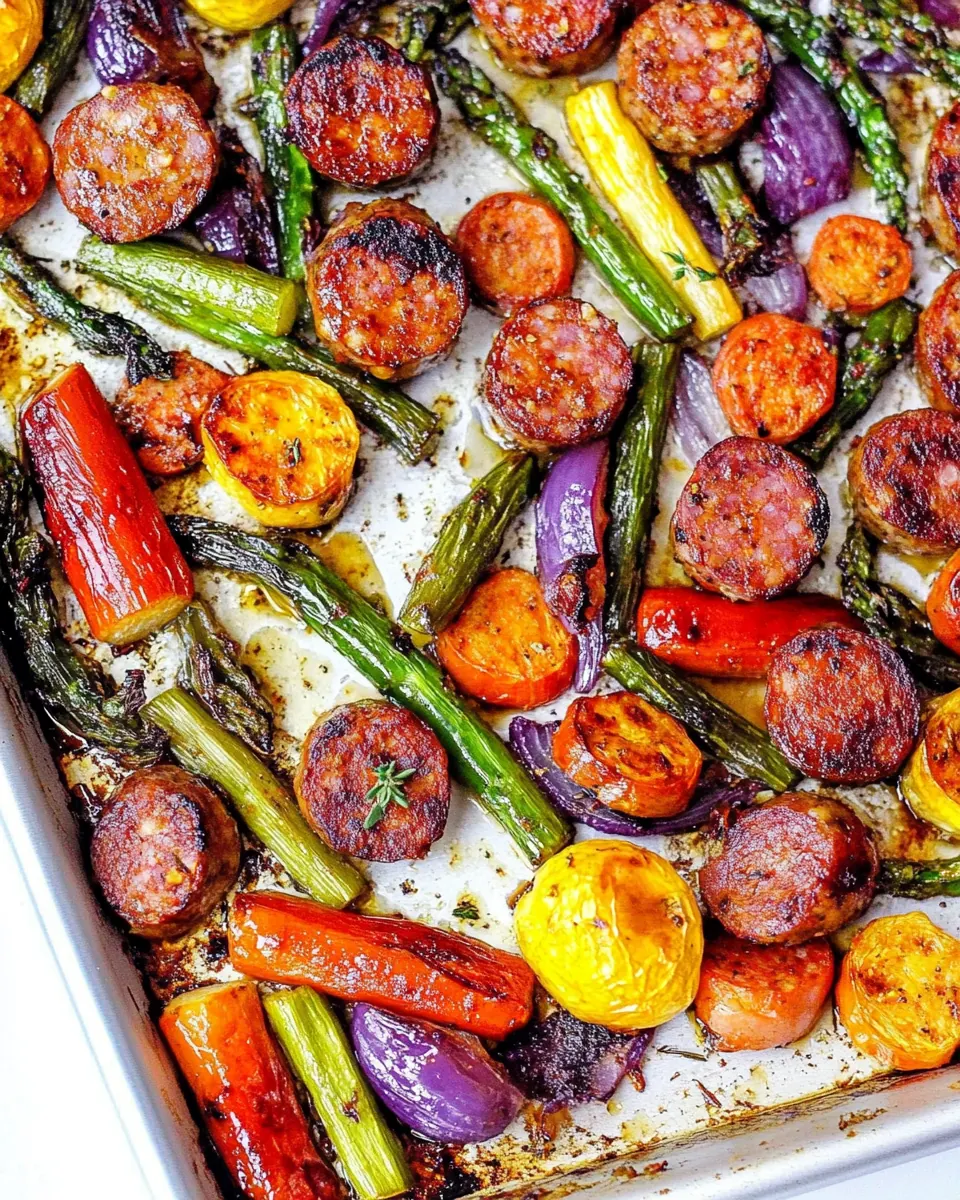
This recipe rewards small attentions, like careful cutting and even seasoning. Below are focused tips to help you get consistent, flavorful results every time you roast a Kielbasa Veggie Sheet Pan Dinner.
- Preheat fully so the pan hits the oven at temperature and the food begins to sear rather than steam; this promotes crisp, caramelized edges.
- Uniform cuts ensure even cooking, so cut the asparagus and bell pepper to matching sizes for simultaneous doneness.
- Single layer roast for best texture, and if the pan gets crowded split across two pans to avoid steaming.
- Season evenly by whisking the spices into the olive oil before tossing, which helps the seasoning cling to every piece.
- Check early at the low end of the roast window because vegetables and sausage can finish sooner depending on oven variations.
- Use foil for easy cleanup, but grease it well to prevent sticking and tearing when you remove the kielbasa and vegetables.
What Goes Well With This Kielbasa Veggie Sheet Pan Dinner
This is a versatile main that pairs beautifully with simple sides and casual occasions. For weeknight dinners through spring gatherings it fits right in, and you can adapt the plating to match more formal or relaxed settings. Below are ideas to complement the dish and suggestions for storing leftovers and seasonal pairings.
- Warm crusty bread to soak up pan juices, perfect for casual weeknight meals or weekend dinners with friends.
- Light green salad dressed with lemon and olive oil, offering a refreshing counterpoint to the roasted textures.
- Rice or couscous as a base to make the meal heartier for family dinners or when you want extra bulk.
- Casual gatherings like potlucks and outdoor spring lunches work well, because the dish travels and serves easily.
- Storage tips include cooling to room temperature before refrigerating in an airtight container for up to three days, and reheating gently in a 350°F oven to preserve texture.
- Seasonal pairing emphasizes spring vegetables like asparagus and peppers, making this a natural choice for springtime menus and alfresco dinners.
FAQ
Conclusion
What makes this recipe special is its combination of simple ingredients that roast into something greater than the sum of their parts, delivering savory kielbasa, bright vegetables, and minimal cleanup. If you are looking for an easy, satisfying meal that showcases spring produce and comes together with little fuss, this is a reliable go to. Give it a try on your next busy evening and enjoy how quickly it becomes a household favorite.
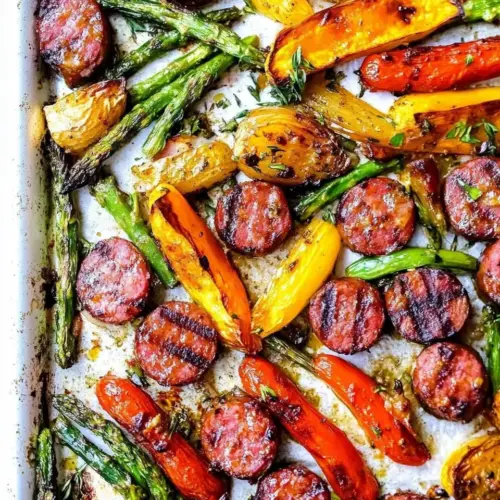
Kielbasa Veggie Sheet Pan Dinner
Equipment
- Baking Sheet
- Mixing Bowl
- Small Bowl
Ingredients
- 14 ounces turkey kielbasa, cut on the diagonal into 1/2-inch-thick slices Provide savory, smoky slices that contribute protein and hearty texture; brown edges add caramelized flavor during roasting and pair well with vegetables for a balanced sheet-pan meal.
- 1 pound asparagus, trimmed, cut into 2-inch pieces (3 cups) Add crisp-tender green stalks offering a fresh, slightly grassy flavor and vibrant color; roast quickly alongside kielbasa to maintain a pleasant bite and nutritional value.
- 1 1/2 cups grape tomatoes, halved Contribute juicy bursts of acidity and sweetness that soften and concentrate when roasted; halved tomatoes create pockets of flavor that brighten the whole dish.
- 1 large orange bell pepper, cut into 2-inch pieces (1 1/2 cups) Bring sweet, crunchy, colorful pieces that caramelize at the edges and add a mild peppery note; large chunks balance textures and enhance visual appeal on the sheet pan.
- 2 tablespoons olive oil Coat all components to promote even roasting and help seasonings adhere; olive oil also encourages browning and enhances mouthfeel with healthy fats.
- 1 teaspoon salt Season the dish to enhance natural flavors and provide basic savory balance; salt draws out moisture from vegetables for better caramelization and intensifies overall taste.
- 1 teaspoon Italian seasoning Impart an herby Mediterranean blend that layers savory, aromatic notes across the tray; Italian seasoning complements both meat and vegetables for cohesive flavor.
- 1 teaspoon paprika Add a warm, smoky depth and subtle sweetness that enhances the grilled-roast character; paprika helps deepen color and rounds out the spice profile.
- 1/2 teaspoon garlic powder Provide concentrated umami and mild pungency without moisture, enhancing savory depth; garlic powder distributes evenly and avoids burning during high-heat roasting.
- 1/4 teaspoon black pepper Contribute sharp, warm bite to balance richer flavors and highlight contrasts; black pepper adds gentle heat and complexity to the finished meal.
Instructions
- Preheat the oven to 400°F. Line a 20 × 14-inch baking sheet or two 14 × 10-inch pans with foil and grease well.: You should notice the oven warming up and the elements quietly humming as they reach 400°F . A properly preheated oven ensures the kielbasa and vegetables begin browning on contact, which yields those desirable caramelized edges. If you skip preheating, the food can steam instead of roast, resulting in limp vegetables. A common mistake is not giving the oven enough time, so wait until the display reads 400°F and the oven is fully hot.
- Arrange the kielbasa in a single layer on the baking sheet. Roast for 12 to 15 minutes, until it starts to brown on the bottom.: The foil will catch drips and make cleanup simple, while a thin film of fat prevents sticking and encourages browning. Rub the surface with a little oil so the kielbasa slides and the vegetables sear rather than glue to the pan. If the pan is crowded or ungreased, pieces may stick and tear, so be generous when greasing.
- Meanwhile, in a large bowl, toss together the veggies.: Lay each slice of kielbasa so it has space around it, which promotes even browning. You'll hear a low sizzle as the pan goes in, and after 12 to 15 minutes the undersides should be starting to show golden brown spots, a cue that Maillard caramelization is happening. A frequent error is overlapping slices, which traps moisture and prevents crisping, so keep them separated.
- In a small bowl, whisk together the oil, salt, Italian seasoning, paprika, garlic powder, and black pepper. Pour over the veggies and toss to coat.: As the kielbasa roasts you will smell savory, roasted aromas and see edges darken. This initial roast develops deep flavor and renders fat that will later mingle with the vegetables. Avoid overcooking here, because browning too long can dry the slices out, so check for the golden underside at about 12 minutes.
- When the kielbasa is done, remove the pan from the oven but leave it on. Flip the kielbasa pieces over and move them to one side of the pan, leaving space for the veggies.: When you toss the asparagus , halved grape tomatoes , and chopped bell pepper , focus on even distribution so every piece gets seasoned later. The motion of tossing mixes textures and exposes surfaces that will brown in the oven. A common oversight is uneven cuts, which leads to inconsistent doneness, so cut everything to similar sizes.
- Arrange the veggies in a single layer on the other side of the extra-large pan, or on the second pan if using two pans.: Whisking the olive oil and spices emulsifies the coating and helps it cling to the vegetables, guaranteeing even flavor. You will see the spices suspend in the oil, and when poured over the vegetables they give a glossy sheen. Not whisking can leave dry pockets of seasoning, so mix well to ensure consistent coverage.
- Roast for 18 to 20 minutes, until the veggies are tender and the kielbasa is further browned.: After pouring the seasoned oil onto the vegetables, toss until each piece is lightly dressed and glistening. This step helps the vegetables brown uniformly and absorb the spice flavors. If the coating looks patchy, the result will be uneven seasoning, so take a few extra seconds to toss thoroughly.
- When the kielbasa is done, remove the pan from the oven but leave it on: You will feel the warmth radiate as you open the oven, and the partial resting helps the kielbasa stabilize before you rearrange. Leaving the oven on maintains temperature so the vegetables start roasting immediately. A mistake is pulling the pan out and leaving it on the counter to cool, which can sap oven heat and slow the vegetable roast.
- Flip the kielbasa pieces over and move them to one side of the pan, leaving space for the veggies: Flipping reveals the nicely browned bottoms and allows the other side to catch heat and color. Sliding the slices to one side creates an organized space for the vegetables so everything finishes together. If you stir or crowd the items too much, you lose crispness, so keep a clear zone for the vegetables.
- Arrange the veggies in a single layer on the other side of the extra-large pan, or on the second pan if using two pans: Spreading the veggies in one layer prevents steaming and helps them roast to tender crispness with charred edges. Listen for the sizzling as they hit the hot pan, and look for browning at the edges as a sign of readiness. Crowding the pan will cause soggy vegetables, so use a second pan if necessary to maintain space.
- Roast for 18 to 20 minutes, until the veggies are tender and the kielbasa is further browned: During this final roast you will notice the tomatoes soften and release juices, the asparagus tips browning, and the bell pepper edges blistering slightly, all while the kielbasa deepens in color. These sensory cues indicate the dish is ready, offering a mix of tender interior and crispy edges. Over roasting can dry the kielbasa or overly collapse the tomatoes, so check around 18 minutes and use those visual and textural signals to judge doneness.
Notes
- Preheat fully so the pan hits the oven at temperature and the food begins to sear rather than steam; this promotes crisp, caramelized edges.
- Uniform cuts ensure even cooking, so cut the asparagus and bell pepper to matching sizes for simultaneous doneness.
- Single layer roast for best texture, and if the pan gets crowded split across two pans to avoid steaming.
- Season evenly by whisking the spices into the olive oil before tossing, which helps the seasoning cling to every piece.
- Check early at the low end of the roast window because vegetables and sausage can finish sooner depending on oven variations.
- Use foil for easy cleanup, but grease it well to prevent sticking and tearing when you remove the kielbasa and vegetables.