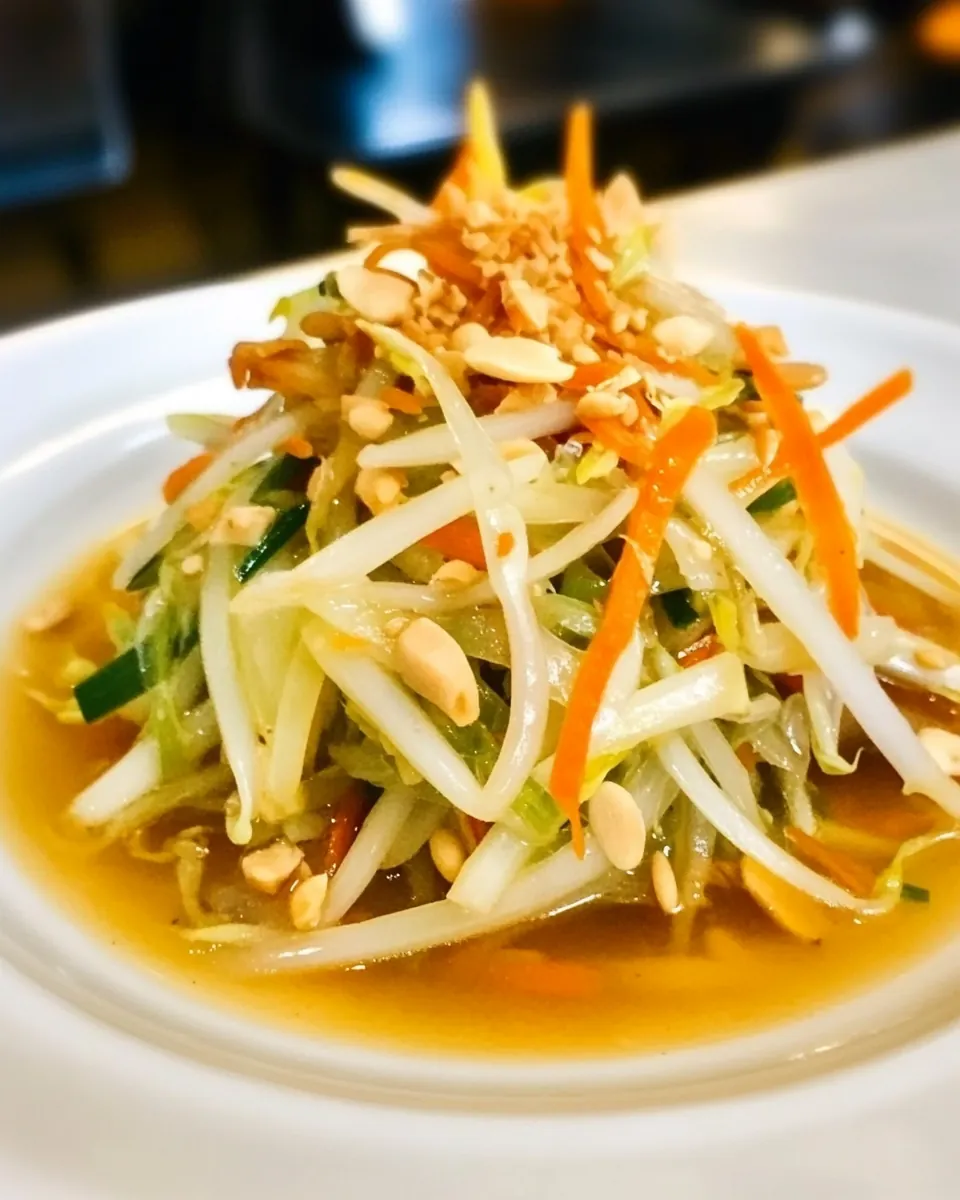
Thai Green Papaya Salad
Thai Green Papaya Salad has always been one of those recipes that wakes up the palate and my memory at the same time. The first time I tasted it I was sitting at a little street stall, listening to a vendor clap a mortar and pestle rhythm as she worked, and that bright, layered balance of sour, sweet, salty, and heat lodged in my head.
Years later I recreate that moment in my own kitchen, pressing garlic and chilies, crushing dried prawns and peanuts, and coaxing flavor from a humble green papaya. When I make Thai Green Papaya Salad for friends they notice the crunchy snake beans and the pop of cherry tomatoes, then ask what my secret is. I always tell them it is patience, and tasting as you go.
There is a ritual to this salad that I adore. I start by adjusting the balance of palm sugar, lime juice, and fish sauce until the dressing sings, then I bruise the green papaya just enough to soften without turning mushy. In these pages I share how I approach each ingredient with respect, and how small sensory cues guide every decision, from texture to seasoning.
Recipe Snapshot
25 mins
15 mins
10 mins
Medium
250 kcal
Thai
Gluten-Free, Vegan
Salads
Mortar and pestle, Knife, Grater or julienne peeler, Sieve, Mixing bowl
Why This Thai Green Papaya Salad Stands Out
Vivid, layered flavor
I love how Thai Green Papaya Salad manages to be intensely flavored yet surprisingly light. The interplay of palm sugar sweetness, lime juice brightness, and fish sauce saltiness gives a complexity that keeps you going back for another forkful.
Fresh crunchy texture
The crunchy bite from the shredded green papaya and the crisp snake beans is the reason I make this salad whenever local produce is at its peak. I relish the contrast between crisp vegetables and the slight chew of toasted peanuts.
Customizable heat and tang
I appreciate that I can easily tune the spice with Thai bird chillies and adjust the tang with more or less lime juice. When I cook for a crowd I often prepare a milder base, then offer extra chilies and lime so guests can personalize their bowl.
Minimal equipment, maximum impact
This dish shines because it relies on technique rather than complicated tools. Using a mortar and pestle to gently pound the aromatics creates a fragrant, integrated dressing that beats anything made in a blender, in my experience.
Versatile eating occasions
I find myself serving Thai Green Papaya Salad at casual dinners, summer lunches, and as a bright side to grilled mains. It brings a lively counterpoint to rich dishes and is an easy way to introduce guests to Southeast Asian flavors.
Ingredients You’ll Need for Thai Green Papaya Salad
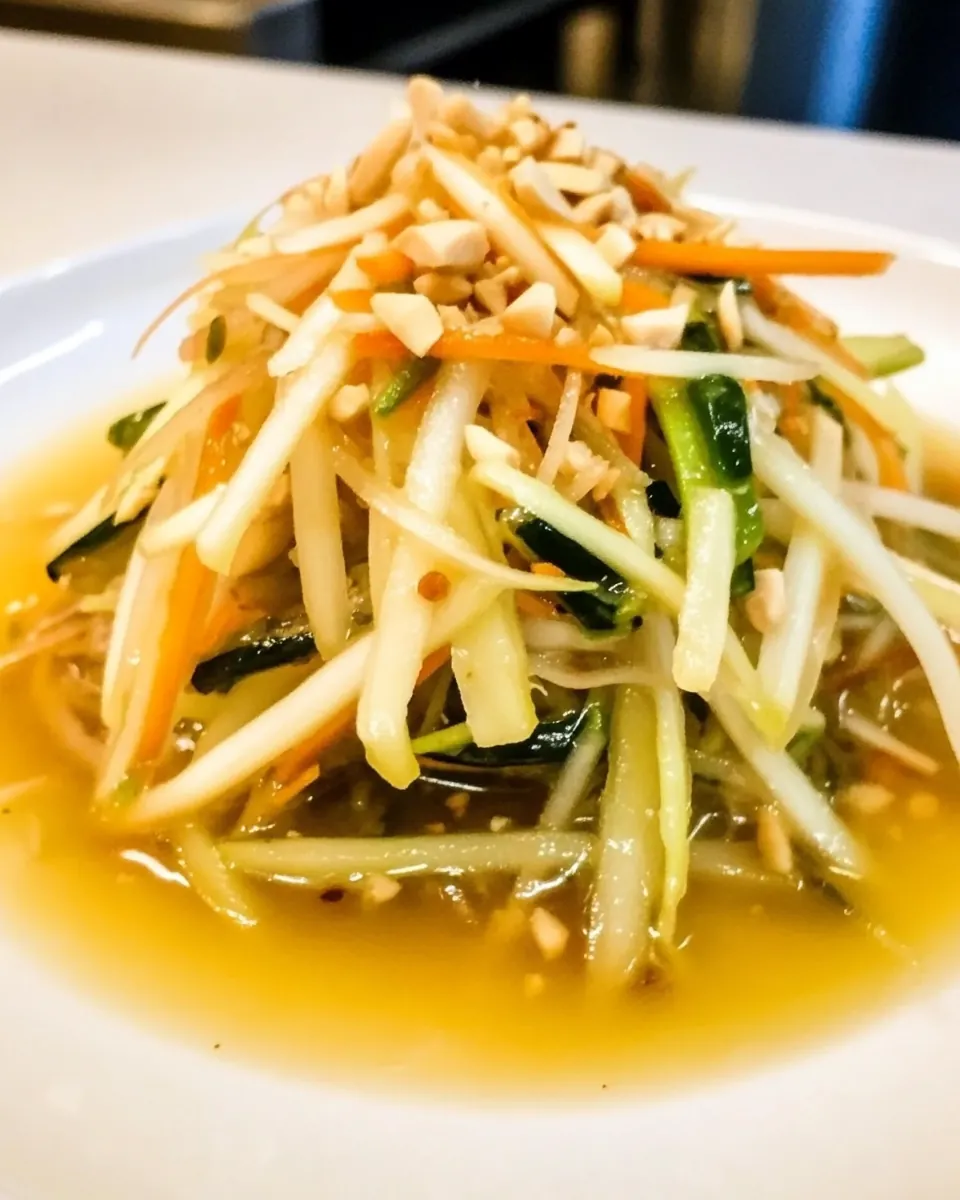
I treat these ingredients like players in an orchestra, each with a distinct role. The dressing components provide the backbone, the shredded green papaya supplies crunchy melody, and the small, flavorful additions like dried prawns and toasted peanuts add texture and umami. Together they make a balanced, lively salad that tastes greater than the sum of its parts.
- 2 cloves peeled garlic to taste: Crush and pound to build a fragrant base; provides pungency and aromatic depth when combined with chilies and lime in the dressing. Use to balance sweet and sour elements and to release essential oils for an authentic flavor profile.
- pinch sea salt: Enhance and balance flavors by cutting bitterness and rounding out intense tastes; helps to moderate heat and bring harmony to the dressing. Use sparingly to avoid overpowering the fresh elements in the salad.
- 2 4 Thai bird chillies to taste: Add and adjust heat to taste while contributing a fresh, sharp spice that defines traditional regional flavor; can be mashed with garlic to infuse the dressing. Titrate quantity carefully to achieve desired spiciness without overwhelming other components.
- 5 cherry tomatoes: Contribute bursts of juicy sweetness and mild acidity while adding color and texture contrast; can be lightly smashed to release juices into the dressing. Allow to firm up the salad’s overall flavor by delivering small pockets of fresh tomato brightness.
- 1 tablespoon dried prawns soaked and drained: Introduce concentrated umami and a savory background note after soaking; provide depth and an authentic seafood complexity to the dressing. Rehydrate before use to soften texture and release flavor that complements fish sauce and tamarind.
- 1 slice of lime: Brighten and aromatize the dressing with zesty citrus oils and tang; slice or squeeze to impart sharp acidity that balances sugar and salt. Use the slice to infuse a crisp lime fragrance and to finish the salad with a lively citrus note.
- 1 tablespoon toasted peanuts: Provide crunchy texture and nutty richness while contributing a toasty flavor that complements sweet, sour, and spicy elements. Crush or roughly chop to scatter over the salad for contrast and additional savory depth.
- 1/4 cups snake beans cut to 4 cm/ 1 1/2 inch pieces: Add a firm, slightly grassy crunch and a fresh vegetal contrast when cut into bite-size pieces; contribute traditional texture and subtle green flavor. Use raw for crispness or briefly blanch for a softer bite depending on preference.
- 2 cups green papaya shredded: Supply the central crunchy, crisp body of the dish with a mild, slightly tangy flavor when shredded; acts as the primary vegetable component that absorbs dressing. Prepare thin shreds for maximum texture and to allow flavors to meld thoroughly.
- 3 tablespoons palm sugar: Sweeten and caramelize the dressing with complex palm sugar notes that add depth and a mellow molasses-like flavor. Dissolve into the dressing to balance lime, fish sauce, and tamarind while enhancing overall harmony.
- 4 tablespoons lime juice: Provide primary acidity and a fresh citrus tang that brightens the dish and balances sweetness; acts as a key counterpoint to salty and sweet components. Juice directly into the dressing to ensure lively, clean sourness throughout the salad.
- 3 tablespoons tamarind water: Contribute a gentle fruity-acidic complexity and mild tannic backbone to deepen the dressing’s flavor; complements lime and palm sugar for a layered sour profile. Use diluted tamarind water to add subtle depth without overpowering brightness.
- 2 tablespoons fish sauce: Impart savory saltiness and umami that anchors the dressing and enhances other flavors; adds authentic saline complexity typical in Southeast Asian cuisine. Measure carefully to balance against sugar and acid for a well-rounded taste.
- large pinch chilli powder: Add an extra concentrated hit of spiciness and color to finish the dish; sprinkle lightly to lift and intensify the overall heat profile. Use as a final seasoning to adjust warmth and visual appeal.
Recipe Steps for Thai Green Papaya Salad
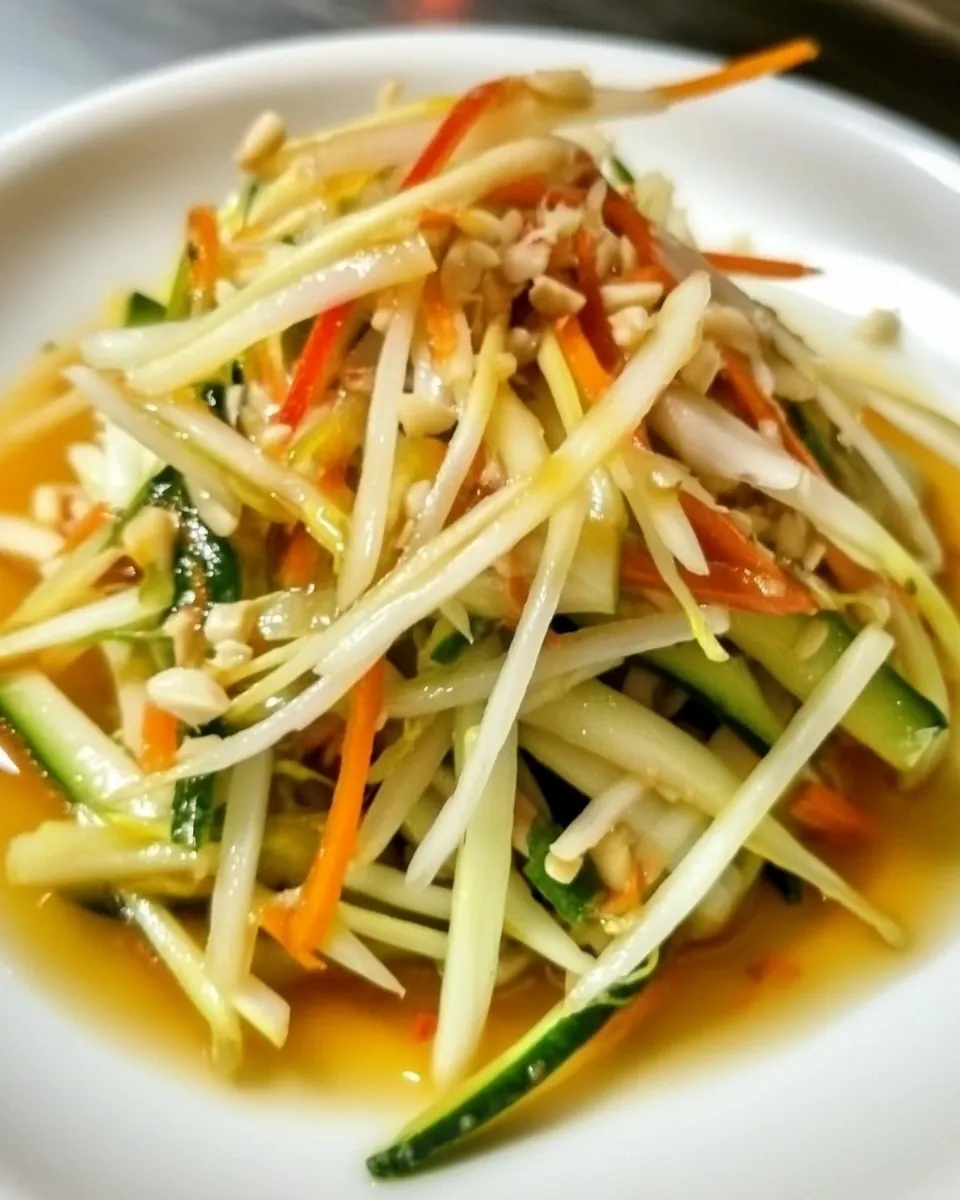
These steps follow a traditional sequence and reward attention to small sensory cues. I like to take my time so each action layers flavor and texture. Below I expand on each direction with details that help you sense when each step is done right.
- In a mortar & pestle pound the garlic with salt.: The first aromas will be sharp and grassy, with the garlic releasing a faint oil as the cell walls break. Use firm, even strokes so the garlic crushes into a paste, and pause if you smell a harsh sulfur note, that means you are overworking it. The salt helps by breaking down the garlic and pulling out moisture, making an integrated base. A common mistake is pounding too aggressively which warms the paste and gives a bitter edge, so keep the mortar steady and controlled.
- Cut the tomatoes in half then toss into the mortar and crush with pestle along with the dried prawns, lime slice, peanuts and snake beans.: When the cherry tomatoes hit the mortar their sweet juices mingle with the garlic paste and the aroma shifts toward tomato sweetness and citrus. The dried prawns will release an umami scent, while crushed peanuts add toasted notes and a slight oiliness. The snake beans will crack and emit a fresh green scent. Listen for a gentle mashing sound rather than a wet slosh; that tells you you are extracting flavor without converting everything to pulp. Avoid overmashing the tomatoes, or the salad can become too watery and lose texture.
- Add the green papaya and bruise – do not over work.: Adding the shredded green papaya introduces a crisp neutral canvas. Use a few light, folding bruises to encourage the dressing to cling, you should hear a soft rustling sound as fibers compress. The papaya should still hold structure and make a crisp snapping sound when you bite it. Overworking at this stage makes the papaya limp and soggy, and the salad loses its signature crunch.
- Season with palm sugar, lime juice, tamarind water, fish sauce and chilli powder – initially only use about 2/3 s of each. Adding more as needed to hone and finish the seasoning.: As you bring in the sweet, sour, salty, and spicy elements the dressing will begin to coat the papaya and other ingredients. Start with most of each component but not all, then taste. The smell should be bright with citrus and deepened by the tamarind, while the palm sugar rounds edge. This staged approach prevents oversalting or over sweetening. A common error is adding everything at once, which makes it hard to correct balance later.
- It should taste sweet and sour, hot then salty.: Your palate will confirm success when sweetness and sourness arrive first, a warm heat follows, and a finishing salty note lingers. Look for a glossy dressing that clings to threads of green papaya . If one note dominates, adjust by adding a touch more of the opposite element in small increments. Be cautious about chasing balance with large additions, it is better to add gradually.
- Soak equal parts tamarind paste into warm water. Allow to soak 10 minutes.: While this is separate, soaking the tamarind softens the pulp and releases a complex fruity sour aroma. Warm water accelerates extraction, and after about 10 minutes you will see the liquid turn a deep, russet color. Avoid boiling as that can dull the fresh tang. A mistake here is skimping on soak time, which yields weak tamarind water and a flat salad.
- Using your fingers, mash the tamarind well into the water until it feels completely soft.: During these ten minutes you will notice the tamarind pulp soften and the water take on a tangy scent. This pause is useful for prepping other components and for coming back to taste the dressing. If you rush this step the tamarind will not release its full flavor, leaving the final dressing less nuanced.
- Next, strain the tamarind water into a fresh bowl and squeeze out as much extract from the pulp as possible. The tamarind water is now ready for use in curries and many other things that require a tangy or sour flavour.: Mashing with your fingers breaks apart fibrous bits and helps the water absorb more soluble acids and aromatics. The texture becomes smooth and the scent more concentrated. Use a sieve next to strain, and avoid leaving large fibers which can create unpleasant chew. A common mistake is insufficient mashing which reduces yield and makes the extract weaker.
- Next, strain the tamarind water into a fresh bowl and squeeze out as much extract from the pulp as possible: Straining separates the clear, flavorful liquid from solids, and squeezing yields extra tartness and complexity. The resulting tamarind water should be clearish and intensely sour with a fruity note. If it looks muddy or contains debris, press through a finer mesh. Not extracting fully wastes flavor and demands more acid later, upsetting balance.
- The tamarind water is now ready for use in curries and many other things that require a tangy or sour flavour: This concentrate can be stored briefly in the fridge or used immediately to round the salad. It will add a dark, fruity acidity that pairs beautifully with lime juice and palm sugar . Keep portions measured so you do not overpower other dishes if used elsewhere. A mistake is leaving it unrefrigerated for long periods, which can lead to off flavors.
Expert Tips about Thai Green Papaya Salad
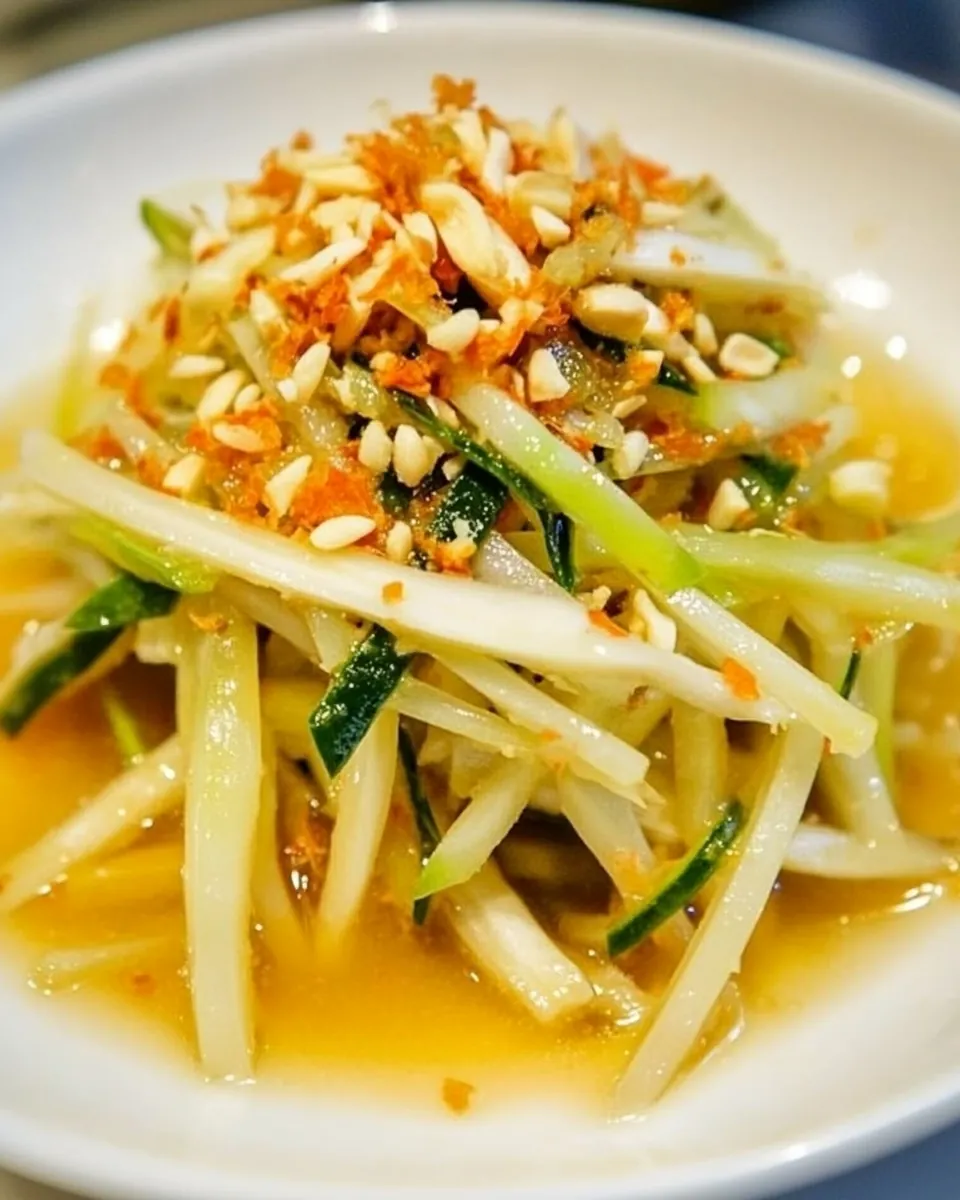
I like to offer a handful of practical tricks that save time and boost authenticity. These tips focus on texture, seasoning, and timing so your salad arrives vibrant and balanced. Read them through before you start to make the process smoother.
- Choose firm green papaya: Select unripe papaya that is firm to the touch and pale green. If it yields slightly under pressure it may be turning ripe which makes it softer and sweeter, affecting the salad’s crisp profile.
- Use fresh lime juice: Freshly squeezed lime juice provides volatile oils and a brightness bottled alternatives lack. Squeeze just before mixing to retain the vibrant citrus aroma.
- Toast peanuts lightly: Toasting peanuts for a few minutes in a dry pan deepens their flavor and provides a warm, nutty note that complements the tart dressing. Watch closely to prevent burning.
- Control the heat: Start with fewer Thai bird chillies and offer extra at the table. The floral heat from these chilies is potent and varies by batch, so incremental additions avoid an overpowering spice.
- Adjust tamarind intensity: Tamarind water concentrates quickly, so strain and taste before adding large amounts. If it seems overpowering dilute with a splash of water and retaste to find the right balance.
- Prep components in order: Have your dressing components ready and measured. Once you start pounding in the mortar, assembly moves quickly and you want everything on hand to finish while textures are fresh.
What Complements This Thai Green Papaya Salad
This salad is wonderfully versatile and plays well across many meals. I recommend pairing it with grilled proteins or serving it as a bright side. Consider timing, occasion, and storage when planning your menu.
- Grilled fish or chicken: The salad’s acidity cuts through richer grilled mains, making it excellent for casual outdoor dinners.
- Rice and sticky rice: Serving with plain rice or sticky rice helps mellow the heat and offers a satisfying, balanced meal for lunch or dinner.
- Light weekday lunches: Pack it separately from proteins to keep textures crisp and bring a lively midday option that feels fresh and energizing.
- Summer gatherings: The bright flavors are perfect for warm weather entertaining, offering a palate cleansing contrast to heavier dishes.
- Storage tips: Keep the dressing separate if you plan to store leftovers, and combine just before serving to preserve crunch. Consume within a day for best texture.
- Seasonal pairings: Use the salad when green papaya and fresh beans are available in summer, it really sings with in season produce.
FAQ
Conclusion
Thai Green Papaya Salad stands out for its lively balance of sweet, sour, salty, and spicy notes paired with crisp textures. I encourage you to try this recipe because it is simple to prepare, highly customizable, and brings bright, complex flavors to any meal. Make it for a casual lunch or as a refreshing side at dinner, and enjoy the way those bold contrasts transform a humble plate into something memorable.
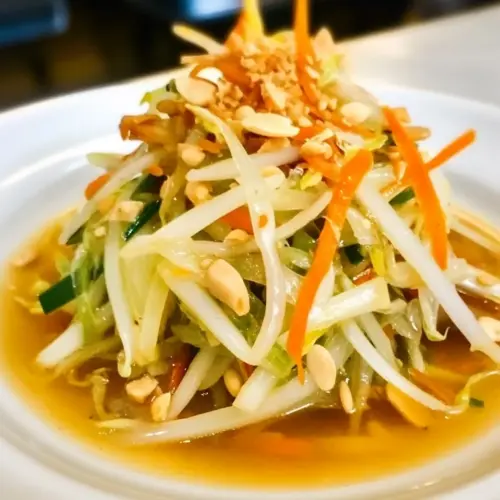
Thai Green Papaya Salad
Equipment
- Mortar and pestle
- Knife
- Grater or julienne peeler
- Sieve
- Mixing Bowl
Ingredients
- 2 cloves peeled garlic to taste Crush and pound to build a fragrant base; provides pungency and aromatic depth when combined with chilies and lime in the dressing. Use to balance sweet and sour elements and to release essential oils for an authentic flavor profile.
- pinch sea salt Enhance and balance flavors by cutting bitterness and rounding out intense tastes; helps to moderate heat and bring harmony to the dressing. Use sparingly to avoid overpowering the fresh elements in the salad.
- 2 -4 Thai bird chillies to taste Add and adjust heat to taste while contributing a fresh, sharp spice that defines traditional regional flavor; can be mashed with garlic to infuse the dressing. Titrate quantity carefully to achieve desired spiciness without overwhelming other components.
- 5 cherry tomatoes Contribute bursts of juicy sweetness and mild acidity while adding color and texture contrast; can be lightly smashed to release juices into the dressing. Allow to firm up the salad’s overall flavor by delivering small pockets of fresh tomato brightness.
- 1 tablespoon dried prawns soaked and drained Introduce concentrated umami and a savory background note after soaking; provide depth and an authentic seafood complexity to the dressing. Rehydrate before use to soften texture and release flavor that complements fish sauce and tamarind.
- 1 slice of lime Brighten and aromatize the dressing with zesty citrus oils and tang; slice or squeeze to impart sharp acidity that balances sugar and salt. Use the slice to infuse a crisp lime fragrance and to finish the salad with a lively citrus note.
- 1 tablespoon toasted peanuts Provide crunchy texture and nutty richness while contributing a toasty flavor that complements sweet, sour, and spicy elements. Crush or roughly chop to scatter over the salad for contrast and additional savory depth.
- 1/4 cups snake beans cut to 4 cm/ 1 1/2 inch pieces Add a firm, slightly grassy crunch and a fresh vegetal contrast when cut into bite-size pieces; contribute traditional texture and subtle green flavor. Use raw for crispness or briefly blanch for a softer bite depending on preference.
- 2 cups green papaya shredded Supply the central crunchy, crisp body of the dish with a mild, slightly tangy flavor when shredded; acts as the primary vegetable component that absorbs dressing. Prepare thin shreds for maximum texture and to allow flavors to meld thoroughly.
- 3 tablespoons palm sugar Sweeten and caramelize the dressing with complex palm sugar notes that add depth and a mellow molasses-like flavor. Dissolve into the dressing to balance lime, fish sauce, and tamarind while enhancing overall harmony.
- 4 tablespoons lime juice Provide primary acidity and a fresh citrus tang that brightens the dish and balances sweetness; acts as a key counterpoint to salty and sweet components. Juice directly into the dressing to ensure lively, clean sourness throughout the salad.
- 3 tablespoons tamarind water Contribute a gentle fruity-acidic complexity and mild tannic backbone to deepen the dressing’s flavor; complements lime and palm sugar for a layered sour profile. Use diluted tamarind water to add subtle depth without overpowering brightness.
- 2 tablespoons fish sauce Impart savory saltiness and umami that anchors the dressing and enhances other flavors; adds authentic saline complexity typical in Southeast Asian cuisine. Measure carefully to balance against sugar and acid for a well-rounded taste.
- large pinch chilli powder Add an extra concentrated hit of spiciness and color to finish the dish; sprinkle lightly to lift and intensify the overall heat profile. Use as a final seasoning to adjust warmth and visual appeal.
Instructions
- In a mortar & pestle pound the garlic with salt.: The first aromas will be sharp and grassy, with the garlic releasing a faint oil as the cell walls break. Use firm, even strokes so the garlic crushes into a paste, and pause if you smell a harsh sulfur note, that means you are overworking it. The salt helps by breaking down the garlic and pulling out moisture, making an integrated base. A common mistake is pounding too aggressively which warms the paste and gives a bitter edge, so keep the mortar steady and controlled.
- Cut the tomatoes in half then toss into the mortar and crush with pestle along with the dried prawns, lime slice, peanuts and snake beans.: When the cherry tomatoes hit the mortar their sweet juices mingle with the garlic paste and the aroma shifts toward tomato sweetness and citrus. The dried prawns will release an umami scent, while crushed peanuts add toasted notes and a slight oiliness. The snake beans will crack and emit a fresh green scent. Listen for a gentle mashing sound rather than a wet slosh; that tells you you are extracting flavor without converting everything to pulp. Avoid overmashing the tomatoes, or the salad can become too watery and lose texture.
- Add the green papaya and bruise – do not over work.: Adding the shredded green papaya introduces a crisp neutral canvas. Use a few light, folding bruises to encourage the dressing to cling, you should hear a soft rustling sound as fibers compress. The papaya should still hold structure and make a crisp snapping sound when you bite it. Overworking at this stage makes the papaya limp and soggy, and the salad loses its signature crunch.
- Season with palm sugar, lime juice, tamarind water, fish sauce and chilli powder – initially only use about 2/3 s of each. Adding more as needed to hone and finish the seasoning.: As you bring in the sweet, sour, salty, and spicy elements the dressing will begin to coat the papaya and other ingredients. Start with most of each component but not all, then taste. The smell should be bright with citrus and deepened by the tamarind, while the palm sugar rounds edge. This staged approach prevents oversalting or over sweetening. A common error is adding everything at once, which makes it hard to correct balance later.
- It should taste sweet and sour, hot then salty.: Your palate will confirm success when sweetness and sourness arrive first, a warm heat follows, and a finishing salty note lingers. Look for a glossy dressing that clings to threads of green papaya . If one note dominates, adjust by adding a touch more of the opposite element in small increments. Be cautious about chasing balance with large additions, it is better to add gradually.
- Soak equal parts tamarind paste into warm water. Allow to soak 10 minutes.: While this is separate, soaking the tamarind softens the pulp and releases a complex fruity sour aroma. Warm water accelerates extraction, and after about 10 minutes you will see the liquid turn a deep, russet color. Avoid boiling as that can dull the fresh tang. A mistake here is skimping on soak time, which yields weak tamarind water and a flat salad.
- Using your fingers, mash the tamarind well into the water until it feels completely soft.: During these ten minutes you will notice the tamarind pulp soften and the water take on a tangy scent. This pause is useful for prepping other components and for coming back to taste the dressing. If you rush this step the tamarind will not release its full flavor, leaving the final dressing less nuanced.
- Next, strain the tamarind water into a fresh bowl and squeeze out as much extract from the pulp as possible. The tamarind water is now ready for use in curries and many other things that require a tangy or sour flavour.: Mashing with your fingers breaks apart fibrous bits and helps the water absorb more soluble acids and aromatics. The texture becomes smooth and the scent more concentrated. Use a sieve next to strain, and avoid leaving large fibers which can create unpleasant chew. A common mistake is insufficient mashing which reduces yield and makes the extract weaker.
- Next, strain the tamarind water into a fresh bowl and squeeze out as much extract from the pulp as possible: Straining separates the clear, flavorful liquid from solids, and squeezing yields extra tartness and complexity. The resulting tamarind water should be clearish and intensely sour with a fruity note. If it looks muddy or contains debris, press through a finer mesh. Not extracting fully wastes flavor and demands more acid later, upsetting balance.
- The tamarind water is now ready for use in curries and many other things that require a tangy or sour flavour: This concentrate can be stored briefly in the fridge or used immediately to round the salad. It will add a dark, fruity acidity that pairs beautifully with lime juice and palm sugar . Keep portions measured so you do not overpower other dishes if used elsewhere. A mistake is leaving it unrefrigerated for long periods, which can lead to off flavors.
Notes
- Choose firm green papaya: Select unripe papaya that is firm to the touch and pale green. If it yields slightly under pressure it may be turning ripe which makes it softer and sweeter, affecting the salad's crisp profile.
- Use fresh lime juice: Freshly squeezed lime juice provides volatile oils and a brightness bottled alternatives lack. Squeeze just before mixing to retain the vibrant citrus aroma.
- Toast peanuts lightly: Toasting peanuts for a few minutes in a dry pan deepens their flavor and provides a warm, nutty note that complements the tart dressing. Watch closely to prevent burning.
- Control the heat: Start with fewer Thai bird chillies and offer extra at the table. The floral heat from these chilies is potent and varies by batch, so incremental additions avoid an overpowering spice.
- Adjust tamarind intensity: Tamarind water concentrates quickly, so strain and taste before adding large amounts. If it seems overpowering dilute with a splash of water and retaste to find the right balance.
- Prep components in order: Have your dressing components ready and measured. Once you start pounding in the mortar, assembly moves quickly and you want everything on hand to finish while textures are fresh.