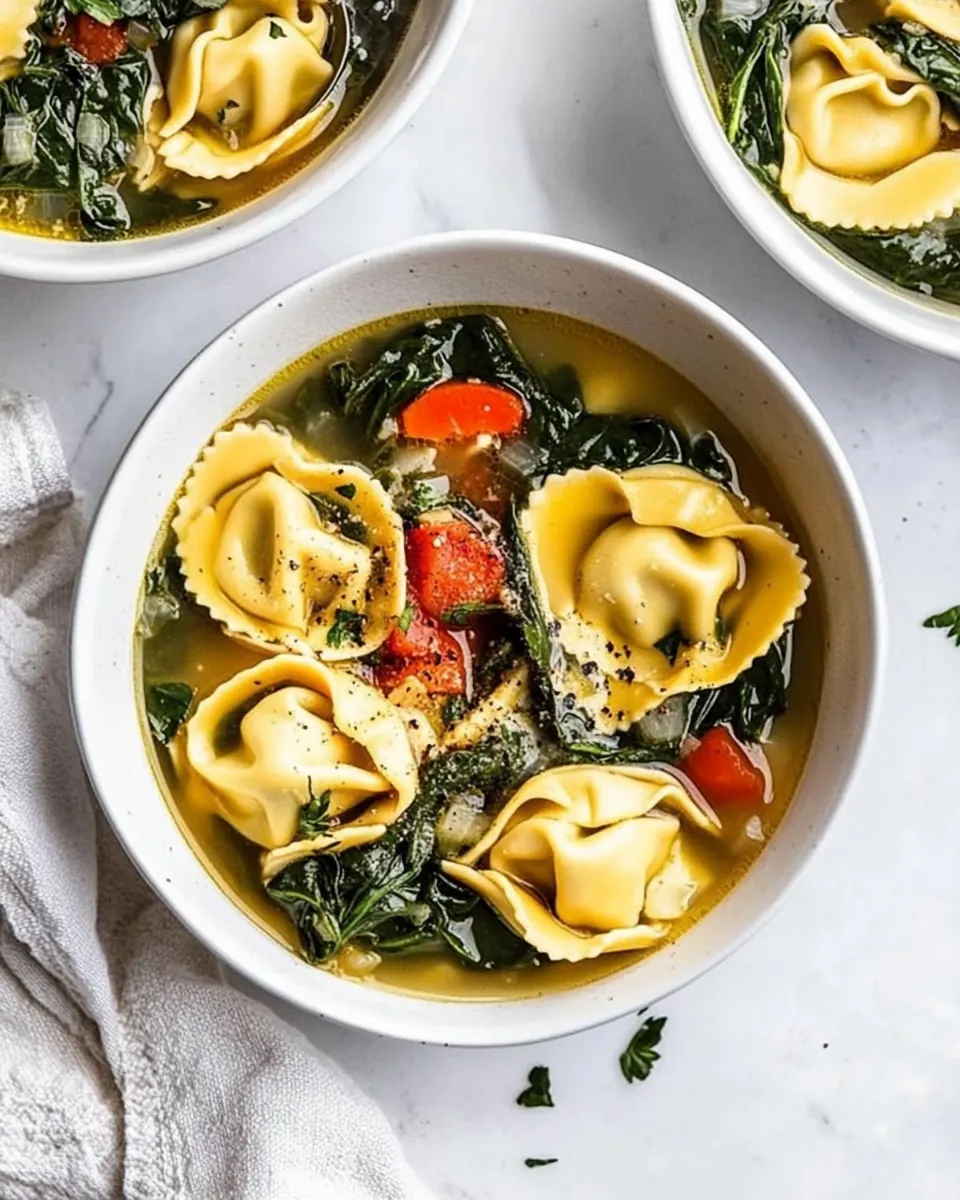
Spinach Tortellini Soup
Spinach Tortellini Soup is the bowl I reach for on chilly evenings when I want something comforting but not fussy. The first time I made it I remember the kitchen filling with a warm, savory perfume as the broth simmered, and that simple moment forever linked this soup to slow evenings and easy company.
Over the years I have adjusted little things, like using a Parmigiano Reggiano rind for depth, or stirring in a big handful of baby spinach at the end so the leaves wilt into the steaming broth. I love how the spinach cheese tortellini practically melt into the soup, giving creamy pockets of cheese that contrast with the fragrant broth and the soft vegetables. It is the sort of recipe I cook when I want to feel nourished without a lot of effort, and it never fails to feel like a warm hug in a bowl.
What I appreciate most is how forgiving the dish is. You can easily scale it up for guests, keep it simple on weeknights, and still produce something that feels thoughtful. Every spoonful offers a little texture from the carrot and celery, a fragrant note from the garlic, and that unmistakable cheesy warmth from the Parmigiano Reggiano finish. If you enjoy cozy, approachable meals that taste like home, this is one you’ll return to often.
Recipe Snapshot
30 mins
5 mins
25 mins
Medium
300 kcal
Italian
Gluten-Free, Low FODMAP
Soups
Large pot, Wooden spoon, Measuring spoons
What’s Great About This Spinach Tortellini Soup
Comforting, But Not Heavy
I find that Spinach Tortellini Soup hits a perfect balance between hearty and light. The tortellini bring satisfying body, while the broth keeps the bowl from feeling overly rich. It’s ideal when you want a filling meal that still feels bright and approachable.
Quick Weeknight Magic
One of the best things about this recipe is speed. From start to finish it moves quickly, which makes it a reliable option for busy evenings when you crave something homemade without a long commitment. The technique keeps things efficient but flavorful.
Layered, Real Flavor
Using simple techniques like sweating the vegetables and adding a cheese rind creates depth that belies the short ingredient list. I love that small touches deliver big payoff, so every bite tastes like you spent more time than you did.
Flexibility and Forgiveness
You can tweak salt levels, swap the broth, or adjust greens and still end up with a wonderful soup. I often adapt quantities to what I have on hand, and the recipe holds up. That adaptability makes it a go to for pantry friendly cooking.
Family Friendly Appeal
The mix of pasta and mild, cheesy filling makes this a hit with both kids and adults. The textures are familiar and comforting, so it works well for casual dinners, simple entertaining, or a cozy weekend lunch.
Ingredients Overview for Spinach Tortellini Soup
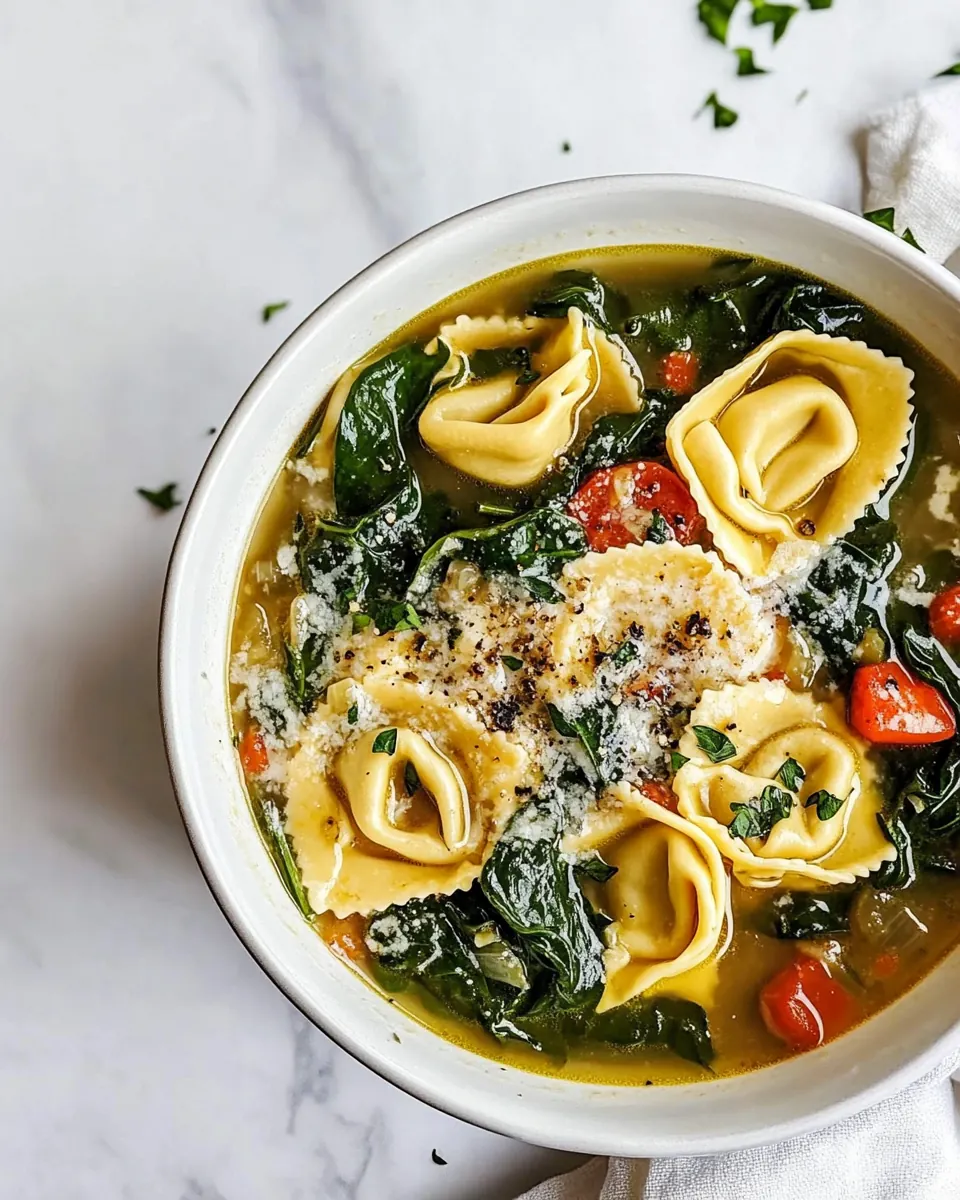
These ingredients create a straightforward, layered soup. The foundation is a savory broth, built up with aromatic vegetables, then rounded out with the creamy pockets of spinach cheese tortellini and finishing cheese for umami. Each component plays a clear role: aromatics for complexity, liquid for mouthfeel, pasta for heartiness, and greens for freshness.
- 2 tsp butter: Melted in the pot to sauté aromatics and provide a rich, slightly sweet base flavor that helps soften vegetables; contributes a silky mouthfeel and helps carry fat-soluble flavors throughout the soup.
- 2 stalks of celery, chopped: Chopped and sautéed to add a mild, aromatic crunch with vegetal notes; releases moisture and savory depth while melding with onion and carrot to form the soup’s soffritto base.
- 1 small onion, chopped: Chopped and cooked down to supply sweetness and savory depth; becomes tender and integrates with other aromatics to build the foundational flavor of the broth.
- 1 carrot, peeled & chopped: Peeled and chopped to introduce natural sweetness, color, and a tender texture; adds earthy undertones and balances the savory elements when sweated with the other vegetables.
- 2 cloves of garlic, minced: Minced and added to release pungent, aromatic oils that brighten and deepen the overall flavor; provides a classic savory lift during the sauté stage and infuses the broth.
- 8 cups chicken broth, (or sub vegetable broth): Poured as the primary cooking liquid to define the soup’s savory backbone; delivers salty, umami-rich character and helps meld all ingredients while simmering.
- 3 cups water: Added to adjust volume and dilute intensity for a balanced broth; helps control consistency and allows flavors to develop without overpowering saltiness.
- 1 small Parmigiano Reggiano Rind (optional): Dropped in while simmering to impart concentrated savory, nutty, and umami notes; optional but enhances depth and richness as it slowly releases character into the soup.
- 18 oz spinach cheese tortellini: Cooked directly in the simmering broth until tender to provide a creamy, cheesy center and substantial body; serves as the main starchy component that makes the soup hearty and filling.
- 1/2 tsp fresh ground pepper: Freshly ground and sprinkled to introduce mild heat and aromatic bite; elevates the overall flavor profile and balances the richness of cheese and broth.
- 1/2 tsp ground nutmeg: Added sparingly to contribute warm, sweet-spicy undertones that complement the spinach and cheese; helps round out flavor and brings subtle complexity to the soup.
- 2 cups baby spinach: Torn or stirred in near the end to add bright, leafy freshness and a tender texture; wilts quickly to deliver color, nutrients, and a vegetal counterpoint to the cheese-filled tortellini.
- salt to taste: Used as needed during cooking to achieve desired seasoning balance; adjusts saltiness to complement the broth, cheese, and vegetables without overpowering them.
- Parmigiano Reggiano, grated () (optional): Grated over finished bowls to add salty, nutty, and umami-rich finishing notes; optional but provides an extra layer of savory complexity and a pleasing texture contrast.
How to Make Spinach Tortellini Soup
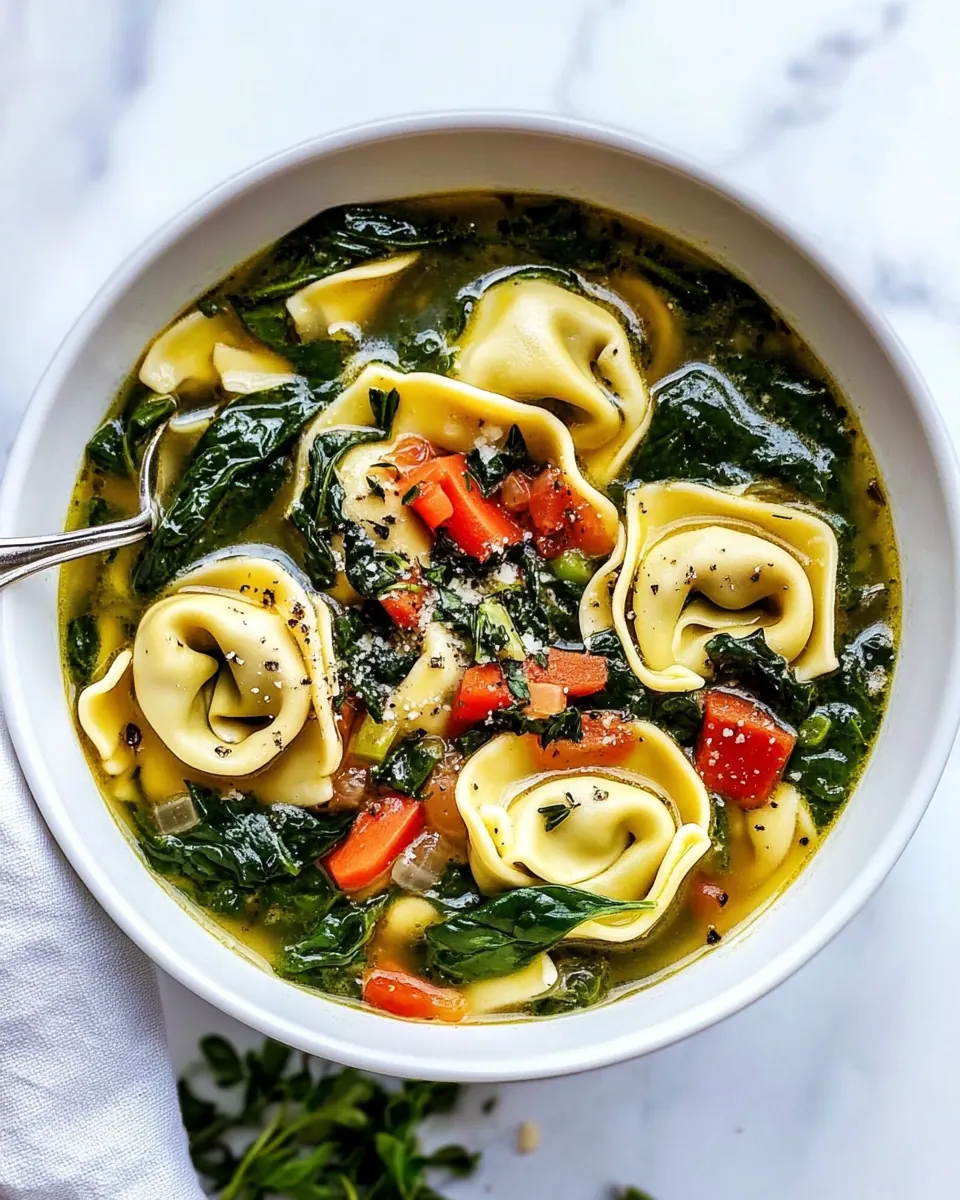
This soup comes together patiently, with a few gentle steps that coax maximum flavor from simple ingredients. Work step by step, paying attention to aromas and textures, and the results will feel greater than the effort invested.
- In a large pot, melt the butter over medium-low heat.: You will notice the butter foaming gently and releasing a warm, nutty aroma as it melts, creating a glossy base for the vegetables to soften into. This low heat prevents browning so the vegetables can sweat and become sweet rather than toast, which keeps the broth clear and bright. A common mistake is turning the heat too high, which can burn the butter and add a bitter note, so keep the flame gentle and watch for even melting.
- When melted, add the celery, onion, carrot & garlic.: As these aromatics hit the warm fat, you'll hear a soft, steady whisper as they begin to sizzle, and the kitchen will fill with sweet, savory scents. The vegetables should glisten and begin to soften without taking color, which preserves a clean broth taste. Stir them so they cook evenly and release moisture. Avoid crowding the pot or raising the temperature too much, or the edges will brown before the centers soften, altering the intended flavor profile.
- Cover and reduce heat to low and cook for approximately 8-10 minutes until vegetables begin to soften.: During this gentle simmer you'll notice the vegetables go translucent and release a mellow sweetness into the pot, building the soup's aromatic foundation. The brief covering helps them steam and tenderize uniformly, which creates a silkier mouthfeel in the final broth. If you skip this restful step and crank up the heat, you'll lose that sweet, mellow character and risk uneven cooking.
- Add the chicken broth, water, parmesan cheese rind and increase heat to medium-high and bring to a boil.: Once these liquids join the softened vegetables, the pot will start to steam and the broth will come alive with savory depth from the chicken broth and the subtle cheese perfume from the Parmigiano Reggiano rind . Bringing it to a boil integrates flavors quickly, but be ready to lower the heat as soon as it boils to avoid over reduction. A common oversight is leaving it at a rolling boil, which concentrates the liquid too much and can alter the soup's balance.
- When broth boils, add salt (to taste), pepper and nutmeg. Stir to combine.: At this stage the aromas will lift and you should taste the broth before adding more seasoning. The pepper will add a bright snap, while the nutmeg provides a warm, rounded undertone that pairs beautifully with cheese. Season conservatively and adjust later, because the Parmigiano Reggiano rind and the grated cheese at the end will also add saltiness. Over salting now is a frequent misstep, so start small and taste as you go.
- Reduce heat to low and add tortellini. Simmer until tortellini cooks to al dente according to package directions.: As the spinach cheese tortellini enter the pot, you'll see the broth take on a slightly starchy sheen. The tortellini will bob gently as they cook, and the filling will soften to creamy pockets that melt into the spoonfuls. Cooking to al dente ensures they hold their shape and provide pleasant bite, rather than becoming mushy. A typical error is overcooking, which causes the pasta to disintegrate and the texture to become pasty, so follow package timing and test a piece early.
- Once cooked, remove the rind, and add the baby spinach.: When the pasta is ready, lifting out the Parmigiano Reggiano rind is essential because it has given up its flavor. Adding the baby spinach at this point lets the leaves wilt quickly into the hot liquid, keeping their color vivid and texture tender. The contrast between the silky tortellini and the lightly wilted greens is part of the soup's charm. If you add the spinach too early it will overcook and turn limp, losing that fresh lift.
- Stir to combine then serve with freshly grated Parmigiano Reggiano!: As you stir, the soup will cohere into a unified bowl with shimmering broth and pockets of cheesy pasta. A final grating of Parmigiano Reggiano adds salty brightness and a touch of creaminess. Serve immediately while the tortellini are warm and the spinach still tender. Waiting too long can make the pasta absorb too much liquid and thicken the soup beyond the intended brothy consistency.
Make It Your Own
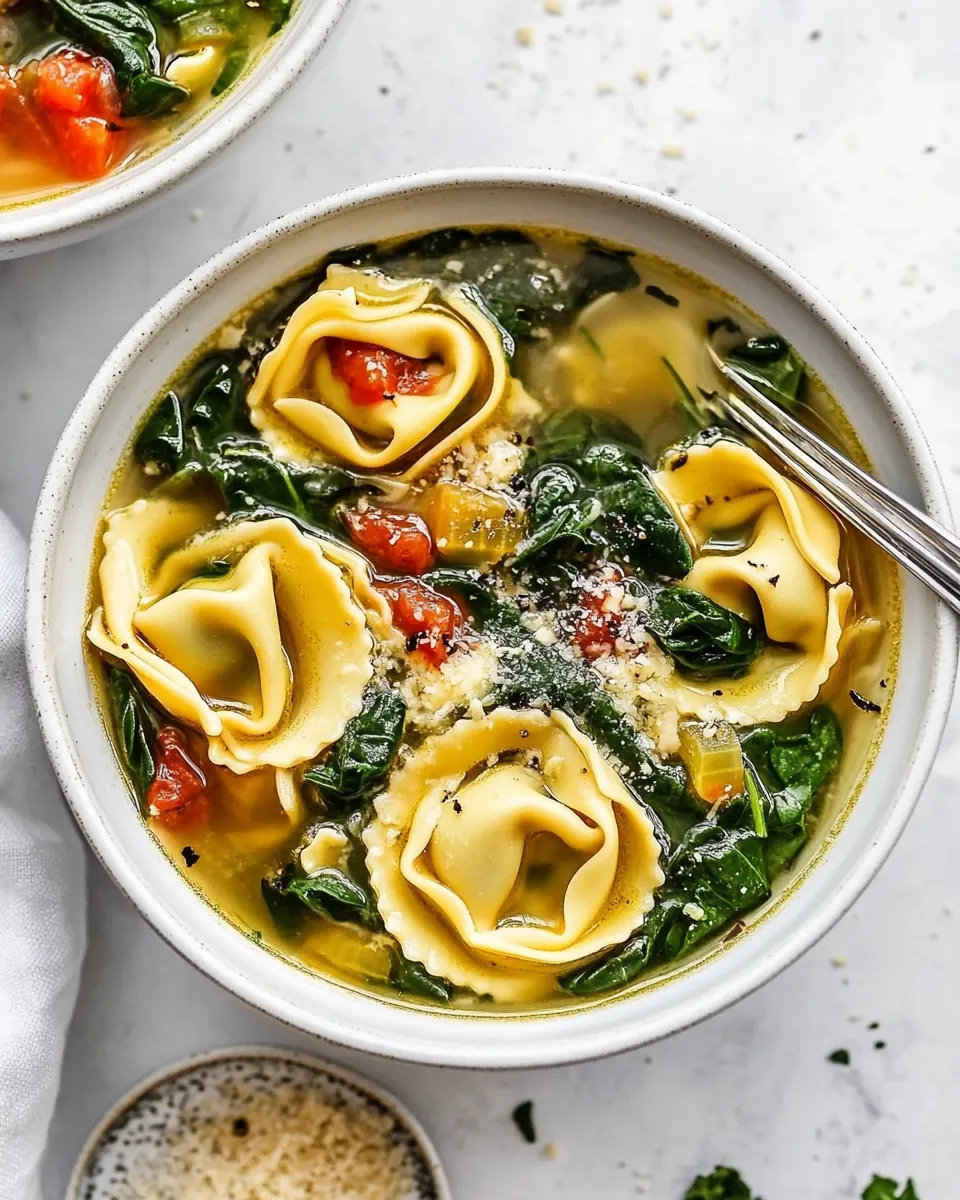
This section shares ways to personalize the soup while staying true to the simple technique that makes it special. Small adjustments can suit dietary needs, flavor preferences, or what you have in the pantry.
- Adjust the broth base. If you prefer a vegetarian option, substitute vegetable broth for chicken broth and maintain the same liquid ratios to keep the balance of flavors harmonious.
- Control the cheese intensity. If you want a milder finish, omit the grated Parmigiano Reggiano at the end and rely solely on the rind while simmering for a subtler umami.
- Keep tortellini timing precise. Follow package directions for cooking the spinach cheese tortellini and begin testing a minute or two before the shortest time to achieve perfect al dente texture.
- Manage salt thoughtfully. Because the rind and grated cheese add salt, season in stages and taste after the broth boils, then again after the pasta is cooked to avoid over salting.
- Serve immediately for best texture. The tortellini will continue to absorb liquid as it sits, so serve soon after adding the baby spinach to preserve a brothy consistency.
Serving Ideas for Spinach Tortellini Soup
This soup is versatile for casual meals or modest entertaining. Present it simply so the flavors and textures shine, and pair it with complementary sides for a complete experience.
- Weeknight dinner: Serve bowls of the soup with extra grated Parmigiano Reggiano on the table and crusty bread for dipping, creating a quick and comforting family meal.
- Lunch option: Offer smaller portions alongside a light salad for a balanced midday meal that feels nourishing without weighing you down.
- During Ramadan or cozy gatherings: This warm soup works well as a gentle starter to break a fast or as part of a multi course home meal, because it is both satisfying and easy to eat.
- Seasonal pairing: In colder months, pair the soup with roasted vegetables to echo the warm, savory notes; in milder seasons keep it lighter with simple green sides.
- Storage tips: Store leftovers in an airtight container in the fridge up to three days, but note the tortellini will absorb liquid over time; refresh with a splash of water or broth and reheat gently on the stove.
FAQ
Conclusion
This Spinach Tortellini Soup stands out for its ease, layered savory depth, and comforting combination of cheesy pasta and bright greens. It delivers a satisfying bowl with minimal fuss, making it an ideal choice for weeknight dinners or simple entertaining. Give it a try when you want something homey yet elegant, and enjoy how small techniques like sweating aromatics and using a cheese rind elevate everyday ingredients into something memorable.

Spinach Tortellini Soup
Equipment
- Large Pot
- Wooden Spoon
- Measuring Spoons
Ingredients
- 2 tsp butter Melted in the pot to sauté aromatics and provide a rich, slightly sweet base flavor that helps soften vegetables; contributes a silky mouthfeel and helps carry fat-soluble flavors throughout the soup.
- 2 stalks of celery, chopped Chopped and sautéed to add a mild, aromatic crunch with vegetal notes; releases moisture and savory depth while melding with onion and carrot to form the soup’s soffritto base.
- 1 small onion, chopped Chopped and cooked down to supply sweetness and savory depth; becomes tender and integrates with other aromatics to build the foundational flavor of the broth.
- 1 carrot, peeled & chopped Peeled and chopped to introduce natural sweetness, color, and a tender texture; adds earthy undertones and balances the savory elements when sweated with the other vegetables.
- 2 cloves of garlic, minced Minced and added to release pungent, aromatic oils that brighten and deepen the overall flavor; provides a classic savory lift during the sauté stage and infuses the broth.
- 8 cups chicken broth, (or sub vegetable broth) Poured as the primary cooking liquid to define the soup’s savory backbone; delivers salty, umami-rich character and helps meld all ingredients while simmering.
- 3 cups water Added to adjust volume and dilute intensity for a balanced broth; helps control consistency and allows flavors to develop without overpowering saltiness.
- 1 small Parmigiano Reggiano Rind, optional Dropped in while simmering to impart concentrated savory, nutty, and umami notes; optional but enhances depth and richness as it slowly releases character into the soup.
- 18 oz spinach cheese tortellini Cooked directly in the simmering broth until tender to provide a creamy, cheesy center and substantial body; serves as the main starchy component that makes the soup hearty and filling.
- 1/2 tsp fresh ground pepper Freshly ground and sprinkled to introduce mild heat and aromatic bite; elevates the overall flavor profile and balances the richness of cheese and broth.
- 1/2 tsp ground nutmeg Added sparingly to contribute warm, sweet-spicy undertones that complement the spinach and cheese; helps round out flavor and brings subtle complexity to the soup.
- 2 cups baby spinach Torn or stirred in near the end to add bright, leafy freshness and a tender texture; wilts quickly to deliver color, nutrients, and a vegetal counterpoint to the cheese-filled tortellini.
- salt to taste Used as needed during cooking to achieve desired seasoning balance; adjusts saltiness to complement the broth, cheese, and vegetables without overpowering them.
- Parmigiano Reggiano, grated (optional) Grated over finished bowls to add salty, nutty, and umami-rich finishing notes; optional but provides an extra layer of savory complexity and a pleasing texture contrast.
Instructions
- In a large pot, melt the butter over medium-low heat.: You will notice the butter foaming gently and releasing a warm, nutty aroma as it melts, creating a glossy base for the vegetables to soften into. This low heat prevents browning so the vegetables can sweat and become sweet rather than toast, which keeps the broth clear and bright. A common mistake is turning the heat too high, which can burn the butter and add a bitter note, so keep the flame gentle and watch for even melting.
- When melted, add the celery, onion, carrot & garlic.: As these aromatics hit the warm fat, you'll hear a soft, steady whisper as they begin to sizzle, and the kitchen will fill with sweet, savory scents. The vegetables should glisten and begin to soften without taking color, which preserves a clean broth taste. Stir them so they cook evenly and release moisture. Avoid crowding the pot or raising the temperature too much, or the edges will brown before the centers soften, altering the intended flavor profile.
- Cover and reduce heat to low and cook for approximately 8-10 minutes until vegetables begin to soften.: During this gentle simmer you'll notice the vegetables go translucent and release a mellow sweetness into the pot, building the soup's aromatic foundation. The brief covering helps them steam and tenderize uniformly, which creates a silkier mouthfeel in the final broth. If you skip this restful step and crank up the heat, you'll lose that sweet, mellow character and risk uneven cooking.
- Add the chicken broth, water, parmesan cheese rind and increase heat to medium-high and bring to a boil.: Once these liquids join the softened vegetables, the pot will start to steam and the broth will come alive with savory depth from the chicken broth and the subtle cheese perfume from the Parmigiano Reggiano rind . Bringing it to a boil integrates flavors quickly, but be ready to lower the heat as soon as it boils to avoid over reduction. A common oversight is leaving it at a rolling boil, which concentrates the liquid too much and can alter the soup's balance.
- When broth boils, add salt (to taste), pepper and nutmeg. Stir to combine.: At this stage the aromas will lift and you should taste the broth before adding more seasoning. The pepper will add a bright snap, while the nutmeg provides a warm, rounded undertone that pairs beautifully with cheese. Season conservatively and adjust later, because the Parmigiano Reggiano rind and the grated cheese at the end will also add saltiness. Over salting now is a frequent misstep, so start small and taste as you go.
- Reduce heat to low and add tortellini. Simmer until tortellini cooks to al dente according to package directions.: As the spinach cheese tortellini enter the pot, you'll see the broth take on a slightly starchy sheen. The tortellini will bob gently as they cook, and the filling will soften to creamy pockets that melt into the spoonfuls. Cooking to al dente ensures they hold their shape and provide pleasant bite, rather than becoming mushy. A typical error is overcooking, which causes the pasta to disintegrate and the texture to become pasty, so follow package timing and test a piece early.
- Once cooked, remove the rind, and add the baby spinach.: When the pasta is ready, lifting out the Parmigiano Reggiano rind is essential because it has given up its flavor. Adding the baby spinach at this point lets the leaves wilt quickly into the hot liquid, keeping their color vivid and texture tender. The contrast between the silky tortellini and the lightly wilted greens is part of the soup's charm. If you add the spinach too early it will overcook and turn limp, losing that fresh lift.
- Stir to combine then serve with freshly grated Parmigiano Reggiano!: As you stir, the soup will cohere into a unified bowl with shimmering broth and pockets of cheesy pasta. A final grating of Parmigiano Reggiano adds salty brightness and a touch of creaminess. Serve immediately while the tortellini are warm and the spinach still tender. Waiting too long can make the pasta absorb too much liquid and thicken the soup beyond the intended brothy consistency.
Notes
- Adjust the broth base. If you prefer a vegetarian option, substitute vegetable broth for chicken broth and maintain the same liquid ratios to keep the balance of flavors harmonious.
- Control the cheese intensity. If you want a milder finish, omit the grated Parmigiano Reggiano at the end and rely solely on the rind while simmering for a subtler umami.
- Keep tortellini timing precise. Follow package directions for cooking the spinach cheese tortellini and begin testing a minute or two before the shortest time to achieve perfect al dente texture.
- Manage salt thoughtfully. Because the rind and grated cheese add salt, season in stages and taste after the broth boils, then again after the pasta is cooked to avoid over salting.
- Serve immediately for best texture. The tortellini will continue to absorb liquid as it sits, so serve soon after adding the baby spinach to preserve a brothy consistency.