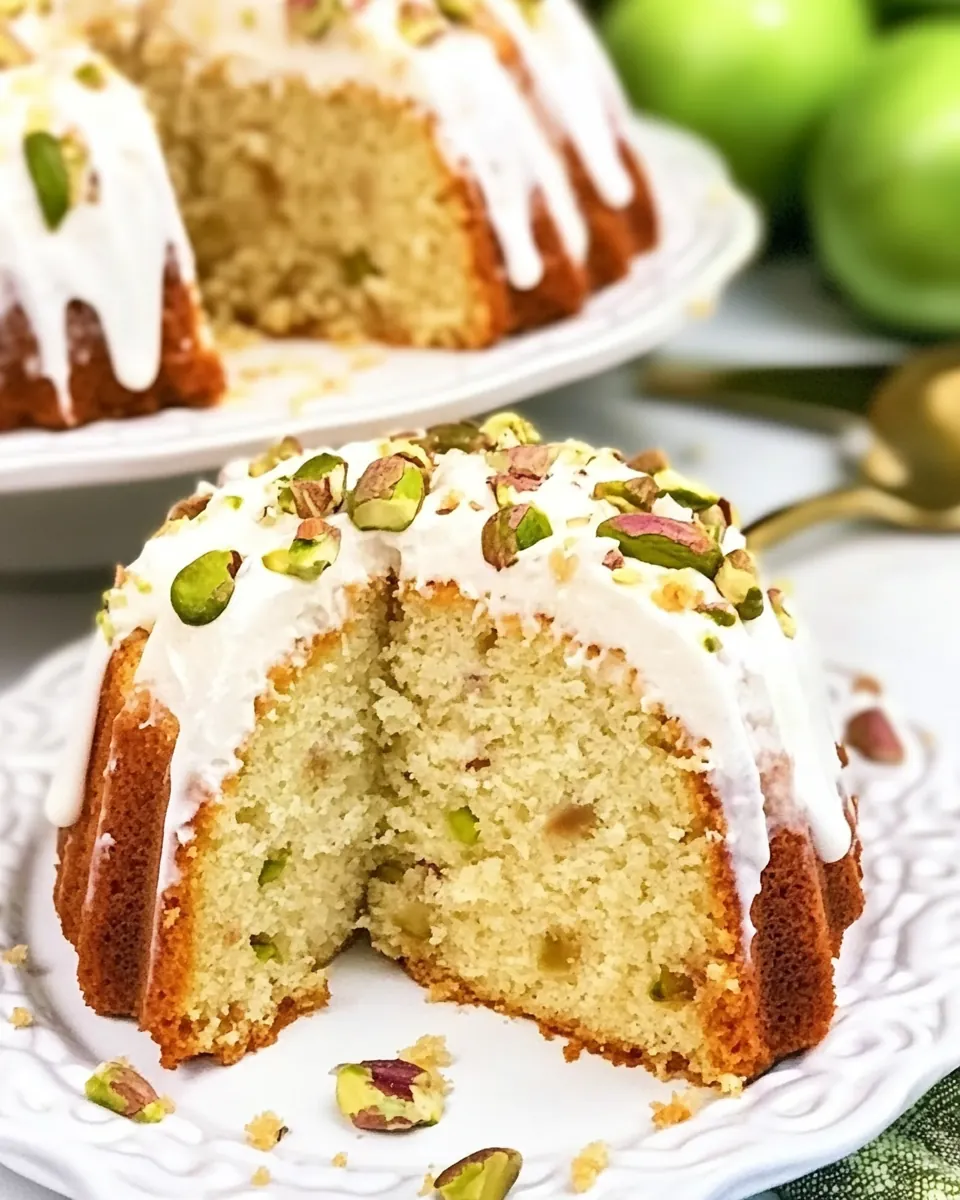
Pistachio Pound Cake
Pistachio Pound Cake has been one of those recipes that quietly lived in my baking notebook until one afternoon when I decided to turn a pantry of staples into something celebratory. I remember pulling the all purpose flour and that bright green packet of instant pistachio pudding from the cabinet while the sunlight slanted across the counter, and suddenly the kitchen felt like a small bakery. I loved how this cake takes something classic and gives it a nutty, fragrant twist, and from the very first forkful I knew I needed to keep this one in heavy rotation.
Over the years I’ve adapted little habits around making Pistachio Pound Cake that consistently improve the crumb and the flavor. I always let the butter come to room temperature slowly rather than rushing it, and I tend to fold in the chopped pistachios by hand to preserve the air in the batter. Friends who try it often ask if it’s difficult, and I tell them that the technique is forgiving, and the rewards are worth the small effort.
Recipe Snapshot
1 hr 30 mins
10 mins
80 mins
Medium
400 kcal
American
Gluten-Free, Low FODMAP
Desserts
Kitchen Aid Mixer, Tube Cake Pan
Why You Need This Pistachio Pound Cake
Rich, but not cloying
I adore how Pistachio Pound Cake manages to feel indulgent and restrained at the same time. The combination of butter, sour cream, and the instant pudding mix creates a moist crumb that stays tender for days, yet the texture never becomes heavy. I usually slice the cake thinly, and each bite offers a creamy mouthfeel with a light pistachio lift.
Simple pantry magic
I love recipes that pull from staples, and this cake is a perfect example. The base ingredients are things I typically have on hand like all purpose flour, sugar, and eggs. Adding the instant pistachio pudding mix is a small trick that contributes big flavor and keeps the batter reliably consistent. That reliability makes this a go to for last minute gatherings.
Textural contrast
The chopped pistachios stirred into the batter bring a crunchy counterpoint to the soft crumb. I always toast a few extra nuts for garnish if I have them, because the warmth of toasting intensifies aroma. The glaze, built from powdered sugar, a touch of almond extract, and a little butter, adds a glossy finish and a subtle nutty sweetness that ties everything together.
Reliable technique for home bakers
One of the reasons I keep coming back to Pistachio Pound Cake is how forgiving the method is. Creaming the butter and sugar until pale yields structure, while alternating dry ingredients with sour cream prevents overmixing. If you follow those cues, the cake bakes up evenly and you will rarely see dense pockets or collapse.
Versatile for occasions
I’ve served this cake at brunch, for afternoon tea, and at holiday tables. It photographs beautifully, slices neatly, and travels well. I find it works for casual coffee visits and for special moments when a homemade dessert is called for, which makes it a dependable recipe in my collection.
Essential Ingredients for Pistachio Pound Cake
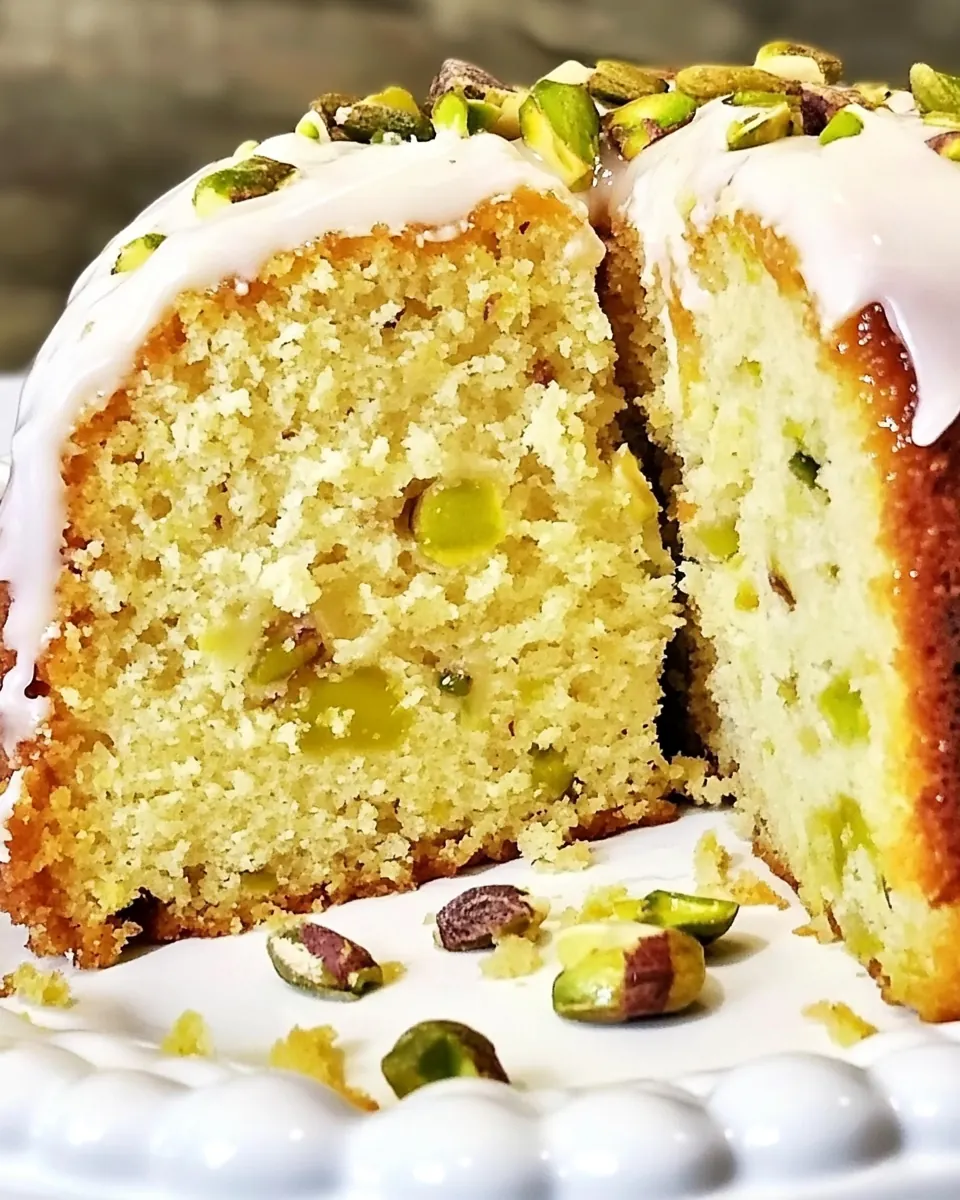
These ingredients are the backbone of a classic pound cake that gets a pistachio spin. Each component plays a role: the structure comes from all purpose flour and eggs, fat and flavor from butter and sour cream, and the instant pistachio pudding delivers both color and concentrated pistachio taste. Understanding how they interact helps you get a consistently tender, moist loaf.
- 3 cups all-purpose flour: Provide structure and bulk to the cake batter, creating the crumb and absorbing moisture from wet ingredients; properly measured flour yields a tender yet sturdy pound cake texture when combined with creaming and leavening methods. Sift or lightly spoon into the measuring cup for accuracy to avoid a dense result, and ensure proper mixing to develop just enough gluten for a cohesive loaf.
- 1 (3.4-oz) package instant pistachio pudding: Add concentrated pistachio flavor and additional dry solids to the batter while contributing slight color and aroma; instant pudding mix also helps retain moisture and can improve sliceability and tenderness in quick breads and pound cakes. Fold in with the dry ingredients to distribute the flavor evenly without overworking the batter.
- 1/2 tsp salt: Enhance and balance overall flavor by moderating sweetness and amplifying other ingredient notes; salt also strengthens gluten networks slightly, improving crumb structure and helping leaveners perform consistently. Dissolve evenly into the dry mix to avoid pockets of salty or flat-tasting cake.
- 1/4 tsp baking soda: Support rise and crumb lift by reacting with acidic components, helping to lighten the dense pound cake batter when combined with other leavening agents; use in precise amounts since too much can create an off taste. Whisk into the dry ingredients so it disperses uniformly and activates correctly during baking.
- 1 1/2 cups butter, room temperature (3 sticks): Provide richness, moisture, and tenderness while contributing to the cake's flavor and fine crumb through creaming with sugar; room–temperature butter traps air to aid leavening and creates a silky mouthfeel. Beat until light and fluffy for optimal volume before gradually adding eggs and dry ingredients to maintain emulsion.
- 2 3/4 cups sugar: Sweeten the cake and contribute to tenderness by interfering with gluten formation while helping with browning and moisture retention; proper creaming of sugar with butter creates air pockets that promote rise. Measure accurately and cream until the mixture is light and airy to achieve a soft, consistent texture.
- 2 tsp vanilla extract: Impart warm, familiar flavor that complements pistachio and almond notes while rounding out the overall aroma; vanilla enhances perceived sweetness and depth in the cake without adding sugar. Add during creaming or with the eggs so the flavor distributes evenly throughout the batter.
- 6 large eggs: Bind ingredients, add richness and moisture, and help with structure and leavening through steam and emulsification; large eggs contribute to volume and a tender crumb when incorporated properly. Add eggs one at a time while beating to maintain a stable emulsion and ensure even texture.
- 1 (8-oz) container sour cream: Contribute tanginess, moisture, and additional fat that tenderizes the crumb while reacting with leavening agents to promote lift; sour cream also adds richness and a slight acidity that brightens flavors. Fold in gently to preserve air incorporated during creaming and to keep the batter smooth and moist.
- 1 cup chopped pistachios: Introduce nutty flavor, crunchy texture, and visual interest while reinforcing the pistachio theme; chopped pistachios also add contrast to the cake's tender crumb and enhance aroma. Stir in near the end of mixing to prevent over-distribution and sinking, and reserve some for topping if desired.
- 1 1/2 cup powdered sugar: Form a sweet glaze that adds a delicate exterior sheen and an extra layer of sweetness while slightly firming on the surface to improve slice presentation; powdered sugar dissolves easily to create a smooth finish. Whisk with liquid and flavoring until silky, then pour or spread over the cooled loaf for an attractive glaze.
- 1 tsp almond extract: Provide concentrated nutty, aromatic nuance that complements pistachio and vanilla, enhancing complexity in both batter and glaze; almond extract is potent so a small amount goes a long way. Add to the glaze or batter in small quantities and taste cautiously to avoid overpowering the mix.
- 2 tbsp milk: Thin the powdered sugar glaze to a pourable consistency and adjust mouthfeel while slightly loosening the sweetness for better coverage; milk helps create a smooth, spreadable finish that sets properly. Add gradually until desired glaze thickness is reached for even distribution over the cake.
- 1 tbsp melted butter: Enrich the glaze with additional buttery flavor and help create a glossy finish while slightly thinning the mixture if warm; melted butter also adds sheen and a subtle richness to the topping. Stir in at the end of glaze preparation and apply while slightly warm for best spreading results.
How to Prepare Pistachio Pound Cake
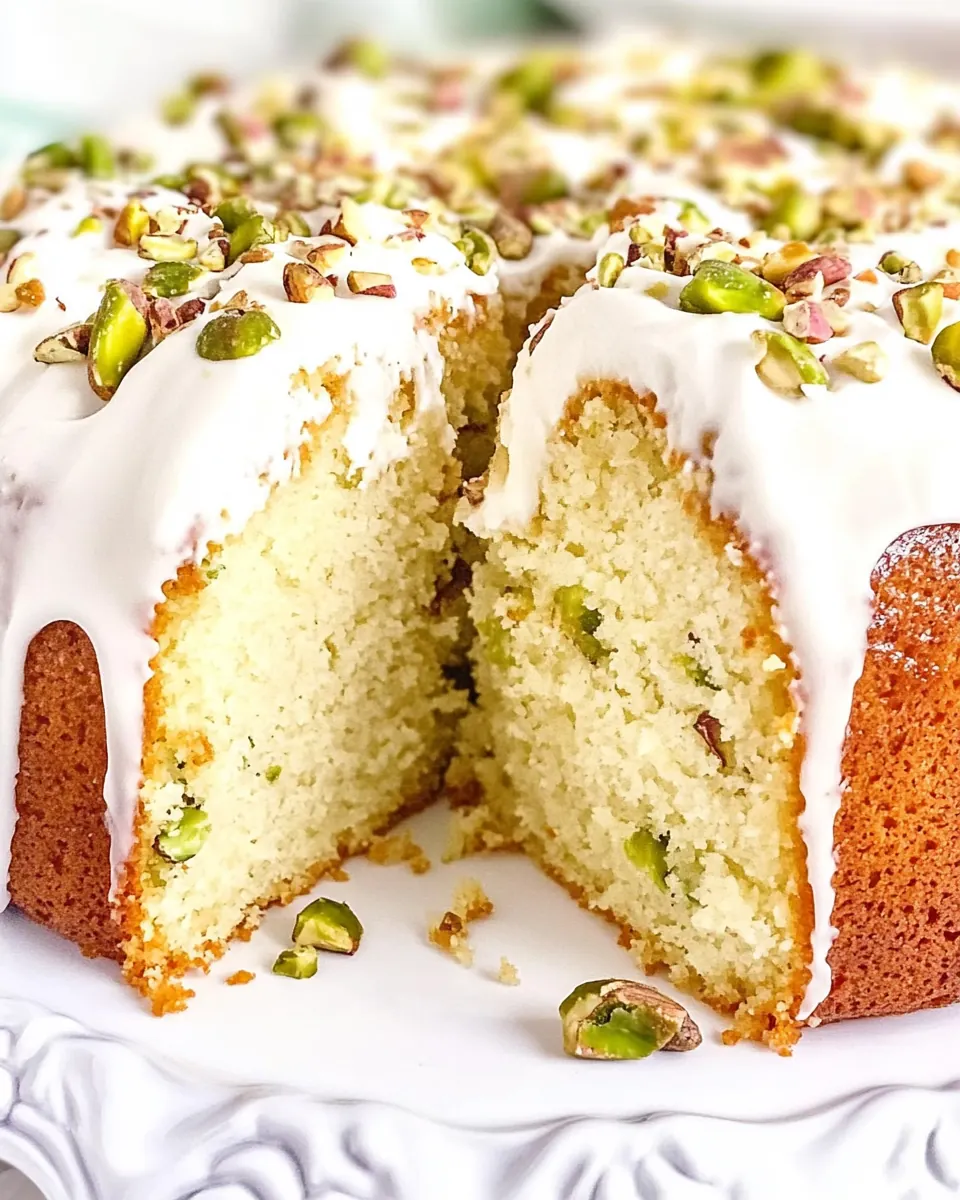
I like to approach baking this cake with calm focus, organizing my mise en place and preheating the oven so everything moves smoothly. The directions follow a classic creaming method with a careful alternate addition that safeguards the texture. Keep your tools ready and listen for the subtle cues as the batter comes together.
- Preheat oven to 325ºF. Butter and flour a 10-inch tube pan. Set aside.: The kitchen should smell faintly warm from the preheating, and the air will feel anticipatory as the oven climbs to 325ºF . Buttering and flouring a tube cake pan ensures the batter will release cleanly, and you should tap out any excess flour so the crust does not become gritty. If the pan seems sticky, it usually means an uneven coating, so reapply a thin layer of butter and dust again. A common mistake is skipping the flouring, which can cause the cake to cling and tear when removed.
- Sift together the flour, pistachio pudding mix, salt, and baking soda.: As you sift these dry ingredients, you will notice a pale, slightly green hue from the pistachio pudding and the powder will feel light and airy. Sifting aerates the all purpose flour , disperses the baking soda and salt , and prevents lumps, which promotes an even crumb. If you smell a subtle nutty sweetness, that is the pudding mix coming through. Avoid skipping sifting, since clumps of dry mix can leave pockets in the finished loaf.
- Cream together butter, sugar, and vanilla. Beat for 2 to 3 minutes, or until light and pale yellow in color. Add the eggs, one at a time, beating well after each addition, stopping and scraping the sides of the bowl as needed.: When creaming, the butter should be soft but not melting, and as it combines with the sugar it will lighten dramatically, creating ribbons of pale mixture. The texture should be airy and smooth, not greasy. Adding the eggs one at a time builds a stable emulsion, and scraping the bowl prevents unmixed pockets. Listen for a steady whir rather than loud clanks, and if the batter looks curdled, a quick scrape and continued beating usually brings it back. Overbeating here can incorporate too much air, which may cause large tunnels during baking.
- Reduce the speed of the mixer and add the sifted dry ingredients alternately with the sour cream. Mix until fully combined. Stir in the chopped pistachios by hand.: Lowering the mixer speed prevents overworking the batter while you alternate additions of the dry mix and the sour cream . The batter will transition from glossy to a thicker, velvety texture, and you should see no streaks of flour. Folding the chopped pistachios by hand keeps pockets of air intact; you will feel the batter yield and the nuts distribute evenly. If you notice streaks of dry mix, fold gently until uniform. The biggest error at this stage is overmixing, which tightens the crumb and makes the cake dense.
- Pour batter into prepared pan and place in the oven.: As you pour, the batter should flow slowly and settle into the tube pan with a smooth surface. The aroma at this point is buttery and subtly nutty. Tap the pan gently on the counter to release any large air bubbles. Place the pan into the center of the oven so heat surrounds it evenly. If you put the pan too close to an oven wall, one side can brown faster, so center placement is key.
- Bake, placing a piece of aluminum foil on top to prevent over browning, if needed, for 1 hour 20 minutes to 1 hour 30 minutes, or until a toothpick inserted into the center comes back clean.: During baking the kitchen will fill with a warm, nutty aroma and the top will gradually take on a light golden color. If the exterior is browning too quickly, tent a sheet of foil, which reflects heat and prevents over darkening while allowing the interior to finish baking. The long bake time at a moderate heat promotes even rise and a tender crumb. A common pitfall is opening the oven repeatedly, which drops the temperature and can cause uneven sinking.
- Remove from oven and let cool in pan on a cooling rack for 15 minutes, then remove from the pan and let cool completely.: After removing the pan you will notice the cake slightly pulling away from the edges, a cue that it is ready to come out. Cooling in the pan for about 15 minutes stabilizes the crumb so it holds together when inverted. Once cooled briefly, invert onto a cooling rack and let it come to room temperature; the cake will settle and the interior will finish its structure. Try not to remove it too soon, or it may break, and leaving it in the pan too long can trap condensation which softens the crust.
- To make the glaze: In a medium-size mixing bowl, mix together the powdered sugar, almond extract, milk, and butter. Drizzle over cooled cake.: In a medium size mixing bowl, mix together the powdered sugar, almond extract, milk, and butter. Drizzle over cooled cake. : The glaze should be glossy and pourable, with a sweet almond perfume from the almond extract . Mixing in the melted butter adds silkiness, and the small amount of milk adjusts thickness so the glaze will flow and cling. Pour slowly over the cooled cake so the glaze sets with delicate drips down the sides. If the glaze is too thin, add a touch more powdered sugar ; if too thick, add a splash more milk . Applying glaze to warm cake will cause it to run off, so ensure the loaf is fully cool.
Recipe Tips about Pistachio Pound Cake
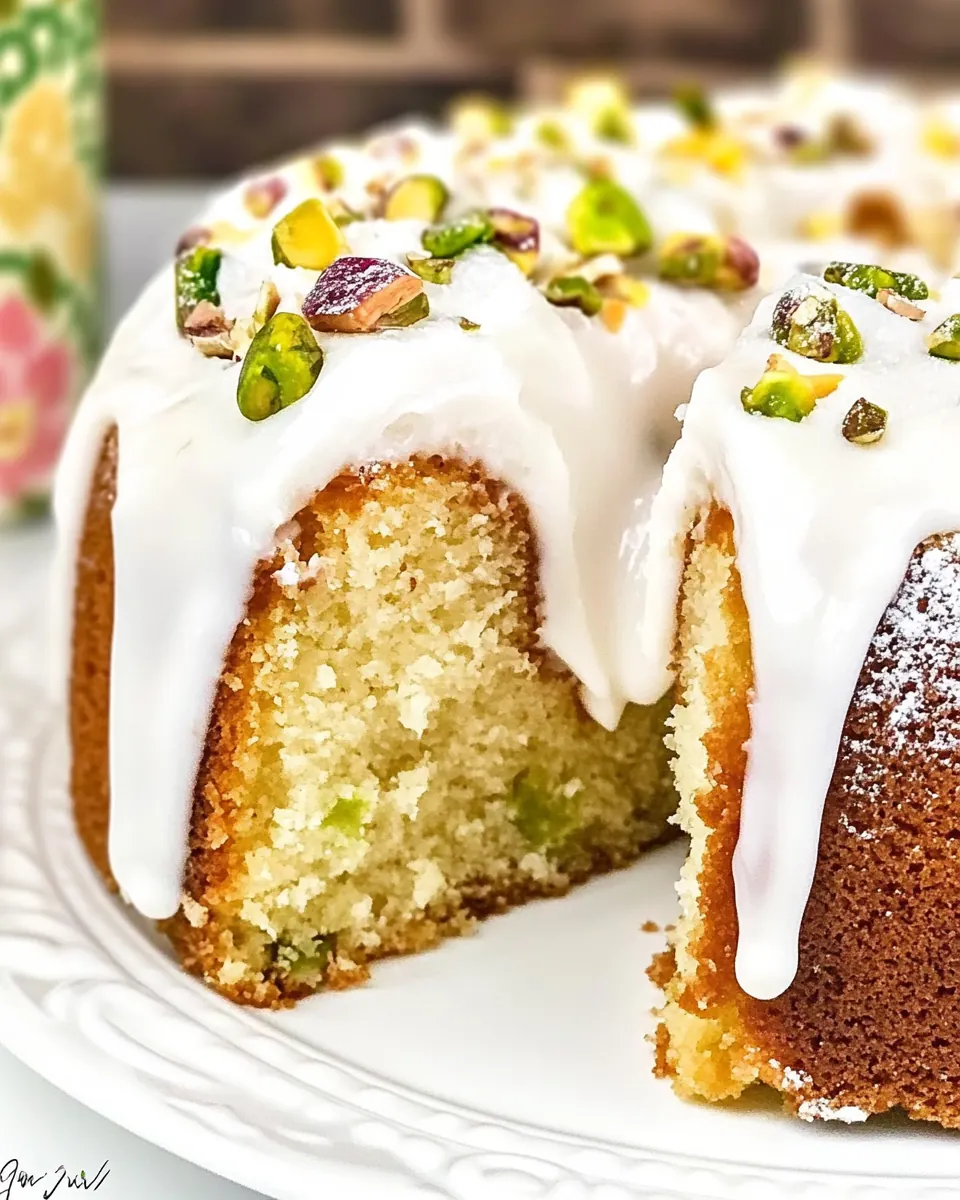
I like to think of these tips as small habits that compound into a reliably great cake. They focus on technique, timing, and small flavor boosts that help you deliver a beautiful loaf every time.
- Room temperature ingredients Make sure the butter, eggs, and sour cream are at room temperature for smoother emulsification and an even crumb.
- Sift the dry mix Sifting the all purpose flour and pistachio pudding mix together prevents lumps and ensures an even distribution of leavening.
- Do not overmix When combining the batter, stop as soon as the dry ingredients disappear to avoid a tight, dense texture.
- Toast your pistachios Lightly toasting the chopped pistachios for a few minutes deepens their aroma and improves the final flavor.
- Check for doneness Begin testing with a toothpick at the earlier time, and expect a clean pull or moist crumbs, not wet batter, when finished.
Serve This Pistachio Pound Cake With
This cake pairs well with simple accompaniments that highlight its nutty character. I often serve slices at brunch with coffee, or bring it to celebratory gatherings where it stands in nicely among other desserts. Below are serving ideas and storage notes to keep the cake tasting fresh.
- Brunch centerpiece Serve thin slices with a pot of strong coffee or tea for a delightful morning spread, letting the pistachio notes complement the beverage.
- Afternoon tea Arrange on a cake stand and pair with light finger sandwiches for a refined tea time where the cake’s texture shines.
- Casual dessert Offer slices with plain whipped cream or a small scoop of vanilla ice cream for a simple, crowd pleasing finish.
- Holiday table Use the cake as part of a dessert buffet during holidays, where its color and nutty profile add variety to the sweets selection.
- Storage tips Store wrapped at room temperature for two to three days, or refrigerate for up to five days to preserve freshness; bring to room temperature before serving for best texture.
- Make ahead The cake freezes well when double wrapped, so you can bake in advance and thaw gently before glazing and serving.
FAQ
Conclusion
This cake stands out for its buttery, tender crumb and the bright pistachio lift that turns a classic pound cake into something special. Give it a try the next time you want a dessert that feels both homemade and a little elegant, you will likely find it becomes a requested favorite. Baking it offers a comforting rhythm from creaming to glazing, and the result rewards the care with slices that are rich, nutty, and perfect for sharing.
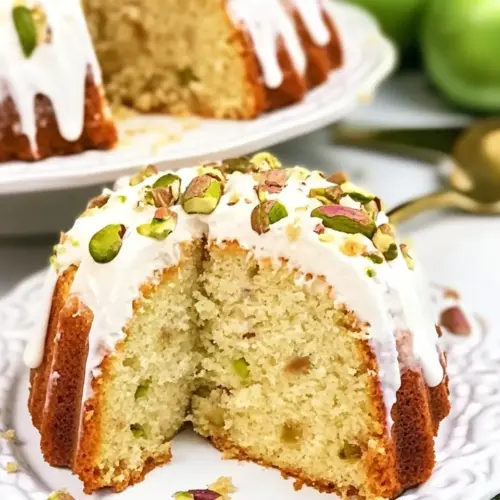
Pistachio Pound Cake
Equipment
- Kitchen-Aid Mixer
- Tube Cake Pan
Ingredients
- 3 cups all-purpose flour Provide structure and bulk to the cake batter, creating the crumb and absorbing moisture from wet ingredients; properly measured flour yields a tender yet sturdy pound cake texture when combined with creaming and leavening methods. Sift or lightly spoon into the measuring cup for accuracy to avoid a dense result, and ensure proper mixing to develop just enough gluten for a cohesive loaf.
- 1 (3.4-oz) package instant pistachio pudding Add concentrated pistachio flavor and additional dry solids to the batter while contributing slight color and aroma; instant pudding mix also helps retain moisture and can improve sliceability and tenderness in quick breads and pound cakes. Fold in with the dry ingredients to distribute the flavor evenly without overworking the batter.
- 1/2 tsp salt Enhance and balance overall flavor by moderating sweetness and amplifying other ingredient notes; salt also strengthens gluten networks slightly, improving crumb structure and helping leaveners perform consistently. Dissolve evenly into the dry mix to avoid pockets of salty or flat-tasting cake.
- 1/4 tsp baking soda Support rise and crumb lift by reacting with acidic components, helping to lighten the dense pound cake batter when combined with other leavening agents; use in precise amounts since too much can create an off taste. Whisk into the dry ingredients so it disperses uniformly and activates correctly during baking.
- 1 1/2 cups butter, room temperature (3 sticks) Provide richness, moisture, and tenderness while contributing to the cake's flavor and fine crumb through creaming with sugar; room-temperature butter traps air to aid leavening and creates a silky mouthfeel. Beat until light and fluffy for optimal volume before gradually adding eggs and dry ingredients to maintain emulsion.
- 2 3/4 cups sugar Sweeten the cake and contribute to tenderness by interfering with gluten formation while helping with browning and moisture retention; proper creaming of sugar with butter creates air pockets that promote rise. Measure accurately and cream until the mixture is light and airy to achieve a soft, consistent texture.
- 2 tsp vanilla extract Impart warm, familiar flavor that complements pistachio and almond notes while rounding out the overall aroma; vanilla enhances perceived sweetness and depth in the cake without adding sugar. Add during creaming or with the eggs so the flavor distributes evenly throughout the batter.
- 6 large eggs Bind ingredients, add richness and moisture, and help with structure and leavening through steam and emulsification; large eggs contribute to volume and a tender crumb when incorporated properly. Add eggs one at a time while beating to maintain a stable emulsion and ensure even texture.
- 1 (8-oz) container sour cream Contribute tanginess, moisture, and additional fat that tenderizes the crumb while reacting with leavening agents to promote lift; sour cream also adds richness and a slight acidity that brightens flavors. Fold in gently to preserve air incorporated during creaming and to keep the batter smooth and moist.
- 1 cup chopped pistachios Introduce nutty flavor, crunchy texture, and visual interest while reinforcing the pistachio theme; chopped pistachios also add contrast to the cake's tender crumb and enhance aroma. Stir in near the end of mixing to prevent over-distribution and sinking, and reserve some for topping if desired.
- 1 1/2 cup powdered sugar Form a sweet glaze that adds a delicate exterior sheen and an extra layer of sweetness while slightly firming on the surface to improve slice presentation; powdered sugar dissolves easily to create a smooth finish. Whisk with liquid and flavoring until silky, then pour or spread over the cooled loaf for an attractive glaze.
- 1 tsp almond extract Provide concentrated nutty, aromatic nuance that complements pistachio and vanilla, enhancing complexity in both batter and glaze; almond extract is potent so a small amount goes a long way. Add to the glaze or batter in small quantities and taste cautiously to avoid overpowering the mix.
- 2 tbsp milk Thin the powdered sugar glaze to a pourable consistency and adjust mouthfeel while slightly loosening the sweetness for better coverage; milk helps create a smooth, spreadable finish that sets properly. Add gradually until desired glaze thickness is reached for even distribution over the cake.
- 1 tbsp melted butter Enrich the glaze with additional buttery flavor and help create a glossy finish while slightly thinning the mixture if warm; melted butter also adds sheen and a subtle richness to the topping. Stir in at the end of glaze preparation and apply while slightly warm for best spreading results.
Instructions
- Preheat oven to 325ºF. Butter and flour a 10-inch tube pan. Set aside.: The kitchen should smell faintly warm from the preheating, and the air will feel anticipatory as the oven climbs to 325ºF . Buttering and flouring a tube cake pan ensures the batter will release cleanly, and you should tap out any excess flour so the crust does not become gritty. If the pan seems sticky, it usually means an uneven coating, so reapply a thin layer of butter and dust again. A common mistake is skipping the flouring, which can cause the cake to cling and tear when removed.
- Sift together the flour, pistachio pudding mix, salt, and baking soda.: As you sift these dry ingredients, you will notice a pale, slightly green hue from the pistachio pudding and the powder will feel light and airy. Sifting aerates the all purpose flour , disperses the baking soda and salt , and prevents lumps, which promotes an even crumb. If you smell a subtle nutty sweetness, that is the pudding mix coming through. Avoid skipping sifting, since clumps of dry mix can leave pockets in the finished loaf.
- Cream together butter, sugar, and vanilla. Beat for 2 to 3 minutes, or until light and pale yellow in color. Add the eggs, one at a time, beating well after each addition, stopping and scraping the sides of the bowl as needed.: When creaming, the butter should be soft but not melting, and as it combines with the sugar it will lighten dramatically, creating ribbons of pale mixture. The texture should be airy and smooth, not greasy. Adding the eggs one at a time builds a stable emulsion, and scraping the bowl prevents unmixed pockets. Listen for a steady whir rather than loud clanks, and if the batter looks curdled, a quick scrape and continued beating usually brings it back. Overbeating here can incorporate too much air, which may cause large tunnels during baking.
- Reduce the speed of the mixer and add the sifted dry ingredients alternately with the sour cream. Mix until fully combined. Stir in the chopped pistachios by hand.: Lowering the mixer speed prevents overworking the batter while you alternate additions of the dry mix and the sour cream . The batter will transition from glossy to a thicker, velvety texture, and you should see no streaks of flour. Folding the chopped pistachios by hand keeps pockets of air intact; you will feel the batter yield and the nuts distribute evenly. If you notice streaks of dry mix, fold gently until uniform. The biggest error at this stage is overmixing, which tightens the crumb and makes the cake dense.
- Pour batter into prepared pan and place in the oven.: As you pour, the batter should flow slowly and settle into the tube pan with a smooth surface. The aroma at this point is buttery and subtly nutty. Tap the pan gently on the counter to release any large air bubbles. Place the pan into the center of the oven so heat surrounds it evenly. If you put the pan too close to an oven wall, one side can brown faster, so center placement is key.
- Bake, placing a piece of aluminum foil on top to prevent over browning, if needed, for 1 hour 20 minutes to 1 hour 30 minutes, or until a toothpick inserted into the center comes back clean.: During baking the kitchen will fill with a warm, nutty aroma and the top will gradually take on a light golden color. If the exterior is browning too quickly, tent a sheet of foil, which reflects heat and prevents over darkening while allowing the interior to finish baking. The long bake time at a moderate heat promotes even rise and a tender crumb. A common pitfall is opening the oven repeatedly, which drops the temperature and can cause uneven sinking.
- Remove from oven and let cool in pan on a cooling rack for 15 minutes, then remove from the pan and let cool completely.: After removing the pan you will notice the cake slightly pulling away from the edges, a cue that it is ready to come out. Cooling in the pan for about 15 minutes stabilizes the crumb so it holds together when inverted. Once cooled briefly, invert onto a cooling rack and let it come to room temperature; the cake will settle and the interior will finish its structure. Try not to remove it too soon, or it may break, and leaving it in the pan too long can trap condensation which softens the crust.
- To make the glaze: In a medium-size mixing bowl, mix together the powdered sugar, almond extract, milk, and butter. Drizzle over cooled cake.: In a medium size mixing bowl, mix together the powdered sugar, almond extract, milk, and butter. Drizzle over cooled cake. : The glaze should be glossy and pourable, with a sweet almond perfume from the almond extract . Mixing in the melted butter adds silkiness, and the small amount of milk adjusts thickness so the glaze will flow and cling. Pour slowly over the cooled cake so the glaze sets with delicate drips down the sides. If the glaze is too thin, add a touch more powdered sugar ; if too thick, add a splash more milk . Applying glaze to warm cake will cause it to run off, so ensure the loaf is fully cool.
Notes
- Room temperature ingredients Make sure the butter, eggs, and sour cream are at room temperature for smoother emulsification and an even crumb.
- Sift the dry mix Sifting the all purpose flour and pistachio pudding mix together prevents lumps and ensures an even distribution of leavening.
- Do not overmix When combining the batter, stop as soon as the dry ingredients disappear to avoid a tight, dense texture.
- Toast your pistachios Lightly toasting the chopped pistachios for a few minutes deepens their aroma and improves the final flavor.
- Check for doneness Begin testing with a toothpick at the earlier time, and expect a clean pull or moist crumbs, not wet batter, when finished.