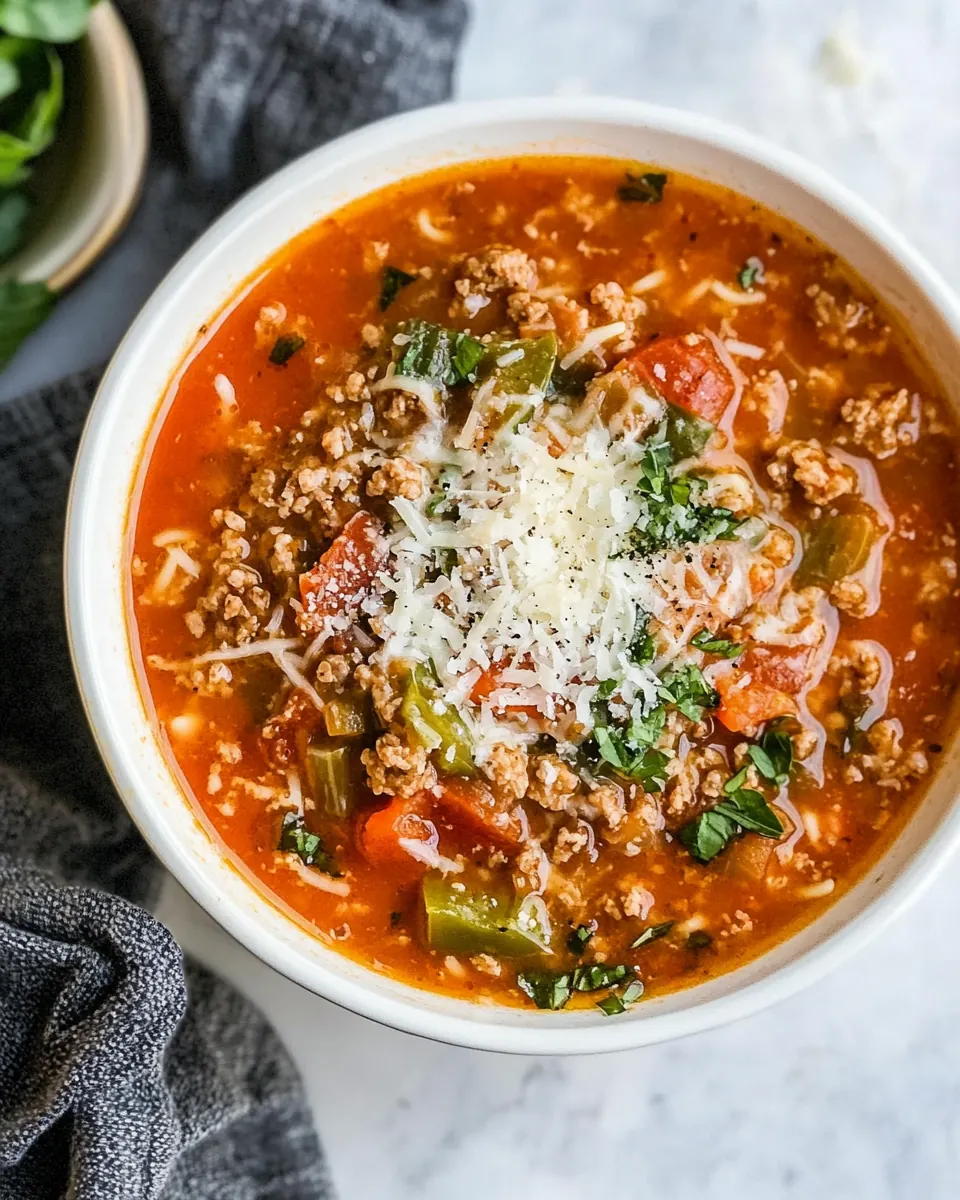
Stuffed Pepper Soup
Stuffed Pepper Soup has been one of those bowls I reach for when the afternoon light turns soft and I want something that feels like home in a single spoonful.
I first learned this version on a blustery autumn afternoon when a neighbor knocked with a steaming pot and a paper towel of grated cheese. That first ladle taught me the magic of combining browned ground beef, tender rice, and bright pieces of green bell pepper and red bell pepper in a savory tomato broth. From then on I started tweaking small things, like scattering Parmesan cheese at the end and stirring in a spoonful of butter at the start to make the mouthfeel silkier. Each change made the recipe feel more mine.
When I make Stuffed Pepper Soup for friends, the kitchen fills with the smell of sautéing onion and sizzling garlic, and the living room seems to warm itself. I like to talk about textures while we wait, how the rice swells and makes the broth comforting and substantial, while the chopped carrot and celery add subtle crunch when not overcooked. Over the years, I learned a trick to brown the ground beef properly so the soup gets a deeper, more savory backbone. It makes a difference, and people notice.
Recipe Snapshot
55 mins
15 mins
40 mins
Medium
350 kcal
American
Gluten-Free, Low FODMAP
Soups
6 Quart Dutch Oven
Why This Stuffed Pepper Soup Works
Hearty, familiar flavors
I love how Stuffed Pepper Soup tastes like the classic stuffed pepper dish but in a spoonable form. The combination of sautéed onion and browned ground beef anchors the bowl with a deeply savory note, while the tomatoes and herbs lift the flavor so each bite stays interesting. I often tell guests this is comfort food that doesn’t feel heavy.
Balanced textures
The mix of soft, plump rice, tender diced bell pepper, and slightly firm carrot and celery gives the soup pleasing contrast. I like that the rice thickens the broth naturally, creating a satisfying mouthfeel without adding thickeners, so the texture feels homemade and authentic.
Simple pantry ingredients
Most of the ingredients are things you likely already have: tomatoes, dried herbs like oregano and basil, a cube of beef bouillon, and long grain rice. That makes this recipe an excellent weeknight fallback. I’ve made it on a busy evening more times than I can count, and it always hits the spot.
Flexible and forgiving
I appreciate recipes that allow for small swaps without derailing the final result. With Stuffed Pepper Soup, you can adjust the broth level, swap proteins, or make it plant based without losing the core comforting profile. That flexibility makes it reliable whether I’m cooking for a crowd or making a quiet dinner for two.
Comfort that travels well
This soup stores beautifully, and the flavors meld overnight. I often make a big pot on purpose because leftovers reheat quickly and taste even better the next day. It’s a practical meal that rewards planning, which I find incredibly satisfying.
Ingredient List for Stuffed Pepper Soup
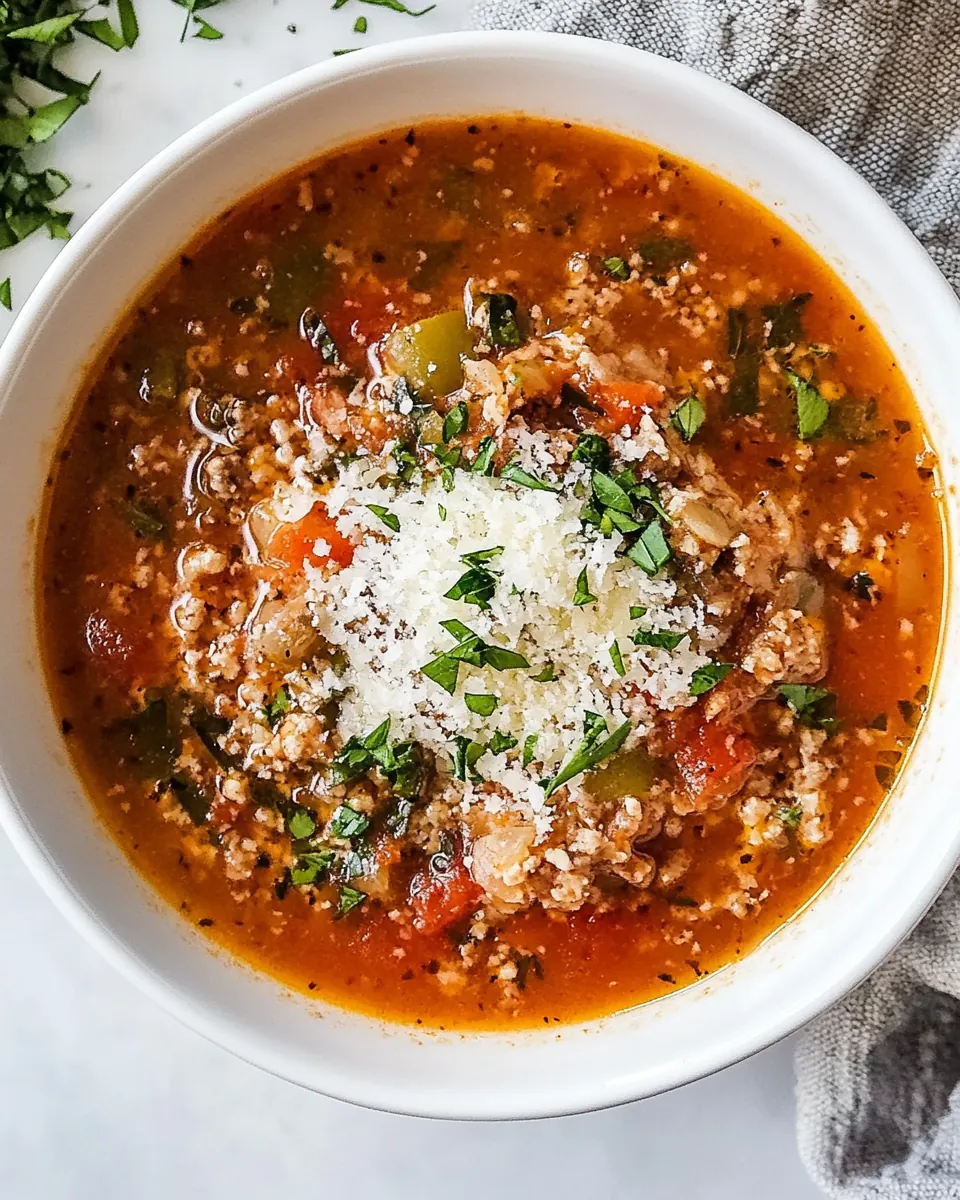
These ingredients form a team: aromatics and fat build the savory base, vegetables bring brightness and texture, rice adds body, and tomatoes plus broth supply the comforting liquid foundation. The key players are the ground beef for richness, the rice for bulk and creaminess, and the diced bell pepper for that gentle pepper bite that makes it feel like stuffed peppers without the vessel.
- 1 tablespoon olive oil: Sauté in a skillet to provide a flavorful fat base and help brown aromatics; enhances mouthfeel and carries flavors throughout the soup when heated gently.
- 1 tablespoon butter (unsalted): Melt into the pan to add richness and a silky finish; combines with olive oil to create a balanced cooking fat that deepens the soup’s savory profile.
- 1 pound ground beef: Brown thoroughly to develop caramelized flavor and add hearty protein; renders fat that complements vegetables and contributes to the soup’s satisfying texture.
- 1 large onion (chopped): Chop finely and soften until translucent to add sweetness and depth; releases natural sugars that build the aromatic foundation of the soup.
- 1 medium carrot (chopped): Dice and sweat until tender to introduce subtle sweetness and texture contrast; helps round out flavors and adds body to the vegetable base.
- 2 stalks celery (chopped): Chop and cook until softened to contribute mild herbal notes and crunch; absorbs surrounding flavors and provides aromatic support to the broth.
- 1 medium green bell pepper (chopped): Chop and sauté to bring crisp, slightly bitter green pepper flavor; adds classic stuffed-pepper taste and vibrant color to the soup.
- 1 medium red bell pepper (chopped): Chop and cook to introduce sweet, fruity pepper notes and bright color; balances the green pepper and enhances the visual and flavor complexity.
- 3 cloves garlic (minced): Mince finely and add near the end of sautéing to impart pungent, garlicky aroma; intensifies savory notes and brightens the overall flavor profile.
- 1 tablespoon tomato paste: Stir in and cook briefly to concentrate tomato flavor and bind with fats; adds umami depth and a hint of sweetness to thicken the broth slightly.
- 3/4 cup long grain rice (uncooked): Rinse and add uncooked to the simmering soup to absorb flavorful liquids; provides hearty grains that swell and create a comforting, filling texture.
- 1/2 teaspoon dried oregano: Sprinkle in to add warm, slightly bitter herbal complexity; complements tomato and beef flavors while contributing traditional Italian seasoning hints.
- 1/2 teaspoon dried basil: Sprinkle in to lend sweet, floral herbiness and subtle peppery undertones; works with oregano to create a rounded Mediterranean seasoning profile.
- salt and pepper (to taste): Season generously to enhance all flavors and balance acidity and richness; used to taste to ensure the soup is well-rounded and palatable.
- 1 cube beef bouillon: Dissolve into the broth to boost concentrated beefy umami and deepen savory notes; acts as a convenient seasoning cube to intensify stock flavor.
- 6 cups beef broth (low sodium): Pour as the primary liquid to form the soup base and supply savory depth; low-sodium choice allows control over final saltiness while sustaining rich beef character.
- 28 ounces diced tomatoes (1 can): Add canned tomatoes with juices to contribute bright acidity, body, and tomato flavor; helps create the classic stuffed-pepper taste and adds chunky texture.
- Parmesan cheese (grated, for serving): Grate over finished bowls to add nutty, salty umami and a creamy finishing touch; enhances richness and provides a pleasant contrast to the savory broth.
Step by Step Instructions for Stuffed Pepper Soup
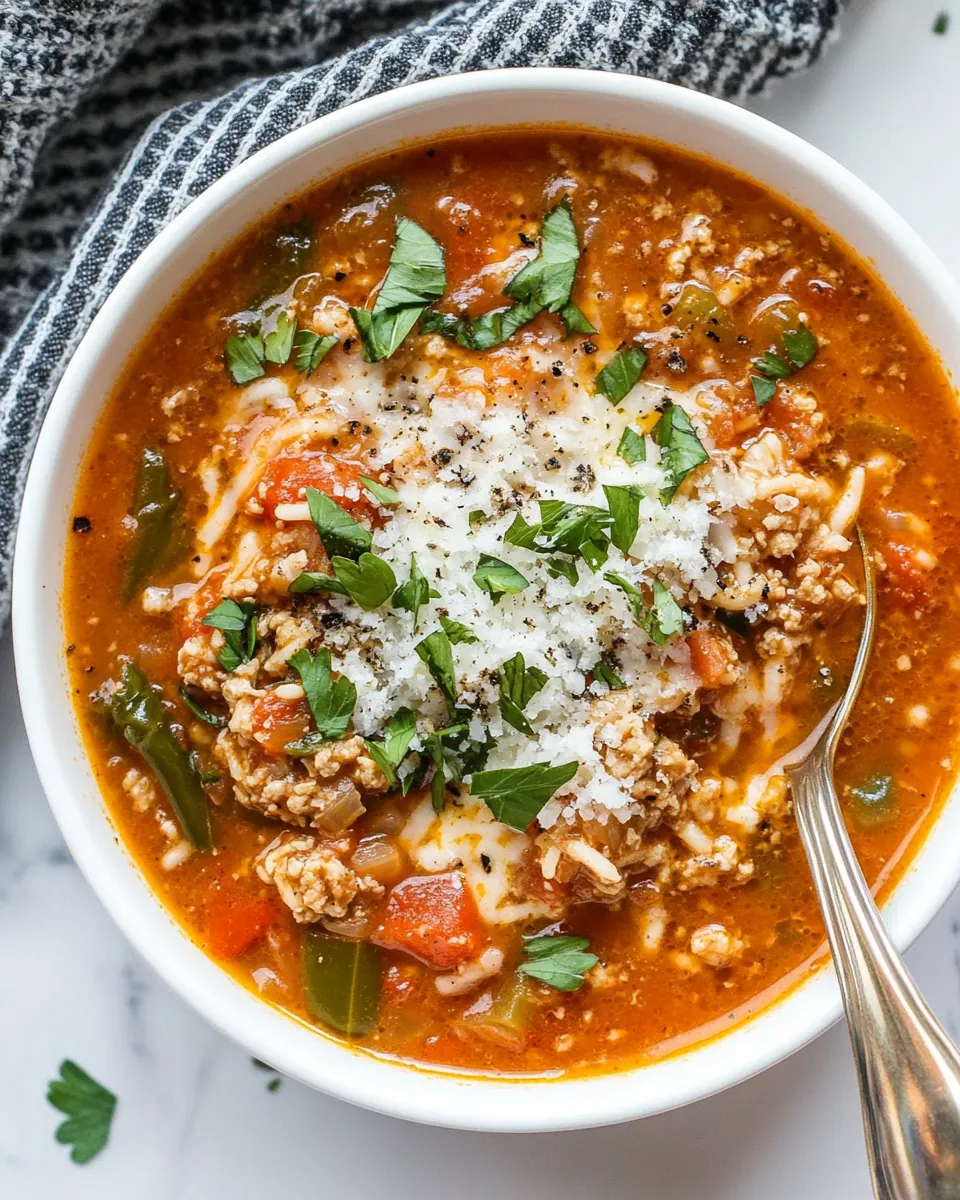
I like to think of these steps as a short story the pot tells, from the first sizzle to the final ladle. Follow the sequence closely for balanced flavors and textures, and pay attention to the sensory cues described so you’ll know when each stage is right.
- In a large Dutch oven add the olive oil and butter and melt over medium heat. Add the ground beef and cook for about 3-5 minutes until the meat is browned, breaking it up as you cook.: You will hear an initial gentle sizzle as the olive oil and butter warm and the aroma of the fats will open up, releasing a rich scent. As the ground beef hits the pan, it should quickly lose its raw pink color; aim for small crumbles and even browning which creates those tiny browned bits that add depth to the finished broth. If the meat steams instead of browns, the pan is too crowded or not hot enough, and the soup will lack that caramelized flavor. A common mistake is stirring constantly; instead, let the meat sit undisturbed for short bursts so the fond develops. Visually, look for a deepening brown and a reduction in moisture in the pan, and smell that toasty, meaty aroma that tells you you are on the right track.
- Stir in the onion, carrots, celery, and bell peppers to the pot and cook for another 3 minutes until the onion softens. Add the garlic and cook for another 30 seconds until aromatic.: The vegetables should start to glisten as they sweat in the rendered fat, releasing sweet and vegetal notes. You want the onion to turn translucent, not browned, because it will continue cooking later; the carrot and celery should soften slightly but keep some bite. When you add the minced garlic , the scent will shift to a fragrant, warm note almost immediately; avoid overcooking garlic because it can become bitter. A typical misstep here is rushing the heat up too high, which can scorch the garlic or cause the peppers to lose texture. Keep your heat moderate and stir until the vegetables smell sweet and the pan gives off a gentle sizzling sound.
- Stir in the tomato paste and then the rice. Add in the dried oregano, basil, salt, pepper and beef bouillon. Pour in the beef broth, diced tomatoes and stir. Bring to a boil then reduce heat to simmer and cook for 30 minutes, stirring occasionally. The soup will thicken as the rice cooks.: As you mix in the tomato paste , you will notice the mixture darkening and taking on a richer tomato scent, which helps build umami. Adding the rice at this stage lets the grains absorb flavor from the start, and as the pot comes to a boil you'll see small bubbles forming that signal the transition to a vigorous simmer. The dried oregano and basil will rehydrate and release herbaceous aromas, and the beef bouillon amplifies savory notes. Once reduced to a simmer, the soup should emit steady tiny bubbles and a comforting steam; stirring occasionally prevents the rice from settling and sticking to the bottom. A common error is simmering too hard, which can over reduce the liquid and leave the rice gummy. Keep it at a gentle simmer and check the rice at the 25 minute mark to ensure it remains tender but not falling apart.
- Taste for seasoning and adjust as necessary with salt and pepper. If the soup is too thick, add more broth as necessary.: This is the moment when the bowl comes together, and you will notice the individual flavors harmonize into a cohesive whole. Use a spoon to sample the broth and pay attention to balance between acidity from the diced tomatoes , savoriness from the beef bouillon and richness from the browned ground beef . Adding salt late prevents oversalting, especially since the soup reduces as it simmers. If the mouthfeel feels overly dense, the solution is simple: add a splash of warm beef broth to loosen it while preserving flavor. A pitfall here is adding too much seasoning at once; instead, season gradually and taste after each adjustment. Trust your senses: the right balance will feel lively but rounded.
- Ladle into bowls and serve with grated Parmesan cheese.: As you ladle, notice the steam rising and the way the spoon carries the thickened broth with soft grains of rice and flecks of herbs and vegetables. The final addition of grated Parmesan cheese will melt into the warm liquid, creating a silky sheen and a salty, nutty lift on the palate. One common mistake is adding the cheese too early, which will cause it to disperse and lose its finishing impact; save it for the bowl so each diner gets that distinct, melty touch. Serve while still hot so the aromas and textures are at their most vivid, and encourage guests to stir their cheese in to fully integrate that last layer of flavor.
Making Adjustments
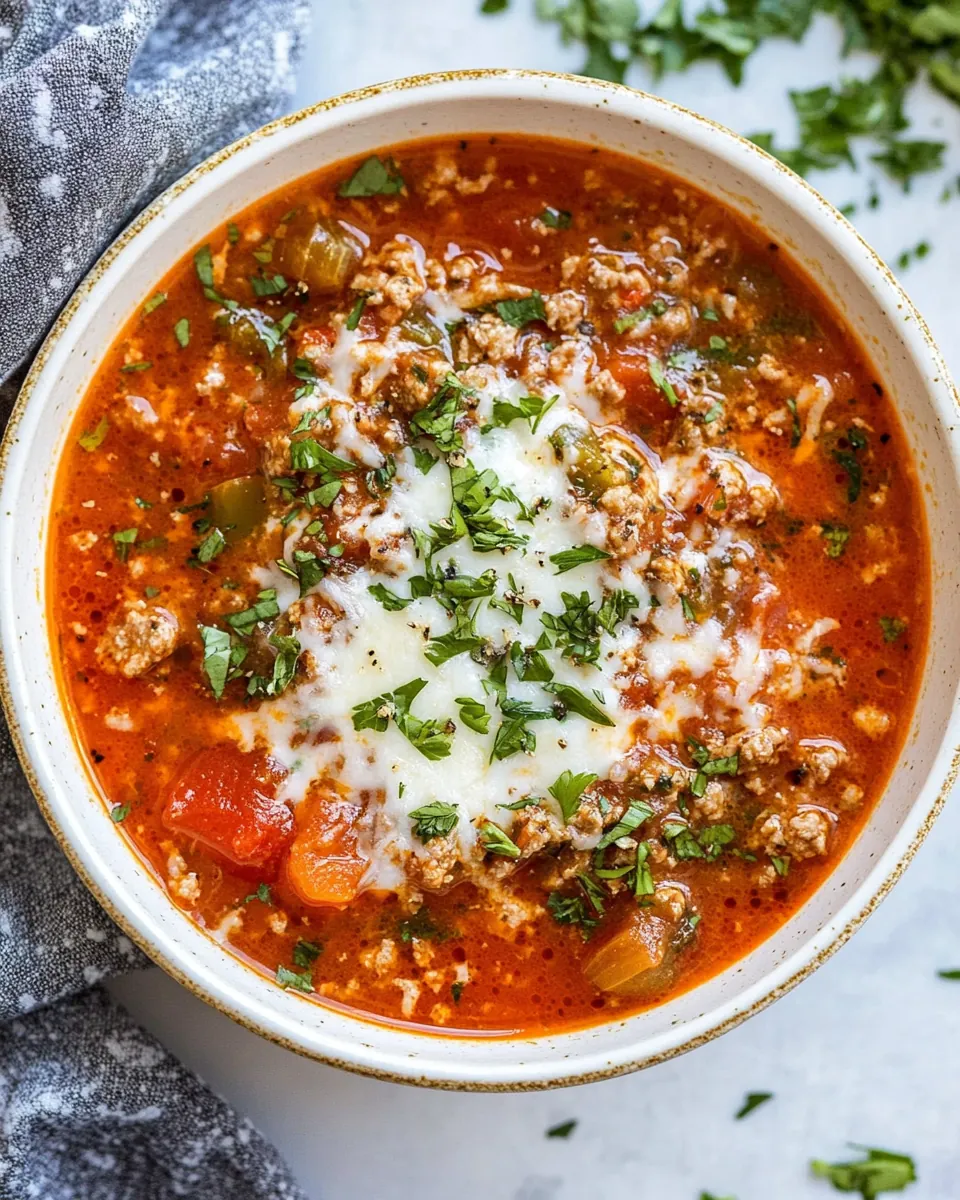
I like to give a quick roadmap for adjustments because this recipe is a real weeknight workhorse. Below are practical, tested tips you can apply whether you want to lighten it up, make it plant based, or prepare it ahead.
- Brown the meat properly: Ensure the ground beef is in a hot pan with enough room to sear. Let it sit briefly between stirs to create browned bits that deepen the soup’s flavor profile.
- Make it plant based: Omit the butter and Parmesan cheese, replace the ground beef with a vegan ground alternative or cooked lentils, and use vegetable broth instead of beef broth for a flavorful meat free version.
- Control salt levels: Use low sodium beef broth and add salt at the end; remember that the soup reduces and intensifies while simmering.
- Adjust thickness on the fly: If the soup becomes too thick as the rice absorbs liquid, stir in warm beef broth a little at a time until you reach your desired consistency.
- Advance prep and storage: This soup keeps well; cool it quickly and refrigerate for up to five days or freeze in airtight containers for up to three months. Reheat gently and add a splash of broth if it tightens up.
What Complements This Stuffed Pepper Soup
This soup pairs well with simple sides and occasions that call for comfort and ease. Think weeknight dinners, cozy lunches, casual family gatherings, or a warming dish during the fall season. Below are detailed serving ideas, storage suggestions, and seasonal pairings to help you present the dish with confidence.
- Serve with crusty bread: A warm loaf or slices of crusty bread are perfect for soaking up the flavorful broth and make the meal feel complete.
- Light salad on the side: A crisp green salad with a vinaigrette brings a fresh contrast to the warm, savory soup and balances the meal.
- Occasions: Ideal for weeknight dinners and casual gatherings, and especially comforting during fall evenings when you want something hearty without fuss.
- Storage tips: Cool leftovers quickly and store in airtight containers. Refrigerate for up to five days or freeze portions for up to three months; thaw in the fridge before reheating gently on the stove.
- Reheating: Reheat on the stovetop over low heat, adding a bit of warm beef broth if the soup tightens. Stir occasionally until the soup is evenly heated through.
- Seasonal pairings: Serve alongside roasted root vegetables in colder months, or a light, crisp side in transitional seasons to keep the meal balanced.
FAQ
Conclusion
Stuffed Pepper Soup captures the essence of classic stuffed peppers in a cozy, spoonable form, balancing savory browned meat, tender rice, and bright diced peppers in a tomato enriched broth. You should definitely give it a try because it comes together with pantry staples, stores well, and rewards a little patience with deep, comforting flavors. Share it with family or keep extra portions on hand for easy lunches, and enjoy how this simple bowl repeatedly comforts and satisfies.
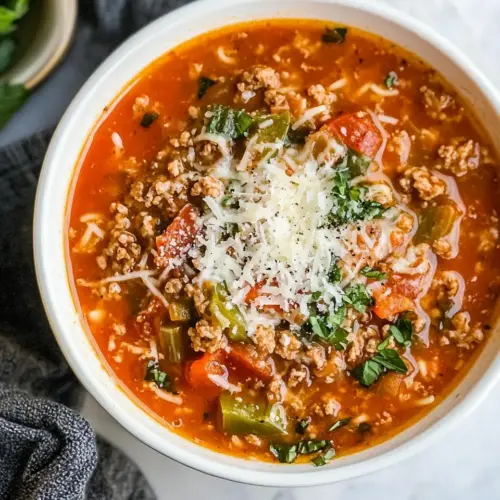
Stuffed Pepper Soup
Equipment
- 6-quart Dutch Oven
Ingredients
- 1 tablespoon olive oil Sauté in a skillet to provide a flavorful fat base and help brown aromatics; enhances mouthfeel and carries flavors throughout the soup when heated gently.
- 1 tablespoon butter (unsalted) Melt into the pan to add richness and a silky finish; combines with olive oil to create a balanced cooking fat that deepens the soup’s savory profile.
- 1 pound ground beef Brown thoroughly to develop caramelized flavor and add hearty protein; renders fat that complements vegetables and contributes to the soup’s satisfying texture.
- 1 large onion (chopped) Chop finely and soften until translucent to add sweetness and depth; releases natural sugars that build the aromatic foundation of the soup.
- 1 medium carrot (chopped) Dice and sweat until tender to introduce subtle sweetness and texture contrast; helps round out flavors and adds body to the vegetable base.
- 2 stalks celery (chopped) Chop and cook until softened to contribute mild herbal notes and crunch; absorbs surrounding flavors and provides aromatic support to the broth.
- 1 medium green bell pepper (chopped) Chop and sauté to bring crisp, slightly bitter green pepper flavor; adds classic stuffed-pepper taste and vibrant color to the soup.
- 1 medium red bell pepper (chopped) Chop and cook to introduce sweet, fruity pepper notes and bright color; balances the green pepper and enhances the visual and flavor complexity.
- 3 cloves garlic (minced) Mince finely and add near the end of sautéing to impart pungent, garlicky aroma; intensifies savory notes and brightens the overall flavor profile.
- 1 tablespoon tomato paste Stir in and cook briefly to concentrate tomato flavor and bind with fats; adds umami depth and a hint of sweetness to thicken the broth slightly.
- 3/4 cup long grain rice (uncooked) Rinse and add uncooked to the simmering soup to absorb flavorful liquids; provides hearty grains that swell and create a comforting, filling texture.
- 1/2 teaspoon dried oregano Sprinkle in to add warm, slightly bitter herbal complexity; complements tomato and beef flavors while contributing traditional Italian seasoning hints.
- 1/2 teaspoon dried basil Sprinkle in to lend sweet, floral herbiness and subtle peppery undertones; works with oregano to create a rounded Mediterranean seasoning profile.
- salt and pepper (to taste) Season generously to enhance all flavors and balance acidity and richness; used to taste to ensure the soup is well-rounded and palatable.
- 1 cube beef bouillon Dissolve into the broth to boost concentrated beefy umami and deepen savory notes; acts as a convenient seasoning cube to intensify stock flavor.
- 6 cups beef broth (low sodium) Pour as the primary liquid to form the soup base and supply savory depth; low-sodium choice allows control over final saltiness while sustaining rich beef character.
- 28 ounces diced tomatoes (1 can) Add canned tomatoes with juices to contribute bright acidity, body, and tomato flavor; helps create the classic stuffed-pepper taste and adds chunky texture.
- Parmesan cheese (grated, for serving) Grate over finished bowls to add nutty, salty umami and a creamy finishing touch; enhances richness and provides a pleasant contrast to the savory broth.
Instructions
- In a large Dutch oven add the olive oil and butter and melt over medium heat. Add the ground beef and cook for about 3-5 minutes until the meat is browned, breaking it up as you cook.: You will hear an initial gentle sizzle as the olive oil and butter warm and the aroma of the fats will open up, releasing a rich scent. As the ground beef hits the pan, it should quickly lose its raw pink color; aim for small crumbles and even browning which creates those tiny browned bits that add depth to the finished broth. If the meat steams instead of browns, the pan is too crowded or not hot enough, and the soup will lack that caramelized flavor. A common mistake is stirring constantly; instead, let the meat sit undisturbed for short bursts so the fond develops. Visually, look for a deepening brown and a reduction in moisture in the pan, and smell that toasty, meaty aroma that tells you you are on the right track.
- Stir in the onion, carrots, celery, and bell peppers to the pot and cook for another 3 minutes until the onion softens. Add the garlic and cook for another 30 seconds until aromatic.: The vegetables should start to glisten as they sweat in the rendered fat, releasing sweet and vegetal notes. You want the onion to turn translucent, not browned, because it will continue cooking later; the carrot and celery should soften slightly but keep some bite. When you add the minced garlic , the scent will shift to a fragrant, warm note almost immediately; avoid overcooking garlic because it can become bitter. A typical misstep here is rushing the heat up too high, which can scorch the garlic or cause the peppers to lose texture. Keep your heat moderate and stir until the vegetables smell sweet and the pan gives off a gentle sizzling sound.
- Stir in the tomato paste and then the rice. Add in the dried oregano, basil, salt, pepper and beef bouillon. Pour in the beef broth, diced tomatoes and stir. Bring to a boil then reduce heat to simmer and cook for 30 minutes, stirring occasionally. The soup will thicken as the rice cooks.: As you mix in the tomato paste , you will notice the mixture darkening and taking on a richer tomato scent, which helps build umami. Adding the rice at this stage lets the grains absorb flavor from the start, and as the pot comes to a boil you'll see small bubbles forming that signal the transition to a vigorous simmer. The dried oregano and basil will rehydrate and release herbaceous aromas, and the beef bouillon amplifies savory notes. Once reduced to a simmer, the soup should emit steady tiny bubbles and a comforting steam; stirring occasionally prevents the rice from settling and sticking to the bottom. A common error is simmering too hard, which can over reduce the liquid and leave the rice gummy. Keep it at a gentle simmer and check the rice at the 25 minute mark to ensure it remains tender but not falling apart.
- Taste for seasoning and adjust as necessary with salt and pepper. If the soup is too thick, add more broth as necessary.: This is the moment when the bowl comes together, and you will notice the individual flavors harmonize into a cohesive whole. Use a spoon to sample the broth and pay attention to balance between acidity from the diced tomatoes , savoriness from the beef bouillon and richness from the browned ground beef . Adding salt late prevents oversalting, especially since the soup reduces as it simmers. If the mouthfeel feels overly dense, the solution is simple: add a splash of warm beef broth to loosen it while preserving flavor. A pitfall here is adding too much seasoning at once; instead, season gradually and taste after each adjustment. Trust your senses: the right balance will feel lively but rounded.
- Ladle into bowls and serve with grated Parmesan cheese.: As you ladle, notice the steam rising and the way the spoon carries the thickened broth with soft grains of rice and flecks of herbs and vegetables. The final addition of grated Parmesan cheese will melt into the warm liquid, creating a silky sheen and a salty, nutty lift on the palate. One common mistake is adding the cheese too early, which will cause it to disperse and lose its finishing impact; save it for the bowl so each diner gets that distinct, melty touch. Serve while still hot so the aromas and textures are at their most vivid, and encourage guests to stir their cheese in to fully integrate that last layer of flavor.
Notes
- Brown the meat properly: Ensure the ground beef is in a hot pan with enough room to sear. Let it sit briefly between stirs to create browned bits that deepen the soup’s flavor profile.
- Make it plant based: Omit the butter and Parmesan cheese, replace the ground beef with a vegan ground alternative or cooked lentils, and use vegetable broth instead of beef broth for a flavorful meat free version.
- Control salt levels: Use low sodium beef broth and add salt at the end; remember that the soup reduces and intensifies while simmering.
- Adjust thickness on the fly: If the soup becomes too thick as the rice absorbs liquid, stir in warm beef broth a little at a time until you reach your desired consistency.
- Advance prep and storage: This soup keeps well; cool it quickly and refrigerate for up to five days or freeze in airtight containers for up to three months. Reheat gently and add a splash of broth if it tightens up.