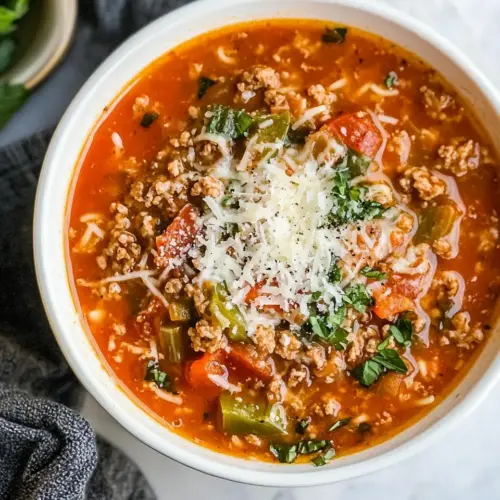
Stuffed Pepper Soup
Stuffed Pepper Soup is a comforting, savory bowl that blends browned ground beef, tender rice, and diced bell peppers in a rich tomato and beef broth. This creamy yet brothy soup makes an easy weeknight dinner, offering hearty textures and balanced flavors that develop even more overnight. Try it when you want a satisfying, family friendly meal that reheats beautifully.
Equipment
- 6-quart Dutch Oven
Ingredients
- 1 tablespoon olive oil Sauté in a skillet to provide a flavorful fat base and help brown aromatics; enhances mouthfeel and carries flavors throughout the soup when heated gently.
- 1 tablespoon butter (unsalted) Melt into the pan to add richness and a silky finish; combines with olive oil to create a balanced cooking fat that deepens the soup’s savory profile.
- 1 pound ground beef Brown thoroughly to develop caramelized flavor and add hearty protein; renders fat that complements vegetables and contributes to the soup’s satisfying texture.
- 1 large onion (chopped) Chop finely and soften until translucent to add sweetness and depth; releases natural sugars that build the aromatic foundation of the soup.
- 1 medium carrot (chopped) Dice and sweat until tender to introduce subtle sweetness and texture contrast; helps round out flavors and adds body to the vegetable base.
- 2 stalks celery (chopped) Chop and cook until softened to contribute mild herbal notes and crunch; absorbs surrounding flavors and provides aromatic support to the broth.
- 1 medium green bell pepper (chopped) Chop and sauté to bring crisp, slightly bitter green pepper flavor; adds classic stuffed-pepper taste and vibrant color to the soup.
- 1 medium red bell pepper (chopped) Chop and cook to introduce sweet, fruity pepper notes and bright color; balances the green pepper and enhances the visual and flavor complexity.
- 3 cloves garlic (minced) Mince finely and add near the end of sautéing to impart pungent, garlicky aroma; intensifies savory notes and brightens the overall flavor profile.
- 1 tablespoon tomato paste Stir in and cook briefly to concentrate tomato flavor and bind with fats; adds umami depth and a hint of sweetness to thicken the broth slightly.
- 3/4 cup long grain rice (uncooked) Rinse and add uncooked to the simmering soup to absorb flavorful liquids; provides hearty grains that swell and create a comforting, filling texture.
- 1/2 teaspoon dried oregano Sprinkle in to add warm, slightly bitter herbal complexity; complements tomato and beef flavors while contributing traditional Italian seasoning hints.
- 1/2 teaspoon dried basil Sprinkle in to lend sweet, floral herbiness and subtle peppery undertones; works with oregano to create a rounded Mediterranean seasoning profile.
- salt and pepper (to taste) Season generously to enhance all flavors and balance acidity and richness; used to taste to ensure the soup is well-rounded and palatable.
- 1 cube beef bouillon Dissolve into the broth to boost concentrated beefy umami and deepen savory notes; acts as a convenient seasoning cube to intensify stock flavor.
- 6 cups beef broth (low sodium) Pour as the primary liquid to form the soup base and supply savory depth; low-sodium choice allows control over final saltiness while sustaining rich beef character.
- 28 ounces diced tomatoes (1 can) Add canned tomatoes with juices to contribute bright acidity, body, and tomato flavor; helps create the classic stuffed-pepper taste and adds chunky texture.
- Parmesan cheese (grated, for serving) Grate over finished bowls to add nutty, salty umami and a creamy finishing touch; enhances richness and provides a pleasant contrast to the savory broth.
Instructions
- In a large Dutch oven add the olive oil and butter and melt over medium heat. Add the ground beef and cook for about 3-5 minutes until the meat is browned, breaking it up as you cook.: You will hear an initial gentle sizzle as the olive oil and butter warm and the aroma of the fats will open up, releasing a rich scent. As the ground beef hits the pan, it should quickly lose its raw pink color; aim for small crumbles and even browning which creates those tiny browned bits that add depth to the finished broth. If the meat steams instead of browns, the pan is too crowded or not hot enough, and the soup will lack that caramelized flavor. A common mistake is stirring constantly; instead, let the meat sit undisturbed for short bursts so the fond develops. Visually, look for a deepening brown and a reduction in moisture in the pan, and smell that toasty, meaty aroma that tells you you are on the right track.
- Stir in the onion, carrots, celery, and bell peppers to the pot and cook for another 3 minutes until the onion softens. Add the garlic and cook for another 30 seconds until aromatic.: The vegetables should start to glisten as they sweat in the rendered fat, releasing sweet and vegetal notes. You want the onion to turn translucent, not browned, because it will continue cooking later; the carrot and celery should soften slightly but keep some bite. When you add the minced garlic , the scent will shift to a fragrant, warm note almost immediately; avoid overcooking garlic because it can become bitter. A typical misstep here is rushing the heat up too high, which can scorch the garlic or cause the peppers to lose texture. Keep your heat moderate and stir until the vegetables smell sweet and the pan gives off a gentle sizzling sound.
- Stir in the tomato paste and then the rice. Add in the dried oregano, basil, salt, pepper and beef bouillon. Pour in the beef broth, diced tomatoes and stir. Bring to a boil then reduce heat to simmer and cook for 30 minutes, stirring occasionally. The soup will thicken as the rice cooks.: As you mix in the tomato paste , you will notice the mixture darkening and taking on a richer tomato scent, which helps build umami. Adding the rice at this stage lets the grains absorb flavor from the start, and as the pot comes to a boil you'll see small bubbles forming that signal the transition to a vigorous simmer. The dried oregano and basil will rehydrate and release herbaceous aromas, and the beef bouillon amplifies savory notes. Once reduced to a simmer, the soup should emit steady tiny bubbles and a comforting steam; stirring occasionally prevents the rice from settling and sticking to the bottom. A common error is simmering too hard, which can over reduce the liquid and leave the rice gummy. Keep it at a gentle simmer and check the rice at the 25 minute mark to ensure it remains tender but not falling apart.
- Taste for seasoning and adjust as necessary with salt and pepper. If the soup is too thick, add more broth as necessary.: This is the moment when the bowl comes together, and you will notice the individual flavors harmonize into a cohesive whole. Use a spoon to sample the broth and pay attention to balance between acidity from the diced tomatoes , savoriness from the beef bouillon and richness from the browned ground beef . Adding salt late prevents oversalting, especially since the soup reduces as it simmers. If the mouthfeel feels overly dense, the solution is simple: add a splash of warm beef broth to loosen it while preserving flavor. A pitfall here is adding too much seasoning at once; instead, season gradually and taste after each adjustment. Trust your senses: the right balance will feel lively but rounded.
- Ladle into bowls and serve with grated Parmesan cheese.: As you ladle, notice the steam rising and the way the spoon carries the thickened broth with soft grains of rice and flecks of herbs and vegetables. The final addition of grated Parmesan cheese will melt into the warm liquid, creating a silky sheen and a salty, nutty lift on the palate. One common mistake is adding the cheese too early, which will cause it to disperse and lose its finishing impact; save it for the bowl so each diner gets that distinct, melty touch. Serve while still hot so the aromas and textures are at their most vivid, and encourage guests to stir their cheese in to fully integrate that last layer of flavor.
Notes
- Brown the meat properly: Ensure the ground beef is in a hot pan with enough room to sear. Let it sit briefly between stirs to create browned bits that deepen the soup’s flavor profile.
- Make it plant based: Omit the butter and Parmesan cheese, replace the ground beef with a vegan ground alternative or cooked lentils, and use vegetable broth instead of beef broth for a flavorful meat free version.
- Control salt levels: Use low sodium beef broth and add salt at the end; remember that the soup reduces and intensifies while simmering.
- Adjust thickness on the fly: If the soup becomes too thick as the rice absorbs liquid, stir in warm beef broth a little at a time until you reach your desired consistency.
- Advance prep and storage: This soup keeps well; cool it quickly and refrigerate for up to five days or freeze in airtight containers for up to three months. Reheat gently and add a splash of broth if it tightens up.