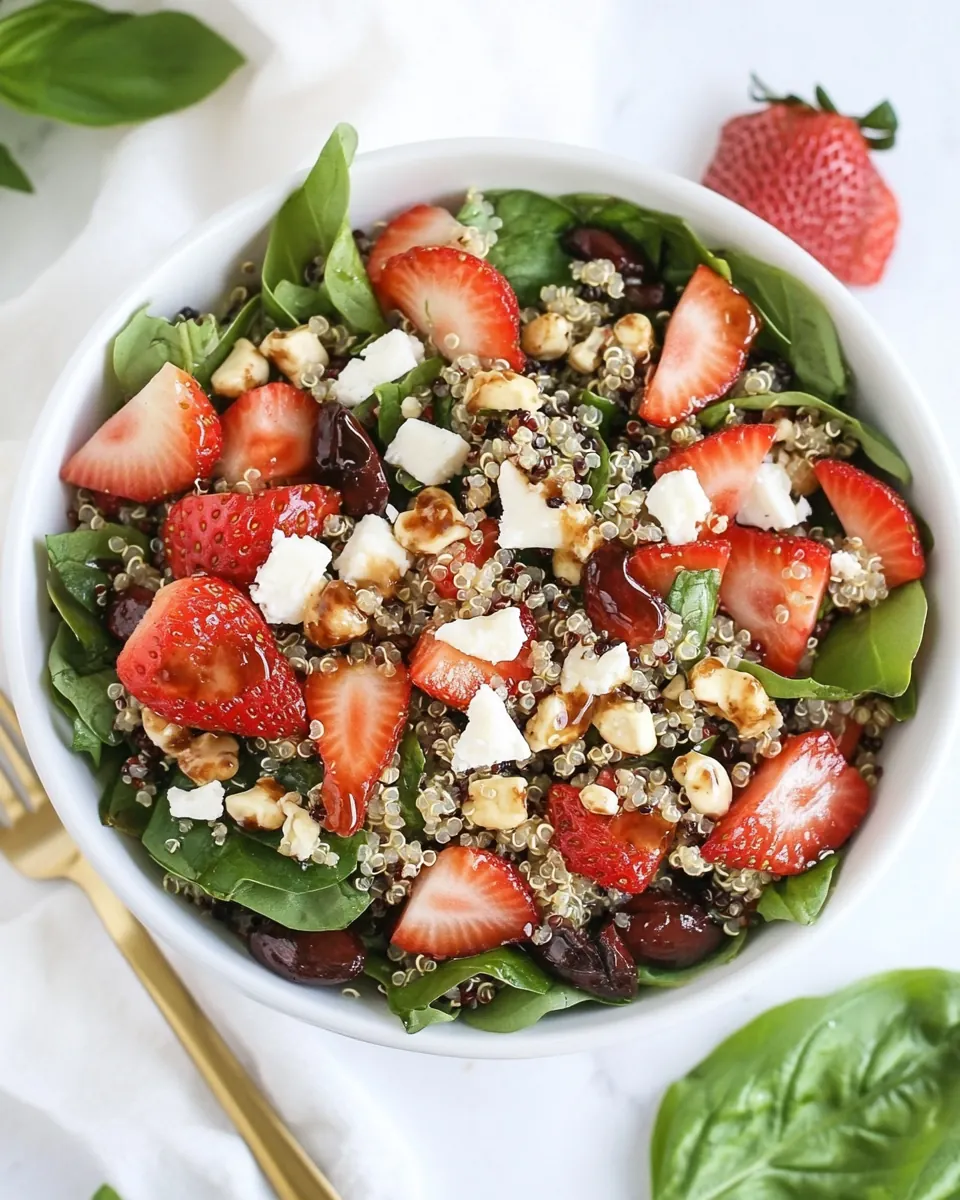
Strawberry Goat Cheese Quinoa Salad
Strawberry Goat Cheese Quinoa Salad is one of those recipes I reach for when I want something bright, textured, and a little cheeky on the palate.
I remember the first time I layered quinoa with handfuls of peppery arugula and a scattering of ruby strawberries, thinking it was too pretty to toss. As I drizzled the dressing, the scent of balsamic vinegar and olive oil filled the kitchen and I felt instantly reassured that simple ingredients can sing together. Over the years I have packed this bowl for picnics, brought it to potlucks, and served it on quiet weeknight dinners, always adjusting a little here and there depending on who I am cooking for.
What keeps me coming back to Strawberry Goat Cheese Quinoa Salad is the contrast I get in every bite, creamy and tangy goat cheese next to crunchy sprouted grains, and the herbal lift from chopped fresh mint. It feels like a composed dish, but it comes together in almost no time, which is why I often make it when I want to impress without the fuss. Each time I prepare it I learn a small nuance about balance, like when to hold the dressing until just before serving, or how ripe the strawberries should be to make the dressing shine.
Recipe Snapshot
15 mins
15 mins
Easy
250 kcal
American
Gluten-Free, Vegan
Salads
large mixing bowl, Balsamic Vinegar, Extra Virgin Olive Oil
The Beauty of This Strawberry Goat Cheese Quinoa Salad
Flavor Harmony
I love how Strawberry Goat Cheese Quinoa Salad balances contrasting flavors. The goat cheese brings tang and creaminess, while the strawberries add natural sweetness, and a simple vinaigrette ties everything together. That interplay makes each forkful interesting, and I often find myself closing my eyes to savor it.
Textural Delight
The combination of fluffy quinoa, crisp arugula, and crunchy sprouted grains keeps the salad lively. I appreciate textures that change from bite to bite, so this recipe always feels satisfying even as a light meal. The little pops from the strawberries and the crumble of goat cheese make it feel like a thoughtfully composed plate.
Speed and Simplicity
What sells me on this salad is how quickly it comes together. With mostly ready to use elements like cooked quinoa and a blender dressing you can have this ready in a short time. I often rely on it for easy weeknight dinners or when I need a dish to bring to a friend that still looks like effort was made.
Versatility
I find this dish adapts well to occasions. It works as a light lunch, a side for a casual dinner, or a bright option for spring gatherings. The components are flexible, and small swaps keep the core idea intact, which is why I keep it in frequent rotation.
Seasonal Brightness
Since this recipe showcases fresh strawberries and herbs, it captures spring flavors beautifully. I savor it when fruit is at its best, and the result always feels celebratory yet grounded. For me, that seasonal quality makes it a go to that never feels tired.
What Goes Into Strawberry Goat Cheese Quinoa Salad
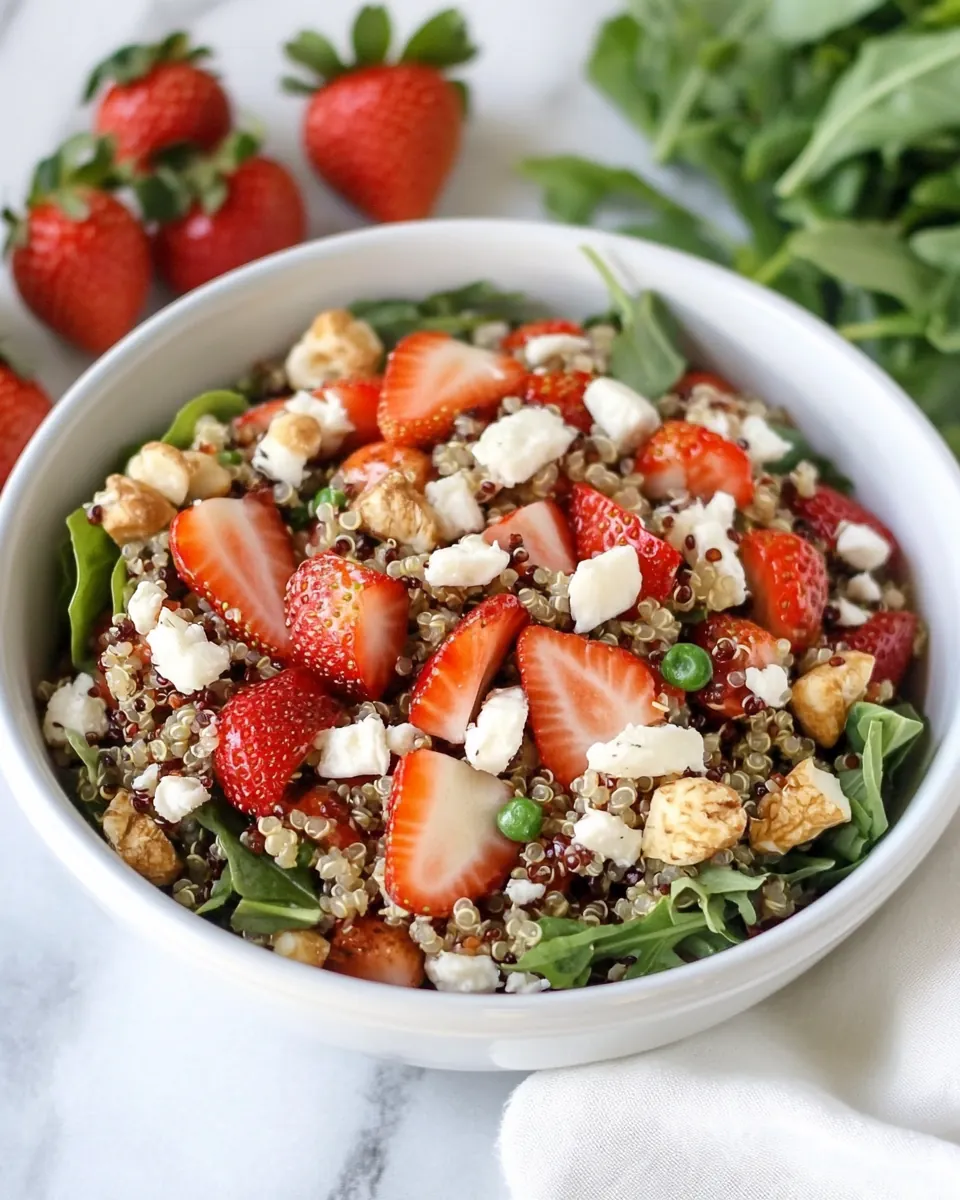
These ingredients are chosen to complement one another, offering a mix of creamy, sweet, peppery, and crunchy components. The key players are the cooked quinoa that provides a nutty base, the peppery bite of arugula, the juicy sweetness of strawberries, and the creamy tang of goat cheese. Dressing components bring the whole thing together while crunchy sprouted grains add satisfying texture.
- 2 cups arugula: Adds a peppery, leafy base that brightens the salad and provides a light, crisp texture; pairs well with sweet strawberries and tangy goat cheese. Helps balance richer components while contributing color and volume to each serving.
- 1 cup cooked tricolored quinoa: Provides a nutty, slightly chewy grain component that adds protein and bulk to the salad; tricolored quinoa also offers visual appeal with contrasting hues. Serves as the hearty element that soaks up the dressing and complements fresh produce.
- 1/2 cups sliced strawberries: Contributes juicy, sweet-tart bursts of flavor dispersed throughout the salad; sliced strawberries meld with the quinoa and greens for a refreshing contrast. Enhances both the aroma and natural sweetness of the dish while adding soft texture.
- 1/3 cup crumbled goat cheese: Delivers a creamy, tangy richness that contrasts with the sweet strawberries and peppery arugula; crumbled goat cheese adds savory depth. Offers a smooth mouthfeel that ties together the salad’s flavors and provides subtle saltiness.
- 1/4 cup chopped fresh mint, depending on love of mint: Introduces a fragrant, cooling herb note that lifts the overall flavor; amount can be adjusted to taste for more or less mint presence. Adds bright green color and aromatic freshness which complements fruit and cheese components.
- 1/4 cup crunchy sprouted grains: Adds a crunchy, wholesome element with a toasty grain flavor that contrasts soft textures; sprouted grains bring extra fiber and subtle nuttiness. Provides textural interest and a rustic component that makes the salad more satisfying.
- 6 medium sized fresh strawberries: Provides whole, fresh strawberries that can be halved or left intact for garnish and extra fruitiness; offers concentrated sweetness and visual appeal. Can be used to top the salad or mixed in for additional bursts of flavor.
- 1/4 cup olive oil: Serves as the primary fat in the dressing, coating ingredients and carrying flavors; olive oil adds smooth, fruity richness. Helps emulsify the balsamic and honey into a cohesive dressing that enhances mouthfeel and satiety.
- 2 tablespoons balsamic vinegar: Adds bright acidity and a sweet-tangy backbone to the dressing, balancing oil and honey; balsamic vinegar enhances the salad’s fruit and cheese notes. Provides depth of flavor and a slightly syrupy finish when combined with other dressing components.
- 1 tablespoon honey: Contributes natural sweetness and helps emulsify the dressing when whisked with oil and vinegar; honey rounds out acidity and complements the strawberries. Adds a subtle floral note and helps glaze components for a cohesive flavor profile.
Putting Together Strawberry Goat Cheese Quinoa Salad
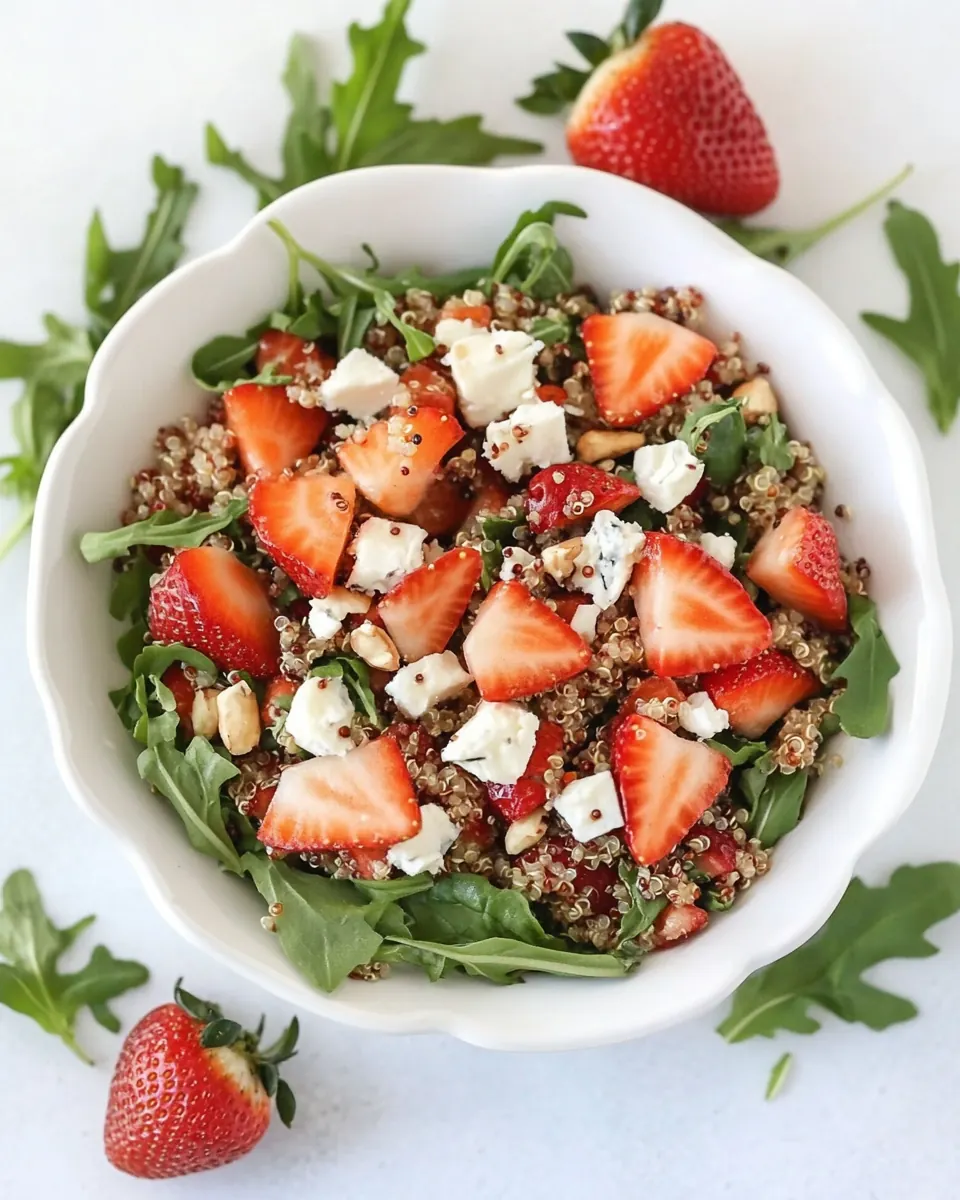
Bringing this salad together is comforting and quick, and each step rewards you with tactile and aromatic feedback. The directions below follow the original sequence but expand on sensory cues, technique reasoning, and small troubleshooting tips so you can feel confident at the bowl.
- In a large bowl gently mix together all ingredients.: The moment you start combining these elements you will notice the aroma of the fresh strawberries and the soft perfume of chopped mint . As you fold the ingredients, aim for even distribution without bruising the leaves, using a gentle lifting motion so the arugula stays airy. The mix should look vibrant, with contrasting colors and textures visible throughout. Why this matters: gentle mixing keeps the goat cheese from turning into a paste and preserves the integrity of each component. A common error is overworking the salad, which leads to wilted greens and mashed strawberries ; to avoid this, stop as soon as the ingredients look evenly spread.
- Gently toss with dressing just until the salad is moistened. You can also serve the dressing on the side if desired.: When the dressing meets the salad you will see a light sheen on the leaves and grains, not a pool of liquid. Tossing lightly ensures each bite has flavor without becoming soggy. The sound is subtle, a soft rustle as leaves glide over grains, and the scent of balsamic vinegar will lift as you move the bowl. Why this matters: minimal tossing prevents the arugula from losing its texture and keeps the sprouted grains crunchy. A troubleshooting tip: if the salad becomes too wet, blot excess liquid with a paper towel and serve immediately, or serve dressing on the side next time.
- In a blender add strawberries, olive oil, balsamic vinegar, and honey. Blend on high until smooth. If the dressing is too thick simply add a bit more oil.: As you drop the ingredients into the blender, notice how the fresh strawberries release a bright berry scent which pairs with the fruity edge of the olive oil . This mix creates a silky dressing that will coat the salad components without overpowering them. The blender’s hum will intensify as the fruit breaks down and the oil emulsifies, producing a glossy texture. Why this technique matters: blending ensures the dressing is smooth and well combined so it adheres to the quinoa and leaves evenly. One pitfall is adding cold ingredients straight from the fridge which can thicken the dressing; if that happens, let it sit a few minutes or add a splash more olive oil .
- Blend on high until smooth.: As the blades spin, watch for a uniform color and listen for an even tone in the motor that indicates the mixture is fully incorporated. The dressing should be free of large berry pieces and have a slightly thick, pourable consistency. Why this step matters: a smooth dressing disperses evenly, ensuring every forkful has balance between sweet and tangy. If the dressing appears grainy or separated, scrape the sides and pulse a few more times; avoid over-blending to prevent overheating sensitive flavors.
- If the dressing is too thick simply add a bit more oil.: Adjusting texture is as much about feel as measurement, so add small amounts of olive oil and evaluate the viscosity. A thinner dressing will cling without pooling, and it will highlight the natural juices from the strawberries . Why this matters: the right consistency prevents clumps and makes tossing easier. A frequent mistake is adding water to thin the dressing which dilutes flavor; instead, use the olive oil to maintain richness.
Ways to Customize
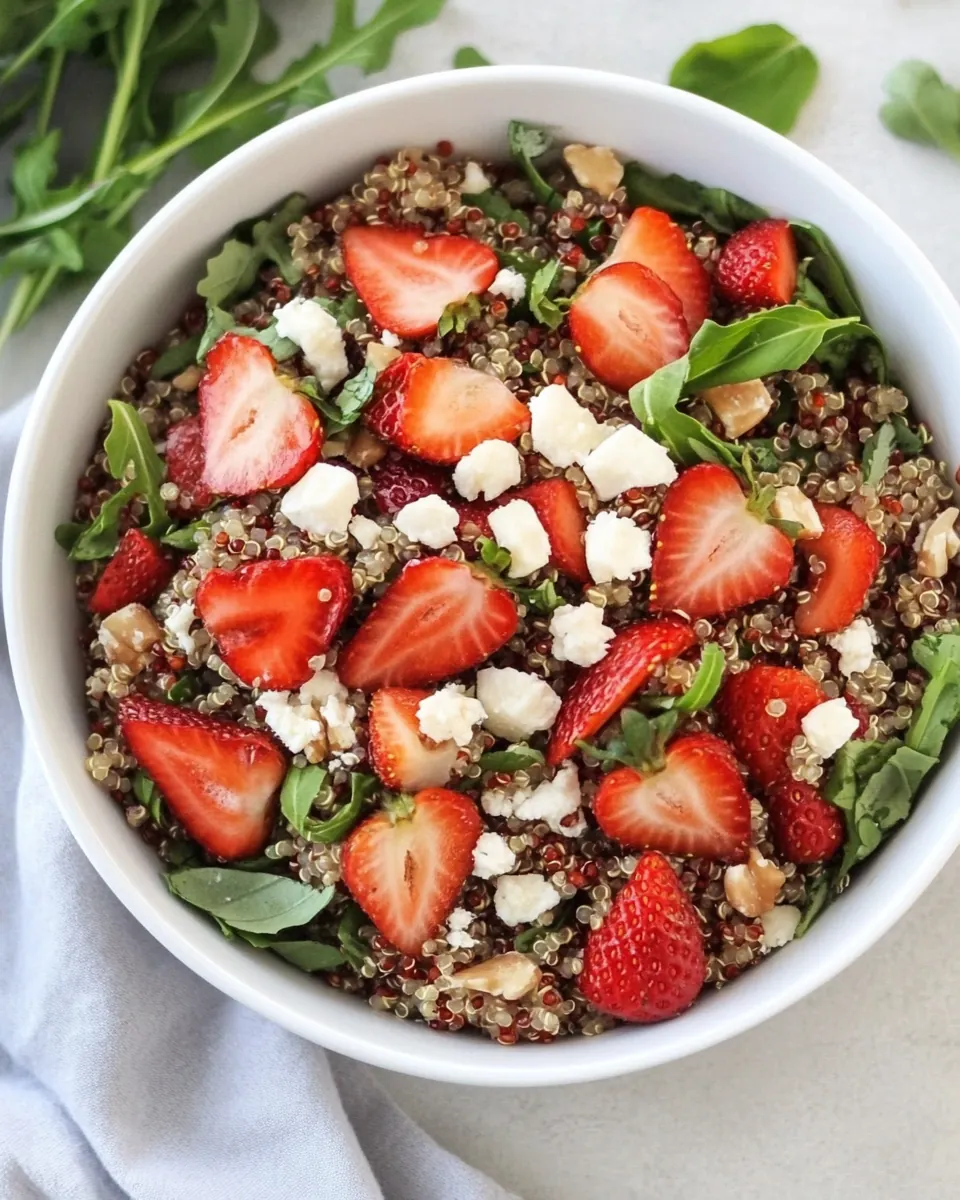
This salad invites personalization while keeping its core structure intact. Below are practical ideas and small changes that let you tailor flavors, textures, or presentation for different occasions.
- Boost the Grain Base: Increase the amount of quinoa for a more filling salad, especially if you want it to serve as a main dish for lunch.
- Control the Herb Intensity: Reduce or increase the mint according to preference; finely chopping helps it integrate without dominating.
- Adjust Sweetness: Modify the amount of honey in the dressing to match the ripeness of your strawberries, using less when berries are very sweet.
- Crunch Management: If sprouted grains are not available, substitute with toasted seeds but add them just before serving to retain crunch.
- Presentation Touches: Reserve a few whole strawberries to fan on top for a polished look when serving to guests.
- Make Ahead Tips: Prepare the components separately and combine them just before serving to keep textures optimal.
Serving Suggestions
This salad works beautifully across different meals and settings, from light lunches to springtime gatherings. Below are ideas for pairings, occasions, and practical storage guidance laid out to make serving simple and stylish.
- Casual Lunch: Serve a generous portion of Strawberry Goat Cheese Quinoa Salad with a slice of crusty bread for a relaxed midday meal.
- Spring Brunch: Present the salad as a colorful side alongside egg dishes, the bright strawberries and herbs pairing especially well with soft cooked eggs.
- Picnic Friendly: Pack components separately, keeping the dressing and sprouted grains apart until ready to eat to preserve texture.
- Light Dinner: Offer the salad as a side with a simply grilled vegetable platter, letting its fresh flavors balance heavier mains.
- Occasion Use: For gatherings like spring potlucks or holiday luncheons, place the dressing on the side and allow guests to dress their portions for freshness.
- Storage: Store leftovers in an airtight container for up to two days, keeping the dressing separate to prevent wilting. Before serving again, toss gently and add reserved sprouted grains to restore crunch.
- Seasonal Pairings: Lean into spring produce and fresh herbs when they are available to maximize brightness and aroma.
FAQ
Conclusion
This salad combines bright seasonal fruit, tangy cheese, and nutty grains for a balanced and memorable plate. I encourage you to give it a try because it is both simple to assemble and flexible enough for many occasions. Serve it when you want something that feels thoughtful without a lot of fuss, and enjoy the fresh contrasts in each bite.
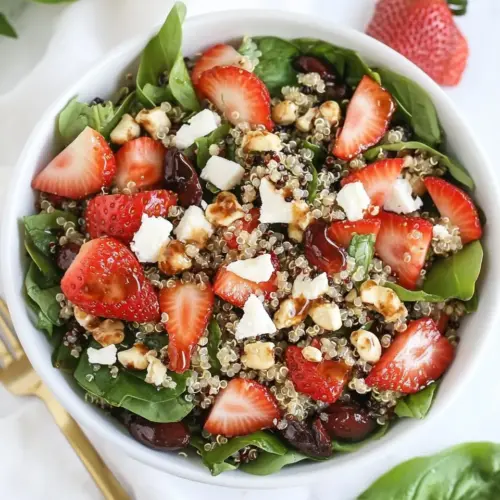
Strawberry Goat Cheese Quinoa Salad
Equipment
- Large Mixing Bowl
- Balsamic Vinegar
- Extra Virgin Olive Oil
Ingredients
- 2 cups arugula Adds a peppery, leafy base that brightens the salad and provides a light, crisp texture; pairs well with sweet strawberries and tangy goat cheese. Helps balance richer components while contributing color and volume to each serving.
- 1 cup cooked tricolored quinoa Provides a nutty, slightly chewy grain component that adds protein and bulk to the salad; tricolored quinoa also offers visual appeal with contrasting hues. Serves as the hearty element that soaks up the dressing and complements fresh produce.
- 1/2 cups sliced strawberries Contributes juicy, sweet-tart bursts of flavor dispersed throughout the salad; sliced strawberries meld with the quinoa and greens for a refreshing contrast. Enhances both the aroma and natural sweetness of the dish while adding soft texture.
- 1/3 cup crumbled goat cheese Delivers a creamy, tangy richness that contrasts with the sweet strawberries and peppery arugula; crumbled goat cheese adds savory depth. Offers a smooth mouthfeel that ties together the salad’s flavors and provides subtle saltiness.
- 1/4 cup chopped fresh mint, depending on love of mint Introduces a fragrant, cooling herb note that lifts the overall flavor; amount can be adjusted to taste for more or less mint presence. Adds bright green color and aromatic freshness which complements fruit and cheese components.
- 1/4 cup crunchy sprouted grains Adds a crunchy, wholesome element with a toasty grain flavor that contrasts soft textures; sprouted grains bring extra fiber and subtle nuttiness. Provides textural interest and a rustic component that makes the salad more satisfying.
- 6 medium sized fresh strawberries Provides whole, fresh strawberries that can be halved or left intact for garnish and extra fruitiness; offers concentrated sweetness and visual appeal. Can be used to top the salad or mixed in for additional bursts of flavor.
- 1/4 cup olive oil Serves as the primary fat in the dressing, coating ingredients and carrying flavors; olive oil adds smooth, fruity richness. Helps emulsify the balsamic and honey into a cohesive dressing that enhances mouthfeel and satiety.
- 2 tablespoons balsamic vinegar Adds bright acidity and a sweet-tangy backbone to the dressing, balancing oil and honey; balsamic vinegar enhances the salad’s fruit and cheese notes. Provides depth of flavor and a slightly syrupy finish when combined with other dressing components.
- 1 tablespoon honey Contributes natural sweetness and helps emulsify the dressing when whisked with oil and vinegar; honey rounds out acidity and complements the strawberries. Adds a subtle floral note and helps glaze components for a cohesive flavor profile.
Instructions
- In a large bowl gently mix together all ingredients.: The moment you start combining these elements you will notice the aroma of the fresh strawberries and the soft perfume of chopped mint . As you fold the ingredients, aim for even distribution without bruising the leaves, using a gentle lifting motion so the arugula stays airy. The mix should look vibrant, with contrasting colors and textures visible throughout. Why this matters: gentle mixing keeps the goat cheese from turning into a paste and preserves the integrity of each component. A common error is overworking the salad, which leads to wilted greens and mashed strawberries ; to avoid this, stop as soon as the ingredients look evenly spread.
- Gently toss with dressing just until the salad is moistened. You can also serve the dressing on the side if desired.: When the dressing meets the salad you will see a light sheen on the leaves and grains, not a pool of liquid. Tossing lightly ensures each bite has flavor without becoming soggy. The sound is subtle, a soft rustle as leaves glide over grains, and the scent of balsamic vinegar will lift as you move the bowl. Why this matters: minimal tossing prevents the arugula from losing its texture and keeps the sprouted grains crunchy. A troubleshooting tip: if the salad becomes too wet, blot excess liquid with a paper towel and serve immediately, or serve dressing on the side next time.
- In a blender add strawberries, olive oil, balsamic vinegar, and honey. Blend on high until smooth. If the dressing is too thick simply add a bit more oil.: As you drop the ingredients into the blender, notice how the fresh strawberries release a bright berry scent which pairs with the fruity edge of the olive oil . This mix creates a silky dressing that will coat the salad components without overpowering them. The blender’s hum will intensify as the fruit breaks down and the oil emulsifies, producing a glossy texture. Why this technique matters: blending ensures the dressing is smooth and well combined so it adheres to the quinoa and leaves evenly. One pitfall is adding cold ingredients straight from the fridge which can thicken the dressing; if that happens, let it sit a few minutes or add a splash more olive oil .
- Blend on high until smooth.: As the blades spin, watch for a uniform color and listen for an even tone in the motor that indicates the mixture is fully incorporated. The dressing should be free of large berry pieces and have a slightly thick, pourable consistency. Why this step matters: a smooth dressing disperses evenly, ensuring every forkful has balance between sweet and tangy. If the dressing appears grainy or separated, scrape the sides and pulse a few more times; avoid over-blending to prevent overheating sensitive flavors.
- If the dressing is too thick simply add a bit more oil.: Adjusting texture is as much about feel as measurement, so add small amounts of olive oil and evaluate the viscosity. A thinner dressing will cling without pooling, and it will highlight the natural juices from the strawberries . Why this matters: the right consistency prevents clumps and makes tossing easier. A frequent mistake is adding water to thin the dressing which dilutes flavor; instead, use the olive oil to maintain richness.
Notes
- Boost the Grain Base: Increase the amount of quinoa for a more filling salad, especially if you want it to serve as a main dish for lunch.
- Control the Herb Intensity: Reduce or increase the mint according to preference; finely chopping helps it integrate without dominating.
- Adjust Sweetness: Modify the amount of honey in the dressing to match the ripeness of your strawberries, using less when berries are very sweet.
- Crunch Management: If sprouted grains are not available, substitute with toasted seeds but add them just before serving to retain crunch.
- Presentation Touches: Reserve a few whole strawberries to fan on top for a polished look when serving to guests.
- Make Ahead Tips: Prepare the components separately and combine them just before serving to keep textures optimal.