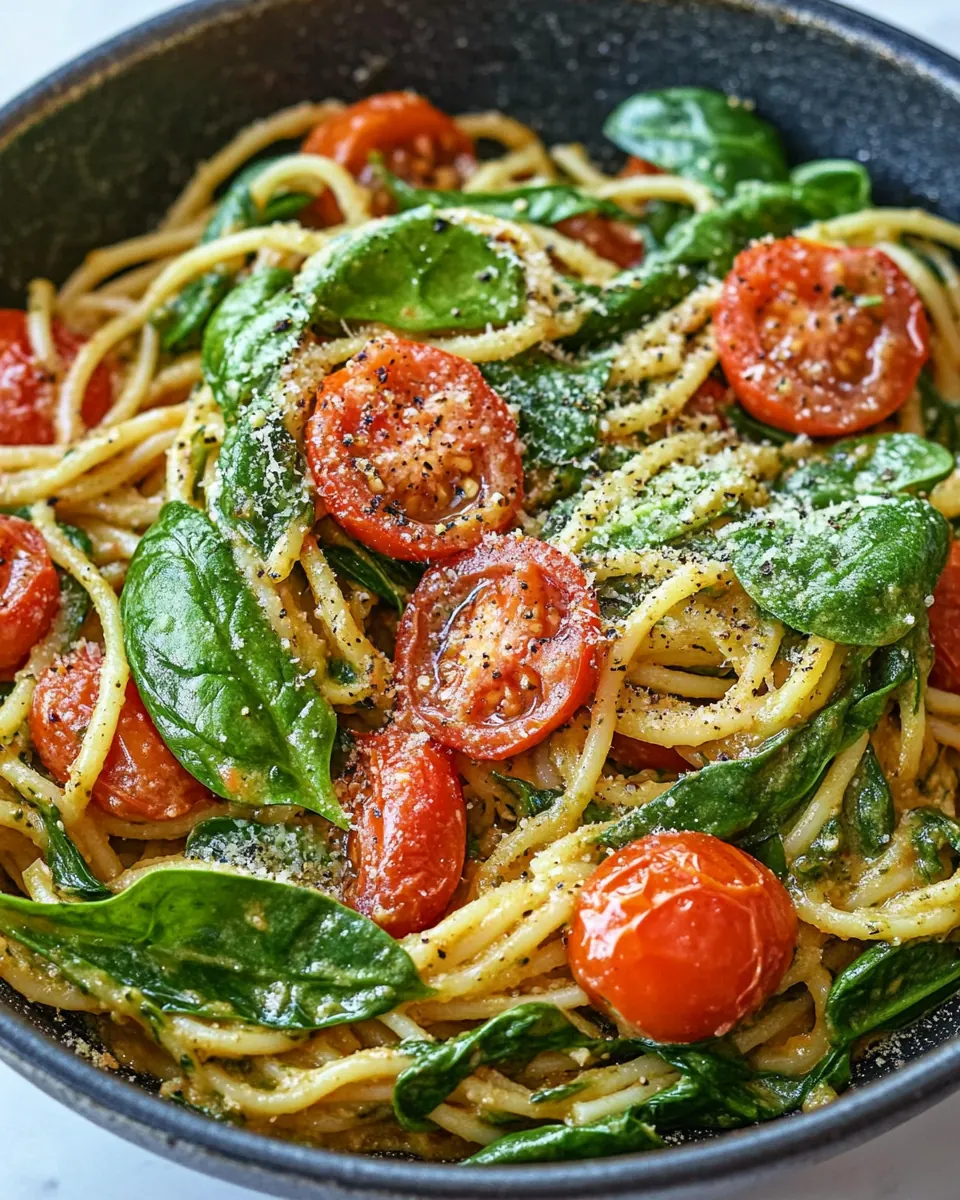
Skillet Spaghetti with Spinach and Tomatoes
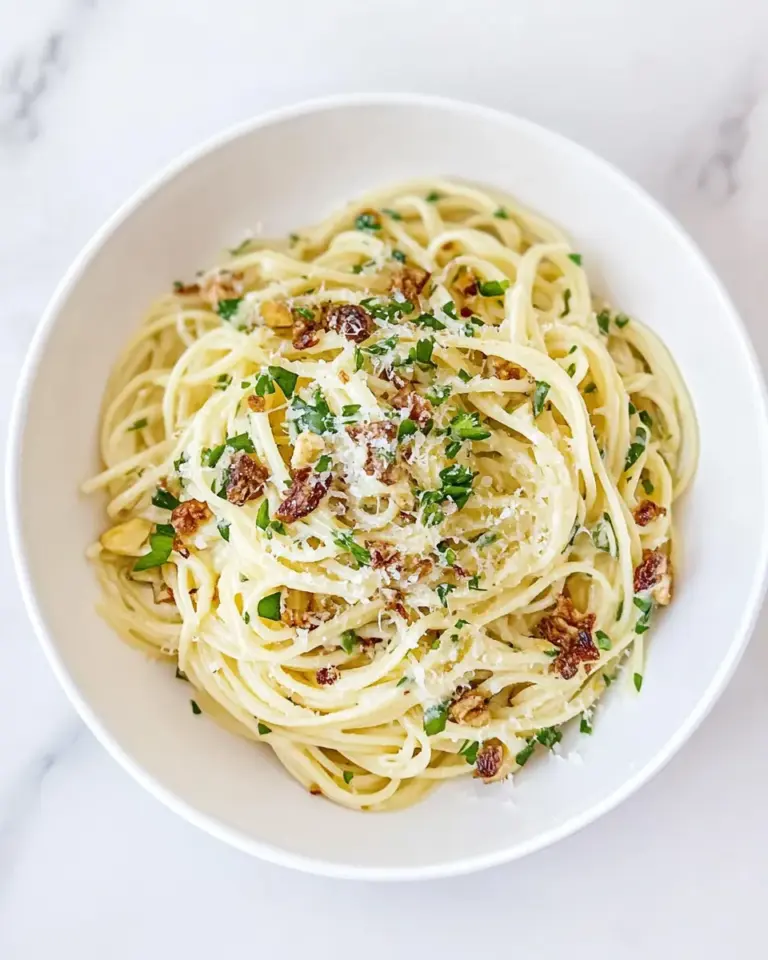
Skillet Spaghetti with Spinach and Tomatoes is one of those recipes I reach for when I want something bright, quick, and genuinely comforting. The first time I made it I was racing the clock after a long day, and the mix of roasted asparagus, sun warmed tomatoes, and a green, nutty pesto wrapped around spaghetti felt like a small victory. That evening the kitchen filled with the scent of caramelizing vegetables, and I remember thinking how simple ingredients can feel celebratory.
Over the years I have tweaked this dish to emphasize texture and balance. I love when the spaghetti holds a silky coat of sauce, while the roasted asparagus keeps a slight bite. The little crunchy walnut bits in the pesto give a satisfying contrast to the tender spinach, and the halved tomatoes pop with sweetness against the savory parmesan. It is the kind of meal that makes weeknight dining feel elevated, yet completely feasible.
What I also like is how forgiving this recipe is. If you have extra greens or a different pasta shape in the pantry, the core idea still sings. I tend to plate it family style, letting people help themselves from the skillet, which keeps the moment relaxed and communal. When you make Skillet Spaghetti with Spinach and Tomatoes, expect bright flavor, easy prep, and a dish that travels well from skillet to table.
Recipe Snapshot
40 mins
10 mins
30 mins
Easy
350 kcal
Italian
Vegan, Gluten-Free
Dinner
Large pot, Oven safe skillet or baking sheet, Blender, Colander
Why This Skillet Spaghetti with Spinach and Tomatoes Stands Out
Bright, seasonal flavors that still feel homey
I adore how Skillet Spaghetti with Spinach and Tomatoes uses spring produce to create something both fresh and familiar. The roasted asparagus and tomatoes add a roasted sweetness that complements the green, earthy notes of the spinach. This combination gives you a vegetables forward plate without sacrificing comfort.
Fast enough for weeknights, impressive for guests
We often need meals that are ready quickly but still feel thoughtful. From my experience, the technique of roasting while the spaghetti boils saves time and builds layers of flavor. You can have a restaurant worthy plate in about the time you would order takeout, which I appreciate on busy nights.
Texture variety keeps each bite interesting
The walnut flecks in the pesto provide crunch against the silky spaghetti and tender roasted asparagus. I like that contrast, because a single texture can become monotonous, while this mix makes every forkful lively. The occasional burst from a halved tomato is a joyful little surprise.
Simple pantry staples, big payoff
This recipe leans on ingredients most of us have or can get easily, like spaghetti, olive oil, and parmesan. It shows how a few thoughtful steps, like reserving pasta water and pureeing a walnut based pesto, can transform basic items into a cohesive, flavorful dish.
Flexible and forgiving
I’ve learned to tweak quantities and still end up with something delicious. If you want it looser, add more reserved pasta water. If you prefer more punch, increase the parmesan or lemon. That flexibility makes it a reliable go to in my kitchen.
Key Ingredients for Skillet Spaghetti with Spinach and Tomatoes
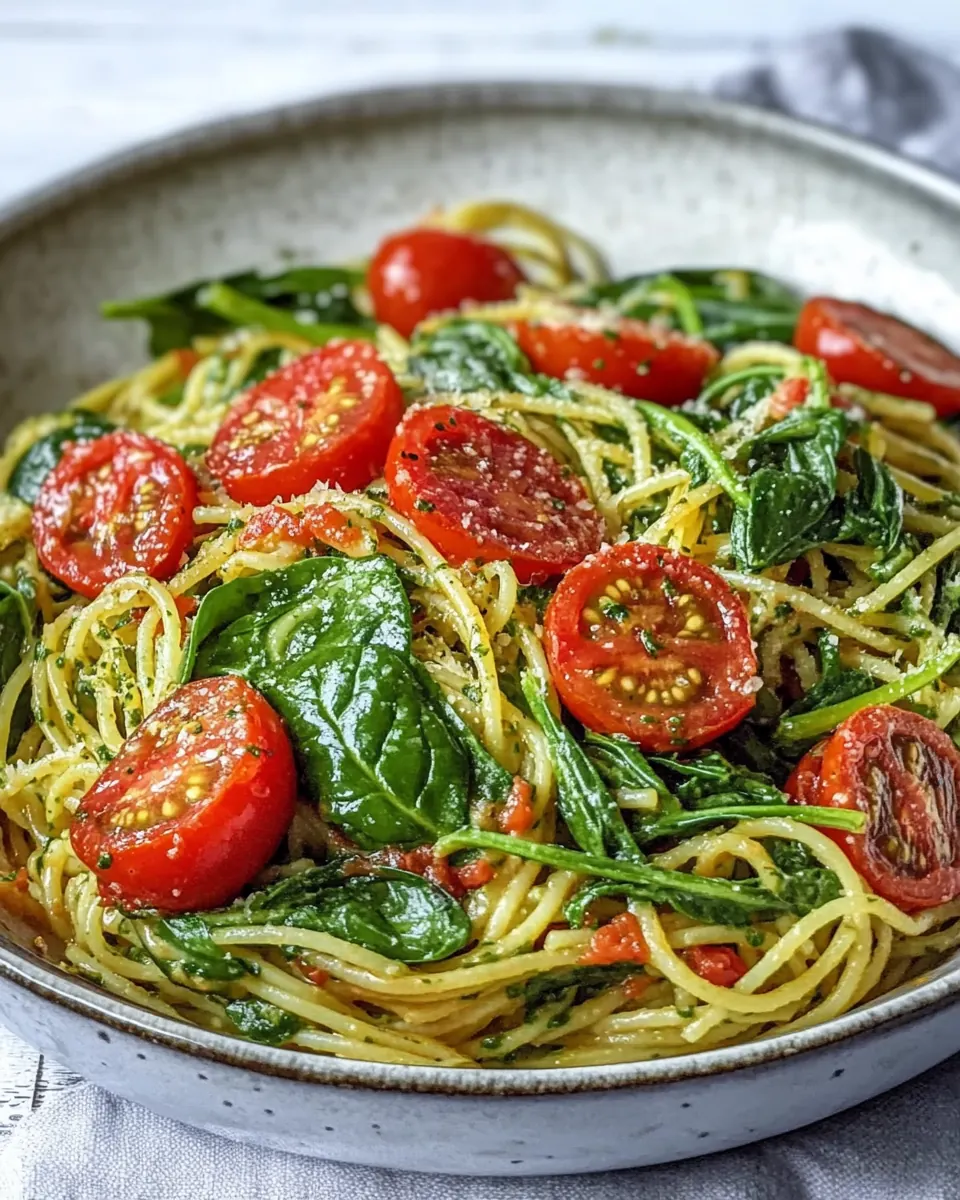
These ingredients are chosen to create harmony between bright, roasted vegetables and a creamy, green pesto. The key players are the spaghetti for body, the roasted asparagus and tomatoes for caramelized sweetness and bite, and the walnut pesto that ties everything together with richness and a little acidity from lemon. Each element plays a clear role so the final dish feels balanced.
- 10 ounces whole-grain spaghetti or high protein (your preference): Cooked to al dente and used as the primary carbohydrate, providing structure and substance to the skillet dish; absorbs sauce flavors and binds other ingredients together for a cohesive meal.
- 3 cups spinach leaves baby or regular spinach, bottom stems removed, divided, loosely packed: Wilted and divided between early and late additions to supply bright leafy texture and nutrients; contributes color, mild earthy flavor, and a tender mouthfeel when combined with warm pasta.
- 1 1/2 cups cherry tomatoes or grape tomatoes, halved: Halved and added for bursts of sweet acidity and juiciness; provides pops of fresh tomato flavor and balances richer elements while roasting slightly in the skillet.
- 1 bunch asparagus cleaned, hard bottoms (about 2 inches) removed, and cut into 2-inch pieces: Trimmed and cut into 2-inch pieces to add a crisp-tender vegetable component; offers a slightly grassy, fresh bite and pairs well with the pasta's texture when sautéed.
- 1 garlic clove minced: Finely minced to release aromatic oils and deliver a savory, pungent background note; infuses the dish with depth and enhances the flavors of tomatoes and greens.
- 1/3 cup walnuts raw or toasted: Chopped or left in small pieces to contribute crunchy texture and nutty flavor; can be toasted or used raw to add healthy fats and a satisfying contrast to soft ingredients.
- 1/3 cup parmesan freshly grated: Freshly grated to provide salty, umami complexity and a creamy finish when stirred into the hot pasta; enhances overall savoriness and helps bind sauce elements.
- 1/2 tablespoon lemon juice freshly squeezed: Squeezed and added to brighten and lift the dish with citrus acidity; cuts through richness and complements both greens and tomatoes for a balanced flavor profile.
- 1/8 teaspoons salt: Measured and used sparingly to enhance overall taste and season other components; helps bring out natural flavors without overpowering the delicate greens and tomatoes.
- 1/8 teaspoon black pepper: Ground and added to provide subtle heat and aromatic sharpness; complements the salt and lemon while rounding out the savory profile of the skillet.
- 1/4 cup water: Poured to create a small amount of cooking liquid that helps deglaze the pan and allow ingredients to steam together; aids in softening vegetables and melding flavors.
- 1/2 tablespoon extra virgin olive oil: Drizzled to sauté and lightly coat ingredients while delivering fruity, healthy fat; assists in flavor release from aromatics and contributes a glossy finish to the pasta.
Instructions for Skillet Spaghetti with Spinach and Tomatoes
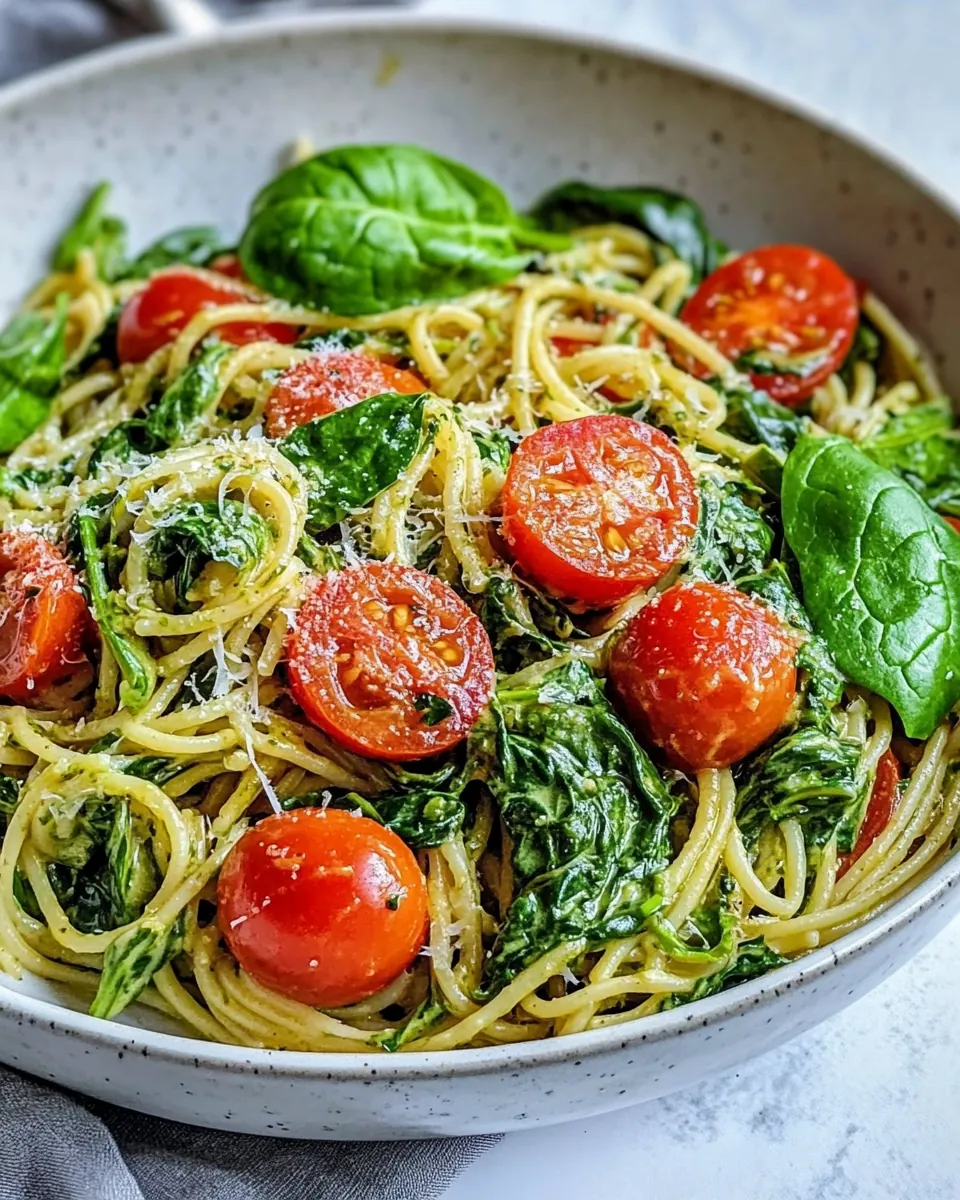
I like to approach these instructions as a rhythm of simultaneous tasks, so the roasting and boiling overlap and come together smoothly. Below, each step is expanded with sensory cues, the reason behind the technique, and a troubleshooting note to help you get it right.
- Preheat oven to 400 degrees.: Begin by heating the oven until it reaches the correct temperature so the asparagus and tomatoes roast evenly and develop those pockets of caramelization, you will smell the oven warming and the air feel a touch dryer in the kitchen, which primes the vegetables to brown rather than steam, and a common issue is putting cold pans in too early which can delay browning and lead to limp texture.
- Boil and drain pasta according to package directions, reserving 1/4 to 1/2 cup of the pasta water for last step. Meanwhile, place asparagus and halved tomatoes in an oven-safe skillet or baking sheet. Drizzle with olive oil and sprinkle with salt and pepper. Roast for about 15 minutes, until vegetables have browned in places and asparagus is tender. Remove from the oven.: While the oven heats, bring a pot of water to a rolling boil and add a generous pinch of salt , then cook the spaghetti until it is al dente, when you drain the pasta keep some of the starchy water as it acts like a binder, giving the pesto body and helping it cling to each strand, and avoid rinsing the pasta which would wash away that starch and cool the noodles.
- While pasta and veggies are cooking, add 1-1/2 cups of spinach and pesto ingredients (except walnuts) to blender. Puree on high until a smooth consistency is reached. Add the walnuts and puree again until smooth (there can be some coarse walnut pieces remaining).: Arrange the cut asparagus and halved tomatoes in a single layer so they roast rather than steam, you should hear a faint sizzle as they hit the hot pan and notice edges browning and the tomato skins beginning to wrinkle, this browning develops savory depth, and be cautious of overcrowding which traps moisture and prevents caramelization.
- Toss pesto and pasta together. Add to skillet with the veggies, tossing to combine the veggies. Heat over low heat until the sauce coating the pasta is warmed. Add 1/4 cup pasta water while heating. Add additional to keep pasta sauce creamy, if necessary.: Blend the spinach , garlic , parmesan , lemon juice, olive oil , and a little water to form a vivid green base, the smell will be herbaceous and slightly tangy, then adding walnuts creates a nutty richness and slight grain for body, and a pitfall here is over thinning the sauce which dilutes flavor so keep a balance between creamy and concentrated.
- Once heated through, serve and enjoy!: At this stage the warm spaghetti meets the green pesto and roasted vegetables, stirring gently will create a glossy sauce that clings to the noodles, you will notice steam rising and a comforting meld of roasted and herby aromas, and if the mixture seems dry add the reserved pasta water in tablespoon amounts to reach a silky consistency, avoiding adding too much at once which can make the sauce watery.
- Once heated through serve and enjoy: As you plate, the dish should glisten and release a mix of nutty, roasted, and bright citrus notes, take a moment to taste for seasoning and add a sprinkle of parmesan if you want more umami, and a frequent mistake is serving immediately without tasting which can leave the dish under seasoned.
Tips for Success
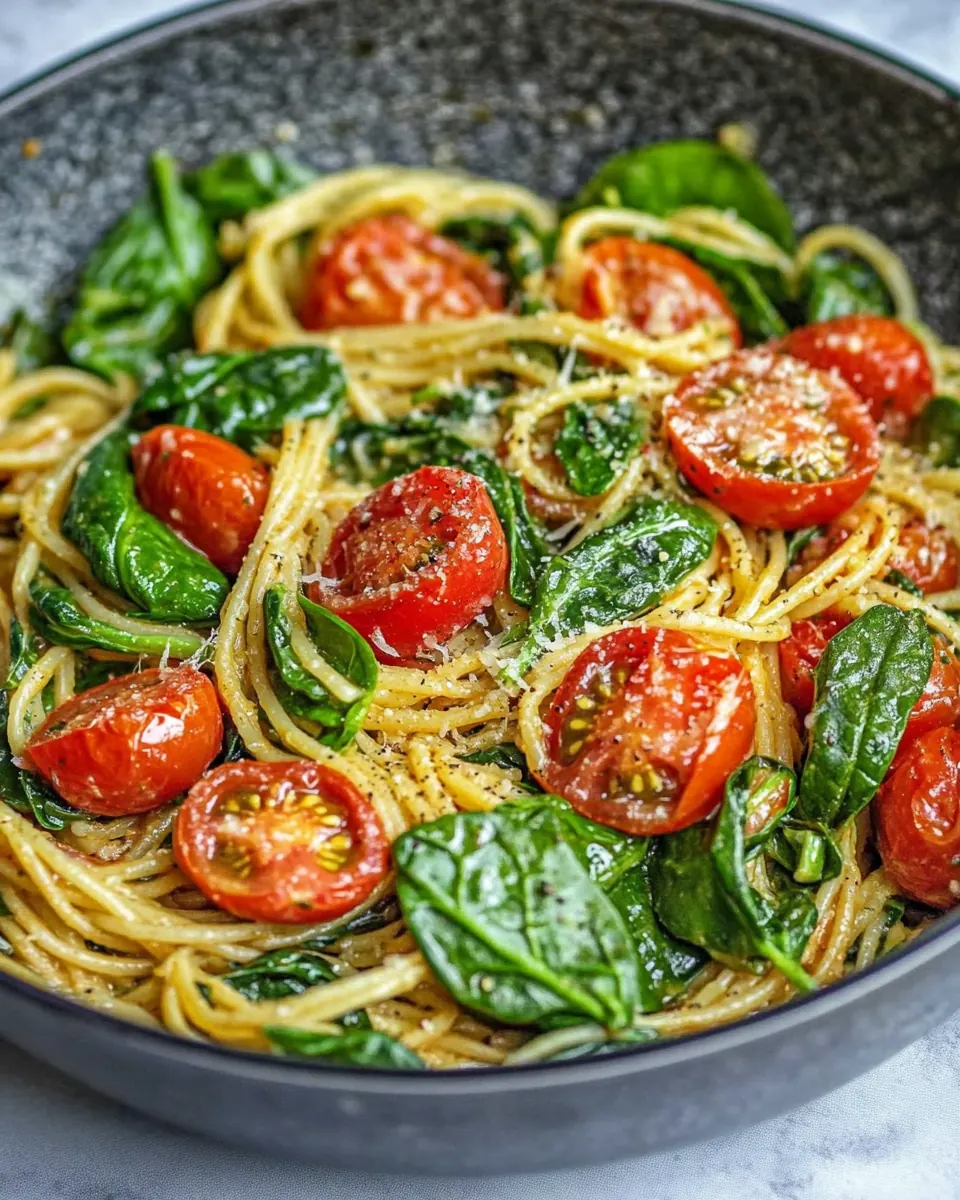
I find that small technique choices make a big difference with Skillet Spaghetti with Spinach and Tomatoes. These tips will help you get consistent texture and bright flavor every time.
- Start with hot equipment so vegetables roast properly and develop browning rather than steaming.
- Reserve pasta water because its starch helps the pesto cling to the spaghetti and creates a silky sauce.
- Adjust salt at the end after combining everything, since parmesan and roasted veggies can concentrate saltiness.
- Pulse walnuts to your liking if you prefer more texture leave some coarse pieces; blitz further for a creamier pesto.
- Use fresh lemon juice for the bright acidity it adds, bottled juice can mute the overall freshness.
Serving Options for Skillet Spaghetti with Spinach and Tomatoes
This dish is versatile enough for a casual weeknight or a laid back dinner with friends. Below are serving ideas, pairings, and storage notes to make the most of it.
- Family style plating serve the skillet at the center of the table so everyone can help themselves and the residual heat keeps the pasta warm.
- Light side salad pair with a crisp green salad dressed with lemon and olive oil to mirror the brightness of the pesto.
- Occasions ideal for spring dinners when asparagus is in season but works for weekly lunches as a make ahead option.
- Storage cool leftovers quickly and refrigerate in an airtight container for up to three days, reheat gently with a splash of water to restore silkiness.
- Seasonal pairing complement with early spring vegetables and a simple grain side if you need to stretch servings for a larger gathering.
FAQ
Conclusion
What makes this recipe special is the way simple ingredients transform into a cohesive, flavorful plate thanks to complementary textures and bright aromatics. I encourage you to give it a try, especially when spring produce is available, because it rewards a small amount of effort with a homey, restaurant quality result. Enjoy the warmth of roasted vegetables combined with the freshness of a green pesto and the comfort of spaghetti, and let the dish become one of your easy, dependable meals.
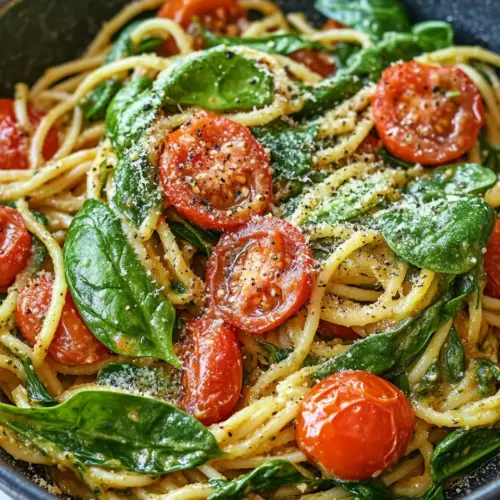
Skillet Spaghetti with Spinach and Tomatoes
Equipment
- Large Pot
- Oven safe skillet or baking sheet
- Blender
- Colander
Ingredients
- 10 ounces whole-grain spaghetti or high protein (your preference) Cooked to al dente and used as the primary carbohydrate, providing structure and substance to the skillet dish; absorbs sauce flavors and binds other ingredients together for a cohesive meal.
- 3 cups spinach leaves baby or regular spinach, bottom stems removed, divided, loosely packed Wilted and divided between early and late additions to supply bright leafy texture and nutrients; contributes color, mild earthy flavor, and a tender mouthfeel when combined with warm pasta.
- 1 1/2 cups cherry tomatoes or grape tomatoes, halved Halved and added for bursts of sweet acidity and juiciness; provides pops of fresh tomato flavor and balances richer elements while roasting slightly in the skillet.
- 1 bunch asparagus cleaned, hard bottoms (about 2 inches) removed, and cut into 2-inch pieces Trimmed and cut into 2-inch pieces to add a crisp-tender vegetable component; offers a slightly grassy, fresh bite and pairs well with the pasta's texture when sautéed.
- 1 garlic clove minced Finely minced to release aromatic oils and deliver a savory, pungent background note; infuses the dish with depth and enhances the flavors of tomatoes and greens.
- 1/3 cup walnuts raw or toasted Chopped or left in small pieces to contribute crunchy texture and nutty flavor; can be toasted or used raw to add healthy fats and a satisfying contrast to soft ingredients.
- 1/3 cup parmesan freshly grated Freshly grated to provide salty, umami complexity and a creamy finish when stirred into the hot pasta; enhances overall savoriness and helps bind sauce elements.
- 1/2 tablespoon lemon juice freshly squeezed Squeezed and added to brighten and lift the dish with citrus acidity; cuts through richness and complements both greens and tomatoes for a balanced flavor profile.
- 1/8 teaspoons salt Measured and used sparingly to enhance overall taste and season other components; helps bring out natural flavors without overpowering the delicate greens and tomatoes.
- 1/8 teaspoon black pepper Ground and added to provide subtle heat and aromatic sharpness; complements the salt and lemon while rounding out the savory profile of the skillet.
- 1/4 cup water Poured to create a small amount of cooking liquid that helps deglaze the pan and allow ingredients to steam together; aids in softening vegetables and melding flavors.
- 1/2 tablespoon extra virgin olive oil Drizzled to sauté and lightly coat ingredients while delivering fruity, healthy fat; assists in flavor release from aromatics and contributes a glossy finish to the pasta.
Instructions
- Preheat oven to 400 degrees.: Begin by heating the oven until it reaches the correct temperature so the asparagus and tomatoes roast evenly and develop those pockets of caramelization, you will smell the oven warming and the air feel a touch dryer in the kitchen, which primes the vegetables to brown rather than steam, and a common issue is putting cold pans in too early which can delay browning and lead to limp texture.
- Boil and drain pasta according to package directions, reserving 1/4 to 1/2 cup of the pasta water for last step. Meanwhile, place asparagus and halved tomatoes in an oven-safe skillet or baking sheet. Drizzle with olive oil and sprinkle with salt and pepper. Roast for about 15 minutes, until vegetables have browned in places and asparagus is tender. Remove from the oven.: While the oven heats, bring a pot of water to a rolling boil and add a generous pinch of salt , then cook the spaghetti until it is al dente, when you drain the pasta keep some of the starchy water as it acts like a binder, giving the pesto body and helping it cling to each strand, and avoid rinsing the pasta which would wash away that starch and cool the noodles.
- While pasta and veggies are cooking, add 1-1/2 cups of spinach and pesto ingredients (except walnuts) to blender. Puree on high until a smooth consistency is reached. Add the walnuts and puree again until smooth (there can be some coarse walnut pieces remaining).: Arrange the cut asparagus and halved tomatoes in a single layer so they roast rather than steam, you should hear a faint sizzle as they hit the hot pan and notice edges browning and the tomato skins beginning to wrinkle, this browning develops savory depth, and be cautious of overcrowding which traps moisture and prevents caramelization.
- Toss pesto and pasta together. Add to skillet with the veggies, tossing to combine the veggies. Heat over low heat until the sauce coating the pasta is warmed. Add 1/4 cup pasta water while heating. Add additional to keep pasta sauce creamy, if necessary.: Blend the spinach , garlic , parmesan , lemon juice, olive oil , and a little water to form a vivid green base, the smell will be herbaceous and slightly tangy, then adding walnuts creates a nutty richness and slight grain for body, and a pitfall here is over thinning the sauce which dilutes flavor so keep a balance between creamy and concentrated.
- Once heated through, serve and enjoy!: At this stage the warm spaghetti meets the green pesto and roasted vegetables, stirring gently will create a glossy sauce that clings to the noodles, you will notice steam rising and a comforting meld of roasted and herby aromas, and if the mixture seems dry add the reserved pasta water in tablespoon amounts to reach a silky consistency, avoiding adding too much at once which can make the sauce watery.
- Once heated through serve and enjoy: As you plate, the dish should glisten and release a mix of nutty, roasted, and bright citrus notes, take a moment to taste for seasoning and add a sprinkle of parmesan if you want more umami, and a frequent mistake is serving immediately without tasting which can leave the dish under seasoned.
Notes
- Start with hot equipment so vegetables roast properly and develop browning rather than steaming.
- Reserve pasta water because its starch helps the pesto cling to the spaghetti and creates a silky sauce.
- Adjust salt at the end after combining everything, since parmesan and roasted veggies can concentrate saltiness.
- Pulse walnuts to your liking if you prefer more texture leave some coarse pieces; blitz further for a creamier pesto.
- Use fresh lemon juice for the bright acidity it adds, bottled juice can mute the overall freshness.