
Chicken Noodle Soup
Chicken Noodle Soup is the bowl of comfort I reach for when the weather turns gray and the house needs warming. I remember my first winter in a new city, carrying a steaming mug of this soup back up the stairs, feeling like warmth could be bottled. That first spoonful of savory broth and tender chicken felt like a hug, and ever since I’ve returned to this recipe whenever I want something simple, nourishing, and honest.
Some evenings I make it for company and watch how the room softens when the aroma of sautéed onion and garlic drifts from the pot. Other times I make a batch just for myself, tucking leftovers into the fridge to reheat on hectic mornings. The rhythm of chopping carrots and stirring the pot is therapeutic, and the payoff is always the same warm satisfaction. Over the years I’ve learned little tricks that make the difference between a fine bowl and an unforgettable one, and I love sharing those moments when we sit down to a familiar classic.
Recipe Snapshot
60 mins
15 mins
45 mins
Medium
320 kcal
American
Paleo, Whole30
Soups
Large pot, Ladle, Knife, Cutting board
Why This Chicken Noodle Soup Shines
Pure, honest flavor
I adore how Chicken Noodle Soup uses a few staple ingredients to create depth. When you simmer a good quantity of chicken in low sodium chicken broth with aromatics, the broth becomes rich without being heavy. That clear, savory liquid is the backbone and it makes every spoonful sing.
Comfort without fuss
One of the reasons I keep this recipe on repeat is how forgiving it is. You do not need perfect technique to get great results. A gentle simmer and patient stirring give you a bowl that feels homemade even if you are short on time. It is the kind of meal that makes busy weeknights feel manageable.
Texture play
There is a lovely contrast between the tender shredded chicken, soft but slightly chewy egg noodles, and vegetables that still hold a little bite. I pay attention to the carrots and celery not becoming mush, because that balance keeps each spoonful interesting.
Adaptable and family friendly
I often adjust this soup to what I have on hand, and it still turns out excellent. Guests of all ages usually love it, and it travels well as leftovers. For me, that adaptability is a major selling point when I want something reliable yet personal.
Fresh finishing touches
A scatter of chopped fresh parsley at the end brightens the whole pot. Little additions like that lift the flavor and appearance, making a humble soup feel special without complicating the process.
What You Need for Chicken Noodle Soup
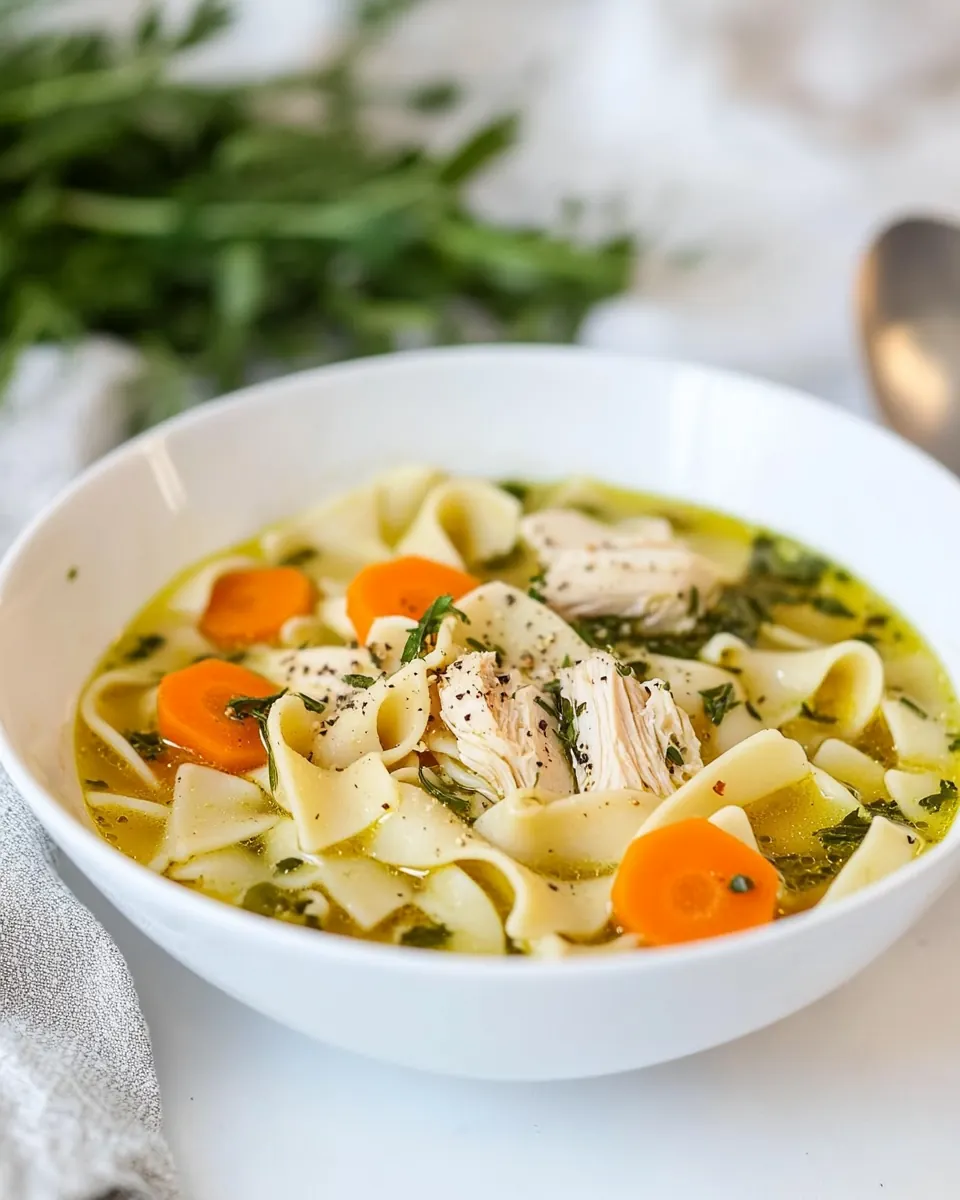
These ingredients form a classic, balanced foundation. The broth delivers savory depth, the shredded chicken provides protein and richness, and the trio of onion, carrots, and celery creates aromatic sweetness and body. Simple herbs and the right pasta bring everything together so each spoonful is comforting and layered.
- 1 tablespoon olive oil: Add to the pot at the beginning to sauté aromatics and prevent sticking; contributes a fruity, rich base flavor and helps brown vegetables slightly for depth.
- 1 medium yellow onion chopped: Provide a sweet, savory backbone when softened; chop finely to release sugars and umami that build the soup’s foundational flavor over simmering.
- 3 cloves garlic minced: Mince and cook briefly to release pungent, aromatic oils; imparts sharpness and complexity that brightens and balances the broth.
- 3 large carrots sliced: Slice and simmer until tender to add natural sweetness, body, and a pleasant bite; contributes color and texture that complement the chicken.
- 2 celery ribs sliced: Slice and sweat with the onions and carrots to add a mild, vegetal flavor and subtle crunch; enhances the savory base and aromatic profile.
- 8 cups low-sodium chicken broth: Pour in and simmer to create the liquid foundation of the soup; provides savory depth and carries all other flavors throughout the dish.
- 3/4 teaspoon dried thyme: Sprinkle in for earthy, slightly floral notes; disperses during simmering to add subtle herbal warmth without overwhelming the broth.
- 3/4 teaspoon dried parsley: Add for gentle, grassy flavor and mild herbal brightness; blends into the stock to support other herbs and round out the seasoning.
- 1 bay leaf: Tuck into the simmering broth to infuse a faint, savory herbal aroma; removes easily and contributes a layered, slightly floral bay flavor.
- Salt and pepper to taste: Season gradually while cooking to enhance and balance flavors; adjust to personal taste to bring out savory notes and round the soup.
- 2 1/2 cups shredded cooked chicken: Stir in shredded to add protein, hearty texture, and savory richness; absorbs broth flavors and makes the soup a complete, satisfying meal.
- 3 cups egg noodles: Add and cook until tender to provide comforting chewiness and starch to thicken the broth slightly; absorbs flavors and makes the soup more filling.
- 2 tablespoons chopped fresh parsley for garnish (optional): Sprinkle over finished bowls for fresh, bright herbal finish; adds color and a burst of clean parsley aroma as an optional garnish.
How to Prepare Chicken Noodle Soup
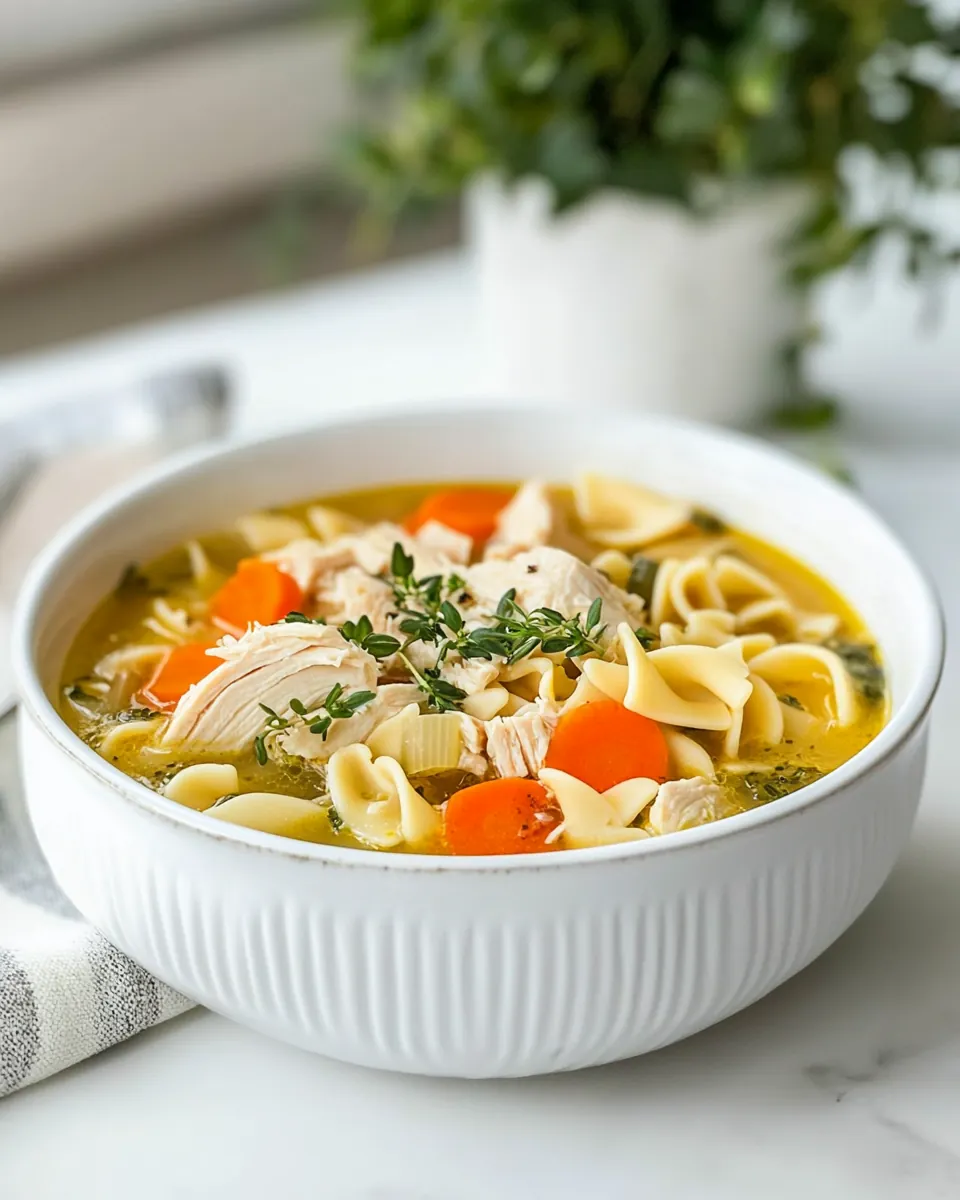
This soup is straightforward, but patience brings out the best results. Follow the sequence and senses I describe so you can judge doneness by sight, smell, and texture rather than relying solely on clocks.
- Heat olive oil in a large pot over medium heat. Add chopped onion, minced garlic, sliced carrots, and celery. Cook until vegetables are tender, about 5 minutes.: Warmth from the oil should shimmer lightly across the surface, and you will smell a soft fruity note from the olive oil . This step primes the pan, creating a slick surface that helps the vegetables sweat instead of sticking, which keeps their flavors clean rather than charred. If the oil smokes, the heat is too high and you'll risk bitter aromatics, so lower the burner immediately. A common mistake is rushing with high heat, which leads to uneven cooking and spots of burned onion .
- Pour in the chicken broth. Stir in the dried thyme, dried parsley, bay leaf, salt, and pepper. Bring the soup to a boil.: As the vegetables hit the pot, you'll hear a gentle sizzle. Stir them so the onion softens and turns translucent while the edges pick up a light golden hue, which deepens the flavor. The aroma should shift to a sweet, savory perfume. Keep the heat moderate so the garlic does not brown too quickly, because burnt garlic tastes acrid. If the vegetables are browning too fast, lower the heat and add a splash of broth to deglaze the pan and capture those browned bits.
- Lower the heat and let the soup simmer for 20 to 25 minutes to let the flavors blend. Add more broth if needed.: Tenderness is felt when a fork slides through a carrot slice with slight resistance. The texture should be soft but not falling apart, preserving structure that contrasts with the noodles later. Taste a small piece to check for the right bite. Overcooking here turns the vegetables mushy and can make the broth cloudy, so aim for gentle doneness.
- Stir in shredded chicken and egg noodles. Cook for 7-10 minutes, until noodles are tender.: As the liquid joins the pot, it will hiss and steam, releasing concentrated aromas from the sautéed vegetables. The broth should come up around the vegetables and immediately begin to mingle with their flavors. Pour slowly to capture any fond at the bottom of the pot, stirring to incorporate those savory browned bits, which enrich the overall taste. Avoid pouring too quickly if your pot is near full, to prevent overflow.
- Remove the bay leaf. Taste and adjust seasoning if necessary. Ladle the soup into bowls and garnish with fresh parsley if desired.: The dried herbs will rehydrate and infuse the liquid as it heats, creating a layered herbal base. Add salt carefully, since the broth is low sodium, and you can always adjust later. The bay leaf imparts a subtle aromatic backbone, but be sure to remove it before serving, as it is sharp if eaten whole. A common mistake is over seasoning early, which leaves no room to adjust after reduction.
- Bring the soup to a boil: A vigorous boil will produce strong steam and lively bubbling. Watch closely because an active boil can agitate the noodles and cause them to release excess starch later. Once boiling, visually you should see consistent rolling bubbles across the surface, and the aroma will intensify as the heat extracts more flavor.
- Lower the heat and let the soup simmer for 20 to 25 minutes to let the flavors blend: A gentle simmer is indicated by small, steady bubbles and a soft steam. This slow melding extracts depth from the bay leaf and dried herbs and allows the vegetables to thoroughly infuse the broth. Smell the pot periodically; a mellow, cohesive scent signals readiness. Resist increasing the heat to shorten the time, because quick reduction can concentrate salt and make the broth overly intense. If the liquid reduces too much, add a bit more broth to maintain balance.
- Add more broth if needed: If the soup appears too thick or the vegetables need more room, pouring in extra broth will loosen the consistency and extend the simmer without diluting flavor if done gradually. The surface should glide smoothly when stirred, not stick or gum. A slip I see often is adding cold liquid too quickly which cools the pot and interrupts the simmer, so warm the extra broth slightly before adding if possible.
- Stir in shredded chicken and egg noodles: When you fold in the shredded chicken and egg noodles , you will hear a soft slurp as the noodles sink and the chicken warms. The chicken will release a faint meaty aroma and the noodles will begin to swell. This is the stage where everything comes together texturally, so distribute ingredients evenly so each ladle has both meat and pasta. Avoid adding too many noodles, because they will soak up broth and leave the soup dry as it sits.
- Cook for 7 to 10 minutes, until noodles are tender: Watch for the noodles to plump and shift from firm to pleasantly yielding, their surface becoming glossy. Taste one noodle to check for a slight bite without starchy chalkiness. Overcooking results in mushy noodles and a starchy, cloudy broth, so aim for al dente to retain texture, especially if you plan to reheat leftovers. If the soup seems too starchy, a splash of fresh broth can freshen the mouthfeel.
- Remove the bay leaf: Pulling the bay leaf out is a small act that ensures nobody gets an unexpected sharp chew. The pot should smell rounded and herbal at this point. Leaving the bay leaf in during serving can create an unpleasant experience, so check carefully among the vegetables and chicken.
- Taste and adjust seasoning if necessary: Sensory evaluation is key here. Take a small spoonful, warm it on your palate, and notice if any component feels flat. A pinch more salt can brighten flavors, while a twist of pepper adds subtle heat. If it tastes overly one dimensional, a squeeze of lemon or a bit more fresh parsley would help, but since those are not in the ingredient list, rely on the permitted seasonings. Avoid salting too early because reduction concentrates the saltiness.
- Ladle the soup into bowls and garnish with fresh parsley if desired: The final presentation is sensory and visual. Steam should rise in gentle ribbons, the surface should shimmer with droplets of broth, and flecks of green from the fresh parsley will add a cheerful note. Serve hot, and encourage diners to stir so flavors mingle. A common service mistake is letting bowls sit too long, cooling the broth and dulling aromas, so serve promptly.
Making Adjustments
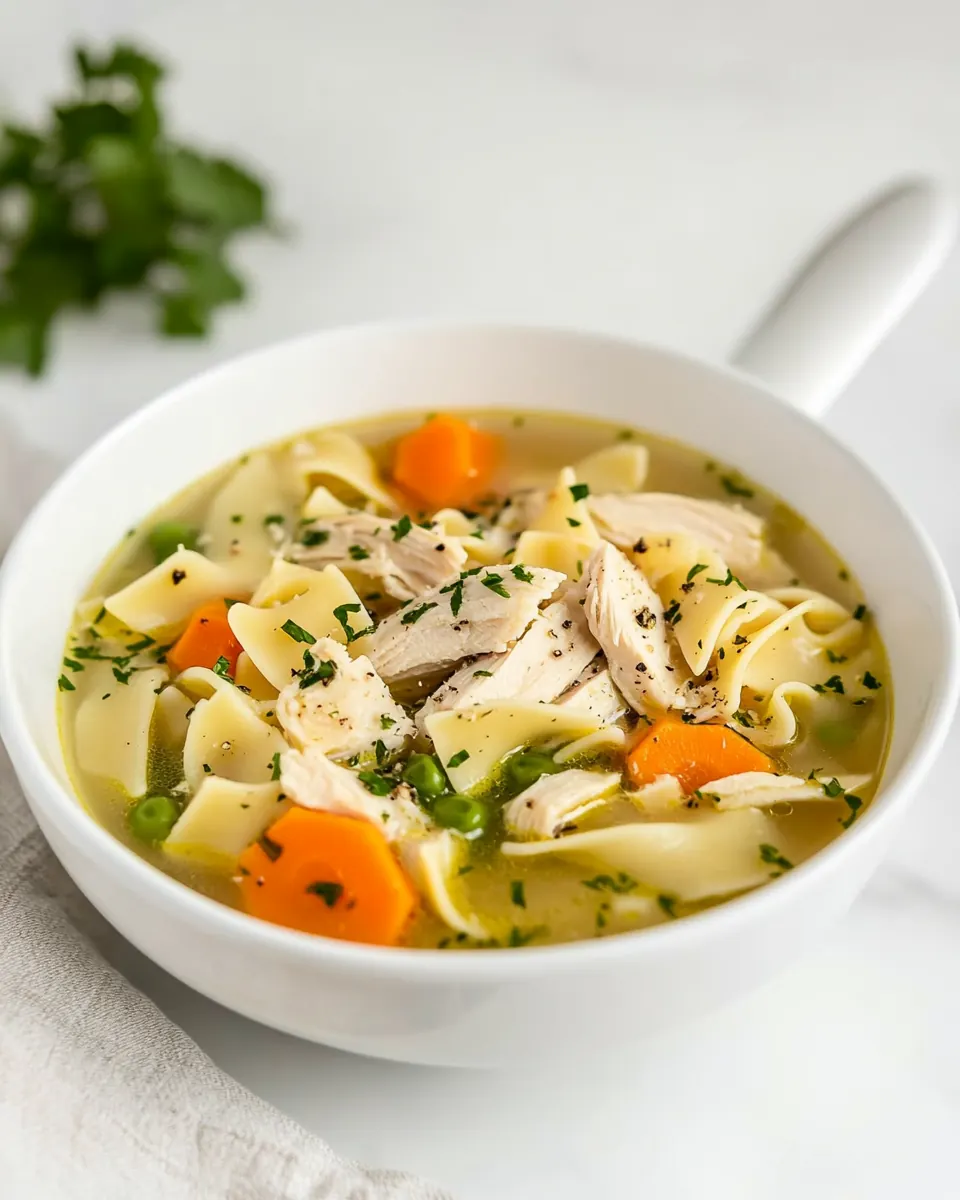
This section helps you tailor Chicken Noodle Soup to your pantry and preferences. Small swaps or timing tweaks can change texture and depth, so I explain how to adjust without losing the soul of the dish.
- Stretching the soup If you need more servings, add warm low sodium chicken broth gradually and extend the simmer for a few minutes so the flavors meld. Do not add cold liquid to avoid shocking the pot.
- Making it heartier Increase the shredded chicken slightly, but add it near the end so it remains tender and does not dry out from prolonged simmering.
- Noodle timing If you expect leftovers, undercook the egg noodles by a minute before adding, since they will soften further when refrigerated and reheated.
- Adjusting herb intensity Add dried herbs early during the simmer for deeper infusion, or sprinkle fresh chopped parsley at the end for a brighter herb note without prolonged cooking.
- Salt control Season lightly during cooking and finish by tasting, because the broth concentrates as it simmers and you can always add more but not remove it.
How to Enjoy Chicken Noodle Soup
This soup is versatile and comforting across many situations. Whether you are serving it for a casual family dinner or a restorative lunch, small choices make a difference in presentation and pairing.
- Serve piping hot Present the soup immediately after cooking so the aromas are vibrant and the broth carries heat evenly through the bowl.
- Family dinners Offer the soup as a main course with crusty bread on the side for dipping, creating a satisfying, low fuss meal that kids and adults usually accept readily.
- Illness or recovery This soup shines when someone is under the weather; its gentle flavors and warm broth are easy on the stomach and hydrating.
- Leftovers Store in an airtight container in the refrigerator for up to three days, keeping the noodles slightly undercooked if you plan to reheat so they do not become mushy.
- Seasonal pairing On cold winter evenings, pair with a simple salad or roasted vegetables for a fuller meal, leaning into the cozy nature of the dish.
- Garnish options Finish with a sprinkle of fresh parsley to add color and a fresh herb lift at the last moment.
FAQ
Conclusion
What makes this Chicken Noodle Soup special is its straightforward, layered flavor and the comforting balance of tender shredded chicken, aromatic vegetables, and silky egg noodles. It is a recipe that feels like home and adapts well to busy nights or when someone needs a gentle, nourishing meal. Give it a try this week, and you may find it becomes one of your reliable go to dishes when you want something simple, warming, and satisfying.
Chicken Noodle Soup
Equipment
- Large Pot
- Ladle
- Knife
- Cutting Board
Ingredients
- 1 tablespoon olive oil Add to the pot at the beginning to sauté aromatics and prevent sticking; contributes a fruity, rich base flavor and helps brown vegetables slightly for depth.
- 1 medium yellow onion chopped Provide a sweet, savory backbone when softened; chop finely to release sugars and umami that build the soup’s foundational flavor over simmering.
- 3 cloves garlic minced Mince and cook briefly to release pungent, aromatic oils; imparts sharpness and complexity that brightens and balances the broth.
- 3 large carrots sliced Slice and simmer until tender to add natural sweetness, body, and a pleasant bite; contributes color and texture that complement the chicken.
- 2 celery ribs sliced Slice and sweat with the onions and carrots to add a mild, vegetal flavor and subtle crunch; enhances the savory base and aromatic profile.
- 8 cups low-sodium chicken broth Pour in and simmer to create the liquid foundation of the soup; provides savory depth and carries all other flavors throughout the dish.
- 3/4 teaspoon dried thyme Sprinkle in for earthy, slightly floral notes; disperses during simmering to add subtle herbal warmth without overwhelming the broth.
- 3/4 teaspoon dried parsley Add for gentle, grassy flavor and mild herbal brightness; blends into the stock to support other herbs and round out the seasoning.
- 1 bay leaf Tuck into the simmering broth to infuse a faint, savory herbal aroma; removes easily and contributes a layered, slightly floral bay flavor.
- Salt and pepper to taste Season gradually while cooking to enhance and balance flavors; adjust to personal taste to bring out savory notes and round the soup.
- 2 1/2 cups shredded cooked chicken Stir in shredded to add protein, hearty texture, and savory richness; absorbs broth flavors and makes the soup a complete, satisfying meal.
- 3 cups egg noodles Add and cook until tender to provide comforting chewiness and starch to thicken the broth slightly; absorbs flavors and makes the soup more filling.
- 2 tablespoons chopped fresh parsley optional for garnish Sprinkle over finished bowls for fresh, bright herbal finish; adds color and a burst of clean parsley aroma as an optional garnish.
Instructions
- Heat olive oil in a large pot over medium heat. Add chopped onion, minced garlic, sliced carrots, and celery. Cook until vegetables are tender, about 5 minutes.: Warmth from the oil should shimmer lightly across the surface, and you will smell a soft fruity note from the olive oil . This step primes the pan, creating a slick surface that helps the vegetables sweat instead of sticking, which keeps their flavors clean rather than charred. If the oil smokes, the heat is too high and you'll risk bitter aromatics, so lower the burner immediately. A common mistake is rushing with high heat, which leads to uneven cooking and spots of burned onion .
- Pour in the chicken broth. Stir in the dried thyme, dried parsley, bay leaf, salt, and pepper. Bring the soup to a boil.: As the vegetables hit the pot, you'll hear a gentle sizzle. Stir them so the onion softens and turns translucent while the edges pick up a light golden hue, which deepens the flavor. The aroma should shift to a sweet, savory perfume. Keep the heat moderate so the garlic does not brown too quickly, because burnt garlic tastes acrid. If the vegetables are browning too fast, lower the heat and add a splash of broth to deglaze the pan and capture those browned bits.
- Lower the heat and let the soup simmer for 20 to 25 minutes to let the flavors blend. Add more broth if needed.: Tenderness is felt when a fork slides through a carrot slice with slight resistance. The texture should be soft but not falling apart, preserving structure that contrasts with the noodles later. Taste a small piece to check for the right bite. Overcooking here turns the vegetables mushy and can make the broth cloudy, so aim for gentle doneness.
- Stir in shredded chicken and egg noodles. Cook for 7-10 minutes, until noodles are tender.: As the liquid joins the pot, it will hiss and steam, releasing concentrated aromas from the sautéed vegetables. The broth should come up around the vegetables and immediately begin to mingle with their flavors. Pour slowly to capture any fond at the bottom of the pot, stirring to incorporate those savory browned bits, which enrich the overall taste. Avoid pouring too quickly if your pot is near full, to prevent overflow.
- Remove the bay leaf. Taste and adjust seasoning if necessary. Ladle the soup into bowls and garnish with fresh parsley if desired.: The dried herbs will rehydrate and infuse the liquid as it heats, creating a layered herbal base. Add salt carefully, since the broth is low sodium, and you can always adjust later. The bay leaf imparts a subtle aromatic backbone, but be sure to remove it before serving, as it is sharp if eaten whole. A common mistake is over seasoning early, which leaves no room to adjust after reduction.
- Bring the soup to a boil: A vigorous boil will produce strong steam and lively bubbling. Watch closely because an active boil can agitate the noodles and cause them to release excess starch later. Once boiling, visually you should see consistent rolling bubbles across the surface, and the aroma will intensify as the heat extracts more flavor.
- Lower the heat and let the soup simmer for 20 to 25 minutes to let the flavors blend: A gentle simmer is indicated by small, steady bubbles and a soft steam. This slow melding extracts depth from the bay leaf and dried herbs and allows the vegetables to thoroughly infuse the broth. Smell the pot periodically; a mellow, cohesive scent signals readiness. Resist increasing the heat to shorten the time, because quick reduction can concentrate salt and make the broth overly intense. If the liquid reduces too much, add a bit more broth to maintain balance.
- Add more broth if needed: If the soup appears too thick or the vegetables need more room, pouring in extra broth will loosen the consistency and extend the simmer without diluting flavor if done gradually. The surface should glide smoothly when stirred, not stick or gum. A slip I see often is adding cold liquid too quickly which cools the pot and interrupts the simmer, so warm the extra broth slightly before adding if possible.
- Stir in shredded chicken and egg noodles: When you fold in the shredded chicken and egg noodles , you will hear a soft slurp as the noodles sink and the chicken warms. The chicken will release a faint meaty aroma and the noodles will begin to swell. This is the stage where everything comes together texturally, so distribute ingredients evenly so each ladle has both meat and pasta. Avoid adding too many noodles, because they will soak up broth and leave the soup dry as it sits.
- Cook for 7 to 10 minutes, until noodles are tender: Watch for the noodles to plump and shift from firm to pleasantly yielding, their surface becoming glossy. Taste one noodle to check for a slight bite without starchy chalkiness. Overcooking results in mushy noodles and a starchy, cloudy broth, so aim for al dente to retain texture, especially if you plan to reheat leftovers. If the soup seems too starchy, a splash of fresh broth can freshen the mouthfeel.
- Remove the bay leaf: Pulling the bay leaf out is a small act that ensures nobody gets an unexpected sharp chew. The pot should smell rounded and herbal at this point. Leaving the bay leaf in during serving can create an unpleasant experience, so check carefully among the vegetables and chicken.
- Taste and adjust seasoning if necessary: Sensory evaluation is key here. Take a small spoonful, warm it on your palate, and notice if any component feels flat. A pinch more salt can brighten flavors, while a twist of pepper adds subtle heat. If it tastes overly one dimensional, a squeeze of lemon or a bit more fresh parsley would help, but since those are not in the ingredient list, rely on the permitted seasonings. Avoid salting too early because reduction concentrates the saltiness.
- Ladle the soup into bowls and garnish with fresh parsley if desired: The final presentation is sensory and visual. Steam should rise in gentle ribbons, the surface should shimmer with droplets of broth, and flecks of green from the fresh parsley will add a cheerful note. Serve hot, and encourage diners to stir so flavors mingle. A common service mistake is letting bowls sit too long, cooling the broth and dulling aromas, so serve promptly.
Notes
- Stretching the soup If you need more servings, add warm low sodium chicken broth gradually and extend the simmer for a few minutes so the flavors meld. Do not add cold liquid to avoid shocking the pot.
- Making it heartier Increase the shredded chicken slightly, but add it near the end so it remains tender and does not dry out from prolonged simmering.
- Noodle timing If you expect leftovers, undercook the egg noodles by a minute before adding, since they will soften further when refrigerated and reheated.
- Adjusting herb intensity Add dried herbs early during the simmer for deeper infusion, or sprinkle fresh chopped parsley at the end for a brighter herb note without prolonged cooking.
- Salt control Season lightly during cooking and finish by tasting, because the broth concentrates as it simmers and you can always add more but not remove it.
