Sea Bass with Cauliflower Puree and Chanterelles
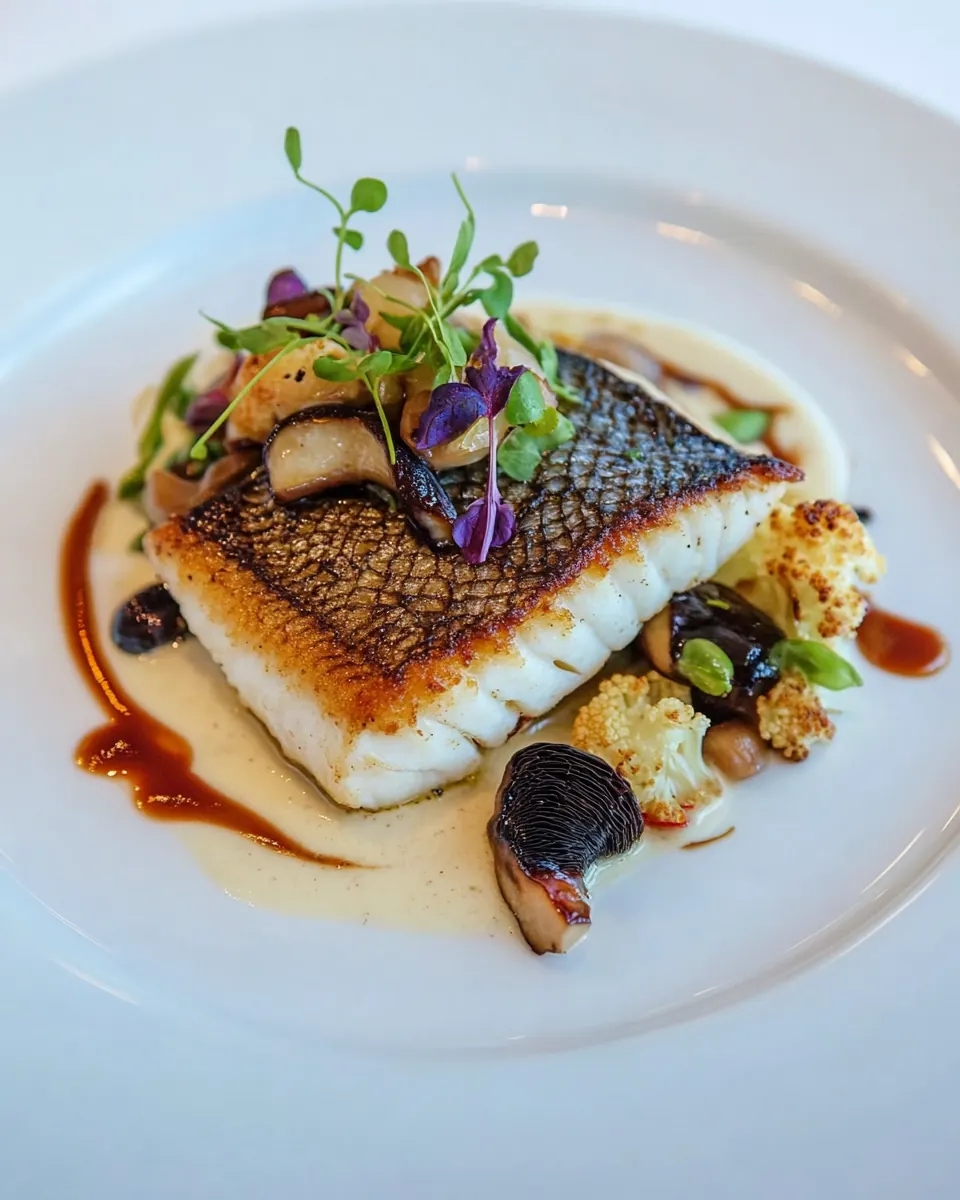
Sea Bass with Cauliflower Puree and Chanterelles is one of those recipes I return to when I want food that feels thoughtful without being fussy. I first built this dish around a market haul on a cool autumn morning, when the chanterelles were at their peak and the fishmonger had two perfect portions of line caught sea bass. I love how the dish balances textures, the crisp sea bass skin snapping under the fork while the cauliflower puree remains silken, and the earthy chanterelle mushrooms providing a savory echo.
That day I roasted a head of cauliflower until the edges caramelized slightly, which gave the puree a faint, nutty depth. Cooking the baby gem lettuce in a hot pan until it took on color felt like the small flourish that makes the plate sing. I remember thinking then that a restrained chicken sauce would tie the elements together without stealing the show. The memory of that meal is tactile and honest, and it shaped how I teach this recipe, step by step, so you can recreate that moment at home.
Recipe Snapshot
25 mins
5 mins
20 mins
Medium
350 kcal
Mediterranean
Keto, Gluten-Free
Dinner
Small pan, Blender or liquidizer, Frying pan, Oven, Strainer
What Makes This Sea Bass with Cauliflower Puree and Chanterelles Special
Pure texture contrast
I love the contrast between the crisp sea bass skin and the velvet cauliflower puree. That crunchy versus creamy interplay gives every bite interest, and it keeps a simple plate from feeling flat. When I plate this at home I always notice how guests comment on the mouthfeel before they praise the flavors.
Seasonal mushroom magic
The chanterelle mushrooms lift the dish with their woodsy, slightly peppery notes. I particularly enjoy cooking them briefly in hot oil so they keep a little chew and do not become waterlogged. For me, this ingredient makes the dish feel like autumn on a fork.
Elegant but weeknight friendly
This recipe reads like restaurant food on the plate, yet it is compact in steps and timing. I often bring it out on a weekday when I want to impress but not camp out in the kitchen. The techniques are straightforward, and they reward attention more than time.
Balanced, layered sauce
The shallow reduction of brown chicken stock with shallot, garlic, and thyme adds depth without heaviness. I find finishing with that sauce around the elements on the plate makes the dish feel cohesive. The sauce also acts as a flavor conduit, marrying the fish, puree, and mushrooms.
Simple ingredients, pronounced results
What I cherish is how each component is honest and distinct. You do not need long ingredient lists to achieve complexity. A little butter or a perfectly crisp skin on the sea bass can make the whole plate sing. That economy is why I reach for this recipe again and again.
Ingredients for Sea Bass with Cauliflower Puree and Chanterelles
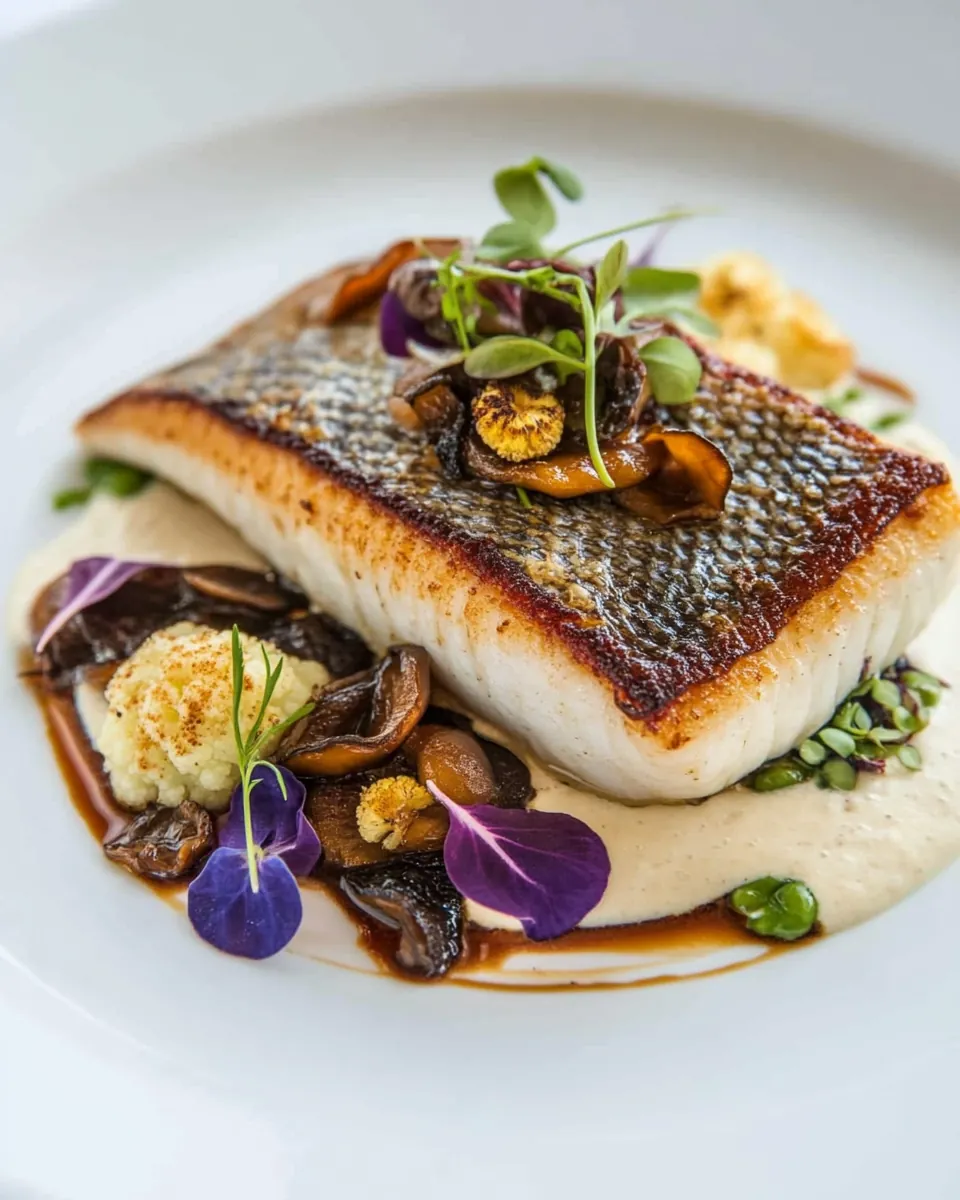
These ingredients are chosen to create a dish that is textural, savory, and seasonally aligned. The key players are the sea bass for its delicate flesh and crispable skin, the cauliflower which becomes a silky canvas, and the chanterelle mushrooms which bring an earthy, aromatic lift. The small supporting cast, like the shallot, garlic, thyme, and butter, work together to build a rich but restrained sauce that ties everything together.
- 2 x 150 grams portions of line caught seabass scaled and pin boned: Cook gently to crisp the skin while keeping flesh moist; used as the main protein for the dish and plated atop the puree. Season and sear skin-side down in a hot pan, then finish in the oven if needed to ensure even cooking throughout.
- 1 small cauliflower broken down into small florets: Break into small florets and simmer until tender; puréed to a smooth, creamy consistency to form the base of the plate. Add a touch of butter or stock when blending to create a silky texture that complements the seabass.
- 5 grams fresh yeast: Dissolve in a little warm liquid to activate and provide mild fermentation or lift if making an accompanying bread or light garnish. Use sparingly to avoid overpowering flavors, ensuring a subtle yeast character if incorporated into any dough or batter elements.
- 80 grams chanterelle mushrooms: Clean and trim, then sauté briefly to concentrate their earthy, nutty flavor; used as a sautéed garnish to add texture and umami. Finish with butter and thyme to complement both the seabass and cauliflower purée.
- 1 head baby gem lettuce: Halve or quarter and lightly char or dress to add a crisp, fresh green element that balances the richness of the fish and puree. Serve alongside or lightly wilted to introduce a cool, crunchy contrast on the plate.
- 150 milliliters brown chicken stock: Reduce slightly to intensify and bind flavors if making a sauce; used to add deep savory notes beneath or around the fish. Degrease if necessary and incorporate with butter or shallot to create a glossy, flavorful jus.
- 20 grams butter: Melt to enrich the purée or sauté the chanterelles and shallot, adding a silky mouthfeel and glossy finish to cooked elements. Use at the end of cooking to finish sauces and vegetables for a rounded, rich flavor.
- 1 shallot: Finely chop and sweat to provide a sweet, aromatic foundation for sauces or the mushrooms; add depth without overpowering. Cook gently until translucent to release sugars and build a balanced base for the dish.
- 1 clove garlic: Crush or mince and cook briefly with shallot or butter to add a subtle aromatic garlic note that lifts the overall flavor. Avoid overcooking to prevent bitterness; add toward the end to preserve its fragrance.
- 1 sprig thyme: Strip leaves and simmer with stock or use to flavor sautéed mushrooms and jus, imparting a subtle herbal lift. Remove before serving if steeped, or use as a fresh garnish to complement the other components.
Cooking Instructions for Sea Bass with Cauliflower Puree and Chanterelles
These instructions are written so you can move through each stage with confidence. Read once, then follow each step mindfully, paying attention to sensory cues like aroma, color, and texture. Keep your mise en place close by so transitions are smooth and the hot pan stays hot when needed.
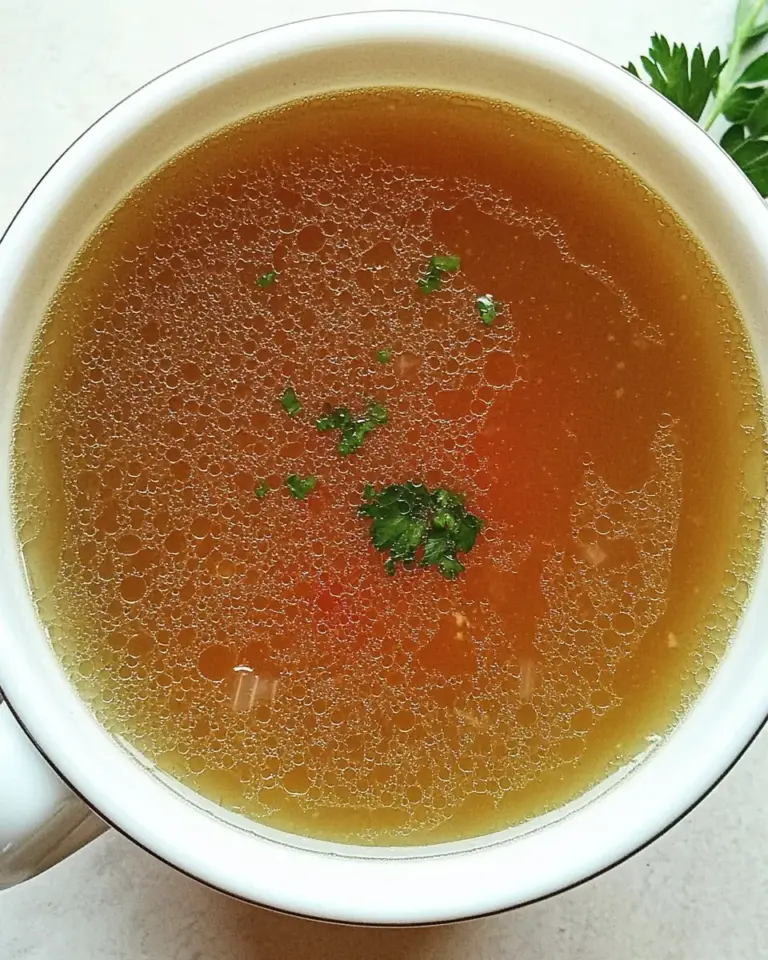
- Sweat the peeled and sliced shallots in a small pan with the garlic and thyme until it’s light brown in colour. Then add the brown chicken stock and reduce until you have a light sauce. Strain this and keep warm.: You will notice a soft, sweet aroma as the shallot and garlic soften, and the pan should release gentle, savory steam as the thyme perfumes the mix. Reducing the brown chicken stock concentrates flavor, producing a glossy, slightly syrupy liquid that will coat the back of a spoon. Straining removes solids so the sauce remains silky, which is vital for a clean presentation. A common error is overheating and browning the shallot too fast; aim for gentle color rather than dark caramel to keep the sauce balanced.
- Wash the chanterelles and dry them. Cook half of the cauliflower florets with a little butter, water and seasoning until tender and then reduce the water until the cauliflower starts to colour, then add in the yeast and liquidize with a small amount of warm water until smooth.: When you sauté the chanterelle mushrooms briefly, they will emit a pleasant, earthy scent; do this separately to avoid watering down the flavor. As the cauliflower softens, you will see edges take on a pale gold, which deepens the puree's flavor. Adding the fresh yeast after the water has reduced allows it to dissolve evenly, lending a subtle savory note. Blending with warm water helps you reach a silky texture. Watch for overblending which can warm the puree too much and thin the body, losing the desired velvet mouthfeel.
- Blanch the remaining cauliflower florets in boiling water and keep hot in a pan.: The blanched florets should remain bright and hold their shape, offering a counterpoint to the puree. You will hear the quiet hiss of the boil and see steam lift from the pot as you drop the florets in, and they should pierce easily with a fork after a brief cook. Keeping them hot is important so the plate stays warm when assembled. A typical mistake is overblanching, which leaves the florets mushy and pale, rather than springy and separate.
- Cut the baby gem in half and place into a frying pan and colour on the cut side for 3-4 minutes, then turn over and continue to cook for 3-4 more minutes.: When you sear the cut side of the baby gem lettuce , the scent of caramelization will appear and the surface will turn a glossy, golden brown. This adds a slightly bitter, smoky edge that contrasts the puree. Flip carefully so the leaves do not tear, and you should hear a gentle sizzle rather than a roar. Times are a guide so watch for color; undercooked halves are pale and limp, while overcooked ones will become slimy and lose bite.
- Pan fry the seabass skin side down until the skin is crisp and then place into an oven if needed for 4-5 minutes until the fish is cooked.: Lay the sea bass in a hot, lightly oiled pan and press gently to ensure even contact; you will hear a satisfying sizzle as the skin renders and tightens. The skin will visibly shrink and turn a deep golden crisp. After achieving that texture, transferring to a heated oven finishes the cooking evenly, keeping the flesh moist. Use a thermometer or judge by flake; the flesh should be opaque and tender. Avoid moving the fillet prematurely or the skin will stick and tear, losing its crisp charm.
- Finally sauté the chanterelles in a little hot oil and drain on kitchen paper. To finish: The quick sauté will coax out the robust aromas of the chanterelle mushrooms , and they should develop slight edges of golden color while retaining a pleasant chew. Draining on paper removes excess oil so they sit neatly on the plate without slicking the puree. This step enhances texture and concentrates taste, adding an earthy punctuation to each forkful. A frequent slip is cooking them too long which makes them mushy and defeats their purpose as a textural foil.
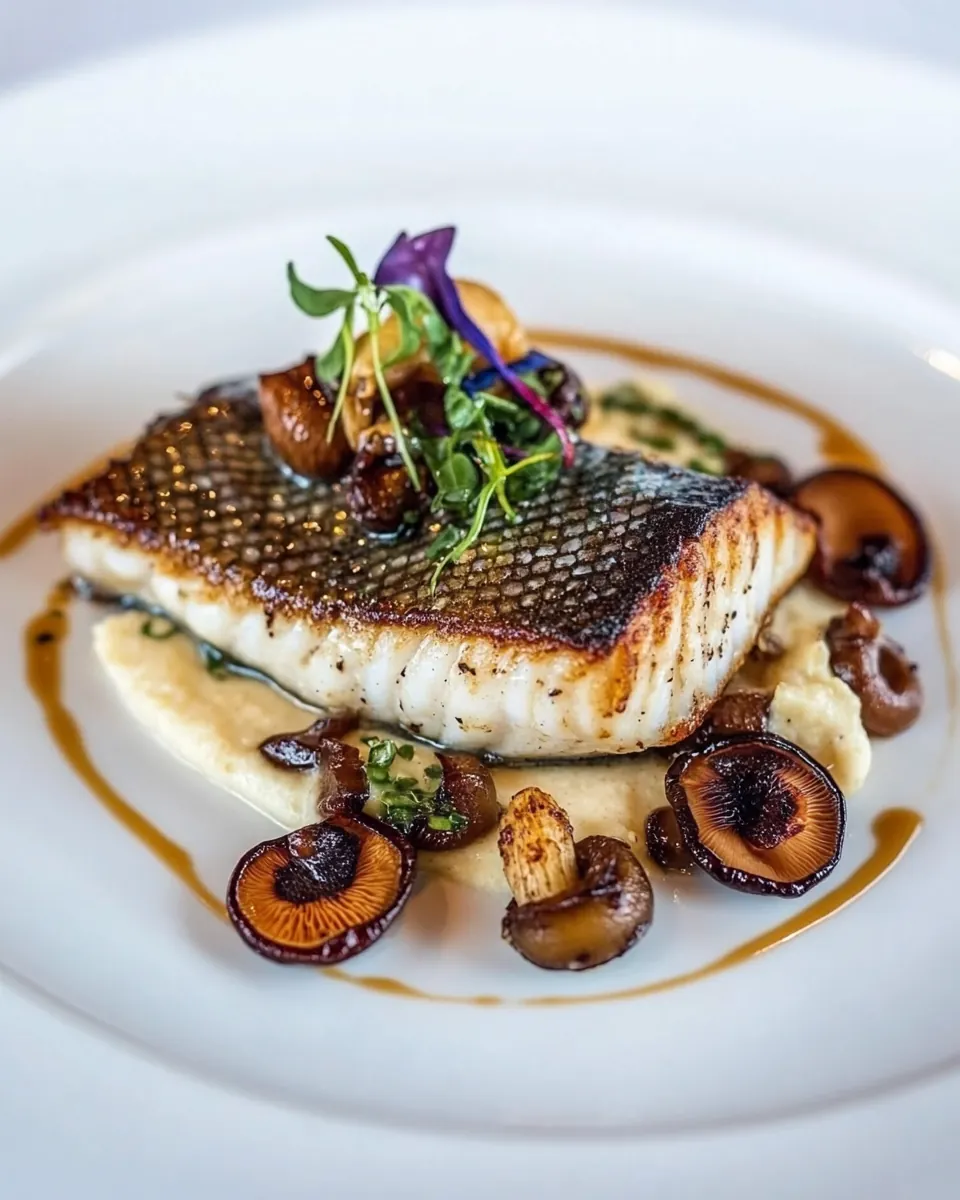
- Spoon the puree onto the warmed plates, followed by the gem halves, cooked seabass, chanterelles and cauliflower florets. Spoon around the chicken sauce and serve.: As you assemble, notice how the warm cauliflower puree gleams and holds a spoon shape. Placing the sea bass atop or beside the puree creates a pleasing composition and allows the crisp skin to be admired before the first cut. Drizzling the strained, reduced brown chicken stock around the elements adds savory shine and a final aromatic lift. Check the plate for temperature contrast; everything should be warm so the textures and flavors align. A common oversight is plating on cold dishes, which steals heat and dulls aroma.
Customization Ideas
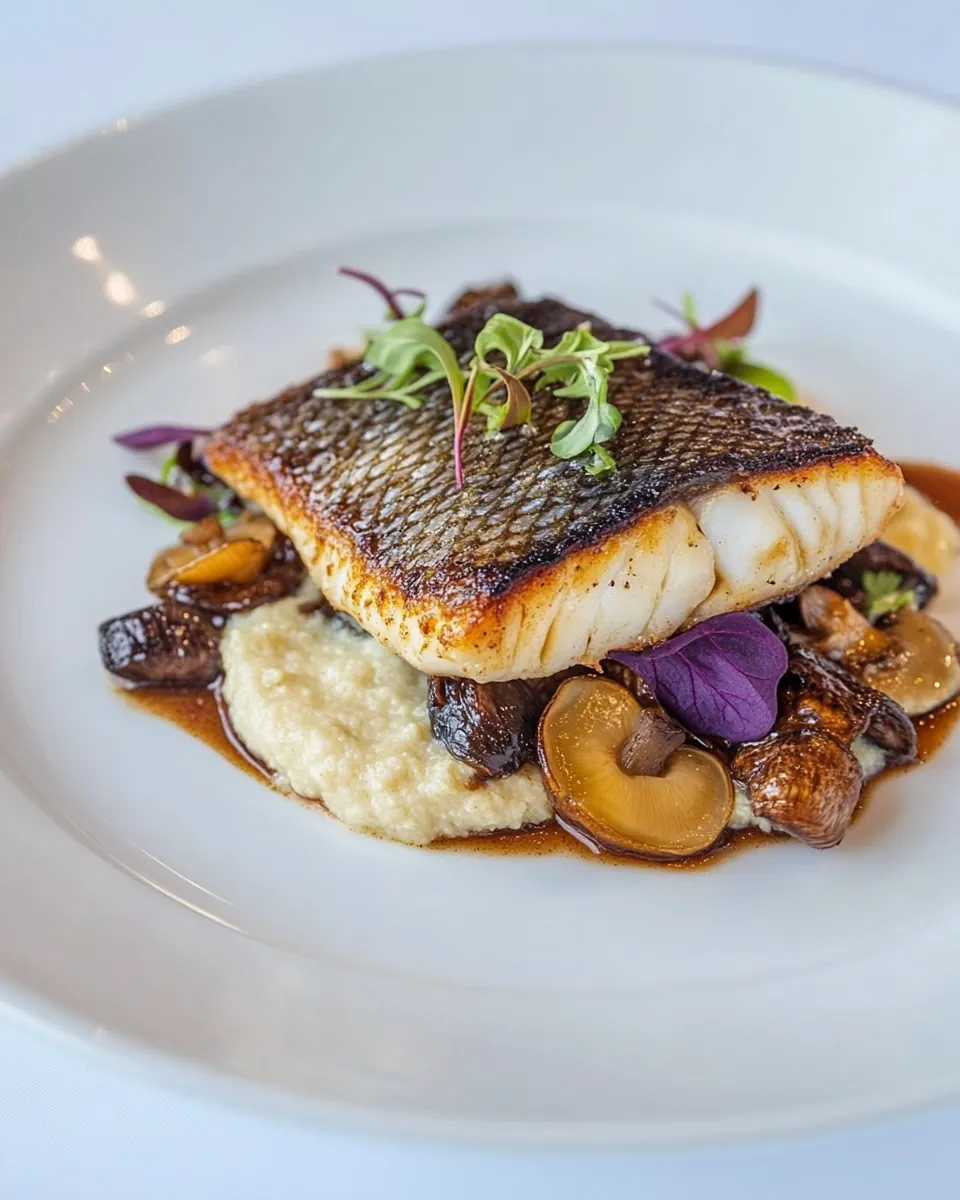
These customization ideas let you tailor Sea Bass with Cauliflower Puree and Chanterelles to different taste profiles or occasions. They keep the heart of the recipe intact while letting you experiment with texture, seasoning, or presentation.
- Swap pan finish: Try finishing the sea bass briefly under a hot grill if you want an alternative crisp texture on the skin.
- Herb variation: Add a small handful of finely chopped fresh herbs into the puree for a brighter note, but fold them in off heat to keep color and freshness.
- Mushroom technique: If chanterelles are unavailable, use another firm, flavorful mushroom cooked the same way to preserve the earthy character.
- Sauce depth: For additional umami, reduce the brown chicken stock slightly more and finish with a pat of butter for gloss.
- Presentation: For a dinner party, serve the puree quenelled with two spoons so each plate looks sculpted and restaurant ready.
Perfect Matches for Sea Bass with Cauliflower Puree and Chanterelles
This dish pairs well with simple, restrained accompaniments that let the main flavors shine. Think of sides and occasions that emphasize seasonality and balanced textures. It adapts easily for an intimate dinner or a special meal during cooler months.
- Light green salad: A crisp salad provides a fresh counterpoint to the warm, silky puree and the rich mushrooms.
- Roasted root vegetables: Serve alongside roasted carrots or parsnips for an autumnal plate that echoes the earthiness of the chanterelles.
- Occasions: This is suited to an intimate dinner, a celebratory weekday meal, or a small gathering in the fall when mushrooms are at their best.
- Storage tips: Store components separately in airtight containers for up to two days, reheating gently to protect textures, and keep the sauce warmed separately.
- Seasonal pairing: Use this when cauliflower and fresh mushrooms are in season, as their peak flavors make the dish sing.
FAQ
Conclusion
This recipe shines because it pairs crisp sea bass skin with a silky cauliflower puree and earthy chanterelles for a balanced, seasonal plate. Give it a try to experience how simple techniques create restaurant quality results at home, and enjoy the layered textures and savory depth. I hope this inspires you to cook with attention to texture and timing, and that it becomes one of your go to dishes when you want something elegant yet manageable.
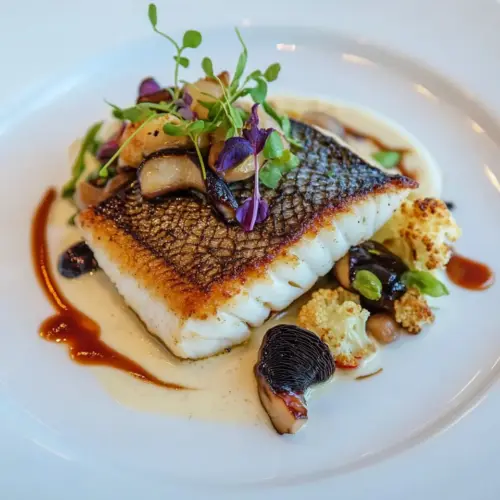
Sea Bass with Cauliflower Puree and Chanterelles
Equipment
- Small Pan
- Blender or liquidizer
- Frying Pan
- Oven
- Strainer
Ingredients
- 2 x 150 grams portions of line caught seabass scaled and pin boned Cook gently to crisp the skin while keeping flesh moist; used as the main protein for the dish and plated atop the puree. Season and sear skin-side down in a hot pan, then finish in the oven if needed to ensure even cooking throughout.
- 1 small cauliflower broken down into small florets Break into small florets and simmer until tender; puréed to a smooth, creamy consistency to form the base of the plate. Add a touch of butter or stock when blending to create a silky texture that complements the seabass.
- 5 grams fresh yeast Dissolve in a little warm liquid to activate and provide mild fermentation or lift if making an accompanying bread or light garnish. Use sparingly to avoid overpowering flavors, ensuring a subtle yeast character if incorporated into any dough or batter elements.
- 80 grams chanterelle mushrooms Clean and trim, then sauté briefly to concentrate their earthy, nutty flavor; used as a sautéed garnish to add texture and umami. Finish with butter and thyme to complement both the seabass and cauliflower purée.
- 1 head baby gem lettuce Halve or quarter and lightly char or dress to add a crisp, fresh green element that balances the richness of the fish and puree. Serve alongside or lightly wilted to introduce a cool, crunchy contrast on the plate.
- 150 milliliters brown chicken stock Reduce slightly to intensify and bind flavors if making a sauce; used to add deep savory notes beneath or around the fish. Degrease if necessary and incorporate with butter or shallot to create a glossy, flavorful jus.
- 20 grams butter Melt to enrich the purée or sauté the chanterelles and shallot, adding a silky mouthfeel and glossy finish to cooked elements. Use at the end of cooking to finish sauces and vegetables for a rounded, rich flavor.
- 1 shallot Finely chop and sweat to provide a sweet, aromatic foundation for sauces or the mushrooms; add depth without overpowering. Cook gently until translucent to release sugars and build a balanced base for the dish.
- 1 clove garlic Crush or mince and cook briefly with shallot or butter to add a subtle aromatic garlic note that lifts the overall flavor. Avoid overcooking to prevent bitterness; add toward the end to preserve its fragrance.
- 1 sprig thyme Strip leaves and simmer with stock or use to flavor sautéed mushrooms and jus, imparting a subtle herbal lift. Remove before serving if steeped, or use as a fresh garnish to complement the other components.
Instructions
- Sweat the peeled and sliced shallots in a small pan with the garlic and thyme until it’s light brown in colour. Then add the brown chicken stock and reduce until you have a light sauce. Strain this and keep warm.: You will notice a soft, sweet aroma as the shallot and garlic soften, and the pan should release gentle, savory steam as the thyme perfumes the mix. Reducing the brown chicken stock concentrates flavor, producing a glossy, slightly syrupy liquid that will coat the back of a spoon. Straining removes solids so the sauce remains silky, which is vital for a clean presentation. A common error is overheating and browning the shallot too fast; aim for gentle color rather than dark caramel to keep the sauce balanced.
- Wash the chanterelles and dry them. Cook half of the cauliflower florets with a little butter, water and seasoning until tender and then reduce the water until the cauliflower starts to colour, then add in the yeast and liquidize with a small amount of warm water until smooth.: When you sauté the chanterelle mushrooms briefly, they will emit a pleasant, earthy scent; do this separately to avoid watering down the flavor. As the cauliflower softens, you will see edges take on a pale gold, which deepens the puree's flavor. Adding the fresh yeast after the water has reduced allows it to dissolve evenly, lending a subtle savory note. Blending with warm water helps you reach a silky texture. Watch for overblending which can warm the puree too much and thin the body, losing the desired velvet mouthfeel.
- Blanch the remaining cauliflower florets in boiling water and keep hot in a pan.: The blanched florets should remain bright and hold their shape, offering a counterpoint to the puree. You will hear the quiet hiss of the boil and see steam lift from the pot as you drop the florets in, and they should pierce easily with a fork after a brief cook. Keeping them hot is important so the plate stays warm when assembled. A typical mistake is overblanching, which leaves the florets mushy and pale, rather than springy and separate.
- Cut the baby gem in half and place into a frying pan and colour on the cut side for 3-4 minutes, then turn over and continue to cook for 3-4 more minutes.: When you sear the cut side of the baby gem lettuce , the scent of caramelization will appear and the surface will turn a glossy, golden brown. This adds a slightly bitter, smoky edge that contrasts the puree. Flip carefully so the leaves do not tear, and you should hear a gentle sizzle rather than a roar. Times are a guide so watch for color; undercooked halves are pale and limp, while overcooked ones will become slimy and lose bite.
- Pan fry the seabass skin side down until the skin is crisp and then place into an oven if needed for 4-5 minutes until the fish is cooked.: Lay the sea bass in a hot, lightly oiled pan and press gently to ensure even contact; you will hear a satisfying sizzle as the skin renders and tightens. The skin will visibly shrink and turn a deep golden crisp. After achieving that texture, transferring to a heated oven finishes the cooking evenly, keeping the flesh moist. Use a thermometer or judge by flake; the flesh should be opaque and tender. Avoid moving the fillet prematurely or the skin will stick and tear, losing its crisp charm.
- Finally sauté the chanterelles in a little hot oil and drain on kitchen paper. To finish: The quick sauté will coax out the robust aromas of the chanterelle mushrooms , and they should develop slight edges of golden color while retaining a pleasant chew. Draining on paper removes excess oil so they sit neatly on the plate without slicking the puree. This step enhances texture and concentrates taste, adding an earthy punctuation to each forkful. A frequent slip is cooking them too long which makes them mushy and defeats their purpose as a textural foil.
- Spoon the puree onto the warmed plates, followed by the gem halves, cooked seabass, chanterelles and cauliflower florets. Spoon around the chicken sauce and serve.: As you assemble, notice how the warm cauliflower puree gleams and holds a spoon shape. Placing the sea bass atop or beside the puree creates a pleasing composition and allows the crisp skin to be admired before the first cut. Drizzling the strained, reduced brown chicken stock around the elements adds savory shine and a final aromatic lift. Check the plate for temperature contrast; everything should be warm so the textures and flavors align. A common oversight is plating on cold dishes, which steals heat and dulls aroma.
Notes
- Swap pan finish: Try finishing the sea bass briefly under a hot grill if you want an alternative crisp texture on the skin.
- Herb variation: Add a small handful of finely chopped fresh herbs into the puree for a brighter note, but fold them in off heat to keep color and freshness.
- Mushroom technique: If chanterelles are unavailable, use another firm, flavorful mushroom cooked the same way to preserve the earthy character.
- Sauce depth: For additional umami, reduce the brown chicken stock slightly more and finish with a pat of butter for gloss.
- Presentation: For a dinner party, serve the puree quenelled with two spoons so each plate looks sculpted and restaurant ready.