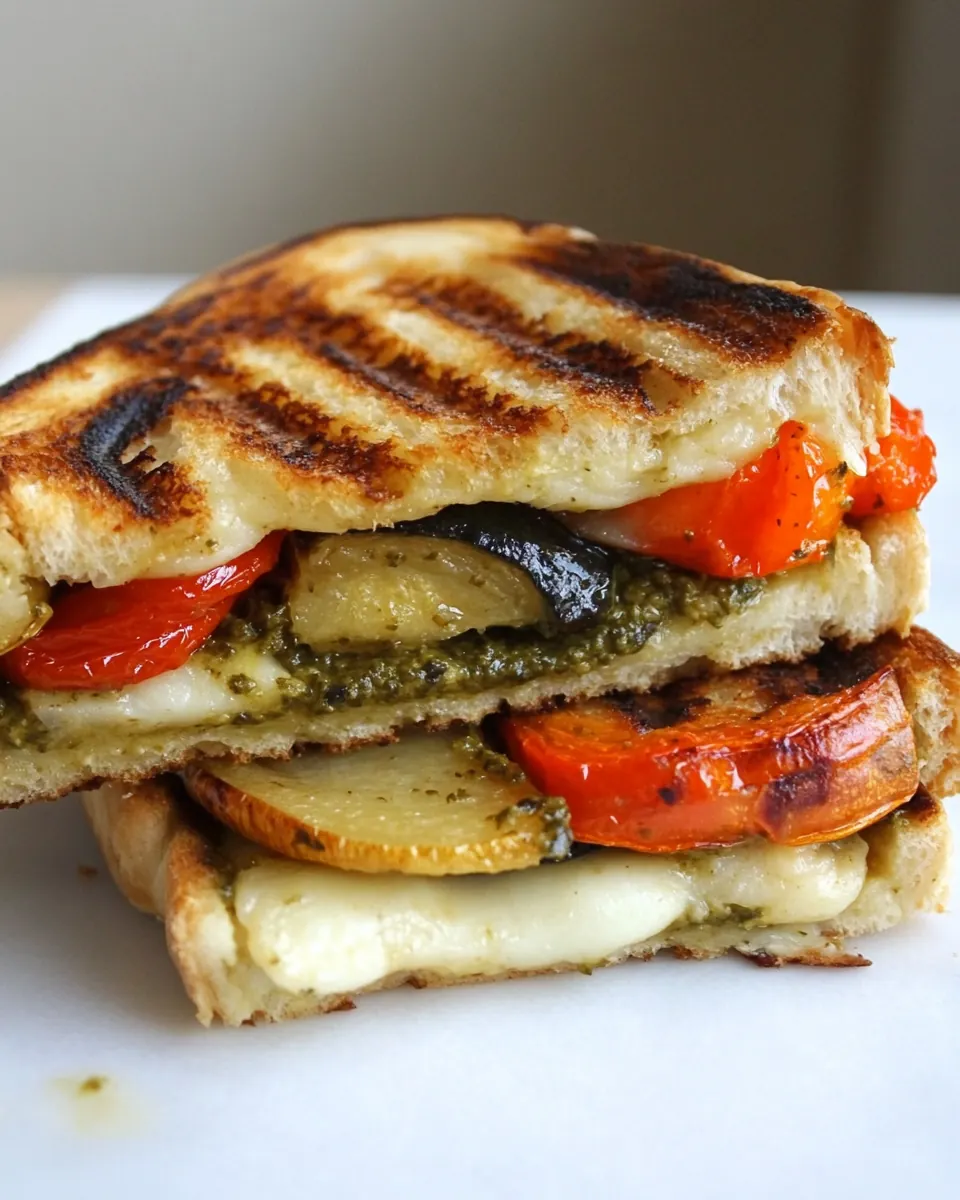
Roasted Vegetable Panini with Pesto
Roasted Vegetable Panini with Pesto is the kind of sandwich I reach for when I want comfort without fuss. I remember the first time I layered roasted peppers, tender asparagus, and melted vegan mozzarella between slices of hearty whole grain bread, the kitchen filling with a toasty, herbaceous aroma that made dinner feel like a small celebration. That first bite, warm and slightly crunchy, convinced me that vegetables can carry a sandwich with as much presence as any protein.
I started making this sandwich on busy weeknights when I needed something satisfying, fast, and veggie forward. Over time I learned little tricks, like giving the asparagus slightly longer in the oven for a caramelized edge, or using a generous swipe of walnut pesto so every forkful hums with bright, nutty flavor. This version became my go to for packing lunches or for when friends drop by unexpectedly, since it assembles quickly and rewards you with layers of texture and flavor.
Recipe Snapshot
50 mins
20 mins
30 mins
Medium
350 kcal
Italian
Vegan, Gluten-Free
Dinner
Oven, Baking sheet, Parchment paper, Skillet, Panini press, Knife
Why Try This Roasted Vegetable Panini with Pesto
It celebrates vegetables with bold flavor
I love how Roasted Vegetable Panini with Pesto makes vegetables the star. Roasting concentrates sweetness in bell peppers and onion, while asparagus gains a nutty edge. Each bite feels intentional, like you are savoring the best of the season.
Comfort without heaviness
When I want something filling yet light, this sandwich fits the bill. The melted Vegan mozzarella gives a creamy mouthfeel without weighing me down, and the bread crisps to provide contrast. It hits that cozy spot without feeling overindulgent.
Quick to assemble and versatile
We can roast a tray of vegetables and then use them in many ways. I often double the veggies for salads or grain bowls later in the week. The assembly is forgiving, so you can adjust pesto levels or cheese to taste, making it perfect for improv cooking.
Pesto adds a finishing note
The Vegan Walnut Pesto gives a bright, herbal lift and a creamy, nutty anchor that ties the sandwich together. I always spread a bit extra if I know the bread is hearty, because that layer keeps every mouthful interesting and cohesive.
Great for sharing and meal prep
I often make a tray of roasted vegetables for dinner and lunches, because the leftovers press beautifully into sandwiches the next day. Friends appreciate the flavor and I love how simple it is to scale up when company arrives.
What to Gather for Roasted Vegetable Panini with Pesto
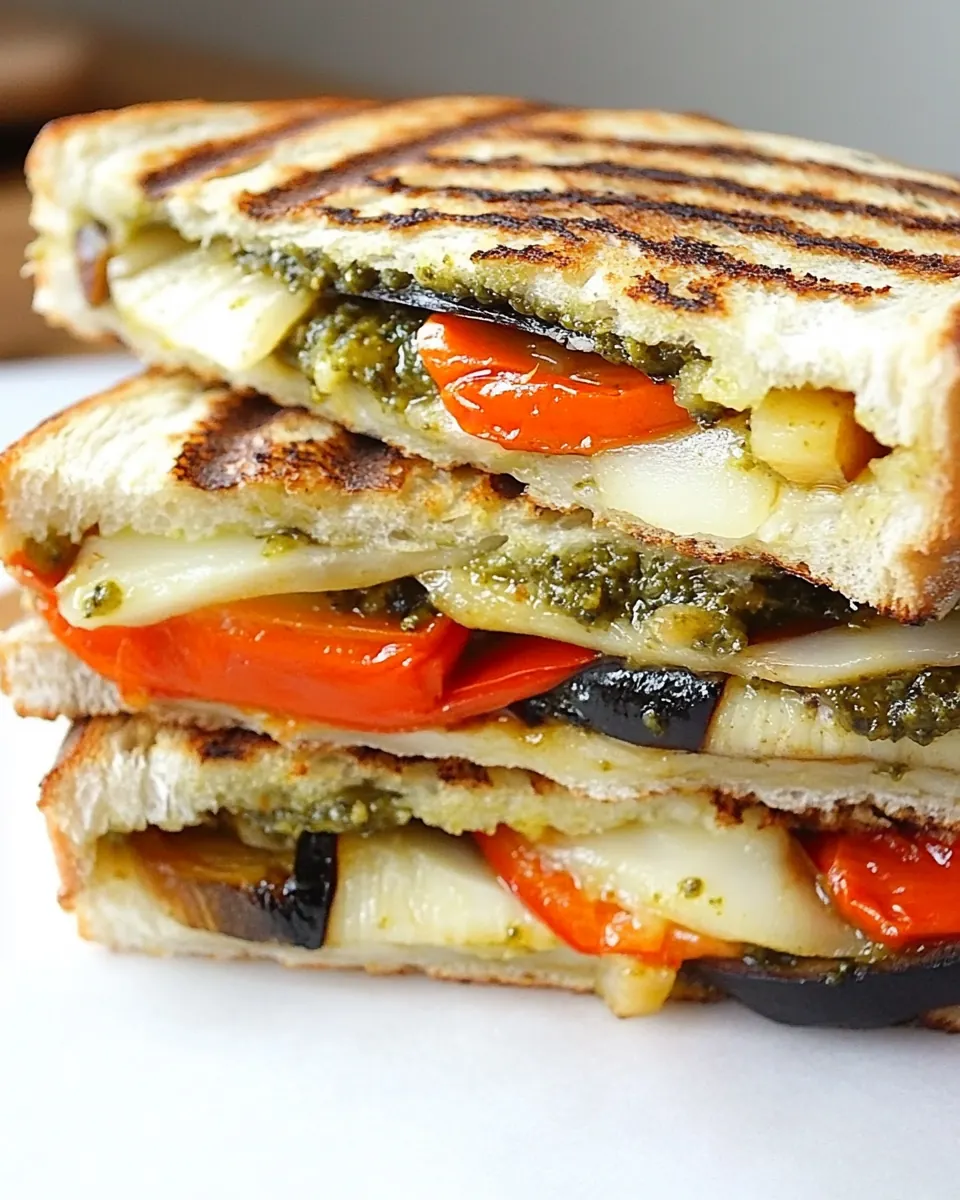
These ingredients are chosen to work in harmony, giving texture, brightness, and richness. The vegetables offer a range of textures from crisp to tender, the Vegan mozzarella delivers creaminess, the Vegan Walnut Pesto provides herbaceous depth and a hint of nuttiness, and the whole grain bread brings structure and toasty flavor. Together they create a balanced sandwich that sings on each bite.
- 2 bell peppers (I use red & orange): Roast to soften and char for deep, sweet flavor that enhances the sandwich filling; slice into strips for even layering and attractive color contrast in the panini.
- 1 small onion: Caramelize to add a mellow, slightly sweet backbone that complements roasted vegetables; thinly slice for quick cooking and balanced texture throughout the sandwich.
- 8 oz . mushrooms (I use cremini): Sauté or roast until tender and browned to provide an earthy, umami-rich component; slice or quarter to distribute savory bites evenly across each panini.
- 1 lb . asparagus: Trim and roast or blanch briefly to retain a crisp-tender bite and bright, green color; cut into manageable lengths so asparagus spears layer neatly inside the sandwich.
- Vegan mozzarella to taste: Melt or layer to add creamy, melty richness and a mild, familiar dairy-like texture; tear or grate to ensure even coverage and stretchy, satisfying mouthfeel when pressed.
- 1/2 cup Vegan Walnut Pesto (more or less): Spread to infuse vibrant herbaceous, nutty flavor and binding moisture that keeps fillings cohesive; adjust quantity to taste for balanced herb and fat presence in the panini.
- 8 slices whole grain bread: Toast or grill to crisp the exterior and provide sturdy structure for holding fillings; choose slices that evenly brown and press well so the sandwich holds together.
The Process for Making Roasted Vegetable Panini with Pesto

This method walks you through roasting vegetables and assembling the panini, focusing on timing and sensory cues so you achieve golden, flavorful results. Keep an eye on color and texture, and press with intention for a crisp exterior and warm, melty interior.
- Preheat oven to 425°F (220°C).: As the oven comes to temperature, you will smell a faint warmth that promises caramelization, and preheating ensures the vegetables hit the heat immediately so they brown rather than steam. This step matters because starting with a hot oven creates those browned edges that provide flavor contrast. A common mistake is skipping preheat, which leads to pale, soft vegetables instead of developing sweet, roasted notes. Make sure your rack is centered so heat circulates evenly and the sheet has room for airflow.
- Slice bell pepper and onion into strips. Cut asparagus into 1-2" pieces. Slice mushrooms.: As you cut, you will notice the pepper skins releasing a fragrant, slightly sweet aroma, and the onion layers separating easily. Uniform cuts help everything cook at the same pace, preventing some pieces from overcooking while others remain underdone. Uneven slices are a frequent culprit when parts cook faster than others, so aim for consistency. Use a sharp knife to get clean cuts, which also helps the vegetables sear nicely in the oven.
- Line a baking sheet with parchment paper. Add vegetables and salt if desired. (You could also add dried herbs such as basil, parsley, oregano, etc.): Draping the sheet with parchment makes cleanup simple and prevents sticking, while an even layer of vegetables allows hot air to circulate and promotes browning. A light sprinkle of salt helps draw out moisture and enhance natural sweetness; however, too much salt early on can make the final texture watery. Avoid overcrowding the sheet, and arrange the pieces so they have small gaps between them to encourage crisping and caramelization.
- Roast for about 25-30 minutes or to desired tenderness, stirring halfway through.: During roasting, the kitchen fills with a roasted, sweet scent as sugars caramelize, and you will see edges turning golden and blistered. Stirring midway encourages even browning and prevents hot spots. The why is simple, even color equals even texture and flavor. A typical pitfall is skipping the stir, which can leave one side charred and another underdone. Trust your eye, and test for tender centers with a fork before removing from the oven.
- After veggies are roasted, in a skillet over medium heat (or panini press) place a slice of bread. Sprinkle a layer of mozzarella on top.: As the bread meets the hot surface, you will hear a soft sizzle and see the edges begin to toast within moments. The cheese will start to soften and shimmer, signaling it is about to melt into a creamy binder. This technique matters because toasting the bread first locks in structure, preventing sogginess. Avoid using oil soaked bread, which can cause excessive smoke; a dry but sturdy slice is ideal.
- Then add a generous layer of vegetables. Spread about 2 Tbsp. pesto on a second slice of bread and place on top, lightly pressing down.: When the vegetables hit warm cheese, you will notice steam rising and the colors deepening, creating an irresistible aroma. The Vegan Walnut Pesto adds an herbaceous, nutty contrast that cuts through richness. Pressing lightly helps the ingredients marry and ensures even contact for melting. One mistake is adding too many vegetables at once, which prevents heat from penetrating and results in a tepid center. Keep portions balanced for uniform warming.
- Heat for about 5-8 minutes on each side or until warmed through and cheese is melted.: Listen for a steady crisping sound, and watch the bread turn a deep golden brown. The visual cue of bubbling, softened cheese and a fragrant steam is your sign to remove the sandwich. This final sear is crucial for texture, giving you contrast between crunchy exterior and warm, melty interior. A frequent error is rushing the sear at too high a heat, which can char the bread before the cheese melts, so use medium heat and patience for best results.
Variations to Try
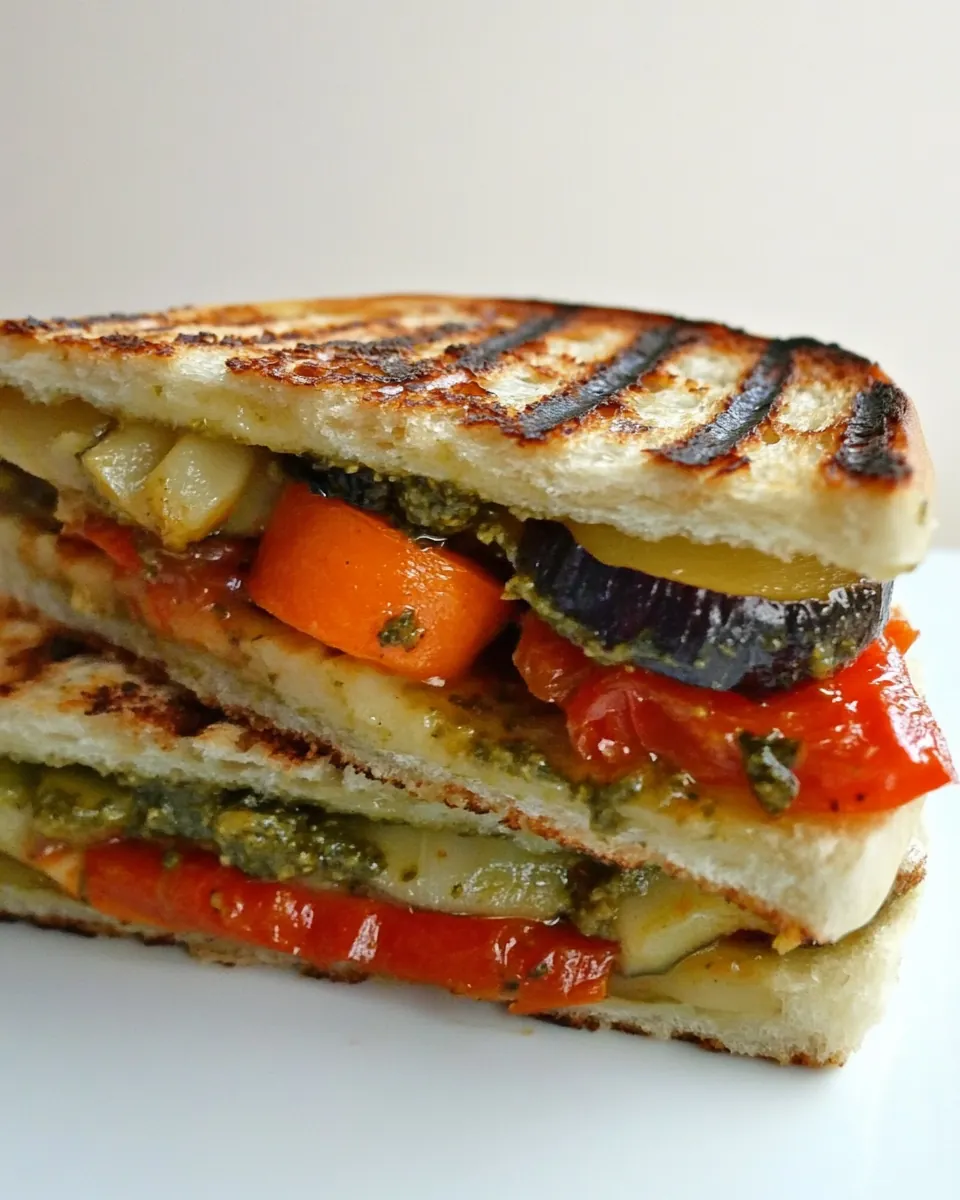
These variations let you tweak texture, flavor, and presentation while keeping the core of the recipe intact. Each tip highlights a simple swap or technique to personalize your Roasted Vegetable Panini with Pesto.
- Swap the pesto base Try basil for a classic profile or add lemon zest to the walnut pesto for extra brightness. A citrus note can lift the whole sandwich without changing the structure.
- Change the cheese amount Increase or decrease Vegan mozzarella to control creaminess. More cheese yields a gooier interior, while less emphasizes the roasted vegetables.
- Adjust the roast time Roast until edges are caramelized for deeper flavor, or shorten the roast for a crisper, fresher bite. Small time tweaks dramatically change texture.
- Use different bread Try sourdough or a rustic country loaf for a different crumb and crust profile. The bread choice influences how the sandwich toasts and how sturdy it feels when pressed.
- Prep ahead Roast a double batch of vegetables to speed assembly later, storing leftovers for easy sandwiches or bowls. This makes weeknight meals effortless and lets flavors meld for even better results the next day.
Perfect Pairings for Roasted Vegetable Panini with Pesto
This section covers serving ideas, suitable occasions, and storage notes to help you present and preserve the sandwich at its best. Think of these pairings as ways to round out the meal and tailor it to the moment.
- Light salad side A crisp green salad with a bright vinaigrette complements the warm, melty panini by adding acidity and crunch, great for lunch or a casual dinner.
- Soup companion Pair with a simple tomato or vegetable soup for a cozy meal, perfect for spring evenings when the roasted flavors feel homey and satisfying.
- Picnic friendly Wrap sandwiches tightly for outdoor meals, and include cut fruit and crunchy pickles for contrast when you serve at a park or casual gathering.
- Meal prep option Store roasted vegetables separately and assemble sandwiches later to avoid sogginess, making it ideal for packing lunches or quick weeknight dinners.
- Seasonal notes Use peak spring asparagus for vivid flavor, and take advantage of colorful bell peppers when they are sweetest, enhancing the sandwich without extra effort.
- Storage tips Refrigerate leftover components in airtight containers for up to three days. Reheat in a skillet or panini press to regain crispness rather than using the microwave, which can make bread limp.
- Occasion suggestions Serve at casual lunches, light dinners, or as part of a brunch spread where guests can customize their sandwiches. Its versatility makes it suitable for informal gatherings and weekday meals alike.
FAQ
Conclusion
Roasted Vegetable Panini with Pesto stands out because it turns simple roasted vegetables into a comforting, flavorful sandwich with delightful contrast between crisp bread and melty filling. Give it a try on a busy weeknight or when friends pop by, and you will be rewarded with a satisfying meal that feels both wholesome and indulgent. I hope it becomes one of your go to go to recipes for quick, veggie forward dinners that impress without much fuss.

Roasted Vegetable Panini with Pesto
Equipment
- Oven
- Baking Sheet
- Parchment Paper
- Skillet
- Panini press
- Knife
Ingredients
- 2 bell peppers (I use red & orange) Roast to soften and char for deep, sweet flavor that enhances the sandwich filling; slice into strips for even layering and attractive color contrast in the panini.
- 1 small onion Caramelize to add a mellow, slightly sweet backbone that complements roasted vegetables; thinly slice for quick cooking and balanced texture throughout the sandwich.
- 8 oz . mushrooms (I use cremini) Sauté or roast until tender and browned to provide an earthy, umami-rich component; slice or quarter to distribute savory bites evenly across each panini.
- 1 lb . asparagus Trim and roast or blanch briefly to retain a crisp-tender bite and bright, green color; cut into manageable lengths so asparagus spears layer neatly inside the sandwich.
- Vegan mozzarella to taste Melt or layer to add creamy, melty richness and a mild, familiar dairy-like texture; tear or grate to ensure even coverage and stretchy, satisfying mouthfeel when pressed.
- 1/2 cup Vegan Walnut Pesto (more or less) Spread to infuse vibrant herbaceous, nutty flavor and binding moisture that keeps fillings cohesive; adjust quantity to taste for balanced herb and fat presence in the panini.
- 8 slices whole grain bread Toast or grill to crisp the exterior and provide sturdy structure for holding fillings; choose slices that evenly brown and press well so the sandwich holds together.
Instructions
- Preheat oven to 425°F (220°C).: As the oven comes to temperature, you will smell a faint warmth that promises caramelization, and preheating ensures the vegetables hit the heat immediately so they brown rather than steam. This step matters because starting with a hot oven creates those browned edges that provide flavor contrast. A common mistake is skipping preheat, which leads to pale, soft vegetables instead of developing sweet, roasted notes. Make sure your rack is centered so heat circulates evenly and the sheet has room for airflow.
- Slice bell pepper and onion into strips. Cut asparagus into 1-2" pieces. Slice mushrooms.: As you cut, you will notice the pepper skins releasing a fragrant, slightly sweet aroma, and the onion layers separating easily. Uniform cuts help everything cook at the same pace, preventing some pieces from overcooking while others remain underdone. Uneven slices are a frequent culprit when parts cook faster than others, so aim for consistency. Use a sharp knife to get clean cuts, which also helps the vegetables sear nicely in the oven.
- Line a baking sheet with parchment paper. Add vegetables and salt if desired. (You could also add dried herbs such as basil, parsley, oregano, etc.): Draping the sheet with parchment makes cleanup simple and prevents sticking, while an even layer of vegetables allows hot air to circulate and promotes browning. A light sprinkle of salt helps draw out moisture and enhance natural sweetness; however, too much salt early on can make the final texture watery. Avoid overcrowding the sheet, and arrange the pieces so they have small gaps between them to encourage crisping and caramelization.
- Roast for about 25-30 minutes or to desired tenderness, stirring halfway through.: During roasting, the kitchen fills with a roasted, sweet scent as sugars caramelize, and you will see edges turning golden and blistered. Stirring midway encourages even browning and prevents hot spots. The why is simple, even color equals even texture and flavor. A typical pitfall is skipping the stir, which can leave one side charred and another underdone. Trust your eye, and test for tender centers with a fork before removing from the oven.
- After veggies are roasted, in a skillet over medium heat (or panini press) place a slice of bread. Sprinkle a layer of mozzarella on top.: As the bread meets the hot surface, you will hear a soft sizzle and see the edges begin to toast within moments. The cheese will start to soften and shimmer, signaling it is about to melt into a creamy binder. This technique matters because toasting the bread first locks in structure, preventing sogginess. Avoid using oil soaked bread, which can cause excessive smoke; a dry but sturdy slice is ideal.
- Then add a generous layer of vegetables. Spread about 2 Tbsp. pesto on a second slice of bread and place on top, lightly pressing down.: When the vegetables hit warm cheese, you will notice steam rising and the colors deepening, creating an irresistible aroma. The Vegan Walnut Pesto adds an herbaceous, nutty contrast that cuts through richness. Pressing lightly helps the ingredients marry and ensures even contact for melting. One mistake is adding too many vegetables at once, which prevents heat from penetrating and results in a tepid center. Keep portions balanced for uniform warming.
- Heat for about 5-8 minutes on each side or until warmed through and cheese is melted.: Listen for a steady crisping sound, and watch the bread turn a deep golden brown. The visual cue of bubbling, softened cheese and a fragrant steam is your sign to remove the sandwich. This final sear is crucial for texture, giving you contrast between crunchy exterior and warm, melty interior. A frequent error is rushing the sear at too high a heat, which can char the bread before the cheese melts, so use medium heat and patience for best results.
Notes
- Swap the pesto base Try basil for a classic profile or add lemon zest to the walnut pesto for extra brightness. A citrus note can lift the whole sandwich without changing the structure.
- Change the cheese amount Increase or decrease Vegan mozzarella to control creaminess. More cheese yields a gooier interior, while less emphasizes the roasted vegetables.
- Adjust the roast time Roast until edges are caramelized for deeper flavor, or shorten the roast for a crisper, fresher bite. Small time tweaks dramatically change texture.
- Use different bread Try sourdough or a rustic country loaf for a different crumb and crust profile. The bread choice influences how the sandwich toasts and how sturdy it feels when pressed.
- Prep ahead Roast a double batch of vegetables to speed assembly later, storing leftovers for easy sandwiches or bowls. This makes weeknight meals effortless and lets flavors meld for even better results the next day.