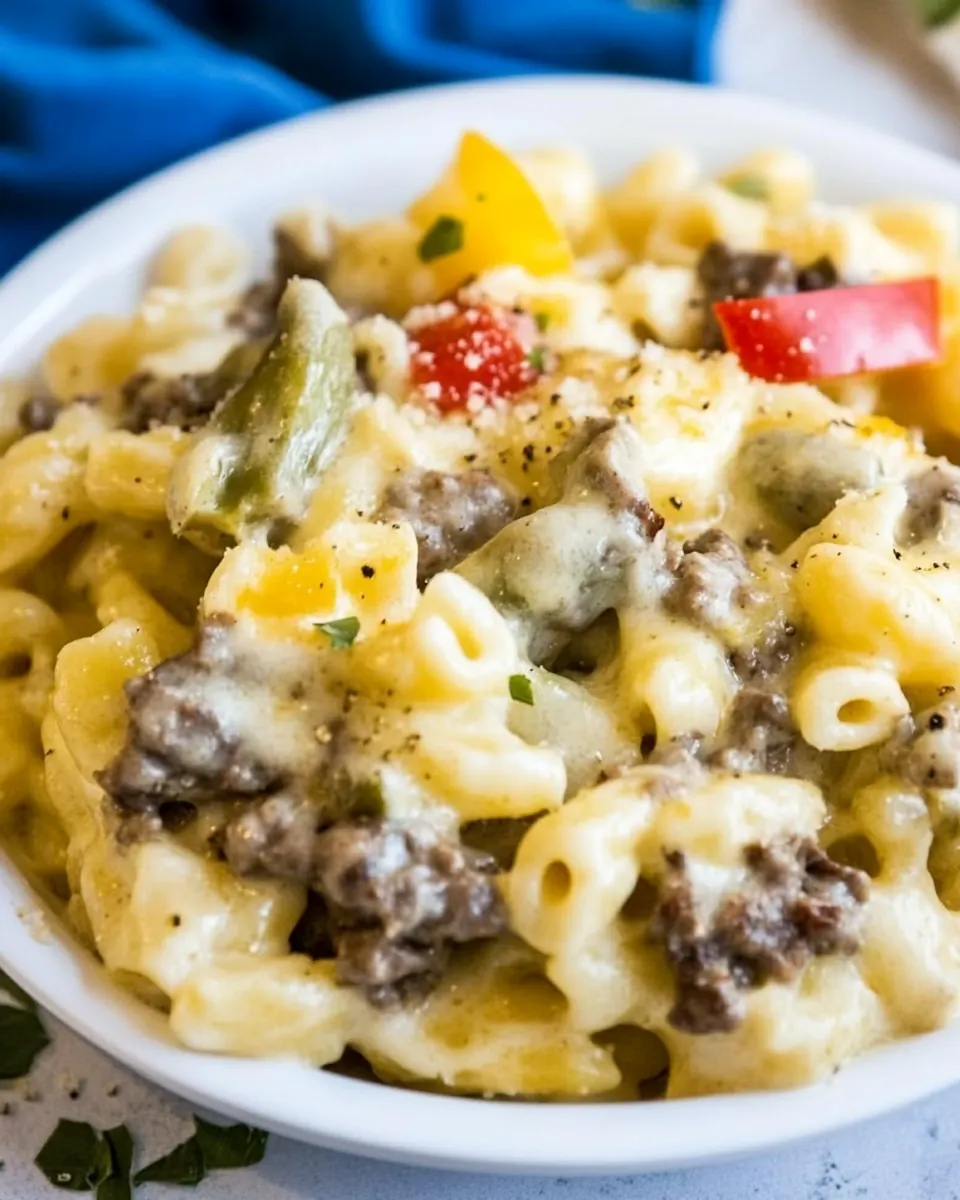
Philly Cheesesteak Mac and Cheese
Philly Cheesesteak Mac and Cheese grabbed my attention the first time I made it on a rainy weeknight when the fridge held nothing glamorous but a box of pasta and a pack of frozen steak. I remember the kitchen filling with a warm, cheesy aroma that felt like an instant hug, and I knew this hybrid was going to be a new household favorite. From that night on, it became my go to comfort dish whenever I wanted something rich, satisfying, and just a little playful.
That evening I was juggling work emails while stirring a bubbling pot, and the act of shredding cheese and sautéing peppers felt oddly therapeutic. I loved how the simple ingredients transformed into something indulgent, how the sizzling of the steak strips and the softening of the onion created layers of texture and flavor. I got to experiment with seasoning and decided that a splash of Worcestershire added the right depth without stealing the show.
Recipe Snapshot
23 mins
15 mins
8 mins
Medium
600 kcal
American
Gluten-Free, Low FODMAP
Dinner
Large pot, Large non stick pan, Colander, Whisk
What Makes This Philly Cheesesteak Mac and Cheese Special
I love the flavor mash up
There is something undeniably satisfying about combining two all time favorites into one dish. When I bite into Philly Cheesesteak Mac and Cheese, I get the creamy, melty comfort of classic mac and cheese, plus the savory, beefy notes of a cheesesteak. I find that contrast keeps every forkful exciting, and it makes this recipe perfect for family dinners when you want to make everyone smile.
The textures keep you coming back
One thing I keep telling friends is that texture matters as much as flavor. The tender bowtie pasta holds sauce differently than elbows, and the browned steak pieces add chew and savory pockets. The soft, slightly sweet onion and the crisped green bell pepper give freshness and bite, so the dish never feels one note.
Simple, pantry friendly ingredients
I appreciate recipes that are doable after a busy day. This one leans on staples like butter, flour, and whole milk, plus three kinds of cheese, so you likely have what you need. The technique is straightforward, which means you can focus on flavor adjustments rather than complicated steps, and that makes it a reliable go to on weeknights.
Comfort food that scales well
Another reason I keep this in my rotation is that it scales easily. Whether I’m cooking for two or a crowd of six, the method holds up. You can brown the steak in batches, cook the pasta while the sauce comes together, and combine everything at the end so it stays creamy and saucy without turning gluey.
Customizable, without losing character
I like that this recipe invites small tweaks. A little extra sharp cheddar brightens the profile, while more mozzarella zeroes in on oozy stretch. The core idea stays intact, so you can adapt to what you have on hand without losing what makes Philly Cheesesteak Mac and Cheese special.
Philly Cheesesteak Mac and Cheese Ingredients
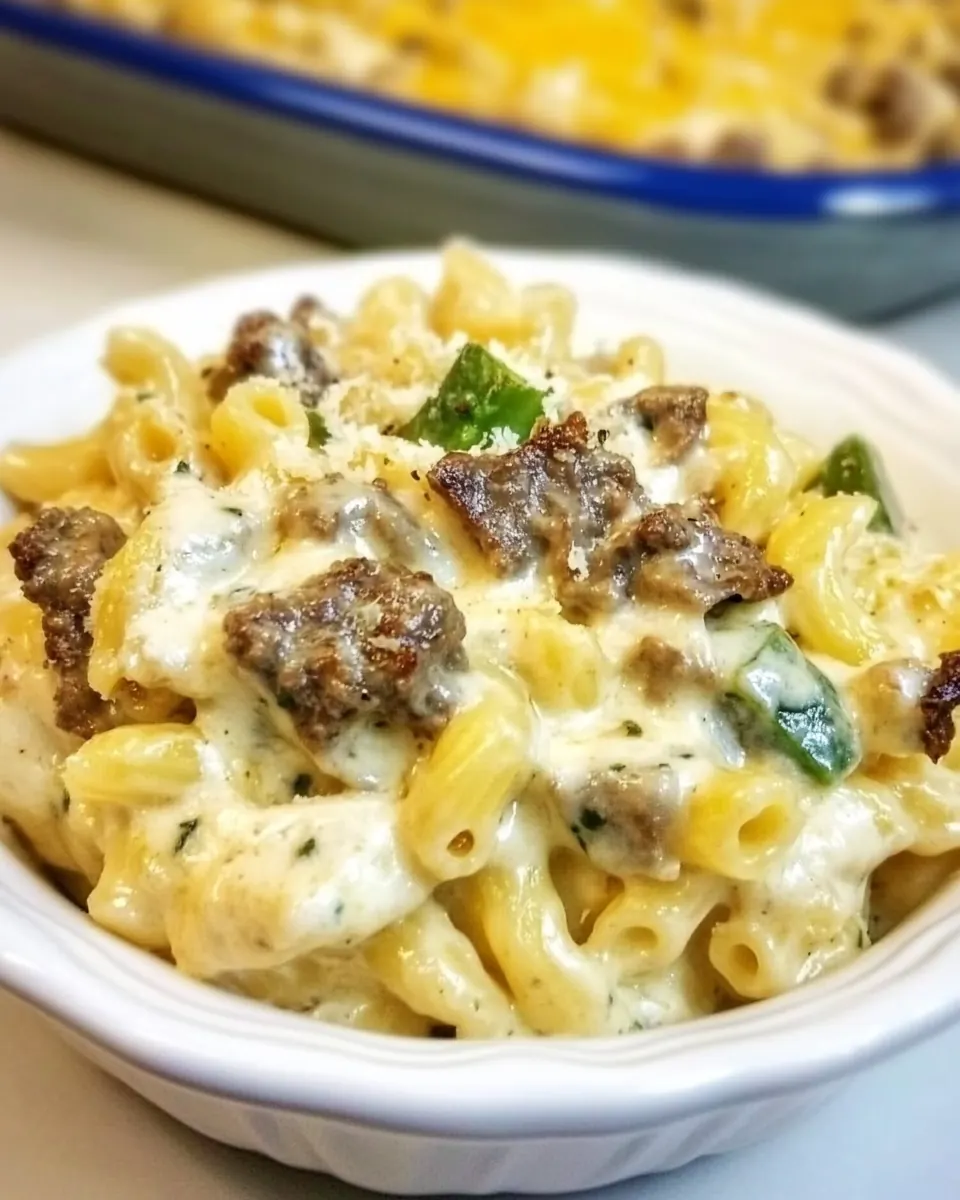
These ingredients are about balance. The pasta forms the vehicle for a rich, cheese forward sauce, while the steak, onion, and bell pepper deliver savory depth and texture. The roux of butter and flour plus whole milk builds a silky base that lets the cheeses melt evenly. Each player has a job, so the finished dish feels cohesive, creamy, and deeply satisfying.
- 12 ounces bowtie pasta: Boil to tender al dente pasta that will carry the creamy cheese sauce and chopped steak evenly throughout the dish. Use bowtie pasta to provide nooks that trap sauce and bits of pepper and onion for balanced bites.
- 10 frozen Steak-uums: Sear or dice frozen Steak–uums and crisp slightly to develop browning and savory beef flavor before combining into the mac and cheese. Deliver the characteristic cheesesteak taste and meaty texture that complements the rich cheese sauce.
- 4 tablespoons butter, divided: Melt and divide to sauté vegetables and build the roux separately, providing both cooking fat and a base for the sauce. Contribute silky mouthfeel and help brown steak and soften peppers and onions without drying them out.
- 1 green bell pepper, cut into 1/2 to 3/4 inch pieces: Sauté cut bell pepper until softened but still slightly crisp to add fresh, sweet, and vegetal notes to the dish. Provide color and mild brightness that contrasts the richness of the cheeses and meat.
- 1 medium sweet or yellow onion, coarsely chopped: Caramelize coarsely chopped onion to bring natural sweetness and depth, softening it into the sauce and mixing with the steak for authentic cheesesteak flavor. Add aromatic base notes that enhance overall savory complexity.
- salt and pepper: Season sparingly to taste during cooking and after combining ingredients to enhance flavors without overpowering the delicate cheese balance. Use both salt and pepper to round out sweetness from onions and cut the richness of dairy.
- 1/2 teaspoon Worcestershire sauce: Add a small amount to introduce a subtle tangy umami note that lifts the richness of the cheese sauce and echoes traditional cheesesteak seasoning. Stir into the sauce for rounded savory depth.
- 2 tablespoons all-purpose flour: Combine with melted butter to create a roux that thickens the milk into a smooth, stable béchamel-style cheese sauce. Whisk thoroughly into the heated milk to avoid lumps and ensure a creamy consistency.
- 3 cups whole milk: Heat gently to form the base of the sauce that the cheeses will melt into and the flour will thicken, contributing body and creaminess. Use whole milk for richness and a silky texture that binds the pasta and meat.
- 1/2 teaspoon garlic powder: Sprinkle in to impart a mild garlicky background that complements the cheeses without becoming pungent, enhancing overall savory flavor. Add to the béchamel to season uniformly throughout the sauce.
- 1 1/2 cups shredded mozzarella: Fold in shredded to provide gooey, stretchy texture and mild milky flavor that mimics the classic cheesesteak melt. Ensure even melting for a cohesive, stringy cheese pull in the finished mac and cheese.
- 1 1/2 cups shredded white American cheese: Blend shredded to create a smooth, creamy base with authentic American sandwich cheese flavor that softens and enriches the sauce. Combine with other cheeses to replicate the classic Philly cheesesteak melting profile.
- 1/2 cup shredded sharp cheddar cheese: Top or fold into the finished dish to contribute sharpness and depth, balancing the milder melters with a bit of tang and bite. Use sparingly to avoid overpowering but to provide welcome contrast in the cheese blend.
Philly Cheesesteak Mac and Cheese Instructions
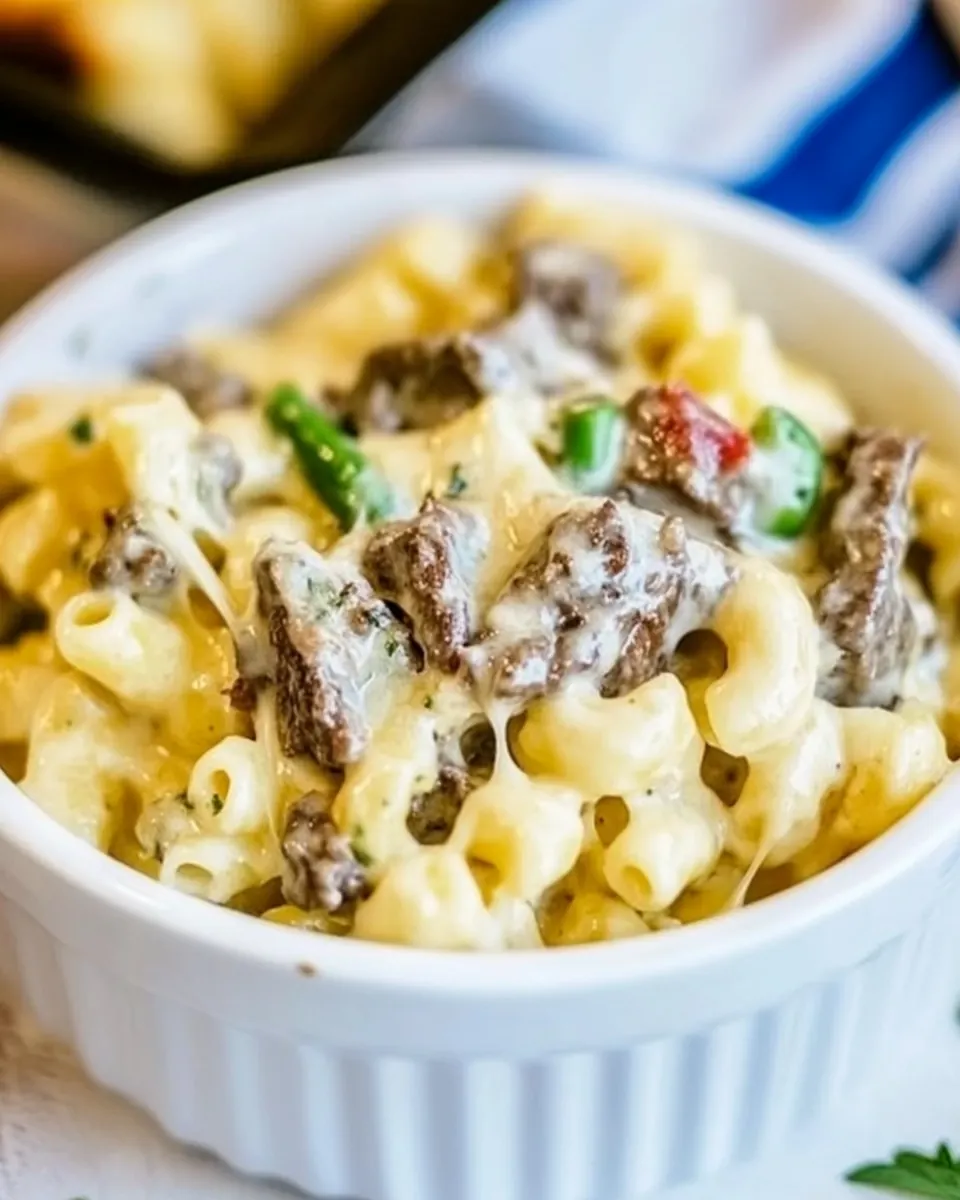
These directions are approachable, but I like to slow down at key moments so the flavors develop. Follow the order and take your time while building the sauce, because heat management and timing are what make the texture sing.
- Cook pasta in salted water and drain.: The moment the water first hits a rolling boil, add a generous pinch of salt so the bowtie pasta will season from the inside out, lending better flavor overall. You will notice the water smell subtly sharpen as the salt dissolves and the pasta will slide around as it reaches an al dente state, the right cue to drain. Use a colander and give the pasta a quick shake so it is not waterlogged when it meets the sauce, otherwise the final texture will be watery. A common misstep is overcooking, which causes gummy pasta that cannot hold the creamy sauce.
- Break Steak-uums apart and cook in a large non-stick pan over medium-high heat until browned. You will want to cook them in several batches so you don't crowd the pan. Remove from pan and set aside.: As the pan heats, the meat will hiss and quickly release a savory aroma, signaling the Maillard reaction that builds deep flavor. Browning in batches prevents steam and allows each piece to develop those caramelized edges that give chew and richness. Watch for tiny browned bits forming on the pan surface, they are flavor gold and should be left behind briefly. Overcrowding leads to grey, steamed meat lacking in texture, so resist that urge.
- Wipe the pan clean and add 2 tablespoons of butter. Melt over medium-high heat. Add green pepper and onion and cook until soft, about 5 minutes. Stir in the Worcestershire sauce.: When you add too many pieces at once, the temperature plunges and moisture collects, making browning impossible, and you will hear more of a soft simmer than a sizzle. Let each batch sizzle and brown, transferring to a plate when done so you keep those crisped edges. If you reintroduce everything too soon the meat can become rubbery, so give it a rest while you finish the other components.
- Remove onion and green pepper from pan and set aside. Season steak, onion and bell pepper to taste with salt and pepper.: Lifting the browned meat off the heat allows residual juices to settle, and you will see a sheen of fat that smells intensely savory when the pan is empty. Letting the cooked pieces rest prevents them from releasing moisture back into the sauce, which could dilute texture. A mistake is letting them sit in a covered dish where steam softens the crust, so keep them loosely tented if you need to hold them briefly.
- Add remaining 2 tablespoons of butter to the pan. Once melted add flour, and cook and stir for 1 minute.: Cleaning the pan removes burnt bits that could bitter the sauce; when you add butter , it should melt and foam slightly, releasing a nutty aroma. This is the base for sautéing the vegetables, and a clean surface ensures even cooking and bright flavor. If you skip wiping, old burned residues will taint the new flavors.
- Gradually whisk in the milk. Simmer for a few minutes to thicken. Add garlic powder.: The butter will shimmer and release a warm, creamy scent, sign that the pan is ready for the green bell pepper and onion . Cooking at this heat lets the vegetables soften without becoming mushy, and you will hear a steady gentle sizzle. Too high heat will brown them too quickly, losing sweet notes, while too low will make them sweat with little flavor development.
- Reduce heat to low and stir in the cheese in 4 or 5 batches.: You will notice the pepper colors brighten and the onion become translucent, with a soft sweet perfume rising as they lose bite. Stir occasionally so they cook evenly and don t develop burnt edges, aiming for tender yet slightly textural pieces. If you overcook until deeply browned, you will shift toward caramelized flavors, which is fine but different from the intended bright, softened vegetables.
- Stir in pasta, steak, onion, and peppers. Serve.: A small splash will deepen the simmering vegetables with an umami roundedness, and the pan scents will grow more complex. This addition ties the meat flavor into the veg, creating continuity in the final mix. Measure carefully, since too much can introduce a tangy note that competes with the cheeses.
- Remove onion and green pepper from pan and set aside: Taking them off the heat preserves their texture and prevents over softening while you build the sauce, and you will still see flecks of seasoning clinging to them, which is flavor to bring back later. Holding them separately also allows you to check seasoning before recombining. Leaving them to sit in the hot pan will continue cooking them unintentionally.
- Season steak, onion and bell pepper to taste with salt and pepper: A light seasoning here ensures every component is seasoned individually, which avoids a bland final dish. Taste a small piece of the cooked onion or pepper to confirm levels, because the cheeses will add saltiness later. The mistake to avoid is under seasoning now and over salting later; balance is key.
- Add remaining 2 tablespoons of butter to the pan: This second portion of butter creates the fat base for the roux, and you will see it melt and foam, ready to marry with the flour . The scent at this stage becomes rich and toasted, which sets up the creamy sauce body. Using less fat will produce a thin sauce that won t cling; using too much will make it greasy.
- Once melted add flour, and cook and stir for 1 minute: The flour should bubble softly in the fat and lose its raw taste as it cooks, giving off a warm, toasty aroma. This step thickens the milk later and prevents a runny sauce, so stir constantly to avoid hot spots. Failing to cook the flour long enough will leave a pasty texture in the finished sauce.
- Gradually whisk in the milk: Adding the whole milk slowly while whisking prevents lumps and creates a silky, glossy base; you will see the sauce go from dull to shiny as it smooths out. Bring it to a gentle simmer so it reduces slightly and thickens. Rushing this step or adding all the milk at once can create clumps that are hard to break down.
- Simmer for a few minutes to thicken: As the sauce simmers it will coat the back of a spoon and release steam with a comforting dairy aroma, signaling the right consistency. This reduction concentrates flavor and gives the cheese something to cling to. If you boil vigorously, the sauce can scald and develop a scorched flavor, so keep it gentle.
- Add garlic powder: The powdered garlic blends in to boost savory notes without the bite of fresh garlic, and you will notice the aroma become rounder and more layered. Incorporating it while the sauce simmers ensures it disperses evenly. Adding too much will create a powdered aftertaste rather than a subtle lift.
- Reduce heat to low and stir in the cheese in 4 or 5 batches: Lowering the heat prevents the cheese from seizing or separating, and adding it gradually helps it melt into a velvety, cohesive sauce. Each addition should melt smoothly into glossy ribbons, and you will hear a quiet settling as the sauce becomes denser. If you add all the cheese at once or keep the heat high, the fats can separate and the sauce will look grainy.
- Stir in pasta, steak, onion, and peppers: When everything comes together, the steam and aroma will be unmistakable, and the bowtie pasta will glisten with sauce, dotted by browned meat and vegetables. Fold gently so the components remain distinct and the sauce coats every piece. Over stirring can break down the pasta and make the dish pasty.
- Serve: Spoon into bowls while warm so the sauce is luxuriously gooey, and enjoy the interplay of creamy, savory, and slightly sweet flavors. If holding for a short time, keep it loosely covered to maintain creaminess; prolonged holding will thicken the sauce, so you'll need a splash of milk to revive it. A common misstep is reheating aggressively, which can separate the sauce and dry the pasta.
Ways to Customize
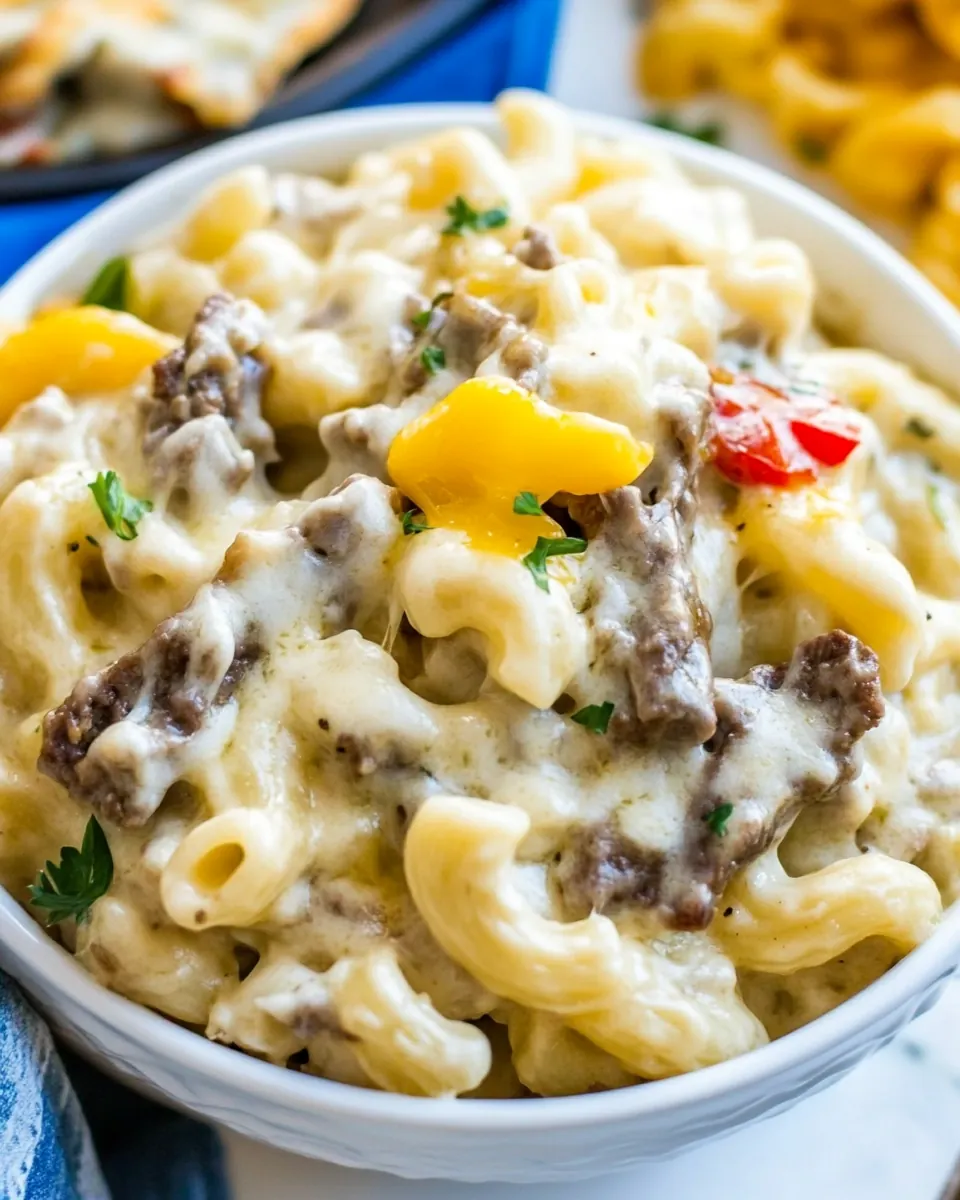
This dish is flexible, and small changes shift its personality while keeping the comforting core intact. Below are ideas to make it creamier, sharper, or more textured depending on your mood and pantry.
- Make it extra creamy, by stirring in a splash of reserved pasta water or an additional two tablespoons of whole milk at the end to loosen the sauce without watering down flavor.
- Boost the tang, by increasing the amount of sharp cheddar slightly to add a bright, savory counterpoint to the mellow American cheese.
- Keep it leaner, by draining any excess rendered fat after browning the steak, which reduces greasiness while preserving flavor.
- Adjust the vegetable texture, by cutting the green bell pepper finer for a more integrated bite, or in larger chunks if you prefer a fresher crunch.
- Hold the sauce looser, by adding reserved pasta water one tablespoon at a time until you reach the desired consistency, this helps the sauce cling without being thick.
Great Combinations for Philly Cheesesteak Mac and Cheese
This dish stands up well to simple, fresh companions and relaxed occasions. Below are ideas for what to serve alongside it, times to enjoy it, and how to store leftovers so you can enjoy it again later.
- Fresh green salad — A crisp salad with a light vinaigrette balances the richness and adds a refreshing counterpoint on weeknight dinners.
- Roasted vegetables — Oven roasted carrots or broccoli provide caramelized notes and extra texture for a heartier meal.
- Casual gatherings — Serve this as a main for relaxed weekend lunches or game day spreads where people can scoop generous helpings.
- Make ahead and store — Refrigerate leftovers in an airtight container for up to three days, and gently reheat with a splash of milk to revive creaminess.
- Seasonal pairing — In colder months, this recipe is ideal for cozy dinners and potlucks because it is comforting and easy to transport in a covered dish.
FAQ
Conclusion
What makes this recipe special is the playful union of two beloved comfort foods, delivering creamy cheese sauce and savory browned steak in every bite. Give it a try on a night when you want something indulgent yet reliably simple, and don t be afraid to tweak the cheese blend to suit your family s taste. It s a warming, crowd pleasing dish that brings familiar flavors together in a way that feels both comforting and fun.
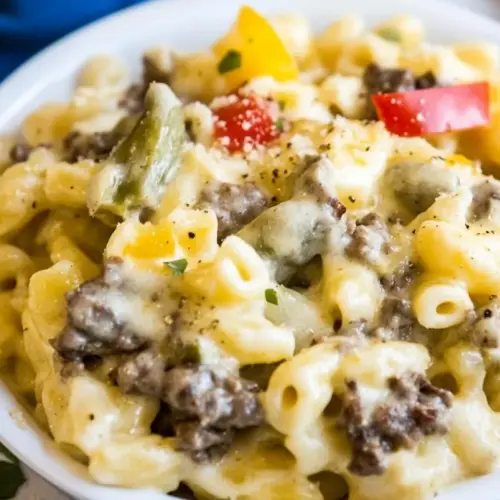
Philly Cheesesteak Mac and Cheese
Equipment
- Large Pot
- Large non stick pan
- Colander
- Whisk
Ingredients
- 12 ounces bowtie pasta Boil to tender al dente pasta that will carry the creamy cheese sauce and chopped steak evenly throughout the dish. Use bowtie pasta to provide nooks that trap sauce and bits of pepper and onion for balanced bites.
- 10 frozen Steak-uums Sear or dice frozen Steak-uums and crisp slightly to develop browning and savory beef flavor before combining into the mac and cheese. Deliver the characteristic cheesesteak taste and meaty texture that complements the rich cheese sauce.
- 4 tablespoons butter, divided Melt and divide to sauté vegetables and build the roux separately, providing both cooking fat and a base for the sauce. Contribute silky mouthfeel and help brown steak and soften peppers and onions without drying them out.
- 1 green bell pepper, cut into 1/2 to 3/4 inch pieces Sauté cut bell pepper until softened but still slightly crisp to add fresh, sweet, and vegetal notes to the dish. Provide color and mild brightness that contrasts the richness of the cheeses and meat.
- 1 medium sweet or yellow onion, coarsely chopped Caramelize coarsely chopped onion to bring natural sweetness and depth, softening it into the sauce and mixing with the steak for authentic cheesesteak flavor. Add aromatic base notes that enhance overall savory complexity.
- salt and pepper Season sparingly to taste during cooking and after combining ingredients to enhance flavors without overpowering the delicate cheese balance. Use both salt and pepper to round out sweetness from onions and cut the richness of dairy.
- 1/2 teaspoon Worcestershire sauce Add a small amount to introduce a subtle tangy umami note that lifts the richness of the cheese sauce and echoes traditional cheesesteak seasoning. Stir into the sauce for rounded savory depth.
- 2 tablespoons all-purpose flour Combine with melted butter to create a roux that thickens the milk into a smooth, stable béchamel-style cheese sauce. Whisk thoroughly into the heated milk to avoid lumps and ensure a creamy consistency.
- 3 cups whole milk Heat gently to form the base of the sauce that the cheeses will melt into and the flour will thicken, contributing body and creaminess. Use whole milk for richness and a silky texture that binds the pasta and meat.
- 1/2 teaspoon garlic powder Sprinkle in to impart a mild garlicky background that complements the cheeses without becoming pungent, enhancing overall savory flavor. Add to the béchamel to season uniformly throughout the sauce.
- 1 1/2 cups shredded mozzarella Fold in shredded to provide gooey, stretchy texture and mild milky flavor that mimics the classic cheesesteak melt. Ensure even melting for a cohesive, stringy cheese pull in the finished mac and cheese.
- 1 1/2 cups shredded white American cheese Blend shredded to create a smooth, creamy base with authentic American sandwich cheese flavor that softens and enriches the sauce. Combine with other cheeses to replicate the classic Philly cheesesteak melting profile.
- 1/2 cup shredded sharp cheddar cheese Top or fold into the finished dish to contribute sharpness and depth, balancing the milder melters with a bit of tang and bite. Use sparingly to avoid overpowering but to provide welcome contrast in the cheese blend.
Instructions
- Cook pasta in salted water and drain.: The moment the water first hits a rolling boil, add a generous pinch of salt so the bowtie pasta will season from the inside out, lending better flavor overall. You will notice the water smell subtly sharpen as the salt dissolves and the pasta will slide around as it reaches an al dente state, the right cue to drain. Use a colander and give the pasta a quick shake so it is not waterlogged when it meets the sauce, otherwise the final texture will be watery. A common misstep is overcooking, which causes gummy pasta that cannot hold the creamy sauce.
- Break Steak-uums apart and cook in a large non-stick pan over medium-high heat until browned. You will want to cook them in several batches so you don't crowd the pan. Remove from pan and set aside.: As the pan heats, the meat will hiss and quickly release a savory aroma, signaling the Maillard reaction that builds deep flavor. Browning in batches prevents steam and allows each piece to develop those caramelized edges that give chew and richness. Watch for tiny browned bits forming on the pan surface, they are flavor gold and should be left behind briefly. Overcrowding leads to grey, steamed meat lacking in texture, so resist that urge.
- Wipe the pan clean and add 2 tablespoons of butter. Melt over medium-high heat. Add green pepper and onion and cook until soft, about 5 minutes. Stir in the Worcestershire sauce.: When you add too many pieces at once, the temperature plunges and moisture collects, making browning impossible, and you will hear more of a soft simmer than a sizzle. Let each batch sizzle and brown, transferring to a plate when done so you keep those crisped edges. If you reintroduce everything too soon the meat can become rubbery, so give it a rest while you finish the other components.
- Remove onion and green pepper from pan and set aside. Season steak, onion and bell pepper to taste with salt and pepper.: Lifting the browned meat off the heat allows residual juices to settle, and you will see a sheen of fat that smells intensely savory when the pan is empty. Letting the cooked pieces rest prevents them from releasing moisture back into the sauce, which could dilute texture. A mistake is letting them sit in a covered dish where steam softens the crust, so keep them loosely tented if you need to hold them briefly.
- Add remaining 2 tablespoons of butter to the pan. Once melted add flour, and cook and stir for 1 minute.: Cleaning the pan removes burnt bits that could bitter the sauce; when you add butter , it should melt and foam slightly, releasing a nutty aroma. This is the base for sautéing the vegetables, and a clean surface ensures even cooking and bright flavor. If you skip wiping, old burned residues will taint the new flavors.
- Gradually whisk in the milk. Simmer for a few minutes to thicken. Add garlic powder.: The butter will shimmer and release a warm, creamy scent, sign that the pan is ready for the green bell pepper and onion . Cooking at this heat lets the vegetables soften without becoming mushy, and you will hear a steady gentle sizzle. Too high heat will brown them too quickly, losing sweet notes, while too low will make them sweat with little flavor development.
- Reduce heat to low and stir in the cheese in 4 or 5 batches.: You will notice the pepper colors brighten and the onion become translucent, with a soft sweet perfume rising as they lose bite. Stir occasionally so they cook evenly and don t develop burnt edges, aiming for tender yet slightly textural pieces. If you overcook until deeply browned, you will shift toward caramelized flavors, which is fine but different from the intended bright, softened vegetables.
- Stir in pasta, steak, onion, and peppers. Serve.: A small splash will deepen the simmering vegetables with an umami roundedness, and the pan scents will grow more complex. This addition ties the meat flavor into the veg, creating continuity in the final mix. Measure carefully, since too much can introduce a tangy note that competes with the cheeses.
- Remove onion and green pepper from pan and set aside: Taking them off the heat preserves their texture and prevents over softening while you build the sauce, and you will still see flecks of seasoning clinging to them, which is flavor to bring back later. Holding them separately also allows you to check seasoning before recombining. Leaving them to sit in the hot pan will continue cooking them unintentionally.
- Season steak, onion and bell pepper to taste with salt and pepper: A light seasoning here ensures every component is seasoned individually, which avoids a bland final dish. Taste a small piece of the cooked onion or pepper to confirm levels, because the cheeses will add saltiness later. The mistake to avoid is under seasoning now and over salting later; balance is key.
- Add remaining 2 tablespoons of butter to the pan: This second portion of butter creates the fat base for the roux, and you will see it melt and foam, ready to marry with the flour . The scent at this stage becomes rich and toasted, which sets up the creamy sauce body. Using less fat will produce a thin sauce that won t cling; using too much will make it greasy.
- Once melted add flour, and cook and stir for 1 minute: The flour should bubble softly in the fat and lose its raw taste as it cooks, giving off a warm, toasty aroma. This step thickens the milk later and prevents a runny sauce, so stir constantly to avoid hot spots. Failing to cook the flour long enough will leave a pasty texture in the finished sauce.
- Gradually whisk in the milk: Adding the whole milk slowly while whisking prevents lumps and creates a silky, glossy base; you will see the sauce go from dull to shiny as it smooths out. Bring it to a gentle simmer so it reduces slightly and thickens. Rushing this step or adding all the milk at once can create clumps that are hard to break down.
- Simmer for a few minutes to thicken: As the sauce simmers it will coat the back of a spoon and release steam with a comforting dairy aroma, signaling the right consistency. This reduction concentrates flavor and gives the cheese something to cling to. If you boil vigorously, the sauce can scald and develop a scorched flavor, so keep it gentle.
- Add garlic powder: The powdered garlic blends in to boost savory notes without the bite of fresh garlic, and you will notice the aroma become rounder and more layered. Incorporating it while the sauce simmers ensures it disperses evenly. Adding too much will create a powdered aftertaste rather than a subtle lift.
- Reduce heat to low and stir in the cheese in 4 or 5 batches: Lowering the heat prevents the cheese from seizing or separating, and adding it gradually helps it melt into a velvety, cohesive sauce. Each addition should melt smoothly into glossy ribbons, and you will hear a quiet settling as the sauce becomes denser. If you add all the cheese at once or keep the heat high, the fats can separate and the sauce will look grainy.
- Stir in pasta, steak, onion, and peppers: When everything comes together, the steam and aroma will be unmistakable, and the bowtie pasta will glisten with sauce, dotted by browned meat and vegetables. Fold gently so the components remain distinct and the sauce coats every piece. Over stirring can break down the pasta and make the dish pasty.
- Serve: Spoon into bowls while warm so the sauce is luxuriously gooey, and enjoy the interplay of creamy, savory, and slightly sweet flavors. If holding for a short time, keep it loosely covered to maintain creaminess; prolonged holding will thicken the sauce, so you'll need a splash of milk to revive it. A common misstep is reheating aggressively, which can separate the sauce and dry the pasta.
Notes
- Make it extra creamy, by stirring in a splash of reserved pasta water or an additional two tablespoons of whole milk at the end to loosen the sauce without watering down flavor.
- Boost the tang, by increasing the amount of sharp cheddar slightly to add a bright, savory counterpoint to the mellow American cheese.
- Keep it leaner, by draining any excess rendered fat after browning the steak, which reduces greasiness while preserving flavor.
- Adjust the vegetable texture, by cutting the green bell pepper finer for a more integrated bite, or in larger chunks if you prefer a fresher crunch.
- Hold the sauce looser, by adding reserved pasta water one tablespoon at a time until you reach the desired consistency, this helps the sauce cling without being thick.
