Steak Salad
Steak Salad has been one of those recipes I turn to when I want a meal that feels both indulgent and refreshingly light. The first time I made it for friends, I remember the kitchen filling with the smoky aroma of grilled flank steak as we sipped iced tea on the back porch, swapping stories. That evening the mix of warm, savory steak and cool, peppery arugula made everything feel balanced, like summer and comfort food had finally agreed on a menu.
I learned to treat this dish as a small ritual. I always pat the steak dry, season it simply with kosher salt and ground black pepper, and let it sit while I prep the rest. The quick marinade of balsamic vinegar and extra virgin olive oil gives the meat a gentle tang without smothering its natural flavor. Meanwhile I slice a large red onion into rings and toss them on the grill until they show those gorgeous char marks, which adds a layer of sweetness and smoke that plays beautifully against the crumbled blue cheese.
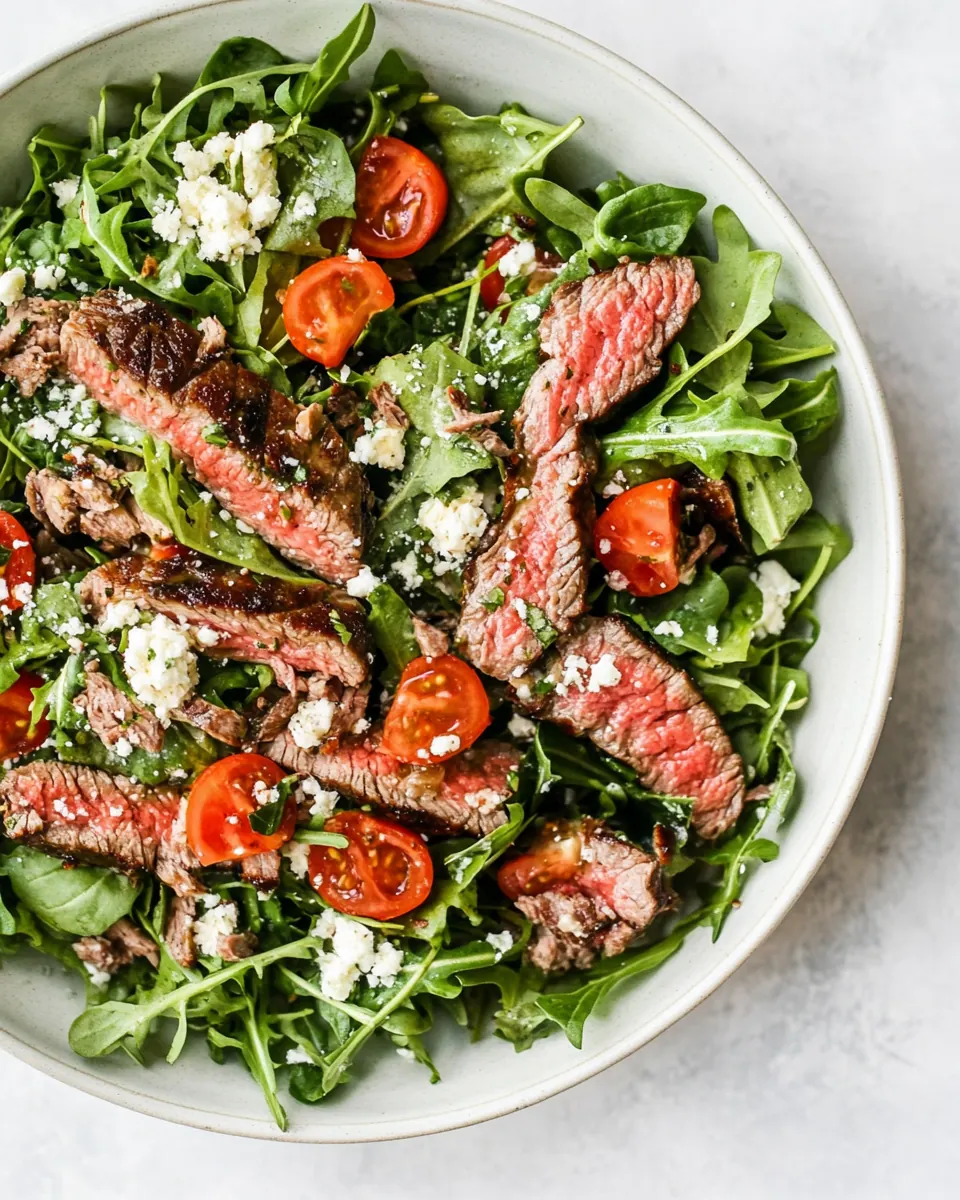
When assembling the salad I like to think of it as layering memories: the bright burst of cherry tomatoes, the bitter bite of extra arugula, the creamy pockets of blue cheese, and the tender ribbons of sliced steak. Each forkful tells a small story, and people always ask for the recipe. Over time I adjusted the dressing, balancing balsamic vinegar with a touch of Dijon mustard and honey, which brings everything together without overpowering the main players. It’s a recipe that travels well from weeknight supper to casual dinner party.
Recipe Snapshot
26 mins
20 mins
6 mins
Medium
450 kcal
American
Gluten-Free, Keto
Dinner
Grill or broiler, Rimmed baking pan, Ziptop bag or large bowl, Cutting board, Sharp knife, Mixing bowl, Whisk
Why This Steak Salad Shines
Bold contrast of textures
I adore how Steak Salad pairs tender, warm steak with crisp, cool greens. The contrast keeps every bite interesting, your teeth meeting the juicy meat then the crunchy greens, and that textural interplay is the heart of why I make this often.
Fast yet impressive
When friends arrive unexpectedly, this recipe shines because the actual active time is short. I can marinate the steak ahead or at room temperature, grill quickly, and assemble the salad while the meat rests. It looks restaurant worthy, and I always feel proud serving it.
Flavor balance
The dressing tucks acidity from balsamic vinegar and sweet notes from honey behind a savory backbone of Dijon mustard and olive oil. That balance lets the crumbled blue cheese shine without being cloying, and the grilled onion adds a caramelized depth that keeps things grounded.
Flexible and forgiving
I love that Steak Salad adapts to what I have on hand. Use flank steak, skirt steak, or hanger steak, swap greens among mixed lettuces and arugula, and the recipe still sings. It is forgiving on portions and timing, which makes it an everyday favorite.
Seasonless appeal
This dish travels well across seasons. In summer the grilled onion and tomatoes feel bright, while in cooler months the warm steak offers comfort. Because of that versatility, I reach for it year round.
Steak Salad Shopping List
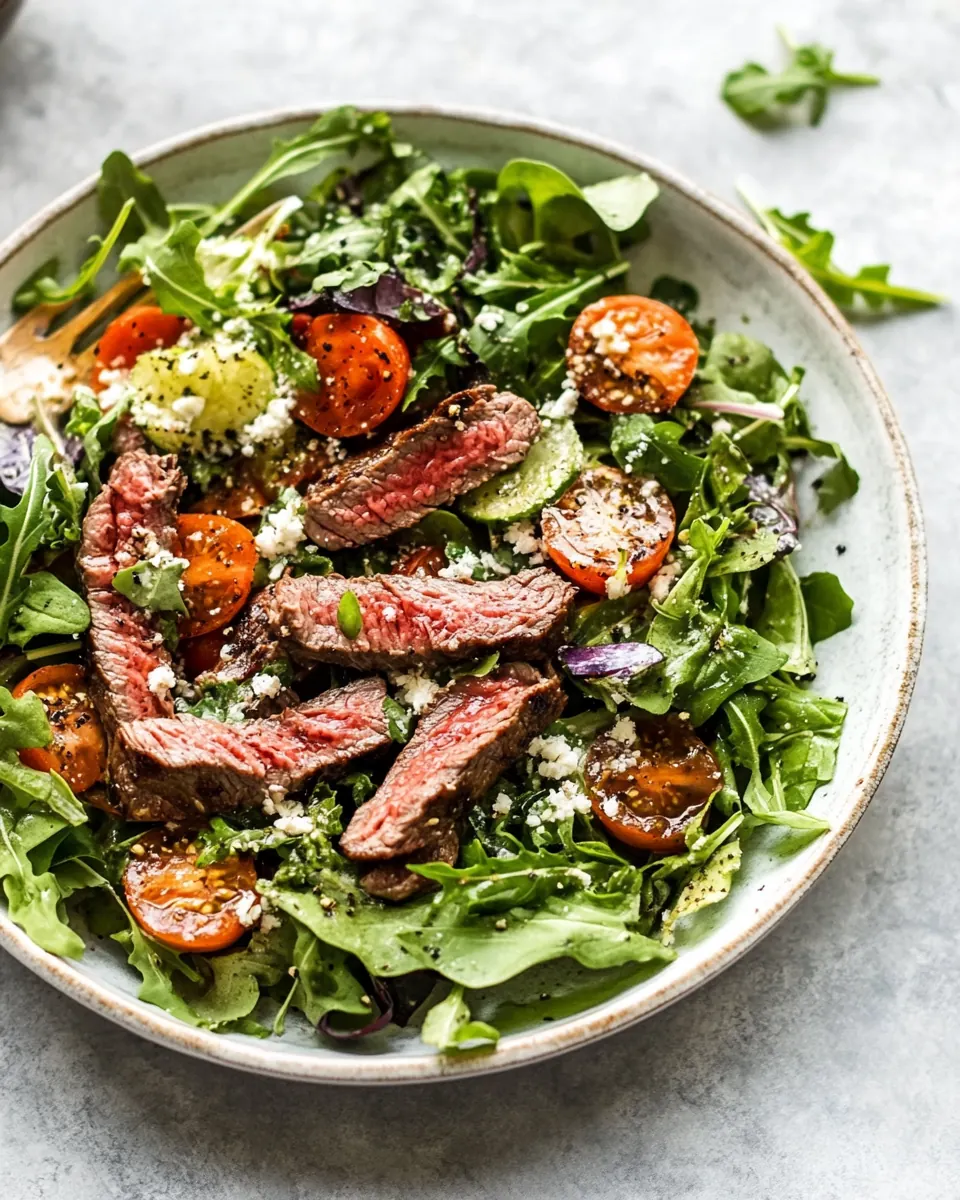
These ingredients come together like a small orchestra, each player contributing a clear voice. The steak is the soloist, delivering savory depth. Greens like arugula and mixed lettuces provide a crisp backdrop, while halved cherry tomatoes add bursts of sweetness. The dressing components, including balsamic vinegar, extra virgin olive oil, Dijon mustard, and honey, act like the conductor, tying everything into a harmonious whole.
- 1 1/4 pounds flank steak, skirt steak, or hanger steak: Season and tenderize the steak while providing the primary protein; cook to desired doneness and slice thinly against the grain for salads.
- 1 1/2 teaspoons kosher salt: Enhance overall flavor and help draw out moisture when seasoning the steak and salad components; balances acidity in dressings.
- 1/2 teaspoon ground black pepper: Add a sharp, pungent heat when seasoning steak or dressings; helps balance richness and brighten flavors.
- 2 tablespoons balsamic vinegar: Provide bright acidity and a slightly sweet, tangy backbone to marinades or dressings; helps tenderize the steak when used before cooking.
- 1 tablespoon extra-virgin olive oil: Contribute a fruity, smooth fat for searing or finishing; helps carry flavors in marinades and dressings.
- 1 large red onion: Offer a sweet-sharp crunch and mild pungency when grilled or sliced raw; adds texture and savory-sweet contrast to the salad.
- 1 pint cherry tomatoes: Bring juicy sweetness and freshness; halved or whole, they add color, acidity, and bursts of flavor to each bite.
- 3 cups mixed greens, chopped romaine, spinach, or lettuces of choice: Supply a sturdy, crisp base and bulk to the salad; chopped romaine, spinach, or lettuces add texture, freshness, and volume.
- 3 cups arugula: Deliver a peppery, slightly bitter green that adds aromatic bite and balances rich steak and cheese in the salad.
- 4 ounces crumbled blue cheese, such as gorgonzola, divided: Add creamy, salty, and tangy richness to the salad; dividing the cheese allows some for garnish and some folded into the dressing if desired.
- extra virgin olive oil for grilling the onion: Provide fat for cooking the onion and developing caramelization; prevents sticking and imparts a subtle olive flavor.
- 1/4 cup balsamic vinegar: Offer sweet, concentrated acidity for glazing grilled onion or dressing the salad; enhances savory components and balances oil.
- 3 tablespoons extra virgin olive oil: Act as a rich, fruity fat in the dressing; emulsifies with vinegar and mustard to coat salad ingredients evenly.
- 1 teaspoon Dijon mustard: Give a sharp, savory emulsifying element in dressings; binds oil and vinegar while adding a subtle tang.
- 1 teaspoon honey: Introduce mild sweetness to round out the dressing and balance acidity from vinegar and mustard.
- 3/4 teaspoon kosher salt plus additional to taste: Provide seasoning depth and structure to dressings and finished salad; allows for initial seasoning and later adjustment to taste.
- 1/8 teaspoon ground black pepper plus additional to taste: Add a subtle warm bite to dressings and finished dish; used sparingly to complement salt and sweetness.
The Process for Making Steak Salad
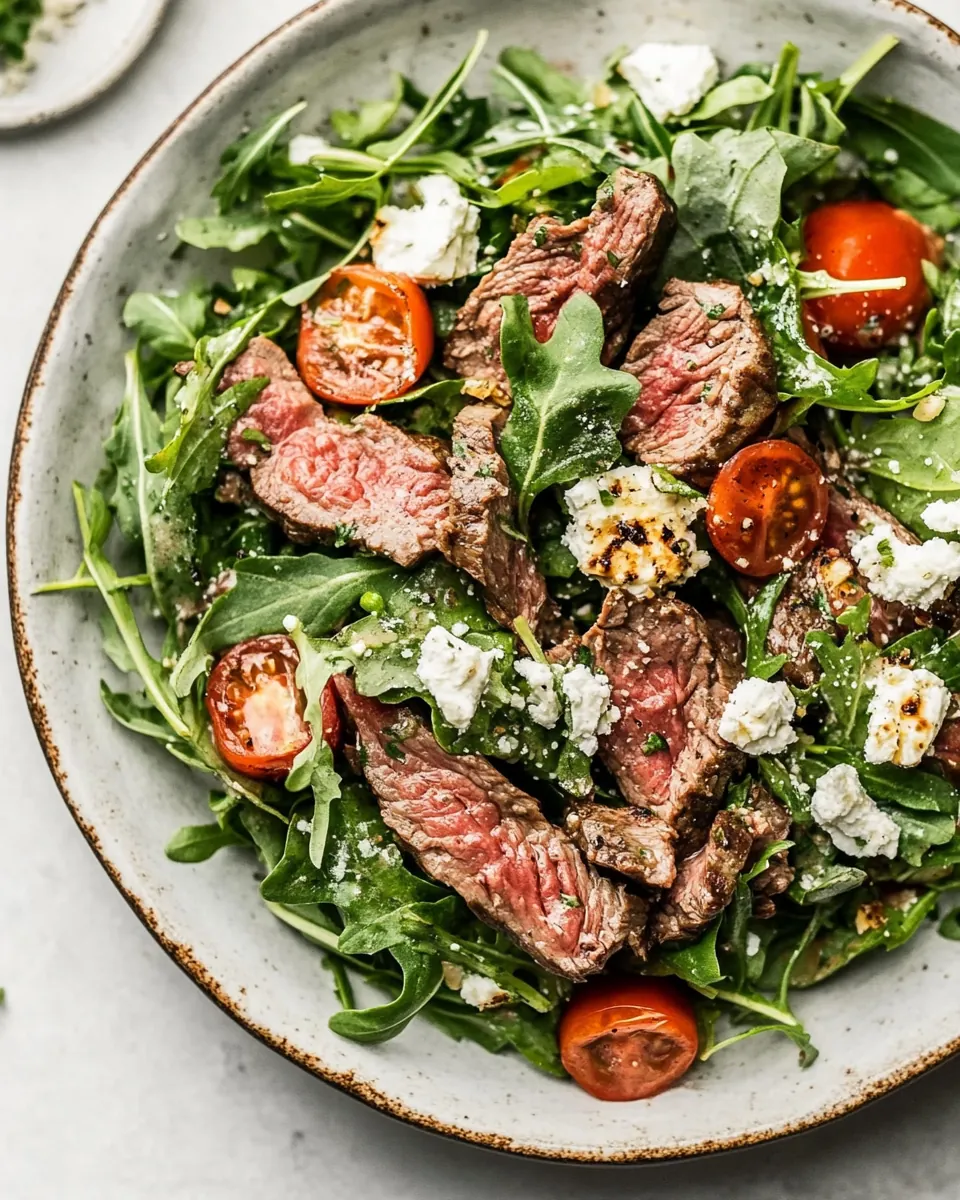
Working through these steps, you’ll move from prepping ingredients to resting and assembling. I like to keep the kitchen organized so each sensory cue tells me when the next action is ready. Listen for sizzles, watch for char, and breathe in the deepening aromas.
- Prep the steak: With paper towels, pat the steak dry. Place in a large ziptop bag or large bowl, with the salt, pepper, balsamic vinegar, and oil. Seal the bag (if using), removing as much air as possible. Turn to coat the steak. Set aside at room temperature for 30 minutes, or refrigerate overnight.: The room fills with a dryer warmth as you pat the steak dry with paper towels, which helps the surface brown more effectively when exposed to heat. When you combine the steak with the measured kosher salt , ground black pepper , 2 tablespoons of balsamic vinegar , and 1 tablespoon of extra–virgin olive oil in a large ziptop bag or bowl, the meat picks up a glossy sheen and a faint tangy scent. Gently pressing out excess air in the bag helps the marinade cling to the steak , but because this is a quick marinade, the idea is to lightly coat rather than fully saturate. Letting the meat sit at room temperature for 30 minutes relaxes muscle fibers so the steak cooks evenly, and refrigerating overnight deepens flavor if you plan ahead. Common mistake to avoid, don't over marinate acidic mixtures for too long, as they can break down the meat and create a mushy texture.
- Meanwhile, cut the onion into 1/2-inch thick rings. Lightly brush each side with olive oil. Cut the cherry tomatoes in half.: As you slice the red onion into 1/2-inch thick rings, the kitchen gets a sharp, sweet aroma; brushing both sides with extra virgin olive oil prevents sticking and helps the natural sugars caramelize under heat. Halving the cherry tomatoes releases their juicy perfume and exposes their seeds, which will burst with flavor on the plate. This prep is about controlling moisture and creating surfaces that will char or soften evenly. A typical misstep is slicing uneven rings, which creates inconsistent grilling and burnt edges on thinner pieces.
- Make the dressing: In a medium bowl or large measuring cup, whisk together the balsamic, oil, Dijon, honey, salt, and pepper.: Whisking together 1/4 cup balsamic vinegar , 3 tablespoons extra virgin olive oil , 1 teaspoon Dijon mustard , 1 teaspoon honey , 3/4 teaspoon kosher salt , and 1/8 teaspoon ground black pepper yields a glossy vinaigrette that smells bright and faintly sweet. The mustard helps emulsify the mixture so the oil does not separate, creating a smooth coating for the greens. Taste and adjust, keeping in mind the vinaigrette should be lively but not overpower the steak or blue cheese . Avoid adding too much salt at once, since the cheese and steak will contribute additional seasoning when tossed.
- Cook the steak and onion: Heat the grill over medium-high heat (425 to 450 degrees F) or heat the oven’s broiler. If using the broiler, line a rimmed baking pan with foil. Remove the steak from the marinade, allowing as much excess marinade as possible to drip away. Grill or broil the onion and steak, until the steak is medium-rare and the onion is charred on both sides—3 to 4 minutes per side depending on its thickness, until the steak reaches 130 degrees F on an instant read thermometer. (If you like your steak more well done, cook it 1 to 2 minutes more, but note that it will be tough).: Preheating to medium high, around 425 to 450 degrees F, ensures a hot cooking surface that sears meat and chars onion rings quickly. If using the oven broiler, line a rimmed baking pan with foil to catch drips and make cleanup simple. A properly heated grill will give a satisfying sizzle when the steak hits the grates, creating a crust that locks in juices. The wrong move here is rushing to cook on a cool surface, which leads to gray, steamed meat rather than a flavorful sear.
- Place the steak on a cutting board and let rest at least 5 minutes.: As the steak and onion meet intense heat, you should hear a steady sizzle and see the edges begin to caramelize; charred marks on the onion add smoky sweetness while the steak develops a richly browned crust. Grill or broil each side 3 to 4 minutes depending on thickness, aiming for an internal temperature of 130 degrees F for medium rare. Resting after cooking is critical to let juices redistribute; skipping this will cause the steak to lose more juices when sliced. If you prefer more done meat, cook an extra 1 to 2 minutes per side, but note that overcooking tougher cuts can make them less tender.
- In a large bowl, place the mixed greens, arugula, halved tomatoes, half of the cheese, and the grilled onions (separate the rings as you add them).: After removing the steak from heat, place it on a cutting board and let it rest for at least 5 minutes, during which aromas settle and surface juices retract slightly. Resting produces a juicier texture when you slice, and the meat will feel firmer to the touch as it carries residual heat. Avoid the urge to slice immediately, as cutting too soon lets flavorful juices run out and leaves you with drier slices on the plate.
- Add enough dressing over the top to moisten, then toss to coat. Divide the salad between individual plates, or place in the center of a large serving plate.: In a large bowl combine 3 cups mixed greens , 3 cups arugula , the halved cherry tomatoes , half of the crumbled blue cheese , and the grilled onions separated into rings. Tossing these ingredients together releases the tomatoes' juices onto the leaves, creating a light dressing base even before vinaigrette is added. The visual contrast here is important, aim for an even distribution so each plate gets a mix of textures. A common error is overdressing at this stage, which wilts the greens prematurely.
- VERY thinly slice the steak across the grain (about 1/4-inch wide). Serve on top of or alongside the salad. Sprinkle on the remaining blue cheese. Enjoy!: Drizzle enough of the vinaigrette over the salad to moisten the leaves, then toss to coat evenly, making sure the dressing clings to leaves and tomatoes without pooling. The emulsion should lightly coat the salad, offering glossy sheen and balanced acidity. When tossing, lift from the bottom to avoid crushing the components, and stop when the colors look vibrant and slightly glossy. Too much dressing will drown the delicate textures and mask the steak's flavor.
- Slice the steak thinly: Using a sharp knife, very thinly slice the steak across the grain into roughly 1/4-inch wide ribbons, which keeps each bite tender and easy to chew. The cross grain cut shortens muscle fibers and makes the meat feel more tender on the palate. Arrange slices on top of or alongside the salad so warm meat briefly warms the leaves without making them soggy. A frequent mistake is cutting with the grain, which makes pieces chewier and tougher.
- Finish and serve: Scatter the remaining crumbled blue cheese over the plated salad and add additional cracked ground black pepper or kosher salt if desired. The combination of warm steak , charred onion , and cool greens creates a pleasing temperature contrast that reads as both hearty and refreshing. Serve immediately to preserve texture, and expect compliments. Do not let the salad sit too long after dressing, or the greens will begin to lose their crispness.
Pro Tips and Tweaks
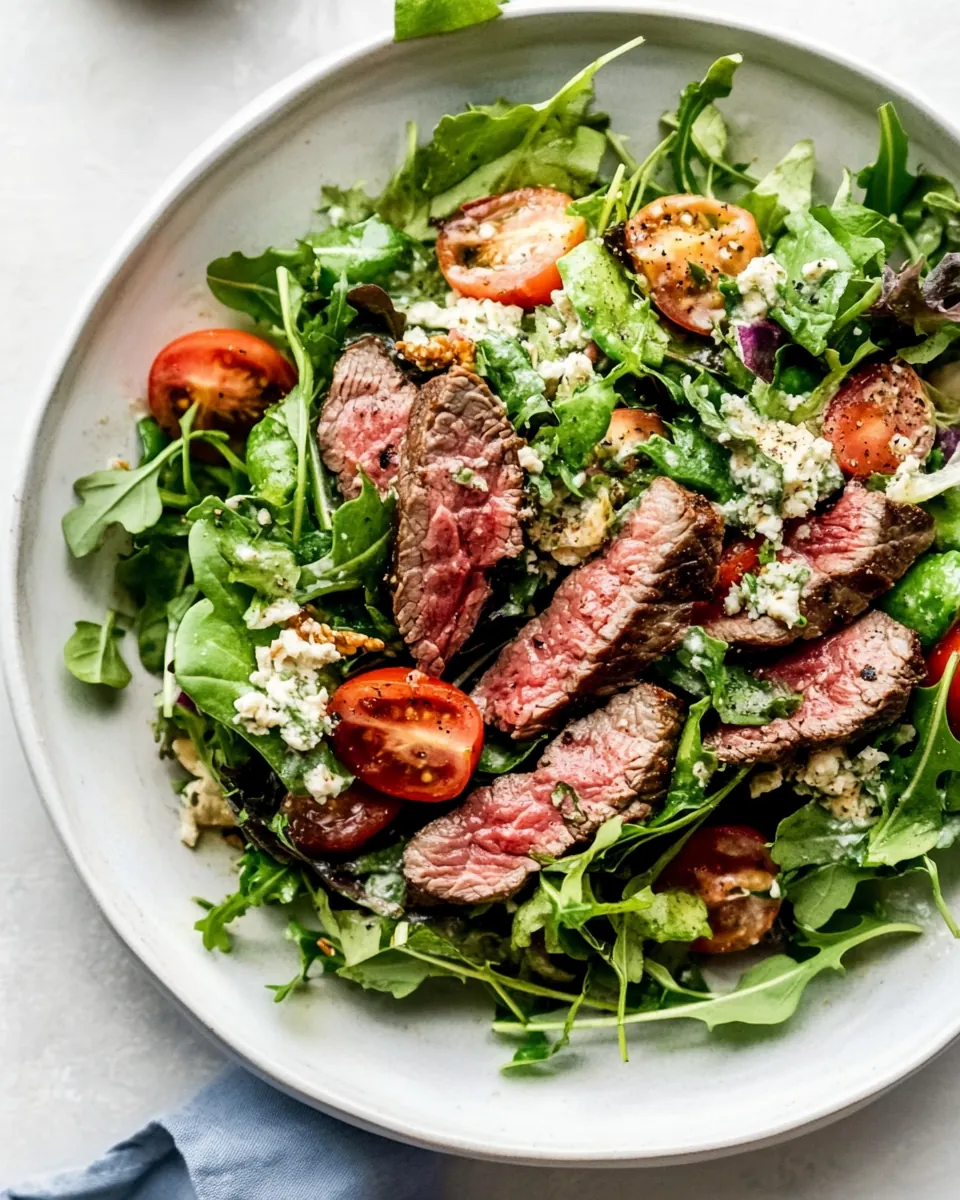
I like to tuck a few practical notes here that make a big difference. These tips will help you nail texture, seasoning, and timing, whether you are cooking for two or four. Keep them handy the first few times you make the salad and you will notice the improvements immediately.
- Season simply Start with just kosher salt and ground black pepper on the steak, and rely on the dressing for complexity so the meat’s natural flavor remains front and center.
- Temperature matters Let the steak come to room temperature for about thirty minutes before cooking, which helps ensure even doneness and a tender bite after cooking.
- Char adds depth Grill the red onion until you see dark char marks, the caramelized sugars add sweet smoke that complements the blue cheese.
- Dressing control Add the vinaigrette sparingly at first, toss, then add more if needed to avoid overdressing and wilting the greens.
- Make ahead You can prep the vinaigrette and marinate the steak several hours ahead, but keep the dressing and salad components separate until just before serving for optimal texture.
What to Serve With Steak Salad
This salad stands well on its own as a satisfying meal, but a few thoughtful pairings elevate the experience. Think in terms of complementary textures and occasions, whether a casual weeknight or a small celebration. Serving simple sides or presenting the salad family style works equally well depending on your mood.
- Crusty bread A slice of warm bread soaks up extra dressing and complements the juicy steak without competing for flavor.
- Roasted vegetables Serve alongside seasonal roasted vegetables for a heartier dinner that adds warm, caramelized flavors.
- Light soup A simple broth or vegetable soup makes a nice starter and keeps the meal balanced for lunch or dinner.
- Occasions Great for lunch or dinner, and equally appropriate for casual gatherings, small dinner parties, or a relaxed holiday meal when you want something impressive but unfussy.
- Storage tips Store components separately when possible: keep leftover steak, greens, and dressing in separate airtight containers to preserve texture for up to three days.
- Seasonal pairings In summer, let the cherry tomatoes and grilled onion shine; in cooler months, rely on the warmth of the steak to add comforting heft.
FAQ
Conclusion
What makes this recipe special is the way warm, seared steak meets cool, peppery greens for a satisfying contrast of flavors and textures. I encourage you to try it because it is flexible, quick to prepare, and impressive enough for guests while still being a comforting weeknight meal. Give attention to the simple techniques like patting the meat dry, preheating your grill or broiler, and slicing across the grain, and the results will reward you with juicy, flavorful bites. Enjoy sharing it with friends or savoring it as a well earned solo dinner.
Steak Salad
Equipment
- Grill or Broiler
- Rimmed baking pan
- Ziptop bag or large bowl
- Cutting Board
- Sharp Knife
- Mixing Bowl
- Whisk
Ingredients
- 1 1/4 pounds flank steak, skirt steak, or hanger steak Season and tenderize the steak while providing the primary protein; cook to desired doneness and slice thinly against the grain for salads.
- 1 1/2 teaspoons kosher salt Enhance overall flavor and help draw out moisture when seasoning the steak and salad components; balances acidity in dressings.
- 1/2 teaspoon ground black pepper Add a sharp, pungent heat when seasoning steak or dressings; helps balance richness and brighten flavors.
- 2 tablespoons balsamic vinegar Provide bright acidity and a slightly sweet, tangy backbone to marinades or dressings; helps tenderize the steak when used before cooking.
- 1 tablespoon extra-virgin olive oil Contribute a fruity, smooth fat for searing or finishing; helps carry flavors in marinades and dressings.
- 1 large red onion Offer a sweet-sharp crunch and mild pungency when grilled or sliced raw; adds texture and savory-sweet contrast to the salad.
- 1 pint cherry tomatoes Bring juicy sweetness and freshness; halved or whole, they add color, acidity, and bursts of flavor to each bite.
- 3 cups mixed greens, chopped romaine, spinach, or lettuces of choice Supply a sturdy, crisp base and bulk to the salad; chopped romaine, spinach, or lettuces add texture, freshness, and volume.
- 3 cups arugula Deliver a peppery, slightly bitter green that adds aromatic bite and balances rich steak and cheese in the salad.
- 4 ounces crumbled blue cheese, such as gorgonzola, divided Add creamy, salty, and tangy richness to the salad; dividing the cheese allows some for garnish and some folded into the dressing if desired.
- extra virgin olive oil for grilling the onion Provide fat for cooking the onion and developing caramelization; prevents sticking and imparts a subtle olive flavor.
- 1/4 cup balsamic vinegar Offer sweet, concentrated acidity for glazing grilled onion or dressing the salad; enhances savory components and balances oil.
- 3 tablespoons extra virgin olive oil Act as a rich, fruity fat in the dressing; emulsifies with vinegar and mustard to coat salad ingredients evenly.
- 1 teaspoon Dijon mustard Give a sharp, savory emulsifying element in dressings; binds oil and vinegar while adding a subtle tang.
- 1 teaspoon honey Introduce mild sweetness to round out the dressing and balance acidity from vinegar and mustard.
- 3/4 teaspoon kosher salt plus additional to taste Provide seasoning depth and structure to dressings and finished salad; allows for initial seasoning and later adjustment to taste.
- 1/8 teaspoon ground black pepper plus additional to taste Add a subtle warm bite to dressings and finished dish; used sparingly to complement salt and sweetness.
Instructions
- Prep the steak: With paper towels, pat the steak dry. Place in a large ziptop bag or large bowl, with the salt, pepper, balsamic vinegar, and oil. Seal the bag (if using), removing as much air as possible. Turn to coat the steak. Set aside at room temperature for 30 minutes, or refrigerate overnight.: The room fills with a dryer warmth as you pat the steak dry with paper towels, which helps the surface brown more effectively when exposed to heat. When you combine the steak with the measured kosher salt , ground black pepper , 2 tablespoons of balsamic vinegar , and 1 tablespoon of extra-virgin olive oil in a large ziptop bag or bowl, the meat picks up a glossy sheen and a faint tangy scent. Gently pressing out excess air in the bag helps the marinade cling to the steak , but because this is a quick marinade, the idea is to lightly coat rather than fully saturate. Letting the meat sit at room temperature for 30 minutes relaxes muscle fibers so the steak cooks evenly, and refrigerating overnight deepens flavor if you plan ahead. Common mistake to avoid, don't over marinate acidic mixtures for too long, as they can break down the meat and create a mushy texture.
- Meanwhile, cut the onion into 1/2-inch thick rings. Lightly brush each side with olive oil. Cut the cherry tomatoes in half.: As you slice the red onion into 1/2-inch thick rings, the kitchen gets a sharp, sweet aroma; brushing both sides with extra virgin olive oil prevents sticking and helps the natural sugars caramelize under heat. Halving the cherry tomatoes releases their juicy perfume and exposes their seeds, which will burst with flavor on the plate. This prep is about controlling moisture and creating surfaces that will char or soften evenly. A typical misstep is slicing uneven rings, which creates inconsistent grilling and burnt edges on thinner pieces.
- Make the dressing: In a medium bowl or large measuring cup, whisk together the balsamic, oil, Dijon, honey, salt, and pepper.: Whisking together 1/4 cup balsamic vinegar , 3 tablespoons extra virgin olive oil , 1 teaspoon Dijon mustard , 1 teaspoon honey , 3/4 teaspoon kosher salt , and 1/8 teaspoon ground black pepper yields a glossy vinaigrette that smells bright and faintly sweet. The mustard helps emulsify the mixture so the oil does not separate, creating a smooth coating for the greens. Taste and adjust, keeping in mind the vinaigrette should be lively but not overpower the steak or blue cheese . Avoid adding too much salt at once, since the cheese and steak will contribute additional seasoning when tossed.
- Cook the steak and onion: Heat the grill over medium-high heat (425 to 450 degrees F) or heat the oven’s broiler. If using the broiler, line a rimmed baking pan with foil. Remove the steak from the marinade, allowing as much excess marinade as possible to drip away. Grill or broil the onion and steak, until the steak is medium-rare and the onion is charred on both sides—3 to 4 minutes per side depending on its thickness, until the steak reaches 130 degrees F on an instant read thermometer. (If you like your steak more well done, cook it 1 to 2 minutes more, but note that it will be tough).: Preheating to medium high, around 425 to 450 degrees F, ensures a hot cooking surface that sears meat and chars onion rings quickly. If using the oven broiler, line a rimmed baking pan with foil to catch drips and make cleanup simple. A properly heated grill will give a satisfying sizzle when the steak hits the grates, creating a crust that locks in juices. The wrong move here is rushing to cook on a cool surface, which leads to gray, steamed meat rather than a flavorful sear.
- Place the steak on a cutting board and let rest at least 5 minutes.: As the steak and onion meet intense heat, you should hear a steady sizzle and see the edges begin to caramelize; charred marks on the onion add smoky sweetness while the steak develops a richly browned crust. Grill or broil each side 3 to 4 minutes depending on thickness, aiming for an internal temperature of 130 degrees F for medium rare. Resting after cooking is critical to let juices redistribute; skipping this will cause the steak to lose more juices when sliced. If you prefer more done meat, cook an extra 1 to 2 minutes per side, but note that overcooking tougher cuts can make them less tender.
- In a large bowl, place the mixed greens, arugula, halved tomatoes, half of the cheese, and the grilled onions (separate the rings as you add them).: After removing the steak from heat, place it on a cutting board and let it rest for at least 5 minutes, during which aromas settle and surface juices retract slightly. Resting produces a juicier texture when you slice, and the meat will feel firmer to the touch as it carries residual heat. Avoid the urge to slice immediately, as cutting too soon lets flavorful juices run out and leaves you with drier slices on the plate.
- Add enough dressing over the top to moisten, then toss to coat. Divide the salad between individual plates, or place in the center of a large serving plate.: In a large bowl combine 3 cups mixed greens , 3 cups arugula , the halved cherry tomatoes , half of the crumbled blue cheese , and the grilled onions separated into rings. Tossing these ingredients together releases the tomatoes' juices onto the leaves, creating a light dressing base even before vinaigrette is added. The visual contrast here is important, aim for an even distribution so each plate gets a mix of textures. A common error is overdressing at this stage, which wilts the greens prematurely.
- VERY thinly slice the steak across the grain (about 1/4-inch wide). Serve on top of or alongside the salad. Sprinkle on the remaining blue cheese. Enjoy!: Drizzle enough of the vinaigrette over the salad to moisten the leaves, then toss to coat evenly, making sure the dressing clings to leaves and tomatoes without pooling. The emulsion should lightly coat the salad, offering glossy sheen and balanced acidity. When tossing, lift from the bottom to avoid crushing the components, and stop when the colors look vibrant and slightly glossy. Too much dressing will drown the delicate textures and mask the steak's flavor.
- Slice the steak thinly: Using a sharp knife, very thinly slice the steak across the grain into roughly 1/4-inch wide ribbons, which keeps each bite tender and easy to chew. The cross grain cut shortens muscle fibers and makes the meat feel more tender on the palate. Arrange slices on top of or alongside the salad so warm meat briefly warms the leaves without making them soggy. A frequent mistake is cutting with the grain, which makes pieces chewier and tougher.
- Finish and serve: Scatter the remaining crumbled blue cheese over the plated salad and add additional cracked ground black pepper or kosher salt if desired. The combination of warm steak , charred onion , and cool greens creates a pleasing temperature contrast that reads as both hearty and refreshing. Serve immediately to preserve texture, and expect compliments. Do not let the salad sit too long after dressing, or the greens will begin to lose their crispness.
Notes
- Season simply Start with just kosher salt and ground black pepper on the steak, and rely on the dressing for complexity so the meat's natural flavor remains front and center.
- Temperature matters Let the steak come to room temperature for about thirty minutes before cooking, which helps ensure even doneness and a tender bite after cooking.
- Char adds depth Grill the red onion until you see dark char marks, the caramelized sugars add sweet smoke that complements the blue cheese.
- Dressing control Add the vinaigrette sparingly at first, toss, then add more if needed to avoid overdressing and wilting the greens.
- Make ahead You can prep the vinaigrette and marinate the steak several hours ahead, but keep the dressing and salad components separate until just before serving for optimal texture.