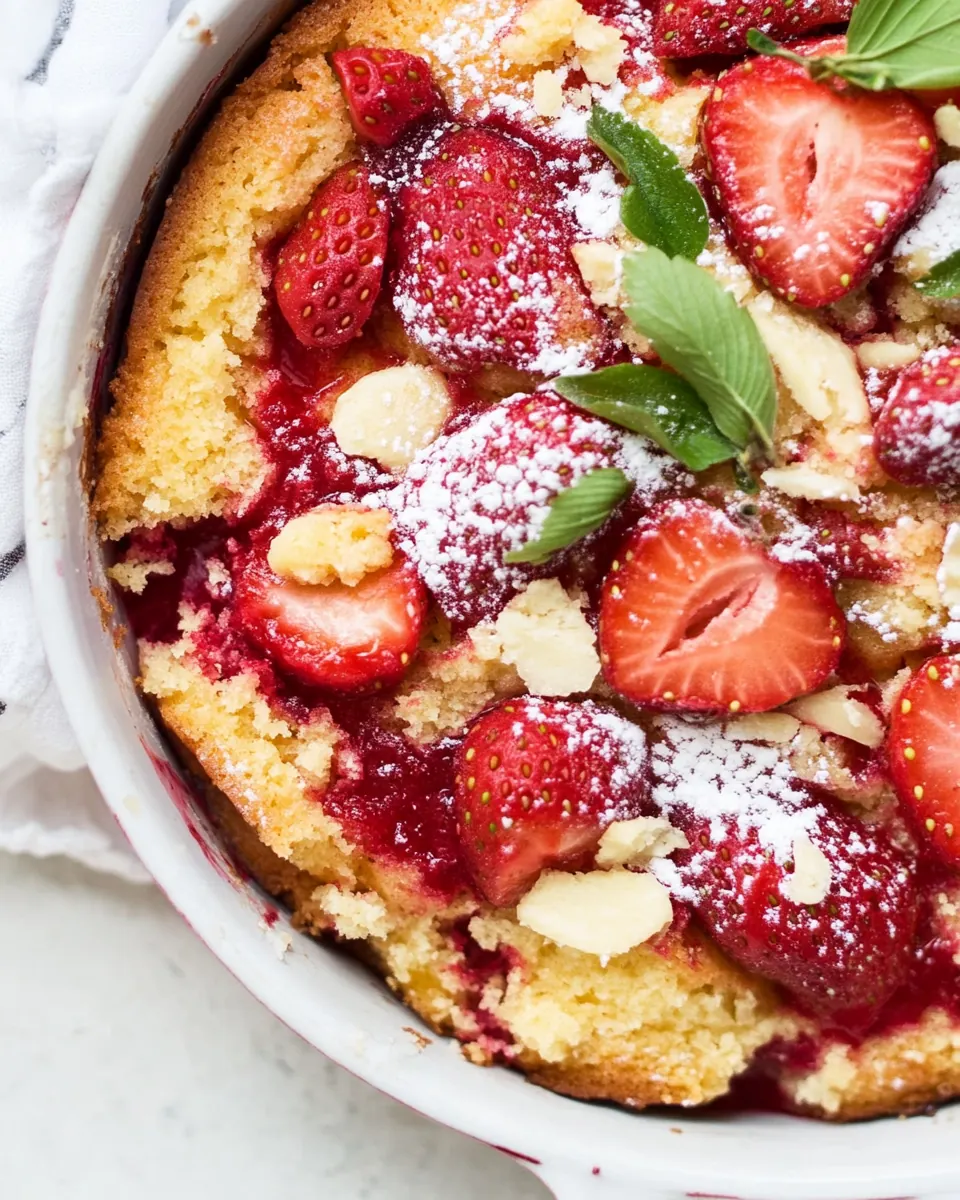
Roasted Strawberry Olive Oil Cake
Roasted Strawberry Olive Oil Cake is the sort of dessert that sneaks into my kitchen on an ordinary afternoon and leaves the whole house lingering on something floral and slightly caramelized. The first time I made this I was scrambling to use a pint of strawberries that had ripened faster than I expected, and the result felt like summer folded into a tender, olive oil crumb. I remember the sweet roast scent filling the oven corridor while I washed a stack of dishes, and how someone wandered in, drawn by the aroma, asking if they could have a sliver straight from the pan.
What I love most about this cake is how it balances simplicity and character. With just a few pantry staples and a handful of fresh strawberries, the batter comes together into something rustic yet refined. The olive oil keeps the crumb moist and gives a subtle fruitiness that plays so well against the roasted strawberries and crunchy sliced almonds. Over the years I have made small tweaks to suit the season, but this version always brings guests to the table with smiles and a second cup of coffee.
Recipe Snapshot
45 mins
15 mins
30 mins
Medium
280 kcal
American
Gluten-Free, Low FODMAP
Desserts
Baking Sheet Pan, 9×9 baking dish
Why We Love This Roasted Strawberry Olive Oil Cake
Roasted Fruit Concentration
I love how roasting the strawberries concentrates their sweetness and produces a syrupy juice that soaks into the cake top. When the berries hit the heat they release a bright perfume, and that caramelized edge makes each bite taste deeper than fresh fruit alone. I find this step elevates the whole cake without extra fuss.
Olive Oil Texture
The choice of olive oil over butter keeps the crumb incredibly tender, and it makes reheating slices in the morning a dream. I prefer a mild, fruity olive oil so it complements, not overpowers, the strawberries. The oil also helps the cake stay moist for days, which is perfect when you want a make ahead dessert.
Herb and Citrus Brightness
Fresh thyme and lemon zest add an unexpected lift that balances the sweet components. I often sprinkle thyme leaves into the dry mix because they offer a subtle herbal note that keeps the cake from feeling cloying. Together with the zest, they make the flavor profile more complex and interesting.
Simple Pantry Appeal
This recipe uses familiar all purpose flour, eggs, and brown sugar, so you can pull it together without a special shop run. I love that it’s accessible yet feels special when served warm with a drizzle from the roasted pan juices. It’s the kind of cake I’ll make on a weekday to celebrate small victories.
Textural Contrast
The sliced almonds sprinkled on top give every bite a pleasant crunch against the soft cake and jammy berries. I always toast a few extra almonds to scatter on plates for an added nutty aroma. That contrast is what keeps each mouthful interesting and makes this recipe memorable.
Recipe Ingredients for Roasted Strawberry Olive Oil Cake
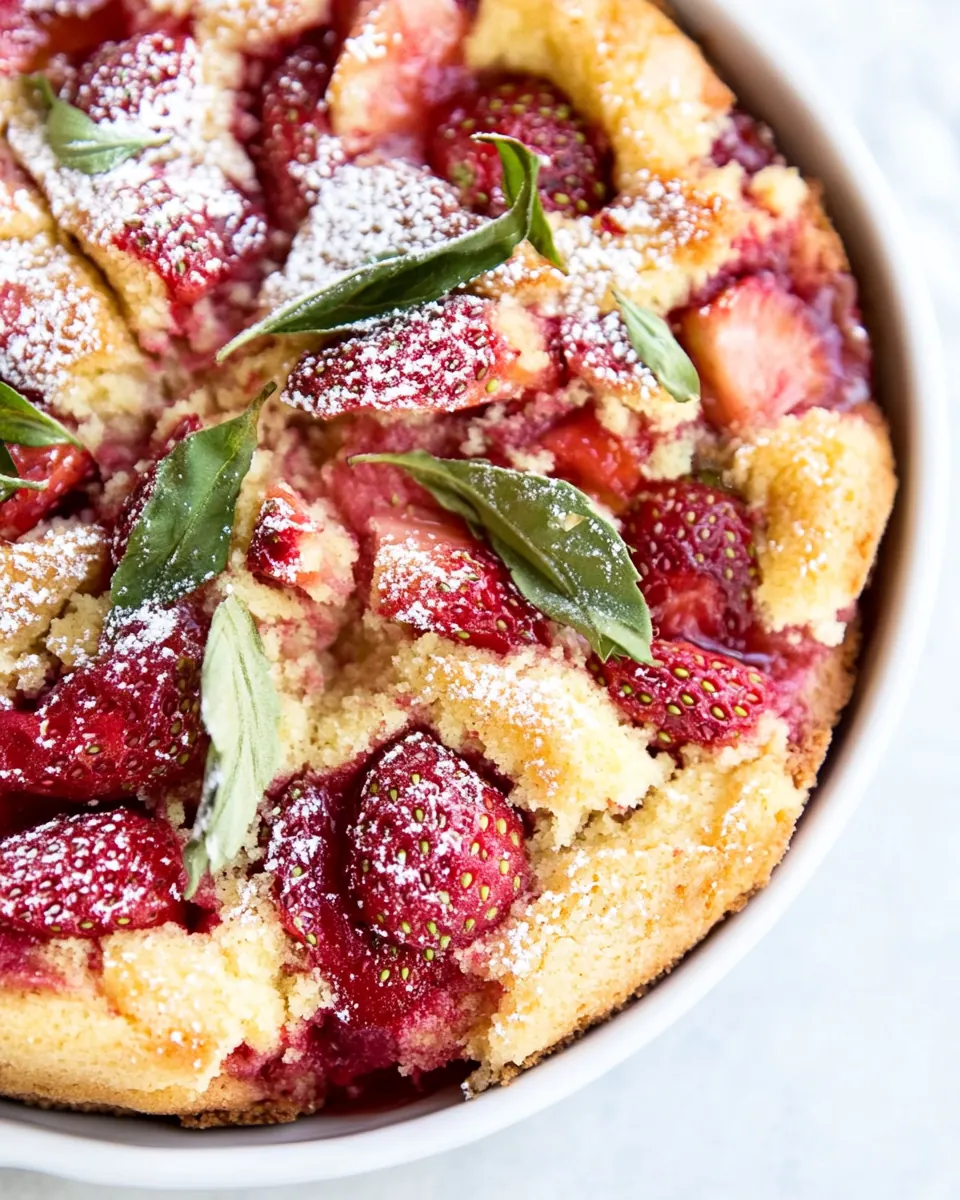
These ingredients are chosen to work in harmony to create a moist, aromatic cake that lets the natural flavor of the strawberries shine. The dry ingredients build structure, the wet ingredients supply moisture and richness, and a few bright accents like lemon zest and thyme keep the finish lively. Each item plays a clear role, so I keep the list tight and focused.
- 8 ounces strawberries, tops trimmed and halved: Sliced and halved to provide fresh, juicy sweetness and tender bursts of fruit throughout the cake; roasting concentrates flavors and adds a caramelized note that complements the batter.
- 2 tablespoons brown sugar: Sprinkled over berries to encourage caramelization and balance acidity; melting into the fruit creates a glossy, sweet topping that enhances texture and flavor contrast.
- 1 tablespoon olive oil: Brushed on strawberries before roasting to add a subtle fruity richness and help promote browning; contributes a savory olive oil aroma that elevates the fruit’s profile.
- 1/4 teaspoon kosher salt: Measured to ensure balanced seasoning in the roasted strawberries; a small amount heightens overall flavor without making the fruit taste salty.
- 1 1/2 cups all-purpose flour: Sifted and combined with leaveners to form the cake’s structure; provides gluten that sets during baking and yields a tender, sliceable crumb.
- 2 teaspoons fresh thyme leaves: Chopped and mixed into batter to introduce aromatic, herbaceous notes; thyme adds bright, slightly savory complexity that pairs well with strawberries and olive oil.
- 1 teaspoon baking powder: Added to the dry ingredients to help the cake rise evenly; creates lift and lightness by releasing gases during baking.
- 1/2 teaspoon kosher salt: Included in the dry mix for consistent seasoning throughout the cake; ensures the crumb has balanced flavor and prevents blandness.
- 1/4 teaspoon baking soda: Combined with other leavening agents to fine-tune rise and crumb texture; helps react with acids in yogurt for a tender, aerated cake.
- 2 large eggs: Beaten into the batter to provide structure, moisture, and richness; eggs help bind ingredients, incorporate air, and contribute to browning and texture.
- 3/4 cup vanilla Greek yogurt: Folded into the wet ingredients to lend moisture, tang, and a creamy density; yogurt reacts with baking soda to help leaven and tenderize the crumb.
- 1/2 cup brown sugar: Creamed with wet ingredients to add sweetness and moisture; brown sugar also contributes a deeper caramel flavor and keeps the cake soft.
- 1/3 cup olive oil: Whisked together with eggs and yogurt to provide fat and silkiness; olive oil yields a moist, tender crumb and a distinct fruity aroma.
- 1 tablespoon lemon zest: Zested into the batter to deliver bright citrus oils and fragrant lift; lemon zest sharpens sweetness and complements the strawberries.
- 1 teaspoon vanilla bean paste: Stirred into the batter or used as a finishing flavor to add warm, sweet vanilla notes; vanilla bean paste enhances aromatic depth and complexity.
- 1/3 cup sliced almonds: Toasted and sprinkled on top for a crunchy contrast and nutty flavor; sliced almonds provide texture and visual appeal while complementing the cake’s flavors.
Making This Roasted Strawberry Olive Oil Cake
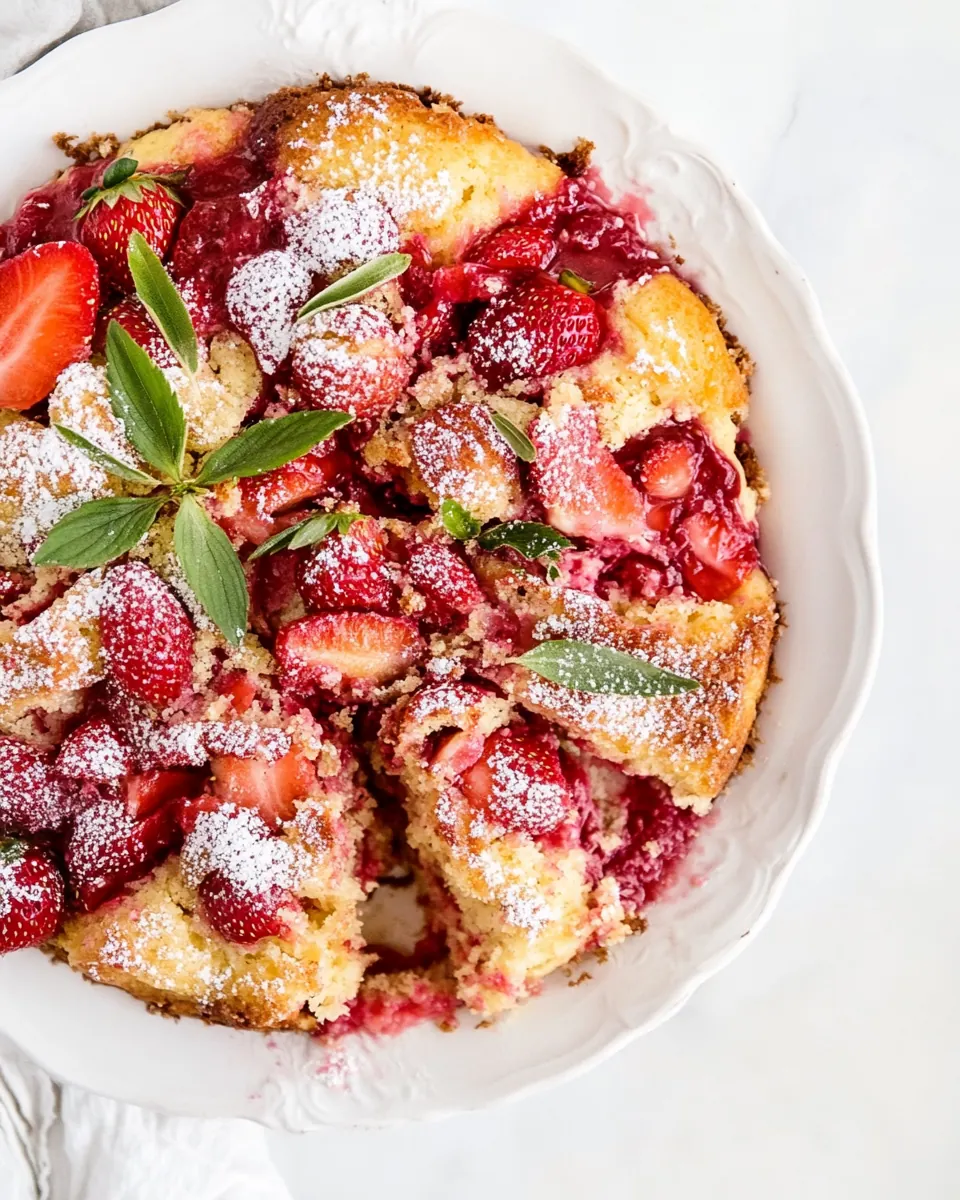
This cake is approachable and forgiving, and the method is built around coaxing flavor out of simple components. I like to work in stages so the roasted strawberries have time to cool slightly while I mix the batter, which helps the juices settle into a glossy topping instead of sinking fully into the cake.
- Preheat oven to 375 degrees F and line a rimmed baking sheet with parchment paper or a silicone liner.: The initial heat jump creates quick caramelization for the strawberries , producing a deep, fragrant aroma as sugars brown. You will notice a sizzling sound as the berries hit the hot pan, and the edges should start to darken slightly by the end of roasting, signaling concentrated flavor. This high start is important because it prevents the fruit from stewing, it concentrates natural sugars, and it forms those lovely roasted juices. A common mistake is using a cold pan which delays caramelization, making the berries release water instead of browning, so always preheat the oven and pan together.
- Add strawberries, brown sugar, olive oil, and kosher salt to the prepared baking sheet pan and toss to combine.: Tossing ensures each strawberry is coated in sugar and oil so they roast evenly and develop caramelized edges. You'll see a glossy sheen on the berries and smell a faint citrus and sweet note as the sugar melds with the oil. This step also encourages the berries to break down slightly, producing syrup that will later become a jewel like topping. Avoid overpacking the pan or they will steam rather than roast, which results in a flat, watery topping.
- Add to the oven and roast for 15 minutes or until the strawberries are soft and juicy.: As they roast, the berries will shrink and bubble, and the kitchen will fill with a warm, fruity scent. Look for softened flesh and bubbling juices around the edges, not dryness; the goal is tender, syrupy fruit. This concentrated juice is crucial because it creates a glossy layer that balances the cake’s texture. A pitfall here is underroasting, which leaves watery berries, so give them the full time until they look jammy and fragrant.
- Remove from the oven and lower the temperature to 350 degrees F.: Lowering the oven prevents the cake from browning too aggressively while still preserving the intense flavor from roasting. You should notice the roasted juices glistening on the pan when you remove it. Cooling for a few minutes stabilizes those juices so they do not immediately sink through the batter. A mistake people make is immediately increasing oven heat, which can cause uneven baking later on.
- Line a 9×9 baking pan with parchment paper and set aside.: Lining the pan ensures easy removal and prevents sticking, especially with a moist cake that will be topped with syrupy strawberries . Press the paper into the corners so the batter spreads evenly and you can lift the cake out cleanly once cool. If you skip this, you risk tearing the cake when unmolding, so take the extra minute to line the pan well.
- In a medium-sized mixing bowl, whisk together flour, fresh thyme leaves, baking powder, kosher salt, and baking soda, set aside.: Combining the dry components first ensures even distribution of baking powder and baking soda , which guarantees a uniform rise and tender crumb. You should see flecks of thyme distributed through the all purpose flour , which will infuse a subtle herbal note. Overmixing the dry mix with liquids later can develop gluten, so this prewhisking is a protective measure. A common error is adding leavening unevenly, causing pockets of strong rise or dense spots.
- In a large mixing bowl, add eggs, vanilla yogurt, brown sugar, olive oil, lemon zest, and vanilla bean paste. Whisk together until smooth.: When whisked, the mixture will become glossy and slightly aerated, offering lift to the final crumb. The vanilla Greek yogurt should be smooth and the olive oil fully incorporated, creating a cohesive base. The aroma of lemon zest and vanilla bean paste will brighten the bowl. Avoid overheating or microwaving the yogurt because that changes texture and can prevent proper mixing.
- Fold in the dry ingredients to the wet ingredients and mix until just fully combined.: Folding preserves the air you created in the wet mixture and prevents overdeveloping gluten, which keeps the cake tender. Stop mixing when you no longer see streaks of flour, a sign you have achieved the correct consistency. The batter should be smooth, not thick like cookie dough, and it should pour gently into the pan. Overmixing is the most common misstep here, leading to a dense cake, so be gentle and patient.
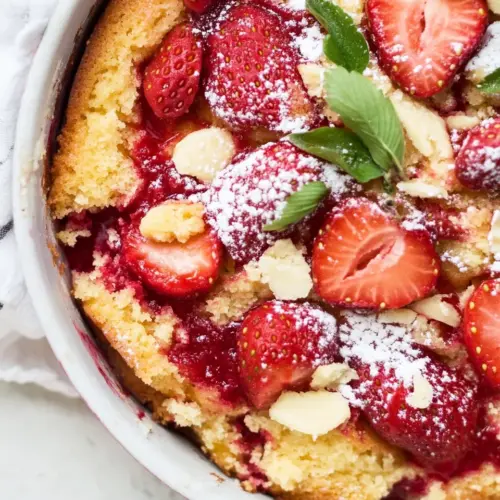
- Add the batter to the prepared 9×9 pan. Top the batter with roasted strawberries, including the juices and sliced almonds.: Spoon or pour the batter evenly, then carefully arrange the roasted strawberries and drizzle the pan juices over the surface so they can sink slightly while baking, creating pockets of jammy fruit. Scatter the sliced almonds for a toasted top that will contrast with the soft crumb. The visual should be a glossy, jewel like top that promises both texture and sweetness. Be careful not to press the fruit into the batter too deeply or it can pull moisture all the way through and make the center too wet.
- Bake for about 30 minutes or until the cake is fully baked and springs back when touched. You can also test the cake by putting a toothpick into the middle of the cake if it comes out clean the cake is fully cooked.: As the cake bakes, the top will turn a light golden color and the edges will pull slightly from the parchment, releasing a warm aroma of brown sugar and olive oil . The almonds will toast, adding a nutty scent. Use the spring back test or a toothpick to check doneness to avoid overbaking, which dries the crumb. Opening the oven too often is a common error, as it causes uneven rising and longer bake times.
- Let the cake cool and serve.: Cooling allows the crumb to set so you can slice cleanly, and it gives the roasted juices a moment to thicken so they stay atop the cake rather than run off the plate. I usually let it rest for at least 20 minutes before unmolding; the aroma remains intensely inviting. Warm slices are lovely, but the cake also keeps well, so if it seems slightly underdone in the center, resting will finish the texture. Mistakes to avoid include cutting it too soon, which can make the slices fall apart.
Making Adjustments
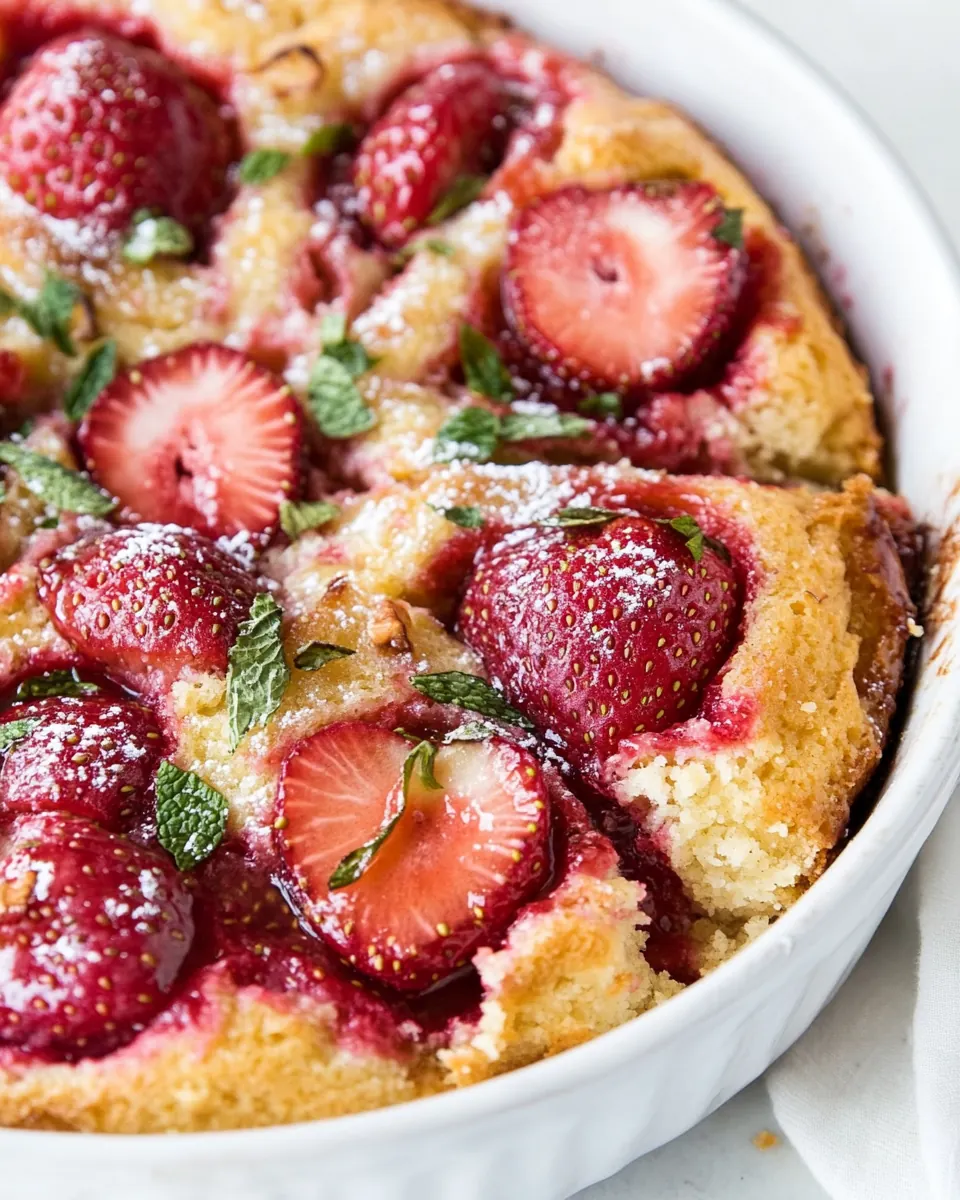
Small adjustments can transform this cake depending on the season or your pantry. Below I share practical tweaks I use often, each focused on preserving the cake’s moist crumb and vibrant fruit character.
- Swap oil intensity Use a milder olive oil if you want a subtler fruit note, or a more robust one for deeper savory complexity.
- Adjust sweetness Reduce the brown sugar in the batter by one to two tablespoons if your strawberries are especially sweet.
- Extra almond crunch Add an additional tablespoon of sliced almonds on top halfway through baking to boost texture and visual appeal.
- Herb variations Substitute thyme with a small pinch of lemon basil for a different bright herbal lift.
- Serving temperature Serve slightly warm to enjoy the full aroma of roasted strawberries, or chill for a firmer slice that is easier to plate for gatherings.
What to Serve Alongside Roasted Strawberry Olive Oil Cake
This cake pairs beautifully with simple companions that highlight its fruit and olive oil profile. Choose accompaniments that echo its freshness, and consider the occasion when deciding how to present it.
- Light whipped cream A dollop of lightly sweetened cream complements the cake’s texture and adds a soft, creamy contrast.
- Fresh fruit salad Serve alongside seasonal fruit to emphasize the cake’s bright, fruity notes for brunch or afternoon tea.
- Hot coffee or herbal tea Robust coffee or a lemony herbal tea balances the cake’s sweetness and keeps the palate refreshed during a long conversation.
- Picnic friendly slices For outdoor gatherings, wrap cooled slices in parchment and bring a small knife so guests can help themselves.
- Storage tips Store covered at room temperature for up to two days, or refrigerate for up to five days. Bring to room temperature before serving to revive the texture.
- Occasion suggestions This cake is ideal for spring brunches, casual dinner desserts, or festive gatherings where you want a homey yet elegant sweet.
FAQ
Conclusion
This cake stands out because it marries roasted, jammy strawberries with a tender, olive oil enriched crumb and a bright herbal citrus lift. The simplicity of the ingredients allows each element to shine, while the method coaxed deep flavors from ordinary fruit. I hope you give it a try the next time you have ripe strawberries, because it’s one of those recipes that feels both comforting and a little celebratory, perfect for sharing with friends or savoring quietly on a slow afternoon.
Roasted Strawberry Olive Oil Cake
Equipment
- Baking Sheet Pan
- 9x9 baking dish
Ingredients
- 8 ounces strawberries, tops trimmed and halved Sliced and halved to provide fresh, juicy sweetness and tender bursts of fruit throughout the cake; roasting concentrates flavors and adds a caramelized note that complements the batter.
- 2 tablespoons brown sugar Sprinkled over berries to encourage caramelization and balance acidity; melting into the fruit creates a glossy, sweet topping that enhances texture and flavor contrast.
- 1 tablespoon olive oil Brushed on strawberries before roasting to add a subtle fruity richness and help promote browning; contributes a savory olive oil aroma that elevates the fruit’s profile.
- 1/4 teaspoon kosher salt Measured to ensure balanced seasoning in the roasted strawberries; a small amount heightens overall flavor without making the fruit taste salty.
- 1 1/2 cups all-purpose flour Sifted and combined with leaveners to form the cake’s structure; provides gluten that sets during baking and yields a tender, sliceable crumb.
- 2 teaspoons fresh thyme leaves Chopped and mixed into batter to introduce aromatic, herbaceous notes; thyme adds bright, slightly savory complexity that pairs well with strawberries and olive oil.
- 1 teaspoon baking powder Added to the dry ingredients to help the cake rise evenly; creates lift and lightness by releasing gases during baking.
- 1/2 teaspoon kosher salt Included in the dry mix for consistent seasoning throughout the cake; ensures the crumb has balanced flavor and prevents blandness.
- 1/4 teaspoon baking soda Combined with other leavening agents to fine-tune rise and crumb texture; helps react with acids in yogurt for a tender, aerated cake.
- 2 large eggs Beaten into the batter to provide structure, moisture, and richness; eggs help bind ingredients, incorporate air, and contribute to browning and texture.
- 3/4 cup vanilla Greek yogurt Folded into the wet ingredients to lend moisture, tang, and a creamy density; yogurt reacts with baking soda to help leaven and tenderize the crumb.
- 1/2 cup brown sugar Creamed with wet ingredients to add sweetness and moisture; brown sugar also contributes a deeper caramel flavor and keeps the cake soft.
- 1/3 cup olive oil Whisked together with eggs and yogurt to provide fat and silkiness; olive oil yields a moist, tender crumb and a distinct fruity aroma.
- 1 tablespoon lemon zest Zested into the batter to deliver bright citrus oils and fragrant lift; lemon zest sharpens sweetness and complements the strawberries.
- 1 teaspoon vanilla bean paste Stirred into the batter or used as a finishing flavor to add warm, sweet vanilla notes; vanilla bean paste enhances aromatic depth and complexity.
- 1/3 cup sliced almonds Toasted and sprinkled on top for a crunchy contrast and nutty flavor; sliced almonds provide texture and visual appeal while complementing the cake’s flavors.
Instructions
- Preheat oven to 375 degrees F and line a rimmed baking sheet with parchment paper or a silicone liner.: The initial heat jump creates quick caramelization for the strawberries , producing a deep, fragrant aroma as sugars brown. You will notice a sizzling sound as the berries hit the hot pan, and the edges should start to darken slightly by the end of roasting, signaling concentrated flavor. This high start is important because it prevents the fruit from stewing, it concentrates natural sugars, and it forms those lovely roasted juices. A common mistake is using a cold pan which delays caramelization, making the berries release water instead of browning, so always preheat the oven and pan together.
- Add strawberries, brown sugar, olive oil, and kosher salt to the prepared baking sheet pan and toss to combine.: Tossing ensures each strawberry is coated in sugar and oil so they roast evenly and develop caramelized edges. You'll see a glossy sheen on the berries and smell a faint citrus and sweet note as the sugar melds with the oil. This step also encourages the berries to break down slightly, producing syrup that will later become a jewel like topping. Avoid overpacking the pan or they will steam rather than roast, which results in a flat, watery topping.
- Add to the oven and roast for 15 minutes or until the strawberries are soft and juicy.: As they roast, the berries will shrink and bubble, and the kitchen will fill with a warm, fruity scent. Look for softened flesh and bubbling juices around the edges, not dryness; the goal is tender, syrupy fruit. This concentrated juice is crucial because it creates a glossy layer that balances the cake’s texture. A pitfall here is underroasting, which leaves watery berries, so give them the full time until they look jammy and fragrant.
- Remove from the oven and lower the temperature to 350 degrees F.: Lowering the oven prevents the cake from browning too aggressively while still preserving the intense flavor from roasting. You should notice the roasted juices glistening on the pan when you remove it. Cooling for a few minutes stabilizes those juices so they do not immediately sink through the batter. A mistake people make is immediately increasing oven heat, which can cause uneven baking later on.
- Line a 9×9 baking pan with parchment paper and set aside.: Lining the pan ensures easy removal and prevents sticking, especially with a moist cake that will be topped with syrupy strawberries . Press the paper into the corners so the batter spreads evenly and you can lift the cake out cleanly once cool. If you skip this, you risk tearing the cake when unmolding, so take the extra minute to line the pan well.
- In a medium-sized mixing bowl, whisk together flour, fresh thyme leaves, baking powder, kosher salt, and baking soda, set aside.: Combining the dry components first ensures even distribution of baking powder and baking soda , which guarantees a uniform rise and tender crumb. You should see flecks of thyme distributed through the all purpose flour , which will infuse a subtle herbal note. Overmixing the dry mix with liquids later can develop gluten, so this prewhisking is a protective measure. A common error is adding leavening unevenly, causing pockets of strong rise or dense spots.
- In a large mixing bowl, add eggs, vanilla yogurt, brown sugar, olive oil, lemon zest, and vanilla bean paste. Whisk together until smooth.: When whisked, the mixture will become glossy and slightly aerated, offering lift to the final crumb. The vanilla Greek yogurt should be smooth and the olive oil fully incorporated, creating a cohesive base. The aroma of lemon zest and vanilla bean paste will brighten the bowl. Avoid overheating or microwaving the yogurt because that changes texture and can prevent proper mixing.
- Fold in the dry ingredients to the wet ingredients and mix until just fully combined.: Folding preserves the air you created in the wet mixture and prevents overdeveloping gluten, which keeps the cake tender. Stop mixing when you no longer see streaks of flour, a sign you have achieved the correct consistency. The batter should be smooth, not thick like cookie dough, and it should pour gently into the pan. Overmixing is the most common misstep here, leading to a dense cake, so be gentle and patient.
- Add the batter to the prepared 9×9 pan. Top the batter with roasted strawberries, including the juices and sliced almonds.: Spoon or pour the batter evenly, then carefully arrange the roasted strawberries and drizzle the pan juices over the surface so they can sink slightly while baking, creating pockets of jammy fruit. Scatter the sliced almonds for a toasted top that will contrast with the soft crumb. The visual should be a glossy, jewel like top that promises both texture and sweetness. Be careful not to press the fruit into the batter too deeply or it can pull moisture all the way through and make the center too wet.
- Bake for about 30 minutes or until the cake is fully baked and springs back when touched. You can also test the cake by putting a toothpick into the middle of the cake if it comes out clean the cake is fully cooked.: As the cake bakes, the top will turn a light golden color and the edges will pull slightly from the parchment, releasing a warm aroma of brown sugar and olive oil . The almonds will toast, adding a nutty scent. Use the spring back test or a toothpick to check doneness to avoid overbaking, which dries the crumb. Opening the oven too often is a common error, as it causes uneven rising and longer bake times.
- Let the cake cool and serve.: Cooling allows the crumb to set so you can slice cleanly, and it gives the roasted juices a moment to thicken so they stay atop the cake rather than run off the plate. I usually let it rest for at least 20 minutes before unmolding; the aroma remains intensely inviting. Warm slices are lovely, but the cake also keeps well, so if it seems slightly underdone in the center, resting will finish the texture. Mistakes to avoid include cutting it too soon, which can make the slices fall apart.
Notes
- Swap oil intensity Use a milder olive oil if you want a subtler fruit note, or a more robust one for deeper savory complexity.
- Adjust sweetness Reduce the brown sugar in the batter by one to two tablespoons if your strawberries are especially sweet.
- Extra almond crunch Add an additional tablespoon of sliced almonds on top halfway through baking to boost texture and visual appeal.
- Herb variations Substitute thyme with a small pinch of lemon basil for a different bright herbal lift.
- Serving temperature Serve slightly warm to enjoy the full aroma of roasted strawberries, or chill for a firmer slice that is easier to plate for gatherings.