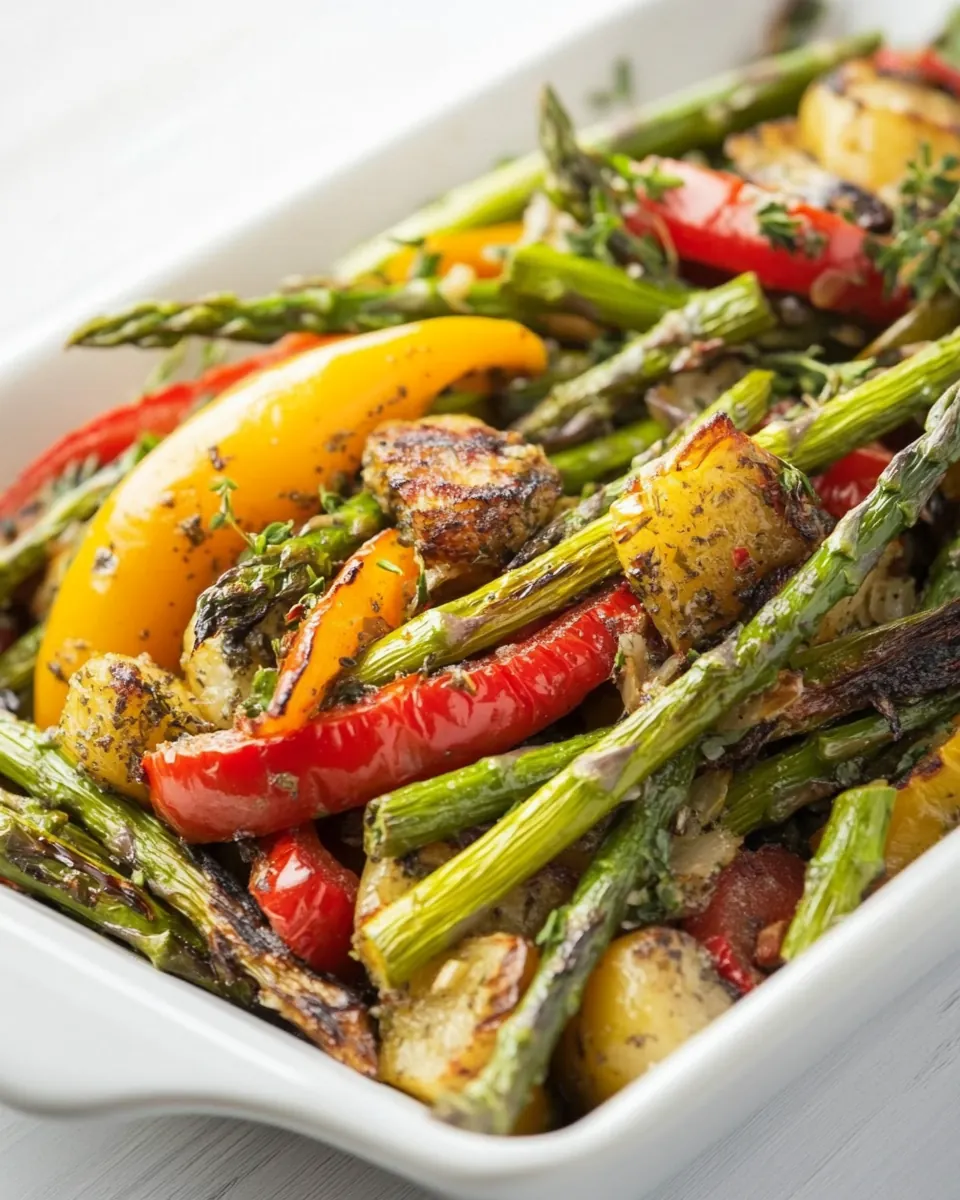
Roasted Asparagus Peppers
Roasted Asparagus Peppers is one of those simple vegetables-forward dishes I reach for when I want something bright, satisfying, and unfussy. The first time I made it, I was coming home from a long morning market shift, arms full of spring produce, and I wanted to showcase each vegetable without masking it. I remember the way the kitchen filled with a warm, herbaceous aroma as the oven worked its magic, and how the colors on the sheet pan looked like a small festival of green, red, and gold.
I like to think of this as a weekday ritual that still feels a little celebratory. When friends stop by unexpectedly, I slide the pan into the oven, pour a glass of something for us to sip, and we chat while the peppers blister and the asparagus tips turn tender. The texture contrast between the snappy stalks of asparagus and the mellow, sweet bell pepper strips always makes people pause and taste more slowly. It also doubles as a perfect side for grilled mains or a starring vegetable plate for a light dinner.
Over time I refined a few little instincts like trimming just enough of the woody ends, not crowding the pan so the vegetables roast rather than steam, and loosening the thyme leaves between my fingers so their scent infuses the oil. Those tiny moves make a big difference, and they are easy to do even on busy nights. If you love vegetables that arrive with a little char, bright aroma, and clean, honest flavor, this recipe will quickly become a dependable favorite in your rotation.
Recipe Snapshot
30 mins
15 mins
15 mins
Easy
120 kcal
Mediterranean
Paleo, Vegan
Side Dishes
Baking sheet, Oven, Mixing bowl, Tongs
Why This Roasted Asparagus Peppers Shines
It highlights fresh seasonal produce
I adore how Roasted Asparagus Peppers lets the ingredients speak for themselves. The recipe uses minimal seasoning so the natural sweetness of the bell pepper and the green, slightly grassy notes of the asparagus take center stage. In spring, when stalks are tender and peppers are crisp, the result feels both clean and indulgent. I often tell people that great produce needs only a little help to shine, and this dish is proof.
Easy, fast, and forgiving
This method is perfect when I want something fast that still impresses. With just a quick trim and a toss in olive oil, you can have the pan in the oven and free your hands. Because roasting is forgiving, if your timer is off by a few minutes the vegetables still turn out lovely, slightly caramelized, and perfectly edible. That flexibility is what makes this my go to for last minute guests.
Versatile with meals and occasions
I’ve served Roasted Asparagus Peppers at casual weeknight dinners and at holiday tables. They pair beautifully with roasted proteins, grain bowls, or simply with bread and a smear of butter. The colors and textures make the plate pop, so it also doubles as an effortless side when you want to dress up a simple main.
Simple technique, big payoff
The technique of high heat roasting concentrates flavors and creates tiny caramelized edges that add complexity. I like to spread the pieces so they contact the pan for little bits of char, which provide savory notes that balance the vegetables natural sweetness. Getting that crisp tender finish is a small step that rewards you every time.
Healthy and approachable
This recipe is nutrient dense without any fuss. The modest amount of extra virgin olive oil carries flavor and helps with caramelization, while a touch of salt and black pepper brings everything into focus. I appreciate how it fits into balanced meals and keeps both weeknight simplicity and fresh flavors intact.
Shopping List for Roasted Asparagus Peppers
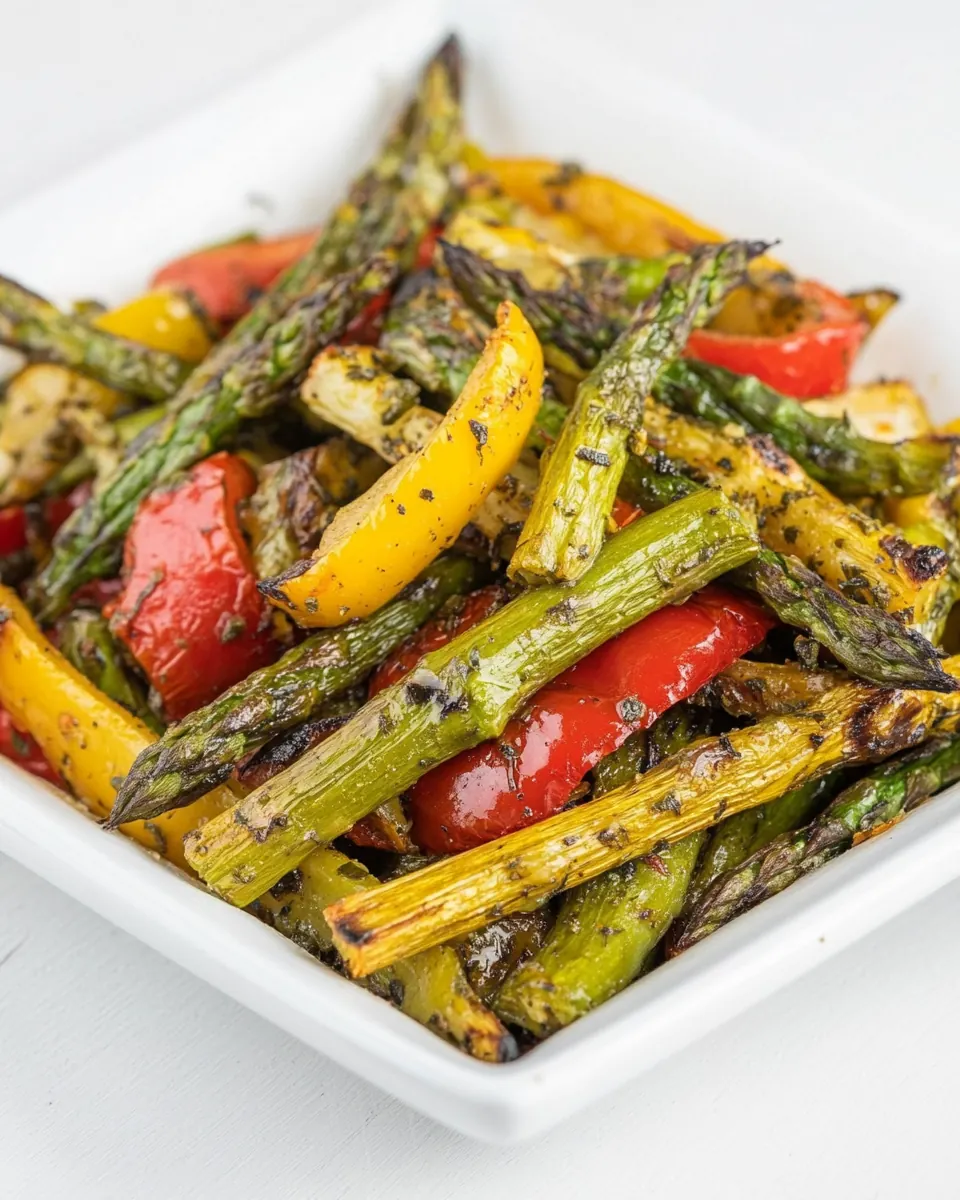
These ingredients are intentionally limited so each item plays a clear part. The key players are the vegetables themselves, aromatic garlic and thyme, and a little extra virgin olive oil to help with caramelization. Salt and pepper are the finishing notes that elevate the whole tray. Together they create a bright, savory side that relies on good produce and a simple roasting technique to deliver maximum flavor.
- 1 pound asparagus bottom woody stems removed and discarded (about 1 to 1-1/2-inch on bottom): Trimmed and cleaned to remove tough ends, provides fresh vegetal texture and the main body of the dish when roasted; woody stems are discarded to ensure tenderness and even cooking.
- 1 red bell pepper stemmed, seeded, and sliced into strips: Stemmed, seeded, and sliced into strips to add bright color, sweet flavor, and a tender-roasted bite that complements the asparagus.
- 1 yellow or orange bell pepper stemmed, seeded, and sliced into strips: Prepared similarly to provide a sweet, slightly fruity contrast and additional color; sliced strips roast evenly alongside the red peppers for balanced appearance and flavor.
- 1 red onion peeled, halved and cut into slices: Peeled, halved, and sliced to contribute a savory-sweet backbone with softened, caramelized layers when roasted; adds aromatic depth and pleasant texture contrast.
- 2 garlic cloves minced: Minced finely to infuse pungent, aromatic garlic flavor throughout the vegetables; disperses during roasting to add savory complexity without large pungent pieces.
- 6 thyme leaves fresh or 2 teaspoons dried thyme: Used fresh or dried to add an herby, slightly floral note; fresh leaves release bright fragrance while dried thyme lends concentrated savory aroma during roasting.
- 1 1/2 tablespoons extra virgin olive oil: Drizzled over vegetables to coat and promote even browning and crisping; adds rich mouthfeel and carries flavors while preventing sticking to the pan.
- 1/4 teaspoon kosher or sea salt: Sprinkled evenly to enhance and balance flavors; seasoning with kosher or sea salt draws out moisture and highlights the natural sweetness of the vegetables.
- 1/4 teaspoon black pepper: Ground and added to taste to provide subtle heat and depth; black pepper rounds out the seasoning profile and enhances overall savoriness.
The Method for Roasted Asparagus Peppers
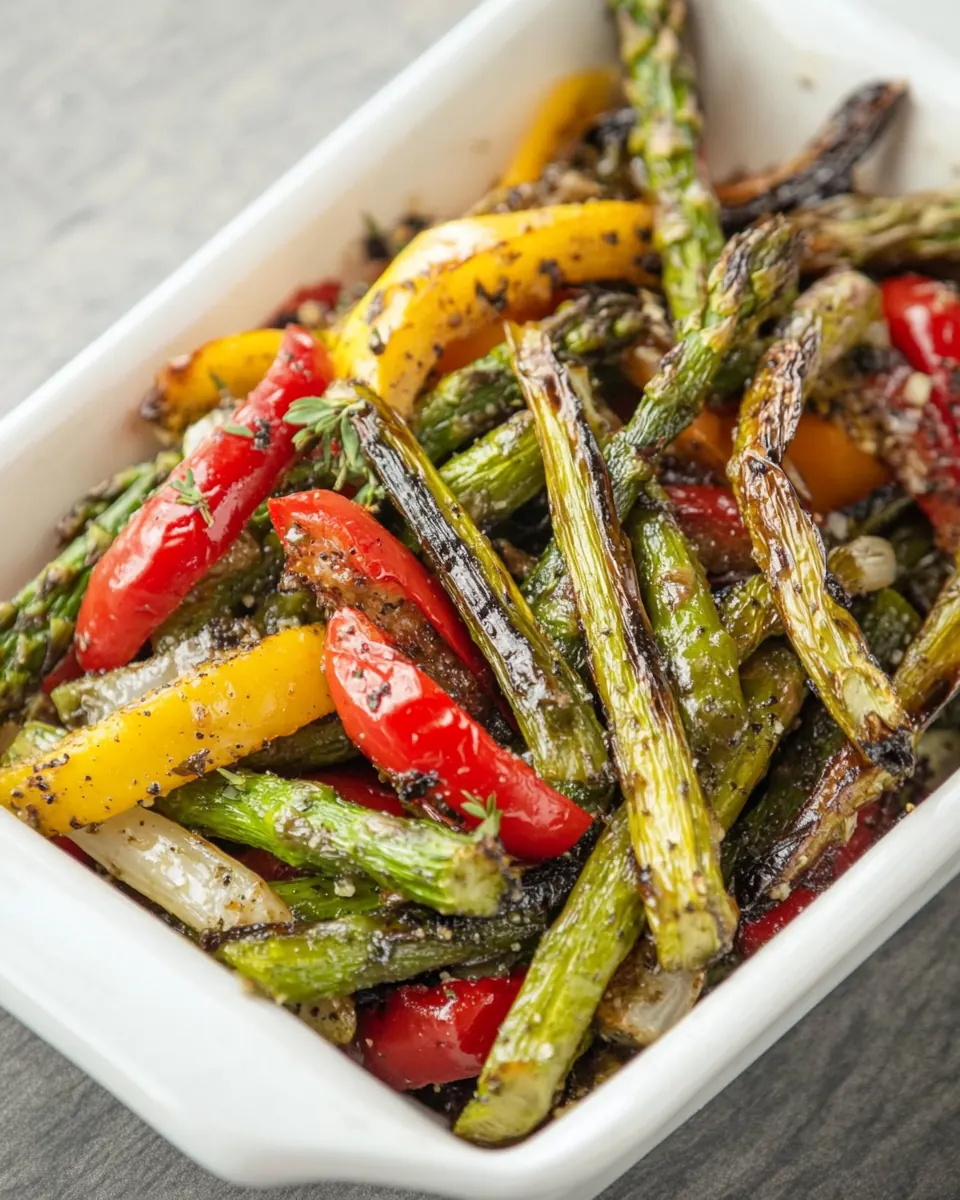
This method is straightforward, and I like to move deliberately but relaxed through each stage. The instructions below expand each of the brief directions so you know how the vegetables should look, smell, and feel at each moment. Follow the sensory cues and you will end up with glossy, lightly charred vegetables with concentrated flavor.
- Preheat oven to 425 degrees.: As you let the oven come up to 425 degrees , you will notice a warm, dry heat filling the kitchen and the air will feel slightly sharper than at lower temperatures. This is important because high heat encourages the sugars in the vegetables to caramelize rather than simply soften, producing golden edges and a richer flavor. One way I test the oven is to slide in the sheet pan for a minute before the vegetables go on, you should feel the heat radiating off the surface. A common mistake is not waiting for the oven to fully preheat, which leads to uneven roasting and limp vegetables.
- Toss asparagus, peppers, onions, garlic, thyme, salt, and pepper in olive oil. Spread in an even layer on a baking sheet. Roast for 15 to 20 minutes, until veggies are tender and lightly brown.: As you combine the asparagus , peppers , onion , minced garlic , thyme , salt , and black pepper with the extra virgin olive oil , notice how the oil glazes each piece, giving them a slightly glossy sheen. The oil helps transfer heat evenly and promotes browning, while the aromatic ingredients begin to mingle, releasing their scents. Use your hands or tongs to ensure everything is lightly coated so no dry spots remain. A troubleshooting tip is to avoid adding too much oil, which prevents crisping and can make the vegetables oily instead of roasted.
- Serve and enjoy!: When spreading the vegetables, arrange them in a single layer so each piece touches the pan surface, creating direct contact for caramelization. The visual cue you want is separation, not piling, so there are small spaces between the pieces. If the sheet is crowded the vegetables will steam and become soft rather than develop those desirable charred bits. If your baking sheet is small, split the vegetables between two pans to preserve high contact and even browning.
- Roast for 15 to 20 minutes, until veggies are tender and lightly brown.: During roasting you will hear the faint sizzle as moisture evaporates and the edges turn golden. Start checking at about 12 minutes, looking for tender stalks and blistered pepper skins. The asparagus should be tender to the bite but still have a little snap, and the onions should be translucent with browned edges. If you want more caramelization, give them a few extra minutes while watching closely to prevent burning. Overcooking is the main error here, which can yield limp, overly soft vegetables that lose their bright color.
- Serve and enjoy!: When you take the pan from the oven the smell will be warm, slightly sweet, and aromatic from the thyme and garlic . Let the vegetables rest for a minute on the sheet so they settle; they will continue to soften slightly as they cool. I often transfer them to a serving platter and finish with a last pinch of salt and black pepper if needed, which sharpens the flavors. The common mistake at this stage is serving immediately while the vegetables are steaming and lack a chance to develop the final layer of concentrated flavor.
Customization Ideas
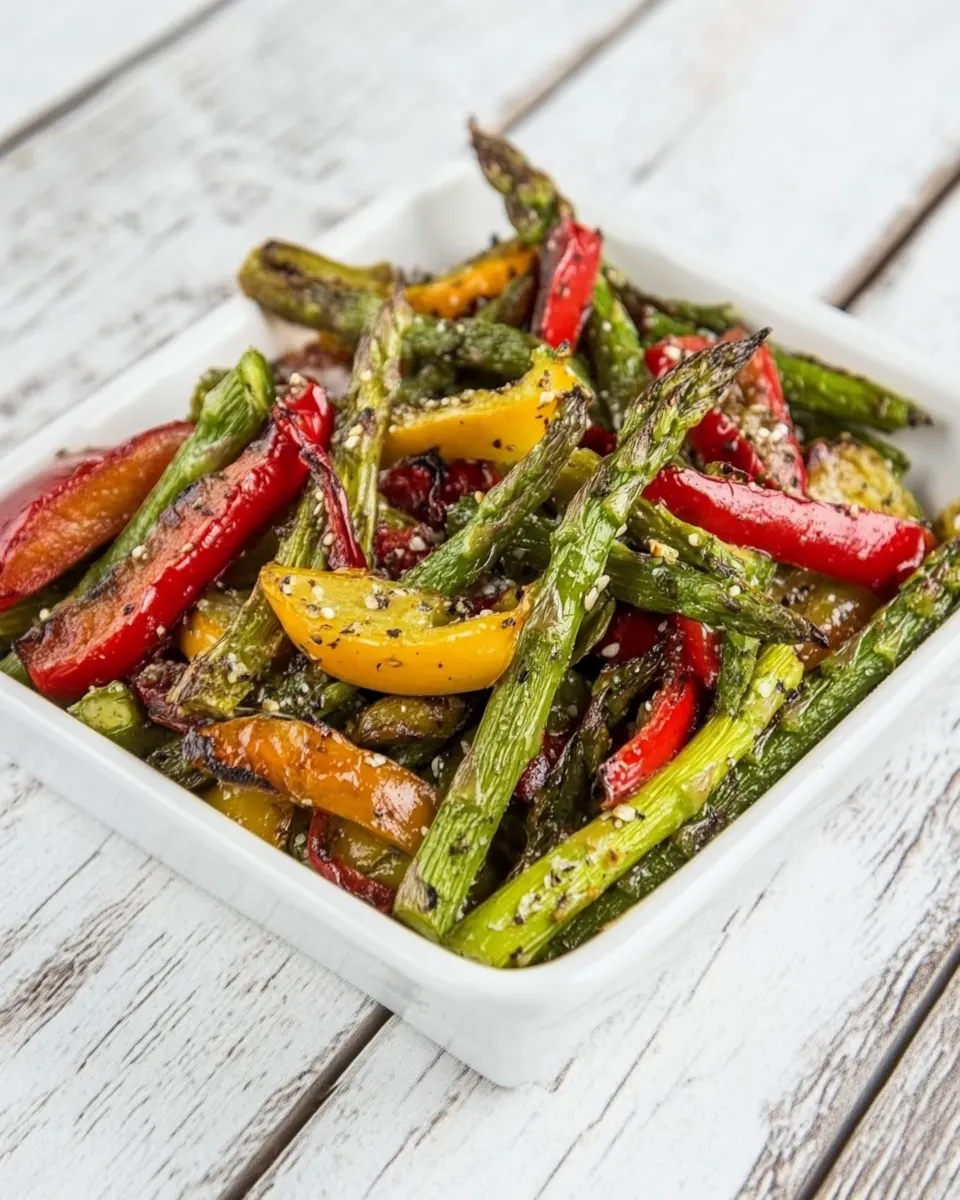
If you want to make this dish your own, small tweaks can shift the flavor profile without changing the heart of the recipe. Below are practical, tested ideas to vary texture, aroma, and presentation while keeping the simple roasting technique intact.
- Swap the oil for a different fruity extra virgin olive oil to introduce a new aroma while keeping the roasting behavior unchanged.
- Herb boost try adding more fresh thyme leaves or a sprinkle of another fresh herb at the end to lift the finished dish.
- Touch of acid finish with a squeeze of citrus after roasting to brighten the flavors and cut the oiliness.
- Toastiness move the pan to the top rack for the last 2 to 3 minutes to encourage more blistering on the peppers if you like a charred finish.
- Serve warm or room temperature this dish holds well and can be served slightly cooled for a salad like presentation without losing its appeal.
What to Serve With Roasted Asparagus Peppers
This roasted vegetable mix works across meals and occasions. It pairs well with grains, roasted proteins, and cheeses, and can be presented as a casual side or part of a composed platter for gatherings. Below are serving ideas that cover everyday dinners, small celebrations, and seasonal menus.
- Weeknight dinners serve alongside a simple grain like rice or quinoa and a protein for a balanced meal that is quick to assemble.
- Lunch bowls add the roasted vegetables over warm grains with a drizzle of extra olive oil and a squeeze of lemon for a bright mid day meal.
- Celebratory meals use as a colorful side on a holiday platter where the roasting brings depth without heavy sauces, perfect for spring menus.
- Storage tip refrigerate in an airtight container for up to three days and reheat briefly in a hot oven to revive the texture instead of microwaving.
- Seasonal pairing because the recipe emphasizes fresh spring vegetables, it shines during spring or early summer when asparagus is at its best.
FAQ
Conclusion
Roasted Asparagus Peppers stands out because it celebrates clean, seasonal flavors with minimal fuss. The combination of tender asparagus, sweet bell peppers, aromatic garlic, and a touch of thyme delivers bright color and satisfying texture. I encourage you to try this recipe when spring produce is available, and to experiment with small tweaks like finishing citrus or extra herbs to make it your own. It’s a dependable, crowd pleasing side that brings freshness and warmth to any table.
Roasted Asparagus Peppers
Equipment
- Baking Sheet
- Oven
- Mixing Bowl
- Tongs
Ingredients
- 1 pound asparagus bottom woody stems removed and discarded (about 1 to 1-1/2-inch on bottom) Trimmed and cleaned to remove tough ends, provides fresh vegetal texture and the main body of the dish when roasted; woody stems are discarded to ensure tenderness and even cooking.
- 1 red bell pepper stemmed, seeded, and sliced into strips Stemmed, seeded, and sliced into strips to add bright color, sweet flavor, and a tender-roasted bite that complements the asparagus.
- 1 yellow or orange bell pepper stemmed, seeded, and sliced into strips Prepared similarly to provide a sweet, slightly fruity contrast and additional color; sliced strips roast evenly alongside the red peppers for balanced appearance and flavor.
- 1 red onion peeled, halved and cut into slices Peeled, halved, and sliced to contribute a savory-sweet backbone with softened, caramelized layers when roasted; adds aromatic depth and pleasant texture contrast.
- 2 garlic cloves minced Minced finely to infuse pungent, aromatic garlic flavor throughout the vegetables; disperses during roasting to add savory complexity without large pungent pieces.
- 6 thyme leaves fresh or 2 teaspoons dried thyme Used fresh or dried to add an herby, slightly floral note; fresh leaves release bright fragrance while dried thyme lends concentrated savory aroma during roasting.
- 1 1/2 tablespoons extra virgin olive oil Drizzled over vegetables to coat and promote even browning and crisping; adds rich mouthfeel and carries flavors while preventing sticking to the pan.
- 1/4 teaspoon kosher or sea salt Sprinkled evenly to enhance and balance flavors; seasoning with kosher or sea salt draws out moisture and highlights the natural sweetness of the vegetables.
- 1/4 teaspoon black pepper Ground and added to taste to provide subtle heat and depth; black pepper rounds out the seasoning profile and enhances overall savoriness.
Instructions
- Preheat oven to 425 degrees.: As you let the oven come up to 425 degrees , you will notice a warm, dry heat filling the kitchen and the air will feel slightly sharper than at lower temperatures. This is important because high heat encourages the sugars in the vegetables to caramelize rather than simply soften, producing golden edges and a richer flavor. One way I test the oven is to slide in the sheet pan for a minute before the vegetables go on, you should feel the heat radiating off the surface. A common mistake is not waiting for the oven to fully preheat, which leads to uneven roasting and limp vegetables.
- Toss asparagus, peppers, onions, garlic, thyme, salt, and pepper in olive oil. Spread in an even layer on a baking sheet. Roast for 15 to 20 minutes, until veggies are tender and lightly brown.: As you combine the asparagus , peppers , onion , minced garlic , thyme , salt , and black pepper with the extra virgin olive oil , notice how the oil glazes each piece, giving them a slightly glossy sheen. The oil helps transfer heat evenly and promotes browning, while the aromatic ingredients begin to mingle, releasing their scents. Use your hands or tongs to ensure everything is lightly coated so no dry spots remain. A troubleshooting tip is to avoid adding too much oil, which prevents crisping and can make the vegetables oily instead of roasted.
- Serve and enjoy!: When spreading the vegetables, arrange them in a single layer so each piece touches the pan surface, creating direct contact for caramelization. The visual cue you want is separation, not piling, so there are small spaces between the pieces. If the sheet is crowded the vegetables will steam and become soft rather than develop those desirable charred bits. If your baking sheet is small, split the vegetables between two pans to preserve high contact and even browning.
- Roast for 15 to 20 minutes, until veggies are tender and lightly brown.: During roasting you will hear the faint sizzle as moisture evaporates and the edges turn golden. Start checking at about 12 minutes, looking for tender stalks and blistered pepper skins. The asparagus should be tender to the bite but still have a little snap, and the onions should be translucent with browned edges. If you want more caramelization, give them a few extra minutes while watching closely to prevent burning. Overcooking is the main error here, which can yield limp, overly soft vegetables that lose their bright color.
- Serve and enjoy!: When you take the pan from the oven the smell will be warm, slightly sweet, and aromatic from the thyme and garlic . Let the vegetables rest for a minute on the sheet so they settle; they will continue to soften slightly as they cool. I often transfer them to a serving platter and finish with a last pinch of salt and black pepper if needed, which sharpens the flavors. The common mistake at this stage is serving immediately while the vegetables are steaming and lack a chance to develop the final layer of concentrated flavor.
Notes
- Swap the oil for a different fruity extra virgin olive oil to introduce a new aroma while keeping the roasting behavior unchanged.
- Herb boost try adding more fresh thyme leaves or a sprinkle of another fresh herb at the end to lift the finished dish.
- Touch of acid finish with a squeeze of citrus after roasting to brighten the flavors and cut the oiliness.
- Toastiness move the pan to the top rack for the last 2 to 3 minutes to encourage more blistering on the peppers if you like a charred finish.
- Serve warm or room temperature this dish holds well and can be served slightly cooled for a salad like presentation without losing its appeal.