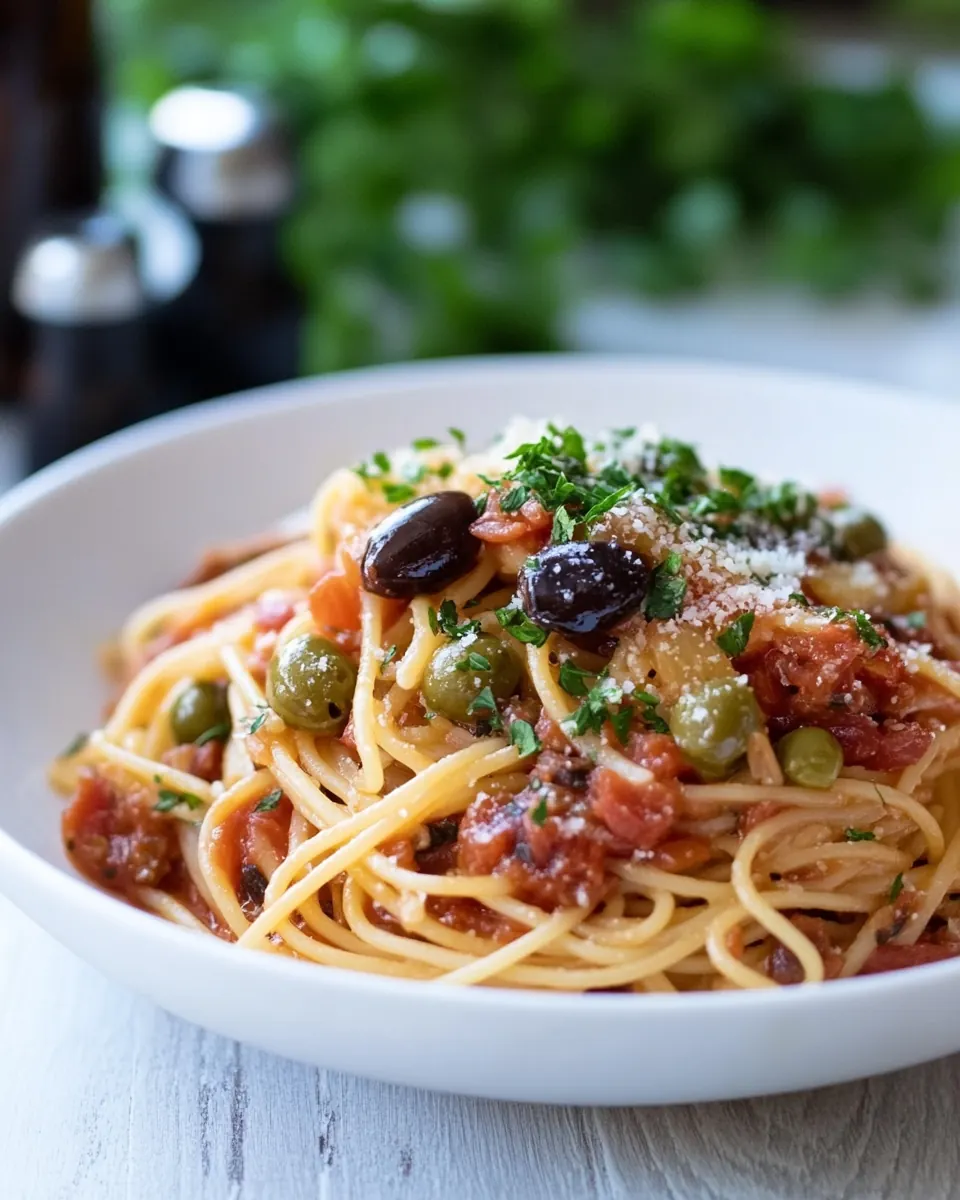
Pasta Puttanesca
Pasta Puttanesca arrived on my table on a rain soaked evening when I had nothing planned and a pantry that looked like a travel journal of Mediterranean weekends. I remember the first forkful, a perfect tangle of spaghetti coated in a sauce that was briny, bright, and punchy all at once, making me feel like I had been invited into someone s lively kitchen. From that night forward, I kept a jar of capers and a tin of anchovy fillets on the shelf so I could summon that comforting, no fuss dinner whenever the mood hit.
What I love most about Pasta Puttanesca is how it transforms ordinary pantry staples into something dangerously satisfying. I often make it when I want big flavor with minimal fuss, and it has become my go to for last minute guests. Each time I stir the sauce, the scent of sizzling garlic and the tang of chopped tomatoes pull me into the moment, and I find myself smiling as the kitchen fills with steam and the promise of a good meal. It s honest cooking, full of bold contrasts that somehow balance perfectly.
Recipe Snapshot
45 mins
15 mins
30 mins
Medium
450 kcal
Italian
Keto, Gluten-Free
Dinner
Large pot, Large Dutch oven or saucepan
What Makes This Pasta Puttanesca Special
Bold, straightforward flavor
I adore how Pasta Puttanesca relies on a small number of assertive ingredients, each contributing a clear voice to the chorus. The anchovy fillets melt into the sauce and lend a deep savory backbone, while the capers and olives add bright, punchy saltiness, so every bite hits multiple taste zones without complexity.
Pantry friendly and fast
Having canned tomatoes, dried spaghetti, and preserved items like capers means you can pull this together quickly. I often turn to this recipe when I need an easy weeknight dinner that still feels thoughtfully cooked. You do not need a long shopping list or special timing to bring this to the table.
Textural contrast
The interplay between silky pasta, tender cooked tomatoes, and the chewy pop of halved kalamata olives is pure comfort. As the sauce simmers and concentrates, it clings to the spaghetti, creating a satisfying mouthfeel that keeps you reaching for another forkful.
Flexible and forgiving
I find Pasta Puttanesca forgiving when it comes to exact measurements, which is freeing. The sauce can handle a little extra olive oil for richness, or a touch more crushed red pepper for heat. It s a recipe that welcomes small adjustments while keeping its essential character intact.
Great for entertaining
This dish scales easily, and because much of the magic happens in the sauce, you can prep ahead and finish quickly when guests arrive. I love serving it when friends drop by unexpectedly, because it looks and tastes like you spent far more effort than you actually did.
Ingredients to Make Pasta Puttanesca
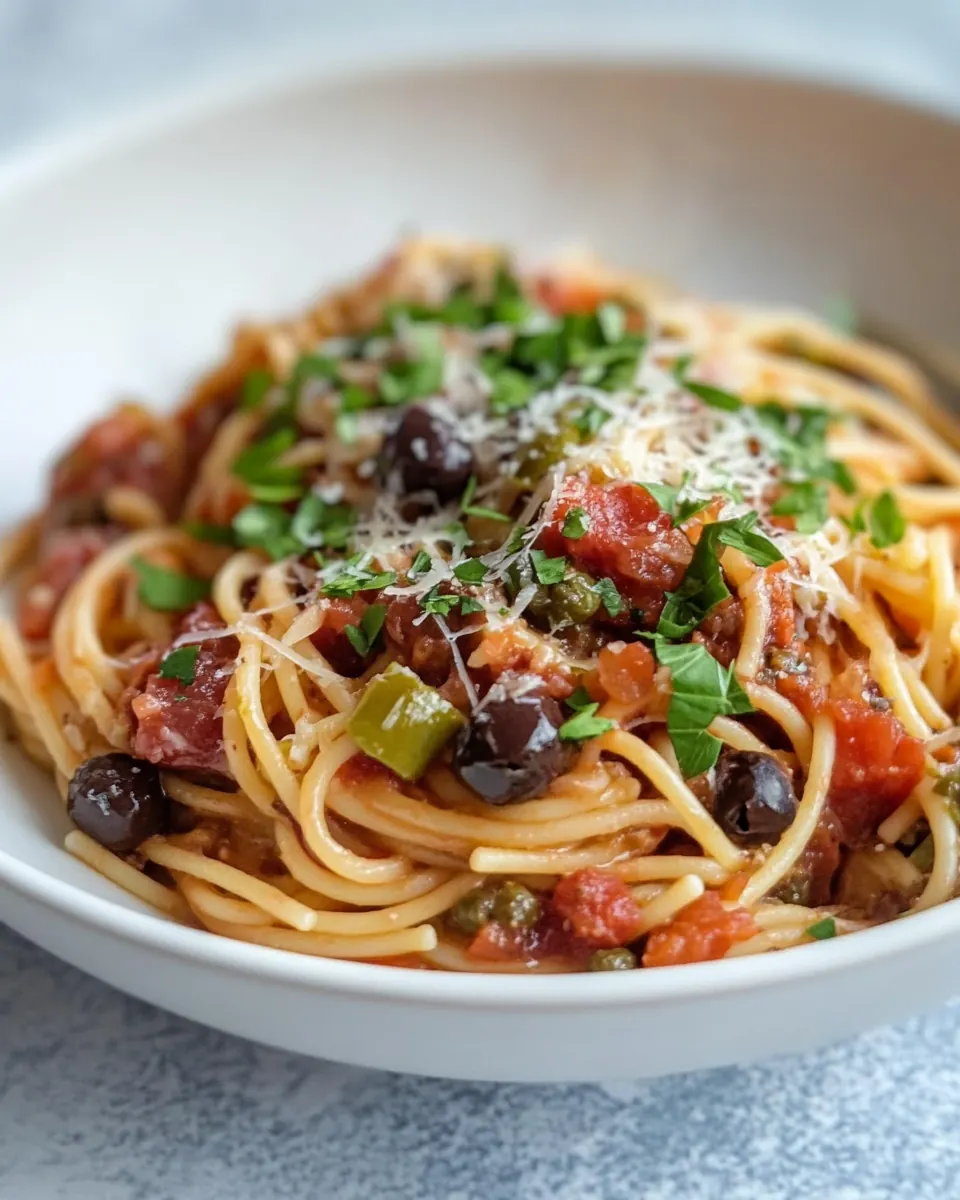
These ingredients are a study in purposeful restraint. Each item brings a distinct role, from the starchy base of the spaghetti to the umami depth of the anchovy fillets, and the bright, acidic backbone of the canned tomatoes. Together they create a balanced sauce that clings to the pasta, delivering salty, savory, and slightly spicy notes in every bite.
- 1 pounds spaghetti (see note 1): Boil to tender al dente pasta that serves as the hearty base of the dish, absorbing the sauce flavors and providing texture contrast to the other components. Cook according to package directions, reserving some pasta water to adjust sauce consistency and help it cling to the strands.
- 1/3 cup olive oil: Use generously as the primary cooking fat and flavor carrier, providing a fruity, aromatic backbone that melds garlic and anchovy into a cohesive sauce. Add early to the pan to gently infuse heat and prevent sticking while facilitating a glossy finish on the finished pasta.
- 4 cloves garlic thinly sliced: Slice thinly to release a sharp, pungent garlic flavor that brightens the sauce and lifts the savory components without overwhelming them. Sauté briefly in oil until fragrant and lightly golden to develop sweetness and remove raw harshness.
- 4 tablespoons capers (see note 2): Rinse or use as packed to introduce bright, briny bursts that cut through the tomato richness and add saline complexity to each bite. Stir in toward the end of cooking to preserve texture and ensure the capers' tang remains lively.
- 4 anchovy fillets packed in oil, drained (see note 3): Mash slightly or chop to impart deep, umami-rich saltiness that dissolves into the sauce, enhancing savory depth and creating a classic Puttanesca savoriness. Add early and allow it to soften in oil so its flavors integrate smoothly with garlic and tomatoes.
- 1/2 cup pitted kalamata olives halved: Halve to provide chewy, fruity saltiness and Mediterranean character that complements capers and anchovies while adding pleasant textural contrast. Toss in near the end of cooking to warm through without losing their distinctive shape and flavor.
- 2 (28-ounce) cans Italian-style whole (plum-shaped) tomatoes drained and chopped: Drain and chop to form the rich, acidic tomato base that carries the sauce, balancing salty and savory notes while offering body and bright tang. Simmer until flavors meld and tomatoes break down into a cohesive, spoonable sauce that coats pasta evenly.
- red chili flakes to taste: Sprinkle sparingly to introduce sharp, warming heat that accentuates the tomato and savory elements without overpowering them. Adjust quantity to taste, adding gradually to reach desired spiciness while maintaining balance.
- freshly grated Parmesan cheese for serving: Grate freshly to garnish and add a nutty, salty finishing touch that complements the sauce's umami and provides a creamy counterpoint to briny elements. Serve at the table so diners can add to taste for richness and depth.
- fresh basil leaves for garnish: Tear or chiffonade to add a fresh, aromatic herbal note and bright color that lifts the heavy savory flavors and finishes the dish with a clean, fragrant accent. Scatter over just before serving to preserve its vibrant scent and appearance.
Pasta Puttanesca Instructions
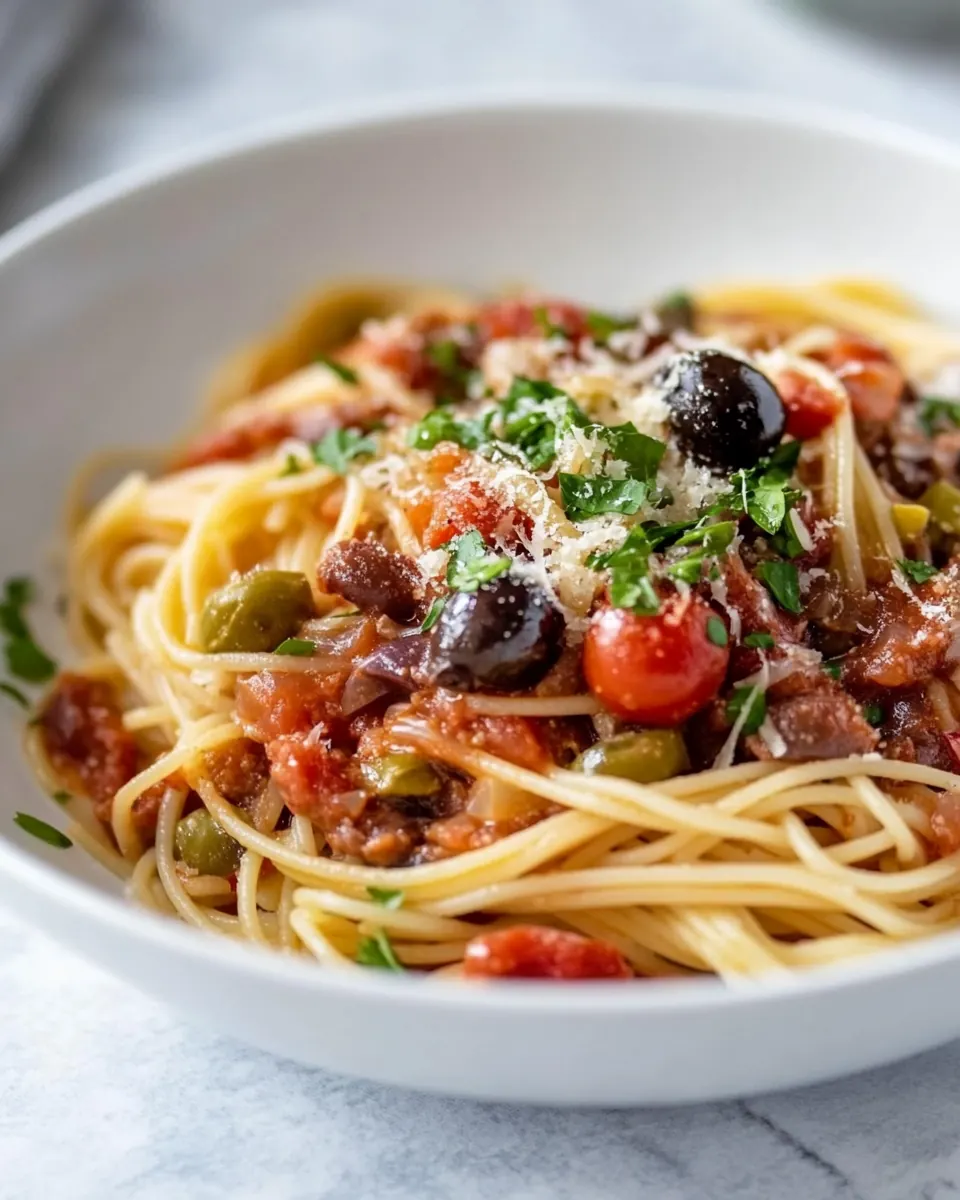
These directions walk you through the rhythmic flow of making the sauce and cooking the spaghetti so everything comes together. I like to keep a cup of the starchy pasta water handy because it s the secret to a glossy, clinging sauce. Work calmly and pay attention to smells and textures for best results.
- In a large pot, bring 4 quarts water and 1 tablespoon salt to boil. Add spaghetti and cook until al dente, about 9 to 10 minutes. Reserve 1 cup pasta water and drain well.: When the water reaches a rolling boil you will notice a lively sound and rapid movement at the surface, which means the spaghetti will cook evenly. Salted water seasons the pasta from the inside out, so do not skip it. A common mistake is under salting the water, which leads to bland pasta even when the sauce is strong, so taste a strand early to check seasoning.
- In a large Dutch oven or saucepan, heat oil over medium heat until shimmering. Add garlic and cook until garlic begins to turn golden, but not scorched, about 1 minute.: You will hear a softer bubbling as the pasta hydrates and see the noodles become plump and slightly translucent. Test by biting for a tender center with a subtle chew, that is al dente. Overcooking will lead to mushy texture and a sauce that slides off rather than clings, so start checking at around 7 minutes if your brand cooks quickly.
- Stir in capers, anchovy fillets, olives, tomatoes, and crushed red pepper (I like 1 teaspoon). Heat to boiling, reduce heat, and simmer uncovered until slightly thickened, about 30-40 minutes.: The reserved starchy pasta water will look slightly cloudy and feels slick between your fingers, and it s invaluable for thinning and emulsifying the sauce. Drain the pasta thoroughly to avoid pooling water that can dilute the sauce, but keep that cup close at hand.
- Add the pasta to the pot with the sauce and toss until evenly coated. Thin with pasta water if needed. Serve with Parmesan cheese and garnish with fresh basil.: You will see a gentle ripple across the surface of the olive oil and smell its fruitier notes when it s ready. This is the moment to add aromatics, because the oil will carry their flavors. Avoid heating until smoking, which can make the oil bitter and ruin the dish.
- Add garlic and cook until garlic begins to turn golden but not scorched about 1 minute: As the garlic sizzles you will detect a fragrant, toasty aroma that signals flavor release. Aim for a warm, light golden hue; anything darker tastes acrid. Stir constantly to ensure even coloring, and remove from direct heat if it starts to brown too quickly.
- Stir in capers anchovy fillets olives tomatoes and crushed red pepper I like 1 teaspoon: Once these ingredients hit the warm oil, they will release a layered fragrance of brine and umami while the canned tomatoes begin to break down. Mash the anchovy fillets against the pan so they dissolve and meld into the oil, which prevents isolated fishy bites and builds a cohesive base. A common pitfall is adding everything too quickly and not allowing flavors to integrate, so stir and let them mingle before reducing heat.
- Heat to boiling reduce heat and simmer uncovered until slightly thickened about 30 to 40 minutes: During the simmer you will notice the sauce reduce, becoming deeper in color and more concentrated in aroma, with gentle popping as moisture escapes. This slow concentration is why the sauce develops its bold character, so be patient and keep the pan uncovered to allow evaporation. Avoid high heat which can break the sauce into an oily separation rather than a cohesive coating.
- Add the pasta to the pot with the sauce and toss until evenly coated: When you combine the spaghetti with the sauce, you should hear a light sizzle and see the noodles glisten as they pick up the tomato and oil emulsion. Tossing rather than stirring ensures the sauce wraps around each strand. If the sauce seems too thick, add small splashes of the reserved pasta water to loosen and create a silky finish; too much water will make it soupy, so add gradually.
- Thin with pasta water if needed: The right amount of starchy water will create a glossy, clingy texture that holds onto the spaghetti . Add no more than a few tablespoons at a time until you reach the desired sheen and consistency. A mistake here is over thinning, which dilutes flavor, so judge carefully by how the sauce coats the pasta.
- Serve with Parmesan cheese and garnish with fresh basil: As you plate, grate fresh Parmesan cheese over the top to introduce a nutty finish and scatter torn basil leaves for aroma. The contrast between warm pasta and fresh herb is immediate and uplifting. Serve promptly for the best texture, because sitting too long will soften the basil and the pasta will keep absorbing sauce.
Customization Ideas
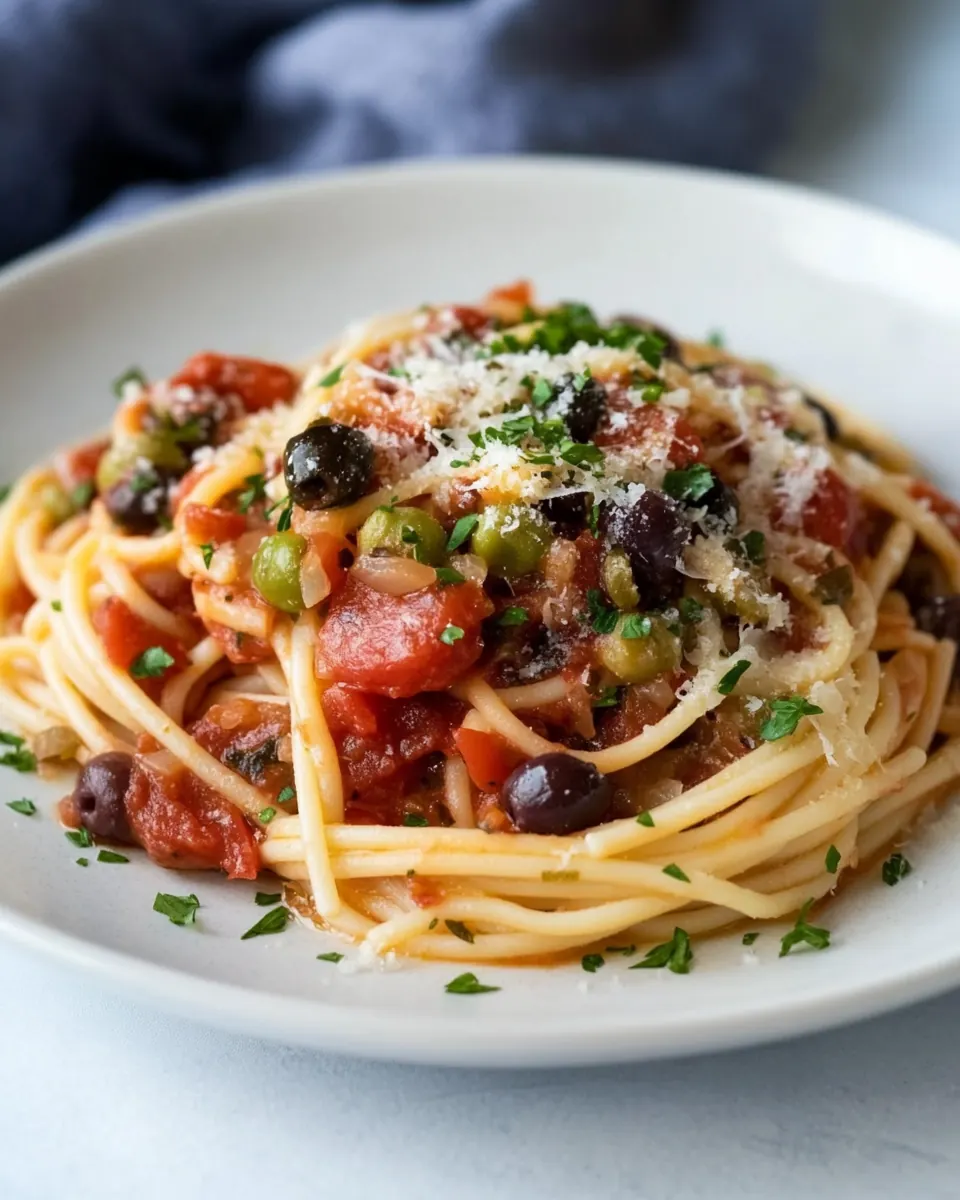
Pasta Puttanesca is remarkably adaptable without losing its core personality. Here are ways I like to tweak it to suit mood and pantry, each option keeping the dish honest and flavorful.
- Swap the pasta shape: While this recipe uses spaghetti, long thin pastas like linguine or bucatini will also carry the sauce beautifully and change the mouthfeel slightly.
- Adjust caper quantity: If you love briny pops, increase the capers; if you re cautious about salt, rinse them or reduce the amount to balance the sauce to your taste.
- Control the heat: Start with a small pinch of red chili flakes and taste as the sauce simmers, adding more only if you want a more pronounced spicy edge.
- Anchovy format: Use anchovy paste if jars of fillets are unavailable; measure carefully because it is concentrated and integrates easily into the oil.
- Olive size: Chop large kalamatta olives into smaller pieces for even distribution, especially if serving children or guests who prefer milder pockets of olive flavor.
Serving Suggestions
This dish is versatile for casual weeknights and relaxed dinner gatherings. Serve it hot straight from the pan so the sauce retains its sheen and the basil remains aromatic. It s hearty enough for a main course but also pairs well alongside lighter sides for variety.
- Serve hot with a simple green salad: A crisp salad dressed lightly balances the salty intensity of the sauce and refreshes the palate between bites.
- Family style on a large platter: Toss the spaghetti and sauce in the pot and transfer to a shallow serving dish, allowing guests to help themselves for a convivial meal.
- Occasions: Ideal for an easy weeknight dinner or a relaxed weekend gathering where bold flavors and minimal fuss are appreciated.
- Storage tips: Store leftovers covered in the refrigerator for up to 4 days; reheat gently on the stovetop with a splash of water to loosen the sauce.
- Seasonal pairings: This feels at home all year round, and the fresh basil leaves in summer are particularly fragrant, while a sprinkle of extra Parmesan cheese warms it in cooler months.
FAQ
Conclusion
Pasta Puttanesca stands out because it turns a handful of pantry staples into a deeply flavored, comforting meal that feels thoughtfully composed yet comes together quickly. This dish is bold, salty, and satisfying, with a lovely balance of umami from the anchovies and bright briny notes from the capers and olives. Give it a try when you want a no fuss dinner that still makes an impression; once you taste that glossy sauce and fragrant basil, it ll likely become a dependable favorite in your rotation.
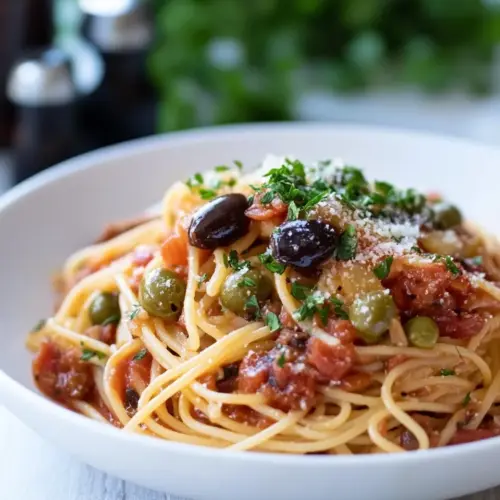
Pasta Puttanesca
Equipment
- Large Pot
- Large Dutch oven or saucepan
Ingredients
- 1 pounds spaghetti (see note 1) Boil to tender al dente pasta that serves as the hearty base of the dish, absorbing the sauce flavors and providing texture contrast to the other components. Cook according to package directions, reserving some pasta water to adjust sauce consistency and help it cling to the strands.
- 1/3 cup olive oil Use generously as the primary cooking fat and flavor carrier, providing a fruity, aromatic backbone that melds garlic and anchovy into a cohesive sauce. Add early to the pan to gently infuse heat and prevent sticking while facilitating a glossy finish on the finished pasta.
- 4 cloves garlic thinly sliced Slice thinly to release a sharp, pungent garlic flavor that brightens the sauce and lifts the savory components without overwhelming them. Sauté briefly in oil until fragrant and lightly golden to develop sweetness and remove raw harshness.
- 4 tablespoons capers (see note 2) Rinse or use as packed to introduce bright, briny bursts that cut through the tomato richness and add saline complexity to each bite. Stir in toward the end of cooking to preserve texture and ensure the capers' tang remains lively.
- 4 anchovy fillets packed in oil, drained (see note 3) Mash slightly or chop to impart deep, umami-rich saltiness that dissolves into the sauce, enhancing savory depth and creating a classic Puttanesca savoriness. Add early and allow it to soften in oil so its flavors integrate smoothly with garlic and tomatoes.
- 1/2 cup pitted kalamata olives halved Halve to provide chewy, fruity saltiness and Mediterranean character that complements capers and anchovies while adding pleasant textural contrast. Toss in near the end of cooking to warm through without losing their distinctive shape and flavor.
- 2 (28-ounce) cans Italian-style whole (plum-shaped) tomatoes drained and chopped Drain and chop to form the rich, acidic tomato base that carries the sauce, balancing salty and savory notes while offering body and bright tang. Simmer until flavors meld and tomatoes break down into a cohesive, spoonable sauce that coats pasta evenly.
- red chili flakes to taste Sprinkle sparingly to introduce sharp, warming heat that accentuates the tomato and savory elements without overpowering them. Adjust quantity to taste, adding gradually to reach desired spiciness while maintaining balance.
- freshly grated Parmesan cheese for serving Grate freshly to garnish and add a nutty, salty finishing touch that complements the sauce's umami and provides a creamy counterpoint to briny elements. Serve at the table so diners can add to taste for richness and depth.
- fresh basil leaves for garnish Tear or chiffonade to add a fresh, aromatic herbal note and bright color that lifts the heavy savory flavors and finishes the dish with a clean, fragrant accent. Scatter over just before serving to preserve its vibrant scent and appearance.
Instructions
- In a large pot, bring 4 quarts water and 1 tablespoon salt to boil. Add spaghetti and cook until al dente, about 9 to 10 minutes. Reserve 1 cup pasta water and drain well.: When the water reaches a rolling boil you will notice a lively sound and rapid movement at the surface, which means the spaghetti will cook evenly. Salted water seasons the pasta from the inside out, so do not skip it. A common mistake is under salting the water, which leads to bland pasta even when the sauce is strong, so taste a strand early to check seasoning.
- In a large Dutch oven or saucepan, heat oil over medium heat until shimmering. Add garlic and cook until garlic begins to turn golden, but not scorched, about 1 minute.: You will hear a softer bubbling as the pasta hydrates and see the noodles become plump and slightly translucent. Test by biting for a tender center with a subtle chew, that is al dente. Overcooking will lead to mushy texture and a sauce that slides off rather than clings, so start checking at around 7 minutes if your brand cooks quickly.
- Stir in capers, anchovy fillets, olives, tomatoes, and crushed red pepper (I like 1 teaspoon). Heat to boiling, reduce heat, and simmer uncovered until slightly thickened, about 30-40 minutes.: The reserved starchy pasta water will look slightly cloudy and feels slick between your fingers, and it s invaluable for thinning and emulsifying the sauce. Drain the pasta thoroughly to avoid pooling water that can dilute the sauce, but keep that cup close at hand.
- Add the pasta to the pot with the sauce and toss until evenly coated. Thin with pasta water if needed. Serve with Parmesan cheese and garnish with fresh basil.: You will see a gentle ripple across the surface of the olive oil and smell its fruitier notes when it s ready. This is the moment to add aromatics, because the oil will carry their flavors. Avoid heating until smoking, which can make the oil bitter and ruin the dish.
- Add garlic and cook until garlic begins to turn golden but not scorched about 1 minute: As the garlic sizzles you will detect a fragrant, toasty aroma that signals flavor release. Aim for a warm, light golden hue; anything darker tastes acrid. Stir constantly to ensure even coloring, and remove from direct heat if it starts to brown too quickly.
- Stir in capers anchovy fillets olives tomatoes and crushed red pepper I like 1 teaspoon: Once these ingredients hit the warm oil, they will release a layered fragrance of brine and umami while the canned tomatoes begin to break down. Mash the anchovy fillets against the pan so they dissolve and meld into the oil, which prevents isolated fishy bites and builds a cohesive base. A common pitfall is adding everything too quickly and not allowing flavors to integrate, so stir and let them mingle before reducing heat.
- Heat to boiling reduce heat and simmer uncovered until slightly thickened about 30 to 40 minutes: During the simmer you will notice the sauce reduce, becoming deeper in color and more concentrated in aroma, with gentle popping as moisture escapes. This slow concentration is why the sauce develops its bold character, so be patient and keep the pan uncovered to allow evaporation. Avoid high heat which can break the sauce into an oily separation rather than a cohesive coating.
- Add the pasta to the pot with the sauce and toss until evenly coated: When you combine the spaghetti with the sauce, you should hear a light sizzle and see the noodles glisten as they pick up the tomato and oil emulsion. Tossing rather than stirring ensures the sauce wraps around each strand. If the sauce seems too thick, add small splashes of the reserved pasta water to loosen and create a silky finish; too much water will make it soupy, so add gradually.
- Thin with pasta water if needed: The right amount of starchy water will create a glossy, clingy texture that holds onto the spaghetti . Add no more than a few tablespoons at a time until you reach the desired sheen and consistency. A mistake here is over thinning, which dilutes flavor, so judge carefully by how the sauce coats the pasta.
- Serve with Parmesan cheese and garnish with fresh basil: As you plate, grate fresh Parmesan cheese over the top to introduce a nutty finish and scatter torn basil leaves for aroma. The contrast between warm pasta and fresh herb is immediate and uplifting. Serve promptly for the best texture, because sitting too long will soften the basil and the pasta will keep absorbing sauce.
Notes
- Swap the pasta shape: While this recipe uses spaghetti, long thin pastas like linguine or bucatini will also carry the sauce beautifully and change the mouthfeel slightly.
- Adjust caper quantity: If you love briny pops, increase the capers; if you re cautious about salt, rinse them or reduce the amount to balance the sauce to your taste.
- Control the heat: Start with a small pinch of red chili flakes and taste as the sauce simmers, adding more only if you want a more pronounced spicy edge.
- Anchovy format: Use anchovy paste if jars of fillets are unavailable; measure carefully because it is concentrated and integrates easily into the oil.
- Olive size: Chop large kalamatta olives into smaller pieces for even distribution, especially if serving children or guests who prefer milder pockets of olive flavor.