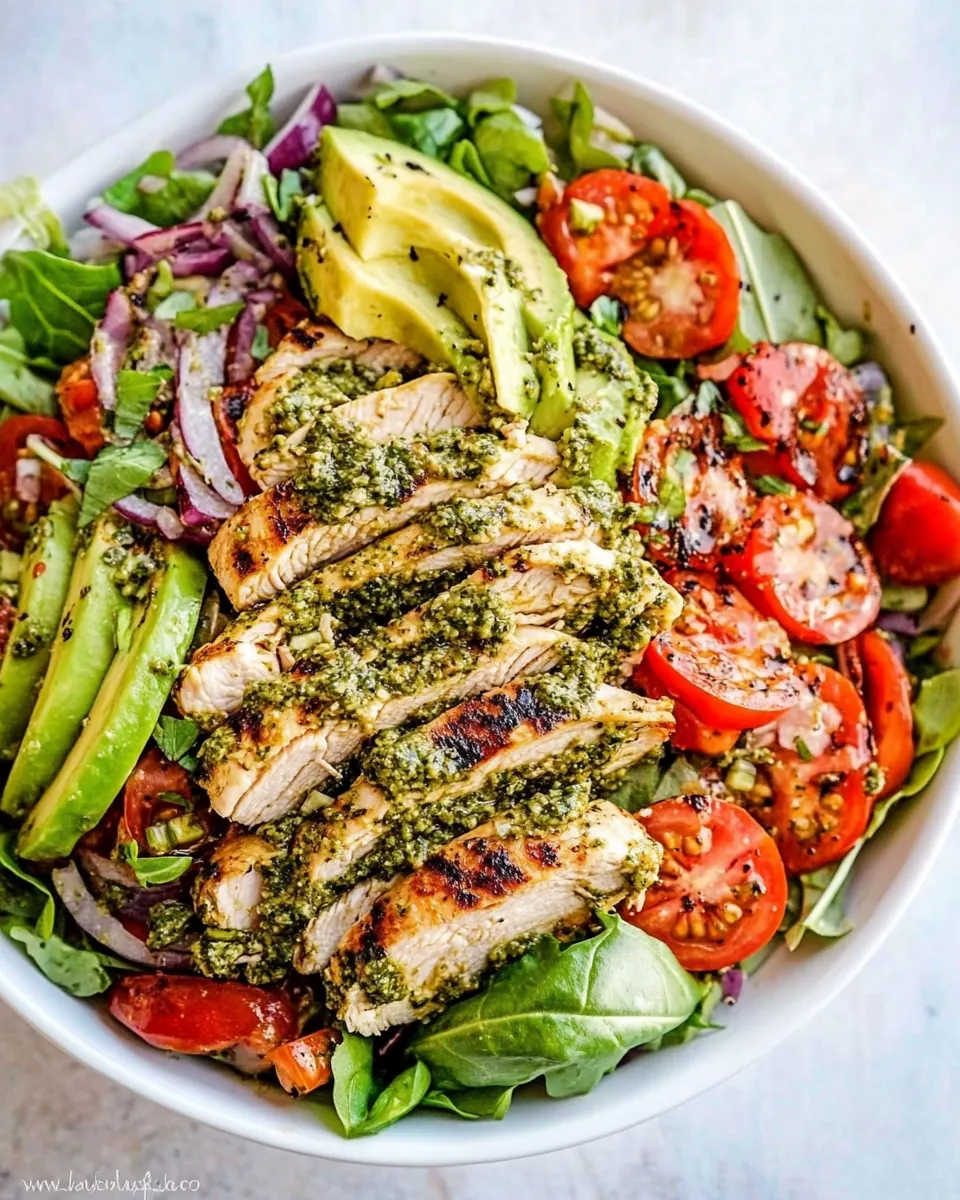
Pesto Grilled Chicken Avocado Salad
Pesto Grilled Chicken Avocado Salad became an instant favorite the first time I tossed warm, herb kissed chicken with silky avocado and peppery greens. I remember bringing this to a summer potluck after a frantic week at work, and watching it disappear faster than I could refill my plate. The combination felt fresh, substantial, and somehow effortlessly elegant, which is exactly the kind of recipe I reach for when I want to impress without fussing.
That afternoon I learned a few lessons about timing and texture that stuck with me. Letting the grilled chicken rest before slicing preserved the juiciness, while a splash of reserved dressing kept the leaves bright and never soggy. I also discovered that a small extra spoonful of pesto turned every bite into something just a bit more indulgent. Sharing that bowl felt like sharing a little piece of my weekday routine turned celebratory.
Recipe Snapshot
35 mins
15 mins
20 mins
Easy
450 kcal
Mediterranean
Paleo, Gluten-Free
Dinner
Grill pan, Large jug, Large salad bowl, Shallow dish
The Magic of This Pesto Grilled Chicken Avocado Salad
Bright contrast of textures
I love how Pesto Grilled Chicken Avocado Salad pairs crisp, cool lettuce and juicy tomatoes with warm, tender chicken and creamy avocado. The contrast keeps every bite interesting, and I always find myself going back for just one more forkful.
Flavor layering that feels effortless
The pesto infused dressing gives this salad an herb forward lift, while a squeeze of lemon juice brightens and balances the oil. I appreciate that depth, because it means a simple pantry of staples transforms into something memorable.
Flexible and weeknight friendly
I often make this when dinner needs to be quick but satisfying. You can marinate the chicken briefly or ahead of time, which makes the grilling portion fast. For busy evenings I grill while prepping the salad components, and it all comes together in one smooth flow.
Great for entertaining
When friends drop by, this salad works beautifully because it looks composed and colorful on the table. Adding extra pesto to drizzle and a handful of chopped herbs feels like a finishing touch that guests notice and compliment.
Healthy without being boring
There is plenty of protein from the chicken, healthy fats from the avocado and olive oil, and fresh crunch from the vegetables. I appreciate meals that feel both nourishing and enjoyable, and this recipe hits that sweet spot every time.
Main Ingredients for Pesto Grilled Chicken Avocado Salad
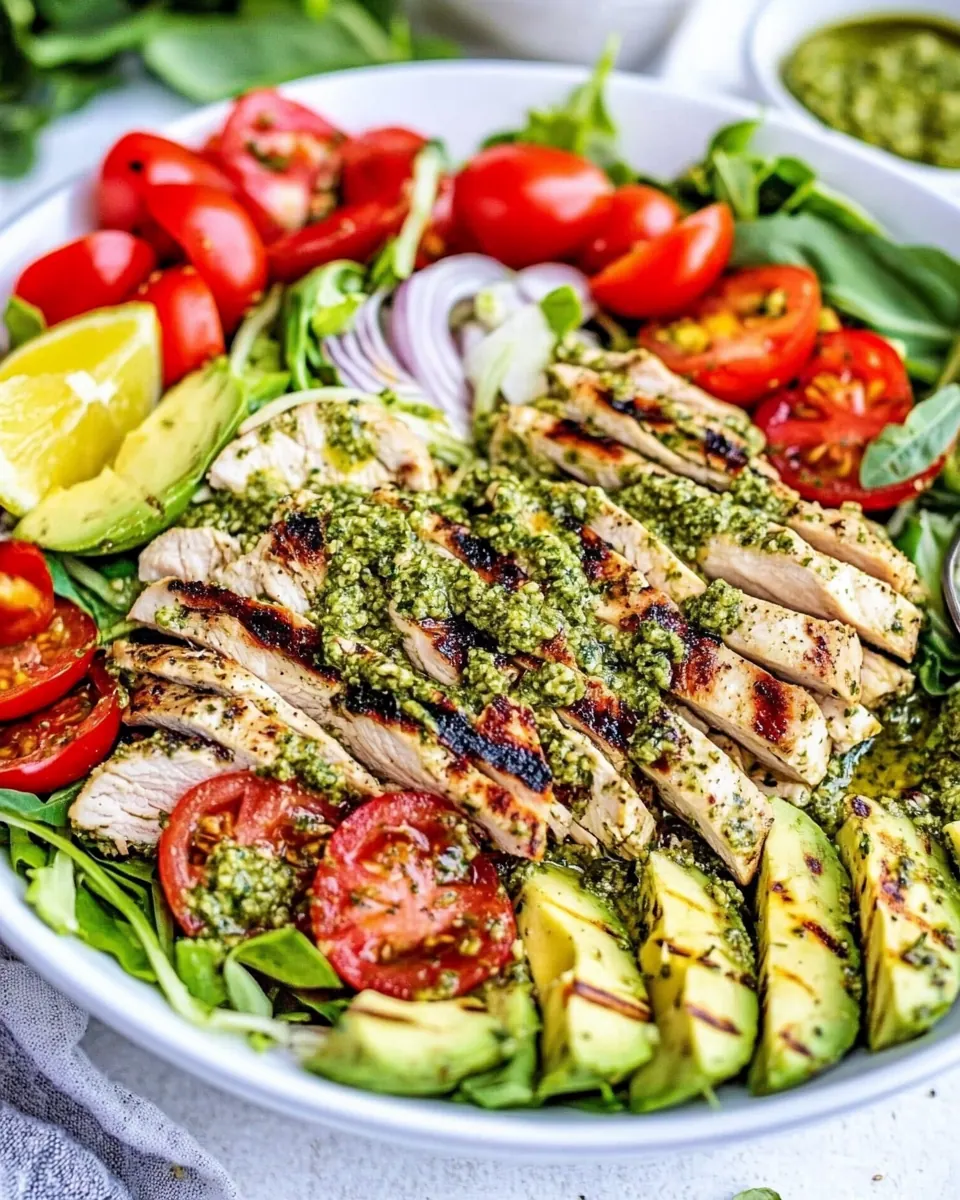
These ingredients are chosen to play off one another, creating harmony between herbs, acid, and texture. The dressing, based on pesto and olive oil, ties the salad together while the grilled chicken adds warmth and substance. Fresh vegetables give crispness and lift, and finishing touches like feta and extra basil bring a savory, aromatic edge.
- 1/3 cup olive oil: Drizzle with a rich, fruity base that binds the dressing and adds silky mouthfeel while helping distribute flavors across the salad.
- 2 tablespoons basil pesto (homemade or store bought): Enhance with an herby, concentrated basil flavor that provides depth and authentic pesto character to the marinade and dressing.
- 2 tablespoons lemon juice (adjust to your tastes): Brighten with citrus acidity that balances the oil and pesto, lifting flavors and adding a zesty contrast to richer elements.
- 1 2 tablespoons water ( — for a thinner consistency) (optional): Thin gently when needed to achieve the desired dressing viscosity, ensuring the coating clings evenly to leaves and chicken.
- 2 teaspoons garlic minced: Infuse with pungent savory notes that amplify the overall flavor profile and complement the basil and lemon components.
- 1 teaspoon salt: Season simply to enhance all flavors, promote balance, and help proteins and vegetables taste more pronounced.
- 1 pinch cracked pepper to taste: Finish with a hint of heat and complexity, contributing aromatic top notes that sharpen the salad's overall profile.
- 4 skinless boneless chicken thigh fillets or chicken breasts: Marinate or grill as the primary protein, providing a juicy, tender, and satisfying centerpiece with versatile texture.
- 4 cups Romaine lettuce or Cos lettuce leaves, washed and dried: Provide a crisp, crunchy foundation that offers freshness and structure, creating contrast with softer salad components.
- 1 cucumber large, diced: Add a cool, hydrating crunch and mild vegetal flavor that complements herbs and provides textural variety.
- 1 cup grape tomatoes, or cherry, diced: Contribute sweet, juicy bursts and vibrant color that add brightness and natural acidity to each bite.
- 1/2 red onion sliced: Offer sharp, slightly sweet bite and layered texture that contrasts with creamier elements and enhances savory balance.
- 1 avocado sliced: Supply creamy, buttery richness and luxurious mouthfeel that pairs exceptionally with pesto and grilled chicken.
- 1/2 cup crumbled feta: Introduce salty, tangy creaminess that brings savory complexity and a pleasant crumbly texture to the salad.
- 2 lemon wedges to serve: Serve as an extra citrus finishing touch to squeeze over the dish, reinforcing brightness and balancing richness.
- 2 tablespoons pesto extra, to serve: Provide an additional spoonful of concentrated pesto to boost herbaceous intensity when serving for more flavor.
- 2 tablespoons fresh basil or parsley, chopped to garnish: Garnish with fresh herbal aroma and a pop of green color that elevates presentation and adds subtle freshness.
Recipe Directions for Pesto Grilled Chicken Avocado Salad
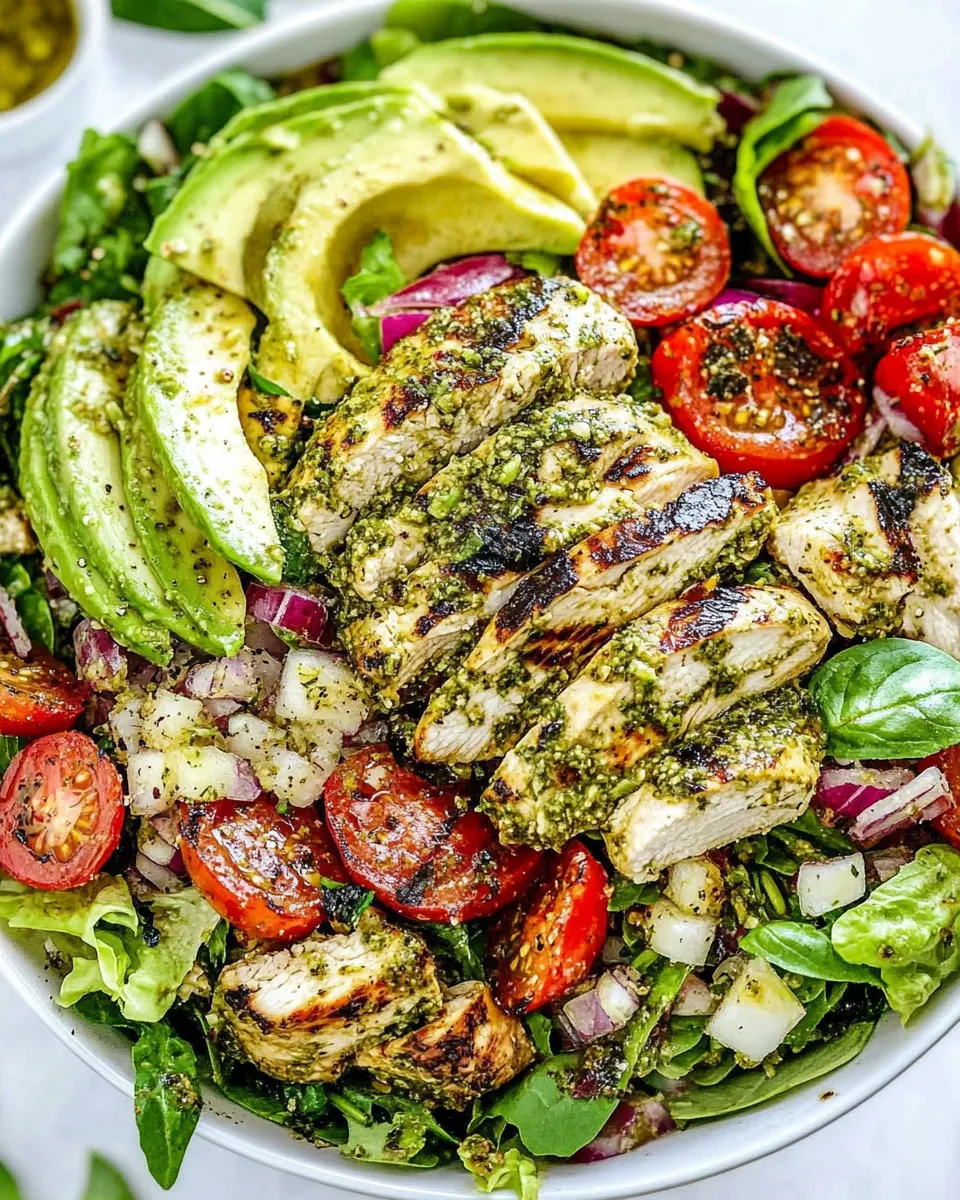
I like to keep the rhythm simple when assembling this salad. Prepare the dressing first so flavors have a moment to meld, then marinate the chicken while you chop and arrange the vegetables, finishing on the grill last so everything remains vivid and textural.
- Whisk together all of the dressing ingredients in a large jug. Pour out half of the dressing into a large, shallow dish. Refrigerate the remaining UNTOUCHED marinade to use as a dressing later.: The dressing should smell herbaceous and bright, with the warm aroma of garlic and the citrusy lift of lemon juice . Vigorously whisking emulsifies the olive oil and pesto , producing a glossy, slightly thick dressing that clings to the greens. You will notice tiny green flecks from the pesto suspended throughout the mixture. This matters because a well emulsified dressing ensures even coating and balanced flavor in every bite. If the dressing separates, whisk again or add a splash of water to bring it back together. A common mistake is under seasoning it, so taste and adjust the salt and lemon juice to avoid a flat final salad.
- Add the chicken to the marinade in the bowl; marinade chicken for 15-30 minutes (or up to two hours in the refrigerator if time allows). While waiting for the chicken, prepare all of the salad ingredients and mix in a large salad bowl.: The shallow dish creates maximum surface contact for the chicken to absorb the marinade, and it will smell savory and herb forward as it soaks. Pouring off half reserves a fresh dressing for finishing the salad, which prevents the leaves from becoming soggy when served. Letting the chicken sit in only part of the dressing retains a brighter dressing for later use. A typical misstep is using all the dressing as a marinade, leaving nothing to dress the salad at serving, which can mute the crispness of the greens.
- Once chicken is ready, heat 1 tablespoon of oil in a grill pan or a grill plate over medium-high heat. Grill chicken on both sides until browned and completely cooked through.: Chilling the reserved dressing keeps it fresh and prevents any cross contamination with raw chicken . The cool dressing will taste sharper when you bring it out, so whisk it briefly before drizzling. Store it covered in the fridge while the chicken marinates. Avoid leaving it uncovered near strong odors that can transfer, and do not reuse marinade that has come in contact with raw poultry unless cooked, which is why reserving untouched dressing is key.
- Allow chicken to rest for 5 minutes; slice and arrange over salad. Drizzle salad with the remaining UNTOUCHED dressing. Serve with lemon wedges, extra basil pesto AND chopped basil or parsley, to garnish.: As the chicken soaks, the surface should glisten and take on a faint green tint from the pesto . This step lets the acid and oil penetrate the meat slightly, contributing to a seasoned exterior once grilled. Move the pieces to ensure they are evenly coated, which leads to uniform flavor and sear. One trap is over marinating; while brief marination enhances taste, going too long can alter texture, so follow recommended times to keep the chicken tender.
- Marinade chicken for 15 to 30 minutes or up to two hours in the refrigerator if time allows: Short marination is perfect for quick flavor infusion, while a couple of hours deepens the herb profile. You will notice the scent of herbs intensify and the surface glossy when ready. Keep the bowl chilled to maintain food safety, and never leave poultry at room temperature for extended periods. A common error is assuming longer is always better, which can lead to overly strong marinade flavors and slightly changed meat texture.
- While waiting for the chicken, prepare all of the salad ingredients and mix in a large salad bowl: Chop the lettuce , dice the cucumber , halve the grape tomatoes , slice the red onion , and prepare the sliced avocado . As you work, the kitchen will smell bright and vegetal, with the onion offering a faint pungency. Toss the components gently so they stay crisp and maintain separate textures. Doing this while the chicken marinates saves time and ensures the salad is fresh when the meat is ready. Avoid overdressing the salad now, which can cause limp greens.
- Once chicken is ready, heat 1 tablespoon of oil in a grill pan or a grill plate over medium high heat: The pan should shimmer and give off a faint nutty scent from the heated olive oil , indicating it is properly preheated. A well heated surface yields a satisfying sizzle when the chicken hits it, producing those golden browned sear marks we want. Preheating ensures quick caramelization which locks juices inside the meat. If the oil smokes excessively, lower the heat to avoid burning your seasoning.
- Grill chicken on both sides until browned and completely cooked through: As the chicken cooks, listen for a steady sizzle and watch the edges turn golden brown; these visual cues signal Maillard reactions that create flavor. Depending on thickness, cooking will vary, but the meat should reach a safe internal temperature and the juices run clear. Resting and slicing later preserves juiciness. A common pitfall is overcooking which dries the chicken , so keep an eye on color and time, and use a thermometer if uncertain.
- Allow chicken to rest for 5 minutes: Resting lets the juices redistribute, so when you slice the chicken the meat remains moist and succulent rather than leaking all over the cutting board. The surface will cool slightly and the aromatic notes from the pesto will mellow into the meat. Cutting too soon squeezes out moisture, resulting in drier slices, so patience here pays off.
- Slice and arrange over salad: Sliced, the warm chicken creates an inviting contrast against the crisp, cool salad. Arrange the pieces evenly so each serving gets both protein and vegetable variety. The visual of warm, slightly charred edges atop vivid greens is part of the appeal and signals a composed, restaurant style plate. Avoid piling everything in one spot which can make parts of the salad soggy.
- Drizzle salad with the remaining UNTOUCHED dressing: The cool, herbaceous dressing brightens the assembled bowl and ties flavors together. Drizzle gradually and toss gently to coat without bruising the leaves, aiming for a light sheen rather than saturation. The dressing should perfume the salad and highlight the pesto notes without overpowering delicate ingredients like avocado . A mistake is over dressing which masks the other components.
- Serve with lemon wedges, extra basil pesto AND chopped basil or parsley to garnish: A final squeeze of lemon wakes up the flavors, a spoonful of extra pesto adds herbal intensity, and fresh chopped herbs finish with aroma. These last touches lift both presentation and taste and invite diners to customize their portion. Don't forget to offer the lemon wedges on the side so guests can control acidity to their liking.
Making Adjustments
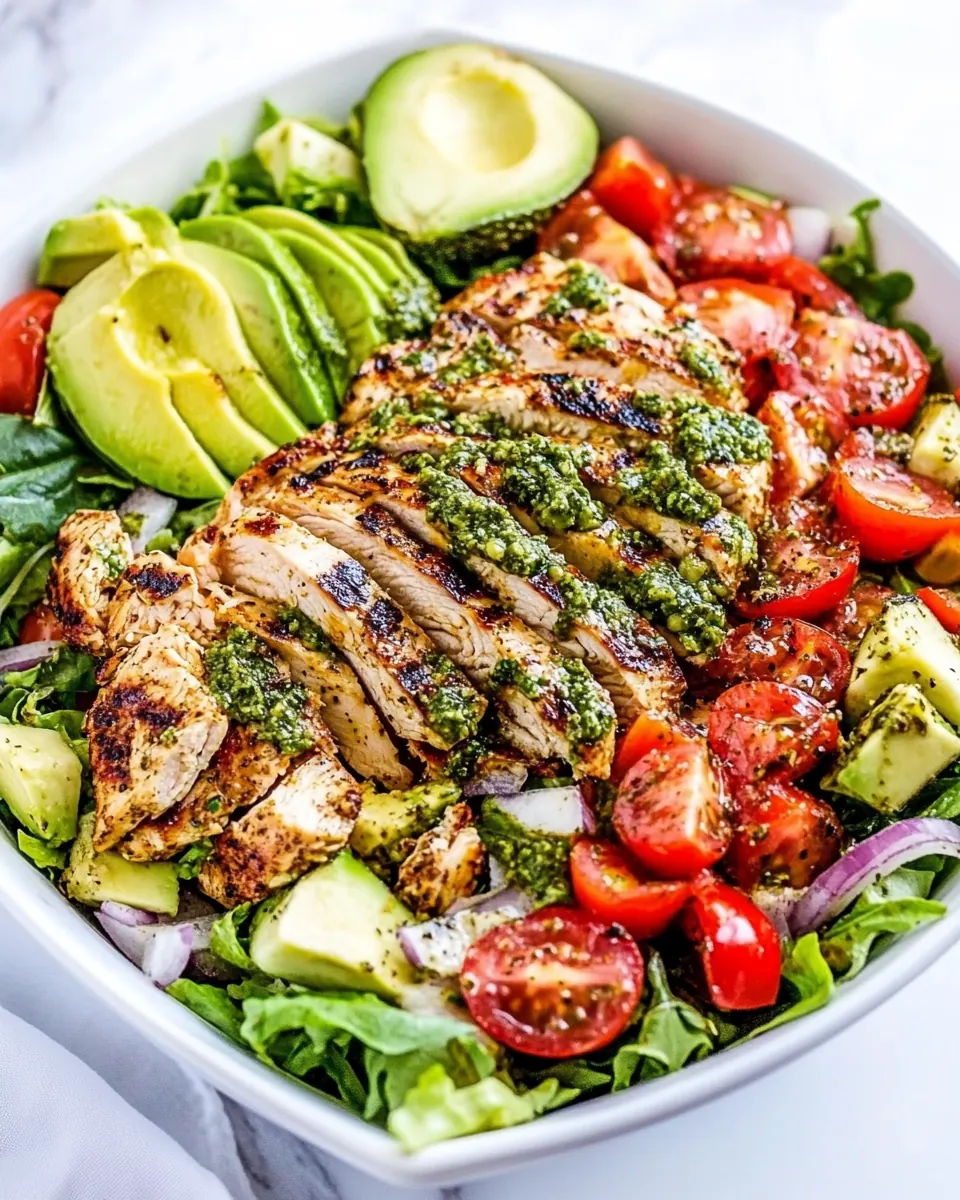
This section offers practical ways to tweak the salad based on preferences or what you have on hand. Each tip begins with a short highlighted phrase for quick scanning, followed by actionable detail so you can adapt confidently.
- Swap chicken cuts: If you prefer leaner meat, use chicken breasts and watch cooking time closely; they will cook faster than thighs and can dry out if overcooked. Pound thicker breasts to even thickness for uniform grilling.
- Adjust pesto intensity: For a subtler herb flavor, reduce the pesto to one tablespoon in the dressing and add the rest sparingly as a finish; this keeps the salad balanced and prevents herb overload.
- Loosen thick pesto: Add a teaspoon or two of olive oil or water to make the pesto easier to drizzle; this is especially helpful when serving as a finishing sauce so it coats evenly.
- Control acidity: If the salad tastes flat, a little more lemon juice will brighten it; conversely, if it is too tart, add a pinch more salt or a touch of olive oil to round flavors.
- Make ahead strategy: Marinate the chicken up to two hours in advance and store the reserved dressing chilled; assemble the salad components ahead but hold the avocado and dressing until right before serving.
What to Serve Alongside Pesto Grilled Chicken Avocado Salad
This salad stands well on its own for a light, satisfying meal but also pairs beautifully with complementary sides for different occasions. Below are ideas for serving, seasonality notes, and storage suggestions using a list format for easy reading and planning.
- Crusty bread for casual lunches: Serve with warm, crusty bread to soak up any extra dressing, making the meal feel more substantial for lunch or a relaxed dinner.
- Grilled vegetables for summer dinners: Pair with simply grilled zucchini or bell peppers for a seasonal, colorful plate that complements the herb forward pesto.
- Light soup for a starter: A clear vegetable or tomato based soup works well as a starter if you want a multi course lunch or dinner that does not overwhelm the palate.
- Occasion suitable for picnics: Pack the components separately and keep the chicken and dressing chilled until assembly, this makes the recipe picnic friendly for outdoor summer gatherings.
- Storage and leftovers: Store leftover salad components separately, with the sliced chicken kept in an airtight container in the fridge for up to two days. Keep the dressing sealed and rewhisk before using to reincorporate the oil.
- Seasonal pairing: In summer, emphasize fresh herbs and ripe tomatoes, while in cooler months you can use heartier lettuces that hold up to dressing and warmth from the chicken.
- Serving style: For a composed presentation, arrange the leaves first, then neatly fan sliced chicken and avocado, finishing with a drizzle of reserved pesto and a scatter of feta.
FAQ
Conclusion
Pesto Grilled Chicken Avocado Salad stands out for its balance of warm grilled protein, creamy avocado, and herbaceous pesto dressing. This recipe brings bright citrus, fragrant herbs, and satisfying textures together in a bowl that works for quick weeknights or casual entertaining. Give it a try the next time you want something that feels both light and filling, and let the reserved dressing and extra pesto be the finishing touches that make it feel special. I hope it becomes one of those reliable recipes you reach for whenever you want bold flavor without a lot of fuss.
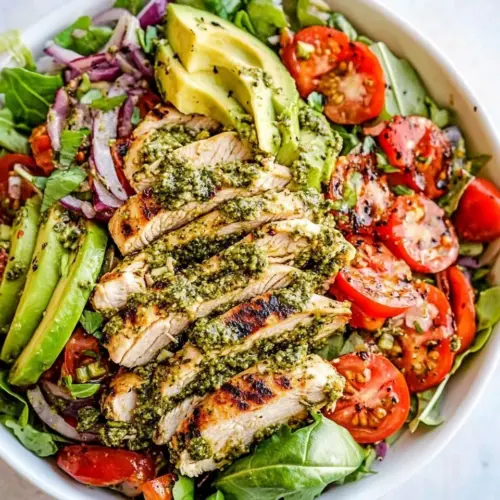
Pesto Grilled Chicken Avocado Salad
Equipment
- Grill pan
- Large jug
- Large salad bowl
- Shallow Dish
Ingredients
- 1/3 cup olive oil Drizzle with a rich, fruity base that binds the dressing and adds silky mouthfeel while helping distribute flavors across the salad.
- 2 tablespoons basil pesto (homemade or store bought) Enhance with an herby, concentrated basil flavor that provides depth and authentic pesto character to the marinade and dressing.
- 2 tablespoons lemon juice (adjust to your tastes) Brighten with citrus acidity that balances the oil and pesto, lifting flavors and adding a zesty contrast to richer elements.
- 1 -2 tablespoons water (optional — for a thinner consistency) Thin gently when needed to achieve the desired dressing viscosity, ensuring the coating clings evenly to leaves and chicken.
- 2 teaspoons garlic minced Infuse with pungent savory notes that amplify the overall flavor profile and complement the basil and lemon components.
- 1 teaspoon salt Season simply to enhance all flavors, promote balance, and help proteins and vegetables taste more pronounced.
- 1 pinch cracked pepper to taste Finish with a hint of heat and complexity, contributing aromatic top notes that sharpen the salad's overall profile.
- 4 skinless boneless chicken thigh fillets or chicken breasts Marinate or grill as the primary protein, providing a juicy, tender, and satisfying centerpiece with versatile texture.
- 4 cups Romaine lettuce or Cos lettuce leaves, washed and dried Provide a crisp, crunchy foundation that offers freshness and structure, creating contrast with softer salad components.
- 1 cucumber large, diced Add a cool, hydrating crunch and mild vegetal flavor that complements herbs and provides textural variety.
- 1 cup grape tomatoes, or cherry, diced Contribute sweet, juicy bursts and vibrant color that add brightness and natural acidity to each bite.
- 1/2 red onion sliced Offer sharp, slightly sweet bite and layered texture that contrasts with creamier elements and enhances savory balance.
- 1 avocado sliced Supply creamy, buttery richness and luxurious mouthfeel that pairs exceptionally with pesto and grilled chicken.
- 1/2 cup crumbled feta Introduce salty, tangy creaminess that brings savory complexity and a pleasant crumbly texture to the salad.
- 2 lemon wedges to serve Serve as an extra citrus finishing touch to squeeze over the dish, reinforcing brightness and balancing richness.
- 2 tablespoons pesto extra, to serve Provide an additional spoonful of concentrated pesto to boost herbaceous intensity when serving for more flavor.
- 2 tablespoons fresh basil or parsley, chopped to garnish Garnish with fresh herbal aroma and a pop of green color that elevates presentation and adds subtle freshness.
Instructions
- Whisk together all of the dressing ingredients in a large jug. Pour out half of the dressing into a large, shallow dish. Refrigerate the remaining UNTOUCHED marinade to use as a dressing later.: The dressing should smell herbaceous and bright, with the warm aroma of garlic and the citrusy lift of lemon juice . Vigorously whisking emulsifies the olive oil and pesto , producing a glossy, slightly thick dressing that clings to the greens. You will notice tiny green flecks from the pesto suspended throughout the mixture. This matters because a well emulsified dressing ensures even coating and balanced flavor in every bite. If the dressing separates, whisk again or add a splash of water to bring it back together. A common mistake is under seasoning it, so taste and adjust the salt and lemon juice to avoid a flat final salad.
- Add the chicken to the marinade in the bowl; marinade chicken for 15-30 minutes (or up to two hours in the refrigerator if time allows). While waiting for the chicken, prepare all of the salad ingredients and mix in a large salad bowl.: The shallow dish creates maximum surface contact for the chicken to absorb the marinade, and it will smell savory and herb forward as it soaks. Pouring off half reserves a fresh dressing for finishing the salad, which prevents the leaves from becoming soggy when served. Letting the chicken sit in only part of the dressing retains a brighter dressing for later use. A typical misstep is using all the dressing as a marinade, leaving nothing to dress the salad at serving, which can mute the crispness of the greens.
- Once chicken is ready, heat 1 tablespoon of oil in a grill pan or a grill plate over medium-high heat. Grill chicken on both sides until browned and completely cooked through.: Chilling the reserved dressing keeps it fresh and prevents any cross contamination with raw chicken . The cool dressing will taste sharper when you bring it out, so whisk it briefly before drizzling. Store it covered in the fridge while the chicken marinates. Avoid leaving it uncovered near strong odors that can transfer, and do not reuse marinade that has come in contact with raw poultry unless cooked, which is why reserving untouched dressing is key.
- Allow chicken to rest for 5 minutes; slice and arrange over salad. Drizzle salad with the remaining UNTOUCHED dressing. Serve with lemon wedges, extra basil pesto AND chopped basil or parsley, to garnish.: As the chicken soaks, the surface should glisten and take on a faint green tint from the pesto . This step lets the acid and oil penetrate the meat slightly, contributing to a seasoned exterior once grilled. Move the pieces to ensure they are evenly coated, which leads to uniform flavor and sear. One trap is over marinating; while brief marination enhances taste, going too long can alter texture, so follow recommended times to keep the chicken tender.
- Marinade chicken for 15 to 30 minutes or up to two hours in the refrigerator if time allows: Short marination is perfect for quick flavor infusion, while a couple of hours deepens the herb profile. You will notice the scent of herbs intensify and the surface glossy when ready. Keep the bowl chilled to maintain food safety, and never leave poultry at room temperature for extended periods. A common error is assuming longer is always better, which can lead to overly strong marinade flavors and slightly changed meat texture.
- While waiting for the chicken, prepare all of the salad ingredients and mix in a large salad bowl: Chop the lettuce , dice the cucumber , halve the grape tomatoes , slice the red onion , and prepare the sliced avocado . As you work, the kitchen will smell bright and vegetal, with the onion offering a faint pungency. Toss the components gently so they stay crisp and maintain separate textures. Doing this while the chicken marinates saves time and ensures the salad is fresh when the meat is ready. Avoid overdressing the salad now, which can cause limp greens.
- Once chicken is ready, heat 1 tablespoon of oil in a grill pan or a grill plate over medium high heat: The pan should shimmer and give off a faint nutty scent from the heated olive oil , indicating it is properly preheated. A well heated surface yields a satisfying sizzle when the chicken hits it, producing those golden browned sear marks we want. Preheating ensures quick caramelization which locks juices inside the meat. If the oil smokes excessively, lower the heat to avoid burning your seasoning.
- Grill chicken on both sides until browned and completely cooked through: As the chicken cooks, listen for a steady sizzle and watch the edges turn golden brown; these visual cues signal Maillard reactions that create flavor. Depending on thickness, cooking will vary, but the meat should reach a safe internal temperature and the juices run clear. Resting and slicing later preserves juiciness. A common pitfall is overcooking which dries the chicken , so keep an eye on color and time, and use a thermometer if uncertain.
- Allow chicken to rest for 5 minutes: Resting lets the juices redistribute, so when you slice the chicken the meat remains moist and succulent rather than leaking all over the cutting board. The surface will cool slightly and the aromatic notes from the pesto will mellow into the meat. Cutting too soon squeezes out moisture, resulting in drier slices, so patience here pays off.
- Slice and arrange over salad: Sliced, the warm chicken creates an inviting contrast against the crisp, cool salad. Arrange the pieces evenly so each serving gets both protein and vegetable variety. The visual of warm, slightly charred edges atop vivid greens is part of the appeal and signals a composed, restaurant style plate. Avoid piling everything in one spot which can make parts of the salad soggy.
- Drizzle salad with the remaining UNTOUCHED dressing: The cool, herbaceous dressing brightens the assembled bowl and ties flavors together. Drizzle gradually and toss gently to coat without bruising the leaves, aiming for a light sheen rather than saturation. The dressing should perfume the salad and highlight the pesto notes without overpowering delicate ingredients like avocado . A mistake is over dressing which masks the other components.
- Serve with lemon wedges, extra basil pesto AND chopped basil or parsley to garnish: A final squeeze of lemon wakes up the flavors, a spoonful of extra pesto adds herbal intensity, and fresh chopped herbs finish with aroma. These last touches lift both presentation and taste and invite diners to customize their portion. Don't forget to offer the lemon wedges on the side so guests can control acidity to their liking.
Notes
- Swap chicken cuts: If you prefer leaner meat, use chicken breasts and watch cooking time closely; they will cook faster than thighs and can dry out if overcooked. Pound thicker breasts to even thickness for uniform grilling.
- Adjust pesto intensity: For a subtler herb flavor, reduce the pesto to one tablespoon in the dressing and add the rest sparingly as a finish; this keeps the salad balanced and prevents herb overload.
- Loosen thick pesto: Add a teaspoon or two of olive oil or water to make the pesto easier to drizzle; this is especially helpful when serving as a finishing sauce so it coats evenly.
- Control acidity: If the salad tastes flat, a little more lemon juice will brighten it; conversely, if it is too tart, add a pinch more salt or a touch of olive oil to round flavors.
- Make ahead strategy: Marinate the chicken up to two hours in advance and store the reserved dressing chilled; assemble the salad components ahead but hold the avocado and dressing until right before serving.