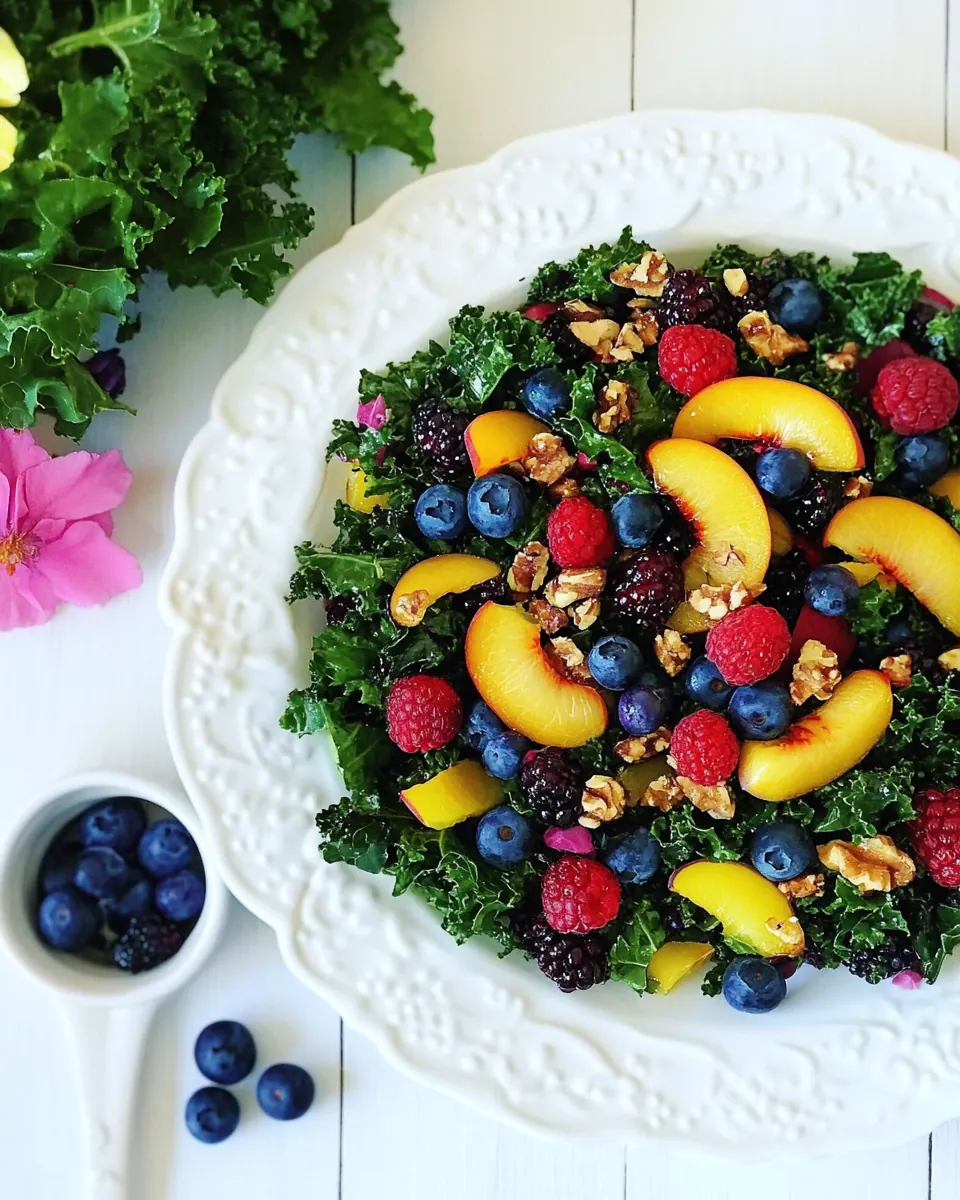
Grilled Kale Salad with Berries Nectarines
Grilled Kale Salad with Berries Nectarines changed the way I think about leafy greens the very first time I tossed it together on a blazing summer evening.
I remember pulling a wobbling tray off the grill with a mix of charred edges and bright fruit juices, and feeling a little triumphant because something so simple looked and tasted so vibrant. I love how the smoky notes from the grill transform the humble kale, and how the juicy nectarines and bright berries cut through that smokiness with sweet, floral bursts. That first bowl felt like a small celebration of summer produce, and I kept going back for just one more forkful.
Over the years I have made small tweaks, but the soul of this dish remains the contrast between crisp, slightly bitter kale and tender, sun warmed fruit. When friends come over for a casual dinner, I often pair this salad with simply grilled proteins and let it be the colorful, refreshing counterpoint on the table. You will find the textures delightful, the dressing breezy, and the whole salad easy to scale up for a crowd.
Recipe Snapshot
13 mins
10 mins
3 mins
Easy
250 kcal
American
Paleo, Gluten-Free
Salads
Grill, Small bowl, Knife, Large bowl, Basting brush
What We Adore About This Grilled Kale Salad with Berries Nectarines
It celebrates seasonal produce
I adore this salad because it showcases summer fruit at its peak. The combination of nectarines, blueberries, and raspberries feels like a direct line to warm afternoons, and grilling the kale amplifies those seasonal flavors rather than masking them.
Texture and contrast are everything
The crunch of toasted almonds and the charred, slightly crisp edges of the kale create a satisfying mouthfeel against the soft, juicy fruit. I find that this interplay keeps every bite interesting, and it’s one reason I return to this recipe time after time.
Fast and flexible
I often need dishes that are quick to pull together. With a short prep routine and a few minutes on a hot grill, this salad comes together fast. I love how forgiving it is, so you can adjust dressing amounts or swap fruit varieties while still landing a beautiful result.
Bright, balanced dressing
The simple dressing with extra virgin olive oil, white balsamic vinegar, and a touch of agave or honey brings acidity and sheen that ties the whole bowl together. It brightens the fruit and softens the raw edges of the kale, so no component overpowers another.
Great for sharing and plating
I often serve this at relaxed gatherings because it looks stunning on a platter, and people love the combination of smoky greens and sweet fruit. It scales easily, which makes it a reliable option when I want something impressive without fuss.
Grilled Kale Salad with Berries Nectarines Shopping List
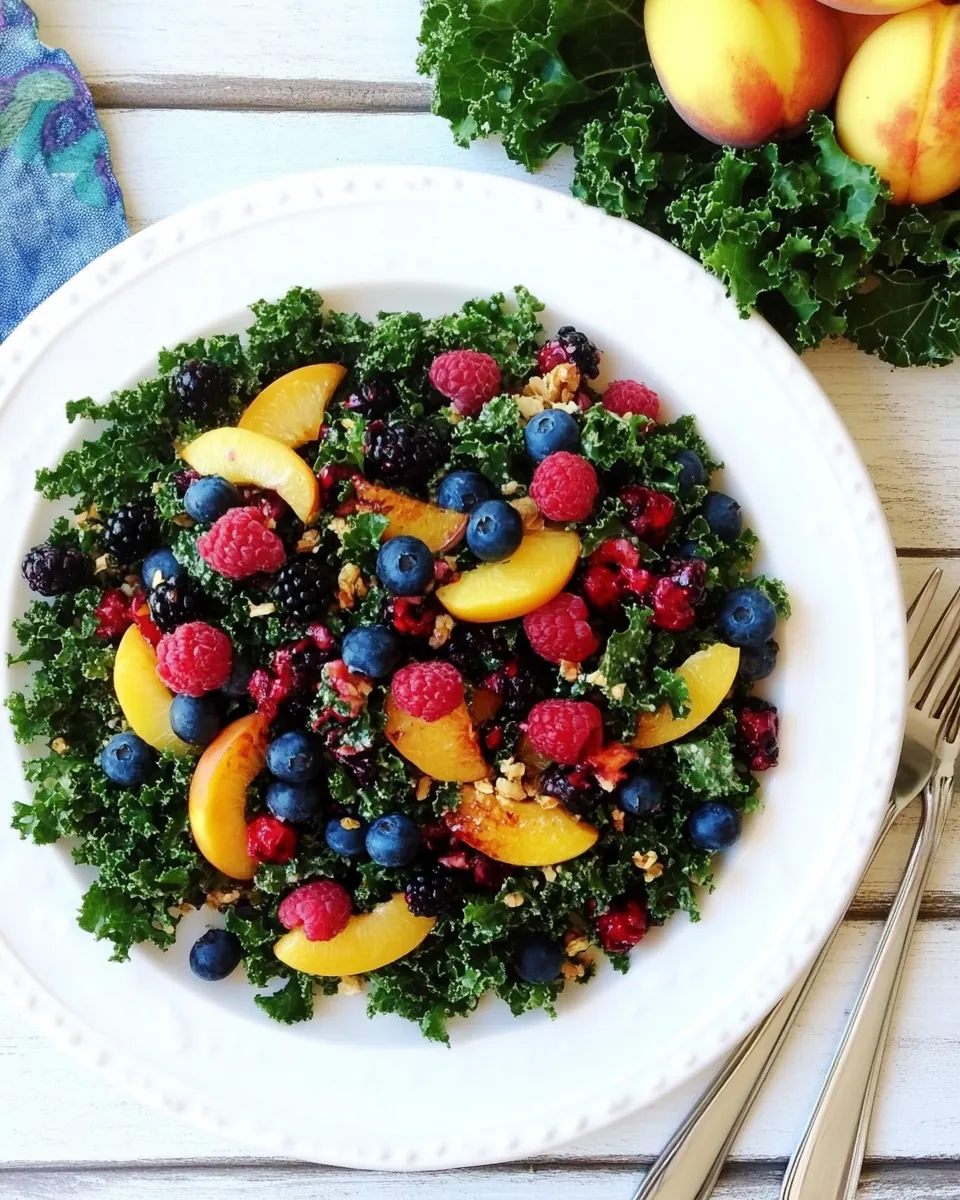
I approach ingredients like players in an ensemble, where each one has a moment to shine. The kale provides structure and a slight bitterness, while the nectarines and berries offer sweetness and juiciness. The dressing ties everything together with fat and acid, and the sliced almonds add that all important crunch.
- 1 bunch kale: Provide hearty, sturdy leaves that form the base of the salad; massaging tenderizes fibers and allows dressings to cling for better flavor absorption. Support a nutrient-dense profile with vitamins and a slightly bitter backbone that contrasts sweet fruit elements.
- 1/4 cup extra virgin olive oil: Add a rich, fruity fat that emulsifies with vinegar to create a silky dressing; drizzle gradually while whisking to achieve a cohesive vinaigrette. Carry flavors and help coat kale, improving mouthfeel and distributing seasoning evenly.
- 1/4 cup white balsamic vinegar: Contribute bright acidity and subtle sweetness that balances the oil and sweet fruits; whisk together with oil and sweetener for a balanced dressing. Provide a gentler, less sharp tang than traditional balsamic, enhancing delicate berry and stone fruit flavors.
- 1 tablespoon agave or honey: Sweeten and round out acidity while aiding emulsification; dissolve into vinegar and lemon for a smooth, balanced dressing. Provide a floral or mellow sweetness that complements both the berries and the charred notes from grilled fruit.
- 1 tablespoon fresh lemon juice: Brighten and lift the dressing with fresh citrus acidity; combine with vinegar and sweetener to fine-tune tanginess. Help preserve a fresh, lively profile that cuts through the oil and complements both bitter greens and sweet fruit.
- Salt and pepper to taste: Season and enhance overall flavor balance; sprinkle and taste as you go to avoid over-salting. Counteract sweetness and accentuate natural flavors of the kale, nectarines, and berries for a well-rounded salad.
- 2 nectarines pit removed and sliced: Bring juicy, sweet-tart stone fruit flavor and tender, slightly charred texture when grilled; slice for easy tossing and even distribution. Offer a warm caramelized contrast to cold berries and crisp greens, adding depth and seasonal character.
- 1 cup blueberries: Provide small bursts of sweet, floral flavor and juicy texture that contrast with sturdy greens and grilled nectarines. Add visual appeal and antioxidant-rich benefits while contributing pleasant pop in each bite.
- 1 cup raspberries: Supply delicate sweetness and a soft texture that complements the blueberries and contrasts with crisp kale; scatter gently to avoid crushing. Add color contrast and a tart-sweet element that brightens the overall salad.
- 1/3 cup sliced almonds: Offer crunchy texture and a toasty, nutty flavor that contrasts soft fruit and leafy greens; toast lightly to enhance aroma before sprinkling. Add healthy fats and a satisfying crunch that ties the salad components together.
How to Assemble Grilled Kale Salad with Berries Nectarines
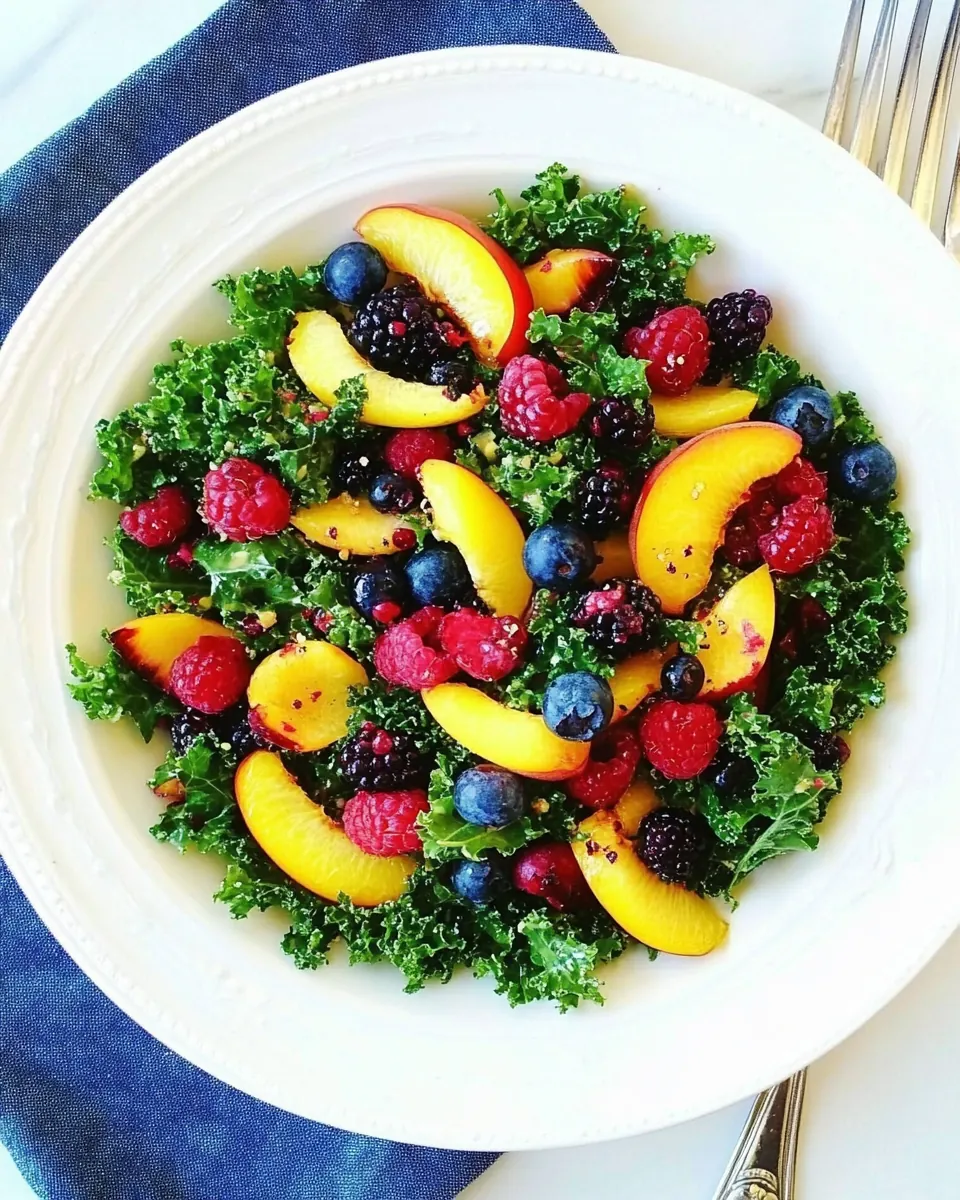
This salad comes together in quick stages where timing and attention to sensory detail matter. I usually start by preparing the dressing and brushing the leaves, then move to the grill to develop char, and finish by tossing everything gently so the fruit keeps its shape.
- Wash the kale and set aside. In a small bowl, whisk together the olive oil, white balsamic vinegar, agave or honey, lemon juice, salt, and pepper. Liberally brush the kale leaves with the dressing, using about 2 tablespoons.: When the kale hits cool running water, you should hear the faint rustle of leaves as dirt and grit loosen, and the leaves will feel firmer and fresher. Washing is essential because kale has tightly layered surfaces where debris can hide, and skipping this step can ruin the texture and introduce grit into every bite. A common mistake is soaking for too long, which can make leaves soggy, so a quick rinse and gentle shake followed by patting or spinning in a salad spinner preserves crispness. If any stems seem woody after washing, remove them later after grilling to keep the final salad pleasant to chew.
- Heat the grill to high heat. Grill kale, turning once, until crispy and charred at edges, about 2-3 minutes. Let the kale cool to room temperature. Remove large center stems with a knife and discard. Roughly chop the kale leaves.: As you whisk, watch the dressing emulsify into a glossy mixture that smells bright and slightly sweet from the lemon juice and agave or honey . This emulsion helps the dressing cling to the kale and fruit, ensuring each bite has balance. Why this matters: a well emulsified dressing disperses fat and acid evenly, preventing clumps of oil or overly sour pockets. Avoid over-salting the dressing now because the seasoning can concentrate once it sits on the leaves, and you can always adjust later.
- Place kale leaves in a large bowl. Add the nectarines, blueberries, raspberries, and almonds. Drizzle salad with additional dressing. Toss and serve.: As you brush, the oil will give the kale a shiny sheen and the leaves will take on a faint scent of citrus and vinegar. Brushing rather than pouring ensures the leaves char evenly on the grill and prevents them from becoming drenched, which would steam instead of crisp. One thing to watch for is using too much dressing, which can cause flare ups on the grill; a light, even coat is all you need.
- Heat the grill to high heat.: A properly hot grill should radiate heat that you can feel at arm's length, and you may hear a brief roar as flames rise. High heat is crucial so the kale chars quickly, developing smoky notes instead of wilting slowly. If the grill is not hot enough, the leaves will become limp rather than crisp, so allow full preheat time and clean grates to prevent sticking.
- Grill kale, turning once, until crispy and charred at edges, about 2 to 3 minutes.: You will notice the edges darkening and a faint sizzle as moisture escapes, which signals proper charring. The smoky aroma should deepen and the surface will become brittle in spots while the center stays flexible. The reason this technique matters is that quick, intense heat concentrates flavor and adds complexity. A frequent error is leaving the leaves too long without turning, which can produce bitter, blackened areas instead of even char.
- Let the kale cool to room temperature.: Cooling allows steam to dissipate so the leaves stay crisp instead of steaming themselves in a hot bowl, and their texture will relax into a pleasant chew. During this rest, flavors meld and any residual dressing settles. Avoid tossing while still warm because the fruit will break down sooner and the salad can become watery.
- Remove large center stems with a knife and discard.: You will find the stems to be noticeably tougher and less pleasant to eat after grilling, and trimming them ensures every bite is comfortable. Cutting them away also tidies the appearance, so the plate looks inviting. A common oversight is leaving thick stems in place, which results in chewy, fibrous bites that detract from the dish.
- Roughly chop the kale leaves.: Chopping transforms the charred leaves into manageable pieces that mix well with the fruit, and you should hear a clean cut and see an attractive balance of dark green flake and charred edges. Doing this by hand preserves texture better than overprocessing, which can bruise the leaves. Be careful not to chop too small, because tiny bits will wilt faster and hide the contrast in textures.
- Place kale leaves in a large bowl.: In a roomy bowl you will have space to toss without smashing the delicate berries , and the air circulation helps keep the leaves crisp. Using too small a container makes tossing messy and can crush fruit, producing an overly juicy salad. Choose a bowl with enough height so you can fold ingredients gently.
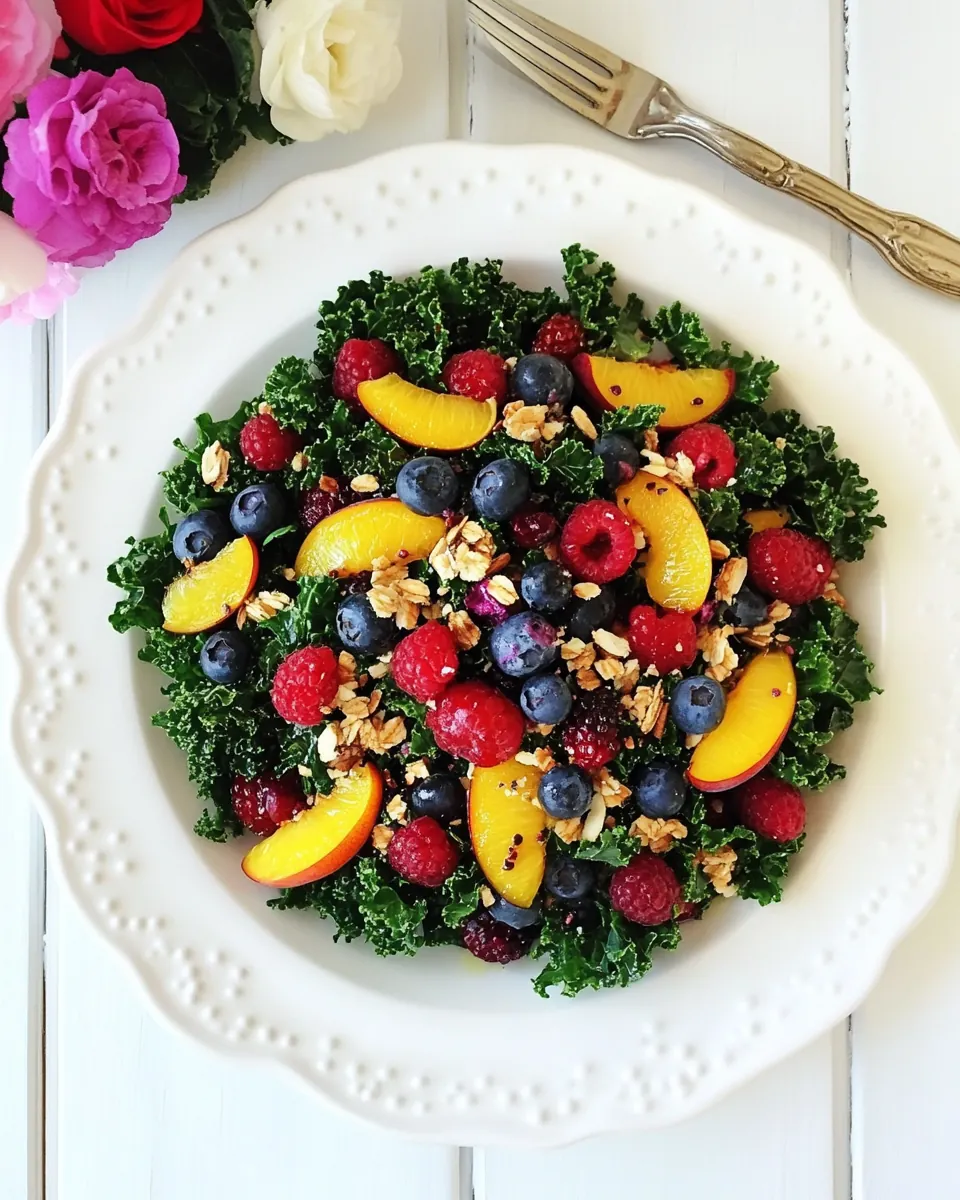
- Add the nectarines, blueberries, raspberries, and almonds.: As you add these, notice the colors pop against the dark green of the kale , and the scent of stone fruit rises. The textures will create a pleasing mosaic, from soft nectarines to crunchy almonds . When combining, avoid vigorous tossing that will bruise the raspberries and break the berries apart; instead fold gently to distribute everything evenly.
- Drizzle salad with additional dressing.: A final drizzle lifts the flavors and gives everything a glossy finish. The sound is subtle, just the soft patter of liquid against fruit, and the visual cue is a light sheen over the leaves and fruit. The reason for a measured drizzle is to prevent overdressing, which can lead to a soggy salad. If you find one area looks underdressed, add a touch more and toss carefully.
- Toss and serve.: Tossing should be gentle and deliberate, ensuring the berries remain intact while the dressing coats the kale and fruit evenly. You will notice a light shimmer and a blend of scents from citrus, char, and sweet fruit. A common mistake is over tossing, which crushes the berries and turns the salad wet, so fold with care and serve promptly for the best texture.
Making Adjustments
I like giving practical options so you can tailor this salad to what you have on hand or your flavor preferences. Below are thoughtful tips to adjust sweetness, texture, and scale, each starting with a clear action phrase to guide you.
- Adjust sweetness: If your nectarines are not very sweet, increase the agave or honey by a small amount, tasting as you go so the dressing remains balanced rather than cloying.
- Crunch preferences: For more crunch swap sliced almonds for roughly chopped nuts, or toast them longer for a deeper, nuttier bite, but watch closely to avoid bitterness from burning.
- Dressing intensity: Make the dressing tangier by adding a touch more white balsamic vinegar or brighter by adding a few more drops of lemon juice, adjusting to personal taste.
- Fruit swaps: If you do not have raspberries, double the blueberries or add sliced stone fruit like peaches, keeping total fruit volume similar to maintain balance.
- Scaling up: To feed a crowd, multiply ingredients proportionally and dress only part of the salad initially, adding more dressing as you serve to avoid sogginess.
- Make ahead: Grill the kale and prepare the dressing up to a day ahead, storing separately, then combine with fruit and almonds just before serving.
Serving This Grilled Kale Salad with Berries Nectarines
This salad is versatile enough for casual meals and special occasions. Serve it as a bright side or a centerpiece salad for gatherings, and consider portioning to preserve texture so the fruit does not weep on the plate.
- As a side dish: Pair with simply grilled proteins or a platter of roasted vegetables to balance rich mains with fresh acidity.
- For lunch: Serve in a shallow bowl with a sprinkle of extra sliced almonds for crunch, keeping dressing light to avoid a heavy midday meal.
- For dinner parties: Arrange on a large platter so the colorful fruit and charred kale shine, and add extra dressing on the side so guests can season to preference.
- Seasonal pairing: This is ideal for summer menus when stone fruit and berries are at their sweetest, making every bite taste of the season.
- Storage tips: Keep leftover dressed portions refrigerated and consume within one day, as the fruit will release juices; store components separately if you plan to keep it longer.
- Occasions: Great for casual al fresco dinners, weekend lunches, or as a colorful addition to celebratory spreads during warm weather.
FAQ
Conclusion
This Grilled Kale Salad with Berries Nectarines shines because it balances smoky, crisp greens with sweet, juicy fruit and crunchy nuts for a lively texture and bright flavor profile. I hope you feel inspired to give it a try, whether for a relaxed weeknight meal or to bring something fresh and seasonal to a gathering. It is an easy recipe to scale and personalize, and I think you will appreciate how a few thoughtful steps elevate simple ingredients into a memorable dish.
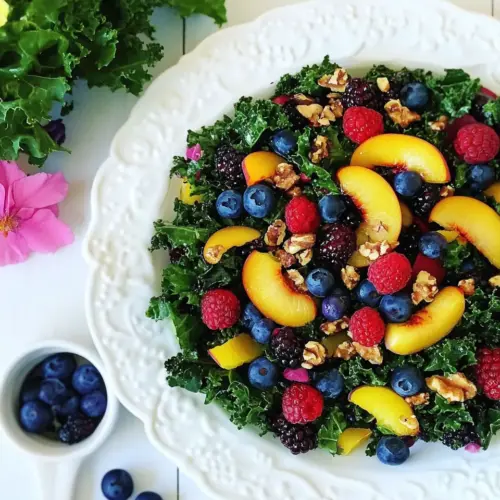
Grilled Kale Salad with Berries Nectarines
Equipment
- Grill
- Small Bowl
- Knife
- Large Bowl
- Basting Brush
Ingredients
- 1 bunch kale Provide hearty, sturdy leaves that form the base of the salad; massaging tenderizes fibers and allows dressings to cling for better flavor absorption. Support a nutrient-dense profile with vitamins and a slightly bitter backbone that contrasts sweet fruit elements.
- 1/4 cup extra virgin olive oil Add a rich, fruity fat that emulsifies with vinegar to create a silky dressing; drizzle gradually while whisking to achieve a cohesive vinaigrette. Carry flavors and help coat kale, improving mouthfeel and distributing seasoning evenly.
- 1/4 cup white balsamic vinegar Contribute bright acidity and subtle sweetness that balances the oil and sweet fruits; whisk together with oil and sweetener for a balanced dressing. Provide a gentler, less sharp tang than traditional balsamic, enhancing delicate berry and stone fruit flavors.
- 1 tablespoon agave or honey Sweeten and round out acidity while aiding emulsification; dissolve into vinegar and lemon for a smooth, balanced dressing. Provide a floral or mellow sweetness that complements both the berries and the charred notes from grilled fruit.
- 1 tablespoon fresh lemon juice Brighten and lift the dressing with fresh citrus acidity; combine with vinegar and sweetener to fine-tune tanginess. Help preserve a fresh, lively profile that cuts through the oil and complements both bitter greens and sweet fruit.
- Salt and pepper to taste Season and enhance overall flavor balance; sprinkle and taste as you go to avoid over-salting. Counteract sweetness and accentuate natural flavors of the kale, nectarines, and berries for a well-rounded salad.
- 2 nectarines pit removed and sliced Bring juicy, sweet-tart stone fruit flavor and tender, slightly charred texture when grilled; slice for easy tossing and even distribution. Offer a warm caramelized contrast to cold berries and crisp greens, adding depth and seasonal character.
- 1 cup blueberries Provide small bursts of sweet, floral flavor and juicy texture that contrast with sturdy greens and grilled nectarines. Add visual appeal and antioxidant-rich benefits while contributing pleasant pop in each bite.
- 1 cup raspberries Supply delicate sweetness and a soft texture that complements the blueberries and contrasts with crisp kale; scatter gently to avoid crushing. Add color contrast and a tart-sweet element that brightens the overall salad.
- 1/3 cup sliced almonds Offer crunchy texture and a toasty, nutty flavor that contrasts soft fruit and leafy greens; toast lightly to enhance aroma before sprinkling. Add healthy fats and a satisfying crunch that ties the salad components together.
Instructions
- Wash the kale and set aside. In a small bowl, whisk together the olive oil, white balsamic vinegar, agave or honey, lemon juice, salt, and pepper. Liberally brush the kale leaves with the dressing, using about 2 tablespoons.: When the kale hits cool running water, you should hear the faint rustle of leaves as dirt and grit loosen, and the leaves will feel firmer and fresher. Washing is essential because kale has tightly layered surfaces where debris can hide, and skipping this step can ruin the texture and introduce grit into every bite. A common mistake is soaking for too long, which can make leaves soggy, so a quick rinse and gentle shake followed by patting or spinning in a salad spinner preserves crispness. If any stems seem woody after washing, remove them later after grilling to keep the final salad pleasant to chew.
- Heat the grill to high heat. Grill kale, turning once, until crispy and charred at edges, about 2-3 minutes. Let the kale cool to room temperature. Remove large center stems with a knife and discard. Roughly chop the kale leaves.: As you whisk, watch the dressing emulsify into a glossy mixture that smells bright and slightly sweet from the lemon juice and agave or honey . This emulsion helps the dressing cling to the kale and fruit, ensuring each bite has balance. Why this matters: a well emulsified dressing disperses fat and acid evenly, preventing clumps of oil or overly sour pockets. Avoid over-salting the dressing now because the seasoning can concentrate once it sits on the leaves, and you can always adjust later.
- Place kale leaves in a large bowl. Add the nectarines, blueberries, raspberries, and almonds. Drizzle salad with additional dressing. Toss and serve.: As you brush, the oil will give the kale a shiny sheen and the leaves will take on a faint scent of citrus and vinegar. Brushing rather than pouring ensures the leaves char evenly on the grill and prevents them from becoming drenched, which would steam instead of crisp. One thing to watch for is using too much dressing, which can cause flare ups on the grill; a light, even coat is all you need.
- Heat the grill to high heat.: A properly hot grill should radiate heat that you can feel at arm's length, and you may hear a brief roar as flames rise. High heat is crucial so the kale chars quickly, developing smoky notes instead of wilting slowly. If the grill is not hot enough, the leaves will become limp rather than crisp, so allow full preheat time and clean grates to prevent sticking.
- Grill kale, turning once, until crispy and charred at edges, about 2 to 3 minutes.: You will notice the edges darkening and a faint sizzle as moisture escapes, which signals proper charring. The smoky aroma should deepen and the surface will become brittle in spots while the center stays flexible. The reason this technique matters is that quick, intense heat concentrates flavor and adds complexity. A frequent error is leaving the leaves too long without turning, which can produce bitter, blackened areas instead of even char.
- Let the kale cool to room temperature.: Cooling allows steam to dissipate so the leaves stay crisp instead of steaming themselves in a hot bowl, and their texture will relax into a pleasant chew. During this rest, flavors meld and any residual dressing settles. Avoid tossing while still warm because the fruit will break down sooner and the salad can become watery.
- Remove large center stems with a knife and discard.: You will find the stems to be noticeably tougher and less pleasant to eat after grilling, and trimming them ensures every bite is comfortable. Cutting them away also tidies the appearance, so the plate looks inviting. A common oversight is leaving thick stems in place, which results in chewy, fibrous bites that detract from the dish.
- Roughly chop the kale leaves.: Chopping transforms the charred leaves into manageable pieces that mix well with the fruit, and you should hear a clean cut and see an attractive balance of dark green flake and charred edges. Doing this by hand preserves texture better than overprocessing, which can bruise the leaves. Be careful not to chop too small, because tiny bits will wilt faster and hide the contrast in textures.
- Place kale leaves in a large bowl.: In a roomy bowl you will have space to toss without smashing the delicate berries , and the air circulation helps keep the leaves crisp. Using too small a container makes tossing messy and can crush fruit, producing an overly juicy salad. Choose a bowl with enough height so you can fold ingredients gently.
- Add the nectarines, blueberries, raspberries, and almonds.: As you add these, notice the colors pop against the dark green of the kale , and the scent of stone fruit rises. The textures will create a pleasing mosaic, from soft nectarines to crunchy almonds . When combining, avoid vigorous tossing that will bruise the raspberries and break the berries apart; instead fold gently to distribute everything evenly.
- Drizzle salad with additional dressing.: A final drizzle lifts the flavors and gives everything a glossy finish. The sound is subtle, just the soft patter of liquid against fruit, and the visual cue is a light sheen over the leaves and fruit. The reason for a measured drizzle is to prevent overdressing, which can lead to a soggy salad. If you find one area looks underdressed, add a touch more and toss carefully.
- Toss and serve.: Tossing should be gentle and deliberate, ensuring the berries remain intact while the dressing coats the kale and fruit evenly. You will notice a light shimmer and a blend of scents from citrus, char, and sweet fruit. A common mistake is over tossing, which crushes the berries and turns the salad wet, so fold with care and serve promptly for the best texture.
Notes
- Adjust sweetness: If your nectarines are not very sweet, increase the agave or honey by a small amount, tasting as you go so the dressing remains balanced rather than cloying.
- Crunch preferences: For more crunch swap sliced almonds for roughly chopped nuts, or toast them longer for a deeper, nuttier bite, but watch closely to avoid bitterness from burning.
- Dressing intensity: Make the dressing tangier by adding a touch more white balsamic vinegar or brighter by adding a few more drops of lemon juice, adjusting to personal taste.
- Fruit swaps: If you do not have raspberries, double the blueberries or add sliced stone fruit like peaches, keeping total fruit volume similar to maintain balance.
- Scaling up: To feed a crowd, multiply ingredients proportionally and dress only part of the salad initially, adding more dressing as you serve to avoid sogginess.
- Make ahead: Grill the kale and prepare the dressing up to a day ahead, storing separately, then combine with fruit and almonds just before serving.