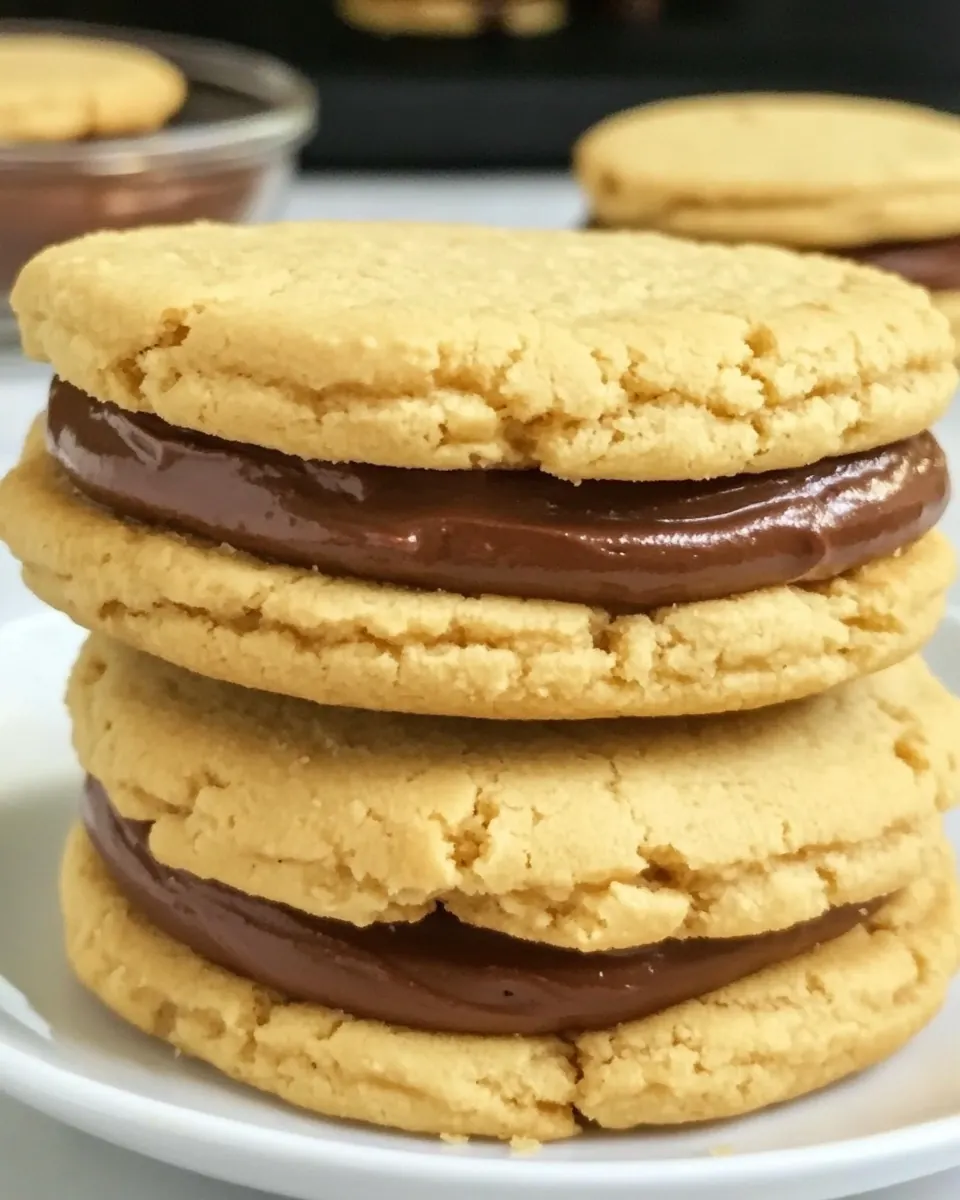
Peanut Butter Sandwich Cookies With Nutella Marshmallow Cream
Peanut Butter Sandwich Cookies With Nutella Marshmallow Cream began as a cheeky weekend experiment when I wanted something nostalgic, but with a twist. I remember pulling a jar of peanut butter from the pantry because I craved that familiar, nutty comfort, then spotting a lonely jar of Nutella and a tub of marshmallow cream that begged to be used. The result felt like a homey hug, chewy and creamy at once, and I could not wait to share it with anyone who wandered into the kitchen.
The first time I made these, my kitchen smelled like toasted nuts and warm sugar, and my kids hovered like small, hopeful corgis. I mixed the batter by hand for a bit of muscle memory therapy, and pressing the fork into the dough felt oddly satisfying. When the sandwiches were assembled, the cross section was everything I wanted: a thin sheen of glossy Nutella threaded through pillowy marshmallow cream and a gentle tang from the cream cheese.
Since then, these cookies have become my default for casual get togethers when I want to keep things fun but not fussy. They travel well and pair beautifully with a simple glass of milk or a tin of tea. You will find they slice through the afternoon slump, and they make for a playful addition to lunch boxes. If you enjoy a sweet, nostalgic bite with slightly grown up flavors, this recipe will likely become a repeat.
Recipe Snapshot
25 mins
15 mins
10 mins
Easy
150 kcal
American
Gluten-Free, Low FODMAP
Desserts
Mixing bowl, Mixer, Rubber spatula, Cookie sheet, Wire rack
Why This Peanut Butter Sandwich Cookies With Nutella Marshmallow Cream Hits Different
Comfort With a Twist
I love how Peanut Butter Sandwich Cookies With Nutella Marshmallow Cream takes a simple childhood favorite and layers in more sophisticated flavors. The marriage of peanut butter and Nutella creates a bittersweet balance, and the marshmallow cream brings a pillowy, almost mousse like texture that transforms a cookie into a mini dessert.
Textural Play
These cookies are special because they offer several textures at once. The baked cookie has a slightly crisp edge and a tender center, while the filling is creamy and smooth. I really appreciate the contrast, it keeps each bite interesting and makes the cookies feel indulgent without being heavy.
Simple Ingredients, Big Impact
One reason I keep coming back to this recipe is how accessible the ingredient list is. With staples like all purpose flour, brown sugar, and unsalted butter, you rarely need a special run to the store. The few extra fridge items, like cream cheese and marshmallow cream, elevate the final result dramatically.
Make Ahead Friendly
I often make the cookies a day ahead and assemble them when guests arrive. The flavors settle and the filling softens slightly, which I find ideal. It is a forgiving recipe, so you can scale it up for a party without worrying about timing down to the minute.
Playful Presentation
These sandwich cookies have a playful look that makes them perfect for casual parties, afternoon treats, or school friendly snacks. They feel homemade and thoughtful, which is why I reach for them when I want an easy treat that still impresses.
Recipe Ingredients for Peanut Butter Sandwich Cookies With Nutella Marshmallow Cream
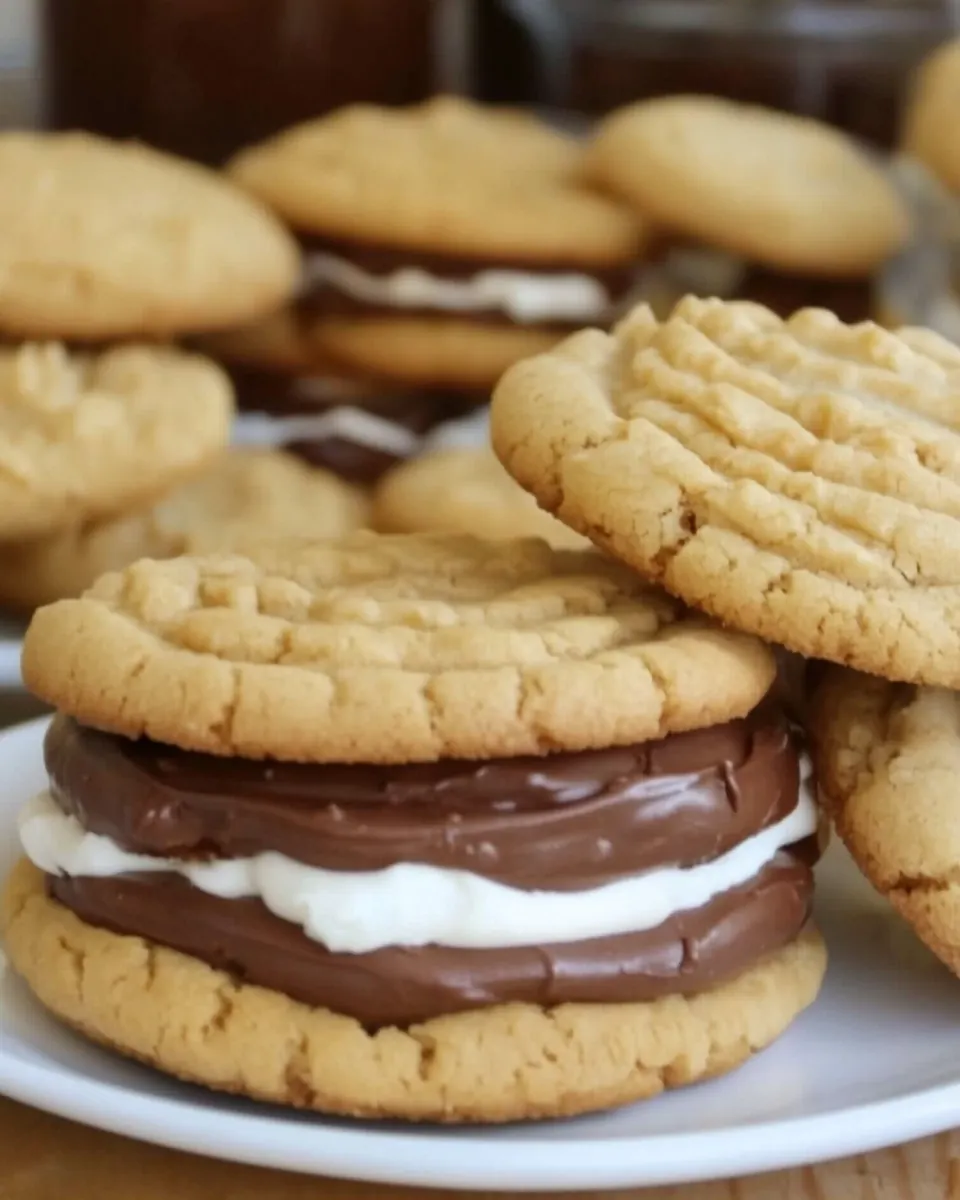
I treat this ingredient list as a small orchestra where each part plays a clear role. The base cookie needs sturdy, buttery support from unsalted butter and sugars so it browns evenly, while creamy peanut butter carries the dominant flavor. The leavening agents ensure a tender texture, and the filling components create a luxurious, spreadable center.
- 1 cup unsalted butter, room temperature: Creamy and softened to room temperature to ensure smooth creaming with sugars; provides richness, structure, and tender crumb to the cookie dough. Helps incorporate air when beaten with sugars, resulting in lighter texture and improved mouthfeel after baking.
- 1 cup brown sugar: Moist and flavorful brown sugar used for its molasses content to add depth and chewiness to cookies. Contributes to caramelized notes and helps retain moisture, promoting a soft interior even after cooling.
- 1 cup white granulated sugar: Granulated white sugar added for sweetness and to aid in creaming with butter for leavening and texture development. Encourages spread during baking and creates a balanced sweetness that complements richer ingredients.
- 1 cup creamy peanut butter: Silky creamy peanut butter added for concentrated nutty flavor, fat, and binder properties within the dough. Enhances overall taste profile, contributes to moistness, and helps create signature peanut butter cookie texture.
- 2 large eggs: Beaten large eggs provide moisture, structure, and emulsification for a cohesive dough; they also aid in leavening and color development. Their proteins set during baking to stabilize cookies and improve chewiness.
- 1 teaspoon pure vanilla extract: Pure vanilla extract contributes aromatic sweetness and rounds out flavors while enhancing the perception of other ingredients. Small amount adds complexity and a pleasant background note in the finished cookies.
- 2 1/2 cups all-purpose flour: All-purpose flour supplies the bulk structure through its gluten-forming proteins, balancing tenderness and chew. Determines cookie body and density when combined with fats and leaveners, ensuring proper texture.
- 1 1/2 teaspoons baking soda: Baking soda acts as a chemical leavening agent that promotes spread and browning by producing carbon dioxide when reacting with acidic components. Helps create a slightly crisp edge and chewier interior in cookies.
- 1 teaspoon baking powder: Baking powder provides additional leavening for lift and lightness in the cookies, working in tandem with baking soda for controlled rise. Ensures consistent texture and helps prevent overly dense results.
- 1/2 teaspoons salt: Salt enhances and balances the sweetness while strengthening gluten structure slightly; it also amplifies other flavors in the recipe. Small quantity is crucial for depth and overall palatability of the cookies.
- For the Filling: Label indicating the start of the filling section to separate components for the sandwich cookies and guide assembly. Clarifies that following items are combined to create the creamy center between baked cookies.
- 1/2 cup cream cheese: Softened cream cheese adds tangy richness and a creamy texture to the filling; it stabilizes and balances sweetness from other filling components. Contributes to a pleasantly smooth, slightly tart center that contrasts the cookies.
- 1/2 cup marshmallow cream: Marshmallow cream provides sweet, fluffy texture and lightness to the filling while adding sticky, spreadable body. Blends with cream cheese and Nutella to create a marshmallow-forward, airy consistency for sandwiching.
- 1/2 cup Nutella: Nutella supplies chocolate-hazelnut flavor and creamy, spreadable fat that intensifies sweetness and richness in the filling. Combines with cream cheese and marshmallow cream to create a decadent, smooth center for the cookies.
Step by Step Instructions for Peanut Butter Sandwich Cookies With Nutella Marshmallow Cream
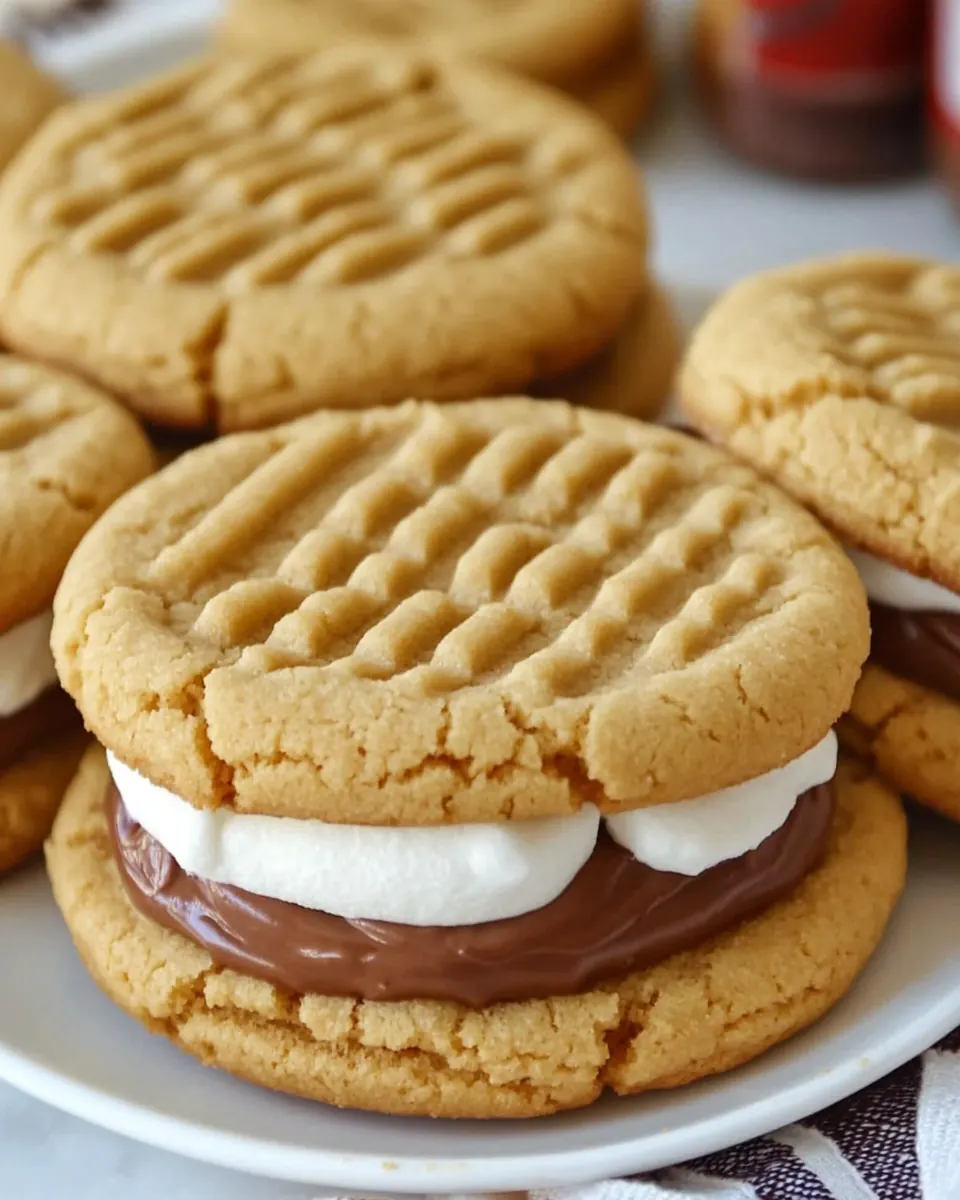
I like to think of baking these as a relaxed, rhythmic process. Below I expand each direction into clear, sensory rich steps so you know what to look for, smell, and avoid. Keep your tools at hand and enjoy the process.
- Preheat the oven to 350 F. Place the butter and sugars in a large bowl and beat for several minutes until fluffy and pale in color. Add the peanut butter and beat for a few more seconds until combined. Add the eggs and vanilla and beat another few seconds until combined. In a separate bowl, sift the flour, baking soda, baking powder and salt. Add the flour mixture to the wet mixture and, using a rubber spatula, gently fold to combine. Be careful not to over-stir. Form the dough into 1-inch balls and place them on a non-stick cookie sheet, pressing a grid pattern into them with a fork. Bake for 8-9 minutes. Let the cookies cool on the cookie sheet for 3 minutes before transferring to a wire rack to cool completely.: You will notice the kitchen temperature settle as the oven warms, and a warm oven helps cookies bake evenly from edge to center. This initial heat is crucial because it sets the rate at which the butter melts and sugars caramelize. A common mistake is skipping preheating, which can leave cookies underbaked or oddly shaped. If your oven runs hot or cold, use an oven thermometer to confirm an accurate 350 F .
- For the filling: Place the cream cheese, marshmallow cream and Nutella in a bowl and beat until combined. Using a butter knife, spread the filling on the bottom side of one cookie and place another cookie on top. Makes about 32 sandwich cookies.: At this stage you should hear a soft, rhythmic whir if using a mixer, and the mixture will lighten in color and increase in volume. This aeration traps tiny air pockets that help make the cookies tender. If you underbeat, the cookies may be dense; if you overbeat, they can collapse. Aim for a ribbon like texture when you lift the beater.
- Add the peanut butter and beat for a few more seconds until combined.: The aroma will shift toward nutty warmth as the peanut butter integrates. You want a uniform texture with no streaks of oil. Mixing briefly helps preserve air in the batter; overmixing can deflate it. Scrape the bowl to ensure even distribution.
- Add the eggs and vanilla and beat another few seconds until combined.: When you add the eggs and vanilla , the mixture becomes glossy and easier to work with. Eggs help bind, while vanilla brightens flavor. Mix just until incorporated to prevent a tough crumb. If the batter looks curdled, continue beating briefly until smooth.
- In a separate bowl, sift the flour, baking soda, baking powder and salt.: Sifting removes lumps and evenly distributes the leavening agents. The dry mixture should smell faintly of wheat and appear light. Unevenly mixed leaveners lead to odd rise patterns, so take your time. If you skip sifting, whisk thoroughly to combine.
- Add the flour mixture to the wet mixture and, using a rubber spatula, gently fold to combine.: Folding preserves the air you built earlier, and you will feel the dough come together into a smooth, cohesive mass. The texture should be slightly tacky but not sticky. Over stirring will develop the gluten and make the cookies dense, so fold just until there are no visible streaks of flour.
- Be careful not to over-stir.: You might feel tempted to keep working the dough, but the visual cue to stop is when the mixture looks uniform with no pockets of dry flour. The dough should hold its shape when scooped. Overworked dough often yields a firmer, less tender cookie, so resist the urge to perfect it by mixing more.
- Form the dough into 1 inch balls and place them on a non stick cookie sheet, pressing a grid pattern into them with a fork.: As you roll, the dough should feel supple and slightly cool. Spacing is important so the cookies have room to spread. Pressing the fork creates a classic texture and helps the cookie bake evenly. A frequent misstep is making balls too large, which alters bake time and texture, so stick to the 1 inch guideline.
- Bake for 8 to 9 minutes.: During baking you will catch the scent of toasted sugar and nuts, and the cookie edges will set while the centers remain softer. Aim for a pale golden edge rather than deep brown to keep them tender. Overbaking is common and will produce a dry cookie, so check at 8 minutes and remove when the centers look set but not hard.
- Let the cookies cool on the cookie sheet for 3 minutes before transferring to a wire rack to cool completely.: Allowing the cookies to rest on the sheet helps them firm up and finish their residual cooking without becoming crunchy. After a few minutes they will lift easily to the wire rack . Moving them too soon can cause them to break, while leaving them too long might cause them to over crisp on the bottom.
- For the filling Place the cream cheese, marshmallow cream and Nutella in a bowl and beat until combined.: The mixture should be glossy and silk like, with a light, sweet aroma dominated by Nutella and a subtle tang from cream cheese . Beating smooth eliminates lumps and creates a spreadable consistency. If the filling is too stiff, let the cream cheese sit at room temperature a bit longer; if too soft, chill briefly to firm up.
- Using a butter knife, spread the filling on the bottom side of one cookie and place another cookie on top.: When you assemble, you will feel the soft give of the cookie and the silky resistance of the filling as you press them together. The visual cue is a thin, even layer of filling peeking from the edges. A common error is adding too much filling which causes the sandwiches to squish out, so use a modest layer for neat results.
- Makes about 32 sandwich cookies.: Count your portions as you assemble to ensure consistent size and serving. If some sandwiches are slightly larger, tuck them into a separate container for immediate enjoyment. Consistency helps with storage and presentation, and keeping an eye on count avoids unexpected shortages when serving.
Recipe Tips about Peanut Butter Sandwich Cookies With Nutella Marshmallow Cream
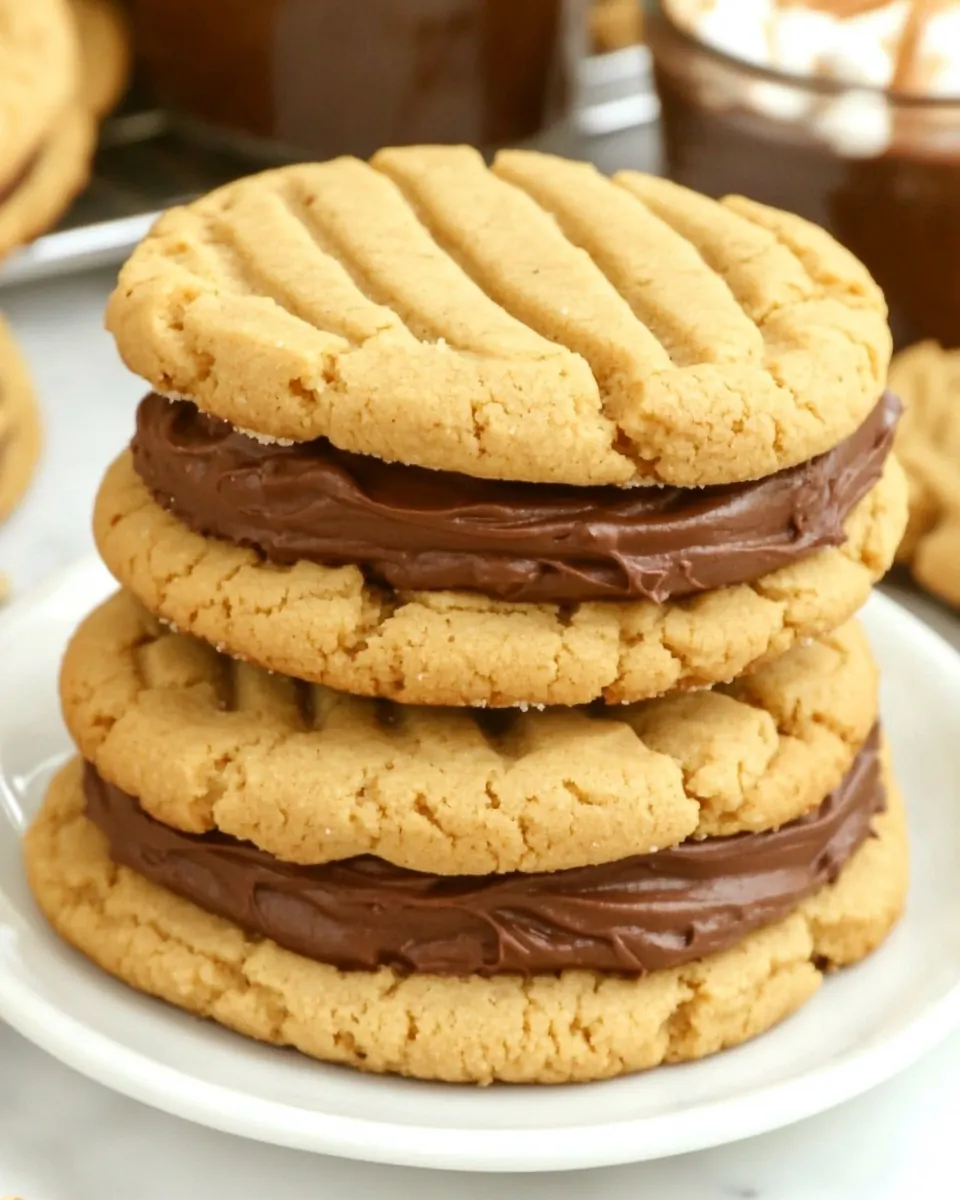
These tips cover techniques and small adjustments that elevate the final cookies. Read them before you begin so you can prep with confidence and avoid common pitfalls.
- Room Temperature Matters: Make sure your unsalted butter and eggs are at room temperature so they incorporate smoothly and the batter achieves the right texture.
- Fresh Leavening: Test your baking powder and baking soda if they are older than six months, fresh leavening ensures proper rise and texture.
- Gentle Folding: Use a rubber spatula to fold the dry ingredients to preserve air, which keeps the cookies light rather than dense.
- Even Sizes: Use a cookie scoop or measure dough to 1 inch balls for uniform baking and consistent yield, about 32 sandwiches as noted.
- Cooling Time: Let cookies cool completely on a rack before filling, this prevents the filling from softening and sliding off.
What Goes Well With This Peanut Butter Sandwich Cookies With Nutella Marshmallow Cream
These cookies pair well with simple beverages and casual occasions. Here are serving ideas, storage tips, and occasions where they shine, all written as practical suggestions you can use immediately.
- Classic Milk Pairing: Serve with a cold glass of milk, its creaminess balances the sweetness and makes the cookies feel like a classic snack for afternoons or school friendly treats.
- Tea and Coffee: Offer with a robust tea or coffee during a casual gathering, the bitter notes of brewed beverages cut through the sugar and highlight the nutty and chocolate flavors.
- Party Platter: Arrange on a platter for birthday parties or casual get togethers, they are easy to pick up and travel well, making them ideal for potlucks and informal celebrations.
- Make Ahead and Store: Store in an airtight container at room temperature for up to three days, or refrigerate for up to a week. For longer keeping, freeze assembled sandwiches between parchment layers for up to one month.
- Seasonal Treat: These are flexible for any season, from picnic friendly spring afternoons to cozy winter gatherings, the flavors suit many occasions and comfort driven menus.
FAQ
Conclusion
These Peanut Butter Sandwich Cookies With Nutella Marshmallow Cream stand out for their playful combination of nutty, chocolatey, and fluffy textures. Give them a try when you want a treat that feels both familiar and slightly elevated. They are approachable to make, travel well, and are great for sharing with friends, family, or anyone who appreciates a sweet, comforting bite.
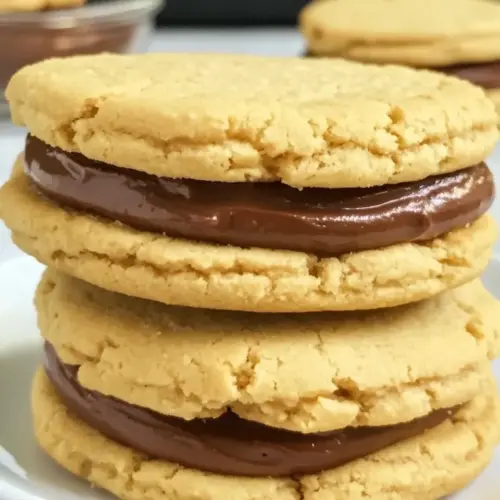
Peanut Butter Sandwich Cookies With Nutella Marshmallow Cream
Equipment
- Mixing Bowl
- Mixer
- Rubber spatula
- Cookie Sheet
- Wire Rack
Ingredients
- 1 cup unsalted butter, room temperature Creamy and softened to room temperature to ensure smooth creaming with sugars; provides richness, structure, and tender crumb to the cookie dough. Helps incorporate air when beaten with sugars, resulting in lighter texture and improved mouthfeel after baking.
- 1 cup brown sugar Moist and flavorful brown sugar used for its molasses content to add depth and chewiness to cookies. Contributes to caramelized notes and helps retain moisture, promoting a soft interior even after cooling.
- 1 cup white granulated sugar Granulated white sugar added for sweetness and to aid in creaming with butter for leavening and texture development. Encourages spread during baking and creates a balanced sweetness that complements richer ingredients.
- 1 cup creamy peanut butter Silky creamy peanut butter added for concentrated nutty flavor, fat, and binder properties within the dough. Enhances overall taste profile, contributes to moistness, and helps create signature peanut butter cookie texture.
- 2 large eggs Beaten large eggs provide moisture, structure, and emulsification for a cohesive dough; they also aid in leavening and color development. Their proteins set during baking to stabilize cookies and improve chewiness.
- 1 teaspoon pure vanilla extract Pure vanilla extract contributes aromatic sweetness and rounds out flavors while enhancing the perception of other ingredients. Small amount adds complexity and a pleasant background note in the finished cookies.
- 2 1/2 cups all-purpose flour All-purpose flour supplies the bulk structure through its gluten-forming proteins, balancing tenderness and chew. Determines cookie body and density when combined with fats and leaveners, ensuring proper texture.
- 1 1/2 teaspoons baking soda Baking soda acts as a chemical leavening agent that promotes spread and browning by producing carbon dioxide when reacting with acidic components. Helps create a slightly crisp edge and chewier interior in cookies.
- 1 teaspoon baking powder Baking powder provides additional leavening for lift and lightness in the cookies, working in tandem with baking soda for controlled rise. Ensures consistent texture and helps prevent overly dense results.
- 1/2 teaspoons salt Salt enhances and balances the sweetness while strengthening gluten structure slightly; it also amplifies other flavors in the recipe. Small quantity is crucial for depth and overall palatability of the cookies.
- For the Filling: Label indicating the start of the filling section to separate components for the sandwich cookies and guide assembly. Clarifies that following items are combined to create the creamy center between baked cookies.
- 1/2 cup cream cheese Softened cream cheese adds tangy richness and a creamy texture to the filling; it stabilizes and balances sweetness from other filling components. Contributes to a pleasantly smooth, slightly tart center that contrasts the cookies.
- 1/2 cup marshmallow cream Marshmallow cream provides sweet, fluffy texture and lightness to the filling while adding sticky, spreadable body. Blends with cream cheese and Nutella to create a marshmallow-forward, airy consistency for sandwiching.
- 1/2 cup Nutella Nutella supplies chocolate-hazelnut flavor and creamy, spreadable fat that intensifies sweetness and richness in the filling. Combines with cream cheese and marshmallow cream to create a decadent, smooth center for the cookies.
Instructions
- Preheat the oven to 350 F. Place the butter and sugars in a large bowl and beat for several minutes until fluffy and pale in color. Add the peanut butter and beat for a few more seconds until combined. Add the eggs and vanilla and beat another few seconds until combined. In a separate bowl, sift the flour, baking soda, baking powder and salt. Add the flour mixture to the wet mixture and, using a rubber spatula, gently fold to combine. Be careful not to over-stir. Form the dough into 1-inch balls and place them on a non-stick cookie sheet, pressing a grid pattern into them with a fork. Bake for 8-9 minutes. Let the cookies cool on the cookie sheet for 3 minutes before transferring to a wire rack to cool completely.: You will notice the kitchen temperature settle as the oven warms, and a warm oven helps cookies bake evenly from edge to center. This initial heat is crucial because it sets the rate at which the butter melts and sugars caramelize. A common mistake is skipping preheating, which can leave cookies underbaked or oddly shaped. If your oven runs hot or cold, use an oven thermometer to confirm an accurate 350 F .
- For the filling: Place the cream cheese, marshmallow cream and Nutella in a bowl and beat until combined. Using a butter knife, spread the filling on the bottom side of one cookie and place another cookie on top. Makes about 32 sandwich cookies.: At this stage you should hear a soft, rhythmic whir if using a mixer, and the mixture will lighten in color and increase in volume. This aeration traps tiny air pockets that help make the cookies tender. If you underbeat, the cookies may be dense; if you overbeat, they can collapse. Aim for a ribbon like texture when you lift the beater.
- Add the peanut butter and beat for a few more seconds until combined.: The aroma will shift toward nutty warmth as the peanut butter integrates. You want a uniform texture with no streaks of oil. Mixing briefly helps preserve air in the batter; overmixing can deflate it. Scrape the bowl to ensure even distribution.
- Add the eggs and vanilla and beat another few seconds until combined.: When you add the eggs and vanilla , the mixture becomes glossy and easier to work with. Eggs help bind, while vanilla brightens flavor. Mix just until incorporated to prevent a tough crumb. If the batter looks curdled, continue beating briefly until smooth.
- In a separate bowl, sift the flour, baking soda, baking powder and salt.: Sifting removes lumps and evenly distributes the leavening agents. The dry mixture should smell faintly of wheat and appear light. Unevenly mixed leaveners lead to odd rise patterns, so take your time. If you skip sifting, whisk thoroughly to combine.
- Add the flour mixture to the wet mixture and, using a rubber spatula, gently fold to combine.: Folding preserves the air you built earlier, and you will feel the dough come together into a smooth, cohesive mass. The texture should be slightly tacky but not sticky. Over stirring will develop the gluten and make the cookies dense, so fold just until there are no visible streaks of flour.
- Be careful not to over-stir.: You might feel tempted to keep working the dough, but the visual cue to stop is when the mixture looks uniform with no pockets of dry flour. The dough should hold its shape when scooped. Overworked dough often yields a firmer, less tender cookie, so resist the urge to perfect it by mixing more.
- Form the dough into 1 inch balls and place them on a non stick cookie sheet, pressing a grid pattern into them with a fork.: As you roll, the dough should feel supple and slightly cool. Spacing is important so the cookies have room to spread. Pressing the fork creates a classic texture and helps the cookie bake evenly. A frequent misstep is making balls too large, which alters bake time and texture, so stick to the 1 inch guideline.
- Bake for 8 to 9 minutes.: During baking you will catch the scent of toasted sugar and nuts, and the cookie edges will set while the centers remain softer. Aim for a pale golden edge rather than deep brown to keep them tender. Overbaking is common and will produce a dry cookie, so check at 8 minutes and remove when the centers look set but not hard.
- Let the cookies cool on the cookie sheet for 3 minutes before transferring to a wire rack to cool completely.: Allowing the cookies to rest on the sheet helps them firm up and finish their residual cooking without becoming crunchy. After a few minutes they will lift easily to the wire rack . Moving them too soon can cause them to break, while leaving them too long might cause them to over crisp on the bottom.
- For the filling Place the cream cheese, marshmallow cream and Nutella in a bowl and beat until combined.: The mixture should be glossy and silk like, with a light, sweet aroma dominated by Nutella and a subtle tang from cream cheese . Beating smooth eliminates lumps and creates a spreadable consistency. If the filling is too stiff, let the cream cheese sit at room temperature a bit longer; if too soft, chill briefly to firm up.
- Using a butter knife, spread the filling on the bottom side of one cookie and place another cookie on top.: When you assemble, you will feel the soft give of the cookie and the silky resistance of the filling as you press them together. The visual cue is a thin, even layer of filling peeking from the edges. A common error is adding too much filling which causes the sandwiches to squish out, so use a modest layer for neat results.
- Makes about 32 sandwich cookies.: Count your portions as you assemble to ensure consistent size and serving. If some sandwiches are slightly larger, tuck them into a separate container for immediate enjoyment. Consistency helps with storage and presentation, and keeping an eye on count avoids unexpected shortages when serving.
Notes
- Room Temperature Matters: Make sure your unsalted butter and eggs are at room temperature so they incorporate smoothly and the batter achieves the right texture.
- Fresh Leavening: Test your baking powder and baking soda if they are older than six months, fresh leavening ensures proper rise and texture.
- Gentle Folding: Use a rubber spatula to fold the dry ingredients to preserve air, which keeps the cookies light rather than dense.
- Even Sizes: Use a cookie scoop or measure dough to 1 inch balls for uniform baking and consistent yield, about 32 sandwiches as noted.
- Cooling Time: Let cookies cool completely on a rack before filling, this prevents the filling from softening and sliding off.